
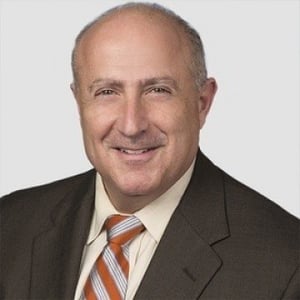
Partner, Wiley Rein LLP
Paul Khoury counsels and represents government contractors in solicitation review, multiple award schedule contracting, state and local procurements, subcontracting, teaming agreements, corporate transactions, bid protests, terminations, contract disputes litigation, compliance reviews, mandatory disclosures, inspector general investigations, and False Claims Act actions. Paul is regularly rated as one of the country’s “Leading Lawyers” in his field by Chambers USA, which commends him as “a fantastic bid protest attorney”. Paul was also chair of the firm’s Pro Bono Committee from 1998 to 2014.
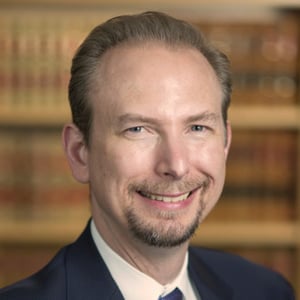
Assistant Professor of Law, Moritz College of Law at The Ohio State University
Prof. Dakota Rudesill is a scholar, practitioner, and teacher of legislation and national security law and policy. At Moritz, he teaches National Security Law & Process, Legislation and Regulation, and the Legislation Clinic.
His scholarship has appeared or is forthcoming in the Georgetown Law Journal, Stanford Journal of International Law, Yale Journal of International Law, Harvard National Security Journal, Georgetown Journal of Law & Public Policy, and the Washington University Law Review, among others. Professor Rudesill is a member of the editorial board of the peer-review Journal of National Security Law and Policy. He is Chair of the National Security Section of the American Association of Law Schools (AALS).
Particular areas of emphasis in Professor Rudesill’s work are intelligence and secrecy (including secret law), arms control and nuclear weapons, legislation, and the experiential “learning-by-doing” training of professionals. Professor Rudesill leads a coalition pushing for a congressional clerkship program analogous to the judiciary’s law clerk program, and is the creator and director of The Ohio State National Security Simulation. This immersive annual exercise places over 130 OSU students from law, policy, intelligence, military, communications, and business management backgrounds in their respective roles as they grapple with current national security challenges and advise top practitioners in real time over two days.
Professor Rudesill has advised senior leaders in all three branches of the federal government. He served the U.S. Congress for nine years, doing national security legislative work for the Senate Budget Committee and Sen. Kent Conrad. In the Executive Branch, as a member of the Obama-Biden Presidential Transition Team, Professor Rudesill advised the President-Elect’s nominees for Director of National Intelligence and CIA Director. He served in the Office of the Director of National Intelligence (ODNI), and on the President’s Detention Policy Task Force at the U.S. Department of Justice. In the Judicial Branch, Professor Rudesill was a law clerk to James B. Loken, Chief Judge of the U.S. Court of Appeals for the Eighth Circuit.
Prior to coming to Ohio State, from 2010 to 2013, Professor Rudesill was Visiting Associate Professor at Georgetown Law Center, and directed the Federal Legislation & Administrative Clinic. Earlier in his career he was a law firm associate, a Visiting Fellow at the Center for Strategic & International Studies, and was selected for the Council on Foreign Relations International Affairs Fellowship.
Professor Rudesill received his B.A. from St. Olaf College and J.D. from Yale Law School.
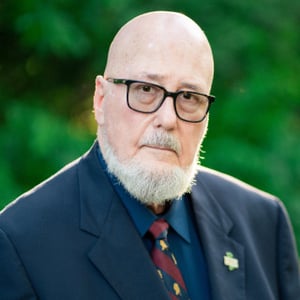
Senior Fellow, National Security Institute, Antonin Scalia School of Law, George Mason University; Retired Professor, Distinguished Fellow and Co-Founder, Center for National Security Law, University of Virginia School of Law (1987-2020)
Robert F. Turner holds both professional and academic doctorates from the University of Virginia School of Law. He co-founded the Center for National Security Law with Professor John Norton Moore in April 1981 and served as its associate director for 39 years, except for two periods of government service in the 1980s and during 1994-95, when he occupied the Charles H. Stockton Chair of International Law at the U.S. Naval War College in Newport, Rhode Island. He retired from UVA in January 2020 and currently serves as a non-resident senior fellow at the GMU National Security Institute. He also served briefly in 2020 as President of the Crime Prevention Research Center—one of the most respected pro-Second Amendment groups in the country—while its founder, Dr. John Lott, was on leave of absence.
A former Army captain and veteran of two tours in Vietnam, Turner served as a research associate and public affairs fellow at Stanford's Hoover Institution on War, Revolution and Peace before spending five years in the mid-1970s as national security adviser to U.S. Senator Robert P. Griffin, a member of the Senate Foreign Relations Committee (where Turner anticipated by seven years the Supreme Court’s landmark INS v. Chadha decision, striking down legislative vetoes). He also served in the executive branch during the Reagan administration as a member of the Senior Executive Service, first in the Pentagon as special assistant to the undersecretary of defense for policy, then in the White House as counsel to the President's Intelligence Oversight Board, and at the State Department as principal deputy and then acting assistant secretary for legislative affairs. In 1986, he became the first president of the congressionally established United States Institute of Peace.
A former three-term chairman of the ABA Standing Committee on Law and National Security (and for many years editor of the ABA National Security Law Report), Turner also chaired the Executive-Congressional Relations Subcommittee of the ABA Section on International Law and Practice and chaired or co-chaired the National Security Law Subcommittee of the Federalist Society’s International and National Security Law Practice Group for several years.
Turner taught undergraduate courses at Virginia on international law, U.S. foreign policy, the Vietnam War and foreign policy and the law in what is now the Woodrow Wilson Department of Politics. In addition, he co-taught National Security Law and advanced national security law seminars on the Indochina War and on war and peace with Moore at the Law School.
The author or editor of 18 books and monographs (including co-editor of the Center's 1,600-page National Security Law & Policy casebook, National Security Law Documents, and Legal Issues in the Struggle Against Terror) and numerous articles in law reviews and other professional journals, Turner has also contributed articles to most of the major U.S. newspapers, including The New York Times and USA Today. In an op-ed published in The International Herald Tribune in September 1990, he and Moore were the first to call for a war-crimes trial for Iraqi dictator Saddam Hussein and for international controls over Iraq's weapons of mass destruction, and the following month he wrote the lead story in The Washington Post Sunday Outlook Section, “Killing Saddam: Would It Be a Crime?,” arguing that Hussein would be a lawful target during Operation Desert Storm. (His reasoning contributed to the modern legal justification for drone strikes targeting specific terrorist leaders.) Three years before the terrorist attacks of September 11, 2001, Turner published an op-ed in USA Today entitled: “In Self-defense, U.S. Has Right to Kill bin Laden.”
In July 2007, he co-authored an article in The Washington Post with former U.S. Marine Corps Commandant General P.X. Kelley, “War Crimes and the White House,” criticizing the use of unlawful “enhanced interrogation techniques” by the Central Intelligence Agency. On the 40th anniversary of the fall of Saigon he authored an article in The Wall Street Journal, “Saigon’s Fall Still Echoes Today,” noting that after the war ended, Hanoi admitted it had made a decision in 1959 to open the Ho Chi Minh Trail and start sending troops, weapons and supplies into South Vietnam to overthrow its government — just as the United States had charged. In 2010 Turner received the first “person of the year” award from SACEI, a major Vietnamese-American human rights organization.
A frequent lecturer and debater, Turner has spoken at more than 100 law schools around the nation and in other fora — taking on as many as four opponents at a time. His debate opponents have included former or future deans of Yale, Stanford, the University of Chicago and Berkeley law schools. Following a 1987 debate against Dean Harlan Cleveland (Rhodes Scholar, U.S. Ambassador to NATO, and Presidential Medal of Freedom recipient) in which Turner defended the legality of U.S. support for the Nicaraguan contras during the Reagan Administration, the host student debating societies awarded Turner the victory by an 85-to-15 percent margin.
Turner has also written and lectured widely on University of Virginia founder and America’s third president Thomas Jefferson. In 2000-2001 he chaired the Jefferson-Hemings Scholars Commission. In his 2012 book Master of the Mountain, Jefferson critic Henry Wiencek described Turner as “Jefferson’s chief scholarly defender."
A former distinguished lecturer at the U.S. Military Academy at West Point, Turner is a member of the Council on Foreign Relations, the Academy of Political Science, the Committee on the Present Danger, The Heterodox Academy, and other professional organizations. He maintained a 4.0 gpa as a graduate student at Stanford in History and Political Science and in the UVA Department of Government and Foreign Affairs and was the first person admitted directly to the UVA academic law doctorate (SJD) program without first being required to earn an LL.M. master’s degree. He was selected for inclusion in Who’s Who in American Law less than two years after graduating from law school and Who’s Who in the World before he reached the age of 40. Turner has testified before more than a dozen different congressional committees on issues of international or constitutional law and other topics.
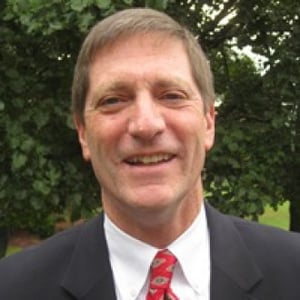
President, Hoppe Strategies
After serving 29 years on Capitol Hill, Dave Hoppe returned to the private sector as president of Hoppe Strategies, a strategic planning, lobbying and political consulting firm.
Hoppe brings a wealth of experience to this job, having dealt with legislative development and strategy at the highest levels on Capitol Hill. He directed Whip offices in both the House and Senate, and led the Senate Majority Leader’s office during the Clinton and Bush 43 administrations. Both positions oversaw and coordinated the flow of legislation through Congress, and both required working with political personalities on both sides of the aisle as well as the White House, to achieve passage for each bill. Hoppe recently reprised this role for Sen. Jon Kyl in the Senate Whip Office.
Additionally, Hoppe was the lead staff member on such historic Constitutional and structural events as the power shift in the Senate (when one Senator changed his party affiliation, throwing into chaos the entire Senate committee structure and requiring extensive negotiations between both parties), and the Senate impeachment trial of President Clinton. These events give him a unique perspective on the interaction of political agendas with legislative outcomes.
Other Hill positions held by Hoppe include Chief of Staff to Rep. Jack Kemp during his presidential bid, and Chief of Staff to Sen. Dan Coats who was appointed to replace former Senator Dan Quayle. Sen. Coats was required to conduct two statewide campaigns in a 4-year period in order to confirm his Senate appointment and then to retain the seat, unusual demands which impacted the work of his Senate office. Early in his Hill career, Hoppe served as energy and environmental policy analyst for the Republican Study Committee.
Among the highlights of Hoppe’s years on House leadership staff were the passage of the Economic Recovery Tax Act of 1981 and the Omnibus Budget Reconciliation Act of 1981, both key elements of the first Reagan administration. During his tenure with Rep. Jack Kemp, the Tax Reform Act of 1986 was passed and signed into law. He was also involved with the Balanced Budget Act of 1997, the Economic Growth and Tax Relief Reconciliation Act of 2001, the Individuals with Disabilities Education Act of 1997, and numerous other issues including welfare reform, tax policies and education reform.
In 2003, Hoppe left the Hill to work for the public affairs firm Quinn Gillespie & Associates, serving as President of QGA 2007-2011, when he returned briefly to the Senate to direct the Whip office for Sen. Kyl. Currently Hoppe is a Senior Policy Advisor at Squire Patton Boggs, he also serves as a Senior Advisor to the Bipartisan Policy Center, and is an advisor to the Jack Kemp Foundation. He is an emeritus member of the Board for Easter Seals of DC, Maryland and Northern Virginia, was Chairman of the Government Affairs Committee for the National Down Syndrome Society, and serves on the national board of SourceAmerica and of the Coalition to Promote Self Determination, a group of organizations working to empower disabled individuals to achieve greater independence.
He holds a B.A. in Government from the University of Notre Dame, and an M.A. in International Relations from Johns Hopkins School of Advanced International Studies. He is married and has three children.
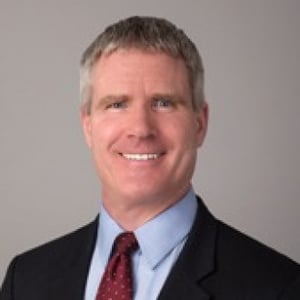
Partner, Gibson, Dunn & Crutcher LLP
Thomas G. Hungar is a partner in the Washington, D.C., office of Gibson Dunn. His practice focuses on appellate litigation, and he assists clients with congressional investigations and complex trial court litigation matters as well. He has presented oral argument before the Supreme Court of the United States in 28 cases, including some of the Court’s most important patent, antitrust, securities, and environmental law decisions, and he has also appeared before numerous lower federal and state courts.
Thomas served as General Counsel to the U.S. House of Representatives from July 2016 until January 2019. As General Counsel, he provided legal advice and litigation representation on a non-partisan basis to the House and its leadership, members, officers, and staff, and he worked closely with numerous House committees in connection with their oversight and investigative activities. Previously, he served as a Deputy Solicitor General of the United States. In that position, he supervised business-related appellate litigation for the federal government, with particular emphasis on patent, antitrust, securities, and environmental appellate cases, and he also oversaw appellate litigation in banking, bankruptcy, tax, government contracts, communications, copyright, labor, trademark, and international trade matters. In private practice, Thomas’s appellate experience has encompassed those areas as well as class actions, constitutional law, employment law, product liability, administrative procedure, insurance coverage and bad faith, and general commercial litigation. He has handled scores of business-related appeals in the Supreme Court and lower appellate courts, and has briefed and argued many high-profile matters.
Thomas is a Fellow of the American Academy of Appellate Lawyers and is a frequent lecturer in his areas of expertise. While at the Department of Justice, he served as Appellate Counsel to the Intellectual Property Task Force Executive Staff, and he was awarded the John Marshall Award for Outstanding Legal Achievement, the Department’s highest award presented to attorneys for contributions and excellence in legal performance, in recognition of his handling of patent-law matters before the Supreme Court.
Most recently, Thomas has garnered national recognition for his Appellate Practice in The Legal 500 – United States, Best Lawyers in America, and in Chambers USA, which has repeatedly highlighted Thomas for his “expertise in appellate litigation” and experience with employment and antitrust disputes, as well as Congressional Investigations. Thomas was also recently named a “Litigation Star” by Benchmark Litigation.
Thomas served as an Assistant to the Solicitor General of the United States from 1992-1994. He also served as a law clerk to Justice Anthony M. Kennedy of the Supreme Court and to Circuit Judge Alex Kozinski of the United States Court of Appeals for the Ninth Circuit. He received his law degree from Yale Law School in 1987, where he was a Senior Editor of the Yale Law & Policy Review. He received his Bachelor of Science degree magna cum laude in mathematics/computer science and economics from Willamette University in 1984.
Thomas is admitted to practice in the District of Columbia.

Vice President, Networks, The Federalist Society for Law and Public Policy Studies
Nathan Kaczmarek is Vice President for Networks at the Federalist Society. He began his legal career in Detroit representing nationwide clients in all phases of healthcare litigation and complex medical malpractice claims. He has since served as a Senior Legal and Policy Advisor in the U.S. House of Representatives and as Counsel for the Subcommittee on Regulatory Affairs and Federal Management in the U.S. Senate. Prior to overseeing the Networks, he was Director of the Practice Groups, the Regulatory Transparency Project, and the Article I Initiative for the Federalist Society.
Nathan holds degrees from Hillsdale College and Thomas M. Cooley Law School. He is a Liaison Representative for The Administrative Conference of the United States. He also serves as Vice President of the Associates of St. John Bosco, a Virginia based non-profit dedicated to Catholic high school and college students.
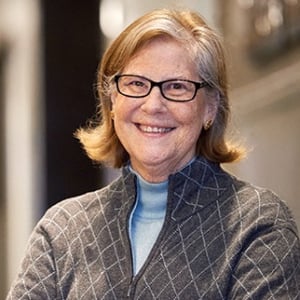
Professor of Practice and Distinguished Scholar in Residence; Co-Director of the Legislative and Regulatory Process Clinic, New York University School of Law
Sally Katzen served in the Clinton administration as administrator of the Office of Information and Regulatory Affairs in the Office of Management and Budget (OMB), as deputy assistant to the president for economic policy and deputy director of the National Economic Council in the White House, and then as the deputy director for management at OMB. She served as the head of the Agency Review Group for the Obama/Biden transition with responsibility for the Executive Office of the President and all government-wide agencies. She has taught both undergraduates and at various law schools. She is a member of the American Law Institute and the National Academy of Public Administration, has served on multiple panels for the National Academy of Sciences, testified frequently before Congress, and is on the board of several non-profit organizations. Before joining the Clinton administration, Katzen was a partner in the Washington, DC, law firm of Wilmer, Cutler & Pickering, specializing in regulatory and legislative matters, while serving in leadership roles in the American Bar Association (including chair of the Section on Administrative Law and Regulatory Practice and as DC delegate to the ABA’s House of Delegates), as president of the Federal Communications Bar Association and as president of the Women’s Legal Defense Fund. She graduated from Smith College and the University of Michigan Law School, where she was the first woman editor-in-chief of the Law Review. She clerked for Judge J. Skelly Wright of the United States Court of Appeals for the District of Columbia Circuit and served in the Carter administration as the general counsel of the Council on Wage and Price Stability in the Executive Office of the President.
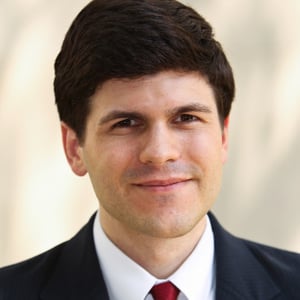
Senior Fellow, American Enterprise Institute
Philip Wallach is a senior fellow at the American Enterprise Institute (AEI), where he studies America’s separation of powers, with a focus on regulatory policy issues and the relationship between Congress and the administrative state.
In his latest book Why Congress (Oxford University Press, 2023), Dr. Wallach defends the centrality of Congress in America’s constitutional system, traces the roots of current dysfunction, and suggests how the institution might be restored.
Before joining AEI, Dr. Wallach was a senior fellow in governance studies at the Brookings Institution, where he authored To the Edge: Legality, Legitimacy, and the Responses to the 2008 Financial Crisis (Brookings Institution Press, 2015). He was later affiliated with the R Street Institute and served as a fellow with the House Select Committee on the Modernization of Congress in 2019.
Dr. Wallach’s scholarly and popular work has been published widely, including in the publications of the Brookings Center on Regulation and Markets, Studies in American Political Development, Fortune, National Affairs, National Review, Law & Liberty, Los Angeles Times, RealClearPolicy, the Bulwark, the Hill, the Wall Street Journal, and the Washington Post. A frequent conference participant, he has lectured at William & Mary, the University of Oregon, Northwestern University’s Medill School of Journalism, and the University of Michigan, among others.
Dr. Wallach received a master’s and doctorate in politics from Princeton University and a bachelor’s degree from Wesleyan University’s College of Social Studies.

Senior Fellow, Arthur F. Burns Fellow in Financial Policy Studies, American Enterprise Institute
Peter J. Wallison holds the Arthur F. Burns Chair in Financial Policy Studies and is co-director of AEI’s program on Financial Policy Studies. Prior to joining AEI, he practiced banking, corporate and financial law at Gibson, Dunn & Crutcher in Washington, D.C., and New York. Mr. Wallison has held a number of government positions. From June 1981 to January 1985, he was General Counsel of the United States Treasury Department, where he had a significant role in the development of the Reagan Administration's proposals for deregulation in the financial services industry. During 1986 and 1987, Mr. Wallison was White House counsel to President Ronald Reagan, and between 1972 and 1976, he served first as Special Assistant to New York's Gov. Nelson A. Rockefeller and, subsequently, as counsel to Mr. Rockefeller as vice president of the United States.
Mr. Wallison was admitted to practice before the courts of New York and the District of Columbia, and is retired from practice in New York. He continues to be a member of the District of Columbia Bar Association. He received his undergraduate degree from Harvard College in 1963 and law degree from Harvard Law School in 1966.
Mr. Wallison is the author of Ronald Reagan: The Power of Conviction and the Success of His Presidency, published in December 2002 by Westview Press. On campaign finance, he is the author (with Joel Gora) of Better Parties, Better Government, (AEI Press 2009). On financial or regulatory matters, he is the author of Back From the Brink, a proposal for a private deposit insurance system, and co-author of Nationalizing Mortgage Risk: The Growth of Fannie Mae and Freddie Mac; The GAAP Gap: Corporate Disclosure in the Internet Age; Competitive Equity: A Better Way to Organize Mutual Funds; Bad History, Worse Policy: How a False Narrative about the Financial Crisis Led to the Dodd-Frank Act (AEI Press 2013); and Hidden In Plain Sight: What Caused the World’s Worst Financial Crisis and Why it Could Happen Again (Encounter Books 2015). His most recent book is Judicial Fortitude: The Last Chance to Rein in the Administrative State, published by Encounter Books in October 2018.
He testifies frequently before committees of Congress, and is a frequent contributor to the op-ed pages of the Wall Street Journal and other print and online journals. He has also been a speaker at many conferences on financial services, housing, the causes of the financial crisis, the Dodd-Frank Act, accounting, and corporate governance, and was a member of the Shadow Financial Regulatory Committee between 1995 and 2015. He was a member of the SEC Advisory Committee on Improvements to Financial Reporting (2008), co-Chair of the Pew Financial Reform Task Force (2009), and a member of the congressionally- appointed Financial Crisis Inquiry Commission (2009-2011). In May 2011, for his work in financial policy, Mr. Wallison received an honorary doctorate in Humane Letters from the University of Colorado.
Chief Investigative Counsel, U.S. House of Representatives Committee on Oversight and Government Reform
Steve Castor is chief investigative counsel for the U.S. House of Representatives Committee on Oversight and Government Reform under committee Chairman Trey Gowdy (R-SC). He has served on the committee staff since 2005, and during his twelve-year tenure participated in a wide variety of high-profile oversight investigations. Prior to working for Congress, he practiced commercial litigation in Philadelphia and Washington, D.C. He earned his law degree from George Washington University.

Emanuel S. Heller Professor of Law, University of California at Berkeley; Thomas Smith Senior Research Fellow, The Civitas Institute, University of Texas at Austin
John Yoo is the Emanuel Heller Professor of Law at the University of California at Berkeley. He is also the Thomas Smith Senior Research Fellow, Civitas Institute, at the University of Texas at Austin. He is also a Nonresident Senior Fellow at the American Enterprise Institute.
His most recent book, The Politically Incorrect Guide to the Supreme Court, co-authored with Robert Delahunty, was published in 2023. Professor Yoo’s other books include Defender-in-Chief: Trump’s Fight for Presidential Power; Striking Power: How Cyber, Robots, and Space Weapons Change the Rules for War; Point of Attack: Preventive War, International Law, and Global Welfare; and Crisis and Command: A History of Executive Power from George Washington to George Bush.
He is a co-author of volumes 1 and 2 of R. Rossum, G. Tarr, V. Munoz & J. Yoo American Constitution Law (Routledge, 2026), and a co-editor of the eight-volume series on the 250th anniversary of the American Revolution, We Hold These Truths, with Yuval Levin and Adam White of the American Enterprise Institute.
Professor Yoo has published more than 100 articles in academic journals on subjects including national security, constitutional law, international law, and the Supreme Court. He also regularly contributes to the editorial pages of the Wall Street Journal, New York Times, Washington Post, Los Angeles Times, and National Review, among others.
Professor Yoo has served in all three branches of government. He was an official in the U.S. Department of Justice, where he worked on national security and terrorism issues after the 9/11 attacks. He served as general counsel of the U.S. Senate Judiciary Committee. He has been a law clerk for Supreme Court Justice Clarence Thomas and federal appeals Judge Laurence Silberman. He has been a visiting professor at the University of Texas at Austin’s School of Civic Leadership, Seoul National University, the Interdisciplinary Center Herzliya, Keio University, Trento University, the University of Chicago, and the Free University of Amsterdam.
Professor Yoo supervises the Public Law and Policy Program and the California Constitution Center. He also serves on the boards of Founding Forward, the Washington Legal Foundation, the Pacific Legal Foundation, the Ulysses Grant Institute, the Federalist Society’s Separation of Powers and Federalism Division, the Universidad Cientifica del Sur Law School, and the Asia-Pacific Law Institute at Seoul National University. He is a winner of the Federalist Society’s Paul Bator award and the Heritage Foundation’s Edwin Meese III Originalism Lectureship.
Professor Yoo graduated from Yale Law School and summa cum laude from Harvard College.
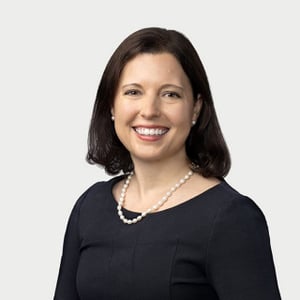
Of Counsel, Gibson Dunn & Crutcher
Amanda H. Neely is of counsel in the Washington, D.C. office of Gibson, Dunn & Crutcher and is a member of the Public Policy, Congressional Investigations, White Collar, and National Security practice groups.
Ms. Neely has extensive experience working on Capitol Hill. She leverages that expertise to advise clients regarding their interactions with Congress and the executive branch. Over the course of ten years, Ms. Neely held several senior staff positions in Congress. She served as Director of Governmental Affairs for the Senate Homeland Security and Governmental Affairs and General Counsel to Senator Rob Portman. Under Senator Portman’s chairmanship, she also served as Deputy Chief Counsel for the Permanent Subcommittee on Investigations. In those roles, she managed Senator Portman’s regulatory reform agenda and led oversight of federal government agencies and investigations into private entities. She previously served in several other Capitol Hill offices including as Oversight Counsel for the House of Representatives Committee on Ways and Means.
Congressional Investigations: At Gibson Dunn, Ms. Neely has represented clients undergoing investigations by numerous congressional committees, including the Senate Permanent Subcommittee on Investigations; Senate Finance Committee; Senate Judiciary Committee; Senate Health, Education, Labor, and Pensions Committee; House Committee on Oversight and Accountability; House Judiciary Committee; and the House Energy and Commerce Committee. In the course of those representations, Ms. Neely assists clients in all stages of investigations, including responding to letter requests and subpoenas to preparing witnesses for interviews, depositions, and congressional hearings. She also has assisted clients appearing before independent commissions such as the Financial Crisis Inquiry Commission and the Commission on Wartime Contracting.
Public Policy: Ms. Neely also works with clients to advance their legislative interests on Capitol Hill by gathering intelligence, formulating strategic plans, and executing lobbying campaigns. In those matters, she has represented a wide range of clients from the fields of technology, healthcare, finance, and energy.
Regulatory Counseling: Ms. Neely regularly advises clients regarding their interests before regulatory agencies. Her expertise in the CHIPS and Science Act allows her to help clients comply with the Department of Commerce’s regulations and assist them in commenting on agency rules and applying for funding. She also works with clients to engage in the rulemaking process at agencies ranging from the Consumer Financial Protection Bureau to the Commodity Futures Trading Commission to the Securities and Exchange Commission.
Ms. Neely also has participated in a variety of litigation matters before state and federal trial and appellate courts, including several class action defense and False Claims Act cases.
Ms. Neely clerked for the Honorable David B. Sentelle, then-Chief Judge of the United States Court of Appeals for the District of Columbia Circuit. She earned her law degree cum laude from Duke University School of Law, where she served as the Articles Editor for both the Alaska Law Review and the Duke Journal of Constitutional Law & Public Policy. She was a member of the Duke Law Moot Court Board and served on the executive board of the Duke Law Federalist Society.
Ms. Neely graduated cum laude from Princeton University, where she majored in English and earned a certificate in Medieval Studies. She served for two years on United States Senator Elizabeth Dole’s staff as a legislative correspondent, focusing on banking, housing, budget, and tax issues. Ms. Neely is admitted to practice law in the District of Columbia and before the United States Courts of Appeals for the District of Columbia Circuit.
Chief Investigative Counsel, U.S. House of Representatives Committee on Oversight and Government Reform
Steve Castor is chief investigative counsel for the U.S. House of Representatives Committee on Oversight and Government Reform under committee Chairman Trey Gowdy (R-SC). He has served on the committee staff since 2005, and during his twelve-year tenure participated in a wide variety of high-profile oversight investigations. Prior to working for Congress, he practiced commercial litigation in Philadelphia and Washington, D.C. He earned his law degree from George Washington University.
Vice President, Networks, The Federalist Society for Law and Public Policy Studies
Nathan Kaczmarek is Vice President for Networks at the Federalist Society. He began his legal career in Detroit representing nationwide clients in all phases of healthcare litigation and complex medical malpractice claims. He has since served as a Senior Legal and Policy Advisor in the U.S. House of Representatives and as Counsel for the Subcommittee on Regulatory Affairs and Federal Management in the U.S. Senate. Prior to overseeing the Networks, he was Director of the Practice Groups, the Regulatory Transparency Project, and the Article I Initiative for the Federalist Society.
Nathan holds degrees from Hillsdale College and Thomas M. Cooley Law School. He is a Liaison Representative for The Administrative Conference of the United States. He also serves as Vice President of the Associates of St. John Bosco, a Virginia based non-profit dedicated to Catholic high school and college students.
Of Counsel, Gibson Dunn & Crutcher
Amanda H. Neely is of counsel in the Washington, D.C. office of Gibson, Dunn & Crutcher and is a member of the Public Policy, Congressional Investigations, White Collar, and National Security practice groups.
Ms. Neely has extensive experience working on Capitol Hill. She leverages that expertise to advise clients regarding their interactions with Congress and the executive branch. Over the course of ten years, Ms. Neely held several senior staff positions in Congress. She served as Director of Governmental Affairs for the Senate Homeland Security and Governmental Affairs and General Counsel to Senator Rob Portman. Under Senator Portman’s chairmanship, she also served as Deputy Chief Counsel for the Permanent Subcommittee on Investigations. In those roles, she managed Senator Portman’s regulatory reform agenda and led oversight of federal government agencies and investigations into private entities. She previously served in several other Capitol Hill offices including as Oversight Counsel for the House of Representatives Committee on Ways and Means.
Congressional Investigations: At Gibson Dunn, Ms. Neely has represented clients undergoing investigations by numerous congressional committees, including the Senate Permanent Subcommittee on Investigations; Senate Finance Committee; Senate Judiciary Committee; Senate Health, Education, Labor, and Pensions Committee; House Committee on Oversight and Accountability; House Judiciary Committee; and the House Energy and Commerce Committee. In the course of those representations, Ms. Neely assists clients in all stages of investigations, including responding to letter requests and subpoenas to preparing witnesses for interviews, depositions, and congressional hearings. She also has assisted clients appearing before independent commissions such as the Financial Crisis Inquiry Commission and the Commission on Wartime Contracting.
Public Policy: Ms. Neely also works with clients to advance their legislative interests on Capitol Hill by gathering intelligence, formulating strategic plans, and executing lobbying campaigns. In those matters, she has represented a wide range of clients from the fields of technology, healthcare, finance, and energy.
Regulatory Counseling: Ms. Neely regularly advises clients regarding their interests before regulatory agencies. Her expertise in the CHIPS and Science Act allows her to help clients comply with the Department of Commerce’s regulations and assist them in commenting on agency rules and applying for funding. She also works with clients to engage in the rulemaking process at agencies ranging from the Consumer Financial Protection Bureau to the Commodity Futures Trading Commission to the Securities and Exchange Commission.
Ms. Neely also has participated in a variety of litigation matters before state and federal trial and appellate courts, including several class action defense and False Claims Act cases.
Ms. Neely clerked for the Honorable David B. Sentelle, then-Chief Judge of the United States Court of Appeals for the District of Columbia Circuit. She earned her law degree cum laude from Duke University School of Law, where she served as the Articles Editor for both the Alaska Law Review and the Duke Journal of Constitutional Law & Public Policy. She was a member of the Duke Law Moot Court Board and served on the executive board of the Duke Law Federalist Society.
Ms. Neely graduated cum laude from Princeton University, where she majored in English and earned a certificate in Medieval Studies. She served for two years on United States Senator Elizabeth Dole’s staff as a legislative correspondent, focusing on banking, housing, budget, and tax issues. Ms. Neely is admitted to practice law in the District of Columbia and before the United States Courts of Appeals for the District of Columbia Circuit.
Emanuel S. Heller Professor of Law, University of California at Berkeley; Thomas Smith Senior Research Fellow, The Civitas Institute, University of Texas at Austin
John Yoo is the Emanuel Heller Professor of Law at the University of California at Berkeley. He is also the Thomas Smith Senior Research Fellow, Civitas Institute, at the University of Texas at Austin. He is also a Nonresident Senior Fellow at the American Enterprise Institute.
His most recent book, The Politically Incorrect Guide to the Supreme Court, co-authored with Robert Delahunty, was published in 2023. Professor Yoo’s other books include Defender-in-Chief: Trump’s Fight for Presidential Power; Striking Power: How Cyber, Robots, and Space Weapons Change the Rules for War; Point of Attack: Preventive War, International Law, and Global Welfare; and Crisis and Command: A History of Executive Power from George Washington to George Bush.
He is a co-author of volumes 1 and 2 of R. Rossum, G. Tarr, V. Munoz & J. Yoo American Constitution Law (Routledge, 2026), and a co-editor of the eight-volume series on the 250th anniversary of the American Revolution, We Hold These Truths, with Yuval Levin and Adam White of the American Enterprise Institute.
Professor Yoo has published more than 100 articles in academic journals on subjects including national security, constitutional law, international law, and the Supreme Court. He also regularly contributes to the editorial pages of the Wall Street Journal, New York Times, Washington Post, Los Angeles Times, and National Review, among others.
Professor Yoo has served in all three branches of government. He was an official in the U.S. Department of Justice, where he worked on national security and terrorism issues after the 9/11 attacks. He served as general counsel of the U.S. Senate Judiciary Committee. He has been a law clerk for Supreme Court Justice Clarence Thomas and federal appeals Judge Laurence Silberman. He has been a visiting professor at the University of Texas at Austin’s School of Civic Leadership, Seoul National University, the Interdisciplinary Center Herzliya, Keio University, Trento University, the University of Chicago, and the Free University of Amsterdam.
Professor Yoo supervises the Public Law and Policy Program and the California Constitution Center. He also serves on the boards of Founding Forward, the Washington Legal Foundation, the Pacific Legal Foundation, the Ulysses Grant Institute, the Federalist Society’s Separation of Powers and Federalism Division, the Universidad Cientifica del Sur Law School, and the Asia-Pacific Law Institute at Seoul National University. He is a winner of the Federalist Society’s Paul Bator award and the Heritage Foundation’s Edwin Meese III Originalism Lectureship.
Professor Yoo graduated from Yale Law School and summa cum laude from Harvard College.
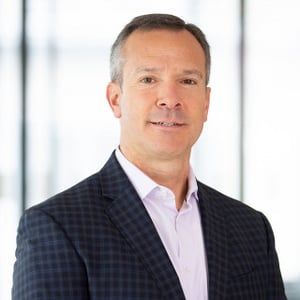
Shareholder, Brownstein Hyatt Farber Schreck, LLP
As co-chair of the firm’s Government Relations Department, Will Moschella leverages his experience in the Justice Department and Congress to counsel clients on a range of matters, including antitrust, financial services, legal reform, intellectual property and criminal law.
Will served at the Justice Department as principal associate deputy attorney general and as assistant attorney general in the Office of Legislative Affairs. In Congress, Will served on the House Judiciary Committee as chief oversight counsel, and chief legislative counsel and parliamentarian. He was involved in numerous high-profile legislative efforts, including the enactment of the Patriot Act, Intelligence Reform and Terrorism Prevention Act, and Prosecutorial Remedies and Other Tools to end the Exploitation of Children Today (PROTECT) Act.
In 2008, Will received the Edmund J. Randolph Award for Outstanding Service, the highest award that can be bestowed on a Justice Department official.

Founder, Law Office of Eileen J. O'Connor PLLC
After nearly 30 years as a national tax specialist with the IRS and major accounting firms, Eileen J. O’Connor, now an attorney in private practice, was Assistant Attorney General for the Justice Department’s Tax Division for six years during the administration of President George W. Bush and a member of then-President-elect Trump’s Treasury Department Transition Team. She focuses on federal administrative and tax law.
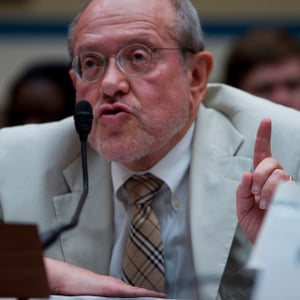
Fellow, The Constitution Project at the Project On Government Oversight
Morton Rosenberg was a senior legal analyst with the Congressional Research Service (CRS) for 35 years specializing in the areas of constitutional law , administrative law and process, congressional practice and procedure, and labor law, and in the problems raised by the interface of Congress and the Executive which involved the scope of congressional oversight and investigative prerogatives, the validity of claims of executive and common law privileges before committees, enforcement of subpoenas, and issues raised by the presidential exercise of temporary and recess appointment. He also served extended details as legal counsel for a special investigative committee and as a legal advisor to the House General Counsel.
Since his retirement from CRS in 2008 he has undertaken a variety of consulting projects and assignments that have tapped into his experience and expertise in constitutional, congressional and administrative law, practice and procedure. This has included an engagement by the Constitution Project to research and write a monograph on congressional investigative oversight in 2009 which was updated and expanded and published in May 2017 entitled "When Congress Comes Calling: A Study on the Principles, Practices. and Pragmatics of Legislative Inquiry." He also served as a consultant to the general counsel of the Public Company Accounting Oversight Board (PCAOB) and its private counsel in the preparation of briefs and for oral argument before the Supreme Court in Free Enterprise Fund v. PCAOB (2010); and in preparing and submitting an amicus brief to the Supreme Court in NLRB v. SW General (2017) which was cited five times by the majority opinion. He is presently of counsel to the law firm Barnett Sivon & Natter, Washington, D.C. and a Constitution Project Fellow.
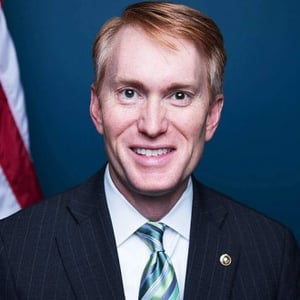
United States Senator from Oklahoma
Senator Lankford of Oklahoma served four years in the U.S. House of Representatives and was elected to the U.S. Senate to complete an unexpired term on November 4, 2014 and re-elected to a full six-year senate term on November 8, 2016.
As chairman of the Senate Subcommittee on Regulatory Affairs and Federal Management, Lankford fights unnecessary and burdensome regulation and advocates for a more restrained federal government.
Personal faith, local decision-making, and opportunity for every person, regardless of their background, are core values for Senator Lankford. Before his time in Congress, from 1995 to 2009, the Senator served as Director of Student Ministry at the Baptist Convention of Oklahoma and Director of the Falls Creek Youth Camp, the largest youth camp in the United States, with more than 51,000 individuals attending each summer.
Committee Assignments:
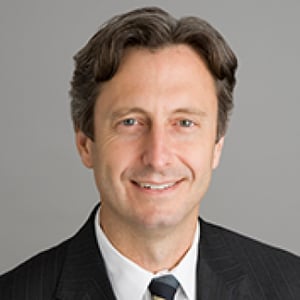
Partner, Gibson Dunn & Crutcher LLP
Michael Bopp is a partner in the Washington, D.C. office of Gibson, Dunn & Crutcher. He is Chair of the Public Policy Practice Group and a member of the Firm’s White Collar Defense and Investigations and Crisis Management Practice Groups, where he chairs the firm’s Congressional Investigations Subgroup. He also chairs the firm’s Financial Markets Crisis Group, a multi-disciplinary group formed to address client concerns stemming from the credit and capital markets crisis. Mr. Bopp’s practice focuses on congressional, internal corporate, and other government investigations, public policy consulting in a variety of fields, and managing and responding to major crises involving multiple government agencies and branches.
From 2006-2008, Mr. Bopp served as Associate Director of OMB and was responsible for overseeing budgets and coordinating regulatory, legislative, and other policy for approximately $150 billion worth of spending for various government agencies, including the Departments of Treasury, Homeland Security, Transportation, Justice, Housing and Urban Development, and Commerce, the General Services Administration, the U.S. Securities and Exchange Commission and the Commodity Futures Trading Commission.
From 2003 to 2006, he served as Staff Director and Chief Counsel of the Committee on Homeland Security and Governmental Affairs, one of the Senate's largest committees and most expansive in terms of jurisdiction. He oversaw more than 100 hearings, led numerous investigations and was a primary drafter of key legislation, including the Intelligence Reform and Terrorism Prevention Act of 2004, the most significant reform of the intelligence community in more than 50 years, and 2006 legislation strengthening port security and overhauling the Federal Emergency Management Agency. He also directed a 50-person investigation of the failure of preparations and response to Hurricane Katrina. The investigation included 22 hearings, 325 witnesses, more than 800,000 pages of documents and an 800 page report.
Mr. Bopp served as Legislative Director and General Counsel to Senator Susan Collins of Maine from 1999 to 2003. He was Chief Counsel to the Subcommittee on Oversight and Investigations of the Committee on Education and the Workforce in the U.S. House of Representatives from 1998 to 1999, where he investigated alleged improper activities undertaken by Teamsters' officials. Before that, he worked on the Congressional investigation of campaign finance abuses as senior investigative counsel to the House Committee on Government Reform and Oversight and as counsel for the Senate Committee on Governmental Affairs. He also previously served as counsel on the Senate Permanent Subcommittee on Investigations. Mr. Bopp served as outside general counsel to the campaign to re-elect Senator Susan Collins.
Mr. Bopp received his law degree cum laude in 1992 from Harvard Law School where he was Articles Editor on the Journal of Law and Public Policy. He graduated magna cum laude, with honors, in public policy from Brown University in 1987.
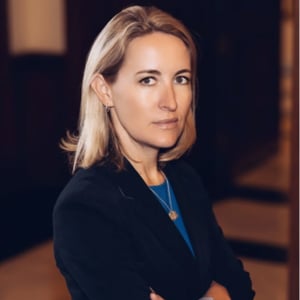
Founder, Quell Strategies
Machalagh Carr is a trusted and strategic counselor with decades of private sector and government experience. She has nimbly navigated the intersection of congressional investigations and oversight, law, geopolitics, and policy, most recently as the top staffer in Article I as Chief of Staff to Speaker of the House Kevin McCarthy.
Prior to her role as Chief of Staff, she served as General Counsel for the Speaker and Office of the Republican Leader at the U.S. House of Representatives. Previously, she served as General Counsel & Parliamentarian for the Committee on Ways and Means, where she handled all legal and procedural issues for the Committee. Before that, she was the Oversight Staff Director at the Committee where she led the investigations and oversight of all issues within the Committee’s jurisdiction. Prior to joining Ways and Means, she served as the Director of Oversight and Investigations for the Committee on Oversight and Government Reform and as Senior Oversight Counsel at the Committee on Natural Resources.
Previously, Machalagh served in the Office of Global Compliance of an international energy company where she conducted internal anti-corruption investigations, audits, and compliance reviews for the company. Before her in-house experience she practiced in the Litigation, White Collar, and Government Investigations Group at Sonnenschein Nath and Rosenthal LLP (now Dentons). Directly after law school, Machalagh clerked for the Chief Judge of the U.S. Court of Appeals for the Armed Forces.
She taught Trial Practice at Catholic University of America, Columbus School of Law and lives in Virginia with her husband and three sons.
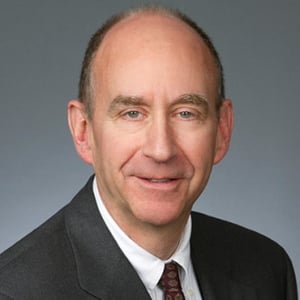
Partner, Kirkland & Ellis LLP
Neil Eggleston is a litigation partner in the Washington, D.C. office of Kirkland & Ellis LLP.
Neil has a distinguished record of public service, and has held a number of senior government roles. He was White House Counsel to President Obama from 2014 to 2017, and advised the president on all legal and constitutional issues across a broad spectrum of domestic and foreign policy matters. Neil’s practice focuses on enforcement defense including at the U.S. Department of Justice (DOJ), U.S. Securities and Exchange Commission (SEC), U.S. Attorney’s Offices, and other enforcement agencies.
Earlier in his career, Neil served as Associate Counsel to President Clinton from 1993 to 1994. Heals o served as Deputy Chief Counsel, U.S. House of Representatives Select Committee Investigating the Iran/Contra Affair (1987-1988); Assistant U.S. Attorney (1981-1987); and Chief Appellate Attorney for the Southern District of New York (1986-1987).
Neil served as a law clerk for the United States Court of Appeals for the Third Circuit (1978-1979) and for Chief Justice Warren E. Burger on the United States Supreme Court (1979-1980).
Neil teaches a seminar in Presidential Power at Harvard Law School in the spring of 2017, 2019, 2020, and 2021 and at Yale Law School in the spring of 2018. He also frequently lectures at American Bar Association and similar seminars.
Of Counsel, Gibson Dunn & Crutcher
Amanda H. Neely is of counsel in the Washington, D.C. office of Gibson, Dunn & Crutcher and is a member of the Public Policy, Congressional Investigations, White Collar, and National Security practice groups.
Ms. Neely has extensive experience working on Capitol Hill. She leverages that expertise to advise clients regarding their interactions with Congress and the executive branch. Over the course of ten years, Ms. Neely held several senior staff positions in Congress. She served as Director of Governmental Affairs for the Senate Homeland Security and Governmental Affairs and General Counsel to Senator Rob Portman. Under Senator Portman’s chairmanship, she also served as Deputy Chief Counsel for the Permanent Subcommittee on Investigations. In those roles, she managed Senator Portman’s regulatory reform agenda and led oversight of federal government agencies and investigations into private entities. She previously served in several other Capitol Hill offices including as Oversight Counsel for the House of Representatives Committee on Ways and Means.
Congressional Investigations: At Gibson Dunn, Ms. Neely has represented clients undergoing investigations by numerous congressional committees, including the Senate Permanent Subcommittee on Investigations; Senate Finance Committee; Senate Judiciary Committee; Senate Health, Education, Labor, and Pensions Committee; House Committee on Oversight and Accountability; House Judiciary Committee; and the House Energy and Commerce Committee. In the course of those representations, Ms. Neely assists clients in all stages of investigations, including responding to letter requests and subpoenas to preparing witnesses for interviews, depositions, and congressional hearings. She also has assisted clients appearing before independent commissions such as the Financial Crisis Inquiry Commission and the Commission on Wartime Contracting.
Public Policy: Ms. Neely also works with clients to advance their legislative interests on Capitol Hill by gathering intelligence, formulating strategic plans, and executing lobbying campaigns. In those matters, she has represented a wide range of clients from the fields of technology, healthcare, finance, and energy.
Regulatory Counseling: Ms. Neely regularly advises clients regarding their interests before regulatory agencies. Her expertise in the CHIPS and Science Act allows her to help clients comply with the Department of Commerce’s regulations and assist them in commenting on agency rules and applying for funding. She also works with clients to engage in the rulemaking process at agencies ranging from the Consumer Financial Protection Bureau to the Commodity Futures Trading Commission to the Securities and Exchange Commission.
Ms. Neely also has participated in a variety of litigation matters before state and federal trial and appellate courts, including several class action defense and False Claims Act cases.
Ms. Neely clerked for the Honorable David B. Sentelle, then-Chief Judge of the United States Court of Appeals for the District of Columbia Circuit. She earned her law degree cum laude from Duke University School of Law, where she served as the Articles Editor for both the Alaska Law Review and the Duke Journal of Constitutional Law & Public Policy. She was a member of the Duke Law Moot Court Board and served on the executive board of the Duke Law Federalist Society.
Ms. Neely graduated cum laude from Princeton University, where she majored in English and earned a certificate in Medieval Studies. She served for two years on United States Senator Elizabeth Dole’s staff as a legislative correspondent, focusing on banking, housing, budget, and tax issues. Ms. Neely is admitted to practice law in the District of Columbia and before the United States Courts of Appeals for the District of Columbia Circuit.
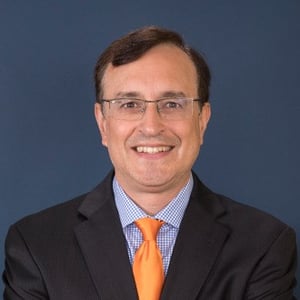
President, Center for Individual Rights
Todd Gaziano is the President of the Center for Individual Rights. Mr. Gaziano received his J.D. in 1988 from the University of Chicago Law School, where he was a John M. Olin Fellow in Law and Economics. He received his B.A. from West Virginia University, summa cum laude in 1985. He was selected as a Truman Scholar from West Virginia while an undergraduate.
Mr. Gaziano’s previous legal work includes service as a law clerk for U.S. Court of Appeals for the Fifth Circuit Judge Edith Jones, as an attorney in the U.S. Department of Justice Office of Legal Counsel, as a chief subcommittee counsel in the U.S. House of Representatives, as a Houston trial attorney, and as a chief corporate legal officer. He also served a six-year term as commissioner on the U.S. Commission on Civil Rights (2008-2013), where he helped conduct oversight and investigations of civil rights agencies.
For most of the last 25 years, Mr. Gaziano was a legal scholar and public interest law leader, promoting individual liberty in the Supreme Court and Congress. From 1997 to 2013, he was the founding director of the Edwin Meese Center for Legal and Judicial Studies at The Heritage Foundation. From 2014 until he joined CIR, he was the Chief of Legal Policy and Strategic Research, and Director of the Center for the Separation of Powers, at Pacific Legal Foundation.
Chief Investigative Counsel, U.S. House of Representatives Committee on Oversight and Government Reform
Steve Castor is chief investigative counsel for the U.S. House of Representatives Committee on Oversight and Government Reform under committee Chairman Trey Gowdy (R-SC). He has served on the committee staff since 2005, and during his twelve-year tenure participated in a wide variety of high-profile oversight investigations. Prior to working for Congress, he practiced commercial litigation in Philadelphia and Washington, D.C. He earned his law degree from George Washington University.
Vice President, Networks, The Federalist Society for Law and Public Policy Studies
Nathan Kaczmarek is Vice President for Networks at the Federalist Society. He began his legal career in Detroit representing nationwide clients in all phases of healthcare litigation and complex medical malpractice claims. He has since served as a Senior Legal and Policy Advisor in the U.S. House of Representatives and as Counsel for the Subcommittee on Regulatory Affairs and Federal Management in the U.S. Senate. Prior to overseeing the Networks, he was Director of the Practice Groups, the Regulatory Transparency Project, and the Article I Initiative for the Federalist Society.
Nathan holds degrees from Hillsdale College and Thomas M. Cooley Law School. He is a Liaison Representative for The Administrative Conference of the United States. He also serves as Vice President of the Associates of St. John Bosco, a Virginia based non-profit dedicated to Catholic high school and college students.
Of Counsel, Gibson Dunn & Crutcher
Amanda H. Neely is of counsel in the Washington, D.C. office of Gibson, Dunn & Crutcher and is a member of the Public Policy, Congressional Investigations, White Collar, and National Security practice groups.
Ms. Neely has extensive experience working on Capitol Hill. She leverages that expertise to advise clients regarding their interactions with Congress and the executive branch. Over the course of ten years, Ms. Neely held several senior staff positions in Congress. She served as Director of Governmental Affairs for the Senate Homeland Security and Governmental Affairs and General Counsel to Senator Rob Portman. Under Senator Portman’s chairmanship, she also served as Deputy Chief Counsel for the Permanent Subcommittee on Investigations. In those roles, she managed Senator Portman’s regulatory reform agenda and led oversight of federal government agencies and investigations into private entities. She previously served in several other Capitol Hill offices including as Oversight Counsel for the House of Representatives Committee on Ways and Means.
Congressional Investigations: At Gibson Dunn, Ms. Neely has represented clients undergoing investigations by numerous congressional committees, including the Senate Permanent Subcommittee on Investigations; Senate Finance Committee; Senate Judiciary Committee; Senate Health, Education, Labor, and Pensions Committee; House Committee on Oversight and Accountability; House Judiciary Committee; and the House Energy and Commerce Committee. In the course of those representations, Ms. Neely assists clients in all stages of investigations, including responding to letter requests and subpoenas to preparing witnesses for interviews, depositions, and congressional hearings. She also has assisted clients appearing before independent commissions such as the Financial Crisis Inquiry Commission and the Commission on Wartime Contracting.
Public Policy: Ms. Neely also works with clients to advance their legislative interests on Capitol Hill by gathering intelligence, formulating strategic plans, and executing lobbying campaigns. In those matters, she has represented a wide range of clients from the fields of technology, healthcare, finance, and energy.
Regulatory Counseling: Ms. Neely regularly advises clients regarding their interests before regulatory agencies. Her expertise in the CHIPS and Science Act allows her to help clients comply with the Department of Commerce’s regulations and assist them in commenting on agency rules and applying for funding. She also works with clients to engage in the rulemaking process at agencies ranging from the Consumer Financial Protection Bureau to the Commodity Futures Trading Commission to the Securities and Exchange Commission.
Ms. Neely also has participated in a variety of litigation matters before state and federal trial and appellate courts, including several class action defense and False Claims Act cases.
Ms. Neely clerked for the Honorable David B. Sentelle, then-Chief Judge of the United States Court of Appeals for the District of Columbia Circuit. She earned her law degree cum laude from Duke University School of Law, where she served as the Articles Editor for both the Alaska Law Review and the Duke Journal of Constitutional Law & Public Policy. She was a member of the Duke Law Moot Court Board and served on the executive board of the Duke Law Federalist Society.
Ms. Neely graduated cum laude from Princeton University, where she majored in English and earned a certificate in Medieval Studies. She served for two years on United States Senator Elizabeth Dole’s staff as a legislative correspondent, focusing on banking, housing, budget, and tax issues. Ms. Neely is admitted to practice law in the District of Columbia and before the United States Courts of Appeals for the District of Columbia Circuit.
Emanuel S. Heller Professor of Law, University of California at Berkeley; Thomas Smith Senior Research Fellow, The Civitas Institute, University of Texas at Austin
John Yoo is the Emanuel Heller Professor of Law at the University of California at Berkeley. He is also the Thomas Smith Senior Research Fellow, Civitas Institute, at the University of Texas at Austin. He is also a Nonresident Senior Fellow at the American Enterprise Institute.
His most recent book, The Politically Incorrect Guide to the Supreme Court, co-authored with Robert Delahunty, was published in 2023. Professor Yoo’s other books include Defender-in-Chief: Trump’s Fight for Presidential Power; Striking Power: How Cyber, Robots, and Space Weapons Change the Rules for War; Point of Attack: Preventive War, International Law, and Global Welfare; and Crisis and Command: A History of Executive Power from George Washington to George Bush.
He is a co-author of volumes 1 and 2 of R. Rossum, G. Tarr, V. Munoz & J. Yoo American Constitution Law (Routledge, 2026), and a co-editor of the eight-volume series on the 250th anniversary of the American Revolution, We Hold These Truths, with Yuval Levin and Adam White of the American Enterprise Institute.
Professor Yoo has published more than 100 articles in academic journals on subjects including national security, constitutional law, international law, and the Supreme Court. He also regularly contributes to the editorial pages of the Wall Street Journal, New York Times, Washington Post, Los Angeles Times, and National Review, among others.
Professor Yoo has served in all three branches of government. He was an official in the U.S. Department of Justice, where he worked on national security and terrorism issues after the 9/11 attacks. He served as general counsel of the U.S. Senate Judiciary Committee. He has been a law clerk for Supreme Court Justice Clarence Thomas and federal appeals Judge Laurence Silberman. He has been a visiting professor at the University of Texas at Austin’s School of Civic Leadership, Seoul National University, the Interdisciplinary Center Herzliya, Keio University, Trento University, the University of Chicago, and the Free University of Amsterdam.
Professor Yoo supervises the Public Law and Policy Program and the California Constitution Center. He also serves on the boards of Founding Forward, the Washington Legal Foundation, the Pacific Legal Foundation, the Ulysses Grant Institute, the Federalist Society’s Separation of Powers and Federalism Division, the Universidad Cientifica del Sur Law School, and the Asia-Pacific Law Institute at Seoul National University. He is a winner of the Federalist Society’s Paul Bator award and the Heritage Foundation’s Edwin Meese III Originalism Lectureship.
Professor Yoo graduated from Yale Law School and summa cum laude from Harvard College.

William J. Colwell, Jr. Memorial Teleforum: Security Clearances - Executive Discretion or Executive Overreach?
Paul Khoury, Dakota Rudesill, Robert F. Turner
We are honoring William “Bill” Colwell with a teleforum on a topic we know he...
Panel I: Can the Other Branches Help Restore Congress?
David Hoppe, Thomas G. Hungar, Nathan Kaczmarek, Sally Katzen, Philip A. Wallach, Peter J. Wallison
On February 6, 2019, the Federalist Society's Article I Initiative and the Georgetown Student Chapter...
Necessary & Proper Episode 34: The New Congress and Congressional Oversight
Steve Castor, John C. Yoo, Amanda H. Neely
On December 11, 2018, the Federalist Society's Capitol Hill Chapter and Article I Initiative cosponsored...
The New Congress and Congressional Oversight
Steve Castor, Nathan Kaczmarek, Amanda H. Neely, John C. Yoo
With the election of the 116th Congress there are many interesting aspects of the intersection...
The New Congress and Congressional Oversight
Steve Castor, Nathan Kaczmarek, Amanda H. Neely, John C. Yoo
With the election of the 116th Congress there are many interesting aspects of the intersection...
The New Congress and Congressional Oversight
Co-sponsored by the Article I Initiative and the Capitol Hill Chapter
Washington, DCBalancing Executive and Legislative Branch Interests in Congressional Oversight
William Moschella, Eileen J. O'Connor, Morton Rosenberg
One might expect that by now the Legislative and Executive Branches would have worked out...
Senate Rules, Budget, and Appropriations Reform
James Lankford
Since the passage of the The 1974 Congressional Budget and Impoundment Control Act, Congress has...
Checking the Executive: The Importance of Congressional Oversight
Michael D. Bopp, Machalagh Carr, W. Neil Eggleston, Amanda H. Neely
The Constitution does not explicitly grant Congress the authority to conduct inquiries or investigations of...
What Can Congress Do to Reassert Its Power Over Agencies?
Todd F. Gaziano
Should Congress assert more power over agencies or continue to delegate? Should Congress rely more...