
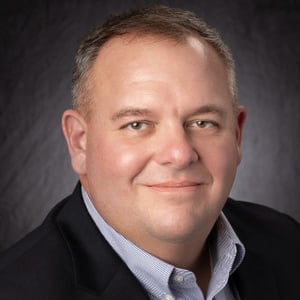
Legal Director, Foundation for Government Accountability
David is the Legal Director at the Foundation for Government Accountability.
Prior to joining FGA, he was an attorney in private practice and a legal researcher for a pro-freedom think tank. He previously served in the Wisconsin legislature as a member of both the State Assembly and the State Senate while also working in his family’s real estate firm. In addition to state service, David worked as an aide for U.S. Congressman Paul Ryan. He holds a Bachelor of Arts in Political Science from the University of Wisconsin-Milwaukee and a Juris Doctor from Mitchell Hamline School of Law. He is a member of the Wisconsin State Bar.
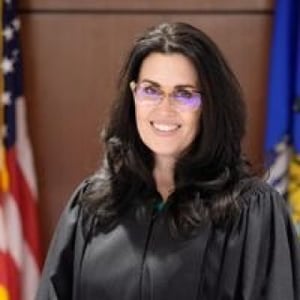
Judge, Waukesha County Circuit Court
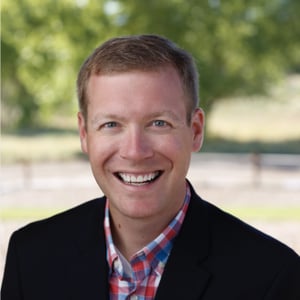
President, Center for American Rights
Daniel Suhr serves as president of the Center for American Rights, where he spends every day on the front lines of the fight to preserve our rights and liberties. The Center's mission is to advance free speech, free enterprise, and parental freedom in education through strategic, precedent-setting litigation.
Daniel formerly worked as policy director for Wisconsin Governor Scott Walker, as chief of staff for Wisconsin Lieutenant Governor Rebecca Kleefisch, and as a law clerk for Judge Diane Sykes of the U.S. Court of Appeals for the Seventh Circuit. He holds a B.A. and J.D. from Marquette University, and master’s degrees from Georgetown and the University of Missouri.
Associate Professor, University of Wisconsin-Madison
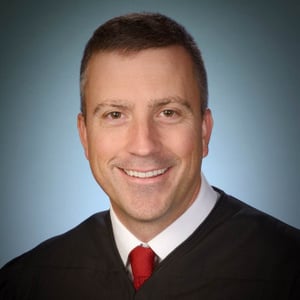
Judge, United States District Court, District of Columbia
Judge Trevor N. McFadden was appointed to the United States District Court for the District of Columbia in 2017. He received his B.A. in 2001 from Wheaton College, IL, magna cum laude. In 2006, he received his J.D. from the University of Virginia School of Law, where he graduated Order of the Coif and was an editor for the Virginia Law Review.
Following graduation from law school, Judge McFadden clerked for Judge Steven Colloton, U.S. Court of Appeals for the Eighth Circuit. He then joined the U.S. Department of Justice, where he served as Counsel to the Deputy Attorney General and as Assistant U.S. Attorney in the District of Columbia. Judge McFadden subsequently became a partner at Baker & McKenzie LLP in Washington, DC, where he focused on white collar investigations. He is also co-author of a treatise, Corporate Settlement Tools: DPAs, NPAs, and Cooperation Agreements.
After four years in private practice, Judge McFadden returned to the U.S. Department of Justice, where he was Deputy Assistant Attorney General and acted as the second-in-command of the Department's Criminal Division. As Deputy Assistant Attorney General, he managed the Division's Fraud and Appellate Sections.
Judge McFadden also has extensive experience in law enforcement. He served as an officer with the Fairfax County, VA, Police Department and as a deputy sheriff in Madison County, VA.

Professor of Law, University of Baltimore Law School
Kimberly Wehle (formerly Kimberly N. Brown) joined the law school after several years of teaching as an Associate Professor at the University of Oklahoma College of Law and a Visiting Professor at the George Washington University Law School. She teaches and writes in the areas of administrative law, federal courts and civil procedure. She is particularly interested in separation of powers questions, as well as in the constitutional implications of structural and technological innovations in modern government.
Wehle is the author of three books that explain complex constitutional concepts for lay audiences. She is a contributor for BBC World News and BBC World News America on PBS, and an opinion contributor to The Atlantic, Politico, The Bulwark and The Hill. She was an on-air legal analyst and commentator for CBS News. In addition, she appears regularly as a guest legal analyst on constitutional topics such as separation of powers and impeachment with outlets including CNN, MSNBC, NPR’s Morning Edition, PBS NewsHour and Fox News. Her articles have also appeared in The Baltimore Sun, The Los Angeles Times, and NBC News Think. She is regularly interviewed and cited by prominent print journalists on a range of newsworthy legal issues.
She hosts a show on Instagram called #SimplePolitics with Kim Wehle at @kimwehle. She also tweets @kimwehle. She is the 2020 recipient of the prestigious University of Maryland System Board of Regents Faculty Award for excellence in scholarship.
Wehle's scholarship addresses the constitutional relationship of independent agencies and private contractors to the enumerated branches of government. Her articles have appeared in the Notre Dame Law Review, the Indiana Law Journal and the North Carolina Law Review, among others, and her work is cited in a leading federal courts casebook.
Wehle was an editor of the Michigan Law Review and clerked for the Hon. Charles R. Richey of the United States District Court for the District of Columbia. She went on to practice, first at the Federal Trade Commission and subsequently as an Associate Independent Counsel in the Office of Independent Counsel Kenneth W. Starr, and as an Assistant U.S. Attorney in the Civil Division of the Office of the United States Attorney in Washington, D.C.
She has practiced before the United States Supreme Court and argued several cases in the United States Court of Appeals for the D.C. Circuit.
Wehle is also an advisor to the nonpartisan nonprofit, Protect Democracy.
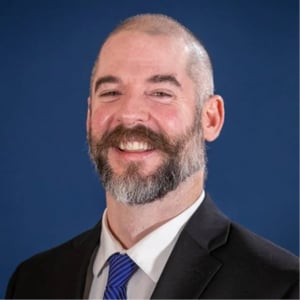
Deputy Director, Regulatory Studies Center, George Washington University
Will Yeatman is deputy director of the GW Regulatory Studies Center. A lawyer, he has spent almost two decades working on federal regulatory policy, with an emphasis on administrative law.
Yeatman has testified many times before Congress and state legislatures, and his scholarly work has appeared in such academic journals as Georgetown Law Journal, Administrative Law Review, and the (forthcoming) Catholic University Law Review. His popular writing has appeared in The Wall Street Journal, Foreign Policy, and Bloomberg.
Yeatman came to the RSC from the Pacific Legal Foundation. Previously, he had been at the Cato Institute’s Center for Constitutional Studies and the Competitive Enterprise Institute. From 2004 to 2006, he served as a Peace Corps volunteer in the Kyrgyz Republic.
Yeatman holds a BA in environmental sciences from the University of Virginia, an MA in international studies from the Denver University Graduate School of International Studies, and a JD from the Georgetown University Law Center. He is a member of the Washington, DC Bar.
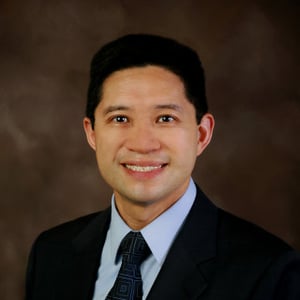
Founder, Original Jurisdiction
David Lat is a lawyer turned writer. He publishes Original Jurisdiction, a newsletter on Substack about law and legal affairs, and he writes for newspapers and magazines, including the New York Times, Washington Post, and Wall Street Journal. Prior to launching Original Jurisdiction, David founded Above the Law, one of the nation's most widely read legal news websites, and Underneath Their Robes, a popular blog about federal judges that he wrote under a pseudonym. He is also the author of a novel set in the world of the federal courts, Supreme Ambitions. Before entering the media world, David worked as a federal prosecutor in Newark, New Jersey; a litigation associate at Wachtell, Lipton, Rosen & Katz, in New York; and a law clerk to Judge Diarmuid F. O’Scannlain of the U.S. Court of Appeals for the Ninth Circuit. David graduated from Harvard College and Yale Law School, where he served as an editor of the Yale Law Journal.
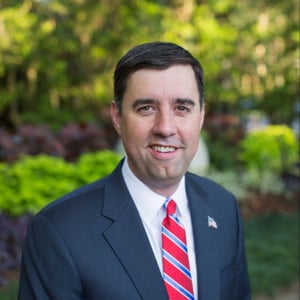
Associate Justice, Alabama Supreme Court
James L. “Jay” Mitchell was elected to the Alabama Supreme Court in 2018.
Prior to serving on the Supreme Court, Justice Mitchell was an accomplished litigation attorney with Maynard, Cooper & Gale, P.C. During his time in private practice, he tried a number of complex cases to verdict, successfully handled appeals, and obtained favorable settlements for clients. He was rated as one of the top litigators in the United States and Alabama, and received the highest possible rating for professional ethics. He also served on Maynard, Cooper & Gale’s executive committee, helping to lead strategic and growth initiatives for the firm.
Justice Mitchell was born in Mobile and grew up in South Alabama and in Homewood. He is a graduate of Homewood High School and received his Bachelor of Arts with honors from Birmingham-Southern College, where he graduated Phi Beta Kappa, served as president of the student body, and played forward on the school’s 1995 national championship basketball team. He holds a Master of Arts from University College in Dublin, Ireland, and received his law degree from the University of Virginia School of Law.
Justice Mitchell has long been active in organizations that benefit the community and enhance the legal profession. In addition to his service with other organizations, he is a member of the Rotary Club of Birmingham and serves on the board of directors at Cornerstone School, an inner city Christian school. He is also a member of the Federalist Society.
Justice Mitchell and his wife, Elizabeth, have been married for 20 years and have four children. They reside in Homewood and are longtime members of Church of the Highlands.

President, JCN
Carrie Campbell Severino is the president of the JCN, and co-author with Mollie Hemingway of the bestselling book Justice on Trial: The Kavanaugh Confirmation and the Future of the Court. As a go-to expert on the confirmation process, Mrs. Severino has been extensively quoted in the media. She regularly appears on television, including FOX, CNN, MSNBC, C-SPAN, and ABC’s This Week.
Severino writes and speaks on a wide range of judicial issues, including the constitutional limits on government, the federal nomination process, and state judicial selection. She has testified before Congress on constitutional questions and briefed Senators on judicial nominations, and regularly files briefs in high-profile Supreme Court cases. She was a law clerk to Supreme Court Justice Clarence Thomas and to Judge David B. Sentelle of the U.S. Court of Appeals for the D.C. Circuit, and is a graduate of Harvard Law School (J.D.), Duke University (B.A., Biology), and Michigan State University (M.A., Linguistics).

Judge, United States Court of Appeals, Eighth Circuit
David Stras became a judge on the United States Court of Appeals for the Eighth Circuit on January 31, 2018. Before serving on the Eighth Circuit, Judge Stras was an Associate Justice of the Minnesota Supreme Court, a position he occupied from July 1, 2010 until his appointment to the Eighth Circuit.
Prior to becoming a judge, Stras was a member of the faculty of the University of Minnesota Law School from 2004 through 2010. He taught and wrote in the areas of federal courts and jurisdiction, constitutional law, criminal law, and law and politics.
Judge Stras received his Bachelor of Arts degree, with highest distinction, in 1995 and his Master of Business Administration in 1999, both from the University of Kansas. He also received his law degree from the University of Kansas School of Law in 1999, where he served as Editor-in-Chief of the Criminal Procedure Edition of the Kansas Law Review.
Following law school, Stras clerked for The Honorable Melvin Brunetti of the United States Court of Appeals for the Ninth Circuit and then for The Honorable J. Michael Luttig of the United States Court of Appeals for the Fourth Circuit.
From 2001 to 2002, he practiced white-collar criminal and appellate litigation with the Washington, D.C., office of Sidley Austin Brown & Wood. Following his year in practice, he clerked for The Honorable Clarence Thomas of the Supreme Court of the United States.
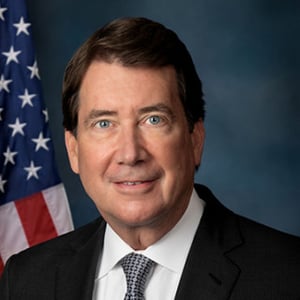
United States Senator, Tennessee
United States Senator Bill Hagerty was elected to the U.S. Senate in 2020 and is currently serving his first term representing the state of Tennessee. His committee assignments include: U.S. Senate Committee on Banking, Housing, & Urban Affairs; U.S. Senate Committee on Foreign Relations; U.S. Senate Committee on Appropriations; and the U.S. Senate Committee on Rules & Administration. Prior to his election to the U.S. Senate, Hagerty served as the U.S. Ambassador to Japan.
Hagerty is a life-long businessman. He started his business career with the Boston Consulting Group, where his work took him to five continents, including three years based in Tokyo, Japan. He later became a venture capital and private equity investor where he invested in and served as an executive and board member of a wide range of companies, including ones listed on the New York Stock Exchange and NASDAQ. From 2011 to 2014, Hagerty took leave from his business career to serve as a member of the Governor’s Cabinet and Commissioner of the Tennessee Department of Economic and Community Development.
Hagerty, an Eagle Scout, is originally from Sumner County, Tennessee. Today, he and his wife Chrissy are both active volunteers in several community and civic organizations, and live in Davidson County, Tennessee. They are the parents of four children.
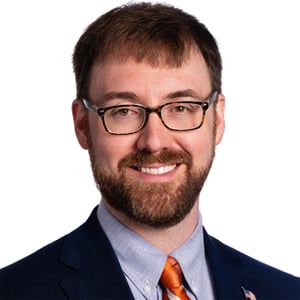
Senior Legal Fellow, Courts and the Constitution, Legal Policy Center, The Heritage Foundation
Zack is a Senior Legal Fellow of Courts and the Constitution at The Heritage Foundation.
He previously served for several years as an Assistant United States Attorney in the Northern District of Florida. Prior to that, he spent two years as an associate in the Washington, D.C. office of Cleary Gottlieb Steen & Hamilton, which he joined after clerking for the Hon. Emmett R. Cox on the United States Court of Appeals for the Eleventh Circuit.
Smith received his undergraduate, master’s, and law degrees from the University of Florida. During law school, Smith served as the Editor in Chief of the Florida Law Review and served on the executive boards of several student organizations, including the UF Chapter of the Federalist Society.
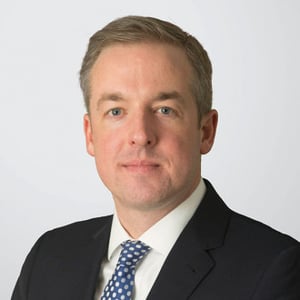
Chief Oversight Counsel, Senate Committee on Finance
Chris Armstrong is Deputy Chief Oversight Counsel to Chairman Orrin G. Hatch on the Senate Committee on Finance. He previously worked for Chairman Dave Camp on the House Committee on Ways and Means and Senator Charles E. Grassley. He serves on the Executive Committee of the Federalist Society’s Federalism & Separation of Powers Practice Group. The views expressed herein are the author’s own, and do not necessarily reflect those of Chairman Hatch or the Finance Committee.
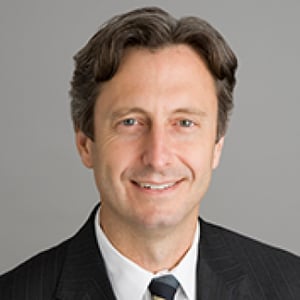
Partner, Gibson Dunn & Crutcher LLP
Michael Bopp is a partner in the Washington, D.C. office of Gibson, Dunn & Crutcher. He is Chair of the Public Policy Practice Group and a member of the Firm’s White Collar Defense and Investigations and Crisis Management Practice Groups, where he chairs the firm’s Congressional Investigations Subgroup. He also chairs the firm’s Financial Markets Crisis Group, a multi-disciplinary group formed to address client concerns stemming from the credit and capital markets crisis. Mr. Bopp’s practice focuses on congressional, internal corporate, and other government investigations, public policy consulting in a variety of fields, and managing and responding to major crises involving multiple government agencies and branches.
From 2006-2008, Mr. Bopp served as Associate Director of OMB and was responsible for overseeing budgets and coordinating regulatory, legislative, and other policy for approximately $150 billion worth of spending for various government agencies, including the Departments of Treasury, Homeland Security, Transportation, Justice, Housing and Urban Development, and Commerce, the General Services Administration, the U.S. Securities and Exchange Commission and the Commodity Futures Trading Commission.
From 2003 to 2006, he served as Staff Director and Chief Counsel of the Committee on Homeland Security and Governmental Affairs, one of the Senate's largest committees and most expansive in terms of jurisdiction. He oversaw more than 100 hearings, led numerous investigations and was a primary drafter of key legislation, including the Intelligence Reform and Terrorism Prevention Act of 2004, the most significant reform of the intelligence community in more than 50 years, and 2006 legislation strengthening port security and overhauling the Federal Emergency Management Agency. He also directed a 50-person investigation of the failure of preparations and response to Hurricane Katrina. The investigation included 22 hearings, 325 witnesses, more than 800,000 pages of documents and an 800 page report.
Mr. Bopp served as Legislative Director and General Counsel to Senator Susan Collins of Maine from 1999 to 2003. He was Chief Counsel to the Subcommittee on Oversight and Investigations of the Committee on Education and the Workforce in the U.S. House of Representatives from 1998 to 1999, where he investigated alleged improper activities undertaken by Teamsters' officials. Before that, he worked on the Congressional investigation of campaign finance abuses as senior investigative counsel to the House Committee on Government Reform and Oversight and as counsel for the Senate Committee on Governmental Affairs. He also previously served as counsel on the Senate Permanent Subcommittee on Investigations. Mr. Bopp served as outside general counsel to the campaign to re-elect Senator Susan Collins.
Mr. Bopp received his law degree cum laude in 1992 from Harvard Law School where he was Articles Editor on the Journal of Law and Public Policy. He graduated magna cum laude, with honors, in public policy from Brown University in 1987.
General Counsel, Office of Speaker Mike Johnson
Ashley Callen has served in the legislative and executive branches for nearly 25 years. Currently, she serves as General Counsel to Speaker Mike Johnson. Prior to her current role, she was General Counsel to Majority Leader Steve Scalise. She got to know Leader Scalise during the 117th Congress serving as the top staffer on the Select Subcommittee on the Coronavirus Crisis as well as serving then-Ranking Member James Comer as Deputy Staff Director of the Oversight and Reform Committee. Ashley has also served as a top oversight and investigations staffer at the House Agriculture Committee (Chairman Mike Conaway), the Science Space and Technology Committee (Chairman Lamar Smith), and the House Judiciary Committee (Ranking Member Doug Collins). She began her career on the Senate side working for her home state senator, Strom Thurmond. After the Senator retired in 2003, Ashley worked for the Air Force General Counsel’s Office. Ashley earned her BA in English at the University of South Carolina and her JD at the Antonin Scalia Law School. She lives in Arlington, VA with her husband and three children
Chief Investigative Counsel, Senate Finance Subcommittee
Partner, Kirkland & Ellis LLP
Allison Murphy is a partner in the Government, Regulatory & Internal Investigations Practice Group in the Washington, D.C., office of Kirkland & Ellis LLP.
Allison has been a legal and strategic counselor on high-profile investigations with broad reach across the government and private sector, including as White House Associate Counsel under President Obama. She has managed congressional investigations from all angles. Most recently, Allison was Chief Oversight Counsel of the House Select Subcommittee on the Coronavirus Crisis, Majority Staff. She also served in the Senate as Counsel for the Permanent Subcommittee on Investigations. Previously, Allison was Attorney Advisor to the Federal Energy Regulatory Commission’s Division of Enforcement. She began her legal career as an associate at Wilmer Cutler Pickering Hale & Dorr.
Former United States Attorney General
William P. Barr was born on May 23, 1950 in New York City. Mr. Barr received his A.B. in government from Columbia University in 1971 and his M.A. in government and Chinese studies in 1973. From 1973 to 1977, he served in the Central Intelligence Agency before receiving his J.D. with highest honors from George Washington University Law School in 1977.
In 1978, Mr. Barr served as a law clerk under Judge Malcolm Wilkey of the U.S. Court of Appeals for the District of Columbia Circuit. Following his clerkship, Mr. Barr joined the Washington, D.C. office of the law firm of Shaw, Pittman, Potts & Trowbridge as an associate. He left the firm to work in the White House under President Ronald Reagan from 1982 to 1983 on the domestic policy staff, then returned to the law firm and became a partner in 1985.
Under President George H.W. Bush, Mr. Barr served as the Deputy Attorney General from 1990 to 1991; the Assistant Attorney General of the Office of Legal Counsel from 1989 to 1990; and the 77th Attorney General of the United States from 1991 to 1993. While serving at the Department, Mr. Barr helped create programs and strategies to reduce violent crime and was responsible for establishing new enforcement policies in a number of areas including financial institutions, civil rights, and antitrust merger guidelines. Mr. Barr also led the Department’s response to the Savings & Loan crisis; oversaw the investigation of the Pan Am 103 bombing; directed the successful response to the Talladega prison uprising and hostage taking; and coordinated counter-terrorism activities during the First Gulf War.
From 1994 to 2000, Mr. Barr served as Executive Vice President and General Counsel for GTE Corporation. Mr. Barr then served as Executive Vice President and General Counsel of Verizon from 2000 to 2008. At both GTE and Verizon, Mr. Barr led the legal, regulatory, and government affairs activities of the companies.
After retiring from Verizon in 2008, Mr. Barr advised major corporations on government enforcement matters, as well as regulatory litigation. Mr. Barr served as Of Counsel at Kirkland & Ellis LLP in 2009 and rejoined the firm in 2017.
President Donald Trump announced his intention to nominate Mr. Barr on December 7, 2018, and he was confirmed as the 85th Attorney General of the United States by the U.S. Senate on February 14, 2019. U.S. Supreme Court Chief Justice John Roberts administered the oath of office. Mr. Barr joins John Crittenden (1841 and 1850-1853) as one of only two people in U.S. history to serve twice as Attorney General.
Scholar in Residence, The Constitution Project
Louis Fisher is Scholar in Residence at the Constitution Project. Previously he worked for four decades at the Library of Congress as Senior Specialist in Separation of Powers (Congressional Research Service, from 1970 to 2006) and Specialist in Constitutional Law (the Law Library, from 2006 to 2010). During his service with CRS he was research director of the House Iran-Contra Committee in 1987, writing major sections of the final report. Fisher's specialties include constitutional law, war powers, budget policy, executive-legislative relations, and judicial-congressional relations.
After completing his doctoral work in political science at the New School for Social Research in 1967, he taught full-time at Queens College for three years. Later he taught part-time at Georgetown University, American University, Catholic University law school, Indiana University, Catholic University, the College of William and Mary law school, and Johns Hopkins University. Currently he is a Visiting Professor at the William and Mary law school.
His books include President and Congress (1972), Presidential Spending Power (1975), The Constitution Between Friends (1978), The Politics of Shared Power (4th ed. 1998), Constitutional Conflicts Between Congress and the President (6th ed. 2014), Constitutional Dialogues (1988),American Constitutional Law (with Katy J. Harriger, 10th ed. 2013), Presidential War Power (3rd ed. 2014), Political Dynamics of Constitutional Law (with Neal Devins, 5th ed. 2011), Congressional Abdication on War and Spending (2000), Religious Liberty in America: Political Safeguards (2002), Nazi Saboteurs on Trial: A Military Tribunal & American Law (2003; 2d ed. 2005), The Politics of Executive Privilege (2004), The Democratic Constitution (with Neal Devins, 2004), Military Tribunals and Presidential Power: American Revolution to the War on Terrorism (2005), In the Name of National Security: Unchecked Presidential Power and the Reynolds Case (2006), The Constitution and 9/11: Recurring Threats to America’s Freedoms (2008), The Supreme Court and Congress: Rival Interpretations (2009), On Appreciating Congress: The People’s Branch (2010), Defending Congress and the Constitution (2011), On the Supreme Court: Without Illusion and Idolatry(2013), and The Law of the Executive Branch: Presidential Power (2014). His textbook in constitutional law is available in two paperbacks:Constitutional Structures: Separation of Powers and Federalism and Constitutional Rights: Civil Rights and Civil Liberties. With Leonard W. Levy he edited the four-volume Encyclopedia of the American Presidency (1994).
He has twice won the Louis Brownlow Book Award (for Presidential Spending Power and Constitutional Dialogues). The encyclopedia he co-edited was awarded the Dartmouth Medal. In 1995 he received the Aaron B. Wildavsky Award “For Lifetime Scholarly Achievement in Public Budgeting” from the Association for Budgeting and Financial Management. In 2006 he received the Neustadt Book Award for Military Tribunals and Presidential Power. In 2011 he received the Walter Beach Pi Sigma Alpha Award from the National Capital Area Political Science Association for strengthening the relationship between political science and public service. In 2012 he received the Hubert H. Humphrey Award from the American Political Science Association in recognition of notable public service by a political scientist. The July 2013 issue of PS: Political Science & Politics includes a symposium on "Law and (Disciplinary) Order: A Dialogue about Louis Fisher, Constitutionalism, and Political Science.
Dr. Fisher has been invited to testify before Congress more than 50 times on such issues as war powers, state secrets privilege, NSA surveillance, executive spending discretion, presidential reorganization authority, Congress and the Constitution, the legislative veto, the item veto, the Gramm-Rudman deficit control act, executive privilege, committee subpoenas, executive lobbying, CIA whistleblowing, covert spending, the pocket veto, recess appointments, the budget process, the balanced budget amendment, biennial budgeting, and presidential impoundment powers.
He has been active with CEELI (Central and East European Law Initiative) of the American Bar Association, traveling to Bulgaria, Albania, and Hungary to assist constitution-writers; participating in CEELI conferences in Washington, D.C. with delegations from Bosnia-Herzegovina, Lithuania, Romania, and Russia; serving on CEELI "working groups" on Armenia and Belarus; and assisted in drafting constitutional amendments for the Kyrgyz Republic. As part of CRS delegations he traveled to Russia and Ukraine to assist on constitutional questions. For the International Bar Association he helped analyze the draft constitutions for Swaziland and Zimbabwe.
He is the author of more than 500 articles in law reviews, political science journals, encyclopedias, books, magazines, and newspapers. He has been invited to speak in Albania, Australia, Belgium, Bulgaria, Canada, China, the Czech Republic, Denmark, England, France, Germany, Greece, Israel, Japan, Macedonia, Malaysia, Mexico, the Netherlands, Oman, the Philippines, Poland, Romania, Russia, Slovenia, South Korea, Sweden, Taiwan, Ukraine, and the United Arab Emirates. The topics include a range of constitutional, political, and institutional issues.

Ronald Reagan Distinguished Fellow Emeritus, The Heritage Foundation
Edwin Meese III, the prominent conservative leader, thinker and elder statesman, continues a quarter-century formal association with The Heritage Foundation as the leading think tank’s Ronald Reagan Distinguished Fellow Emeritus.
In that capacity, Meese oversees special projects and acts as an ambassador for Heritage within the conservative movement.
Meese was chairman of Heritage’s Center for Legal and Judicial Studies from its founding in 2001 until what he calls his “semi-retirement” on Feb. 1, 2013.
He joined Heritage in 1988 as the think tank's first Ronald Reagan Distinguished Fellow -- the only policy chair in the country to be officially named for the 40th president. His work focused on keeping President Reagan’s legacy of conservative principles alive in public debate and discourse.
The legal center now bears his name, in recognition of Meese’s contributions to the rule of law and the nation’s understanding of constitutional law. Its mission is to educate government officials, the media and the public about the Constitution and legal principles -- and how they affect public policy.
Perhaps best known as U.S. attorney general during Reagan’s second term, Meese’s service to the conservative icon stretched from the California governor’s mansion in 1966 to the White House in 1981 before he went to the Department of Justice four years later.
His Heritage “hats” kept Meese among the major conservative voices in national policy debates at an age when most men and women enjoyed quiet retirements.
In 2006, for example, Meese was named to the Iraq Study Group, a special presidential commission dedicated to examining the best resolutions for America's involvement in Iraq. In the past few years he wrote and spoke about constitutional topics ranging from religious liberty to the responsibility of Supreme Court justices.
Immediately after Reagan's death in 2004, and in the years since, Meese often agreed to major media appearances to discuss the lasting impact of his old friend, mentor and boss. He has summarized the Reagan legacy in three accomplishments: Reagan cut taxes and kept them low. He worked to defeat and end the Soviet Union and its worldwide push for communism. And he restored America's faith in itself after years of failure and "malaise."
"I admired him as a leader and cherish his friendship," Meese wrote in a 2004 essay for Heritage members and supporters. "Ronald Reagan had strong convictions. He was committed to the principles that had led to the founding of our nation. And he had the courage to follow his convictions against all odds." <[>Edwin Meese III was born Dec. 2, 1931, to Edwin Jr. and Leone Meese in Oakland, Calif. He graduated from Yale University in 1953 and holds a law degree from the University of California-Berkeley.
Meese spent much of his adult life working for Reagan, first after the former actor, sports announcer and athlete was elected as California’s governor in 1966 and then when he sought and won the presidency in 1980.
Reagan never forgot Meese's loyalty and hard work. During a press conference at which reporters questioned Meese's actions at the Justice Department, Reagan replied: "If Ed Meese is not a good man, there are no good men."
During the Reagan governorship, Meese served as executive assistant and chief of staff from 1969 through 1974 and as legal affairs secretary from 1967 through 1968. He previously was deputy district attorney in Alameda County, Calif.
From January 1981 to February 1985, Meese held the position of counsellor to the president -- the senior job on the White House staff -- and functioned as Reagan's chief policy adviser. In 1985, he received Government Executive magazine's annual award for excellence in management.
Meese served as the 75th attorney general of the United States from February 1985 to August 1988. As the nation's chief law enforcement officer, he directed the Justice Department and led international efforts to combat terrorism, drug trafficking and organized crime.
Meese’s relationship with Heritage began when he met with senior management to discuss the think tank's landmark policy guide, Mandate for Leadership, prepared for the incoming administration. Meese later recalled that Reagan personally handed out copies of the 1,093-page book to members of his Cabinet and asked them to read it. Nearly two-thirds of Mandate's 2,000 recommendations would be adopted or attempted by the Reagan administration.
More than a decade after joining Heritage, Meese assumed the chairmanship of its Center for Legal and Judicial Studies. Under his guidance, the center counseled White House staffers, Justice Department officials and Senate Judiciary Committee members on the importance of filling judicial vacancies with qualified men and women who are committed to interpreting the Constitution according to the founding document's original meaning.
The center became known for hosting "moot court" practice sessions to sharpen the arguments of attorneys slated to bring important cases before the Supreme Court. Those cases addressed constitutional issues ranging from property rights to racial preferences in primary and secondary schools to restrictions on free speech in campaign finance law.
Meese headed the legal center's Advisory Board for the writing and editing of the best-selling book, The Heritage Guide to the Constitution (Regnery, 2005). In it, 109 experts walked readers through a clause-by-clause analysis of the Constitution. Sen. Tom Coburn (R-Okla.) was among those keeping the reference work handy during Judiciary Committee hearings on Supreme Court nominees.
Meese's other books include “Leadership, Ethics and Policing” (Prentice Hall, 2004); “Making America Safer” (Heritage, 1997); and “With Reagan: The Inside Story” (Regnery Gateway, 1992).He wrote the Introduction to a well-received 2010 book on the “overcriminalization” trend, “One Nation Under Arrest,” by Heritage veterans Paul Rosenzweig and Brian W. Walsh.
He also is a distinguished visiting fellow at the Hoover Institution at Stanford University in California and lectures, writes and consults throughout the United States on a variety of subjects.
As both attorney general and counsellor to Reagan, Meese was a member of the Cabinet and the National Security Council. He served as chairman of the Domestic Policy Council and the National Drug Policy Board. After Reagan won the White House in the 1980 election, Meese headed the transition team. During the campaign, he was the Reagan-Bush Committee's senior official.
Meese had a career outside government and politics. From 1977 to 1981, he was a law professor at the University of San Diego, where he also directed the Center for Criminal Justice Policy and Management.
He was an executive in the aerospace and transportation industry as vice president for administration of Rohr Industries Inc. in Chula Vista, Calif. He left Rohr to return to the practice of law, doing corporate and general work in San Diego County.
A retired colonel in the Army Reserve, Meese remains active in numerous civic and educational organizations.
He and his wife, Ursula, have two grown children and reside in McLean, Va.
Stuyvesant P. Comfort Professor of Law; Director, Center for Financial Institutions; and Co-Director, Center for Civil Justice, New York University School of Law
Geoffrey Miller is an author or editor of a dozen books and more than 200 articles in the fields of financial institutions, contract law, corporate and securities law, constitutional law, civil procedure, legal history, jurisprudence, and ancient law. He has taught a wide range of subjects including law and economics, corporations, compliance and risk management, property, regulation of financial institutions, land development, securities law, the legal profession, and legal theory. Miller received his BA magna cum laude from Princeton in 1973 and his JD from Columbia in 1978, where he was a Stone Scholar and editor-in-chief of the Columbia Law Review. He clerked for Judge Carl McGowan of the US Court of Appeals for the District of Columbia Circuit and Justice Byron White of the US Supreme Court. After two years as an attorney adviser at the Office of Legal Counsel of the US Department of Justice and one year with a Washington, DC, law firm, he joined the faculty of the University of Chicago Law School in 1983 and NYU School of Law in 1995.
Miller has been a visiting professor or visiting scholar at Columbia University, Harvard University, University of Minnesota, University of Basel (Switzerland), University of Genoa (Italy), Collegio Carlo Alberto (Italy), Study Center Gerzensee (Switzerland), Vanderbilt University, University of St. Gallen (Switzerland), University of Frankfurt (Germany), University of Sydney (Australia), University of Auckland (New Zealand), and the Bank of Japan. Miller is a founder of the Society for Empirical Legal Studies, a scholarly organization devoted to promoting statistical and other empirical techniques in the study of legal institutions. He is founder and director of NYU School of Law’s Center for Financial Institutions, co-director of the Center for Civil Justice, co-founder of and Senior Academic Fellow at NYU's Program on Corporate Compliance and Enforcement, co-convener of the Global Economic Policy Forum, a member of the board of directors of State Farm Bank, and a fellow in the American Academy of Arts and Sciences.
Lafayette S. Foster Professor of Law, Yale Law School
Kate Stith, Lafayette S. Foster Professor of Law at Yale Law School, teaches and writes in the areas of criminal law, criminal procedure, and constitutional law. Prior to joining the faculty at Yale, Professor Stith was an Assistant United States Attorney for the Southern District of New York, where she prosecuted white-collar and organized-crime cases. Professor Stith is serving or has served as an Adviser for the American Law Institute project Model Penal Code Sentencing; on the Committee on Law and Justice of the National Research Council; on the Professional Ethics Committee in the State of Connecticut; as a Commissioner of the Permanent Commission on the Status of Women in Connecticut; as President of the Connecticut Bar Foundation; on the Dartmouth College Board of Trustees; as faculty sponsor and director of the Women's Campaign School at Yale; as Deputy Dean of Yale Law School; and, by appointment of the Chief Justice of the United States, on the Advisory Committee for the Federal Rules of Criminal Procedure. Her book on the federal sentencing guidelines, Fear of Judging (with J.A. Cabranes), was awarded a Certificate of Merit by the ABA in 1999. A graduate of Dartmouth College, the Kennedy School of Government, and Harvard Law School, she clerked for Judge Carl McGowan of the U.S. Court of Appeals for the District of Columbia and for Supreme Court Justice Byron R.White.

Professor of Law, University of Michigan Law School
Christopher J. Walker is a Professor of Law at the University of Michigan. Prior to joining Michigan law faculty in 2022, he spent a decade teaching at The Ohio State University Moritz College of Law. He previously clerked for Justice Anthony Kennedy of the U.S. Supreme Court, worked on the Civil Appellate Staff at the U.S. Department of Justice, and served on the Senate Judiciary Committee staff for the Gorsuch Supreme Court confirmation. Professor Walker’s research focuses on administrative law, regulation, and law and policy at the agency level. Outside the law school, he chaired the American Bar Association’s Section of Administrative Law and Regulatory Practice in 2020-21 and served as one of forty Public Members of the Administrative Conference of the United States from 2016-2022, and he continues to serve in both organizations in various capacities. He also works of counsel at the U.S. Chamber Litigation Center. In 2022, he received the Federalist Society’s Joseph Story Award.
Former United States Attorney General
Griffin Boyette Bell was born in Americus, Georgia, on October 31, 1918. He attended Georgia Southwestern College, and received an LL.B. degree cum laude from Mercer University Law School in Macon, Georgia. In addition, he received the Order of the Coif from Vanderbilt Law School, and honorary degrees from a number of colleges and universities.
Mr. Bell served in the U. S. Army from 1941 to 1946, attaining the rank of major.
He was admitted to the Georgia bar in 1947, and practiced in Savannah and Rome, Georgia, before joining the Atlanta law firm of King & Spalding in 1953. From January 1959 to October 1961, Bell held the honorary position of chief of staff to Georgia Governor Ernest Vandiver.
In 1961 President Kennedy appointed him to serve on the U. S. Court of Appeals for the Fifth Circuit. In March 1976, he returned to King & Spalding as a senior partner. He resigned from the firm on December 31, 1976, after being nominated for the office of Attorney General by President Carter. Confirmed by the Senate on January 25, 1977, Bell was sworn in on January 26, receiving the oath of office from Chief Justice Warren E. Burger.
During his career, Bell served as Chairman of the Committee on Innovation and Development of the Federal Judicial Center, of the American Bar Association's Division of Judicial Administration and of the Pound Conference Follow-Up Task Force.
His memberships included the American Law Institute, the American Bar Association's Commission on Standards of Judicial Administration, the Board of Directors of the Federal Judicial Center, the American College of Trial Lawyers, and the Visiting Committee of Vanderbilt Law School. He was a trustee of Mercer University and an attorney with the law firm King & Spalding. Bell died January 5, 2009 in Atlanta, Georgia.
Columnist, The Wall Street Journal
Gordon Crovitz is the former "Information Age" columnist for the Wall Street Journal's Editorial Page. He is a media and information industry adviser and executive, including former publisher of The Wall Street Journal, executive vice president of Dow Jones and president of its Consumer Media Group. He has been active in digital media since the early 1990s, overseeing the growth of The Wall Street Journal Online to more than one million paying subscribers, making WSJ.com the largest paid news site on the Web. He launched the Factiva business-search service and led the acquisition for Dow Jones of the MarketWatch Web site, VentureOne database, Private Equity Analyst newsletter and online news services VentureWire (Silicon Valley), e-Financial News (London) and VWD (Frankfurt).
In 2009, he co-founded Press+, which was acquired by RR Donnelley in 2011.
He is a member of the board of directors of Blurb, Business Insider, Houghton Mifflin Harcourt, Marin Software, Minneapolis Star Tribune and ProQuest. He is an angel investor and is on the board of advisors of several early-stage companies, including Halogen Media, Quid, Skift, SkyGrid, SocialMedian (sold to XING) and WatchUp. He is an investor in Betaworks, a New York incubator for startups.
Earlier in his career, Gordon wrote the "Rule of Law" column for the Journal and won several awards including the Gerald Loeb Award for business commentary. He was editor and publisher of the Far Eastern Economic Review in Hong Kong and editorial-page editor of The Wall Street Journal Europe in Brussels.
He graduated from the University of Chicago and has law degrees from Wadham College, Oxford University, which he attended as a Rhodes scholar, and Yale Law School.
Former General Counsel, United States Senate Intelligence Committee
Between 2003 and 2011, Michael Davidson served first as Minority Counsel and then General Counsel at the Senate Intelligence Committee. In 1997 and 1998, he participated in representing Senators Byrd, Moynihan, and Levin in their challenge to the constitutionality of the Line Item Veto Act. After teaching clinical law at the State University of New York in Buffalo and then two years as chief staff counsel at the DC Circuit, he served as the first Senate Legal Counsel (1979-95), where his responsibilities included representing the Senate in separation of powers cases. After graduation from the University of Chicago Law School in 1964, Davidson served as a Peace Corps volunteer in Kenya, and then as an Assistant Counsel at the NAACP Legal Defense Fund.
Betts Professor Emeritus of Law, Columbia Law School
Peter L. Strauss is the Betts Professor of Law at Columbia Law School. He teaches courses in administrative law, legal methods, and legislation. He joined the faculty in 1971, and has twice served as vice dean.
He received his LL.B. from Yale Law School in 1964 and his A.B. from Harvard College in 1961. Before joining the Law School, he clerked for David L. Bazelon and William J. Brennan in Washington, D.C.; spent two years lecturing on criminal law in the national university of Ethiopia; and three years as an attorney in the Office of the Solicitor General, briefing and arguing cases before the U.S. Supreme Court. During 1975 to 1977, Strauss was on leave from Columbia as the first general counsel of the United States Nuclear Regulatory Commission.
In 1987, the American Bar Association's section of administrative law and regulatory practice presented Strauss with its third annual award for distinguished scholarship in administrative law. From 1992 to 1993, he served as chair of the section. He has been a reporter for rulemaking on its APA and European Union administrative law projects, and was a member of its E-Rulemaking task force. In 2008, the American Constitution Society awarded him the first Richard Cudahy prize for his essay “Overseer or 'The Decider'? The President in Administrative Law.”
Strauss has been a visitor at the European University Institute, Harvard University, the Max Planck Institute for Comparative Public and International Law, and New York University, and has lectured widely on American administrative law abroad, including programs in Argentina, Australia, Belarus, Brazil, China, Colombia, England, France, Germany, Hong Kong, India, Italy, Japan, the Netherlands, New Zealand, Turkey, and Venezuela. During 2008 to 2009, he was Fernand Braudel Senior Fellow at the European Law Institute and Parsons Fellow at the University of Sydney Law School.
A life member of the American Law Institute, Strauss was elected in 2010 to the American Academy of Arts & Sciences. He has also long been a faculty member on the board of the Law School's Public Interest Law Foundation.

U.S. Court of Appeals, D.C. Circuit
Judge Williams practiced law in New York City (at the firm of Debevoise Plimpton and as an Assistant U.S. Attorney) and then taught law at the University of Colorado Law School from 1969 to 1986, with visiting years at UCLA, SMU, and the University of Chicago (where he was also a fellow in law and economics). He was appointed to the U.S. Court of Appeals for the D.C. Circuit in 1986. His most recent book is a biography of Vasily Maklakov, The Reformer: How One Liberal Fought to Preempt the Russian Revolution (Encounter Books, 2017).

Plenary Session 2: Legislation, Confirmations, and Oversight– Working and Succeeding in a Legislative Legal Role
Featuring: Ms. Ashley Callen, Partner, Jenner & Block LLP Mr. Michael Fragoso, Partner, Torridon Group...
Plenary Session 2: Legislation, Confirmations, and Oversight– Working and Succeeding in a Legislative Legal Role
Inaugural Legislative Branch Summit
Washington, DCPanel 1: Legislative Oversight in Wisconsin
2026 Wisconsin Chapters Conference
Delafield, WICongress and the Future of Agency Authority: A Discussion of Three Major Administrative Law Cases and Their Implications for Congress
Trevor N. McFadden, Kimberly Wehle, Will Yeatman
The Federalist Society's Capitol Hill Chapter and the Regulatory Transparency Project invite you to join...
Originalist Perspectives on Ethics and the Supreme Court
David Lat, Jay Mitchell, Carrie Campbell Severino, David R. Stras
Article III of the Constitution vests the “judicial Power” in “one Supreme Court, and in...
Necessary & Proper Episode 82: The D.C. Crime Bill: What Happens Next?
Bill Hagerty, Zack Smith
In November 2022, the District of Columbia City Council passed the Revised Criminal Code Act...
Congressional Oversight and Investigations: New Developments and Outlook for the 117th Congress
Chris Armstrong, Michael D. Bopp, Ashley Callen, Daniel J. Goshorn, Allison Murphy
With Democrats holding power in both houses of Congress and the White House, how will...
Panel IV: The Appropriation Power and the Necessary and Proper Clause [Archive Collection]
William P. Barr, Louis Fisher, Edwin Meese, Geoffrey P. Miller, Kate Stith
On January 19-20, 1990, The Federalist Society hosted a conference at the Mayflower Hotel in...
Necessary & Proper Episode 61: Congress and the Administrative State
Christopher J. Walker
In this presentation co-sponsored by the Federalist Society's Article I Initiative and Columbia Student Chapter, Professor...
Panel III: Congressional Control of the Administration of Government: Hearings, Investigations, Oversight, and Legislative History [Archive Collection]
Griffin Bell, L. Gordon Crovitz, Michael Davidson, Peter L. Strauss, Stephen F. Williams
On January 19-20, 1990, The Federalist Society hosted a conference at the Mayflower Hotel in...