Necessary & Proper Episode 82: The D.C. Crime Bill: What Happens Next?
In November 2022, the District of Columbia City Council passed the Revised Criminal Code Act of 2022 (RCCA) that significantly reformed the D.C. Criminal Code to “modernize and overhaul” the District’s criminal laws including a reduction in penalties for many violent offenses.
D.C. Mayor Muriel Bowser initially vetoed the bill citing concerns about some of the changes, but the Council overrode her veto in early 2023. Because D.C. government is not autonomous from the federal government, the legislation requires Congressional approval.
The U.S. House voted to nullify the bill, and the Senate is slated to vote on whether to block the bill this week. Should the Senate vote to block the D.C. bill, it could be the first time in almost 3 decades that Congress has nullified a D.C. law.
If the Senate votes to nullify the law, the bill will go to President Biden to sign or to veto. While many had anticipated he would veto the resolution, President Biden indicated in a March 2 tweet that he would sign the resolution should it pass.
On March 6, D.C. Council Chairman Phil Mendelson wrote a letter to the Senate attempting to withdraw the legislation. Such a withdrawal has not been attempted before. The Senate is still slated to take the issue to a vote later this week.
As the Senate vote approached, we hosted a webinar featuring an opening address from U.S. Senator Bill Hagerty, followed by a discussion of the bill and what may come next.
Opening Address Featuring:
Discussion Featuring:
*******
As always, the Federalist Society takes no position on particular legal or public policy issues; all expressions of opinion are those of the speaker.
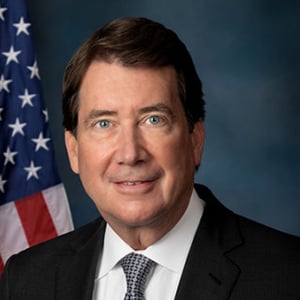
United States Senator, Tennessee
United States Senator Bill Hagerty was elected to the U.S. Senate in 2020 and is currently serving his first term representing the state of Tennessee. His committee assignments include: U.S. Senate Committee on Banking, Housing, & Urban Affairs; U.S. Senate Committee on Foreign Relations; U.S. Senate Committee on Appropriations; and the U.S. Senate Committee on Rules & Administration. Prior to his election to the U.S. Senate, Hagerty served as the U.S. Ambassador to Japan.
Hagerty is a life-long businessman. He started his business career with the Boston Consulting Group, where his work took him to five continents, including three years based in Tokyo, Japan. He later became a venture capital and private equity investor where he invested in and served as an executive and board member of a wide range of companies, including ones listed on the New York Stock Exchange and NASDAQ. From 2011 to 2014, Hagerty took leave from his business career to serve as a member of the Governor’s Cabinet and Commissioner of the Tennessee Department of Economic and Community Development.
Hagerty, an Eagle Scout, is originally from Sumner County, Tennessee. Today, he and his wife Chrissy are both active volunteers in several community and civic organizations, and live in Davidson County, Tennessee. They are the parents of four children.
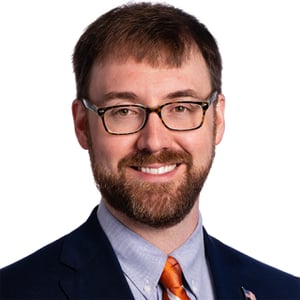
Legal Fellow and Manager, Supreme Court and Appellate Advocacy Program, The Heritage Foundation
Zack is a Legal Fellow and Manager of the Supreme Court and Appellate Advocacy Program in the Edwin Meese III Center for Legal and Judicial Studies at The Heritage Foundation.
He previously served for several years as an Assistant United States Attorney in the Northern District of Florida. Prior to that, he spent two years as an associate in the Washington, D.C. office of Cleary Gottlieb Steen & Hamilton, which he joined after clerking for the Hon. Emmett R. Cox on the United States Court of Appeals for the Eleventh Circuit.
Smith received his undergraduate, master’s, and law degrees from the University of Florida. During law school, Smith served as the Editor in Chief of the Florida Law Review and served on the executive boards of several student organizations, including the UF Chapter of the Federalist Society.