
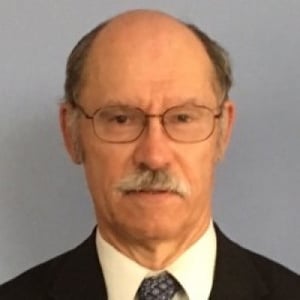
Professorial Lecturer in Law, George Washington University Law School
Theodore C. (Ted) Hirt was an attorney in the Department of Justice's Civil Division from August 1979 to March 2016. He was in its Federal Programs Branch from 1979 to 2008 (trial attorney, senior trial counsel, assistant director), and then in its Office of Immigration Litigation from 2008 to 2016 (trial attorney and senior litigation counsel). Among his responsibilities (September 2001 to March 2016) was being an advisor to the Assistant Attorneys General for the Civil Division, who serve ex officio on the Civil Rules Advisory Committee. Mr. Hirt’s areas of specialization include First Amendment issues, internet and telecommunications law, and electronic discovery. From 1976 to 1979, he was an associate at Fried, Frank, Harris, Shriver & Kampelman. From 1975 to 1976 he was an attorney in the Prehearing Division of the Michigan Court of Appeals.

Judge, U.S. Court of Appeals for the Third Circuit
Hon. Jennifer Mascott served as Associate Professor of Law and Director of the Separation of Powers Institute at The Catholic University of America’s Columbus School of Law before her appointment to the federal bench. On July 16, 2025, President Donald J. Trump nominated her to the U.S. Court of Appeals for the Third Circuit (Delaware), and she was confirmed on October 9, 2025.
Prior to her confirmation, Judge Mascott wrote extensively in administrative and constitutional law, statutory interpretation, and the separation of powers. Her scholarship—published in leading journals including the Stanford Law Review, Notre Dame Law Review, and Supreme Court Review—was cited by the U.S. Supreme Court and multiple federal courts. She also contributed Supreme Court commentary for NBC Universal.
Before joining Catholic Law, she was an Assistant Professor and Co-Director of The C. Boyden Gray Center at George Mason University’s Antonin Scalia Law School. In 2022 she became co-author of Beermann, Cass & Diver’s Administrative Law: Cases and Materials (9th ed.). In 2023 she received the Justice Joseph Story Award for excellence in scholarship, teaching, and advancing the rule of law.
Judge Mascott also served as a Council Member of the ABA’s Administrative Law Section and as a Public Member of the Administrative Conference of the United States. She frequently testified before Congress on executive power, regulatory reform, and judicial jurisdiction, and participated in multiple Supreme Court confirmation hearings.
From 2019 to 2021, she took leave from academia to serve as Deputy Assistant Attorney General in the Department of Justice’s Office of Legal Counsel and later as Associate Deputy Attorney General, where she argued federal cases and assisted with Justice Amy Coney Barrett’s confirmation. Earlier in her career, she clerked for Justice Clarence Thomas and for then-Judge Brett M. Kavanaugh on the D.C. Circuit.
Judge Mascott earned her J.D. summa cum laude from the George Washington University Law School and her B.A. from the same institution.

Tammy McCutchen is a leading authority on federal and state wage-hour laws and prevailing wage laws. She counsels businesses on wage-hour compliance, including conducting internal audits on independent contractor status, overtime exemptions, and other pay practices. She also represents employers during investigations by the U.S. Department of Labor and serves as an expert witness in wage-hour class actions. She was a founding officer of ComplianceHR, a law and technology company, where she created AI-based applications to evaluate independent contractor and overtime exempt status.
Ms. McCutchen served as Administrator of the U.S. Department of Labor’s Wage and Hour Division, appointed by President Bush and confirmed by the Senate in 2001. She was the primary architect of the 2004 revisions to the overtime exemption regulations, the first major changes to the regulations in 55 years.
Before joining DOL, she was senior counsel for the Hershey Company in Hershey, Pennsylvania.
Ms. McCutchen has been a volunteer leader of the Federalist Society since 1989. She served in leadership roles for the Northwestern Student Chapter and Chicago Lawyers Chapter. She currently serves in leadership for the Labor & Employment Practice Group, the Regulatory Transparency Project, and the Knoxville, TN Lawyers Chapter. She served on the Editorial Advisory Board of Law360, the Labor Committee of the U.S. Chamber of Commerce, the Small Business Legal Advisory Board of the National Federation of Independent Business, and a Policy Fellow at the ACU Foundation.
Ms. McCutchen is a graduate of Western Illinois University and Northwestern University School of Law. She clerked for the Hon. Daniel Manion on the U.S. Court of Appeals for the Seventh Circuit.
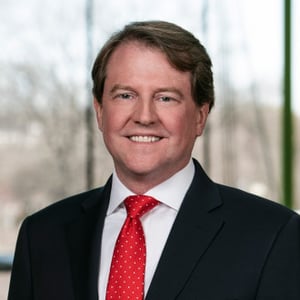
Partner, Jones Day
Don McGahn represents clients before government agencies, in enforcement matters, and in court disputes arising from government regulation or action. He handles litigation, crisis management, regulatory compliance, and political issues.
Prior to rejoining Jones Day in 2019, Don served as Counsel to the President of the United States, advising Donald J. Trump on all legal issues concerning the President and his administration, including constitutional and statutory authority, executive orders, international agreements, tariffs, trade, administrative law, and national security. Don also managed the judicial selection process for the President. During Don's tenure, a historic number of judges were appointed to the federal bench, including two Supreme Court justices. In addition, he spearheaded President Trump's deregulation efforts, which resulted in deregulation at record rates. Following Don's departure from the White House, the President appointed him to the Council of the Administrative Conference of the United States, a nonpartisan, independent agency dedicated to promoting improvement to administrative agency processes.
Don's accomplishments have been recognized at the highest levels of government. Senate Majority Leader Mitch McConnell stated that Don concluded his tenure "not only as the best White House Counsel I've seen on the job, but more broadly, as one of the most successful and consequential aides to any President in recent memory."
Don was nominated by President George W. Bush in 2008, and confirmed in the Senate by unanimous consent, to serve as a member of the Federal Election Commission. He also served as outside Counsel to the Committee on House Administration during the 113th and 114th Congresses and as general counsel to the National Republican Congressional Committee.

Judge, United States Court of Appeals, D.C. Circuit
Judge Randolph was confirmed by the Senate and appointed to the United States Court of Appeals for the District of Columbia Circuit by President George H. W. Bush in July 1990.
Judge Randolph received his B.S. degree in 1966 from Drexel University, majoring in economics and basic engineering. At Drexel, he was president of the debate society, vice president of the Student Senate, and a member of the varsity wrestling squad. In 1969, he received his J.D. from the University of Pennsylvania, summa cum laude. Judge Randolph ranked first in his law school class all three years and was managing editor of the Law Review.
After graduation, Judge Randolph served as a law clerk to Judge Henry J. Friendly of the United States Court of Appeals for the Second Circuit in New York.
Admitted to the California Bar in 1970 (and to the District of Columbia bar in 1973), Judge Randolph worked as Assistant to the Solicitor General, U.S. Department of Justice, in Washington, D.C., 1970-1973.
After two years in private practice, Judge Randolph was named Deputy Solicitor General of the United States, a position he held from 1975-1977.
In 1979, Judge Randolph was appointed Special Counsel to the Committee on Standards of Official Conduct (the Ethics Committee) of the United States House of Representatives, remaining in this position until 1980.
In the 1980s, Judge Randolph held a number of positions while in private practice, including Special Assistant Attorney General for the states of New Mexico (1985 90), Utah (1986-1990) and Montana (1983-1990). He also served as a Member of the Advisory Panel of the Federal Courts Study Committee.
From 1971-1990, Judge Randolph argued 23 times in the United States Supreme Court, winning 20 of his cases.
As an Adjunct Professor of Law at Georgetown University Law Center from 1974-1978 he taught courses in civil procedure and injunctions. In 1992 he taught a course in constitutional law. He is a Distinguished Adjunct Professor of Law at George Mason School of Law and for the past ten years has been teaching First Amendment law. He also serves on the Judicial Advisory Board of the George Mason University Law and Economics Center.
From 1993 through 1995 Judge Randolph was a member of the Committee on Codes of Conduct of the Judicial Conference of the United States, and from 1995 to 1998 served as the Committee's chairman. He also served as the judicial liaison to the American Bar Association’s Administrative Law Section.
Judge Randolph is a member of the Board of Visitors at Drexel University Law School and was named to the “Drexel One Hundred” as a leading alumnus. In 2002 he was presented the James Wilson Award by the University of Pennsylvania Law School. In November 2005 he delivered the Fifth Annual Barbara K. Olson Memorial Lecture at the Annual Lawyers Convention of the Federalist Society. He has published numerous articles, the most recent of which is in the June 2006 issue of the Harvard Journal of Law and Public Policy.
Judge Randolph is married to the Honorable Eileen J. O’Connor, formerly Assistant Attorney General, Tax Division, U.S. Department of Justice. His son John Trevor Randolph is an investment banker in New York. His daughter Cynthia Lee Randolph is an artist living in San Francisco.
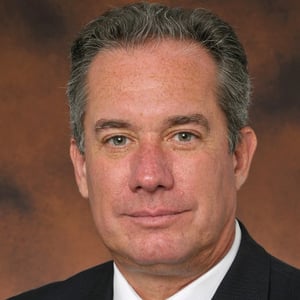
President, Senior Executives Association
Bill Valdez was appointed as the President of the Senior Executives Association (SEA) in September 2016. As President, he sets SEA’s overall strategic direction and is focused on strengthening the Senior Executive Service (SES) through legislative and policy initiatives, building a leadership pipeline for the Executive Branch, and establishing SEA as a thought leader in the Washington, DC policy debates that impact not only the SES, but all civil service employees.
Mr. Valdez retired from Federal service as a career Senior Executive in July 2014. His career with the Department of Energy spanned over 20 years and he has extensive knowledge in the areas of R&D portfolio analysis and evaluation, energy/environmental technologies and policies, small business development, supply chain analysis, science and engineering workforce development, budget planning and execution, diversity and equal opportunity issues, science policy, human capital processes and policies, procurement processes and policies, corporate and strategic planning, and contract management.
Mr. Valdez held the positions of Acting Director, DOE Office of Economic Impact and Diversity; Director of Business Services, Office of Energy Efficiency and Renewable Energy; and Director of Planning and Analysis, and Director for Workforce Development within DOE’s Office of Science. In addition, he was co-chair of the National Science and Technology Council’s Science of Science Policy Interagency Working Group from 2005-2014, and was a senior advisor at the White House Office of Science and Technology Policy (OSTP) in the 1990s.
Mr. Valdez is an Adjunct Faculty at American University’s School of Public Affairs, where he specializes in Federal government evaluation and strategic planning and is a co-editor of “The Handbook of Federal Government Leadership and Administration,” which was published in November 2016.
Mr. Valdez was awarded the Presidential Rank Award (meritorious) in 2007, was elected as a Fellow of the American Association for the Advancement of Science (AAAS) in 2006, and was elected to Senior Executive Association’s Board of Directors in 2005 and served as Chairman from 2011-13.
Prior to working at DOE, Mr. Valdez worked as a Senior Project Manager in private industry where he provided strategic planning services to Asian and European multinational corporations. He also was a reporter in Austin, Texas.
Mr. Valdez received a Bachelor of Arts from the University of Texas and his Master of Arts in International Economics and Energy Policy from the Johns Hopkins School of Advanced International Studies.
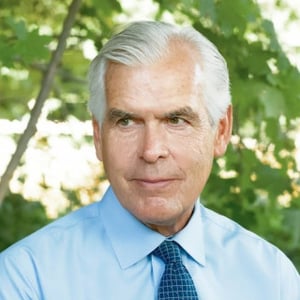
Senior Counsel, Covington & Burling LLP and Founder & Chair, Common Good
Philip K. Howard is a well-known leader of government and legal reform in America. He is Chair of Common Good and a bestselling author, and has advised both parties on needed reforms. In his new book, Not Accountable (Rodin Books, 2023), he argues that public employee unions undermine democratic governance and should be unconstitutional.
Philip is the author of the bestseller The Death of Common Sense (Random House, 1995), The Collapse of the Common Good (Ballantine Books, 2002), Life Without Lawyers (W.W. Norton, 2009), The Rule of Nobody (W.W. Norton, 2014), and Try Common Sense (W.W. Norton, 2019). His commentaries are published frequently in major media outlets.
In 2002, Philip formed Common Good, a nonpartisan coalition dedicated to simplifying laws so that Americans can use common sense in daily choices. His 2010 TED Talk has been viewed by more than 750,000 people. His 2015 report, “Two Years, Not Ten Years,” exposed the economic and environmental costs of delayed infrastructure approvals, and its proposals have since been incorporated into federal law. Philip has appeared often on television and radio, including several times on Jon Stewart’s “The Daily Show.”
The son of a minister, Philip got his start working summers at the Oak Ridge National Laboratory for Nobel laureate Eugene Wigner. He has been active in public affairs his entire adult life. He is Senior Counsel at the law firm Covington & Burling, LLP. A graduate of Yale College and the University of Virginia Law School, Philip lives in Manhattan with his wife Alexandra. They have four children.

Senior Scholar, Manhattan Institute; Professor of Law Emerita, University of San Diego
Gail Heriot is a Senior Scholar at the Manhattan Institute, a Professor of Law Emerita at the University of San Diego and the Chairman of the Board of the American Civil Rights Project. She served on the U.S. Commission on Civil Rights for 18 years. Her new book is entitled “Why We Walk on Eggshells: How Our Civil Rights Laws Stifle Our Public Discourse.”
Of Counsel, Kirkland & Ellis LLP
John focuses his practice on labor and employment litigation and counseling employers on mergers, acquisitions and consolidations, downsizing, plant relocations, union representation elections, labor negotiations, strikes and lockouts, NLRB unfair labor practices, arbitration, wage and hour, wrongful discharge and equal employment. John, a former NLRB General Counsel and Labor Department official, was selected as a global leader in the field of employment & labor law in The International Who's Who of Labor and Employment Lawyers by Law Business Research, The Best Lawyers in America, and Super Lawyers.
John earned his B.A. from Brown University and both his J.D. and LL.M. from Georgetown.

Attorney at Law
James P. Scanlan is an attorney specializing in the use of statistics in litigation. He has published about 60 articles on legal or public policy issues. About half have pertained to the use of statistics in the law and the social and medical sciences, especially regarding the patterns by which standard measures of differences between outcome rates tend to be systematically affected by the prevalence of an outcome. Most notably, the rarer an outcome the greater tends to be the relative difference in experiencing and the smaller tends to be the relative difference in avoiding it, a pattern termed “Scanlan’s Rule” by scholars in the UK. Thus, for example, improvements in health or healthcare tend to decrease relative differences in favorable health outcomes, while increasing relative differences in the corresponding adverse outcomes; increasing loan approval rates tends to decrease relative differences in approval rates while increasing relative differences in rejection rates. Without recognizing this and related patterns it is not possible to soundly interpret data on group differences in outcome rates.

CEO, Sharf & Associates
As EEOC's Chief Psychologist in the mid-1970s, Jim drafted the Uniform Guidelines on Employee Selection Procedures He subsequently returned to government to serve as Special Assistant to EEOC's Chairman for whom he drafted the "race norming" prohibition in the Civil Rights Act of 1991.
Jim has successfully defended the validity generalization (VG) of measures of cognitive ability (Taylor v. James River Corp., 1989 WL 165953 (S.D. Ala. 1989; McCoy v. Willamette Industries, Inc. U.S. District Court for the Southern District of Georgia, Savannah Dicision, Civil Action No. CV401-075 (2001)) - his VG reasoning having been affirmed by the Fifth Circuit (Bernard v. Gulf Oil Corp., 890 F.2d. 735, 744 (5th Cir. 1989). Jim has also successfully defended validity generalization challenged by OFCCP (TIMKEN) and EEOC (SMECO).
For four years, Jim was industrial psychology's expert writing the licensing exam required of all psychologists in the U.S. and Canada. Jim was awarded the M. Scott Myers Award for Applied Research in the Workplace by the Society for Industrial/ Organizational Psychology for developing the valid, legally defensible employment tests used by TSA to hire fifty-thousand airport security screeners.
With Metrics Reporting, Inc., Jim and the Competency Validation Center team are now partnering with the Hope Street Group nonprofit network both to document and to assess legally defensible, job-related competencies in the healthcare and manufacturing sectors. GOALS: Employers will be able to communicate Talent Supply Chain competencies; Individuals will accumulate stackable credentials documenting their competencies; and Talent Suppliers will align competency-based education with employer requirements.
Since 1976, Milton L. Chappell has been a staff attorney with the National Right to Work Legal Defense Foundation, a non-profit legsl aid organization located in Springfield, Virginia. During his 38 years of practice, he has specialized in representing nonunion public employees and teachers in litigation before the United States Supreme Court, and other federal and state courts and administrative agencies, against the abuses of compulsory unionism. The litigation has resulted in the establishment of procedures and notices that assist nonunion teachers in reducing the amount of their compulsory union fees the public sector unions spend on political and other non-collective bargaining activities that his clients oppose. In addition to representing clients claiming a political objection to joining or financially supporting a labor union, he has also represented clients claiming a religious objection to unions, as well as defending against numerous union attacks on the Right to Work laws passed in Indiana and Michigan, and Wisconsin’s Act 10, which includes right to work protection for most public employees. Mr. Chappell is an expert in constitutional and labor law, especially the First Amendment. Mr. Chappell has represented clients in Arizona, California, Connecticut, Delaware, Florida, Hawaii, Illinois, Indiana, Kentucky, Maryland, Michigan, New York, Ohio, Oregon, Pennsylvania, Texas, and Virginia, Washington, Wisconsin, and the District of Columbia.
Mr. Chappell is a member of the following bars: Maryland, the District of Columbia, United States Supreme Court, United States Courts of Appeals for the 2nd, 3rd, 4th, 5th, 6th, 7th, 9th, 11th, and District of Columbia Circuits, and the United States District Courts for the Districts of Maryland, Northern California, Western Wisconsin, and the District of Columbia. He is the author of “From Abood to Tierney: The Protection on Nonunion Employees in an Agency Shop,” 15 Ohio Northern University Law Review 1 (1988) and “Seeking a New Foundation,” 16 Government Union Review 1 (1995). He is coauthor of “Protecting the Rights of State Employees Against Compulsory Unionism,” California Public Employee Relations 143 (August 2000).
Associate, Greehan, Taves, Pandak & Stoner, PLLC

Can Americans Reconcile Our Constitutional System With an Expansive Administrative State?
Ted Hirt
A review of: Bureaucracy in America: The Administrative State’s Challenge to Constitutional Government, by Joseph...
Civil Service Reform
Jenn L. Mascott, Tammy Dee McCutchen, Donald F. McGahn, A. Raymond Randolph, Bill Valdez, Philip K. Howard
The Sixth Annual Executive Branch Review Conference is scheduled for Tuesday, April 17 at the...
Disparate Impact: Reducing Innovation in the Workplace?
Gail L. Heriot, John S. Irving, James Scanlan, James Sharf
The slogan "Personnel is policy" reflects the principle that hiring the right people is one...
Topics
State Court Docket Watch News Clips: 7/29/2015
A Michigan Supreme Court ruling resulted in the state's 2012 "Right to Work" law applying to...
Right to Work in the Midwest - Podcast
Milton L. Chappell
In 2012 and 2013, Indiana and Michigan, respectively, passed Right to Work laws covering both...
SCOTUScast 6-4-08 featuring Alan Smith
Alan Smith
On May 27, 2008, the Supreme Court decided Gomez-Perez v. Potter. The Court held that Section...