
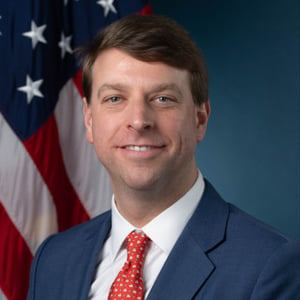
United States Attorney, Western District of North Carolina
Russ Ferguson leads the U.S. Attorney’s Office as the presidentially-appointed United States Attorney for the Western District of North Carolina, following his confirmation by the United States Senate on December 18, 2025. Nominated by President Donald Trump, who formally signed his commission on December 23, 2025, U.S. Attorney Ferguson took the oath of office, administered by the Honorable Frank D. Whitney, Senior United States District Judge, on Christmas Eve.
Mr. Ferguson was first appointed as interim United States Attorney by Attorney General Pamela Bondi on March 3, 2025, and sworn in on March 11, 2025. He was subsequently unanimously appointed to the position by all federal judges in this district effective June 30, 2025. He was then nominated by the President on July 30, 2025.
As U.S. Attorney, Mr. Ferguson serves as the chief federal law enforcement officer in the Western District, responsible for representing the United States in all civil and criminal litigations. Mr. Ferguson leads an office of nearly 100 federal prosecutors and support personnel, serving 32 counties across western North Carolina, including the Eastern Band of Cherokee Indians, the largest Native American community in the eastern United States.
U.S. Attorney Ferguson brings 16 years of significant legal experience to his new role. He began his legal career as a federal prosecutor in the U.S. Attorney’s Office for the District of Columbia, where he tried 28 cases to verdict. Before his appointment as U.S. Attorney, Mr. Ferguson was a partner at the international law firm of Womble Bond Dickinson, where he led the firm’s complex litigation group and handled complex civil and criminal cases. Mr. Ferguson’s work included representing clients in high-profile and complex criminal and civil trials, as well as in international arbitrations before a number of world arbitral bodies.
U.S. Attorney Ferguson has held leadership roles with the Mecklenburg County Bar, which honored him with an award for Best Individual Attorney for his pro bono service. He has been named to Super Lawyers, Best Lawyers in America, North Carolina Business Elite, and received the Charlotte Business Journal’s Forty Under Forty Award. Mr. Ferguson has also served as a speaker and panelist for local and national events and has published numerous articles on topics related to civil and criminal law.
U.S. Attorney Ferguson has served the community by serving on the Board of NourishUp, Charlotte’s food pantry and meals on wheels organization, demonstrating his ongoing commitment to addressing hunger and supporting families in need. He also previously served on Keep Charlotte Beautiful, to which he was appointed by the City Council, and on the Mecklenburg County Bar’s Board of Directors.
U.S. Attorney Ferguson received his undergraduate degree from Duke University and earned his law degree and a masters of law from Georgetown University Law Center. After law school, U.S. Attorney Ferguson clerked for the Honorable Frank D. Whitney in the United States District Court for the Western District of North Carolina.
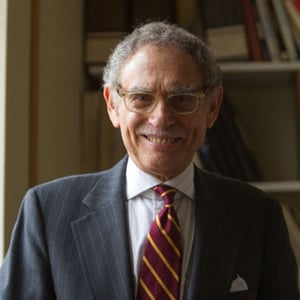
Founder and Director, James Wilson Institute on Natural Rights & the American Founding
Hadley Arkes joined the faculty of Amherst College in 1966. He became the Edward Ney Professor of Jurisprudence in 1987, and held that chair until he retired officially in July 2015. But he has not retired from writing and speaking. He has carried that teaching into a new phase; he has become the Founder and Director of the James Wilson Institute on Natural Rights and the American Founding in Washington, D.C. He has written eight books, mostly with Princeton and Cambridge University Presss. Among the books at Princeton have been: The Philosopher in the City (1981), First Things (1986), Beyond the Constitution (1990), and The Return of George Sutherland (1994). With Cambridge Press he has done Natural Rights and the Right to Choose (2002), and Constitutional Illusions & Anchoring Truths: The Touchstone of the Natural Law (2010). His most recent book, with Regnery Press is Mere Natural Law (2023) His articles have appeared in professional journals, but apart from his writing in more scholarly formats, he has become known to a wider audience through his writings in the Wall Street Journal, National Review, Civitas and First Things, a journal that took its name from his book of that title.
He was the main advocate, and architect, of the bill that became known as the Born-Alive Infants’ Protection Act. The account of his experience, in moving the bill through Congress, is contained as an epilogue or memoir in his book, Natural Rights & the Right to Choose. Arkes first prepared his proposal as part of the debating kit assembled for the first George Bush in 1988. The purpose of that proposal was to offer the “most modest first step” of all in legislating on abortion, and opening a conversation even with people who called themselves “pro-choice.” Professor Arkes proposed to begin simply by preserving the life of a child who survived an abortion–contrary to the holding of one federal judge, that such a child was not protected by the laws. Professor Arkes led the testimony on the bill before the Judiciary Committee of the U.S. House in July 2000, then again in July 2001. The legislative calendar was upended in the aftermath of September 11th, but in March 2002, the bill was brought to the floor of the House, where it passed unanimously. To the surprise of Professor Arkes, the bill was brought to the floor of the Senate on July 18 by the Deputy Majority Leader, Harry Reid, and passed in the same way. On August 5, President Bush signed the bill into law with Professor Arkes in attendance.
Professor Arkes was the founder, at Amherst, of the Committee for the American Founding, a group of alumni and students seeking to preserve, at Amherst, the doctrines of “natural rights” taught by the American Founders and Lincoln. That interest has been carried over now to the founding of a new center for the jurisprudence of natural law, in Washington, D.C.: the James Wilson Institute on Natural Rights and the American Founding, named for one of the premier minds among the American Founders. Professor Arkes has drawn to this project a cluster of accomplished federal judges who have wanted to get a firmer hold on the natural law, and brought them together with some gifted teachers of philosophy and law. The new institute will be sponsoring lectures and seminars in Washington and other parts of the country. The purpose of this new James Wilson Institute is to teach anew, to lawyers, judges, and students those principles of law that furnished the guide to the American Founders as they set about framing a Constitution. And the hope is to restore, to a new generation, the furnishings of mind of the men who formed this regime.
Former Inspector General of the Corporation for National and Community Service
Gerald Walpin, the new Inspector General of the Corporation for National and Community Service, has vowed a vigorous effort to investigate and prosecute all persons who betray the public’s trust by defrauding the Corporation and its programs.
A prominent New York attorney, Walpin was nominated by President George W. Bush, confirmed by the U.S. Senate and sworn into office on January 8, 2007. He leads the Office of Inspector General (OIG), an independent Federal agency charged with oversight over the taxpayer-supported Corporation and its service programs, including AmeriCorps, Volunteers in Service to America (VISTA)and Senior Corps.
“My major objective is to expand upon the good work of this office by preventing, detecting and prosecuting all thefts and frauds,” said Walpin. “The reality is that such misconduct takes precious resources away from deserving people, the same way the theft of a welfare check hurts a single mother who needs that money to buy milk for her children. For that reason, this office will seek out and ensure sanctions for all wrongdoing involving Corporation funds.”
Walpin said his other major goal is to “assist the Corporation in making its services efficient and accessible for all national service stakeholders.”
A New York City native, Walpin graduated from College of the City of New York in 1952. He earnedhis law degree, cum laude, in 1955 from Yale Law School, where he was managing editor of the Yale Law Journal. From 1957-60, he served as a lieutenant in the United States Air Force Judge Advocate General.
His career included a five-year stint as Chief of Prosecutions for the United States Attorney for the Southern District of New York, where he successfully prosecuted a number of high-profile cases. He spent more than 40 years as senior partner and, more recently, of counsel to New York-based Katten Muchin Rosenman LLP.
Mr. Walpin has represented a wide range of clients, including large public corporations, securities brokerage firms, accounting firms, law firms, banks in lender liability claims, and individuals, both American and foreign, in securities litigations, employment litigations, criminal prosecutions, and investigations by the United States Securities and Exchange Commission. Both as an Assistant U.S. Attorney and in his law firm, he was frequently called upon to investigate fraudulent conduct.
Included in the published compilation “The Best Lawyers in America,” Mr. Walpin served from 2002-2004 as president of the Federal Bar Council, the association of attorneys practicing in the Second Circuit Federal courts. In 2003, he was honored with the American Inns of Court Professionalism Award for outstanding professionalism as an attorney and for mentoring younger lawyers.
Walpin and his wife Sheila, married for almost 50 years, have three children and six grandchildren.
Inspector General of the Corporation for National and Community Service
Chief of Prosecutions in the New York U.S. Attorney's Office.
President of the Federal Bar council
Senior Partner of and Council to Katten Muchin Rosenman LLP
Chief of Prosectutions for the US Attornery for the Southern District of New York
Lieutenant in the US Air Force Judge Advocate General
B.A., College of the City of New York, 1952
J.D., Yale Law School
Judge, U.S. Court of Appeals, District of Columbia Circuit
Judge Sentelle was appointed United States Circuit Judge in October 1987, served as Chief Judge from February 11, 2008 until February 11, 2013, and took senior status on February 12, 2013. He is a 1968 graduate of the University of North Carolina Law School. Following law school, he practiced with the firm of Uzzell & DuMont until he became an Assistant U.S. Attorney in Charlotte, N.C. in 1970. From 1974 to 1977, he served as a North Carolina State District Judge but left the bench in 1977 to become a partner with the firm of Tucker, Hicks, Sentelle, Moon & Hodge. In 1985, Judge Sentelle joined the U.S. District Court, Western District of North Carolina, in Asheville, where he served until his appointment to the D.C. Circuit. Judge Sentelle was the Presiding Judge of the Special Division for the Purpose of Appointing Independent Counsels (1992-2006). He also served as the Chair of the U.S. Judicial Conference's Executive Committee (2010-2013). Judge Sentelle served for over 20 years as President of the Edward Bennett Williams Inn of the American Inns of Court.
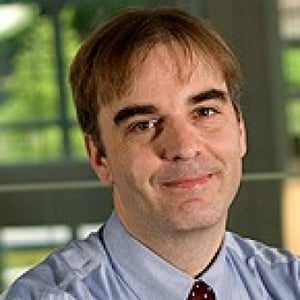
Alston & Bird Professor of Law, Duke University School of Law
Professor Young teaches constitutional law, federal courts, and foreign relations law. He is one of the nation's leading authorities on the constitutional law of federalism, having written extensively on the Rehnquist Court's "Federalist Revival" and the difficulties confronting courts as they seek to draw lines between national and state authority. He also is an active commentator on foreign relations law, where he focuses on the interaction between domestic and supranational courts and the application of international law by domestic courts. Professor Young also writes on constitutional interpretation and constitutional theory. He has been known to dabble in maritime law and comparative constitutional law.
A native of Abilene, Texas, Professor Young joined the Duke Law faculty in 2008, after serving as the Charles Alan Wright Chair in Federal Courts at the University of Texas at Austin School of Law, where he had taught since 1999. He graduated from Dartmouth College in 1990 and Harvard Law School in 1993. After law school, he served as a law clerk to Judge Michael Boudin of the 1st U.S. Circuit Court of Appeals (1993-94) and to Justice David Souter of the U.S. Supreme Court (1995-96). Professor Young practiced law at Cohan, Simpson, Cowlishaw, & Wulff in Dallas, Texas (1994-95) and at Covington & Burling in Washington, D.C. (1996-98), where he specialized in appellate litigation. He has also been a visiting professor at Harvard Law School (2004-05) and Villanova University School of Law (1998-99), as well as an adjunct professor at Georgetown University Law Center (1997).
Elected to the American Law Institute in 2006, Professor Young is an active participant in both public and private litigation in his areas of interest. He has been the principal author of amicus briefs on behalf of leading constitutional scholars in several recent Supreme Court cases, including Medellin v. Texas(concerning presidential power and the authority of the International Court of Justice over domestic courts) and Gonzales v. Raich (concerning federal power to regulate medical marijuana).
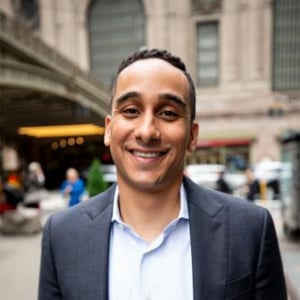
Nick Ohnell Fellow, The Manhattan Institute
Rafael Mangual is the Nick Ohnell Fellow at the Manhattan Institute, a contributing editor of City Journal, and a member of the Council on Criminal Justice. His first book, Criminal (In)Justice, was released in July 2022. He has authored and coauthored a number of MI reports and op-eds on issues ranging from urban crime and jail violence to broader matters of criminal and civil justice reform. His work has been featured and mentioned in a wide array of publications, including the Wall Street Journal, The Atlantic, New York Post, The New York Times, The Washington Post, Philadelphia Inquirer and City Journal. Mangual also regularly appears on Fox News and has made a number of national and local television and radio appearances on outlets such as C-SPAN and Bloomberg Radio. In 2020, he was appointed to serve a four-year term as a member of the New York State Advisory Committee of the U.S. Commission on Civil Rights.
Prior to joining MI in 2015, Rafael worked in corporate communications for the International Trademark Association. He holds a B.A. in corporate communications from the City University of New York’s Baruch College and a J.D. from DePaul University in Chicago, where he was president of the Federalist Society and vice president of the Appellate Moot Court team. After graduating from law school, Mangual was inducted into the Order of the Barristers, a national honor society for excellence in oral and written advocacy.
Associate Justice, North Carolina Supreme Court
Early Years
Personal Information
Married to Susan Awbrey Hunter. One son, Robert Neal Hunter III; two step-sons, Chris Awbrey Steele and Alan Baret Steel; two grandchildren; Member of First Presbyterian Church, Greensboro, North Carolina
Partner, Robinson & Lawing, LLP
When Mike Robinson was six years old, he wrote a brief essay in school about what he wanted to be when he grew up. While the other kids in his class wanted to be firemen, cowboys, ballerinas and football players, Mike knew he wanted to be a lawyer and one day a judge. Since that time, he never wavered from those goals. Today, Mike has a distinguished law career and recently announced his candidacy for the Supreme Court of North Carolina.
For over 33 years, Mike has practiced law in North Carolina. In 1997, he was one of nine lawyers who formed, Robinson & Lawing, LLP. For the past six years he has served as one of its managing partners. Mike has concentrated his practice on matters involving complex civil litigation, medical malpractice defense, insurance defense, intellectual property matters, and corporate litigation planning and loss prevention. Mike is admitted to practice in North Carolina State Courts, the three U.S. District Courts in North Carolina, the Fourth Circuit Court of Appeals and the U.S. Supreme Court.
In addition to his professional accomplishments, Mike has served in numerous volunteer capacities with a number of charitable and civic organizations within the community.
Mike is a conservative who believes that judges do not make laws, but rather should enforce them. If elected to the North Carolina Supreme Court, Mike will be tough but fair and will apply the law as written by the state legislature. He will work hard to examine every case that comes before him and take a level-headed approach to his work.
Mike received his undergraduate degree from Davidson College and his juris doctor degree with honors from the University of North Carolina at Chapel Hill.
Mike and his wife Wynn have lived in Winston-Salem for the past 33 years. They have four grown children (three sons and a daughter), two daughters-in-law and two granddaughters.
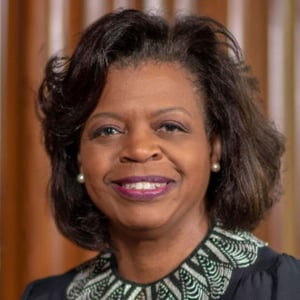
Fmr. Chief Justice, North Carolina Supreme Court
Chief Justice Cheri Beasley has spent more than 20 years dedicated to the rule of law. She began her judicial career as a district court judge in Cumberland County, where she served for a decade before being elected to the North Carolina Court of Appeals in 2008. She served as an associate justice on the Supreme Court of North Carolina for seven years before being appointed by Governor Roy Cooper to lead the Supreme Court and North Carolina's third branch of government, the Judicial Branch. She is the first African-American woman in the Supreme Court’s 200-year history to serve as Chief Justice.
Chief Justice Beasley has spent her entire career advocating for courts that are independent, fair, and accessible, and that serve every person with dignity and respect. As Chief Justice, she is advocating for a court system that not only solves legal disputes, but also helps people better their lives. By engaging local judges, educators and law enforcement, she is helping to reform discipline in our schools and keeping kids out of our courtrooms. She is committed to expanding specialized treatment courts that better serve the needs of North Carolina’s children and families. She is also working to leverage the power of technology to make sure our courts are efficient and accessible.
She has lectured extensively to promote the administration of justice, the importance of an independent judiciary, and fair judicial selection. She is active in her community through leadership in her church, First Baptist of Raleigh, her support of hunger relief efforts, and her mentoring of students from elementary school to law school. She is a graduate of Douglass College of Rutgers University, the University of Tennessee College of Law, and Duke University School of Law where she obtained her LL.M. She and her husband, Curtis Owens, are the proud parents of twin sons, Thomas and Matthew.
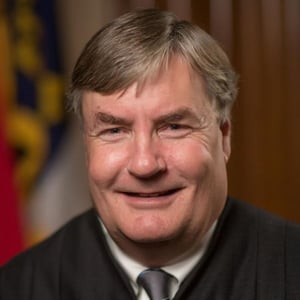
North Carolina Court of Appeals
Sam J. Ervin, IV, was born in Morganton, North Carolina, on November 18, 1955. He attended the public schools in Burke County, North Carolina, graduating from Freedom High School in 1974. In 1978, Judge Ervin was awarded an A.B., magna cum laude, from Davidson College. After graduating from Davidson, he attended Harvard Law School, from which he received a J.D., cum laude, in 1981.
From 1981 until 1999, Judge Ervin practiced law with the Morganton, North Carolina firm of Byrd, Byrd, Ervin, Whisnant, McMahon, P.A., and its predecessors. While in private practice, Judge Ervin handled a wide variety of civil, criminal, and administrative matters, including many appeals to the North Carolina Court of Appeals and the Supreme Court of North Carolina.
In 1999, Judge Ervin was nominated for a seat on the North Carolina Utilities Commission by Governor James B. Hunt, Jr. He was nominated for a second term on the Utilities Commission by Governor Michael F. Easley in 2007. Both appointments were confirmed by the General Assembly. The Utilities Commission is a quasi-judicial body that is responsible for regulating electric, natural gas, telecommunications, water and sewer, and certain types of transportation service provided to retail customers in North Carolina by privately-owned entities. During his service as a member of the Utilities Commission, Judge Ervin was involved in deciding many important regulatory matters, including, but not limited to, electric and natural gas rate proceedings, electric and natural gas business combination proceedings, proceedings involving applications by electric utilities for authority to construct new generation and transmission facilities, proceedings involving the approval of telecommunications price regulation plans, proceedings arbitrating or otherwise examining the terms and conditions under which competitive telecommunications providers were allowed to interconnect with incumbents, and proceedings addressing issues relating to the adequacy of water and sewer service in certain specific locations.
In addition, Judge Ervin was extensively involved in the activities of the National Association of Regulatory Utility Commissioners (NARUC), having served as Chairman of that organization's Subcommittee on Nuclear Issues and Waste Disposal from 2002 until 2005; as Chairman of that organization's Committee on Electricity from 2004 until 2007; and as a member of its Task Force on Climate Policy from 2007 through 2008. As part of his involvement in NARUC, Judge Ervin supervised its participation in the process that led to the implementation of the Energy Policy Act of 2005. While a member of the Utilities Commission, Judge Ervin testified on two different occasions before the Subcommittee on Energy and Air Quality of the Committee on Commerce of the United States House of Representatives. Judge Ervin was a regular speaker at energy-related conferences and seminars during his service as a Utilities Commissioner.
Judge Ervin has also been, at various times, involved in a wide variety of church-related, bar-related, and charitable activities. He is married to Mary Temple Ervin and has two children and two step-children.
Judge Ervin was elected to the North Carolina Court of Appeals at the November 4, 2008, general election. His term as a member of the Court of Appeals commenced on January 1, 2009, and extends until December 31, 2017.
Associate Justice, North Carolina Supreme Court
Early Years
Born in DeKalb County, Georgia in 1952, Robin E. Hudson moved to Greensboro, NC with her family in 1966.
Professional Background
Admitted to the North Carolina Bar in 1976 and practiced law in Raleigh and Durham until her election to the Court of Appeals in November 2000. She is the first North Carolina woman elected to the appellate court division without having been appointed first. She served on the NC Court of Appeals from January 2001 until December 2006. During that time, she helped organize and coordinate the Court of Appeals voluntary mediation program. She began her 8-year term on the Supreme Court in January 2007.
Except for 3 years as assistant appellant defender in the mid-1980's, she practiced law in the private sector and handled a variety of trials and appeals, but concentrated on workers' compensation and tort litigation, with particular emphasis on occupational diseases and products liability. She practiced extensively before the Industrial Commission, as well as in State and Federal courts. Since 1994, she has been certified to mediate cases from Superior Court and the Industrial Commission.
Graduate of Page Senior High School, Greensboro, 1969. Graduated from Yale University in 1973 with a BA degree in philosophy and psychology. Received J.D. from the University of North Carolina School of Law in 1976.
Seventh Division of the Superior Court, North Carolina
Judge Eric Levinson joined the District Attorney’s Office in Cabarrus and Rowan Counties, N.C. as a felony prosecutor following law school, and he prosecuted drug, property, sexual assault, and homicide offenders.
Judge Eric Levinson was elected to the N.C. judiciary in 1996 as a District and Family Court Judge in Charlotte, N.C. In this role, he was recognized for implementing best-practices in our criminal and child support enforcement courts and became a N.C. Certified Juvenile Court Judge.
Judge Eric Levinson was elected statewide in 2002 as one of fifteen members of the N.C. Court of Appeals in Raleigh, N.C., where he served as an Associate Judge and the Court’s youngest member. He authored hundreds of legal opinions in disputes and lawsuits concerning criminal, civil and administrative matters.
Judge Eric Levinson was appointed by the Bush Administration in 2007 as the Justice Attache to Iraq for the U.S. Department of Justice. As Justice Attache, Levinson managed the U.S. government’s diplomatic relationship with the Iraqi judiciary and its Chief Justice, Medhat al Mahmoud, and advanced the establishment of Major Crimes Courts where terrorists were prosecuted.
Judge Eric Levinson worked in Kabul, Afghanistan as a Rule of Law and Courts Advisor in 2008. In this role, he collaborated with members of the Supreme Court of Afghanistan and helped draft and advance guidelines to establish commercial courts to adjudicate business, contract and related civil conflicts.
Judge Eric Levinson was appointed to the N.C. Superior Court in 2009 after a bipartisan group of Republican and Democratic lawmakers, business professionals, attorneys and community stakeholders endorsed his appointment. Levinson presently holds court in counties all across western, central and eastern N.C. and presides over violent crimes against persons (homicide, sexual assault, armed robbery, serious assault) as well as civil conflicts (complex business disputes, class action, property).
Judge Eric Levinson gained his Juris Doctorate from the University of North Carolina at Chapel Hill School of Law where he was President of the Student Bar Association. He obtained a BBA in Finance,cum laude, at the University of Georgia, where he was an Honors Program student. Levinson also completed the Institute on Comparative Political and Economic Systems through the Fund for American Studies in Washington, D.C. and Georgetown University, and completed a program in International Finance hosted by the University of London, England. He is a certified Superior Court mediator, and is a N.C. Certified Juvenile Court Judge.
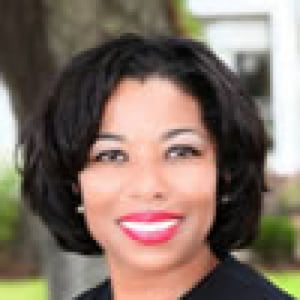
Fourth Division of the Superior Court, North Carolina
Judge Lewis graduated from Fayetteville State University in 1986 and received her Juris Doctorate from North Carolina Central University in 1990. Upon successfully passing the Bar in 1990, She served as a law clerk to the Honorable Speaker of the House, Dan Blue, in his firm of Thigpen, Blue, Stephens and Fellers in Raleigh. Hired as an Assistant District Attorney for the 13th Prosecutorial District (Brunswick, Bladen and Columbus counties) she went on to become the youngest and first female African-American Judge in Brunswick County. Judge Lewis is currently the Senior Resident Superior Court Judge for District 13 B.
Judge Lewis has created five Specialty Courts to serve the citizens of Brunswick County. Drug Treatment Court, a true night court program, Mental Health Therapeutic Court, DWI Therapeutic Court, Domestic Violence Therapeutic Court and the Sex Offender Accountability and Rehabilitation Court (SOAR).
Professional memberships and boards include the North Carolina State Bar, 13th Judicial District Bar Association, the Brunswick County Bar Association and the North Carolina Black Lawyers Bar Association. Achievements and honors include the Gubernatorial Awarded Old North State Award, General Federation of Women’s Club of North Carolina, Women of Achievement Award, Brunswick County Bar Association Hall of Fame Award, Trailblazer Award for the Brunswick Beacon, Fayetteville State University Chancellor’s Medallion, Lower Cape Fear YMCA Women of Achievement Award and Lawyer’s Weekly Women of Justice Award, 2013.
Community and Volunteer activities include Brunswick County Women in Philanthropy, North Carolina Plant Conservancy, Southport Oak Island Kiwanis Club.
Judge Lewis was born in Fayetteville North Carolina and grew up in Spring Lake where she attended William’s Chapel Free Will Baptist Church. Her father, Mose, served in the United States Army as a Command Sgt. Maj. where he served in Korea, three tours in Vietnam and a tour in the Dominican Republic. Upon his retirement Mose became an educator in Southport. He was Principal at South Brunswick High School and retired Assistant Superintendent of Schools of Brunswick County.
Judge Lewis’ mother, Doris, was a respected educator in the Harnett County school system. Mose and Doris shared their time between the home place in Spring Lake and Southport. Doris retired to take care of her beloved husband when he was diagnosed with Lou Gehrig’s disease in 1995. Mose passed in April of 2000.
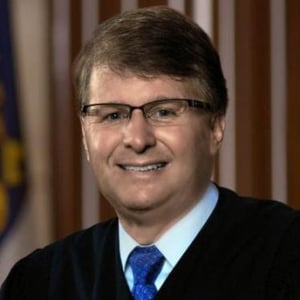
Founding Dean & Professor, Kenneth F. Kahn School of Law at High Point University
Hon. Mark Martin is the founding dean and professor of law at the Kenneth F. Kahn School of Law at High Point University.
Mark served as Chief Justice of the North Carolina Supreme Court from 2014-2019. He also served on that Court as an Associate Justice, on the North Carolina Court of Appeals, and on a North Carolina Superior Court.
The Chief Justice of the United States appointed Mark to the Committee on Federal-State Jurisdiction of the United States Judicial Conference. He also served on the board of directors of the Conference of Chief Justices.
Mark chairs the Thomson Reuters Judicial Advisory Council. He is a member of the American Law Institute, where he assists with the Third Restatement, Conflict of Laws, and serves on the Region 15 Advisory Committee.
Mark has served on the adjunct faculties of Duke University, North Carolina Central University, and the University of North Carolina law schools. Mark co-taught a course on the various modes of constitutional interpretation with Associate Justice Samuel A. Alito, Jr. of the United States Supreme Court from 2020-2022.
Reporter, WSOC-TV
Reporter Jenna Deery joined Channel 9 Eyewitness News in October 2013. She came from Cox Media Group station WHIO, in Dayton, OH where she anchored the weekend newscasts for two years.
Jenna’s career in television began at Cox Media Group station WFTV in her hometown of Orlando, FL. While she was at WFTV, she worked behind the scenes in nearly every aspect of news production as an Associate Producer. From WFTV, Jenna went on to spend three years at WAKA in Montgomery, AL where she was a weekend anchor and reported during the week. She spent most of her time covering Alabama's capitol city politics which included in-depth reporting of a federal investigation involving a former attorney general resulting in a major overhaul of state ethics laws.
Jenna developed a love for TV news as a child. She would appear in segments of her stepmother’s morning show in Lynchburg, VA. Then, when she was a high school student, Jenna appeared on-camera with her stepmother to promote community outreach initiative campaigns for a Christian cable station in Orlando, FL.
Jenna is a graduate of Samford University in Birmingham, AL. She loves working on her fitness in Zumba class, volunteering at church and exploring the Queen City.
Dean & Professor of Law, Charlotte School of Law
Jay Conison has extensive experience in strategy, finance, business development, external affairs, and overall management of law schools. Most recently, he served as Dean of Valparaiso University Law School. Conison’s scholarly and professional work focuses on issues in legal education and the business of law schools. He is currently Reporter for the American Bar Association Task Force on the Future of Legal Education and has recently served as Chair of the Accreditation Committee of the ABA Section of Legal Education and Admissions to the Bar.
During his 15-year tenure at Valparaiso University Law School, Conison achieved sustainable diversity among students, staff and faculty; constructed a second law building devoted to clinical and skills education; upgraded the main law building to improve student services and student life; expanded the faculty and increased the national and international impact of faculty work; and created an effective organizational and management structure for the law school that ensured a high level of service to students, faculty, staff, and alumni.
In addition his other work in legal education, Conison regularly chairs or serves on ABA and AALS site inspection teams, and has held leadership positions on other committees and task forces at the national and state level. He writes and blogs on legal education and the business of law schools.
Conison earned his B.A. from Yale College and both his M.A. and J.D. from the University of Minnesota. Prior to joining the Valparaiso University Law School, he was at Oklahoma City University School of Law from 1990-1998, where he held positions of assistant professor, associate professor, professor, associate dean and interim dean. Dean Conison began his law career with Sonnenschein Nath & Rosenthal in Chicago, IL practicing business litigation with an emphasis on antitrust, franchising, and employee benefits.
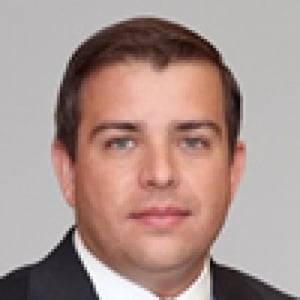
Counsel, King & Spalding
Bradley J. Lingo is a counsel in King & Spalding’s Charlotte office. He practices in the firm’s National Business Litigation Group.
Mr. Lingo has considerable experience guiding clients to successful resolutions of complex civil litigation matters. His work has encompassed a broad array of trial and appellate matters, but in recent years, much of it has focused on defending accounting firms against claims of malpractice and securities fraud. He has played a significant role in matters for three of the Big Four accounting firms. He also has experience representing clients facing regulatory investigations, including investigations by the Securities and Exchange Commission and the Department of Justice.
Mr. Lingo has maintained an active pro bono practice focusing on religious-liberties issues. Accounts of pro bono work spearheaded by Mr. Lingo have appeared on the front pages of the New York Times, Washington Post, and Wall Street Journal.
Prior to joining King & Spalding, Mr. Lingo practiced in the Washington, D.C., office of Gibson Dunn and served as a law clerk to the Hon. Morris Sheppard Arnold of the United States Court of Appeals for the Eighth Circuit. He received his law degree, cum laude, from Harvard Law School, where he was an executive editor of the Harvard Journal of Law and Public Policy. He graduated first in his class and summa cum laude from Grove City College. While there, he was elected student body vice-president and awarded the Calderwood Scholarship, which goes to the two rising seniors demonstrating outstanding scholarship, leadership, and service.
Mr. Lingo currently serves as Chairman of the Federalist Society's Charlotte Chapter. Super Lawyers named him one of North Carolina’s “Rising Stars” for 2014. He is admitted to practice in North Carolina and the District of Columbia.
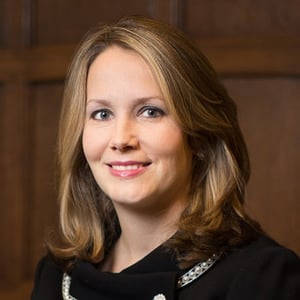
Partner, McGuireWoods LLP
The Honorable Susan C. Rodriguez was sworn-in as a U.S. District Judge in the Western District of North Carolina on December 8, 2025. She previously served as a U.S. Magistrate Judge since April 2023. Prior to taking the bench, Judge Rodriguez was a partner at a national law firm, where she was the co-leader of the firm’s financial institutions industry team. Her private practice experience focused on government investigations and white-collar matters. She has represented clients in numerous government investigations by the U.S. Department of Justice, U.S. Department of Homeland Security, Consumer Financial Protection Bureau (CFPB), and the Federal Trade Commission (FTC), among others. She was recognized for her outstanding work for clients through Chambers rankings in both 2022 and 2023 for Litigation: White-Collar Crime & Government Investigations in North Carolina and nationally for Fintech Legal: Corporate, Securities & Financing. She also was named to “North Carolina Rising Stars,” Government Relations, Super Lawyers, 2017-2019.
Judge Rodriguez also served as a legal policy advisor at the Department of Homeland Security. She was a federal law clerk for the Honorable Frank D. Whitney, U.S. District Court Judge for the Western District of North Carolina, handling both civil and criminal matters. Prior to that, she was a presidential appointee, serving as a staffer in the White House Counsel’s office from 2005-2006, handling management of judicial nominations and assisting with responses to congressional investigations.
Megan T.R. Hitchens is an attorney in Charlotte, N.C. She is a graduate of Elon University School of Law.
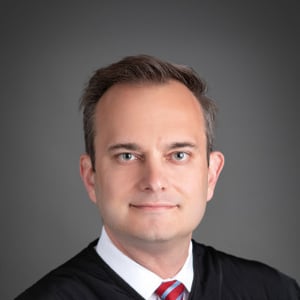
United States Magistrate Judge, Eastern District of North Carolina
Robert T. Numbers, II serves as a United States Magistrate Judge in the United States District Court for the Eastern District of North Carolina.
Judge Numbers received degrees in Political Science and Economics, with honors, from Wake Forest University. After completing his undergraduate work, Judge Numbers obtained his law degree from the University of Notre Dame where he served on the Notre Dame Law Review.
Upon his graduation from law school, Judge Numbers joined the Winston-Salem office of a large, regional law firm. From 2005 until 2010, Judge Numbers’ practice focused on civil rights claims against local municipalities and government contractors. In 2010, Judge Numbers joined the firm’s Raleigh office and concentrated his practice on complex business litigation in state and federal courts.

A Conversation with U.S. Attorney Russ Ferguson
Charlotte Lawyer Chapter
Charlotte, NCPolice Use of Force and the Practical Limits of Popular Reform Proposals: A Response to Rizer and Mooney
Rafael A. Mangual
Note from the Editor: The Federalist Society takes no positions on particular legal and public...
Containing the Federal Power: A Remedy Old… and Surprisingly New
Charlotte, North CarolinaLife & Liberty: Who needs them?
Charlotte, North Carolina2014 North Carolina Supreme Court Judicial Candidate Forum - Event Video
Robert N. Hunter, Michael L. Robinson, Cheri Beasley, Samuel J. Ervin, Robin Hudson, Eric Levinson, Ola Lewis, Mark D. Martin, Jenna Deery, Jay Conison, Bradley Lingo, Susan Courtwright Rodriguez
In November, North Carolina voters will head to the polls to elect four of the...
The Constitution: Living, Changing, or Fixed Document?
Charlotte, North CarolinaNebraska High Court Applies Common Law Doctrine of In Loco Parentis to Confer Standing on Former Same-Sex Domestic Partner in Child Custody Dispute
Megan T.R Hitchens
With the use of surrogates, in-vitro fertilization, adoption, and egg and sperm donation, same-sex couples...
The Role of the Courts in National Security
Houston, TexasNorth Carolina Appellate Court Questions the Constitutionality of Campus Police at Universities with Religious Heritages in State v. Yencer
Robert T. Numbers
In late August, as colleges and universities across North Carolina were preparing to welcome back...
A Renaissance of Federalism?
Charlotte, North Carolina