
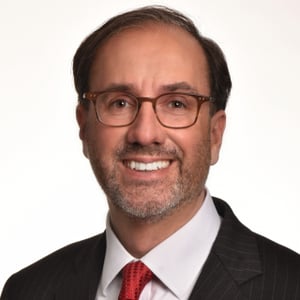
President and CEO, The Buckeye Institute
Robert Alt is the President and Chief Executive Officer of The Buckeye Institute where he has catalyzed exponential growth since he took the organization’s helm in 2012. He has since founded Buckeye’s renowned Economic Research Center and established its impactful Legal Center.
Alt is a distinguished scholar and attorney with particular expertise in legal policy, criminal justice, national security, and constitutional law. He previously worked for former U.S. Attorney General Edwin Meese III, regularly provides commentary on television and radio programs, and his writings have appeared in countless outlets.
In 2004, Alt spent five months in Iraq as an embedded war correspondent.
Alt has testified before Congress multiple times—including at the confirmation hearings for U.S. Supreme Court Justice Elena Kagan—the Federal Election Commission regarding matters of constitutional and administrative law, and numerous state legislatures.
Alt serves as an officer on the boards of The Philadelphia Society and the Federalist Society’s Columbus Lawyers Chapter. He taught national security law, criminal law, and legislation at Case Western Reserve University School of Law, as well as constitutional law and political parties and interest groups at Ashland University.
Alt earned his Doctor of Law degree from The University of Chicago Law School, where he was Symposium Editor and the winner of the Mulroy Prize for Excellence in Appellate Advocacy as well as research assistant to Professor Richard Epstein. Following law school, he clerked for Judge Alice Batchelder on the U.S. Court of Appeals for the Sixth Circuit. Alt graduated with his Bachelor of Arts in philosophy and political science magna cum laude from Azusa Pacific University where he also won the Outstanding Senior Award in Political Science.
Alt is an accomplished high-altitude alpinist and endurance athlete who has successfully climbed 6.75 of the famed Seven Summits of the World including Mount Everest. He is the creator of PROFOUND CLIMBING™ and a frequent speaker across the country and around the world on legal and public policy topics as well as effective leadership, management, decision-making, and teamwork in contexts ranging from extraordinary life/death situations to ordinary professional/business settings.
President and CEO, The Buckeye Institute
Robert Alt is the President and Chief Executive Officer of The Buckeye Institute where he has catalyzed exponential growth since he took the organization’s helm in 2012. He has since founded Buckeye’s renowned Economic Research Center and established its impactful Legal Center.
Alt is a distinguished scholar and attorney with particular expertise in legal policy, criminal justice, national security, and constitutional law. He previously worked for former U.S. Attorney General Edwin Meese III, regularly provides commentary on television and radio programs, and his writings have appeared in countless outlets.
In 2004, Alt spent five months in Iraq as an embedded war correspondent.
Alt has testified before Congress multiple times—including at the confirmation hearings for U.S. Supreme Court Justice Elena Kagan—the Federal Election Commission regarding matters of constitutional and administrative law, and numerous state legislatures.
Alt serves as an officer on the boards of The Philadelphia Society and the Federalist Society’s Columbus Lawyers Chapter. He taught national security law, criminal law, and legislation at Case Western Reserve University School of Law, as well as constitutional law and political parties and interest groups at Ashland University.
Alt earned his Doctor of Law degree from The University of Chicago Law School, where he was Symposium Editor and the winner of the Mulroy Prize for Excellence in Appellate Advocacy as well as research assistant to Professor Richard Epstein. Following law school, he clerked for Judge Alice Batchelder on the U.S. Court of Appeals for the Sixth Circuit. Alt graduated with his Bachelor of Arts in philosophy and political science magna cum laude from Azusa Pacific University where he also won the Outstanding Senior Award in Political Science.
Alt is an accomplished high-altitude alpinist and endurance athlete who has successfully climbed 6.75 of the famed Seven Summits of the World including Mount Everest. He is the creator of PROFOUND CLIMBING™ and a frequent speaker across the country and around the world on legal and public policy topics as well as effective leadership, management, decision-making, and teamwork in contexts ranging from extraordinary life/death situations to ordinary professional/business settings.
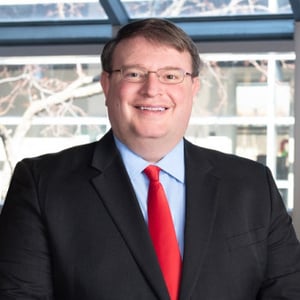
Partner, Shumaker, Loop & Kendrick, LLP
Larry builds on a wide range of experiences – including as an accomplished attorney, a former President of the Ohio Senate, and a legal academic – to help solve his clients’ most challenging legal problems. Larry focuses on complex litigation, including high-stakes appeals.
Larry is a Partner in the firm’s Litigation practice. He focuses his practice on litigation at both the trial and appellate levels and has experience in a variety of matters involving antitrust, fiduciary duties, torts, contracts, securities, and employment law. These range from standard contract disputes to constitutional challenges against federal statutes to defending against complex class actions.
In addition to his litigation practice, Larry served as a member of the Ohio Senate for nearly a decade. His colleagues unanimously elected him to serve as Senate President, the presiding officer of the 33-member chamber, from 2017-2020. During his time in the Senate, Larry successfully sponsored legislation on a wide range of topics, including education, tax law, elections administration, criminal law, and corporate law. These included a comprehensive update to Ohio’s corporate code and limited liability company law, including the sections setting out fiduciary duties for officers and shareholders. Larry also sponsored significant updates to Ohio’s Control Share Acquisition Act (which governs corporate takeovers). In 2018, he received the Ohio State Bar Association’s Lawyer-Legislator Distinguished Service Award.
Larry has also taught courses on Civil Procedure and Legislation as an adjunct law professor at Case Western Reserve University School of Law. He has published legal scholarship on a range of issues including constitutional law, education, law and economics, and securities. He has been cited in roughly 75 law journals throughout the country and by a member of the United States Supreme Court.
Larry began his legal career as a law clerk to Judge Alice M. Batchelder of the United States Court of Appeals for the Sixth Circuit. He has worked at some of the nation’s largest law firms and began his private practice by spending more than five years with Chicago-based Kirkland & Ellis LLP.
From 2018-2020, Larry was a Rodel Fellow at the Aspen Institute, a program designed to bring greater civility to public discourse. He is active in the Federalist Society and is a former board member of the Ohio Legal Assistance Foundation (now known as the Ohio Access to Justice Foundation), the statewide umbrella organization for legal aid.

Judge, United States Court of Appeals, Sixth Circuit
Judge Readler earned his undergraduate and law degrees from the University of Michigan. After graduating, he served as a law clerk to Judge Alan Norris of the United States Court of Appeals for the Sixth Circuit. Judge Readler then began practicing law in the Columbus office of the international law firm Jones Day, eventually spending ten years as a partner in the firm’s Issues and Appeals Practice Group. While at Jones Day, Judge Readler appeared in state and federal trial and appellate courts around the country, most frequently the Supreme Court of Ohio and the Sixth Circuit. Judge Readler also successfully argued before the United States Supreme Court in McQuiggin v. Perkins on behalf of an inmate claiming actual innocence. His other pro bono representations include representing capital defendants before the Tenth Circuit and the Supreme Court of Ohio, as well as representing defendants sentenced to life in prison before the Sixth Circuit. While at Jones Day, Judge Readler traveled to Nairobi with Lawyers Without Borders to train Kenyan lawyers in prosecuting domestic violence cases, and he was also a recipient of the American Marshall Memorial Fellowship awarded by the German Marshall Fund of the United States. Following his career in private practice, Judge Readler served as Acting Assistant Attorney General for the Civil Division of the United States Department of Justice from 2017 to 2019. In that role, Judge Readler led and supervised over 1,000 lawyers in the Department’s largest litigating division, briefing and arguing several cases on behalf of the United States in federal courts across the country, including high-profile cases significant to the Administration and the Department. In March 2019, Judge Readler was confirmed to serve as a Circuit Judge on the Sixth Circuit. He resides in Columbus.

Ohio, Opportunity
Matt A. Mayer is the President of Opportunity Ohio and weekly contributor on Columbus-Dayton-Cincinnati radio. In his role, he develops strategic policy positions, advises policymakers on a wide-range of issues, designs and evaluates public opinion surveys, creates educational videos and collateral material aimed at key constituencies, engages with all elements of the media, conducts fact-finding missions, and speaks to groups in America and Europe on a variety of topics. Mayer led a nine-state campaign to stop the expansion of Medicaid, and has conducted strategic policy summits for top state and national groups. Opportunity Ohio’s targeted educational videos have received more than 18.4 million views on social media in the last seven years. Mayer accurately predicted BREXIT, the election of Donald Trump, the budget deficit in Ohio in 2017-2018, the enormous enrollment in Medicaid that surpassed government estimates, Ohio’s continued mediocre private sector job market, and the Joe Biden-Kamala Harris 2020 Democratic ticket.
In 2023, Mayer spent nine months exploring an outsider run for Ohio Governor that involved speaking to thousands of Ohioans in fifty-six out of Ohio’s eighty-eight counties. Ultimately, Mayer ended the exploratory effort after not reaching internal non-financial benchmarks and determining that a major non-Establishment figure likely would run and overwhelm Mayer with his personal fortune and extensive media exposure.
Mayer has written and spoken extensively on the importance of competitive federalism in renewing the American promise. Previously, Mayer served as a monthly columnist for The Spectator USA and U.S. News & World Report, a Visiting Fellow for the American Enterprise Institute, and a Visiting Scholar for the Heritage Foundation in Washington, D.C. where he wrote extensively on national security issues. You can follow him on Twitter (@ohiomatt) and all of his op-eds can be found on his Substack page, The Patriot Mind.
Mayer has worked in public policy and politics at both the state and federal levels. He was a senior official at the U.S. Department of Homeland Security where he provided DHS leaders with policy and operational advice as the Counselor to the Deputy Secretary, including participating in crisis management activities following Hurricane Katrina. He also headed the $3.5 billion terrorism preparedness office charged with developing initiatives to transform America to meet the demands of a post-9/11 environment. Mayer engaged in bilateral counterterrorism exchanges with the United Kingdom and Israel, did briefings in The White House Situation Room and at NATO, and headed America’s largest full-scale national exercise focused on a pandemic virus attack (fifteen years before the COVID pandemic).
Mayer came to DHS from Colorado where he served as the Deputy Director for the Department of Regulatory Agencies under Colorado Governor Bill Owens. He co-developed Colorado’s Regulatory Notice system that utilizes electronic mail to notify stakeholders of all proposed regulations before those regulations become final. The Regulatory Notice system earned the Denver Business Journal’s 2003 “Innovative Product/Service Award” for making government more transparent and accountable. Mayer’s concept of restoring federalism received the runner-up prize in the 2012 Better Government Competition.
Mayer was a 2007 Lincoln Fellow with The Claremont Institute for the Study of Statesmanship and Political Philosophy and a 2006 American Marshall Memorial Fellow with the German Marshall Fund of the United States. In September 2005, The Ohio State University Alumni Association awarded Mayer the William Thompson Oxley Award for early career achievement. Mayer received the Colorado Statesman’s “Rising Star Award” for his management of a congressional campaign and as a deputy on a U.S. Senate campaign in Colorado. At the age of 29, the Denver Business Journal recognized Mayer as one of Colorado’s young leaders by naming him to its “Forty Under 40” list–one of only three recipients under the age of 30 (one of the other two was current Colorado Governor Jared Polis).
Mayer has written three books: The Founding Debate: Where Should the Power Over Our Lives Reside, Taxpayers Don’t Stand a Chance: How Battleground Ohio Loses No Matter Who Wins (and What to Do About It), and Homeland Security and Federalism: Protecting America from Outside the Beltway (with Foreword by the Honorable Edwin Meese III). He has written articles for law reviews, public policy journals, and newspapers, including the Wall Street Journal, CNN, Fox News, USA Today, and Politico; given testimony to the U.S. Congress, the Texas House and Senate, and the Ohio House and Senate; and appeared on Fox News, C-SPAN, ABC, NBC, and other major media outlets.
Mayer graduated from the University of Dayton and received his law degree from The Ohio State University College of Law.
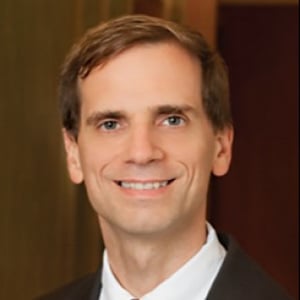
Judge, United States Court of Appeals, District of Columbia Circuit
Judge Katsas was appointed to the D.C. Circuit in December 2017. He graduated from Princeton University and Harvard Law School, where he was an executive editor on the Harvard Law Review. Between 1989 and 1992, he served as a law clerk to Judge Edward Becker on the Third Circuit, to then-Judge Clarence Thomas on the D.C. Circuit, and to Justice Thomas on the Supreme Court. Between 1992 and 2001, he was an associate and then partner in the Washington office of Jones Day, where he specialized in appellate and complex civil litigation. Between 2001 and 2009, he served in many senior positions in the Department of Justice, including as Assistant Attorney General for the Civil Division and as Acting Associate Attorney General. In 2009, he returned to Jones Day. From January to December 2017, he served as Deputy Assistant to the President and Deputy Counsel to the President.
Before joining the bench, Judge Katsas argued more than 75 appeals, including three cases in the Supreme Court, 13 cases in the D.C. Circuit, and cases in every other federal court of appeals. By appointment of the Chief Justice, he served on the Advisory Committee on Appellate Rules from 2013 to 2017. In 2016, he was elected to membership in the American Academy of Appellate Lawyers.
Jacob E. Davis and Jacob E. Davis II Chair in Law, Moritz Colleg, The Ohio State University
Professor Shane came to Ohio State in 2003 from Carnegie Mellon University's H. John Heinz III School of Public Policy and Management. He is an internationally recognized scholar in administrative law, with a specialty in separation of powers law, and has co-authored leading casebooks on each subject. He has served on the faculty at the University of Iowa College of Law and was dean at the University of Pittsburgh School of Law.
In addition to his outstanding law teaching and scholarship, Professor Shane has received a National Science Foundation grant for interdisciplinary study related to cyberspace and democracy. At Ohio State, he provides strong leadership in interdisciplinary scholarship and teaching.

Executive Director, Ohio Dental Association
David J. Owsiany is the executive director of the Ohio Dental Association and a past president of the Columbus Lawyers Chapter of the Federalist Society.
He has served as CEO of a statewide health care association, president of the Buckeye Institute, chief of policy for the Ohio Department of Insurance, judicial law clerk for the Illinois Appellate Court, and staffer on the United State Senate Judiciary Committee.
Mr. Owsiany has written dozens of articles on legal and public policy issues for various publications, including the University of Toledo Law Review, the Federalist Society's State Court Docket Watch, Columbus Dispatch, Cincinnati Enquirer, Crain’s Cleveland Business, and Akron Beacon Journal.
Owsiany received his J.D. from Washington University School of Law in St. Louis and B.A. from the University of Michigan in Ann Arbor.
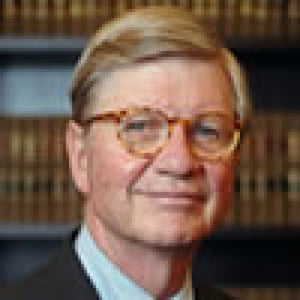
Justice in Residence and Visiting Professor of Law, Ave Maria School of Law
Professor Taylor is a retired Chief Justice of the Michigan Supreme Court and served over 16 years as an appellate judge in Michigan. He is a graduate of the University of Michigan and received his J.D. from George Washington University Law School. After service as an officer in the US Navy, he began his legal career as an Assistant Prosecuting Attorney in Michigan and then practiced in a Lansing, Michigan, law firm, Denfield, Timmer and Taylor, for 19 years earning the highest ratings as to competence and character. He has lectured at law schools across the United States, been published in numerous law reviews and was the co-author of a three volume Michigan Practice Guide on Torts. He has served on the Board of Directors of the National Conference of Chief Justices, was a member, and then President, of the Michigan State Board of Law Examiners and served on the Board of Directors of the George Mason University Law School's Law and Economics Center.
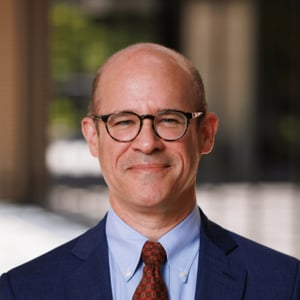
Professor of Law, Stanford Law School
Orin S. Kerr is a Professor of Law at Stanford Law School, where he teaches and writes in the areas of criminal procedure and computer crime law. Kerr earned mechanical engineering degrees from Princeton University and Stanford University before graduating with a J.D. from Harvard Law School. He is a former law clerk to Justice Anthony M. Kennedy at the United States Supreme Court and Judge Leonard I. Garth of the U.S. Court of Appeals for the Third Circuit.
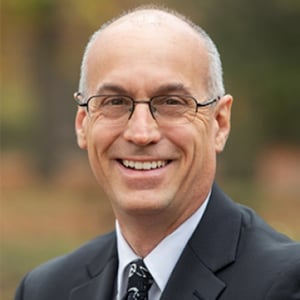
Associate Dean for Faculty and Intellectual Life, Ohio State University Moritz College of Law
Ric Simmons is the Associate Dean for Faculty and Intellectual Life and the Jacob E. Davis and Jacob E. Davis II Chair in Law at Moritz. He teaches Evidence, Criminal Law, Criminal Procedure, and Computer Crime and Surveillance.
An accomplished legal scholar, Professor Simmons’ research focuses on the intersection of the Fourth Amendment and new technology. He has written about the use of big data in the criminal justice system, searches of cell phones and other electronic devices, and hyper-intrusive surveillance devices. He has also written about the privatization of the criminal justice system and the role of the prosecutor. Professor Simmons is the author of Smart Surveillance: How to Interpret the Fourth Amendment in the Twenty-First Century (Cambridge Press 2019), and Private Criminal Justice: How Private Parties are Enforcing Criminal Law and Transforming Our Justice System (2023), and he has co-authored four casebooks and two hornbooks. His scholarship has also appeared in leading legal journals, including the Duke Law Journal, the Boston University Law Review, and the George Washington Law Review.
Before coming to Moritz, Simmons was an acting assistant professor at New York University School of Law. Before that, he clerked for the Honorable Laughlin E. Waters of the Central District of California and then served for four years as an assistant district attorney for New York County.
Professor Simmons is a national expert on the grand jury and served on the Ohio Supreme Court’s Grand Jury Task Force. He has also been a recipient of the Ohio State University Alumni Award for Distinguished Teaching and has won the Morgan E. Shipman Outstanding Professor Award six times.
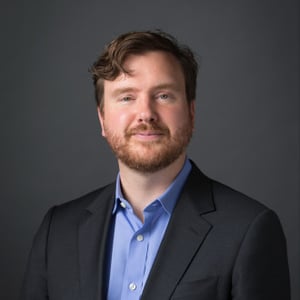
President and CEO, Foundation for Individual Rights in Education (FIRE)
Greg Lukianoff is an attorney, New York Times best-selling author, and the President and CEO of the Foundation for Individual Rights in Education (FIRE). He is the author of Unlearning Liberty: Campus Censorship and the End of American Debate, Freedom From Speech, and FIRE’s Guide to Free Speech on Campus. Most recently, he co-authored The Coddling of the American Mind: How Good Intentions and Bad Ideas Are Setting Up a Generation for Failure with Jonathan Haidt. This New York Times best-seller expands on their September 2015 Atlantic cover story of the same name. Greg is also an Executive Producer of Can We Take a Joke? (2015), a feature-length documentary that explores the collision between comedy, censorship, and outrage culture, both on and off campus, and of Mighty Ira: A Civil Liberties Story (2020), a feature-length film about the life and career of former ACLU Executive Director Ira Glasser.
Greg has been published in The New York Times, The Wall Street Journal, The Washington Post, Los Angeles Times, The Boston Globe, and numerous other publications. He frequently appears on TV shows and radio programs, including the CBS Evening News, The Today Show, and NPR’s Morning Edition. In 2008, he became the first-ever recipient of the Playboy Foundation’s Freedom of Expression Award, and he has testified before both the U.S. Senate and the House of Representatives about free speech issues on America’s college campuses.
Ohio, Opportunity
Matt A. Mayer is the President of Opportunity Ohio and weekly contributor on Columbus-Dayton-Cincinnati radio. In his role, he develops strategic policy positions, advises policymakers on a wide-range of issues, designs and evaluates public opinion surveys, creates educational videos and collateral material aimed at key constituencies, engages with all elements of the media, conducts fact-finding missions, and speaks to groups in America and Europe on a variety of topics. Mayer led a nine-state campaign to stop the expansion of Medicaid, and has conducted strategic policy summits for top state and national groups. Opportunity Ohio’s targeted educational videos have received more than 18.4 million views on social media in the last seven years. Mayer accurately predicted BREXIT, the election of Donald Trump, the budget deficit in Ohio in 2017-2018, the enormous enrollment in Medicaid that surpassed government estimates, Ohio’s continued mediocre private sector job market, and the Joe Biden-Kamala Harris 2020 Democratic ticket.
In 2023, Mayer spent nine months exploring an outsider run for Ohio Governor that involved speaking to thousands of Ohioans in fifty-six out of Ohio’s eighty-eight counties. Ultimately, Mayer ended the exploratory effort after not reaching internal non-financial benchmarks and determining that a major non-Establishment figure likely would run and overwhelm Mayer with his personal fortune and extensive media exposure.
Mayer has written and spoken extensively on the importance of competitive federalism in renewing the American promise. Previously, Mayer served as a monthly columnist for The Spectator USA and U.S. News & World Report, a Visiting Fellow for the American Enterprise Institute, and a Visiting Scholar for the Heritage Foundation in Washington, D.C. where he wrote extensively on national security issues. You can follow him on Twitter (@ohiomatt) and all of his op-eds can be found on his Substack page, The Patriot Mind.
Mayer has worked in public policy and politics at both the state and federal levels. He was a senior official at the U.S. Department of Homeland Security where he provided DHS leaders with policy and operational advice as the Counselor to the Deputy Secretary, including participating in crisis management activities following Hurricane Katrina. He also headed the $3.5 billion terrorism preparedness office charged with developing initiatives to transform America to meet the demands of a post-9/11 environment. Mayer engaged in bilateral counterterrorism exchanges with the United Kingdom and Israel, did briefings in The White House Situation Room and at NATO, and headed America’s largest full-scale national exercise focused on a pandemic virus attack (fifteen years before the COVID pandemic).
Mayer came to DHS from Colorado where he served as the Deputy Director for the Department of Regulatory Agencies under Colorado Governor Bill Owens. He co-developed Colorado’s Regulatory Notice system that utilizes electronic mail to notify stakeholders of all proposed regulations before those regulations become final. The Regulatory Notice system earned the Denver Business Journal’s 2003 “Innovative Product/Service Award” for making government more transparent and accountable. Mayer’s concept of restoring federalism received the runner-up prize in the 2012 Better Government Competition.
Mayer was a 2007 Lincoln Fellow with The Claremont Institute for the Study of Statesmanship and Political Philosophy and a 2006 American Marshall Memorial Fellow with the German Marshall Fund of the United States. In September 2005, The Ohio State University Alumni Association awarded Mayer the William Thompson Oxley Award for early career achievement. Mayer received the Colorado Statesman’s “Rising Star Award” for his management of a congressional campaign and as a deputy on a U.S. Senate campaign in Colorado. At the age of 29, the Denver Business Journal recognized Mayer as one of Colorado’s young leaders by naming him to its “Forty Under 40” list–one of only three recipients under the age of 30 (one of the other two was current Colorado Governor Jared Polis).
Mayer has written three books: The Founding Debate: Where Should the Power Over Our Lives Reside, Taxpayers Don’t Stand a Chance: How Battleground Ohio Loses No Matter Who Wins (and What to Do About It), and Homeland Security and Federalism: Protecting America from Outside the Beltway (with Foreword by the Honorable Edwin Meese III). He has written articles for law reviews, public policy journals, and newspapers, including the Wall Street Journal, CNN, Fox News, USA Today, and Politico; given testimony to the U.S. Congress, the Texas House and Senate, and the Ohio House and Senate; and appeared on Fox News, C-SPAN, ABC, NBC, and other major media outlets.
Mayer graduated from the University of Dayton and received his law degree from The Ohio State University College of Law.

Public Pension Reform in Ohio and Beyond
Cleveland, OhioOhio State Charter Schools
Overcriminalizing the Buckeye State? Criminal-Law Trends in Ohio and the Threat to Liberty and Commerce
Columbus, OhioMatt Mayer
A Discussion on Homeland Security
Columbus, OhioSelecting Ohio’s Judges: A Debate on Elections and Alternatives
The Fourth Amendment and the Internet
Columbus, OhioThe Supreme Court: Must-See Cases on the Docket This Term
Unlearning Liberty: Speech Codes on Our Nation’s College Campuses
Homeland Security & Federalism: Protecting America from Outside the Beltway