
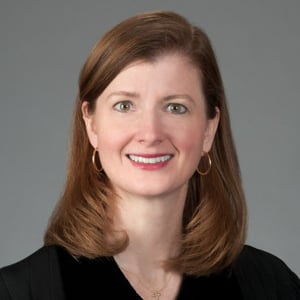
Judge, United States Court of Appeals, Eleventh Circuit
On March 20, 2018, Judge Elizabeth L. Branch (Lisa) was sworn in as a United States Circuit Judge for the Eleventh Circuit.
Judge Branch attended and graduated from Davidson College in North Carolina (B.A., cum laude, 1990), and Emory University School of Law (J.D., with distinction, 1994).
After graduating from law school, Judge Branch served as a federal law clerk to The Honorable J. Owen Forrester of the U.S. District Court for the Northern District of Georgia from 1994 to 1996. Following her clerkship, Judge Branch joined the litigation department of Smith, Gambrell & Russell, LLP in Atlanta as an associate and then a partner.
From 2004 to 2008, Judge Branch was a senior official in the Administration of President George W. Bush in Washington, D.C. She served first as the Associate General Counsel for Rules and Legislation at the U.S. Department of Homeland Security and then as the Counselor to the Administrator of the Office of Information and Regulatory Affairs at the U. S. Office of Management and Budget.
She returned to Smith Gambrell in 2008 as a litigation partner. Judge Branch then was appointed to the Court of Appeals of Georgia by Governor Nathan Deal, taking office on September 4, 2012, where she served until March 19, 2018.
Judge Branch is a member of the Board of Advisors of the Atlanta Lawyers Chapter for the Federalist Society for Law and Public Policy Studies.
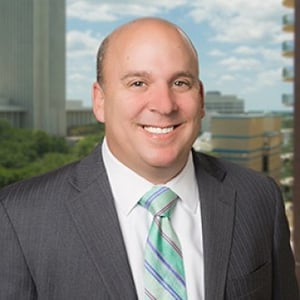
General Counsel, Citizens Property Insurance Corporation
Tim Cerio is the General Counsel for Citizens Property Insurance Corporation. Prior to joining Citizens, Tim practiced administrative and health care law with GrayRobinson, PA. Tim formerly served as General Counsel to Governor Rick Scott, and also as General Counsel, and later Chief of Staff, of the Florida Department of Health. Tim currently serves on the Board of Governors of the State University System of Florida, the constitutional body charged with overseeing Florida’s twelve public universities. He is also a member of the Board of Directors of the James Madison Institute. Tim was a member of the 2017-2018 Constitution Revision Commission, which is convened once every twenty years for the purpose of reviewing Florida’s constitution and proposing amendments for voter consideration. Tim also formerly served on the First District Court of Appeal Judicial Nominating Commission. Tim and his family live in Tallahassee, Florida.
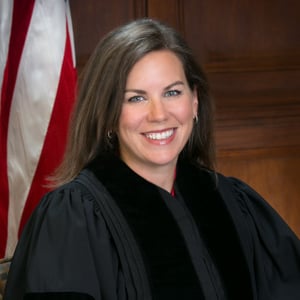
Judge, United States Court of Appeals, Eleventh Circuit
Britt C. Grant is a judge on the U.S. Court of Appeals for the Eleventh Circuit. Judge Grant was appointed to the federal bench in August 2018 after serving as a Justice on the Supreme Court of Georgia. Prior to her judicial appointment, she served as the Solicitor General of Georgia and practiced in the Washington, D.C. office of Kirkland & Ellis. Upon graduation from law school, Judge Grant served as a law clerk to then-Judge Brett M. Kavanaugh of the U.S. Court of Appeals for the District of Columbia Circuit. She earned her J.D., with distinction, from Stanford Law School, where she was the Co-Founder of the Stanford National Security and the Law Society, and the President of the Stanford Law chapter of the Federalist Society. Before enrolling in law school, Judge Grant served in The White House in a variety of domestic policy roles as well as on the staff of Congressman Nathan Deal. Judge Grant earned her B.A., summa cum laude, from Wake Forest University, where she was inducted into Phi Beta Kappa. She now lives in Atlanta, Georgia with her husband and three children.
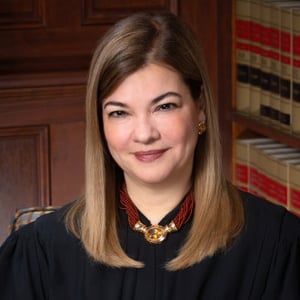
Judge, United States Court of Appeals, Eleventh Circuit
Judge Barbara Lagoa was born in Miami, Florida. She received her Bachelor of Arts cum laude in 1989 from Florida International University where she majored in English and was a member of the Phi Kappa Phi honor society. Judge Lagoa received her Juris Doctor from Columbia University School of Law in 1992, where she served as an Associate Editor of the Columbia Law Review. She is fluent in English and Spanish. On December 6, 2019, she received her commission as a judge on the U.S. Eleventh Circuit Court of Appeals from President Donald Trump.
On January 9, 2019, she became the first Hispanic woman and the first Cuban American woman appointed to serve on the Florida Supreme Court. Prior to her appointment by Governor Ron DeSantis to the Florida Supreme Court, Governor Jeb Bush appointed her in June of 2006 to serve on the Third District Court of Appeal. At that court, she became the first Hispanic woman and the first Cuban American woman appointed to serve on the Third District Court of Appeal. On January 1, 2019, she became the first Hispanic female Chief Judge of the Third District Court of Appeal.
Prior to joining the bench, Judge Lagoa practiced in both the civil and criminal arenas. Her civil practice at Greenberg Traurig focused on general and complex commercial litigation, particularly the areas of employment discrimination, business torts, securities litigation, construction litigation, and insurance coverage disputes. In 2003, she joined the United States Attorney’s Office for the Southern District of Florida as an Assistant United States Attorney, where she worked in the Civil, Major Crimes and Appellate Sections. As an Assistant United States Attorney, she tried numerous criminal jury trials, including drug conspiracies and Hobbs Act violations. She also handled a significant number of appeals.
While a practicing lawyer, Judge Lagoa was admitted to The Florida Bar, the United States District Courts for the Middle and Southern Districts of Florida, and the United States Court of Appeals for the Eleventh Circuit. She was also a member of many local, state, and national professional groups including the Dade County Bar Association, and the Florida Association for Women Lawyers.
Judge Lagoa’s civic and community activities include service on the Board of Directors for the YWCA of Greater Miami and Dade County, the Film Society of Miami, Kristi House, and the FIU Alumni Association. She was also a member of the Federal Judicial Nominating Commission. She is currently a member of the Eugene P. Spellman and William Hoeveler Chapter of the American Inns of Court.
Judge Lagoa is married to Paul C. Huck, Jr., an attorney. They have three daughters.
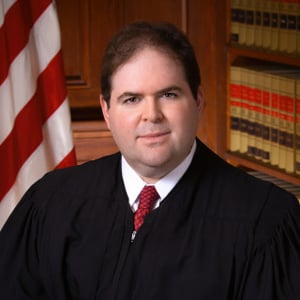
Judge, United States Court of Appeals, Eleventh Circuit
On November 19, 2019, Judge Robert J. Luck was appointed to the United States Court of Appeals for the Eleventh Circuit by President Donald Trump. Prior to serving on the federal bench, he was appointed to the Florida Supreme Court by Governor Ron DeSantis on January 14, 2019. He previously served on the Third District Court of Appeal in Miami after his appointment there by Governor Rick Scott in March 2017.
Earlier, Judge Luck served on the Eleventh Judicial Circuit Court of Florida from September 2013 to March 2017. He presided in the Criminal, Civil, and Appellate Divisions. Judge Luck, in his years as a trial court judge, tried seventy jury trials, and heard dozens of appeals from the county court and municipal agencies. Judge Luck was appointed to the circuit court in 2013 and was elected by the voters of Miami-Dade County to retain his seat in 2016.
Prior to his service on the bench, Judge Luck was an Assistant United States Attorney for the Southern District of Florida. In his years as a federal prosecutor, he was assigned to the Appeals, Major Crimes, and Economic Crimes Sections of the U.S. Attorney’s Office. Judge Luck tried nineteen jury trials before the federal district court and argued three appeals to the United States Court of Appeals for the Eleventh Circuit. In his final year in the Office, he was a Deputy Chief in the Major Crimes Section.
Earlier in his career, Judge Luck was a legislative correspondent for two United States Senators, a law clerk and staff attorney to Circuit Judge Edward E. Carnes on the United States Court of Appeals for the Eleventh Circuit, and a part of the Greenberg Traurig firm’s appellate section. Judge Luck received his Juris Doctor from the University of Florida Levin College of Law magna cum laude and was asked to join the Order of the Coif. Judge Luck also served as Editor-in-Chief of the Florida Law Review. Judge Luck received his Bachelor of Arts in Economics from the University of Florida with highest honors.
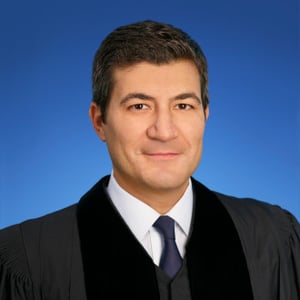
Judge, United States District Court, Southern District of Florida
Rodolfo “Rudy” Armando Ruiz II is a District Judge of the United States District Court for the Southern District of Florida. Prior to his judicial commission on May 3, 2019, Ruiz was a Circuit Court Judge for the Eleventh Judicial Circuit of Florida from 2014 through 2019, and a Miami-Dade County Court Judge from 2012 through 2014. Ruiz also served as an Assistant County Attorney with the Miami-Dade County Attorney’s Office and an associate with White & Case LLP.
Ruiz received a Bachelor of Science in Economics from Duke University and earned his Juris Doctor from Georgetown University. After graduating from law school, he was a law clerk to the Honorable Federico A. Moreno of the United States District Court for the Southern District of Florida.
Judge, United States Court of Appeals, Eleventh Circuit
Britt C. Grant is a judge on the U.S. Court of Appeals for the Eleventh Circuit. Judge Grant was appointed to the federal bench in August 2018 after serving as a Justice on the Supreme Court of Georgia. Prior to her judicial appointment, she served as the Solicitor General of Georgia and practiced in the Washington, D.C. office of Kirkland & Ellis. Upon graduation from law school, Judge Grant served as a law clerk to then-Judge Brett M. Kavanaugh of the U.S. Court of Appeals for the District of Columbia Circuit. She earned her J.D., with distinction, from Stanford Law School, where she was the Co-Founder of the Stanford National Security and the Law Society, and the President of the Stanford Law chapter of the Federalist Society. Before enrolling in law school, Judge Grant served in The White House in a variety of domestic policy roles as well as on the staff of Congressman Nathan Deal. Judge Grant earned her B.A., summa cum laude, from Wake Forest University, where she was inducted into Phi Beta Kappa. She now lives in Atlanta, Georgia with her husband and three children.
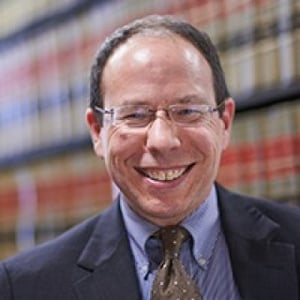
Professor of Law, Michigan State University (currently serving as FCC General Counsel)
Professor Candeub joined the MSU Law faculty in fall 2004. He is also a Fellow with MSU's Institute of Public Utilities. Prior to joining MSU, he served as an advisor at the Federal Communications Commission (FCC). From 1998 to 2000, Professor Candeub was a litigation associate for the Washington D.C. firm of Jones, Day, Reavis & Pogue and also has served as a corporate associate with Cleary, Gottlieb, Steen & Hamilton, also in Washington, D.C. Immediately following law school, he clerked for Chief Judge J. Clifford Wallace, U.S. Court of Appeals for the Ninth Circuit. While in law school, Professor Candeub was an articles editor for the University of Pennsylvania Law Review.
Professor Candeub's scholarly interests focus on the law and regulation of communications, internet, technology. His numerous law review articles and scholarly papers have placed him at the center of legal and policy controversies, and he often writes for popular outlets such as the Wall Street Journal and US News. Federal courts, including the U.S. Supreme Court, have cited and relied upon his work.
He joined the Trump administration in 2019 as Deputy Assistant Secretary of Commerce for Telecommunications and Information and assumed the role of Acting Assistant Secretary. He later joined the Department of Justice as Deputy Associate Attorney General.
Professor Candeub is a senior fellow at the D.C.-based Center of Renewing America.
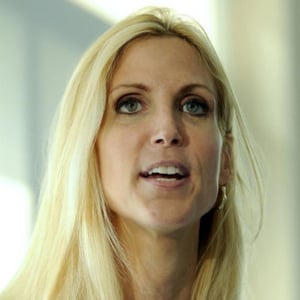
Author and Columnist
Ann Coulter is the author of THIRTEEN New York Times bestsellers — In Trump We Trust: E Pluribus Awesome!; Adios, America; Never Trust a Liberal Over Three-Especially a Republican Mugged: Racial Demagoguery from the Seventies to Obama (September 2012); Demonic: How the Liberal is Endangering America (June 2011); Guilty: Liberal Victims and Their Assault on America (January 2009); If Democrats Had Any Brains, They'd Be Republicans (October, 2007); Godless: The Church of Liberalism (June 2006); How to Talk to a Liberal (If You Must) (October, 2004); Treason: Liberal Treachery From the Cold War to the War on Terrorism (June 2003); Slander: Liberal Lies About the American Right (June 2002); and High Crimes and Misdemeanors:The Case Against Bill Clinton (August 1998).
On August 21, 2018, she released, Resistance Is Futile!: How the Trump-Hating Left Lost Its Collective Mind
Coulter is the legal correspondent for Human Events and writes a popular syndicated column for Universal Press Syndicate.
She is a frequent guest on many TV shows, including Good Morning Britain, Yahoo News, HBO’s Real Time with Bill Maher, The Today Show, Good Morning America, The Early Show, The Tonight Show and has been profiled in numerous publications, including TV Guide, the Guardian (UK), the New York Observer, National Journal, Harper’s Bazaar, The Washington Post, The New York Times and Elle magazine. She was the April 25, 2005 cover story of Time magazine. In 2001, Coulter was named one of the top 100 Public Intellectuals by federal judge Richard Posner.
A Connecticut native, Coulter graduated with honors from Cornell University School of Arts & Sciences, and received her J.D. from University of Michigan Law School, where she was an editor of The Michigan Law Review.
Coulter clerked for the Honorable Pasco Bowman II of the United States Court of Appeals for the Eighth Circuit and was an attorney in the Department of Justice Honors Program for outstanding law school graduates.
After practicing law in private practice in New York City, Coulter worked for the Senate Judiciary Committee, where she handled crime and immigration issues for Senator Spencer Abraham of Michigan. From there, she became a litigator with the Center For Individual Rights in Washington, DC, a public interest law firm dedicated to the defense of individual rights with particular emphasis on freedom of speech, civil rights, and the free exercise of religion.
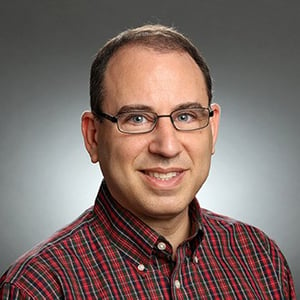
Professor of Law and Co-Director, High Tech Law Institute, Santa Clara University School of Law
Eric Goldman is a Professor of Law, and Co-Director of the High Tech Law Institute, at Santa Clara University School of Law. Before he became a full-time academic in 2002, he practiced Internet law for 8 years in the Silicon Valley. His research and teaching focuses on Internet, IP and advertising law topics, and he blogs on these topics at the Technology & Marketing Law Blog [http://blog.ericgoldman.org]. Managing IP magazine has twice named him to a shortlist of North American “IP Thought Leaders,” and he has been named an “IP Vanguard” by the California State Bar’s IP Section.
Judge, United States Court of Appeals, Eleventh Circuit
Britt C. Grant is a judge on the U.S. Court of Appeals for the Eleventh Circuit. Judge Grant was appointed to the federal bench in August 2018 after serving as a Justice on the Supreme Court of Georgia. Prior to her judicial appointment, she served as the Solicitor General of Georgia and practiced in the Washington, D.C. office of Kirkland & Ellis. Upon graduation from law school, Judge Grant served as a law clerk to then-Judge Brett M. Kavanaugh of the U.S. Court of Appeals for the District of Columbia Circuit. She earned her J.D., with distinction, from Stanford Law School, where she was the Co-Founder of the Stanford National Security and the Law Society, and the President of the Stanford Law chapter of the Federalist Society. Before enrolling in law school, Judge Grant served in The White House in a variety of domestic policy roles as well as on the staff of Congressman Nathan Deal. Judge Grant earned her B.A., summa cum laude, from Wake Forest University, where she was inducted into Phi Beta Kappa. She now lives in Atlanta, Georgia with her husband and three children.
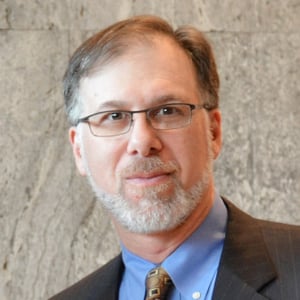
Partner, Schaerr | Jaffe LLP
Erik Jaffe has been involved in appeals on a broad range of legal issues, including First Amendment challenges to campaign finance reform, Commerce Clause challenges to Health Care Reform and other federal legislation, Equal Protection Clause challenges to affirmative action in education, First Amendment challenges to school vouchers, Fifth Amendment challenges to takings of property, Second Amendment challenges to restrictions on gun ownership, and a wide variety of cases involving patents, copyrights, ERISA, securities fraud, federal preemption, environmental regulation, and other state and federal constitutional and statutory matters. He has represented businesses and non-profit groups, Judges, Senators, former government officials, Nobel Prize winners, and a broad cross-section of private individuals. Mr. Jaffe has been involved in over 120 Supreme Court matters, including filing over 30 cert. petitions, representing half-a-dozen parties on the merits, and filing over 70 amicus briefs at both the cert. and merits stages.
A 1990 graduate of the Columbia University School of Law, Mr. Jaffe was a law clerk to Judge Douglas H. Ginsburg of the United States Court of Appeals for the District of Columbia Circuit from 1990 to 1991. Following that clerkship he spent five years in litigation practice with the Washington, D.C. law firm of Williams & Connolly. In the summer of 1996 he left Williams & Connolly to clerk for Supreme Court Justice Clarence Thomas. At the end of that clerkship he started his own practice, and he was a sole practitioner from 1997 to 2018. He joined the firm of Schaerr | Jaffe LLP in 2018.

Thomas M. Siebel Senior Fellow, The Hoover Institution, Stanford University; Gary T. Schwartz Distinguished Professor of Law Emeritus, UCLA School of Law
Eugene Volokh is the Thomas M. Siebel Senior Fellow at the Hoover Institution (Stanford), as well as the Gary T. Schwartz Distinguished Professor of Law Emeritus and Distinguished Research Professor at UCLA School of Law. He recently retired from teaching at UCLA, after 30 years there, and is now focusing on research.
Volokh is the author of the textbooks The First Amendment and Related Statutes (8th ed. 2023), and Academic Legal Writing (5th ed. 2016), as well as over 100 academic law journal articles, mostly on First Amendment law. He is a member of The American Law Institute; the editor-in-chief of the Journal of Free Speech Law; and the creator and coauthor of The Volokh Conspiracy, a leading legal blog founded in 2002 (hosted at the Washington Post from 2014 to 2017 and now at Reason Magazine).
Judge, United States Court of Appeals, Eleventh Circuit
On March 20, 2018, Judge Elizabeth L. Branch (Lisa) was sworn in as a United States Circuit Judge for the Eleventh Circuit.
Judge Branch attended and graduated from Davidson College in North Carolina (B.A., cum laude, 1990), and Emory University School of Law (J.D., with distinction, 1994).
After graduating from law school, Judge Branch served as a federal law clerk to The Honorable J. Owen Forrester of the U.S. District Court for the Northern District of Georgia from 1994 to 1996. Following her clerkship, Judge Branch joined the litigation department of Smith, Gambrell & Russell, LLP in Atlanta as an associate and then a partner.
From 2004 to 2008, Judge Branch was a senior official in the Administration of President George W. Bush in Washington, D.C. She served first as the Associate General Counsel for Rules and Legislation at the U.S. Department of Homeland Security and then as the Counselor to the Administrator of the Office of Information and Regulatory Affairs at the U. S. Office of Management and Budget.
She returned to Smith Gambrell in 2008 as a litigation partner. Judge Branch then was appointed to the Court of Appeals of Georgia by Governor Nathan Deal, taking office on September 4, 2012, where she served until March 19, 2018.
Judge Branch is a member of the Board of Advisors of the Atlanta Lawyers Chapter for the Federalist Society for Law and Public Policy Studies.
Judge, United States Court of Appeals, Eleventh Circuit
Britt C. Grant is a judge on the U.S. Court of Appeals for the Eleventh Circuit. Judge Grant was appointed to the federal bench in August 2018 after serving as a Justice on the Supreme Court of Georgia. Prior to her judicial appointment, she served as the Solicitor General of Georgia and practiced in the Washington, D.C. office of Kirkland & Ellis. Upon graduation from law school, Judge Grant served as a law clerk to then-Judge Brett M. Kavanaugh of the U.S. Court of Appeals for the District of Columbia Circuit. She earned her J.D., with distinction, from Stanford Law School, where she was the Co-Founder of the Stanford National Security and the Law Society, and the President of the Stanford Law chapter of the Federalist Society. Before enrolling in law school, Judge Grant served in The White House in a variety of domestic policy roles as well as on the staff of Congressman Nathan Deal. Judge Grant earned her B.A., summa cum laude, from Wake Forest University, where she was inducted into Phi Beta Kappa. She now lives in Atlanta, Georgia with her husband and three children.

Chief Judge, United States Court of Appeals, Eleventh Circuit
William H. Pryor Jr. serves as Chief Circuit Judge on the United States Court of Appeals for the Eleventh Circuit.
In 2013–18, he served on the United States Sentencing Commission and, in 2017–18, served as Acting Chair.
He has taught as a visiting professor at the University of Alabama School of Law and previously taught as an adjunct professor at the Cumberland School of Law of Samford University.
He served as the 45th Attorney General of Alabama from 1997 to 2004. When he took office, he was the youngest attorney general in the nation. In his reelection, he received the highest percentage of votes of any statewide candidate.
He graduated magna cum laude from Tulane Law School where he finished first in the common-law curriculum and was editor in chief of the Tulane Law Review. He then served as a law clerk for Judge John Minor Wisdom of the U.S. Court of Appeals for the Fifth Circuit.
He is a member of The American Law Institute and an Adviser for the RESTATEMENT OF THE LAW THIRD, CONFLICT OF LAWS. He is a coauthor with Bryan Garner, Justices Gorsuch and Kavanaugh, and several other judges of a treatise, THE LAW OF JUDICIAL PRECEDENT. He has published in the Yale Law Journal, Columbia Law Review, Virginia Law Review, Notre Dame Law Review, Harvard Journal of Law & Public Policy, Yale Law & Policy Review, George Mason Law Review, Florida Law Review, Alabama Law Review, Case Western Reserve Law Review, and Tulane Law Review. He has published op-eds in The Wall Street Journal, The New York Times, National Review, and USA Today. He has debated at National Lawyers’ Conventions of the Federalist Society (including on National Public Radio) and at the Oxford Union in the United Kingdom. And he is listed among several “widely admired judicial writers” in Bryan Garner’s The Redbook: A Manual on Legal Style.
He is a member of the Tulane Law School Hall of Fame and has received the Defender of the Constitution Award from the Heritage Foundation, the Jurist of the Year Award from the Texas Review of Law & Politics, and the St. Thomas More Award from the St. Thomas More Society of Atlanta. Judge Pryor is also a proud member of the National Society of the Sons of the American Revolution.

Laurence A. Tisch Professor of Law and Director, Classical Liberal Institute, New York University School of Law; Director, Classical Liberal Institute, Civitas Institute University of Texas at Austin
Richard A. Epstein is the Laurence A. Tisch Professor of Law, at New York University, a senior research fellow at the Civitas Institute at the University of Texas Austin, and a senior Lecturer, the University of Chicago. He received an LL.D., h.c . from the University of Ghent, 2003 , and an LLD h.c . from the University of Siegen in 2018 and the Bradley Prize in 2011. He has been a member of the American Academy of Arts and Sciences since 1985. He has edited both the Journal of Legal Studies (1981-1991) and the Journal of Law and Economics (1991-2001). He is also a founder and director of the Classical Liberal Institute at NYU Law School. His most recent book is The Classical Liberal Constitution: The Uncertain Quest for Limited Government (2014). His other books include Takings: Private Property and the Power of Eminent Domain ( 1985); Bargaining with the State (1993); Simple Rules for a Complex World (1995); Principles for a Free Society: Reconciling Individual Liberty and the Common Good (1998); Skepticism and Freedom: A Modern Theory of Classical Liberalism (2003); Design for Liberty: Private Property, Public Administration and the Rule of Law (2011), and most recently, The Myth of Birthright citizenship—and Beyond (2026). He has taught courses in , administrative law, antitrust, constitutional, contracts, environmental law, land use planning; real property, torts and water law. He has written and spoken extensively on a wide range of topics, and is writes a regular column for Defining Ideas.
Judge, United States Court of Appeals, Eleventh Circuit
Britt C. Grant is a judge on the U.S. Court of Appeals for the Eleventh Circuit. Judge Grant was appointed to the federal bench in August 2018 after serving as a Justice on the Supreme Court of Georgia. Prior to her judicial appointment, she served as the Solicitor General of Georgia and practiced in the Washington, D.C. office of Kirkland & Ellis. Upon graduation from law school, Judge Grant served as a law clerk to then-Judge Brett M. Kavanaugh of the U.S. Court of Appeals for the District of Columbia Circuit. She earned her J.D., with distinction, from Stanford Law School, where she was the Co-Founder of the Stanford National Security and the Law Society, and the President of the Stanford Law chapter of the Federalist Society. Before enrolling in law school, Judge Grant served in The White House in a variety of domestic policy roles as well as on the staff of Congressman Nathan Deal. Judge Grant earned her B.A., summa cum laude, from Wake Forest University, where she was inducted into Phi Beta Kappa. She now lives in Atlanta, Georgia with her husband and three children.
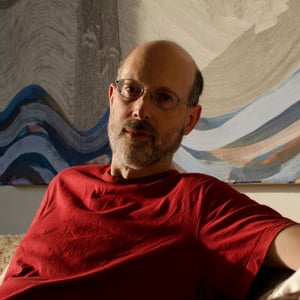
Maurice and Hilda Friedman Professor of Law, Columbia Law School; CEO, New Civil Liberties Alliance
Philip Hamburger is the Maurice and Hilda Friedman Professor of Law at Columbia Law School, and Chief Executive Officer at the New Civil Liberties Alliance. Before coming to Columbia, he was the John P. Wilson Professor at the University of Chicago Law School.
He writes on constitutional law and its history—with particular emphasis on religious liberty, freedom of speech and the press, judicial office, administrative power, and unconstitutional conditions.
His books are Separation of Church and State (Harvard 2002), Law and Judicial Duty (Harvard 2008), Is Administrative Law Unlawful? (Chicago 2014), The Administrative Threat (Encounter 2017), and Liberal Suppression: Section 501(c)(3) and the Taxation of Speech (Chicago 2018). A forthcoming book is Purchasing Submission: Conditions, Power, and Freedom (Harvard 2021).
He is a member of the American Academy of Arts and Sciences, and he has served on the board of directors of the American Society for Legal History. He has twice received the Sutherland Prize for the most significant contribution to English legal history, and has been awarded the Henry Paolucci - Walter Bagehot Book Award, the Hayek Book Prize, and the Bradley Prize.
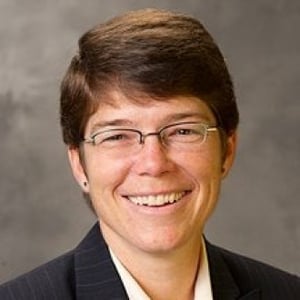
Professor of Law, Rutgers Law School
Professor Kovacs teaches Administrative Law, Natural Resources Law, Environmental Law, and Property.
Prior to joining the Rutgers faculty in 2011, she spent twelve years in the U.S. Department of Justice’s Environment and Natural Resources Division, Appellate Section. She wrote more than 100 appellate and Supreme Court briefs and argued more than sixty appeals in all thirteen of the federal circuit courts of appeals, twice en banc, and in three state supreme courts. Her cases covered a wide range of areas including environmental, administrative, and constitutional law, both civil and criminal. Among other cases, Professor Kovacs defended the Navy's use of low frequency active sonar and the display of a Latin cross in the Mojave National Preserve; she prosecuted crimes under the Bald and Golden Eagle Protection Act; she pursued a claim to compensate the Oneida Indians for the State of New York's unlawful purchase of their land in the early 19th Century; and she defended the Endangered Species Act against Fifth Amendment takings claims.
In 2016, Professor Kovacs was a political appointee serving as Senior Advisor to the Director of the Bureau of Land Management in the U.S. Department of the Interior. She also spent three years litigating primarily constitutional claims as an attorney in the Baltimore City Law Department, and she clerked for the Honorable Robert C. Murphy, former Chief Judge of the Maryland Court of Appeals. Professor Kovacs is a cum laude graduate of Yale University and the Georgetown University Law Center.
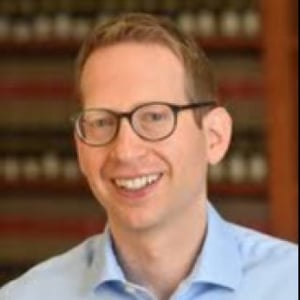
Professor of Law, UCLA Law
Jon Michaels is Professor of Law at UCLA School of Law. His scholarly and teaching interests include constitutional law, administrative law, national security law, the separation of powers, presidential power, regulation, bureaucracy, and privatization.
Michaels (view CV) is a graduate of Williams College, Oxford University, where he was a Marshall Scholar, and Yale Law School, where he served as an articles editor for the Yale Law Journal. Michaels clerked first for Judge Guido Calabresi of the U.S. Court of Appeals for the Second Circuit and then for Justice David Souter of the U.S. Supreme Court. Immediately prior to his appointment at UCLA, Michaels worked as an associate in Arnold & Porter’s National Security Law and Public Policy Group in Washington, DC.
A two-time winner of the American Constitution Society’s Cudahy Award for scholarly excellence in administrative law, Michaels is a frequent legal affairs commentator for national and local media outlets and contributes regularly to the Take Care blog.
His book, Constitutional Coup: Privatization’s Threat to the American Republic, was published by Harvard University Press in October 2017. (Read the Introduction. Read reviews and interviews.)
Professor of Law, Michigan State University (currently serving as FCC General Counsel)
Professor Candeub joined the MSU Law faculty in fall 2004. He is also a Fellow with MSU's Institute of Public Utilities. Prior to joining MSU, he served as an advisor at the Federal Communications Commission (FCC). From 1998 to 2000, Professor Candeub was a litigation associate for the Washington D.C. firm of Jones, Day, Reavis & Pogue and also has served as a corporate associate with Cleary, Gottlieb, Steen & Hamilton, also in Washington, D.C. Immediately following law school, he clerked for Chief Judge J. Clifford Wallace, U.S. Court of Appeals for the Ninth Circuit. While in law school, Professor Candeub was an articles editor for the University of Pennsylvania Law Review.
Professor Candeub's scholarly interests focus on the law and regulation of communications, internet, technology. His numerous law review articles and scholarly papers have placed him at the center of legal and policy controversies, and he often writes for popular outlets such as the Wall Street Journal and US News. Federal courts, including the U.S. Supreme Court, have cited and relied upon his work.
He joined the Trump administration in 2019 as Deputy Assistant Secretary of Commerce for Telecommunications and Information and assumed the role of Acting Assistant Secretary. He later joined the Department of Justice as Deputy Associate Attorney General.
Professor Candeub is a senior fellow at the D.C.-based Center of Renewing America.
Professor of Law and Co-Director, High Tech Law Institute, Santa Clara University School of Law
Eric Goldman is a Professor of Law, and Co-Director of the High Tech Law Institute, at Santa Clara University School of Law. Before he became a full-time academic in 2002, he practiced Internet law for 8 years in the Silicon Valley. His research and teaching focuses on Internet, IP and advertising law topics, and he blogs on these topics at the Technology & Marketing Law Blog [http://blog.ericgoldman.org]. Managing IP magazine has twice named him to a shortlist of North American “IP Thought Leaders,” and he has been named an “IP Vanguard” by the California State Bar’s IP Section.
Judge, United States Court of Appeals, Eleventh Circuit
Britt C. Grant is a judge on the U.S. Court of Appeals for the Eleventh Circuit. Judge Grant was appointed to the federal bench in August 2018 after serving as a Justice on the Supreme Court of Georgia. Prior to her judicial appointment, she served as the Solicitor General of Georgia and practiced in the Washington, D.C. office of Kirkland & Ellis. Upon graduation from law school, Judge Grant served as a law clerk to then-Judge Brett M. Kavanaugh of the U.S. Court of Appeals for the District of Columbia Circuit. She earned her J.D., with distinction, from Stanford Law School, where she was the Co-Founder of the Stanford National Security and the Law Society, and the President of the Stanford Law chapter of the Federalist Society. Before enrolling in law school, Judge Grant served in The White House in a variety of domestic policy roles as well as on the staff of Congressman Nathan Deal. Judge Grant earned her B.A., summa cum laude, from Wake Forest University, where she was inducted into Phi Beta Kappa. She now lives in Atlanta, Georgia with her husband and three children.
Thomas M. Siebel Senior Fellow, The Hoover Institution, Stanford University; Gary T. Schwartz Distinguished Professor of Law Emeritus, UCLA School of Law
Eugene Volokh is the Thomas M. Siebel Senior Fellow at the Hoover Institution (Stanford), as well as the Gary T. Schwartz Distinguished Professor of Law Emeritus and Distinguished Research Professor at UCLA School of Law. He recently retired from teaching at UCLA, after 30 years there, and is now focusing on research.
Volokh is the author of the textbooks The First Amendment and Related Statutes (8th ed. 2023), and Academic Legal Writing (5th ed. 2016), as well as over 100 academic law journal articles, mostly on First Amendment law. He is a member of The American Law Institute; the editor-in-chief of the Journal of Free Speech Law; and the creator and coauthor of The Volokh Conspiracy, a leading legal blog founded in 2002 (hosted at the Washington Post from 2014 to 2017 and now at Reason Magazine).
Author and Columnist
Ann Coulter is the author of THIRTEEN New York Times bestsellers — In Trump We Trust: E Pluribus Awesome!; Adios, America; Never Trust a Liberal Over Three-Especially a Republican Mugged: Racial Demagoguery from the Seventies to Obama (September 2012); Demonic: How the Liberal is Endangering America (June 2011); Guilty: Liberal Victims and Their Assault on America (January 2009); If Democrats Had Any Brains, They'd Be Republicans (October, 2007); Godless: The Church of Liberalism (June 2006); How to Talk to a Liberal (If You Must) (October, 2004); Treason: Liberal Treachery From the Cold War to the War on Terrorism (June 2003); Slander: Liberal Lies About the American Right (June 2002); and High Crimes and Misdemeanors:The Case Against Bill Clinton (August 1998).
On August 21, 2018, she released, Resistance Is Futile!: How the Trump-Hating Left Lost Its Collective Mind
Coulter is the legal correspondent for Human Events and writes a popular syndicated column for Universal Press Syndicate.
She is a frequent guest on many TV shows, including Good Morning Britain, Yahoo News, HBO’s Real Time with Bill Maher, The Today Show, Good Morning America, The Early Show, The Tonight Show and has been profiled in numerous publications, including TV Guide, the Guardian (UK), the New York Observer, National Journal, Harper’s Bazaar, The Washington Post, The New York Times and Elle magazine. She was the April 25, 2005 cover story of Time magazine. In 2001, Coulter was named one of the top 100 Public Intellectuals by federal judge Richard Posner.
A Connecticut native, Coulter graduated with honors from Cornell University School of Arts & Sciences, and received her J.D. from University of Michigan Law School, where she was an editor of The Michigan Law Review.
Coulter clerked for the Honorable Pasco Bowman II of the United States Court of Appeals for the Eighth Circuit and was an attorney in the Department of Justice Honors Program for outstanding law school graduates.
After practicing law in private practice in New York City, Coulter worked for the Senate Judiciary Committee, where she handled crime and immigration issues for Senator Spencer Abraham of Michigan. From there, she became a litigator with the Center For Individual Rights in Washington, DC, a public interest law firm dedicated to the defense of individual rights with particular emphasis on freedom of speech, civil rights, and the free exercise of religion.
Partner, Schaerr | Jaffe LLP
Erik Jaffe has been involved in appeals on a broad range of legal issues, including First Amendment challenges to campaign finance reform, Commerce Clause challenges to Health Care Reform and other federal legislation, Equal Protection Clause challenges to affirmative action in education, First Amendment challenges to school vouchers, Fifth Amendment challenges to takings of property, Second Amendment challenges to restrictions on gun ownership, and a wide variety of cases involving patents, copyrights, ERISA, securities fraud, federal preemption, environmental regulation, and other state and federal constitutional and statutory matters. He has represented businesses and non-profit groups, Judges, Senators, former government officials, Nobel Prize winners, and a broad cross-section of private individuals. Mr. Jaffe has been involved in over 120 Supreme Court matters, including filing over 30 cert. petitions, representing half-a-dozen parties on the merits, and filing over 70 amicus briefs at both the cert. and merits stages.
A 1990 graduate of the Columbia University School of Law, Mr. Jaffe was a law clerk to Judge Douglas H. Ginsburg of the United States Court of Appeals for the District of Columbia Circuit from 1990 to 1991. Following that clerkship he spent five years in litigation practice with the Washington, D.C. law firm of Williams & Connolly. In the summer of 1996 he left Williams & Connolly to clerk for Supreme Court Justice Clarence Thomas. At the end of that clerkship he started his own practice, and he was a sole practitioner from 1997 to 2018. He joined the firm of Schaerr | Jaffe LLP in 2018.
Professor of Law, Michigan State University (currently serving as FCC General Counsel)
Professor Candeub joined the MSU Law faculty in fall 2004. He is also a Fellow with MSU's Institute of Public Utilities. Prior to joining MSU, he served as an advisor at the Federal Communications Commission (FCC). From 1998 to 2000, Professor Candeub was a litigation associate for the Washington D.C. firm of Jones, Day, Reavis & Pogue and also has served as a corporate associate with Cleary, Gottlieb, Steen & Hamilton, also in Washington, D.C. Immediately following law school, he clerked for Chief Judge J. Clifford Wallace, U.S. Court of Appeals for the Ninth Circuit. While in law school, Professor Candeub was an articles editor for the University of Pennsylvania Law Review.
Professor Candeub's scholarly interests focus on the law and regulation of communications, internet, technology. His numerous law review articles and scholarly papers have placed him at the center of legal and policy controversies, and he often writes for popular outlets such as the Wall Street Journal and US News. Federal courts, including the U.S. Supreme Court, have cited and relied upon his work.
He joined the Trump administration in 2019 as Deputy Assistant Secretary of Commerce for Telecommunications and Information and assumed the role of Acting Assistant Secretary. He later joined the Department of Justice as Deputy Associate Attorney General.
Professor Candeub is a senior fellow at the D.C.-based Center of Renewing America.
Author and Columnist
Ann Coulter is the author of THIRTEEN New York Times bestsellers — In Trump We Trust: E Pluribus Awesome!; Adios, America; Never Trust a Liberal Over Three-Especially a Republican Mugged: Racial Demagoguery from the Seventies to Obama (September 2012); Demonic: How the Liberal is Endangering America (June 2011); Guilty: Liberal Victims and Their Assault on America (January 2009); If Democrats Had Any Brains, They'd Be Republicans (October, 2007); Godless: The Church of Liberalism (June 2006); How to Talk to a Liberal (If You Must) (October, 2004); Treason: Liberal Treachery From the Cold War to the War on Terrorism (June 2003); Slander: Liberal Lies About the American Right (June 2002); and High Crimes and Misdemeanors:The Case Against Bill Clinton (August 1998).
On August 21, 2018, she released, Resistance Is Futile!: How the Trump-Hating Left Lost Its Collective Mind
Coulter is the legal correspondent for Human Events and writes a popular syndicated column for Universal Press Syndicate.
She is a frequent guest on many TV shows, including Good Morning Britain, Yahoo News, HBO’s Real Time with Bill Maher, The Today Show, Good Morning America, The Early Show, The Tonight Show and has been profiled in numerous publications, including TV Guide, the Guardian (UK), the New York Observer, National Journal, Harper’s Bazaar, The Washington Post, The New York Times and Elle magazine. She was the April 25, 2005 cover story of Time magazine. In 2001, Coulter was named one of the top 100 Public Intellectuals by federal judge Richard Posner.
A Connecticut native, Coulter graduated with honors from Cornell University School of Arts & Sciences, and received her J.D. from University of Michigan Law School, where she was an editor of The Michigan Law Review.
Coulter clerked for the Honorable Pasco Bowman II of the United States Court of Appeals for the Eighth Circuit and was an attorney in the Department of Justice Honors Program for outstanding law school graduates.
After practicing law in private practice in New York City, Coulter worked for the Senate Judiciary Committee, where she handled crime and immigration issues for Senator Spencer Abraham of Michigan. From there, she became a litigator with the Center For Individual Rights in Washington, DC, a public interest law firm dedicated to the defense of individual rights with particular emphasis on freedom of speech, civil rights, and the free exercise of religion.
Professor of Law and Co-Director, High Tech Law Institute, Santa Clara University School of Law
Eric Goldman is a Professor of Law, and Co-Director of the High Tech Law Institute, at Santa Clara University School of Law. Before he became a full-time academic in 2002, he practiced Internet law for 8 years in the Silicon Valley. His research and teaching focuses on Internet, IP and advertising law topics, and he blogs on these topics at the Technology & Marketing Law Blog [http://blog.ericgoldman.org]. Managing IP magazine has twice named him to a shortlist of North American “IP Thought Leaders,” and he has been named an “IP Vanguard” by the California State Bar’s IP Section.
Judge, United States Court of Appeals, Eleventh Circuit
Britt C. Grant is a judge on the U.S. Court of Appeals for the Eleventh Circuit. Judge Grant was appointed to the federal bench in August 2018 after serving as a Justice on the Supreme Court of Georgia. Prior to her judicial appointment, she served as the Solicitor General of Georgia and practiced in the Washington, D.C. office of Kirkland & Ellis. Upon graduation from law school, Judge Grant served as a law clerk to then-Judge Brett M. Kavanaugh of the U.S. Court of Appeals for the District of Columbia Circuit. She earned her J.D., with distinction, from Stanford Law School, where she was the Co-Founder of the Stanford National Security and the Law Society, and the President of the Stanford Law chapter of the Federalist Society. Before enrolling in law school, Judge Grant served in The White House in a variety of domestic policy roles as well as on the staff of Congressman Nathan Deal. Judge Grant earned her B.A., summa cum laude, from Wake Forest University, where she was inducted into Phi Beta Kappa. She now lives in Atlanta, Georgia with her husband and three children.
Partner, Schaerr | Jaffe LLP
Erik Jaffe has been involved in appeals on a broad range of legal issues, including First Amendment challenges to campaign finance reform, Commerce Clause challenges to Health Care Reform and other federal legislation, Equal Protection Clause challenges to affirmative action in education, First Amendment challenges to school vouchers, Fifth Amendment challenges to takings of property, Second Amendment challenges to restrictions on gun ownership, and a wide variety of cases involving patents, copyrights, ERISA, securities fraud, federal preemption, environmental regulation, and other state and federal constitutional and statutory matters. He has represented businesses and non-profit groups, Judges, Senators, former government officials, Nobel Prize winners, and a broad cross-section of private individuals. Mr. Jaffe has been involved in over 120 Supreme Court matters, including filing over 30 cert. petitions, representing half-a-dozen parties on the merits, and filing over 70 amicus briefs at both the cert. and merits stages.
A 1990 graduate of the Columbia University School of Law, Mr. Jaffe was a law clerk to Judge Douglas H. Ginsburg of the United States Court of Appeals for the District of Columbia Circuit from 1990 to 1991. Following that clerkship he spent five years in litigation practice with the Washington, D.C. law firm of Williams & Connolly. In the summer of 1996 he left Williams & Connolly to clerk for Supreme Court Justice Clarence Thomas. At the end of that clerkship he started his own practice, and he was a sole practitioner from 1997 to 2018. He joined the firm of Schaerr | Jaffe LLP in 2018.
Thomas M. Siebel Senior Fellow, The Hoover Institution, Stanford University; Gary T. Schwartz Distinguished Professor of Law Emeritus, UCLA School of Law
Eugene Volokh is the Thomas M. Siebel Senior Fellow at the Hoover Institution (Stanford), as well as the Gary T. Schwartz Distinguished Professor of Law Emeritus and Distinguished Research Professor at UCLA School of Law. He recently retired from teaching at UCLA, after 30 years there, and is now focusing on research.
Volokh is the author of the textbooks The First Amendment and Related Statutes (8th ed. 2023), and Academic Legal Writing (5th ed. 2016), as well as over 100 academic law journal articles, mostly on First Amendment law. He is a member of The American Law Institute; the editor-in-chief of the Journal of Free Speech Law; and the creator and coauthor of The Volokh Conspiracy, a leading legal blog founded in 2002 (hosted at the Washington Post from 2014 to 2017 and now at Reason Magazine).
Laurence A. Tisch Professor of Law and Director, Classical Liberal Institute, New York University School of Law; Director, Classical Liberal Institute, Civitas Institute University of Texas at Austin
Richard A. Epstein is the Laurence A. Tisch Professor of Law, at New York University, a senior research fellow at the Civitas Institute at the University of Texas Austin, and a senior Lecturer, the University of Chicago. He received an LL.D., h.c . from the University of Ghent, 2003 , and an LLD h.c . from the University of Siegen in 2018 and the Bradley Prize in 2011. He has been a member of the American Academy of Arts and Sciences since 1985. He has edited both the Journal of Legal Studies (1981-1991) and the Journal of Law and Economics (1991-2001). He is also a founder and director of the Classical Liberal Institute at NYU Law School. His most recent book is The Classical Liberal Constitution: The Uncertain Quest for Limited Government (2014). His other books include Takings: Private Property and the Power of Eminent Domain ( 1985); Bargaining with the State (1993); Simple Rules for a Complex World (1995); Principles for a Free Society: Reconciling Individual Liberty and the Common Good (1998); Skepticism and Freedom: A Modern Theory of Classical Liberalism (2003); Design for Liberty: Private Property, Public Administration and the Rule of Law (2011), and most recently, The Myth of Birthright citizenship—and Beyond (2026). He has taught courses in , administrative law, antitrust, constitutional, contracts, environmental law, land use planning; real property, torts and water law. He has written and spoken extensively on a wide range of topics, and is writes a regular column for Defining Ideas.
Judge, United States Court of Appeals, Eleventh Circuit
Britt C. Grant is a judge on the U.S. Court of Appeals for the Eleventh Circuit. Judge Grant was appointed to the federal bench in August 2018 after serving as a Justice on the Supreme Court of Georgia. Prior to her judicial appointment, she served as the Solicitor General of Georgia and practiced in the Washington, D.C. office of Kirkland & Ellis. Upon graduation from law school, Judge Grant served as a law clerk to then-Judge Brett M. Kavanaugh of the U.S. Court of Appeals for the District of Columbia Circuit. She earned her J.D., with distinction, from Stanford Law School, where she was the Co-Founder of the Stanford National Security and the Law Society, and the President of the Stanford Law chapter of the Federalist Society. Before enrolling in law school, Judge Grant served in The White House in a variety of domestic policy roles as well as on the staff of Congressman Nathan Deal. Judge Grant earned her B.A., summa cum laude, from Wake Forest University, where she was inducted into Phi Beta Kappa. She now lives in Atlanta, Georgia with her husband and three children.
Maurice and Hilda Friedman Professor of Law, Columbia Law School; CEO, New Civil Liberties Alliance
Philip Hamburger is the Maurice and Hilda Friedman Professor of Law at Columbia Law School, and Chief Executive Officer at the New Civil Liberties Alliance. Before coming to Columbia, he was the John P. Wilson Professor at the University of Chicago Law School.
He writes on constitutional law and its history—with particular emphasis on religious liberty, freedom of speech and the press, judicial office, administrative power, and unconstitutional conditions.
His books are Separation of Church and State (Harvard 2002), Law and Judicial Duty (Harvard 2008), Is Administrative Law Unlawful? (Chicago 2014), The Administrative Threat (Encounter 2017), and Liberal Suppression: Section 501(c)(3) and the Taxation of Speech (Chicago 2018). A forthcoming book is Purchasing Submission: Conditions, Power, and Freedom (Harvard 2021).
He is a member of the American Academy of Arts and Sciences, and he has served on the board of directors of the American Society for Legal History. He has twice received the Sutherland Prize for the most significant contribution to English legal history, and has been awarded the Henry Paolucci - Walter Bagehot Book Award, the Hayek Book Prize, and the Bradley Prize.
Professor of Law, Rutgers Law School
Professor Kovacs teaches Administrative Law, Natural Resources Law, Environmental Law, and Property.
Prior to joining the Rutgers faculty in 2011, she spent twelve years in the U.S. Department of Justice’s Environment and Natural Resources Division, Appellate Section. She wrote more than 100 appellate and Supreme Court briefs and argued more than sixty appeals in all thirteen of the federal circuit courts of appeals, twice en banc, and in three state supreme courts. Her cases covered a wide range of areas including environmental, administrative, and constitutional law, both civil and criminal. Among other cases, Professor Kovacs defended the Navy's use of low frequency active sonar and the display of a Latin cross in the Mojave National Preserve; she prosecuted crimes under the Bald and Golden Eagle Protection Act; she pursued a claim to compensate the Oneida Indians for the State of New York's unlawful purchase of their land in the early 19th Century; and she defended the Endangered Species Act against Fifth Amendment takings claims.
In 2016, Professor Kovacs was a political appointee serving as Senior Advisor to the Director of the Bureau of Land Management in the U.S. Department of the Interior. She also spent three years litigating primarily constitutional claims as an attorney in the Baltimore City Law Department, and she clerked for the Honorable Robert C. Murphy, former Chief Judge of the Maryland Court of Appeals. Professor Kovacs is a cum laude graduate of Yale University and the Georgetown University Law Center.
Professor of Law, UCLA Law
Jon Michaels is Professor of Law at UCLA School of Law. His scholarly and teaching interests include constitutional law, administrative law, national security law, the separation of powers, presidential power, regulation, bureaucracy, and privatization.
Michaels (view CV) is a graduate of Williams College, Oxford University, where he was a Marshall Scholar, and Yale Law School, where he served as an articles editor for the Yale Law Journal. Michaels clerked first for Judge Guido Calabresi of the U.S. Court of Appeals for the Second Circuit and then for Justice David Souter of the U.S. Supreme Court. Immediately prior to his appointment at UCLA, Michaels worked as an associate in Arnold & Porter’s National Security Law and Public Policy Group in Washington, DC.
A two-time winner of the American Constitution Society’s Cudahy Award for scholarly excellence in administrative law, Michaels is a frequent legal affairs commentator for national and local media outlets and contributes regularly to the Take Care blog.
His book, Constitutional Coup: Privatization’s Threat to the American Republic, was published by Harvard University Press in October 2017. (Read the Introduction. Read reviews and interviews.)

Luncheon Panel: A Conversation About the Eleventh Circuit
2020 Annual Florida Chapters Conference
Lake Buena Vista, FLThe Paradox of Precedent
Birmingham Lawyers Chapter
Birmingham, ALFreedom of Speech and Private Power
Adam Candeub, Eric Goldman, Britt C. Grant, Eugene Volokh, Ann Coulter, Erik S. Jaffe
On November 15, 2019, the Federalist Society's Free Speech & Election Law Practice Group hosted...
Freedom of Speech and Private Power
Adam Candeub, Ann Coulter, Eric Goldman, Britt C. Grant, Erik S. Jaffe, Eugene Volokh
On November 15, 2019, the Federalist Society's Free Speech & Election Law Practice Group hosted...
Freedom of Speech and Private Power
2019 National Lawyers Convention
Washington, DCTopics
2019 National Lawyers Convention Digital Survival Guide
This "Survival Guide" is your one-stop-shop for all things digital at the National Lawyers Convention....
Topics
Freedom of Speech and Private Power
What are the limits of private power in the viewpoint discrimination realm? Are current remedies...
Atlanta Lawyers Chapter Summer Barbeque
Atlanta, GAShowcase Panel I: What is Regulation For?
2018 National Lawyers Convention
Washington, DCShowcase Panel I: What is Regulation For?
Richard A. Epstein, Britt C. Grant, Philip A. Hamburger, Kathryn Kovacs, Jon D. Michaels
The administrative state, with roots over a century old, was founded on the premise that...