
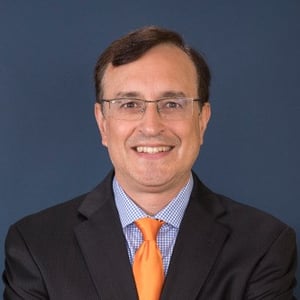
President, Center for Individual Rights
Todd Gaziano is the President of the Center for Individual Rights. Mr. Gaziano received his J.D. in 1988 from the University of Chicago Law School, where he was a John M. Olin Fellow in Law and Economics. He received his B.A. from West Virginia University, summa cum laude in 1985. He was selected as a Truman Scholar from West Virginia while an undergraduate.
Mr. Gaziano’s previous legal work includes service as a law clerk for U.S. Court of Appeals for the Fifth Circuit Judge Edith Jones, as an attorney in the U.S. Department of Justice Office of Legal Counsel, as a chief subcommittee counsel in the U.S. House of Representatives, as a Houston trial attorney, and as a chief corporate legal officer. He also served a six-year term as commissioner on the U.S. Commission on Civil Rights (2008-2013), where he helped conduct oversight and investigations of civil rights agencies.
For most of the last 25 years, Mr. Gaziano was a legal scholar and public interest law leader, promoting individual liberty in the Supreme Court and Congress. From 1997 to 2013, he was the founding director of the Edwin Meese Center for Legal and Judicial Studies at The Heritage Foundation. From 2014 until he joined CIR, he was the Chief of Legal Policy and Strategic Research, and Director of the Center for the Separation of Powers, at Pacific Legal Foundation.
Professor of Law and Director of the Natural Resources Law Cente, University of Colorado Law School
Professor Mark Squillace is the Director of the Natural Resources Law Center at the University of Colorado Law School. Before coming to Colorado, Professor Squillace taught at the University of Toledo College of Law where he was the Charles Fornoff Professor of Law and Values. Prior to Toledo, Mark taught at the University of Wyoming College of Law where he served a three-year term as the Winston S. Howard Professor of Law. He is a former Fulbright scholar and the author or co-author of numerous articles and books on natural resources and environmental law. In 2000, Professor Squillace took a leave from law teaching to serve as Special Assistant to the Solicitor at the U.S. Department of the Interior. In that capacity he worked directly with the Secretary of the Interior, Bruce Babbitt, on variety of legal and policy issues.

Professor of Law and Executive Director, Law and Economics Center, Antonin Scalia Law School, George Mason University
Donald Kochan is Professor of Law and Executive Director of the Law & Economics Center (LEC). Professor Kochan is an elected member of the American Law Institute (ALI) and serves as an Adviser to ALI's Restatement of the Law Fourth, Property project. Professor Kochan is a Nonresident Scholar at the Center for the Constitution at Georgetown University Law Center, where he was a Visiting Scholar in residence during Fall 2018. Before joining the Antonin Scalia Law School faculty, he was the Parker S. Kennedy Professor in Law at Chapman University’s Dale E. Fowler School of Law from 2004 to 2020. From 2003 to 2004, Professor Kochan was an Olin Fellow at the University of Virginia School of Law. During 2002-2003, he was a Visiting Assistant Professor of Law at George Mason’s Scalia Law School.
Professor Kochan’s scholarship focuses on areas of property law, constitutional law, administrative law, local government law, natural resources and environmental law, and law & economics. He has published several books and more than 50 scholarly articles and essays in well-regarded law journals. His work has been cited in more than a dozen state and federal court opinions, in more than 75 briefs filed in state and federal courts including more than 25 filed in the U.S. Supreme Court, in dozens of books and treatises, and in more than 800 scholarly articles.
Professor Kochan received his JD from Cornell Law School, where he was a John M. Olin Scholar in Law and Economics and managing editor of the Cornell International Law Journal. During law school, he also served as editor and executive editor of the Harvard Journal of Law & Public Policy symposium issues in 1997 and 1998. He received his BA from Western Michigan University, magna cum laude, with majors in both political science and philosophy, where he studied as the John W. Gill Medallion Scholar and was honored as the Presidential Scholar (awarded to the top graduate in the political science department).
After graduating from law school, Professor Kochan was a law clerk to The Honorable Richard F. Suhrheinrich of the United States Court of Appeals for the Sixth Circuit. Following his clerkship, Professor Kochan was an associate with the firm of Crowell & Moring LLP in Washington, D.C., where he specialized in natural resources & environmental law as well as tort, products, and consumer civil litigation & legislative affairs.
Distinguished Professor, Moses Lasky Professor of Law History an, University of Colorado Law School
Prior to joining the faculty of Colorado Law School, Charles Wilkinson practiced law with private firms in Phoenix and San Francisco and then with the Native American Rights Fund. In 1975, he became a law professor, teaching at the law schools of the University of Oregon, Michigan and Minnesota before moving to Colorado in 1987.
His primary specialties are federal public land law and Indian law. In addition to his many articles in law reviews, popular journals, and newspapers, his fourteen books include the standard law texts on public land law and on Indian law. He also served as managing editor of Felix S. Cohen's Handbook of Federal Indian Law, the leading treatise on Indian law. The books he has written in recent years, such as 1992's The Eagle Bird, are aimed for a general audience, and they discuss society, history, and land in the American West. He won the Colorado Book Award for Messages From Frank's Landing, a profile of Billy Frank, Jr. of the Nisqually Tribe of western Washington. In his book, Blood Struggle: The Rise of Modern Indian Nations, he poses what he calls "the most fundamental question of all: Can the Indian voice endure?" Listen to an interview on Colorado Public Radio conducted by Dan Drayer about Blood Struggle. In his latest book The People Are Dancing Again: The History of the Siletz Tribe of Western Oregon, Professor Wilkinson writes about how the history of the Siletz Tribe is in many ways the history of many Indian tribes: a story of heartache, perseverance, survival, and revival.
Professor Wilkinson has received teaching awards from his students at all three law schools where he has taught, and the Universities of Colorado and Oregon have given him their highest awards for leadership, scholarship, and teaching. He has also won acclamation from non-academic organizations. The National Wildlife Federation presented him with its National Conservation Award, and in its 10-year anniversary issue, Outside Magazine named him one of 15 "People to Watch," calling him "the West's leading authority on natural resources law." He has served on several boards, including The Wilderness Society, the Grand Canyon Trust, and the Center of the American West at the University of Colorado. Over the years, Professor Wilkinson has taken on many special assignments for the Departments of Interior, Agriculture, and Justice. He was a member of the tribal team that negotiated the 1997 Joint Secretarial Order of the Interior and Commerce Departments concerning tribal rights under the Endangered Species Act. He served as special counsel to the Interior Department for the drafting of the Presidential Proclamation, signed by President Clinton in September 1996, establishing the Grand Staircase-Escalante National Monument in Utah. In December 1997 Agriculture Secretary Glickman appointed him a member of the Committee of Scientists, charged with reviewing the Forest Service planning regulations. Professor Wilkinson acted as facilitator in negotiations between the National Park Service and the Timbisha Shoshone Tribe concerning a tribal land base in Death Valley National Park; in 2000 Congress enacted legislation ratifying the resulting agreement. He also served as facilitator in far-ranging negotiations between the City of Seattle and the Muckleshoot Indian Tribe.
Professor of Law and Executive Director, Law and Economics Center, Antonin Scalia Law School, George Mason University
Donald Kochan is Professor of Law and Executive Director of the Law & Economics Center (LEC). Professor Kochan is an elected member of the American Law Institute (ALI) and serves as an Adviser to ALI's Restatement of the Law Fourth, Property project. Professor Kochan is a Nonresident Scholar at the Center for the Constitution at Georgetown University Law Center, where he was a Visiting Scholar in residence during Fall 2018. Before joining the Antonin Scalia Law School faculty, he was the Parker S. Kennedy Professor in Law at Chapman University’s Dale E. Fowler School of Law from 2004 to 2020. From 2003 to 2004, Professor Kochan was an Olin Fellow at the University of Virginia School of Law. During 2002-2003, he was a Visiting Assistant Professor of Law at George Mason’s Scalia Law School.
Professor Kochan’s scholarship focuses on areas of property law, constitutional law, administrative law, local government law, natural resources and environmental law, and law & economics. He has published several books and more than 50 scholarly articles and essays in well-regarded law journals. His work has been cited in more than a dozen state and federal court opinions, in more than 75 briefs filed in state and federal courts including more than 25 filed in the U.S. Supreme Court, in dozens of books and treatises, and in more than 800 scholarly articles.
Professor Kochan received his JD from Cornell Law School, where he was a John M. Olin Scholar in Law and Economics and managing editor of the Cornell International Law Journal. During law school, he also served as editor and executive editor of the Harvard Journal of Law & Public Policy symposium issues in 1997 and 1998. He received his BA from Western Michigan University, magna cum laude, with majors in both political science and philosophy, where he studied as the John W. Gill Medallion Scholar and was honored as the Presidential Scholar (awarded to the top graduate in the political science department).
After graduating from law school, Professor Kochan was a law clerk to The Honorable Richard F. Suhrheinrich of the United States Court of Appeals for the Sixth Circuit. Following his clerkship, Professor Kochan was an associate with the firm of Crowell & Moring LLP in Washington, D.C., where he specialized in natural resources & environmental law as well as tort, products, and consumer civil litigation & legislative affairs.
Distinguished Professor, Moses Lasky Professor of Law History an, University of Colorado Law School
Prior to joining the faculty of Colorado Law School, Charles Wilkinson practiced law with private firms in Phoenix and San Francisco and then with the Native American Rights Fund. In 1975, he became a law professor, teaching at the law schools of the University of Oregon, Michigan and Minnesota before moving to Colorado in 1987.
His primary specialties are federal public land law and Indian law. In addition to his many articles in law reviews, popular journals, and newspapers, his fourteen books include the standard law texts on public land law and on Indian law. He also served as managing editor of Felix S. Cohen's Handbook of Federal Indian Law, the leading treatise on Indian law. The books he has written in recent years, such as 1992's The Eagle Bird, are aimed for a general audience, and they discuss society, history, and land in the American West. He won the Colorado Book Award for Messages From Frank's Landing, a profile of Billy Frank, Jr. of the Nisqually Tribe of western Washington. In his book, Blood Struggle: The Rise of Modern Indian Nations, he poses what he calls "the most fundamental question of all: Can the Indian voice endure?" Listen to an interview on Colorado Public Radio conducted by Dan Drayer about Blood Struggle. In his latest book The People Are Dancing Again: The History of the Siletz Tribe of Western Oregon, Professor Wilkinson writes about how the history of the Siletz Tribe is in many ways the history of many Indian tribes: a story of heartache, perseverance, survival, and revival.
Professor Wilkinson has received teaching awards from his students at all three law schools where he has taught, and the Universities of Colorado and Oregon have given him their highest awards for leadership, scholarship, and teaching. He has also won acclamation from non-academic organizations. The National Wildlife Federation presented him with its National Conservation Award, and in its 10-year anniversary issue, Outside Magazine named him one of 15 "People to Watch," calling him "the West's leading authority on natural resources law." He has served on several boards, including The Wilderness Society, the Grand Canyon Trust, and the Center of the American West at the University of Colorado. Over the years, Professor Wilkinson has taken on many special assignments for the Departments of Interior, Agriculture, and Justice. He was a member of the tribal team that negotiated the 1997 Joint Secretarial Order of the Interior and Commerce Departments concerning tribal rights under the Endangered Species Act. He served as special counsel to the Interior Department for the drafting of the Presidential Proclamation, signed by President Clinton in September 1996, establishing the Grand Staircase-Escalante National Monument in Utah. In December 1997 Agriculture Secretary Glickman appointed him a member of the Committee of Scientists, charged with reviewing the Forest Service planning regulations. Professor Wilkinson acted as facilitator in negotiations between the National Park Service and the Timbisha Shoshone Tribe concerning a tribal land base in Death Valley National Park; in 2000 Congress enacted legislation ratifying the resulting agreement. He also served as facilitator in far-ranging negotiations between the City of Seattle and the Muckleshoot Indian Tribe.

The Scope of the President's Power Under the Antiquities Act
Todd F. Gaziano, Mark Squillace
The Antiquities Act of 1906 provides, in part, that “The President may, in the President's...
Midnight Monuments: The Antiquities Act and the Executive Authority to Designate National Monuments - Podcast
Donald J. Kochan, Charles Wilkinson
The Antiquities Act of 1906 provides, in part, that “The President may, in the President's...
Midnight Monuments: The Antiquities Act and the Executive Authority to Designate National Monuments
TeleforumEngage Volume 11, Issue 2, September 2010
*Online-Only Issue* CIVIL RIGHTS Catch or Release? The Employment Non-Discrimination Act's Exemption for Religious Organizations...