
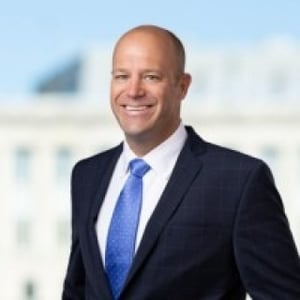
Partner, Givens Pursley LLP
Jeff Beelaert is a partner at Givens Pursley LLP in Boise, Idaho, with a distinguished background of public service and extensive experience with trial and appellate litigation. As lead counsel, Jeff has achieved success for clients in high-stakes, complex cases at every level of state and federal courts, including the United States Supreme Court.
Before joining Givens Pursley, Jeff previously held several posts at the United States Department of Justice.
Jeff previously worked as an associate at Sidley Austin in DC, where he drafted Supreme Court briefs and handled white collar matters and investigations.
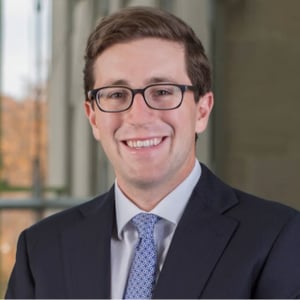
Associate, Jones Day
Harry Graver works on appeals and motions practice, with a focus on federal overreach. He has argued multiple successful cases before the federal appellate courts. And he has briefed matters at all levels of the judiciary.
Before joining Jones Day in 2021, Harry served as a law clerk to Justice Brett M. Kavanaugh of the Supreme Court of the United States and to Judge J. Harvie Wilkinson III of the United States Court of Appeals for the Fourth Circuit. Harry graduated from Harvard Law School, where he received the Fay Diploma for being first in his class. He also serves as an adjunct professor at the Scalia Law School at George Mason University, teaching a course on the separation of powers.
Associate Dean and William T. Schwartz Distinguished Professor of Law, University of Wyoming College of Law
Sam Kalen joined the University of Wyoming College of Law faculty in 2009, and he is the William T. Schwartz Distinguished Professor of Law and Associate Dean, as well as the founder and co-director of the School’s Center for Law and Energy Resources in the Rockies. Sam earned his B.A. from Clark University in Worcester, Mass., his J.D. from Washington University School of Law in St. Louis, and he spent a year studying legal history and constitutional thought in a PhD program at the University of Virginia. Before joining UW, Sam taught as a visitor or adjunct at a number of other law schools, he also served in the Solicitor’s Office at the Department of the Interior during the Clinton administration, and he practiced for many years with a Washington, D.C., law firm. Immediately after law school, he clerked at the Missouri Supreme Court.
Sam is passionate about teaching and writing in a variety of areas that impact environmental, public lands and natural resources, energy, and administrative law. He spent years practicing in each of these areas, including working with Indigenous Peoples and Tribal Nations, and attempts to explore these areas in both the classroom and in his scholarship. He is the author and co-author of numerous law review articles, including one that was cited and quoted in a Supreme Court opinion. His most recent law review article appeared in Maryland Law Review, on "Public Land Management’s Future Place: Envisioning a Paradigm Shift" (Vol 82, page 240, 2023). He also is a co-author of the American Bar Association’s Endangered Species Basic Practice Series book (2nd edition), a co-author of Natural Resources Law and Policy (3rd ed. Foundation Press), and a co-author Energy Follies: Missteps, Fiascos, and Successes of America’s Energy Policy (Cambridge U. Press 2018).
Sam alternates teaching a variety of courses, including Environmental Law, Administrative Law, Legislation, Legal History, Public Lands & Natural Resources, Energy Law, Energy & Climate Law & Policy, and Indian Law. He also has taught field courses, including courses exploring energy and natural resource issues in Wyoming, as well as a course on Public Lands and Natural Resources in Grand Teton National Park. Professor Kalen also has worked collaboratively with the University’s Haub School of Environment and Natural Resources.
Partner, Givens Pursley LLP
Jeff Beelaert is a partner at Givens Pursley LLP in Boise, Idaho, with a distinguished background of public service and extensive experience with trial and appellate litigation. As lead counsel, Jeff has achieved success for clients in high-stakes, complex cases at every level of state and federal courts, including the United States Supreme Court.
Before joining Givens Pursley, Jeff previously held several posts at the United States Department of Justice.
Jeff previously worked as an associate at Sidley Austin in DC, where he drafted Supreme Court briefs and handled white collar matters and investigations.
Associate, Jones Day
Harry Graver works on appeals and motions practice, with a focus on federal overreach. He has argued multiple successful cases before the federal appellate courts. And he has briefed matters at all levels of the judiciary.
Before joining Jones Day in 2021, Harry served as a law clerk to Justice Brett M. Kavanaugh of the Supreme Court of the United States and to Judge J. Harvie Wilkinson III of the United States Court of Appeals for the Fourth Circuit. Harry graduated from Harvard Law School, where he received the Fay Diploma for being first in his class. He also serves as an adjunct professor at the Scalia Law School at George Mason University, teaching a course on the separation of powers.
Associate Dean and William T. Schwartz Distinguished Professor of Law, University of Wyoming College of Law
Sam Kalen joined the University of Wyoming College of Law faculty in 2009, and he is the William T. Schwartz Distinguished Professor of Law and Associate Dean, as well as the founder and co-director of the School’s Center for Law and Energy Resources in the Rockies. Sam earned his B.A. from Clark University in Worcester, Mass., his J.D. from Washington University School of Law in St. Louis, and he spent a year studying legal history and constitutional thought in a PhD program at the University of Virginia. Before joining UW, Sam taught as a visitor or adjunct at a number of other law schools, he also served in the Solicitor’s Office at the Department of the Interior during the Clinton administration, and he practiced for many years with a Washington, D.C., law firm. Immediately after law school, he clerked at the Missouri Supreme Court.
Sam is passionate about teaching and writing in a variety of areas that impact environmental, public lands and natural resources, energy, and administrative law. He spent years practicing in each of these areas, including working with Indigenous Peoples and Tribal Nations, and attempts to explore these areas in both the classroom and in his scholarship. He is the author and co-author of numerous law review articles, including one that was cited and quoted in a Supreme Court opinion. His most recent law review article appeared in Maryland Law Review, on "Public Land Management’s Future Place: Envisioning a Paradigm Shift" (Vol 82, page 240, 2023). He also is a co-author of the American Bar Association’s Endangered Species Basic Practice Series book (2nd edition), a co-author of Natural Resources Law and Policy (3rd ed. Foundation Press), and a co-author Energy Follies: Missteps, Fiascos, and Successes of America’s Energy Policy (Cambridge U. Press 2018).
Sam alternates teaching a variety of courses, including Environmental Law, Administrative Law, Legislation, Legal History, Public Lands & Natural Resources, Energy Law, Energy & Climate Law & Policy, and Indian Law. He also has taught field courses, including courses exploring energy and natural resource issues in Wyoming, as well as a course on Public Lands and Natural Resources in Grand Teton National Park. Professor Kalen also has worked collaboratively with the University’s Haub School of Environment and Natural Resources.
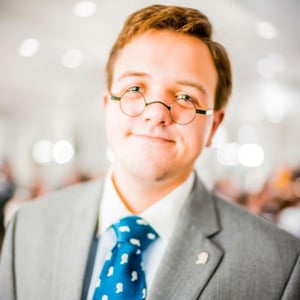
Adam Griffin is a graduate of the University of North Carolina School of Law. During law school, he served as a research assistant to Professor Stephen E. Sachs and UNC Law Dean Martin Brinkley. After law school, Adam spent two years litigating for liberty at the Institute for Justice as an inaugural Law and Liberty Fellow. He then served as a law clerk to Chief Judge Richard E. Myers in the United States District Court for the Eastern District of North Carolina, and previously worked at Pacific Legal Foundation and the Civil Rights Division of the Department of Justice.
Adam Griffin is a graduate of the University of North Carolina School of Law. During law school, he served as a research assistant to Professor Stephen E. Sachs and UNC Law Dean Martin Brinkley. After law school, Adam spent two years litigating for liberty at the Institute for Justice as an inaugural Law and Liberty Fellow. He then served as a law clerk to Chief Judge Richard E. Myers in the United States District Court for the Eastern District of North Carolina, and previously worked at Pacific Legal Foundation and the Civil Rights Division of the Department of Justice.
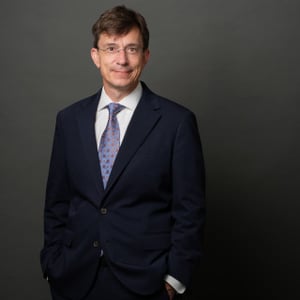
Professor of Law and Executive Director, Law and Economics Center, Antonin Scalia Law School, George Mason University
Donald Kochan is Professor of Law and Executive Director of the Law & Economics Center (LEC). Professor Kochan is an elected member of the American Law Institute (ALI) and serves as an Adviser to ALI's Restatement of the Law Fourth, Property project. Professor Kochan is a Nonresident Scholar at the Center for the Constitution at Georgetown University Law Center, where he was a Visiting Scholar in residence during Fall 2018. Before joining the Antonin Scalia Law School faculty, he was the Parker S. Kennedy Professor in Law at Chapman University’s Dale E. Fowler School of Law from 2004 to 2020. From 2003 to 2004, Professor Kochan was an Olin Fellow at the University of Virginia School of Law. During 2002-2003, he was a Visiting Assistant Professor of Law at George Mason’s Scalia Law School.
Professor Kochan’s scholarship focuses on areas of property law, constitutional law, administrative law, local government law, natural resources and environmental law, and law & economics. He has published several books and more than 50 scholarly articles and essays in well-regarded law journals. His work has been cited in more than a dozen state and federal court opinions, in more than 75 briefs filed in state and federal courts including more than 25 filed in the U.S. Supreme Court, in dozens of books and treatises, and in more than 800 scholarly articles.
Professor Kochan received his JD from Cornell Law School, where he was a John M. Olin Scholar in Law and Economics and managing editor of the Cornell International Law Journal. During law school, he also served as editor and executive editor of the Harvard Journal of Law & Public Policy symposium issues in 1997 and 1998. He received his BA from Western Michigan University, magna cum laude, with majors in both political science and philosophy, where he studied as the John W. Gill Medallion Scholar and was honored as the Presidential Scholar (awarded to the top graduate in the political science department).
After graduating from law school, Professor Kochan was a law clerk to The Honorable Richard F. Suhrheinrich of the United States Court of Appeals for the Sixth Circuit. Following his clerkship, Professor Kochan was an associate with the firm of Crowell & Moring LLP in Washington, D.C., where he specialized in natural resources & environmental law as well as tort, products, and consumer civil litigation & legislative affairs.
Partner, Givens Pursley LLP
Jeff Beelaert is a partner at Givens Pursley LLP in Boise, Idaho, with a distinguished background of public service and extensive experience with trial and appellate litigation. As lead counsel, Jeff has achieved success for clients in high-stakes, complex cases at every level of state and federal courts, including the United States Supreme Court.
Before joining Givens Pursley, Jeff previously held several posts at the United States Department of Justice.
Jeff previously worked as an associate at Sidley Austin in DC, where he drafted Supreme Court briefs and handled white collar matters and investigations.
Associate, Jones Day
Harry Graver works on appeals and motions practice, with a focus on federal overreach. He has argued multiple successful cases before the federal appellate courts. And he has briefed matters at all levels of the judiciary.
Before joining Jones Day in 2021, Harry served as a law clerk to Justice Brett M. Kavanaugh of the Supreme Court of the United States and to Judge J. Harvie Wilkinson III of the United States Court of Appeals for the Fourth Circuit. Harry graduated from Harvard Law School, where he received the Fay Diploma for being first in his class. He also serves as an adjunct professor at the Scalia Law School at George Mason University, teaching a course on the separation of powers.
Associate Dean and William T. Schwartz Distinguished Professor of Law, University of Wyoming College of Law
Sam Kalen joined the University of Wyoming College of Law faculty in 2009, and he is the William T. Schwartz Distinguished Professor of Law and Associate Dean, as well as the founder and co-director of the School’s Center for Law and Energy Resources in the Rockies. Sam earned his B.A. from Clark University in Worcester, Mass., his J.D. from Washington University School of Law in St. Louis, and he spent a year studying legal history and constitutional thought in a PhD program at the University of Virginia. Before joining UW, Sam taught as a visitor or adjunct at a number of other law schools, he also served in the Solicitor’s Office at the Department of the Interior during the Clinton administration, and he practiced for many years with a Washington, D.C., law firm. Immediately after law school, he clerked at the Missouri Supreme Court.
Sam is passionate about teaching and writing in a variety of areas that impact environmental, public lands and natural resources, energy, and administrative law. He spent years practicing in each of these areas, including working with Indigenous Peoples and Tribal Nations, and attempts to explore these areas in both the classroom and in his scholarship. He is the author and co-author of numerous law review articles, including one that was cited and quoted in a Supreme Court opinion. His most recent law review article appeared in Maryland Law Review, on "Public Land Management’s Future Place: Envisioning a Paradigm Shift" (Vol 82, page 240, 2023). He also is a co-author of the American Bar Association’s Endangered Species Basic Practice Series book (2nd edition), a co-author of Natural Resources Law and Policy (3rd ed. Foundation Press), and a co-author Energy Follies: Missteps, Fiascos, and Successes of America’s Energy Policy (Cambridge U. Press 2018).
Sam alternates teaching a variety of courses, including Environmental Law, Administrative Law, Legislation, Legal History, Public Lands & Natural Resources, Energy Law, Energy & Climate Law & Policy, and Indian Law. He also has taught field courses, including courses exploring energy and natural resource issues in Wyoming, as well as a course on Public Lands and Natural Resources in Grand Teton National Park. Professor Kalen also has worked collaboratively with the University’s Haub School of Environment and Natural Resources.
Adam Griffin is a graduate of the University of North Carolina School of Law. During law school, he served as a research assistant to Professor Stephen E. Sachs and UNC Law Dean Martin Brinkley. After law school, Adam spent two years litigating for liberty at the Institute for Justice as an inaugural Law and Liberty Fellow. He then served as a law clerk to Chief Judge Richard E. Myers in the United States District Court for the Eastern District of North Carolina, and previously worked at Pacific Legal Foundation and the Civil Rights Division of the Department of Justice.

Topics
Supreme Court, Without Explanation, Refuses to Allow the State of Utah to Invoke the Court’s Original Jurisdiction to Challenge the Federal Government’s Retention of Millions of Acres of Land
Over the course of the past decade, the embers left by the Sagebrush Revolution—first ignited...
The Antiquities Act: A Tool for Conservation, or a Law Without Limit?
Jeff Beelaert, Harry S. Graver, Sam Kalen
In 1906, Congress passed the Antiquities Act, which gives the President the authority to set...
The Antiquities Act: A Tool for Conservation, or a Law Without Limit?
Jeff Beelaert, Harry S. Graver, Sam Kalen
In 1906, Congress passed the Antiquities Act, which gives the President the authority to set...
The Antiquities Act: A Tool for Conservation, or a Law Without Limit?
Litigation Update: Sagebrush Rebels and Western States Challenge Presidential Monument Designations
Adam F. Griffin
Congress passed the Antiquities Act in 1906 to protect Native American archaeological sites from looters...
Litigation Update: Sagebrush Rebels and Western States Challenge Presidential Monument Designations
Adam F. Griffin
Congress passed the Antiquities Act in 1906 to protect Native American archaeological sites from looters...
Litigation Update: Sagebrush Rebels and Western States Challenge Presidential Monument Designations
Abusing the Antiquities Act? A Conversation on Environmental Law, Historic Preservation, and Executive Power
Harvard Student Chapter
Cambridge, MAEnvironmental Law without Congress
Donald J. Kochan
Prof. Donald Kochan of Chapman Law explains how Congress' vague legislative tendencies have allowed federal...
Topics
Presidential Authority and the Antiquities Act
Early last month, on December 4, 2017, President Trump signed proclamations reducing the scope of...