

Judge, United States Court of Appeals, Third Circuit
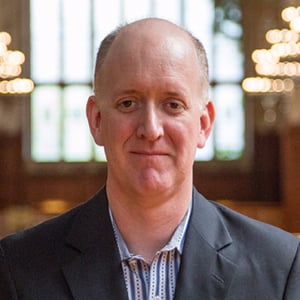
Stephanos Bibas is a judge on the U.S. Court of Appeals for the Third Circuit. Judge Bibas was previously a professor of law and criminology at the University of Pennsylvania Law School. As director of the Penn Law Supreme Court Clinic, he argued six cases before the Supreme Court of the United States and filed briefs in dozens of others. He graduated summa cum laude and Phi Beta Kappa from Columbia University in 1989 with a B.A. in political theory and from Oxford University in 1991 with a B.A. in jurisprudence. He then earned his J.D. from Yale Law School in 1994.
After graduating from Yale Law, Judge Bibas clerked for Judge Patrick Higginbotham of the U.S. Court of Appeals for the Fifth Circuit and Justice Anthony Kennedy on the Supreme Court and was a litigation associate at Covington & Burling LLP in Washington, D.C. Thereafter, Judge Bibas served as an Assistant U.S. Attorney in the Southern District of New York, where he successfully prosecuted the world’s leading expert in Tiffany stained glass for hiring a grave robber to steal priceless Tiffany windows from cemeteries. Before his tenure at Penn Law, Judge Bibas taught at the University of Chicago Law School and the University of Iowa College of Law and was a research fellow at Yale Law School. He has published two books and seventy scholarly articles.
Richard W. Pogue Professor of Law, University of Michigan Law School
Professor Daniel Crane is the Richard W. Pogue Professor of Law. He served as the associate dean for faculty and research from 2013 to 2016. He teaches Contracts, Antitrust, Antitrust and Intellectual Property, and Legislation and Regulation.
Crane previously was a professor of law at Yeshiva University's Benjamin N. Cardozo School of Law and a visiting professor at New York University School of Law and the University of Chicago Law School. In spring 2009, he taught antitrust law on a Fulbright Scholarship at the Universidade Católica Portuguesa in Lisbon.
Crane's work has appeared in the University of Chicago Law Review, the California Law Review, the Michigan Law Review, the Georgetown Law Journal, and the Cornell Law Review, among other journals. He is the author of several books on antitrust law, including Antitrust (Aspen, 2014), The Making of Competition Policy: Legal and Economic Sources (Oxford University Press, 2013), and The Institutional Structure of Antitrust Enforcement (Oxford University Press, 2011).
Partner, Keller Postman
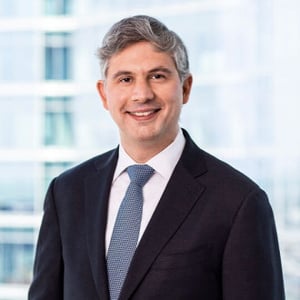
Ashley Keller is one of the founding Partners of Keller Postman LLC. An experienced trial and appellate lawyer, Ashley helps set strategic direction across virtually all of the firm’s cases. He represents clients in a wide variety of practice areas and types of claims, including product-liability, antitrust, class action, and arbitration matters.
Ashley is one of the leaders of Keller Postman’s national product-liability practice. He leverages his ability to detangle complex concepts and develop novel legal theories to support individual client matters and as counsel on numerous product-liability multidistrict litigation matters. He chairs the plaintiffs’ Law & Briefing Committee in the Zantac (Ranitidine) Product Liability MDL in the U.S. District Court for the Southern District of Florida.
Ashley also litigates complex antitrust and class action matters. Among his notable cases, Ashley represents numerous States in antitrust litigation against Google for monopolizing products and services used by advertisers and publishers in online-display advertising.
Ashley also has played a central role in developing the firm’s pioneering arbitration practice, which includes pursuing individual arbitrations for clients whose claims are subject to arbitration clauses with class-action waivers. In part through managing the complexity of pursuing these individual claims simultaneously, the firm has secured millions in settlements for more than 500,000 employees and consumers.
Before launching Keller Postman, Ashley co-founded the litigation finance firm Gerchen Keller Capital, which grew to more than $1.3 billion in assets under management and was the world’s largest private investment manager focused on legal and regulatory risk prior to being acquired by Burford Capital in 2016.
Previously, Ashley was a partner at Bartlit Beck Herman Palenchar & Scott LLP, The American Lawyer’s litigation boutique of the year. While there, he handled various trial and appellate matters involving multi-billion-dollar securities and patent cases, contract disputes, mass torts, and class actions.
Ashley also worked as an analyst at Alyeska Investment Group, a Chicago-based market-neutral hedge fund, where he focused on investments in companies facing litigation and other complicated regulatory matters.
Ashley was named a 2021 Plaintiffs’ Lawyers Trailblazer by the National Law Journal. He is also listed on Lawdragon’s 500 Leading Lawyers in America, Lawdragon’s 500 Leading Plaintiff Consumer Lawyers, Lawdragon’s Leading Plaintiff Financial Lawyers, National Trial Lawyers’ Top 100, and Illinois Super Lawyers.
Ashley was a law clerk for Justice Anthony M. Kennedy at the Supreme Court of the United States and Judge Richard Posner at the U.S. Court of Appeals for the Seventh Circuit. He graduated magna cum laude from Harvard College, received his M.B.A. from the University of Chicago Booth School of Business and received his J.D. from the University of Chicago Law School, where he graduated first in his class.
Principal Deputy Assistant Attorney General, Antitrust Division, U.S. Department of Justice
On January 14, 2022, Doha Mekki was appointed Principal Deputy Assistant Attorney General for the Antitrust Division of the U.S. Department of Justice. As Principal Deputy Assistant Attorney General, Ms. Mekki supervises more than 350 attorneys who investigate and prosecute civil and criminal violations of federal antitrust and other competition laws. She is responsible for overseeing the Division’s civil enforcement, criminal enforcement, litigation, domestic and international policy, advocacy, and economic analysis programs, as well as the Division’s operations.
Ms. Mekki joined the Antitrust Division in 2015 as a Trial Attorney. In that capacity, she led investigations and litigated merger challenges in the rail, commercial vehicle, aviation, and healthcare industries, among others. She later served as Counsel to the Assistant Attorney General for Antitrust. In that role, she focused on civil antitrust enforcement in healthcare, sports, and digital markets, as well as criminal enforcement in labor markets. From 2020 until 2021, she served as an Assistant Chief in the Antitrust Division’s Defense, Industrials, and Aerospace Section, where she provided legal and policy guidance to attorneys and paralegals working on the section’s merger and anticompetitive conduct investigations and enforcement. Beginning in 2021, she served concurrently as the Antitrust Division’s Special Counsel for Labor. In that capacity, she helped advance the Division’s civil and criminal enforcement in labor markets. She is a two-time recipient of the Assistant Attorney General’s Award of Distinction and she has testified before Congress about competition in labor markets.
She was previously an associate in the antitrust and financial services groups of an international law firm in New York, NY, where her antitrust practice focused on federal antitrust litigation, government investigations, and counseling.
Ms. Mekki holds a B.A. from Duke University, a J.D. from the University of Pennsylvania Law School, and an M.B.E. in Bioethics from the Department of Medical Ethics at the University of Pennsylvania Perelman School of Medicine.
Counsel, Cadwalader, Wickersham & Taft LLP; Senior Competition Counsel, TechFreedom
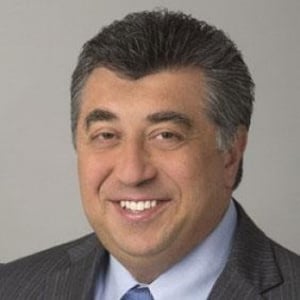
Bilal Sayyed represents clients before the Federal Trade Commission (FTC) and Department of Justice (DOJ) in significant merger, civil and criminal antitrust matters. A significant portion of his practice involves representing investment funds on antitrust and Hart-Scott-Rodino (HSR) Act compliance matters; he has also provided expert witness services related to HSR compliance. Bilal also counsels clients before the FTC in consumer protection and privacy investigations. He maintains an active amicus and appellate brief writing practice in antitrust litigation and antitrust merger matters.
Prior to joining Cadwalader, Bilal was the Director of the FTC’s Office of Policy Planning (OPP) (2018-2021). In that role, he provided legal and policy advice to the Chairman and Commissioners on antitrust and consumer protection matters and worked closely with the senior and career leadership of the FTC’s Bureaus of Competition, Consumer Protection, and Economics. Bilal previously served as an Attorney Advisor to FTC Chairman Timothy J. Muris from 2001 to 2004. In that role, Bilal advised the Chairman on matters involving a wide spectrum of industries, including chemical and mining, petroleum and natural gas, health care and pharmaceutical, defense and transportation, gaming, various consumer products and retail operations, and professional associations and standard-setting organizations.
Bilal has taught antitrust and competition law at the George Mason University School of Law since 2011.
Bilal received his B.A. from Case Western Reserve University, and a J.D. from George Mason University School of Law. He is admitted to practice in the District of Columbia and the State of New York, as well as before the U.S. District Courts for the District of Colorado and the District of Columbia, the U.S. Court of Appeals for the District of Columbia Circuit, the Fifth Circuit, the Ninth Circuit, and the U.S. Supreme Court.
Bilal is the host of Rethinking Antitrust, a podcast published by TechFreedom that examines the economics, institutions, law, legislation, and policy goals of antitrust enforcement.
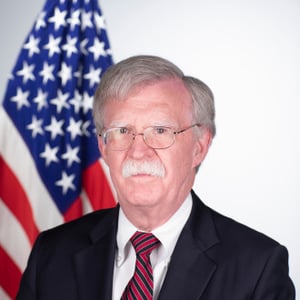
Former United States National Security Advisor
John R. Bolton served as Assistant to the President and National Security Advisor from April 2018 to September 2019.
Prior to his appointment, Ambassador Bolton served as a senior fellow at the American Enterprise Institute (AEI); of counsel at Kirkland & Ellis; a contributor to FOX News Channel and FOX Business Network; and his op-ed articles were regularly featured in major media publications.
Ambassador Bolton was appointed as United States Permanent Representative to the United Nations on August 1, 2005 and served until his resignation in December 2006. Prior to his appointment, Ambassador Bolton served as Under Secretary of State for Arms Control and International Security from May 2001 to May 2005.
Other positions he has previously held include Assistant Secretary for International Organization Affairs at the Department of State, 1989-1993; Assistant Attorney General, Department of Justice, 1985-1989; Assistant Administrator for Program and Policy Coordination, U.S. Agency for International Development, 1982-1983 and General Counsel, U.S. Agency for International Development, 1981-1982.
Ambassador Bolton is the author of Surrender is Not an Option: Defending America at the U.N. and Abroad, published by Simon and Shuster (November 2007) and How Barack Obama is Endangering our National Sovereignty, published by Encounter Books (April 2010).
Ambassador Bolton was born in Baltimore, Maryland. He graduated with a Bachelor of Arts degree, summa cum laude, Phi Beta Kappa, from Yale College in 1970, and received his Juris Doctor from Yale Law School in 1974. He currently resides in Maryland with his wife, Gretchen. They have one daughter, Jennifer Sarah, who also graduated from Yale College, and received her MBA and SM degrees from MIT in 2014 and is currently a senior manager at Nissan’s facility in Nashville.
Judge, United States Court of Appeals, Eighth Circuit
Pasco Middleton Bowman II is a federal judge on senior status on the United States Court of Appeals for the 8th Circuit. He joined the court in 1983 after being nominated by President Ronald Reagan to a seat vacated by Jesse Smith Henley. Bowman assumed senior status on August 1, 2003.
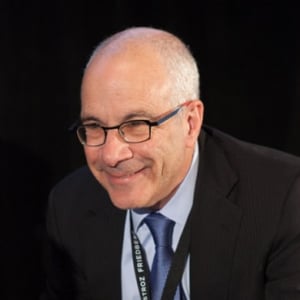
Senior Faculty, Arthur and Toni Rembe Rock Center for Corporate Governance, Stanford Law School
Joseph A. Grundfest, JD ’78, is a nationally prominent expert on capital markets, corporate governance, and securities litigation. His scholarship has been published in the Harvard, Yale, and Stanford law reviews, and he has been recognized as one of the most influential attorneys in the United States. Professor Grundfest founded the award-winning Stanford Securities Class Action Clearinghouse, which provides detailed, online information about the prosecution, defense, and settlement of federal class action securities fraud litigation. He launched Stanford Law School’s executive education programs and continues to co-direct Directors’ College, the nation’s leading venue for the continuing professional education of directors of publicly traded corporations. He is also a senior faculty member with the Arthur and Toni Rembe Rock Center for Corporate Governance. Additionally, he is co-founder and director of Financial Engines and a director of Kohlberg, Kravis, Roberts & Co.
Before joining the Stanford Law School faculty in 1990, Professor Grundfest was a commissioner of the Securities and Exchange Commission, served on the staff of the President’s Council of Economic Advisors as counsel and senior economist for legal and regulatory matters, and was an associate at Wilmer, Cutler & Pickering. Early in his career he was a research associate at the Brookings Institution and an economist and consultant with the RAND Corporation.
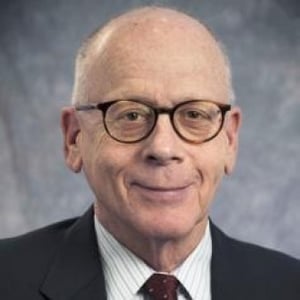
William B. Graham Distinguished Service Professor of Law, University of Chicago Law School
Saul Levmore came to the Law School from the University of Virginia. He was the Dean of the University of Chicago Law School from 2001 to 2009, and is the William B. Graham Distinguished Service Professor of Law. He has been a visiting professor at Yale, Harvard, Michigan, and Northwestern. He has taught and written about torts, corporations, copyright, non-profit organizations, comparative law, public choice, corporate tax, commercial law, insurance, and contracts. He is a member of the American Academy of Arts and Sciences, a past president of the American Law Deans Association, and a past trustee of the Law School Admissions Council and of the Skadden Foundation. He is currently the President of the American Law and Economics Association. Away from law, he has been an advisor on corporate governance issues and on development strategies and although his work continues to be related to law and economics, and especially public choice, across many fields he has also written books on aging and on games and puzzles.
Dean Emeritus, George Mason School of Law
Lauded as a cultural laureate of the Commonwealth of Virginia, former Mason dean Henry G. Manne was the driving force behind the many innovations in legal education implemented at George Mason.
Professor Manne was designated one of the "founders" of the field of law and economics by the American Law and Economics Association. He launched the Law and Economics Center at Emory University and the University of Miami before bringing it to George Mason.
His monograph, An Intellectual History of the School of Law, George Mason University, traces the development of the law and economics movement and highlights the special contributions made by George Mason University School of Law to the movement. Professor Manne's other writings include such seminal works as Insider Trading and the Stock Market; Wall Street in Transition (with E. Solomon); and "Mergers and the Market for Corporate Control", Journal of Political Economy, April 1965. Professor Manne also designed and implemented at George Mason the nation's first system of fully integrated law school specialty track programs.
In August 2012, Dean Manne gave an oral history of his life, including his time at the Law and Economics Center, to the Securities and Exchange Commission Historical Society. An audio recording of the interview and transcript are available on the Society's website: audio (mp3); edited transcript (pdf).
He received a B.A. from Vanderbilt University (1950), J.D. from the University of Chicago (1952), J.S.D. from Yale University (1966), LL.D. from Seattle University (1987), and LL.D. from the Universidad Francesco Marroquin in Guatemala (1987).
Former United States Assistant Attorney General, Civil Rights Division, United States Department of Justice
William Bradford served as the United States Assistant Attorney General for the Civil Rights Division from 1981 to 1988.
Reynolds was Senior Counsel in BakerBotts Antitrust and Competition division. He graduated with a LL.B. from Vanderbilt University Law School in 1967 where he was Order of the Coif and Editor-in-Chief of the Vanderbilt Law Review. In 1964, he received a B.A. from Yale University.
Reynolds passed away on September 14, 2019, in Seabrook Island, South Carolina at age 77.

Associate Dean for Academic Affairs, Austin E. Owen Research Scholar & Professor of Law, The University of Richmond School of Law
Dean Kristen Jakobsen Osenga teaches and writes in the areas of patent law, antitrust, and legislation and regulation. Some of her recent scholarship focuses on standard development organizations, patent eligible subject matter, patent licensing firms, litigation and remedies for patent infringement, and patent law reform. She has written numerous law review articles on these and other topics, as well as book chapters and op eds on various aspects of patent law. Additionally, she has spoken on these issues at many academic conferences and bar events. Dean Osenga is Chief Policy Counselor for the Inventors Defense Alliance, as well as an active member of the Federal Circuit Bar Association and the American Intellectual Property Law Association.
Dean Osenga received a B.S. degree in Biomedical Engineering from the University of Iowa, an M.S. degree in Electrical Engineering from Southern Illinois University – Carbondale, and a J.D. from the University of Illinois College of Law, where she graduated magna cum laude. After law school, she practiced at the law firm of Finnegan, Henderson, Farabow, Garrett, & Dunner LLP, (now Finnegan) where she did patent prosecution and litigation. She then clerked for the Judge Richard Linn of the U.S. Court of Appeals for the Federal Circuit. After clerking, she entered academia, teaching first at Chicago-Kent College of Law and then at the University of Richmond, where she has been since 2006. She has also been a Visiting Professor at Emory University School of Law and at William & Mary School of Law.

Professor of Law, Southern Illinois University School of Law
Professor Mark F. Schultz joined the faculty in 2003. He teaches and writes primarily in the area of intellectual property.
Professor Schultz is a frequent author and speaker known for his work on the law and economics of the global intellectual property system. In one of his most influential projects, he worked with the Organization for Economic Cooperation and Development (OECD) to construct a groundbreaking global trade secret protection index (the TSPI). The TSPI is influencing policy discussions on this cutting-edge topic in capitals around the world. Other recent projects have included an empirical study that quantified for the first time the backlogs in patent offices worldwide, a report on how patented innovation is meeting global health challenges, and the construction of a new global index of copyright strength.
Professor Schultz is an influential voice in public policy debates regarding intellectual property. He has testified before the U.S. Congress on copyright law at the invitation of the House Judiciary Committee and has briefed the staff of the U.S. Senate Judiciary Committee on trade secret legislation. He speaks frequently around the world about the connection between secure and effective intellectual property rights and flourishing national economies and individual lives, with invitations from the U.S. Patent and Trademark Office, the U.S. Trade Representative, and the U.S. Copyright Office, as well as numerous academic institutions, think tanks, and industry groups. He served as an NGO delegate to the World Intellectual Property Organization (WIPO) for several years during the WIPO Development Agenda talks. He is also one of the organizers of an ongoing multilateral diplomatic dialogue on best practices in national trade secret laws, and is co-founder of the Center for Protection of Intellectual Property (CPIP) at George Mason University in Washington, D.C.
Among the awards and recognition he has received for his scholarship was the School of Law's Outstanding Scholar of the Year award in 2008. He has been a distinguished visiting scholar at the University of Botswana and a visiting professor at DePaul University College of Law.
Professor Schultz graduated with honors from the George Washington University School of Law. Following law school, he was a judicial clerk for the Hon. Daniel M. Friedman of the United States Court of Appeals for the Federal Circuit in Washington, D.C., and the Hon. Eric G. Bruggink of the United States Court of Federal Claims. Prior to joining academia, he practiced law for a decade, serving as outside general counsel to several tech startups and helping technology companies to expand their businesses and commercialize their intellectual property in dozens of countries. He holds a B.A. in International Economics from George Washington University and has done PhD level coursework in development economics at Southern Illinois University.
He is active in leadership roles in local and national organizations. He has served as chair of the Federalist Society's Intellectual Property Practice Group and the AALS Section on Internet and Computer Law. He is an officer of the American Bar Association's International IP Committee of the International Law Section and the American Intellectual Property Law Association’s Trade Secret Law Committee. He currently is chair of the Academic Advisory Board of the Copyright Alliance.
Professor Schultz teaches Copyright Law, Trade Secret Law, Trademark Law, and a senior seminar on Intellectual Property and Global Development. He established and directs both the Specialization in Intellectual Property Law and the IP Semester in Practice Externship Program. He also co-founded a Legal Globalization Class, offered every other year, that takes students to South Africa and Botswana after spending a semester learning about the legal system, culture, history, and politics of southern Africa. The popular course is a once-in-a-lifetime experience that introduces students to leading lawyers, judges, government officials, and human rights advocates, taking them from Cape Town to Johannesburg to Gaborone as well as many popular destinations including game reserves, national parks, the Cape of Good Hope, and the Cradle of Humankind.
President, Recording Industry Association of America (RIAA).
Mitch Glazier is President, Recording Industry Association of America (RIAA).
Glazier guides the industry’s strategic policy initiatives and helps coordinate the activities of the association. In his more than 10-year tenure at the RIAA, Glazier has helped manage a variety of initiatives that have played a vital role in the music industry’s transition to the digital age. This includes the 2008 PRO-IP Act, which established the country’s first Intellectual Property Enforcement Coordinator in the Executive Office of the President, and the Higher Education Opportunity Act of 2008, which provided colleges and universities with meaningful tools to reduce the illegal downloading of copyrighted works on college campuses.
Glazier has also been instrumental in managing a variety of state initiatives that have helped the legal online marketplace for music to begin to prosper, including the enactment of laws in several states that ensure copyright protections extend to digital storage devices and subscription services. He has spearheaded the promotion and expansion of artist and industry programs such as RIAA’s sponsorship of a weekly “Monday Open Mic” night at Nashville’s iconic Bluebird Café to showcase emerging artists and songwriters.
Before joining RIAA, Glazier served as Chief Counsel for intellectual property to the Judiciary Committee in the U.S. House of Representatives. A native of Illinois, Glazier served as law clerk to the Honorable Judge Wayne R. Andersen, United States District Court for the Northern District of Illinois, and practiced law at the Chicago firm Neal, Gerber & Eisenberg as an associate in commercial litigation. He graduated from Northwestern University and Vanderbilt Law School. Glazier serves on the boards of Musicians on Call, the American Association of People with Disabilities, and the Internet Education Foundation.
Robert Kavesh Professorship in Economics, Leonard N. Stern School of Business, New York University
Lawrence J. White has been with New York University Leonard N. Stern School of Business for more than 35 years. His primary research areas of interest include financial regulation, antitrust, network industries, international banking and applied microeconomics.
Professor White has published numerous articles in the Journal of Business, Journal of Economic Perspectives, Journal of Economic Literature, Journal of Political Economy, American Economic Review, Review of Economics and Statistics, Quarterly Journal of Economics, and other leading journals in economics, finance, and law. He is the author of The S&L Debacle: Public Policy Lessons for Bank and Thrift Regulation, among other books, and he is the co-editor (with John Kwoka) of the 6th of edition of The Antitrust Revolution. He contributed chapters to both of the NYU Stern books on the financial crisis - Restoring Financial Stability and Regulating Wall Street. He is the co-author (with Stern's Viral Acharya, Matthew Richardson, and Stijn Van Nieuwerburgh) of Guaranteed to Fail: Fannie Mae, Freddie Mac, and the Debacle of Mortgage Finance.
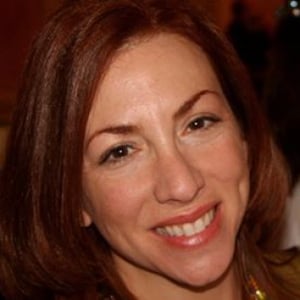
Vice President of Copyright and Legal Affairs, Motion Picture Association
Jennifer Pariser is the Vice President, Copyright and Legal Affairs at the Motion Picture Association. She provides counsel on a wide range of intellectual property and other legal issues for the association, oversees the studios’ relationship with academic institutions and runs its anti-piracy notice program. Jenny previously served as head of litigation at the RIAA and at Sony Music. Prior to that she was an associate with the firms Patterson, Belknap, Webb & Tyler and Debevoise & Plimpton in New York and also served as a judicial clerk to the Honorable Charles Tenney in the United States District Court for the Southern District of New York. She graduated from New York University Law School in 1989 where she was a member of the Law Review. She lectures extensively on copyright topics including at the Copyright Society of the USA, the American and New York Bar Associations, PLI and various law schools.

GRAMMY Award Winning Artist
Maria Schneider’s music has been hailed by critics as “evocative, majestic, magical, heart-stoppingly gorgeous, and beyond categorization.” She and her orchestra became widely known starting in 1994 when they released their first recording, Evanescence. There, Schneider began to develop her personal way of writing for what would become her 18-member collective, made up of many of the finest musicians in jazz today, tailoring her compositions to distinctly highlight the uniquely creative voices of the group. The Maria Schneider Orchestra has performed at festivals and concert halls worldwide. She herself has received numerous commissions and guest-conducting invites, working with over 90 groups from over 30 countries.
Schneider’s music blurs the lines between genres, making her long list of commissioners quite varied, stretching from Jazz at Lincoln Center, to The Saint Paul Chamber Orchestra, to collaborating with David Bowie. She is among a small few to have received GRAMMYS in multiple genres, have received the award in both jazz and classical categories, as well as for her work with David Bowie.
Schneider and her orchestra have a distinguished recording career with twelve GRAMMY nominations and five GRAMMY awards. Unique funding of projects has become a hallmark for Schneider through the trend-setting company, ArtistShare. Her album, Concert in the Garden (2004) became historic as the first recording to win a GRAMMY with Internet-only sales, even more significantly, it blazed the "crowd-funding" trail as ArtistShare’s first release. She’s been awarded many honors by the Jazz Journalists Association and DOWNBEAT and JAZZTIMES Critics and Readers Polls. In 2012, her alma mater, the University of Minnesota, presented Schneider with an honorary doctorate, and in 2014, ASCAP awarded her their esteemed Concert Music Award.
Schneider has become a strong voice for music advocacy and in 2014, testified before the US Congressional Subcommittee on Intellectual Property about digital rights. She has also appeared in CNN, participated in round-tables for the United States Copyright Office, and has been quoted in numerous publications for her views on Spotify, Pandora, YouTube, Google, digital rights, and music piracy. Most recently, she and concerned colleagues in New York have launched a widespread campaign on behalf of music-makers, MusicAnswers.org.
Her recent collaboration with her orchestra and David Bowie resulted in his single called, "Sue (Or In A Season of Crime),” and brought her a 2016 GRAMMY (Best Arrangement, Instruments and Vocals). Schneider and her orchestra also received a 2016 GRAMMY for their latest work, The Thompson Fields (Best Large Jazz Ensemble Album).
Professor of Law, Southern Illinois University School of Law
Professor Mark F. Schultz joined the faculty in 2003. He teaches and writes primarily in the area of intellectual property.
Professor Schultz is a frequent author and speaker known for his work on the law and economics of the global intellectual property system. In one of his most influential projects, he worked with the Organization for Economic Cooperation and Development (OECD) to construct a groundbreaking global trade secret protection index (the TSPI). The TSPI is influencing policy discussions on this cutting-edge topic in capitals around the world. Other recent projects have included an empirical study that quantified for the first time the backlogs in patent offices worldwide, a report on how patented innovation is meeting global health challenges, and the construction of a new global index of copyright strength.
Professor Schultz is an influential voice in public policy debates regarding intellectual property. He has testified before the U.S. Congress on copyright law at the invitation of the House Judiciary Committee and has briefed the staff of the U.S. Senate Judiciary Committee on trade secret legislation. He speaks frequently around the world about the connection between secure and effective intellectual property rights and flourishing national economies and individual lives, with invitations from the U.S. Patent and Trademark Office, the U.S. Trade Representative, and the U.S. Copyright Office, as well as numerous academic institutions, think tanks, and industry groups. He served as an NGO delegate to the World Intellectual Property Organization (WIPO) for several years during the WIPO Development Agenda talks. He is also one of the organizers of an ongoing multilateral diplomatic dialogue on best practices in national trade secret laws, and is co-founder of the Center for Protection of Intellectual Property (CPIP) at George Mason University in Washington, D.C.
Among the awards and recognition he has received for his scholarship was the School of Law's Outstanding Scholar of the Year award in 2008. He has been a distinguished visiting scholar at the University of Botswana and a visiting professor at DePaul University College of Law.
Professor Schultz graduated with honors from the George Washington University School of Law. Following law school, he was a judicial clerk for the Hon. Daniel M. Friedman of the United States Court of Appeals for the Federal Circuit in Washington, D.C., and the Hon. Eric G. Bruggink of the United States Court of Federal Claims. Prior to joining academia, he practiced law for a decade, serving as outside general counsel to several tech startups and helping technology companies to expand their businesses and commercialize their intellectual property in dozens of countries. He holds a B.A. in International Economics from George Washington University and has done PhD level coursework in development economics at Southern Illinois University.
He is active in leadership roles in local and national organizations. He has served as chair of the Federalist Society's Intellectual Property Practice Group and the AALS Section on Internet and Computer Law. He is an officer of the American Bar Association's International IP Committee of the International Law Section and the American Intellectual Property Law Association’s Trade Secret Law Committee. He currently is chair of the Academic Advisory Board of the Copyright Alliance.
Professor Schultz teaches Copyright Law, Trade Secret Law, Trademark Law, and a senior seminar on Intellectual Property and Global Development. He established and directs both the Specialization in Intellectual Property Law and the IP Semester in Practice Externship Program. He also co-founded a Legal Globalization Class, offered every other year, that takes students to South Africa and Botswana after spending a semester learning about the legal system, culture, history, and politics of southern Africa. The popular course is a once-in-a-lifetime experience that introduces students to leading lawyers, judges, government officials, and human rights advocates, taking them from Cape Town to Johannesburg to Gaborone as well as many popular destinations including game reserves, national parks, the Cape of Good Hope, and the Cradle of Humankind.

U.S. Court of Appeals, Seventh Circuit
Frank H. Easterbrook is a judge of the United States Court of Appeals for the Seventh Circuit and a Senior Lecturer at the Law School of the University of Chicago. He was Chief Judge from 2006–2013. Before joining the court in 1985, he was the Lee andBrena Freeman Professor of Law at the University of Chicago, where he taught and wrote in antitrust, securities, corporate law, jurisprudence, and criminal procedure. He has published The Economic Structure of Corporate Law (with Daniel R. Fischel) and about 100 scholarly articles. He served as Co-Editor of the Journal of Law and Economics from 1982 to 1991 and as a member of the Judicial Conference’s Standing Committee on Rules of Practice and Procedure from 1991 to 1997. Before joining the faculty of the Law School in 1979, Judge Easterbrook was Deputy Solicitor General of the United States. He holds degrees from Swarthmore College (B.A. with high honors, 1970) and the University of Chicago (J.D. cum laude, 1973), and is a member of the American Academy of Arts and Sciences, the American Law Institute, the Mont Pelerin Society, Phi Beta Kappa, and the Order of the Coif.
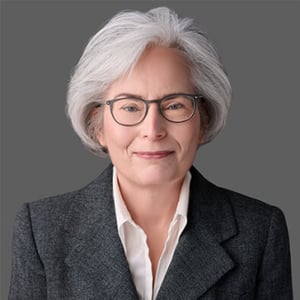
Partner, Rule Garza Howley LLP

Senior Judge, United States Court of Appeals, District of Columbia Circuit
Circuit Judge Douglas H. Ginsburg was appointed to the United States Court of Appeals for the District of Columbia in 1986. After receiving his B.S. from Cornell University in 1970, and his J.D. from the University of Chicago Law School in 1973, he clerked on the D.C. Circuit and for Justice Thurgood Marshall on the United States Supreme Court. Thereafter, Judge Ginsburg was a professor at the Harvard Law School, the Deputy Assistant and then Assistant Attorney General for the Antitrust Division of the Department of Justice, as well as the Administrator of the Office of Information and Regulatory Affairs in the Office of Management and Budget. Concurrent with his service as a federal judge, Judge Ginsburg has taught at the University of Chicago Law School and the New York University School of Law. Judge Ginsburg is currently a Professor of Law at the George Mason University and a visiting professor at University College London, Faculty of Laws.
Judge Ginsburg is the Chairman of the International Advisory Board of the Global Antitrust Institute at the Law and Economics Center of the George Mason University School of Law. He also serves on the Advisory Boards of: Competition Policy International; the Harvard Journal of Law and Public Policy; the Journal of Competition Law and Economics; the Journal of Law, Economics & Policy; the Supreme Court Economic Review; the University of Chicago Law Review; the New York University Journal of Law and Liberty; and, at University College London, both the Centre for Law, Economics and Society and the Jevons Institute for Competition Law and Economics.
In 2020, Judge Ginsburg was the 11th recipient of the John Sherman Award, presented by the Antitrust Division of the Department of Justice in recognition of the awardee’s Lifetime Contributions to Antitrust Law and Policy.
In 2014, Judge Ginsburg received the Lifetime Achievement Award given annually by the Global Competition Review.
He is the author or co-author of several books and more than 100 articles on competition and regulation, including, most recently, Growing Convergence: The Limited Role of Antitrust in Standard Essential Patent Disputes, in CPI Antitrust Chronicle, Summer 2021, Vol. 1, No. 2.
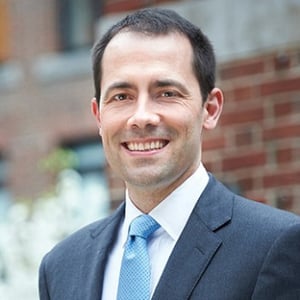
Professor of Law, New York University School of Law
Scott Hemphill teaches and writes about antitrust, intellectual property, and regulation of industry. His research focuses on the law and economics of competition and innovation, and his scholarship ranges broadly, from drug patents to net neutrality to fashion and intellectual property. Hemphill’s recent work examines the antitrust problem of parallel exclusion in concentrated industries and anticompetitive settlements of patent litigation by drug makers. His scholarship has been cited by the US Supreme Court and the California Supreme Court, among others, and has formed the basis for congressional testimony on matters of regulatory policy. Hemphill's writing has appeared in law reviews, peer-reviewed journals, and the popular press, including the Yale Law Journal, Science, and the Wall Street Journal. He joined NYU from Columbia Law School, where he was a professor of law. Hemphill has also served as antitrust bureau chief for the New York Attorney General and clerked for Judge Richard Posner of the US Court of Appeals for the Seventh Circuit and Justice Antonin Scalia of the Supreme Court. He holds a JD and PhD in economics from Stanford, an AB from Harvard, and an MSc in economics from the London School of Economics, where he studied as a Fulbright Scholar.
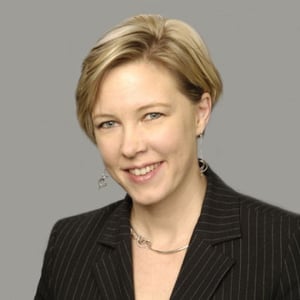
Clinical Professor and Senior Scholar and Senior Fellow for Copyright Research and Policy of C-IP2, Antonin Scalia Law School, George Mason University
Sandra Aistars is Senior Fellow for Copyright Research and Policy and a Senior Scholar at the Center for Intellectual Property x Innovation Policy (C-IP2). She also leads the law school’s Arts & Entertainment Advocacy Program. Professor Aistars has over twenty years of advocacy experience on behalf of copyright and other intellectual property owners. She has served on trade missions and been an industry advisor to the Department of Commerce on intellectual property implications for international trade negotiations; worked on legislative and regulatory matters worldwide; frequently testified before Congress and federal agencies regarding intellectual property matters; chaired cross-industry coalitions and technology standards efforts; and is regularly tapped by government agencies to lecture in U.S. government-sponsored study tours for visiting legislators, judges, prosecutors, and regulators.
Immediately prior to joining Scalia Law, Professor Aistars was the Chief Executive Officer of the Copyright Alliance – a nonprofit, public interest organization that represents the interests of artists and creators across the creative spectrum. While at Scalia Law, she continues to collaborate with the Copyright Alliance as a member of its Academic Advisory Board. Professor Aistars currently serves on the boards of the Washington Area Lawyers for the Arts (WALA) and the Howard Intellectual Property Program (HIPP), and she has previously served as trustee of the Copyright Society of the USA (CSUSA). Professor Aistars has also previously served as Vice President and Associate General Counsel at Time Warner Inc. She began her legal career in private practice at Weil, Gotshal and Manges LLP.

Samuel H. McCoy II Professor of Law, University of Virginia School of Law
John F. Duffy is the Samuel H. McCoy II Professor of Law and Class of 1966 Research Professor of Law at the University of Virginia School of Law, where he teaches administrative law, torts and intellectual property. Professor Duffy has published articles on a wide range of administrative law and regulatory issues in journals such as University of Chicago Law Review, Yale Law Journal, Stanford Law Review, Virginia Law Review, Columbia Law Review, Texas Law Review, Northwestern University Law Review, NYU Law Review, University of Pennsylvania Law Review and the Supreme Court Review. His 1998 article Administrative Common Law in Judicial Review, 77 Tex. L. Rev. 113 (1998), was one of the first articles to criticize the Chevron doctrine as being irreconcilable with § 706 of the APA; it won the American Bar Association’s Scholarship Award in Administrative Law. His 2008 article “Are Administrative Patent Judges Unconstitutional?” was covered on National Public Radio), in the New York Times (Adam Liptak, In One Flaw, Questions on Validity of 46 Judges, May 6, 2008), and in the Wall Street Journal (Dan Slater, Patently Unconstitutional, May 6, 2008). The NYT and WSJ agreed that he was “a different kind of law professor,” “one of the lucky few” whose “writings actually wind up changing the law.”
As an attorney in the courts, Duffy has twice successfully convinced the Supreme Court to overturn lower court doctrines that had been applied in many cases over decades but that were unanimously held to be irreconcilable with Supreme Court precedents. See TC Heartland v. Kraft Foods Group Brands, 581 U.S. 258 (2017); KSR v. Teleflex, 550 U.S. 398 (2007).
Prior to entering legal academics, Duffy clerked on the D.C. Circuit for Stephen Williams and on the Supreme Court for Antonin Scalia. While clerking, he became known as Justice Scalia’s “hapless law clerk,” who had been tasked with unearthing three-quarters of a century of legislative history that made “no difference” to the outcome in an otherwise forgettable case. See Conroy v. Aniskoff, 507 U.S. 511, 527-28 (1993) (Scalia, J., concurring in the judgment).
In earlier days, Duffy enjoyed being a professional blackjack player unwelcome in all Atlantic City casinos and a semi-professional road runner (best marathon time 2:24:33). He holds an A.B. in physics from Harvard and a J.D. from the University of Chicago.
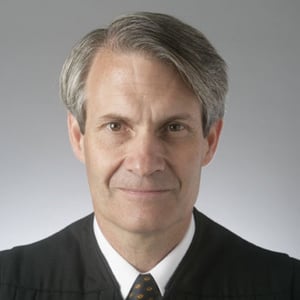
Special Counsel, Hunton Andrews Kurth
After serving on the United State Court of Appeals for the D. C. Circuit from 2005, Judge Griffith stepped down from the bench in 2020. Currently he is a Lecturer on Law at Harvard Law School, a Fellow at the Wheatley Institute at Brigham Young University, and Special Counsel in the Washington, DC office of the law firm of Hunton Andrews Kurth. Most recently, he was a member of President Biden's Commission on the Supreme Court. He is the author of Civic Charity and the Constitution , and the co-author, along with former judges Michael Luttig and Michael McConnell, of Lost, Not Stolen: The Conservative Case that Trump Lost and Biden Won the 2020 Presidential Election. https://lostnotstolen.org/ . Before being appointed to the D. C. Circuit, Judge Griffith was the General Counsel at BYU; Senate Legal Counsel, the non-partisan chief legal officer of the U. S. Senate; and a partner at Wiley, Rein & Fielding. Long active in rule-of-law programs in former communist nations, Judge Griffith is a member of the international advisory board of the CEELI Institute in Prague. He is a graduate of BYU and the University of Virginia School of Law and is a member of the American Law Institute.
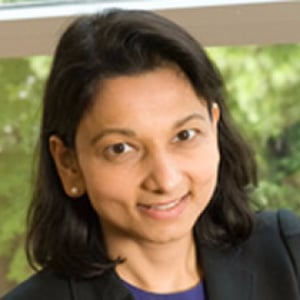
Elvin R. Latty Professor of Law, Duke University School of Law
Arti Rai, Elvin R. Latty Professor of Law and co-Director, Duke Law Center for Innovation Policy, is an internationally recognized expert in intellectual property (IP) law, administrative law, and health policy. Rai has also taught at Harvard, Yale, and the University of Pennsylvania law schools. Rai's research on IP law and policy in biotechnology, pharmaceuticals, and software has been funded by NIH, the Kauffman Foundation, and the Woodrow Wilson Center. She has published over 50 articles, essays, and book chapters on IP law, administrative law, and health policy. Her publications have appeared in both peer-reviewed journals and law reviews, including Science, the New England Journal of Medicine, the Journal of Legal Studies, Nature Biotechnology, and the Columbia, Georgetown, and Northwestern law reviews. She is the editor of Intellectual Property Law and Biotechnology: Critical Concepts (Edward Elgar, 2011) and the co-author of a 2012 Kauffman Foundation monograph on cost-effective health care innovation.
From 2009-2010, Rai served as the Administrator of the Office of External Affairs at the U.S. Patent and Trademark Office (USPTO). As External Affairs Administrator, Rai led policy analysis of the patent reform legislation that ultimately became the America Invents Act and worked to establish the USPTO’s Office of the Chief Economist. Prior to that time, she had served on President-Elect Obama’s transition team reviewing the USPTO. Prior to entering academia, Rai clerked for the Honorable Marilyn Hall Patel of the U.S. District Court for the Northern District of California; was a litigation associate at Jenner & Block (doing patent litigation as well as other litigation); and was a litigator at the Federal Programs Branch of the U.S. Department of Justice's Civil Division.
Rai regularly testifies before Congress and relevant administrative bodies on IP law and policy issues and regularly advises federal agencies on IP policy issues raised by the research that they fund. She is a member of the National Advisory Council for Human Genome Research and of an Expert Advisory Council to the Defense Advanced Projects Research Agency (DARPA). Rai is a public member of the Administrative Conference of the United States, a member of the American Law Institute, and co-chair of the IP Committee of the Administrative Law Section of the ABA. Rai is currently a member of the Institute of Medicine Committee on Strategies for Responsible Sharing of Clinical Trial Data and has served on, or as a reviewer for, numerous National Academies of Science committees. In 2011, Rai won the World Technology Network Award for Law.
Rai graduated from Harvard College, magna cum laude, with a degree in biochemistry and history (history and science), attended Harvard Medical School for the 1987-1988 academic year, and received her J.D., cum laude, from Harvard Law School in 1991. Rai's moot court team at Harvard Law School won Best Brief and Team honors at the school's prestigious Ames Moot Court Competition.
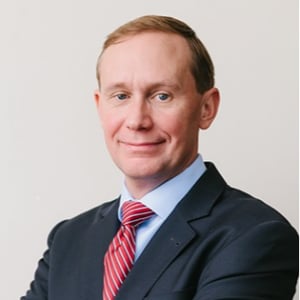
Associate Professor, Boston College Law School
David Olson is an associate professor and the Faculty Director of the Program on Innovation and Entrepreneurship. He teaches patent law, intellectual property law, antitrust law, and various seminars. His research and writing primarily focus on patents, copyrights, antitrust, and incentives for innovation and competition. Since joining BC Law in 2007, he has been recognized for his teaching excellence and contributions. In 2011, he received the Business & Law Society Faculty Award for Achievement in Business & Law. In 2012, he received the Professor Emil Slizewski Award for Faculty Excellence. For one semester in 2015, Olson served as a visiting professor at Pontifical Catholic University, Rio de Janeiro, Brazil, where he conducted research and taught a course on intellectual property.
Olson has published scholarly articles on patent law, copyright law, antitrust, music licensing, and first amendment copyright issues. His writing has been cited in Supreme Court and other legal opinions. He has testified before the U.S. Congress on matters of drug patents, FDA regulation, and antitrust.
The media frequently seeks Olson’s insights and opinions. He has been quoted in the Wall Street Journal, Associated Press, and Reuters, among others. He has appeared as a guest panelist on WBUR’s Radio Boston, WAMU's Kojo Namdi Show, and Public Radio Canada. His op-eds have appeared in the Chicago Tribune, Washington Times, and The Hill.
Olson came to Boston College from Stanford Law School's Center for Internet and Society, where he conducted research on patent law and litigated copyright fair use impact cases. Before entering academia, Olson practiced law as a patent litigator. He clerked for Judge Jerry Smith of the U.S. Court of Appeals for the Fifth Circuit.

Solicitor General, Montana Attorney General's Office
Christian is currently Solicitor General of Montana, where he serves as the chief litigator and principal legal advisor to Montana Attorney General Austin Knudsen. In that capacity, he manages litigation before the federal district courts, courts of appeal, and the United States Supreme Court, as well as the Montana Supreme Court. He previously served in the Trump Administration as Senior Counsel to the Assistant Secretary for Civil Rights at the U.S. Department of Education. Prior to government service, he was a public interest constitutional litigator at Mountain States Legal Foundation and a fellow at the Institute for Justice. He clerked for Justice Caleb Stegall on the Kansas Supreme Court. He also served as Director of Publications for the Federalist Society's national headquarters.
Christian earned his B.A. in Political Science in 2009 from the University of Pennsylvania before attending the University of Kansas School of Law. Christian is admitted to practice law in Kansas and Montana. A Kansas native, he is a die-hard fan of the Kansas Jayhawks, Kansas City Chiefs, and Kansas City Royals.
Christian is a member of the Federalism & Separation of Powers Practice Group's Executive Committee.
Assistant Professor of Law, Marquette University Law School
Professor Bruce Boyden teaches and writes in the areas of copyright, Internet law, privacy, legal history, and civil procedure. His scholarship focuses on the ways in which law adapts to turbulence caused by sudden changes in the technological, social, or economic landscape. Recent articles includeGames and Other Uncopyrightable Systems, 18 Geo. Mason L. Rev. 439 (2011), and Constitutional Safety Valve: The Privileges or Immunities Clause and Status Regimes in a Federalist System, 62 Ala. L. Rev. 111 (2011).
Prior to joining the faculty at Marquette, Professor Boyden was a visiting professor at Washington & Lee University School of Law and at Michigan State University College of Law. Before that, he was in private practice for several years with the law firm Proskauer Rose LLP, where his practice focused on copyright, digital rights management, privacy, and Internet law. Professor Boyden is a graduate of Yale Law School, where he served as Notes Editor of the Yale Law Journal and as an Editor of the Yale Journal of Law & Feminism. He received his M.A. in history from Northwestern University and his B.A.,summa cum laude, from the University of Arkansas in history and philosophy. His current research focuses on the interaction between copyright and changing technology.
CoFounder, RightsClick
Steven’s extensive background in IP law and policy began as an attorney for the U.S. Senate Judiciary Committee, after which, he served as senior counsel for Policy and International Affairs at the U.S. Copyright Office and then as Chief Intellectual Property Counsel for the Global Intellectual Property Center of the U.S. Chamber of Commerce. Before co-founding RightsClick, he started the IP consultancy Sentinel Worldwide, and teaches copyright law at George Washington University Law School.

Professor of Law, Antonin Scalia Law School, George Mason University
Adam Mossoff is Professor of Law at Antonin Scalia Law School, George Mason University. He has published extensively on why patents, copyrights, and other intellectual property rights have been—and should be—legally secured to innovators and creators as property rights. His scholarship has been relied on by the United States Supreme Court, by lower federal courts, and by U.S. federal agencies. He has been invited to testify numerous times before the U.S. Senate and the House of Representatives on intellectual property legislation. His writings on intellectual property policy have also appeared in the Wall Street Journal, New York Times, Forbes, Investors Business Daily, and in other media outlets. His journal articles can be downloaded here.
Professor Mossoff is a longstanding member of the Executive Committee of the Intellectual Property Practice Group of the Federalist Society, on which he served as Chairperson from 2016-2018, and he is Chair of the Intellectual Property Working Group of the Regulatory Transparency Project of the Federalist Society. He is a Senior Fellow and Chair of the Forum for Intellectual Property at the Hudson Institute, a Visiting Intellectual Property Fellow at the Heritage Foundation, and a member of the Board of Directors of the Center for Intellectual Property Understanding. He is a member of the Intellectual Property Rights Policy Committee of ANSI and he has served as Chair and Vice-Chair of the Intellectual Property Committee of the IEEE-USA, on which he remains a member in good standing.
Professor of Law, Southern Illinois University School of Law
Professor Mark F. Schultz joined the faculty in 2003. He teaches and writes primarily in the area of intellectual property.
Professor Schultz is a frequent author and speaker known for his work on the law and economics of the global intellectual property system. In one of his most influential projects, he worked with the Organization for Economic Cooperation and Development (OECD) to construct a groundbreaking global trade secret protection index (the TSPI). The TSPI is influencing policy discussions on this cutting-edge topic in capitals around the world. Other recent projects have included an empirical study that quantified for the first time the backlogs in patent offices worldwide, a report on how patented innovation is meeting global health challenges, and the construction of a new global index of copyright strength.
Professor Schultz is an influential voice in public policy debates regarding intellectual property. He has testified before the U.S. Congress on copyright law at the invitation of the House Judiciary Committee and has briefed the staff of the U.S. Senate Judiciary Committee on trade secret legislation. He speaks frequently around the world about the connection between secure and effective intellectual property rights and flourishing national economies and individual lives, with invitations from the U.S. Patent and Trademark Office, the U.S. Trade Representative, and the U.S. Copyright Office, as well as numerous academic institutions, think tanks, and industry groups. He served as an NGO delegate to the World Intellectual Property Organization (WIPO) for several years during the WIPO Development Agenda talks. He is also one of the organizers of an ongoing multilateral diplomatic dialogue on best practices in national trade secret laws, and is co-founder of the Center for Protection of Intellectual Property (CPIP) at George Mason University in Washington, D.C.
Among the awards and recognition he has received for his scholarship was the School of Law's Outstanding Scholar of the Year award in 2008. He has been a distinguished visiting scholar at the University of Botswana and a visiting professor at DePaul University College of Law.
Professor Schultz graduated with honors from the George Washington University School of Law. Following law school, he was a judicial clerk for the Hon. Daniel M. Friedman of the United States Court of Appeals for the Federal Circuit in Washington, D.C., and the Hon. Eric G. Bruggink of the United States Court of Federal Claims. Prior to joining academia, he practiced law for a decade, serving as outside general counsel to several tech startups and helping technology companies to expand their businesses and commercialize their intellectual property in dozens of countries. He holds a B.A. in International Economics from George Washington University and has done PhD level coursework in development economics at Southern Illinois University.
He is active in leadership roles in local and national organizations. He has served as chair of the Federalist Society's Intellectual Property Practice Group and the AALS Section on Internet and Computer Law. He is an officer of the American Bar Association's International IP Committee of the International Law Section and the American Intellectual Property Law Association’s Trade Secret Law Committee. He currently is chair of the Academic Advisory Board of the Copyright Alliance.
Professor Schultz teaches Copyright Law, Trade Secret Law, Trademark Law, and a senior seminar on Intellectual Property and Global Development. He established and directs both the Specialization in Intellectual Property Law and the IP Semester in Practice Externship Program. He also co-founded a Legal Globalization Class, offered every other year, that takes students to South Africa and Botswana after spending a semester learning about the legal system, culture, history, and politics of southern Africa. The popular course is a once-in-a-lifetime experience that introduces students to leading lawyers, judges, government officials, and human rights advocates, taking them from Cape Town to Johannesburg to Gaborone as well as many popular destinations including game reserves, national parks, the Cape of Good Hope, and the Cradle of Humankind.

Laurence A. Tisch Professor of Law and Director, Classical Liberal Institute, New York University School of Law; Senior Fellow, The Civitas Institute, University of Texas at Austin
Richard A. Epstein is the inaugural Laurence A. Tisch Professor of Law at NYU School of Law. Prior to his joining the faculty, he was a visiting law professor at NYU from 2007 through 2009. He served as the Peter and Kirstin Bedford Senior Fellow at the Hoover Institution from 2000 to 2024. Since 2024 to the present he is a senior lecturer at the Civitas Institute at the University of Texas—Austin. Epstein is also the James Parker Hall Distinguished Service Professor of Law Emeritus and a senior lecturer at the University of Chicago. His initial law school appointment was at the University of Southern California from 1968 to 1972. Epstein received an LL.D., h.c. from the University of Ghent, 2003. He has been a member of the American Academy of Arts and Sciences since 1985 and was a Senior Fellow of the Center for Clinical Medical Ethics at the University of Chicago Division of Biological Sciences, also from 1983. to 2022 He served as editor of the Journal of Legal Studies from 1981 to 1991, and of the Journal of Law and Economics from 1991-2001. From 2001 to 2010 he was a director of the John M. Olin Program in Law and Economics at the University of Chicago.
His newest book, The Myth of Birthright Citizenship: What the Fourteenth Amendment Really Says was published in 2026 (Encounter Books). Prior to that he has published many books including, The Dubious Morality of the Modern Administrative State (Roman & Littlefield 2020).Earlier he published th Classical Liberal Constitution: The Uncertain Quest for Limited Government (Harvard 2014) iHis previous books include Design for Liberty: Private Property, Public Administration and the Rule of Law (Harvard 2011); The Case Against the Employee Free Choice Act (Hoover 2009); Supreme Neglect: How to Revive the Constitutional Protection of Property Rights (Oxford 2008); Antitrust Decrees in Theory and Practice: Why Less is More (AEI 2007); Overdose: How Excessive Government Regulation Stifles Pharmaceutical Innovation (Yale University Press. 2006); How Progressives Rewrote the Constitution (Cato 2006); Cases and Materials on Torts (Aspen Law & Business; 8th ed. 2004); Skepticism and Freedom: A Modern Case for Classical Liberalism (University of Chicago, 2003); Torts (Aspen Law & Business 1999); Principles for a Free Society: Reconciling Individual Liberty with the Common Good (Perseus Books, 1998): Mortal Peril: Our Inalienable Rights to Health Care (Addison-Wesley, 1997); Simple Rules for a Complex World (Harvard, 1995); Bargaining With the State (Princeton, 1993); Forbidden Grounds: The Case Against Employment Discrimination Laws (Harvard , 1992); Takings: Private Property and the Power of Eminent Domain (Harvard, 1985); and Modern Products Liability Law (Greenwood Press, 1980). He has also edited(with Catherine M. Sharkey) Cases and Materials on the Law of Torts (10th edition 2012).
Professor Epstein has written numerous articles on a wide range of legal and interdisciplinary subjects. He has taught courses in administrative law, antitrust law, civil procedure, communications, constitutional law, contracts, corporations, criminal law, employment discrimination law, environmental law, food and drug law health law and policy, legal history, labor law, property, real estate development and finance, jurisprudence, labor law; land use planning, patents, individual, estate and corporate taxation, Roman Law; torts, and workers' compensation.
Professor Epstein also writes a regular column for Civitas Institute, which also sponsors his podcast, The Libertarian with Charles C.W. Cooke, and Law Talk, with Cooke and John Yoo. He also does a podcast with John Batchelor. And appears regularly on the Freedom File with Judge Andrew Napolitano.
Professor of Law, New York University School of Law
Scott Hemphill teaches and writes about antitrust, intellectual property, and regulation of industry. His research focuses on the law and economics of competition and innovation, and his scholarship ranges broadly, from drug patents to net neutrality to fashion and intellectual property. Hemphill’s recent work examines the antitrust problem of parallel exclusion in concentrated industries and anticompetitive settlements of patent litigation by drug makers. His scholarship has been cited by the US Supreme Court and the California Supreme Court, among others, and has formed the basis for congressional testimony on matters of regulatory policy. Hemphill's writing has appeared in law reviews, peer-reviewed journals, and the popular press, including the Yale Law Journal, Science, and the Wall Street Journal. He joined NYU from Columbia Law School, where he was a professor of law. Hemphill has also served as antitrust bureau chief for the New York Attorney General and clerked for Judge Richard Posner of the US Court of Appeals for the Seventh Circuit and Justice Antonin Scalia of the Supreme Court. He holds a JD and PhD in economics from Stanford, an AB from Harvard, and an MSc in economics from the London School of Economics, where he studied as a Fulbright Scholar.
Partner, Wilson Sonsini Goodrich & Rosati
U.S. Court of Appeals, Seventh Circuit
Frank H. Easterbrook is a judge of the United States Court of Appeals for the Seventh Circuit and a Senior Lecturer at the Law School of the University of Chicago. He was Chief Judge from 2006–2013. Before joining the court in 1985, he was the Lee andBrena Freeman Professor of Law at the University of Chicago, where he taught and wrote in antitrust, securities, corporate law, jurisprudence, and criminal procedure. He has published The Economic Structure of Corporate Law (with Daniel R. Fischel) and about 100 scholarly articles. He served as Co-Editor of the Journal of Law and Economics from 1982 to 1991 and as a member of the Judicial Conference’s Standing Committee on Rules of Practice and Procedure from 1991 to 1997. Before joining the faculty of the Law School in 1979, Judge Easterbrook was Deputy Solicitor General of the United States. He holds degrees from Swarthmore College (B.A. with high honors, 1970) and the University of Chicago (J.D. cum laude, 1973), and is a member of the American Academy of Arts and Sciences, the American Law Institute, the Mont Pelerin Society, Phi Beta Kappa, and the Order of the Coif.

A Creature of Statute: American Antitrust Law
Stephanos Bibas, Daniel A. Crane, Ashley Keller, Doha Mekki, Bilal Sayyed
Although a creature of statute, American antitrust law functions in practice as a field of...
Workshop on Problems of Insider Trading and Merger Regulations [Archive Collection]
John R. Bolton, Pasco M. Bowman, Joseph A. Grundfest, Saul Levmore, Henry G. Manne, Wm. Bradford Reynolds
On January 30-31, 1987, the Federalist Society hosted its annual National Lawyers Convention at the...
Deep Dive Episode 47 – The Songwriting Industry and Antitrust Consent Decrees
Kristen Osenga, Mark F. Schultz
Most people would be surprised to discover that music is among the most regulated of...
Music Licensing
Mitch Glazier, Lawrence J. White
The system for licensing musical works in the U.S. and internationally is fractionalized, complex, regulated,...
Deep Dive Episode 16 – Is the Newest Part of the Copyright Act Antiquated?
Jennifer L. Pariser, Maria Schneider, Mark F. Schultz
Is the Newest Part of the Copyright Act Antiquated? Unchaining Creativity and Innovation. Nearly twenty...
Corporations, Securities & Antitrust: Justice Scalia's Contributions to Antitrust Law
Frank H. Easterbrook, Deborah A. Garza, Douglas H. Ginsburg, C. Scott Hemphill
In his confirmation hearing, Justice Scalia told the Senators that, as a law school student,...
Intellectual Property: The Role of Congress and Executive Agencies in 21st Century IP Regimes
Sandra Aistars, John F. Duffy, Thomas B. Griffith, Arti K. Rai, David S. Olson
The Constitution specifically vests power in Congress to grant authors and inventors exclusive rights in...
What's Next for Copyright Enforcement? Rogue Sites and Other Challenges - Podcast
Christian Corrigan, Bruce Boyden, Steven M. Tepp, Adam Mossoff, Mark F. Schultz
How can copyright owners enforce their rights in a challenging online and digital environment? Widespread...
The Google Books Settlement
Richard A. Epstein, C. Scott Hemphill, Jonathan Jacobson
The New York City Lawyers Chapter hosted this event on December 14, 2009, at the Cornell...
Property Rights in the 21st Century
Frank H. Easterbrook
Following are excerpts from a panel discussion entitled "Property Rights in the 21st Century," which...