

Tammy McCutchen is a leading authority on federal and state wage-hour laws and prevailing wage laws. She counsels businesses on wage-hour compliance, including conducting internal audits on independent contractor status, overtime exemptions, and other pay practices. She also represents employers during investigations by the U.S. Department of Labor and serves as an expert witness in wage-hour class actions. She was a founding officer of ComplianceHR, a law and technology company, where she created AI-based applications to evaluate independent contractor and overtime exempt status.
Ms. McCutchen served as Administrator of the U.S. Department of Labor’s Wage and Hour Division, appointed by President Bush and confirmed by the Senate in 2001. She was the primary architect of the 2004 revisions to the overtime exemption regulations, the first major changes to the regulations in 55 years.
Before joining DOL, she was senior counsel for the Hershey Company in Hershey, Pennsylvania.
Ms. McCutchen has been a volunteer leader of the Federalist Society since 1989. She served in leadership roles for the Northwestern Student Chapter and Chicago Lawyers Chapter. She currently serves in leadership for the Labor & Employment Practice Group, the Regulatory Transparency Project, and the Knoxville, TN Lawyers Chapter. She served on the Editorial Advisory Board of Law360, the Labor Committee of the U.S. Chamber of Commerce, the Small Business Legal Advisory Board of the National Federation of Independent Business, and a Policy Fellow at the ACU Foundation.
Ms. McCutchen is a graduate of Western Illinois University and Northwestern University School of Law. She clerked for the Hon. Daniel Manion on the U.S. Court of Appeals for the Seventh Circuit.
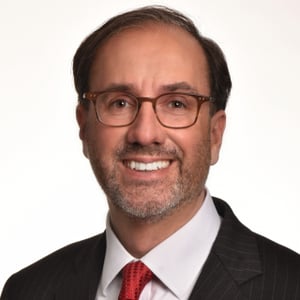
President and CEO, The Buckeye Institute
Robert Alt is the President and Chief Executive Officer of The Buckeye Institute where he has catalyzed exponential growth since he took the organization’s helm in 2012. He has since founded Buckeye’s renowned Economic Research Center and established its impactful Legal Center.
Alt is a distinguished scholar and attorney with particular expertise in legal policy, criminal justice, national security, and constitutional law. He previously worked for former U.S. Attorney General Edwin Meese III, regularly provides commentary on television and radio programs, and his writings have appeared in countless outlets.
In 2004, Alt spent five months in Iraq as an embedded war correspondent.
Alt has testified before Congress multiple times—including at the confirmation hearings for U.S. Supreme Court Justice Elena Kagan—the Federal Election Commission regarding matters of constitutional and administrative law, and numerous state legislatures.
Alt serves as an officer on the boards of The Philadelphia Society and the Federalist Society’s Columbus Lawyers Chapter. He taught national security law, criminal law, and legislation at Case Western Reserve University School of Law, as well as constitutional law and political parties and interest groups at Ashland University.
Alt earned his Doctor of Law degree from The University of Chicago Law School, where he was Symposium Editor and the winner of the Mulroy Prize for Excellence in Appellate Advocacy as well as research assistant to Professor Richard Epstein. Following law school, he clerked for Judge Alice Batchelder on the U.S. Court of Appeals for the Sixth Circuit. Alt graduated with his Bachelor of Arts in philosophy and political science magna cum laude from Azusa Pacific University where he also won the Outstanding Senior Award in Political Science.
Alt is an accomplished high-altitude alpinist and endurance athlete who has successfully climbed 6.75 of the famed Seven Summits of the World including Mount Everest. He is the creator of PROFOUND CLIMBING™ and a frequent speaker across the country and around the world on legal and public policy topics as well as effective leadership, management, decision-making, and teamwork in contexts ranging from extraordinary life/death situations to ordinary professional/business settings.
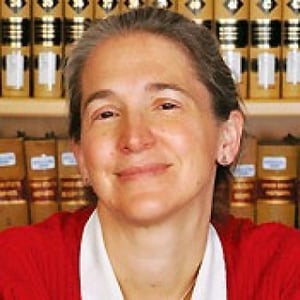
Carter C. Kissell Professor of Law, The Ohio State University Michael E. Moritz College of Law
In law school, Professor Hébert served as editor-in-chief of the Kansas Law Review and was elected to Order of the Coif. Following graduation from law school, she clerked for Judge James K. Logan of the U.S. Court of Appeals for the Tenth Circuit and practiced labor and employment law, representing management, for five years with Spencer, Fane, Britt, and Browne in Kansas City, Mo.
Professor Hébert has published a number of law review articles on employment discrimination, sexual harassment, employee privacy, and alternative dispute resolution (ADR). Her treatise Employee Privacy Lawwas published in 1993 and is supplemented annually.
Professor Hébert makes frequent presentations to academic and professional audiences on issues of sexual harassment and employee privacy, including genetic testing and electronic surveillance. Professor Hébert served as Chair of the Employment Discrimination Section of the Association of American Law Schools in 1998. She currently serves as a member of the Workplace Mediation Advisory Committee of the State of Ohio Commission on Dispute Resolution and Conflict Management.
From 1997 to 2000, Professor Hébert served as associate dean for academic affairs at the Moritz College of Law. Professor Hébert is a member of the Associated Graduate Faculty of the Department of Womens Studies at Ohio State. Professor Hébert’s courses include Employment Discrimination Law, Employment Law, Employee Benefits,Alternative Dispute Resolution in the Workplace, Legal Writing and Analysis, and a Sexual Harassment seminar. She taught Comparative Employment Discrimination and Comparative Dispute Resolution during the Oxford semester program in 2010.
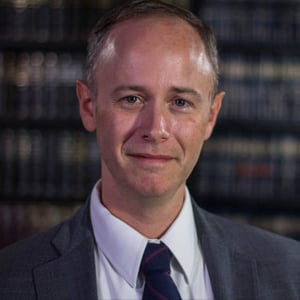
Vice President and Legal Director, National Right to Work Legal Defense and Education Foundation, Inc.
William Messenger is Foundation Vice President and Legal Director. He was a staff attorney for over twenty years and, during that time, represented individuals in numerous cases that sought to expand worker freedom of choice. This includes acting as lead counsel in three cases before the United States Supreme Court. In 2018, Messenger argued Janus v. AFSCME Council 31, where the Supreme Court held it violates the First Amendment for governments and unions to compel individuals to financially support unions and their speech. Originally from Youngstown Ohio, Messenger attended Ohio University as an undergraduate and then the George Washington University School of Law.
President and CEO, The Buckeye Institute
Robert Alt is the President and Chief Executive Officer of The Buckeye Institute where he has catalyzed exponential growth since he took the organization’s helm in 2012. He has since founded Buckeye’s renowned Economic Research Center and established its impactful Legal Center.
Alt is a distinguished scholar and attorney with particular expertise in legal policy, criminal justice, national security, and constitutional law. He previously worked for former U.S. Attorney General Edwin Meese III, regularly provides commentary on television and radio programs, and his writings have appeared in countless outlets.
In 2004, Alt spent five months in Iraq as an embedded war correspondent.
Alt has testified before Congress multiple times—including at the confirmation hearings for U.S. Supreme Court Justice Elena Kagan—the Federal Election Commission regarding matters of constitutional and administrative law, and numerous state legislatures.
Alt serves as an officer on the boards of The Philadelphia Society and the Federalist Society’s Columbus Lawyers Chapter. He taught national security law, criminal law, and legislation at Case Western Reserve University School of Law, as well as constitutional law and political parties and interest groups at Ashland University.
Alt earned his Doctor of Law degree from The University of Chicago Law School, where he was Symposium Editor and the winner of the Mulroy Prize for Excellence in Appellate Advocacy as well as research assistant to Professor Richard Epstein. Following law school, he clerked for Judge Alice Batchelder on the U.S. Court of Appeals for the Sixth Circuit. Alt graduated with his Bachelor of Arts in philosophy and political science magna cum laude from Azusa Pacific University where he also won the Outstanding Senior Award in Political Science.
Alt is an accomplished high-altitude alpinist and endurance athlete who has successfully climbed 6.75 of the famed Seven Summits of the World including Mount Everest. He is the creator of PROFOUND CLIMBING™ and a frequent speaker across the country and around the world on legal and public policy topics as well as effective leadership, management, decision-making, and teamwork in contexts ranging from extraordinary life/death situations to ordinary professional/business settings.
Carter C. Kissell Professor of Law, The Ohio State University Michael E. Moritz College of Law
In law school, Professor Hébert served as editor-in-chief of the Kansas Law Review and was elected to Order of the Coif. Following graduation from law school, she clerked for Judge James K. Logan of the U.S. Court of Appeals for the Tenth Circuit and practiced labor and employment law, representing management, for five years with Spencer, Fane, Britt, and Browne in Kansas City, Mo.
Professor Hébert has published a number of law review articles on employment discrimination, sexual harassment, employee privacy, and alternative dispute resolution (ADR). Her treatise Employee Privacy Lawwas published in 1993 and is supplemented annually.
Professor Hébert makes frequent presentations to academic and professional audiences on issues of sexual harassment and employee privacy, including genetic testing and electronic surveillance. Professor Hébert served as Chair of the Employment Discrimination Section of the Association of American Law Schools in 1998. She currently serves as a member of the Workplace Mediation Advisory Committee of the State of Ohio Commission on Dispute Resolution and Conflict Management.
From 1997 to 2000, Professor Hébert served as associate dean for academic affairs at the Moritz College of Law. Professor Hébert is a member of the Associated Graduate Faculty of the Department of Womens Studies at Ohio State. Professor Hébert’s courses include Employment Discrimination Law, Employment Law, Employee Benefits,Alternative Dispute Resolution in the Workplace, Legal Writing and Analysis, and a Sexual Harassment seminar. She taught Comparative Employment Discrimination and Comparative Dispute Resolution during the Oxford semester program in 2010.
Vice President and Legal Director, National Right to Work Legal Defense and Education Foundation, Inc.
William Messenger is Foundation Vice President and Legal Director. He was a staff attorney for over twenty years and, during that time, represented individuals in numerous cases that sought to expand worker freedom of choice. This includes acting as lead counsel in three cases before the United States Supreme Court. In 2018, Messenger argued Janus v. AFSCME Council 31, where the Supreme Court held it violates the First Amendment for governments and unions to compel individuals to financially support unions and their speech. Originally from Youngstown Ohio, Messenger attended Ohio University as an undergraduate and then the George Washington University School of Law.

Partner, O'Melveny & Myers LLP
Gregory Jacob is a partner in O’Melveny’s Washington, D.C. office. Greg Jacob represents financial services companies including banks, investment managers, health care payors, and insurers, as well as other employers, in class action and other litigation concerning ERISA and other labor and employment matters. A former Solicitor of Labor, Greg has extensive knowledge on a wide variety of labor and employment issues including ERISA, FLSA, OFCCP, and whistleblower law. He regularly litigates in federal courts throughout the country, defends clients against Department of Labor investigations, and provides counseling to plans and plan sponsors.
Prior to rejoining O’Melveny in 2021, Greg served as Counsel to Vice President Pence and Deputy Assistant to the President. He directly advised the Vice President on all legal issues relating to the Office of the Vice President, and advised the White House Coronavirus Task Force concerning the Defense Production Act and other legal issues related to bolstering the domestic supply chain.
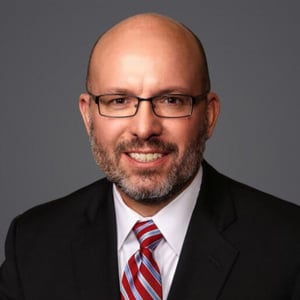
Shareholder, Ogletree, Deakins, Nash, Smoak & Stewart
Chris Murray is Co-Chair of the firm’s Arbitration and Alternative Dispute Resolution Practice Group. In this role, he assists attorneys throughout the firm and clients nationwide to create, roll out, and enforce effective employment arbitration agreements and other ADR programs. Mr. Murray has extensive experience with class/collective action waivers in employment arbitration. Mr. Murray was part of the Ogletree team that successfully defended the use of such waivers in the Fifth Circuit’s landmark decision in D.R. Horton, Inc. v. N.L.R.B. Since then, he has successfully defended the enforceability of class action waivers in numerous subsequent cases and submitted an amicus brief on the subject on behalf of several major employers’ associations in the Supreme Court’s Murphy Oil case. Mr. Murray assists clients and the Firm’s attorneys to draft or revise arbitration programs focused on a client’s specific needs and goals and in light of changing law and evolving best practices.

Encino Motorcars v. Navarro - Post-Decision SCOTUScast
Tammy Dee McCutchen
SCOTUScast featuring Tammy McCutchen
On April 2, 2018, the Supreme Court decided Encino Motorcars v. Navarro, a case on...
Topics
Time for the OFCCP to Remove its Roadblock to Quality Medical Care for Veterans and Current Service Members
TRICARE is a Department of Defense (DoD) program that pays for the medical benefits...
Lunch Discussion: Janus v. AFSCME
Robert Alt, L. Camille Hébert, William L. Messenger
2018 Ohio Lawyers Chapters Conference
Earlier this year the U.S. Supreme Court heard oral arguments in Janus v. American Federation...
Lunch Discussion: Janus v. AFSCME
Robert Alt, L. Camille Hébert, William L. Messenger
2018 Ohio Lawyers Chapters Conference
Earlier this year the U.S. Supreme Court heard oral arguments in Janus v. American Federation...
Topics
Faulty Union “Math” Doesn’t Add Up to a Public-Sector Right to Strike
An April 5, 2018, post on Onlabor.org [https://onlabor.org/will-masterpiece-cakeshop-and-janus-create-a-first-amendment-right-to-strike-for-teachers/] argues that, if the U.S. Supreme Court rules for...
Introduction to the Labor & Employment Working Group
Gregory Frederick Jacob
Regulatory Transparency Project's Fourth Branch Video
Gregory Jacob is the Chairman of RTP’s Labor & Employment working group and Partner, O’Melveny...
Artis v. District of Columbia - Post-Decision SCOTUScast
SCOTUScast featuring Misha Tseytlin
On January 22, 2018, the Supreme Court decided Artis v. District of Columbia, a case...
Courthouse Steps: China Agritech v. Resh
Christopher C. Murray
Labor & Employment Law and Litigation Practice Group Teleforum
On March 26, the Supreme Court will hear arguments in China Agritech, Inc. v. Resh,...
Topics
The Fifth Circuit Vacates the Fiduciary Rule
On March 15, 2018, the Fifth Circuit struck down one of the most controversial regulatory...
Topics
Fifth Circuit Court of Appeals Vacates DOL Fiduciary Rule
In a 2-1 decision, the 5th Circuit Court of Appeals held that the Department of...