
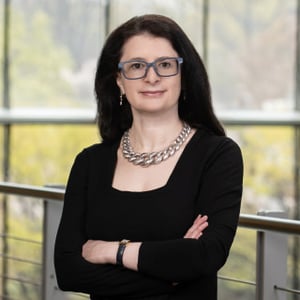
Senior Associate General Counsel/Senior Legal Advisor, Office of Management and Budget/CFPB
Victoria Dorfman is a Senior Associate General Counsel at the Office of Management and Budget and is a Senior Legal Advisor at the Consumer Financial Protection Bureau. At the OMB, she advises on constitutional and statutory issues. At the CFPB, she is primarily responsible for Enforcement, Supervision, Fair Lending, Oversight, and the Bureau’s litigation.
Prior to entering government service, Victoria was a partner at Jones Day, in Washington, D.C. and in New York, where she represented clients in appellate and complex commercial litigation in U.S. courts and in international arbitration. She has successfully briefed cases at all stages of litigation and argued before federal and state courts of appeals.
Victoria's areas of in-depth experience include jurisdiction and civil procedure, arbitration, bankruptcy, antitrust, and general commercial litigation. She maintained an active First Amendment Establishment and Free Exercise practice and represents religious institutions. Victoria's representations included obtaining unanimous victories in intergovernmental tax immunity and forum non conveniens cases in the U.S. Supreme Court; bankruptcy confirmations, including in appellate and Supreme Court proceedings, of Chrysler, the City of Detroit, Caesar's, Adelphia, and Relativity Media; UNCITRAL and BIT arbitrations; victories for Bayer in antitrust patent challenges to agreements regarding a blockbuster drug's production; and a damages award for Chevron against the government, including a sanction for bad faith litigation conduct.
Prior to joining Jones Day, Victoria clerked for Justice Clarence Thomas of the United States Supreme Court and Judge Michael J. Luttig of the Fourth Circuit Court of Appeals. Victoria received her A.B. from Harvard College (cum laude) and J.D. from Harvard Law School (magna cum laude), where she was Articles, Books and Commentaries editor on Harvard Law Review.
Victoria is a native speaker of Russian, and is proficient in French and Portuguese. She published articles on Religion Clauses, bankruptcy, federal jurisdiction and statutory interpretation, and is a contributing author and editor of The Practitioner's Guide to Appellate Advocacy.
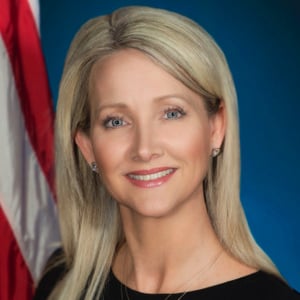
United States District Judge, Middle District of Florida
Judge Berger was raised in Jacksonville, Florida. She received her undergraduate degree from The Florida State University in 1990 and her law degree from The Florida State University College of Law in 1992, where she was a member of Law Review. Judge Berger served as an Assistant State Attorney in the Seventh Judicial Circuit from 1993 – 2000. In January 2001, Judge Berger left the State Attorney’s Office to serve as an Assistant General Counsel to Governor Jeb Bush. Judge Berger served in Governor Bush’s administration from January 2001 until May 2005, when she was appointed by the governor to serve as a Circuit Judge in the Seventh Judicial Circuit. During her service on the circuit court, Judge Berger presided over the civil and probate divisions (2005-2006) and adult felony division (2006-2012) in St. Augustine. She was also the presiding judge of the St. Johns County Adult Drug Court Program (2005-2012).
Judge Berger is currently a member of the St. Johns County Bar Association, the Orange County Bar Association, The Florida Supreme Court Committee on Civil Jury Instructions, the Florida Bar Criminal Procedure Rules Committee, the Florida Bar Appellate Practice Section’s Executive Council, the Dunn Blount Inn of Court, and the Federalist Society. She has prior service on the Florida Bar’s Judicial Administration and Evaluation Committee (2008 – 2013), the Judicial Administration Selection and Tenure Committee (2001-2004), the Florida Supreme Court Subcommittee on Postconviction Relief (2010-2011), the Statewide Diversity Team (2009-2012), and has been a member of both the National Association of Drug Court Professionals and the Florida Association of Drug Court Professionals.
Judge Berger has lectured on a wide range of topics including practicing with professionalism, judicial diversity, the judicial appointment process, effective oral arguments, fundamentals of extradition, capital cases, gender bias in the media, drug court, and drug and alcohol prevention.
Active in her community, Judge Berger served as a member of the St. Johns County Consortium on Substance Abuse as well as the St. Johns County Public Safety Committee. She is a member of the St. Augustine Rotary Club (Paul Harris Fellow) and is a steering committee member of The Marketplace Christian Professional Resources. She volunteers in the schools, has served as a reading mentor, and participates in the PACT Prevention Coalition’s Safe Prom Event. Judge Berger is also an active member of Trinity Episcopal Parish.
Judge Berger and her husband, Larry, live in St. Augustine with their two children.
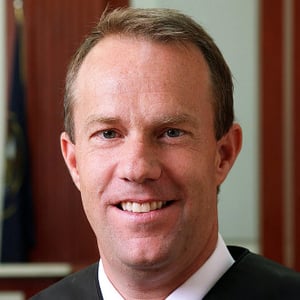
Associate Chief Justice, Utah Supreme Court
Thomas R. Lee was appointed to the Utah Supreme Court by Governor Gary Herbert in July 2010. He currently serves as Associate Chief Justice and as a member of the Utah Judicial Council. He also chaired the Supreme Court's Advisory Committee on Professionalism and Civility during a time in which the court promulgated Standards of Professionalism and Civility for judges in Utah. Justice Lee is a graduate, with high honors, of the University of Chicago Law School. After law school, he served as a law clerk for Judge J. Harvie Wilkinson, III, of the United States Court of Appeals for the Fourth Circuit and then for Justice Clarence Thomas of the United States Supreme Court. Justice Lee then joined the law firm now known as Parr, Brown, Gee & Loveless, where he became a shareholder. Prior to his appointment to the bench, Justice Lee was a full-time professor at the law school at Brigham Young University, where he continues to serve as Distinguished Lecturer. During his years as a full-time law professor, he maintained a part-time intellectual property litigation practice with Howard, Phillips, & Andersen. He also developed a part-time appellate practice, arguing numerous cases in federal courts throughout the country and in the United States Supreme Court. In 2004 - 05, Justice Lee served as Deputy Assistant Attorney General in the Civil Division of the U.S. Department of Justice.
Don Forchelli Professor of Law and Director of Graduate Education, Brooklyn Law School
Lawrence Solan holds both a law degree and a Ph.D. in linguistics. His scholarly works are largely devoted to exploring interdisciplinary issues related to law, language and psychology, especially in the areas of statutory and contractual interpretation, the attribution of liability and blame, and linguistic evidence. He is director of the Law School's Center for the Study of Law, Language and Cognition, and his acclaimed book, The Language of Judges, is widely recognized as a seminal work on linguistic theory and legal argumentation. His most recent books are The Language of Statutes: Laws and their Interpretation, published by the University of Chicago Press in 2010, and The Oxford Handbook of Language and Law, co-edited with Peter Tiersma and published in 2012. He has authored numerous articles and book chapters, and regularly lectures in the United States and abroad.
Professor Solan has been a visiting professor in the Council of Humanities and the Psychology Department at Princeton University. He has also been and a visiting professor at Yale Law School. He has served as president of the International Association of Forensic Linguistics, is on the board of the International Academy of Law and Mental Health, and the editorial board of the International Journal of Speech, Language and the Law.
Prior to joining the faculty in 1996, Professor Solan was a partner in the firm of Orans, Elsen and Lupert, where he specialized in complex civil litigation, before which he was a law clerk to Justice Stewart Pollock of the Supreme Court of New Jersey.
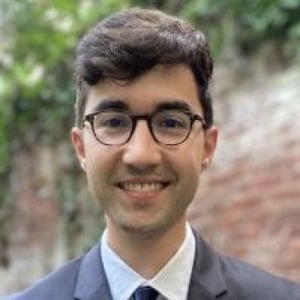
Assistant Professor of Law, Georgetown Law
Professor Tobia’s teaching and scholarship are motivated by a tension between two views of the law. On the first view, law is a system of experts, founded upon knowledge of specialized concepts: dicta, habeas corpus, parol evidence, strict liability. Law students learn these new concepts; treatises and restatements clarify these concepts’ features; and legal scholars debate how these concepts should apply and evolve. On a radically different view, law’s most central concepts are actually ordinary ones. Lay juries regularly evaluate familiar questions like: did he act reasonably; was her act intentional; what caused the outcome; was the agreement formed with consent; what was their motive? Using methods from philosophy, cognitive science, and linguistics, Professor Tobia’s research examines the features of central legal concepts, with the overarching aim of clarifying the relationship between law and the people it governs.
Prof. Tobia received a B.A., summa cum laude, in Philosophy, Mathematics, and Cognitive Science from Rutgers University; a B.Phil. with distinction from Oxford as an Ertegun Scholar; and a J.D. and Ph.D. with distinction from Yale, as an Articles Editor of the Yale Law Journal, Coker Teaching Fellow in Torts, and Prize Teaching Fellow in Philosophy. Kevin’s scholarship has appeared in the Harvard Law Review, Yale Law Journal, and journals of philosophy and cognitive science (e.g. Analysis; Mind & Language; Cognitive Science) and has been awarded Yale Law School’s Felix S. Cohen prize for legal philosophy and the AALS Section on Jurisprudence “Future Promise Award” for scholarship in legal philosophy.
Professor Tobia teaches in Torts and Section 3’s Legal Justice Seminar at Georgetown and has previously taught Legal Philosophy at Oxford and assisted in the instruction of courses in Contracts, Torts, Health Law & Bioethics, and Law & Economics. Professor Tobia frequently collaborates with scholars from Georgetown and abroad, as a Research Affiliate with the ETH Zurich Center for Law & Economics and collaborator in the Experimental Jurisprudence Cross-Cultural Study exchange.

Patrick Hotung Professor of Constitutional Law, Georgetown University Law Center
Randy Barnett is the Patrick Hotung Professor of Constitutional Law at Georgetown University Law Center. He has argued before the United States Supreme Court, tried murder cases to juries as a prosecutor in Chicago, and appeared as a prosecutor in the feature film Inalienable. He is the author of numerous books, including Restoring the Lost Constitution, The Structure of Liberty, Our Republican Constitution, and The Original Meaning of the Fourteenth Amendment. He has published two memoirs, A Life for Liberty: The Making of an American Originalist, and Felony Review: Tales of True Crime and Corruption in Chicago. He is currently working on a new book, Freedom and Flourishing: Libertarianism for the Real World.
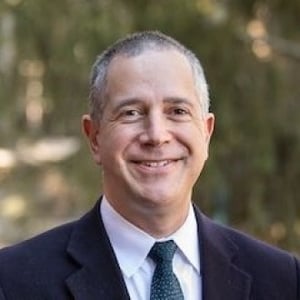
Cary Fields Professor of Law; Co-Director, Center for Law and Religion, St. John's University School of Law
Professor DeGirolami has research interests in law and religion, freedom of speech, constitutional law, tort law, and criminal law. His book, The Tragedy of Religious Freedom, was published by Harvard University Press in 2013. His papers have been or will be published in various law journals including Notre Dame Law Review, Washington University Law Review, Stanford Law and Policy Review, Constitutional Commentary, Legal Theory, Ohio State Journal of Criminal Law, Boston College Law Review, San Diego Law Review, Alabama Law Review, and St. John's Law Review, among others. He has written for The New York Times, The New Republic, The Weekly Standard, First Things, Commonweal, and The Library of Law and Liberty. He is the Cary Fields Professor of Law and the Co-director of the Center for Law and Religion.
Following law school, Professor DeGirolami clerked for Judge William E.Smith of the U.S. District Court for the District of Rhode Island and Judge Jerome Farris of the U.S. Court of Appeals for the Ninth Circuit. His professional experience includes service as an Assistant District Attorney in Cambridge, Massachusetts. Prior to joining the St. John's faculty, he was an Associate-in-Law at Columbia Law School, and Visiting Assistant Professor and Scholar in Residence at Catholic University's Columbus School of Law. He was a Visiting Fellow at Princeton University in 2019, in the Department of Politics’ James Madison Program. He was a Visiting Fellow at Princeton University in 2019, in the Department of Politics' James Madison Program, and a Visiting Professor at Notre Dame Law School in Spring 2020.
At St. John's, he teaches or has taught Constitutional Law, Constitutional Theory, Criminal Law, courses in Law and Religion, Professional Responsibility, and Torts.
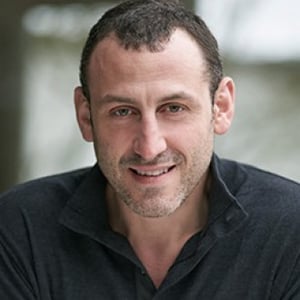
Professor of Law, Northwestern University Pritzker School of Law
Joshua Kleinfeld teaches and writes about political, legal, and moral philosophy, criminal law, and criminal procedure. He also practices law in Northwestern's Juvenile Criminal Defense Clinic. He is a full professor with tenure at the Northwestern Pritzker School of the Law and (by courtesy) in Northwestern’s philosophy department. In 2017-18, he was a visiting professor at Harvard and Stanford Law Schools. He is the recipient of the Bator Award, given annually to one American law professor under the age of 40 who has demonstrated "excellence in legal scholarship, a commitment to teaching, a concern for students, and who has made a significant public impact."
In philosophy, Kleinfeld's research focuses on the idea of "embodied ethical life," as developed in the socio-theoretic tradition of Hegel, Weber, and Durkheim. This tradition aims to understand and critique social life by bringing to light the normative ideas implicit in social practices and institutions. In law, this means that the most interesting philosophical concepts are often those reflected or actualized in legal practice – in the law as judges and lawyers think of it and wield it.
In criminal law and procedure, Kleinfeld has developed a theory known as "reconstructivism," which holds that the chief office of criminal law is not to dole out retributive justice, nor to optimize crime and cost control, but to reconstruct a violated normative order in the wake of a crime. This work, which draws on the thought of Hegel, Durkheim, Jean Hampton, and Antony Duff, develops an alternative to retributive and utilitarian theories of criminal law by focusing on the distinctive social function and sense of justice at work in the criminal system.
Kleinfeld is also involved in practical criminal justice reform. In this vein, he defends children accused of homicide in the Northwestern Juvenile Criminal Defense clinic and assists in litigation efforts meant to reform American criminal law through the courts. He has also developed a view of criminal justice reform known as "democratization," which holds that the root of the American criminal justice crisis is a set of bureaucratic attitudes, structures, and incentives divorced from the American public’s concerns and sense of justice, and that the primary solution is to make criminal justice more community-focused and responsive to lay influences. Working with others, he has developed a number of policy proposals meant to reform American criminal justice in a democratic direction.
Kleinfeld holds a JD from Yale Law School, a PhD in philosophy from the Goethe University of Frankfurt (supervised by Axel Honneth, Klaus Günther, and Rainer Forst), and a BA in philosophy from Yale College. He clerked for Judge J. Harvie Wilkinson on the United States Court of Appeals for the Fourth Circuit; Judge Janice Rogers Brown on the United States Court of Appeals for the D.C. Circuit; and President (chief justice) Aharon Barak of the Supreme Court of Israel. He worked as an Associate at Debevoise & Plimpton LLP in Frankfurt, Germany, in the area of corporate criminal law. Before law school, he worked as a Senior Research Analyst at the White House’s Council on Bioethics.

George C. Dix Professor in Constitutional Law, Northwestern University Pritzker School of Law
John O. McGinnis is a graduate of Harvard College and Harvard Law School where he was an editor of the Harvard Law Review. He also has an MA degree from Balliol College, Oxford, in philosophy and theology. Professor McGinnis clerked on the U.S. Court of Appeals for the District of Columbia. From 1987 to 1991, he was deputy assistant attorney general in the Office of Legal Counsel at the Department of Justice. He is the author of Accelerating Democracy: Transforming Government Through Technology (Princeton 2013) and Originalism and the Good Constitution (Harvard 2013) (with M. Rappaport). He is a past winner of the Paul Bator award given by the Federalist Society to an outstanding academic under 40. He has been listed by the United States on the roster of panelists who may be called upon to decide World Trade Organization Disputes.
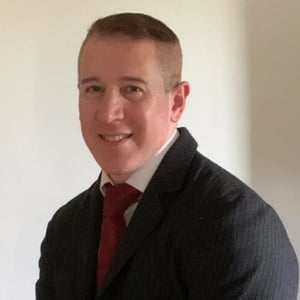
Associate Professor of Government; Pre-Law Advisor, Patrick Henry College
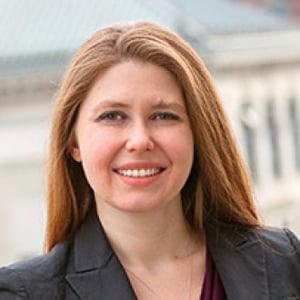
Professor of Law, Brooklyn Law School
Professor Mulligan teaches Internet law, intellectual property law, and trusts & estates. Her research addresses efforts to adapt intellectual property law for the digital age, the relationship between law and technology, and theories of constitutional interpretation. Recently, she has written about the Internet of Things, robot punishment, and early translations of the Constitution.
While at Brooklyn, Professor Mulligan researched as a visiting scholar at the Georgetown Center for the Constitution and taught as a visiting associate professor at Yale Law School. Previously, she taught at the University of Georgia and was a postdoctoral associate and lecturer in law at the Information Society Project at Yale Law School. Her scholarship has been published in a variety of journals and law reviews, including Georgia Law Review, SMU Law Review, and Constitutional Commentary.
Professor Mulligan earned her bachelor’s degree cum laude and her law degree cum laude from Harvard University, where she worked as a production and article editor for the Harvard Journal of Law & Technology. Before entering academia, she served as a law clerk for Judge Charles F. Lettow of the U.S. Court of Federal Claims.
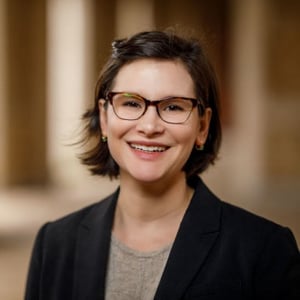
Associate Professor of Law, Notre Dame Law School
Sadie Blanchard teaches and writes about contracts and international business law. Her research examines how legal institutions interact with social forces to shape behavior, especially in markets. Before coming to Notre Dame 2018, she was the Fellow in Private Law at Yale Law School, a research fellow at the Max Planck Institute on International Procedural Law in Luxembourg, and a law clerk to The Hon. Charles N. Brower of the Iran-United States Claims Tribunal, in his capacity as an independent arbitrator in foreign direct investment disputes. She also practiced law in Paris in the international arbitration group of King & Spalding.
Blanchard earned a B.A. in economics summa cum laude from Louisiana State University and a J.D. from Yale Law School.
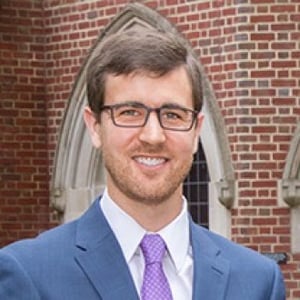
Professor of Law & Helen L. Crocker Faculty Scholar, Stanford Law School
Jud Campbell joined the faculty of Stanford Law School in 2023. He previously served as a professor of law at the University of Richmond School of Law and as a visiting professor of law at the University of Chicago Law School and at Harvard Law School. His academic focus is constitutional history and First Amendment law. His publications include articles in the Stanford Law Review, Yale Law Journal, Harvard Law Review, Texas Law Review, Constitutional Commentary, and Law and History Review. After completing his J.D. at Stanford Law School, he clerked for Judge Diane S. Sykes on the U.S. Court of Appeals for the Seventh Circuit, and for Judge José A. Cabranes on the U.S. Court of Appeals for the Second Circuit. He then served as the Executive Director of the Stanford Constitutional Law Center. He holds a bachelor’s degree from the University of North Carolina at Chapel Hill and two master’s degrees from the London School of Economics, where he studied as a Marshall Scholar.
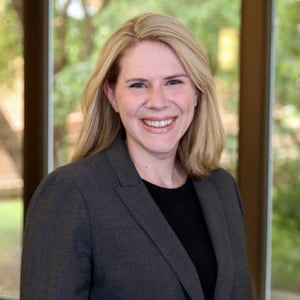
Professor of Law, Co-Director of the Center on the Structural Constitution, Texas A&M University School of Law
Katherine Mims Crocker is a Professor of Law and Faculty Co-Director of the Center on the Structural Constitution at Texas A&M University School of Law. She is also an affiliate of the Stanford Constitutional Law Center. Her scholarship focuses on federal courts, civil-rights litigation, constitutional law, and state and local-government law. She has also taught courses in civil procedure, property, and judicial decision making. Professor Crocker has published papers (or has work forthcoming) in leading journals including the Duke Law Journal, Harvard Law Review, Michigan Law Review, Minnesota Law Review, Notre Dame Law Review, Virginia Law Review, and Washington University Law Review.
Before joining Texas A&M, Professor Crocker was on the faculty at William & Mary Law School and completed a fellowship at Duke Law School. She also practiced at McGuireWoods LLP in Richmond, Virginia, where she concentrated on appellate litigation. Professor Crocker clerked for Justice Antonin Scalia of the Supreme Court of the United States and Judge J. Harvie Wilkinson III of the U.S. Court of Appeals for the Fourth Circuit. She received her law degree from the University of Virginia, where she graduated first in her class and was an Articles Development Editor on the Virginia Law Review. She earned her undergraduate degree from Harvard University cum laude.

Laurence A. Tisch Professor of Law and Director, Classical Liberal Institute, New York University School of Law; Director, Classical Liberal Institute, Civitas Institute University of Texas at Austin
Richard A. Epstein is the Laurence A. Tisch Professor of Law, at New York University, a senior research fellow at the Civitas Institute at the University of Texas Austin, and a senior Lecturer, the University of Chicago. He received an LL.D., h.c . from the University of Ghent, 2003 , and an LLD h.c . from the University of Siegen in 2018 and the Bradley Prize in 2011. He has been a member of the American Academy of Arts and Sciences since 1985. He has edited both the Journal of Legal Studies (1981-1991) and the Journal of Law and Economics (1991-2001). He is also a founder and director of the Classical Liberal Institute at NYU Law School. His most recent book is The Classical Liberal Constitution: The Uncertain Quest for Limited Government (2014). His other books include Takings: Private Property and the Power of Eminent Domain ( 1985); Bargaining with the State (1993); Simple Rules for a Complex World (1995); Principles for a Free Society: Reconciling Individual Liberty and the Common Good (1998); Skepticism and Freedom: A Modern Theory of Classical Liberalism (2003); Design for Liberty: Private Property, Public Administration and the Rule of Law (2011), and most recently, The Myth of Birthright citizenship—and Beyond (2026). He has taught courses in , administrative law, antitrust, constitutional, contracts, environmental law, land use planning; real property, torts and water law. He has written and spoken extensively on a wide range of topics, and is writes a regular column for Defining Ideas.
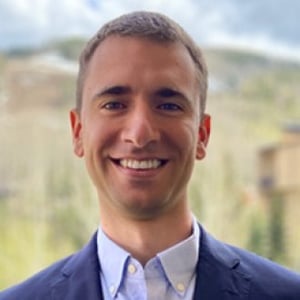
Law Clerk to the Hon. Kevin Newsom
Jeff Hetzel is a law clerk for Judge Kevin Newsom of the U.S. Court of Appeals for the Eleventh Circuit. He attended Stanford Law School, where he was president of the Federalist Society, a Bradley Fellow at the Constitutional Law Center, and a Hoover Institution Rising Fellow. He also served as a research assistant for Professors Michael McConnell and William Baude. He was a summer associate at Latham & Watkins LLP, Gibbs & Bruns LLP, and the New Hampshire Public Defender. Before law school, he worked in criminal defense for three years. He holds a B.A. from Middlebury College.
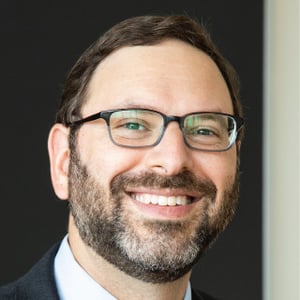
Antonin Scalia Professor of Law, Harvard Law School
Stephen E. Sachs is the Antonin Scalia Professor of Law at Harvard Law School, where he teaches civil procedure, conflict of laws, and seminars on constitutional law. His research focuses on the law and theory of constitutional interpretation, the jurisdiction of state and federal courts, the history of procedure and private law, and the role of the general common law in the U.S. legal system.
Sachs has authored numerous articles, essays, and book chapters. He is an elected member of the American Law Institute, an adviser to the ALI’s project on the Restatement of the Law (Third), Conflict of Laws, a former member of the Judicial Conference’s Advisory Committee on Appellate Rules, and a founding member of the Academic Freedom Alliance.
In 2020, Sachs received the Federalist Society’s Joseph Story Award, which recognizes a young academic who has demonstrated excellence in legal scholarship, a commitment to teaching, a concern for students, and who has made a significant public impact in a manner that advances the rule of law in a free society.
Sachs previously taught at Duke University School of Law and as a visiting professor at the University of Chicago Law School. Before entering academia, he practiced in the Washington, D.C., litigation group of Mayer Brown LLP, and he clerked for Chief Justice John G. Roberts Jr. as well as for Judge Stephen F. Williams of the U.S. Court of Appeals for the D.C. Circuit.
Sachs received his J.D. from Yale Law School, where he was executive editor of the Yale Law Journal and served both as executive editor and articles editor of the Yale Law & Policy Review. A Rhodes Scholar, he graduated from Oxford University with a first-class BA (Hons) degree in philosophy, politics, and economics. He received his A.B. degree summa cum laude in history from Harvard University, earning the Sophia Freund Prize.
Sachs is a licensed attorney in Massachusetts and the District of Columbia, and he is authorized to practice before the D.C. Circuit, the Second Circuit, the Seventh Circuit, and the Supreme Court of the United States.
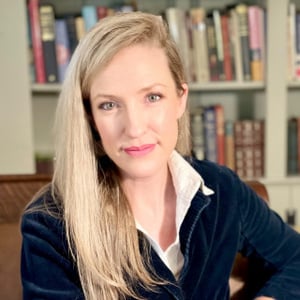
Resident Fellow, Yale Law School
Lorianne Updike Toler is a constitutional legal historian and president of Libertas Constitutional Consulting, where she specializes in constitution-writing best practices, having worked and lived in Libya and the MENA region. She was the “midwife” to The Quill Project at Oxford and the founding president of The Constitutional Sources Project (www.ConSource.org) in Washington, DC. A graduate of Brigham Young University’s School of Communications and Law School (magna cum laude) and Oxford (MSt), she has published, spoken, and taught on US constitutional history, comparative constitutional history, intellectual property, Christianity, and religious freedom.
Laurence A. Tisch Professor of Law and Director, Classical Liberal Institute, New York University School of Law; Director, Classical Liberal Institute, Civitas Institute University of Texas at Austin
Richard A. Epstein is the Laurence A. Tisch Professor of Law, at New York University, a senior research fellow at the Civitas Institute at the University of Texas Austin, and a senior Lecturer, the University of Chicago. He received an LL.D., h.c . from the University of Ghent, 2003 , and an LLD h.c . from the University of Siegen in 2018 and the Bradley Prize in 2011. He has been a member of the American Academy of Arts and Sciences since 1985. He has edited both the Journal of Legal Studies (1981-1991) and the Journal of Law and Economics (1991-2001). He is also a founder and director of the Classical Liberal Institute at NYU Law School. His most recent book is The Classical Liberal Constitution: The Uncertain Quest for Limited Government (2014). His other books include Takings: Private Property and the Power of Eminent Domain ( 1985); Bargaining with the State (1993); Simple Rules for a Complex World (1995); Principles for a Free Society: Reconciling Individual Liberty and the Common Good (1998); Skepticism and Freedom: A Modern Theory of Classical Liberalism (2003); Design for Liberty: Private Property, Public Administration and the Rule of Law (2011), and most recently, The Myth of Birthright citizenship—and Beyond (2026). He has taught courses in , administrative law, antitrust, constitutional, contracts, environmental law, land use planning; real property, torts and water law. He has written and spoken extensively on a wide range of topics, and is writes a regular column for Defining Ideas.
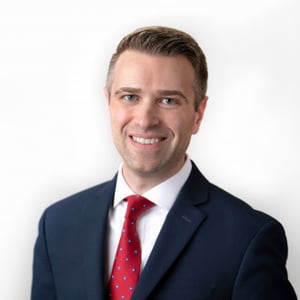
Managing Partner, Cramer Multhauf LLP
Attorney Matthew Fernholz focuses his practice on commercial litigation, trust and fiduciary disputes, business torts, trade secrets, non-compete agreements, defamation, and appellate work. In addition, he has developed one of the preeminent political and election law practices in the State of Wisconsin, and has handled several high-profile matters, from representing candidates for statewide office, successfully challenging the Governor’s emergency powers, arguing before the Wisconsin Elections Commission, and representing the Speaker of the Assembly.
Matthew frequently and successfully tries cases to verdict, and believes a lawyer unwilling to try a case should not take on a client in a litigation matter. In addition to this trial work, he has handled dozens of appeals, and countless dispositive motions.
His work has also been published in law review journals and newspapers alike.
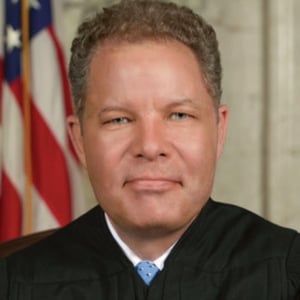
Former Justice, Wisconsin Supreme Court
Justice Daniel Kelly was appointed to the Supreme Court by Gov. Scott Walker in 2016 to fill the vacancy created by the retirement of Justice David T. Prosser, Jr.
A native of Santa Barbara, California, Kelly grew up in Arvada, Colorado. He came to Waukesha, Wisconsin to study at Carroll College (now Carroll University), where he earned a bachelor's degree in Political Science and Spanish in 1986. He earned his law degree from Regent University School of Law in Virginia Beach, Virginia in 1991.
Before joining the Court, Kelly had 19 years' experience as a private practice attorney in Wisconsin and represented clients in cases before the Wisconsin Supreme Court and the U.S. Supreme Court. Kelly spent most of his private practice career at one of the largest and oldest law firms in Wisconsin. Subsequently, he served as vice president and general counsel for a philanthropic foundation, and then practiced law at a firm he owned and founded in Waukesha.
Early in his legal career, Kelly was a law clerk and then staff attorney for the Office of Special Masters of the U.S. Court of Federal Claims, from 1992 to 1996. He worked as a law clerk for the late Wisconsin Court of Appeals Judge Ralph Adam Fine from 1991 to 1992.
Kelly is a member of the board of advisors and past president of the Milwaukee Lawyer's Chapter of the Federalist Society. He serves on the Carroll University President's Advisory Council and is a former member of the Wisconsin Advisory Committee of the U.S. Commission on Civil Rights.
Kelly is married and has five children. He lives in North Prairie, Wisconsin.
Managing Partner, Cramer Multhauf LLP
Attorney Matthew Fernholz focuses his practice on commercial litigation, trust and fiduciary disputes, business torts, trade secrets, non-compete agreements, defamation, and appellate work. In addition, he has developed one of the preeminent political and election law practices in the State of Wisconsin, and has handled several high-profile matters, from representing candidates for statewide office, successfully challenging the Governor’s emergency powers, arguing before the Wisconsin Elections Commission, and representing the Speaker of the Assembly.
Matthew frequently and successfully tries cases to verdict, and believes a lawyer unwilling to try a case should not take on a client in a litigation matter. In addition to this trial work, he has handled dozens of appeals, and countless dispositive motions.
His work has also been published in law review journals and newspapers alike.
Former Justice, Wisconsin Supreme Court
Justice Daniel Kelly was appointed to the Supreme Court by Gov. Scott Walker in 2016 to fill the vacancy created by the retirement of Justice David T. Prosser, Jr.
A native of Santa Barbara, California, Kelly grew up in Arvada, Colorado. He came to Waukesha, Wisconsin to study at Carroll College (now Carroll University), where he earned a bachelor's degree in Political Science and Spanish in 1986. He earned his law degree from Regent University School of Law in Virginia Beach, Virginia in 1991.
Before joining the Court, Kelly had 19 years' experience as a private practice attorney in Wisconsin and represented clients in cases before the Wisconsin Supreme Court and the U.S. Supreme Court. Kelly spent most of his private practice career at one of the largest and oldest law firms in Wisconsin. Subsequently, he served as vice president and general counsel for a philanthropic foundation, and then practiced law at a firm he owned and founded in Waukesha.
Early in his legal career, Kelly was a law clerk and then staff attorney for the Office of Special Masters of the U.S. Court of Federal Claims, from 1992 to 1996. He worked as a law clerk for the late Wisconsin Court of Appeals Judge Ralph Adam Fine from 1991 to 1992.
Kelly is a member of the board of advisors and past president of the Milwaukee Lawyer's Chapter of the Federalist Society. He serves on the Carroll University President's Advisory Council and is a former member of the Wisconsin Advisory Committee of the U.S. Commission on Civil Rights.
Kelly is married and has five children. He lives in North Prairie, Wisconsin.
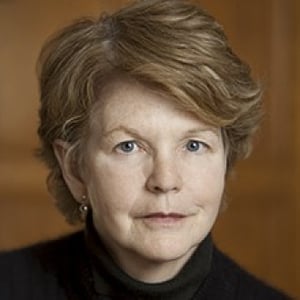
Howard M. Holtzmann Professor of International Law, Yale Law School
Lea Brilmayer is the Howard M. Holtzmann Professor of International Law at Yale Law School. In addition to teaching Contracts to first-year students, she also teaches Conflict of Laws and International Courts and Tribunals, as well as seminars on the laws of war and on African current affairs. Her degrees include a B.A. in mathematics and a J.D. from the University of California at Berkeley, as well as an LL.M. from Columbia Law School. Brilmayer has taught at a number of different law schools as either a professor or visiting professor, including the University of Texas, the University of Chicago, the University of Michigan, Columbia Law School, Harvard Law School, and the New York University School of Law (where she led a weekly seminar on International Jurisprudence.) She is a member of the Texas and Supreme Court bars. She has given numerous endowed lectures at other American law schools and has also taught twice at the summer session of the Hague Academy of International Law.
During her first decade of teaching, her writing interests mainly concerned conflict of laws (in particular, personal jurisdiction and choice of law); federal jurisdiction; and jurisprudence. Her conflict of laws writings have included one theoretical book on the subject and a leading casebook (in the more recent editions, co-authored with Jack Goldsmith). Together with a group of Yale student contributors, she published An Introduction to Jurisdiction in the American Federal System. Her writings on the conflict of laws have resulted in her being asked on a number of occasions to testify before Congressional committees, most recently on the Full Faith and Credit implications of same sex marriage. More recently, her interests have gradually turned to international law and international relations, and she is frequently cited for her academic writings about nationalism and the international legal status of secessionist movements. Her research in international jurisprudence has also led to two books, Justifying International Acts and American Hegemony: Political Morality in a One-Superpower World.
In addition to her academic interests, Brilmayer carries on an active life in interstate and international adjudication. In addition to contributing to amicus briefs, she has served as counsel of record before the United States Supreme Court and has been an expert consultant on many lower and intermediate appellate court cases. For the last decade she has served as lead counsel in several international public (state-to-state) arbitrations dealing with island sovereignty, maritime delimitation, land boundaries, and mass claims for violations of the laws of war.
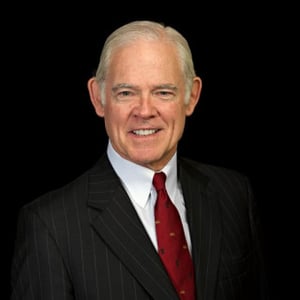
Founding Partner, Cooper & Kirk PLLC
Charles J. Cooper is a founding member and the chairman of Cooper & Kirk, PLLC, “one of the Nation’s leading litigation boutiques” (Above The Law 2017). The National Law Journal recently wrote that Mr. Cooper’s “brilliant legal career has so far spanned five decades and thrust Cooper into the spotlight in some of the most historic moments of the country’s modern history.” He has argued nine cases before the United States Supreme Court and scores of appeals before each of the 13 federal courts of appeals and several state supreme courts. He has been lead trial counsel in numerous complex, weeks-long trials in federal courts throughout the country. Named by the National Law Journal as one of the 10 best litigators in Washington D.C., Mr. Cooper’s work has been reported in numerous press accounts, and he has been called a “powerhouse attorney” (Fortune 2015), “a hard-nosed litigator” (Washington Post 2017), and “one of the country’s most in-demand civil litigators and a Washington legal institution unto himself” (The American Spectator 2014).
After graduating from the University of Alabama School of Law in 1977, where he ranked first in his class and served as Editor-in-Chief of the Alabama Law Review, Mr. Cooper began his career as a law clerk to Judge Paul Roney on the Fifth Circuit Court of Appeals and to Justice William H. Rehnquist in 1978–79. He then practiced law in Atlanta for two years before joining the Civil Rights Division of the U.S. Department of Justice, where he served as the Deputy Assistant Attorney General in charge of, among other things, appellate matters. In 1985 President Reagan appointed him to the position of Assistant Attorney General for the Office of Legal Counsel, which is the office responsible for providing legal opinions and advice to the White House, the Attorney General, and Executive Branch departments and agencies on issues covering the full spectrum of federal constitutional, statutory, and regulatory law.
In 1988 he returned to private practice as a litigation partner in the Washington, D.C. office of McGuireWoods. From 1990 until the founding of Cooper & Kirk in 1996, he was a partner at Shaw Pittman (now Pillsbury Winthrop Shaw Pittman), where he headed the firm’s Constitutional and Government Litigation Group.
Mr. Cooper has represented a wide range of public and private clients in highly complex constitutional, civil rights, antitrust, healthcare, banking, intellectual property, elections, campaign finance, administrative, commercial, and government contract cases. He has led trial teams in cases that have won judgments and settlements valued in the billions of dollars and that have established ground-breaking constitutional precedents.
Much of Mr. Cooper’s practice has involved representing high-profile clients in nationally prominent matters, including: the State of Florida in a First Amendment suit brought by the Disney Company concerning its autonomous regulatory authority over its Disney World property; the Commonwealth of Virginia in a suit seeking to enjoin the removal of noncitizens from its voter rolls; 38 members of the Duke Lacrosse team falsely accused of rape by officials of Duke University and the City of Durham; Harper Lee in a copyright dispute with the heirs of Gregory Peck; high-ranking former government officials such as former Attorneys General John Ashcroft, Jeff Sessions, and William Barr, and Ambassador John Bolton; several Governors and United States Senators; over 100 Members of Congress; and many state, territorial, and local government bodies and officials. He has also represented and advised government officials and public figures in connection with sensitive private issues that needed to be, and were, resolved discreetly without becoming matters of public record.
In 1998 Chief Justice Rehnquist appointed Mr. Cooper to the Standing Committee on Rules of Practice and Procedure of the Judicial Conference of the United States, where he served for three terms. He also served as a Public Member, appointed by President George H.W. Bush, of the National Commission on Judicial Discipline and Removal. He is a member of numerous professional associations, including the American Law Institute (since 1993) and the American Academy of Appellate Lawyers (since 1996). He is also an active member of the Federalist Society and the Republican National Lawyers Association, which in 2010 named him Republican Lawyer of the Year and in 2016 honored him with its Edwin Meese III Award.
Mr. Cooper has published scores of articles and spoken extensively on constitutional and legal policy topics. He has appeared before congressional committees on 26 occasions, testifying as an expert on a wide variety of legal issues, including the Chevron doctrine of judicial deference to administrative agencies, the diversity of citizenship jurisdiction of federal courts, statehood bills for Puerto Rico and the District of Columbia, and the impeachment of President Clinton.

U.S. Court of Appeals, Seventh Circuit
Frank H. Easterbrook is a judge of the United States Court of Appeals for the Seventh Circuit and a Senior Lecturer at the Law School of the University of Chicago. He was Chief Judge from 2006–2013. Before joining the court in 1985, he was the Lee andBrena Freeman Professor of Law at the University of Chicago, where he taught and wrote in antitrust, securities, corporate law, jurisprudence, and criminal procedure. He has published The Economic Structure of Corporate Law (with Daniel R. Fischel) and about 100 scholarly articles. He served as Co-Editor of the Journal of Law and Economics from 1982 to 1991 and as a member of the Judicial Conference’s Standing Committee on Rules of Practice and Procedure from 1991 to 1997. Before joining the faculty of the Law School in 1979, Judge Easterbrook was Deputy Solicitor General of the United States. He holds degrees from Swarthmore College (B.A. with high honors, 1970) and the University of Chicago (J.D. cum laude, 1973), and is a member of the American Academy of Arts and Sciences, the American Law Institute, the Mont Pelerin Society, Phi Beta Kappa, and the Order of the Coif.
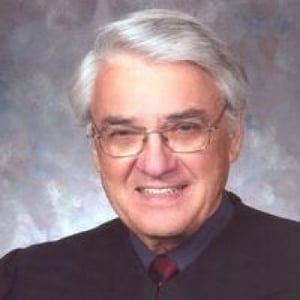
Senior Judge, United States Court of Appeals, Fifth Circuit
Patrick Errol Higginbotham is a federal judge on senior status with the United States Court of Appeals for the 5th Circuit. He joined the court in 1982 after being nominated by President Ronald Reagan.
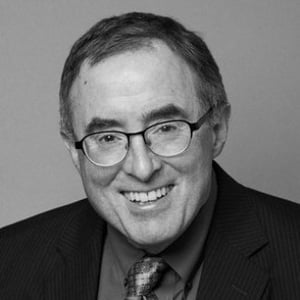
Contributing Writer, Vanity Fair
Michael Kinsley is a Contributing Writer for Vanity Fair, where his column appears monthly. Over a long career in the media, he has been Managing Editor of the Washington Monthly, Editor of the New Republic, and Editorial and Opinion Editor of the Los Angeles Times. He was the Founding Editor of Slate, one of the first on-line magazines. For over six years Kinsley was the liberal host of Crossfire, a CNN show where he sparred with Pat Buchanan five days a week. He played a similar role for many years with William F. Buckley on PBS’s Firing Line. He has written for The New Yorker, Conde Nast Traveler, and other publications.
U.S. Court of Appeals, Ninth Circuit
Stephen Roy Reinhardt is a federal appeals judge with the United States Court of Appeals for the Ninth Circuit in San Francisco. He joined the Court in 1980 after being nominated by President Jimmy Carter.
Born in New York City, New York, Reinhardt graduated from Pomona College with his Bachelor's degree in 1951 and later received a Bachelors of Laws degree, LL.B, from Yale Law School in 1954. Reinhardt served in the U.S. Air Force from 1954 to 1956 before becoming a law clerk for the Honorable Luther Youngdahl in the United States District Court for the District of Columbia until 1957. Reinhardt was a private practice attorney in the State of California from 1957 to 1980. Reinhardt was nominated to the United States Court of Appeals for the Ninth Circuit by President Jimmy Carter on November 30, 1979, to a new seat created by 92 Stat. 1629, which was approved by Congress. Reinhardt was confirmed by the U.S. Senate on September 11, 1980 and received commission on September 11, 1980.
Howard M. Holtzmann Professor of International Law, Yale Law School
Lea Brilmayer is the Howard M. Holtzmann Professor of International Law at Yale Law School. In addition to teaching Contracts to first-year students, she also teaches Conflict of Laws and International Courts and Tribunals, as well as seminars on the laws of war and on African current affairs. Her degrees include a B.A. in mathematics and a J.D. from the University of California at Berkeley, as well as an LL.M. from Columbia Law School. Brilmayer has taught at a number of different law schools as either a professor or visiting professor, including the University of Texas, the University of Chicago, the University of Michigan, Columbia Law School, Harvard Law School, and the New York University School of Law (where she led a weekly seminar on International Jurisprudence.) She is a member of the Texas and Supreme Court bars. She has given numerous endowed lectures at other American law schools and has also taught twice at the summer session of the Hague Academy of International Law.
During her first decade of teaching, her writing interests mainly concerned conflict of laws (in particular, personal jurisdiction and choice of law); federal jurisdiction; and jurisprudence. Her conflict of laws writings have included one theoretical book on the subject and a leading casebook (in the more recent editions, co-authored with Jack Goldsmith). Together with a group of Yale student contributors, she published An Introduction to Jurisdiction in the American Federal System. Her writings on the conflict of laws have resulted in her being asked on a number of occasions to testify before Congressional committees, most recently on the Full Faith and Credit implications of same sex marriage. More recently, her interests have gradually turned to international law and international relations, and she is frequently cited for her academic writings about nationalism and the international legal status of secessionist movements. Her research in international jurisprudence has also led to two books, Justifying International Acts and American Hegemony: Political Morality in a One-Superpower World.
In addition to her academic interests, Brilmayer carries on an active life in interstate and international adjudication. In addition to contributing to amicus briefs, she has served as counsel of record before the United States Supreme Court and has been an expert consultant on many lower and intermediate appellate court cases. For the last decade she has served as lead counsel in several international public (state-to-state) arbitrations dealing with island sovereignty, maritime delimitation, land boundaries, and mass claims for violations of the laws of war.
Founding Partner, Cooper & Kirk PLLC
Charles J. Cooper is a founding member and the chairman of Cooper & Kirk, PLLC, “one of the Nation’s leading litigation boutiques” (Above The Law 2017). The National Law Journal recently wrote that Mr. Cooper’s “brilliant legal career has so far spanned five decades and thrust Cooper into the spotlight in some of the most historic moments of the country’s modern history.” He has argued nine cases before the United States Supreme Court and scores of appeals before each of the 13 federal courts of appeals and several state supreme courts. He has been lead trial counsel in numerous complex, weeks-long trials in federal courts throughout the country. Named by the National Law Journal as one of the 10 best litigators in Washington D.C., Mr. Cooper’s work has been reported in numerous press accounts, and he has been called a “powerhouse attorney” (Fortune 2015), “a hard-nosed litigator” (Washington Post 2017), and “one of the country’s most in-demand civil litigators and a Washington legal institution unto himself” (The American Spectator 2014).
After graduating from the University of Alabama School of Law in 1977, where he ranked first in his class and served as Editor-in-Chief of the Alabama Law Review, Mr. Cooper began his career as a law clerk to Judge Paul Roney on the Fifth Circuit Court of Appeals and to Justice William H. Rehnquist in 1978–79. He then practiced law in Atlanta for two years before joining the Civil Rights Division of the U.S. Department of Justice, where he served as the Deputy Assistant Attorney General in charge of, among other things, appellate matters. In 1985 President Reagan appointed him to the position of Assistant Attorney General for the Office of Legal Counsel, which is the office responsible for providing legal opinions and advice to the White House, the Attorney General, and Executive Branch departments and agencies on issues covering the full spectrum of federal constitutional, statutory, and regulatory law.
In 1988 he returned to private practice as a litigation partner in the Washington, D.C. office of McGuireWoods. From 1990 until the founding of Cooper & Kirk in 1996, he was a partner at Shaw Pittman (now Pillsbury Winthrop Shaw Pittman), where he headed the firm’s Constitutional and Government Litigation Group.
Mr. Cooper has represented a wide range of public and private clients in highly complex constitutional, civil rights, antitrust, healthcare, banking, intellectual property, elections, campaign finance, administrative, commercial, and government contract cases. He has led trial teams in cases that have won judgments and settlements valued in the billions of dollars and that have established ground-breaking constitutional precedents.
Much of Mr. Cooper’s practice has involved representing high-profile clients in nationally prominent matters, including: the State of Florida in a First Amendment suit brought by the Disney Company concerning its autonomous regulatory authority over its Disney World property; the Commonwealth of Virginia in a suit seeking to enjoin the removal of noncitizens from its voter rolls; 38 members of the Duke Lacrosse team falsely accused of rape by officials of Duke University and the City of Durham; Harper Lee in a copyright dispute with the heirs of Gregory Peck; high-ranking former government officials such as former Attorneys General John Ashcroft, Jeff Sessions, and William Barr, and Ambassador John Bolton; several Governors and United States Senators; over 100 Members of Congress; and many state, territorial, and local government bodies and officials. He has also represented and advised government officials and public figures in connection with sensitive private issues that needed to be, and were, resolved discreetly without becoming matters of public record.
In 1998 Chief Justice Rehnquist appointed Mr. Cooper to the Standing Committee on Rules of Practice and Procedure of the Judicial Conference of the United States, where he served for three terms. He also served as a Public Member, appointed by President George H.W. Bush, of the National Commission on Judicial Discipline and Removal. He is a member of numerous professional associations, including the American Law Institute (since 1993) and the American Academy of Appellate Lawyers (since 1996). He is also an active member of the Federalist Society and the Republican National Lawyers Association, which in 2010 named him Republican Lawyer of the Year and in 2016 honored him with its Edwin Meese III Award.
Mr. Cooper has published scores of articles and spoken extensively on constitutional and legal policy topics. He has appeared before congressional committees on 26 occasions, testifying as an expert on a wide variety of legal issues, including the Chevron doctrine of judicial deference to administrative agencies, the diversity of citizenship jurisdiction of federal courts, statehood bills for Puerto Rico and the District of Columbia, and the impeachment of President Clinton.
U.S. Court of Appeals, Seventh Circuit
Frank H. Easterbrook is a judge of the United States Court of Appeals for the Seventh Circuit and a Senior Lecturer at the Law School of the University of Chicago. He was Chief Judge from 2006–2013. Before joining the court in 1985, he was the Lee andBrena Freeman Professor of Law at the University of Chicago, where he taught and wrote in antitrust, securities, corporate law, jurisprudence, and criminal procedure. He has published The Economic Structure of Corporate Law (with Daniel R. Fischel) and about 100 scholarly articles. He served as Co-Editor of the Journal of Law and Economics from 1982 to 1991 and as a member of the Judicial Conference’s Standing Committee on Rules of Practice and Procedure from 1991 to 1997. Before joining the faculty of the Law School in 1979, Judge Easterbrook was Deputy Solicitor General of the United States. He holds degrees from Swarthmore College (B.A. with high honors, 1970) and the University of Chicago (J.D. cum laude, 1973), and is a member of the American Academy of Arts and Sciences, the American Law Institute, the Mont Pelerin Society, Phi Beta Kappa, and the Order of the Coif.
Senior Judge, United States Court of Appeals, Fifth Circuit
Patrick Errol Higginbotham is a federal judge on senior status with the United States Court of Appeals for the 5th Circuit. He joined the court in 1982 after being nominated by President Ronald Reagan.
Contributing Writer, Vanity Fair
Michael Kinsley is a Contributing Writer for Vanity Fair, where his column appears monthly. Over a long career in the media, he has been Managing Editor of the Washington Monthly, Editor of the New Republic, and Editorial and Opinion Editor of the Los Angeles Times. He was the Founding Editor of Slate, one of the first on-line magazines. For over six years Kinsley was the liberal host of Crossfire, a CNN show where he sparred with Pat Buchanan five days a week. He played a similar role for many years with William F. Buckley on PBS’s Firing Line. He has written for The New Yorker, Conde Nast Traveler, and other publications.
U.S. Court of Appeals, Ninth Circuit
Stephen Roy Reinhardt is a federal appeals judge with the United States Court of Appeals for the Ninth Circuit in San Francisco. He joined the Court in 1980 after being nominated by President Jimmy Carter.
Born in New York City, New York, Reinhardt graduated from Pomona College with his Bachelor's degree in 1951 and later received a Bachelors of Laws degree, LL.B, from Yale Law School in 1954. Reinhardt served in the U.S. Air Force from 1954 to 1956 before becoming a law clerk for the Honorable Luther Youngdahl in the United States District Court for the District of Columbia until 1957. Reinhardt was a private practice attorney in the State of California from 1957 to 1980. Reinhardt was nominated to the United States Court of Appeals for the Ninth Circuit by President Jimmy Carter on November 30, 1979, to a new seat created by 92 Stat. 1629, which was approved by Congress. Reinhardt was confirmed by the U.S. Senate on September 11, 1980 and received commission on September 11, 1980.

Doctrine Briefing: The Ministerial Exception
Victoria Dorfman
In Our Lady of Guadalupe v. Morrissey-Berru (2020), the Supreme Court expanded on the ministerial exception doctrine it...
Topics
Freedom of Thought Pick of the Week: Judge Silberman's Dissent
The Tah v. Global Witness majority opinion, and even the first two parts of Judge Silberman's...
Luncheon Panel: A Virtual Discussion on Corpus Linguistics
Wendy Berger, Thomas Rex Lee, Lawrence Solan, Kevin Tobia
2021 Annual Florida Chapters Conference
Corpus linguistics has recently emerged as a method for addressing problems in the legal/textualist interpretation....
Panel: Originalism & Its Discontents
Randy E. Barnett, Marc DeGirolami, Joshua Kleinfeld, John O. McGinnis, Jesse Merriam, Christina M. Mulligan
23rd Annual Federalist Society Faculty Conference
Originalism & Its Discontents11:00 am - 12:30 pm This panel will discuss some of the...
Young Legal Scholars Paper Presentations
Sadie Rose Blanchard, Jud Campbell, Katherine Mims Crocker, Richard A. Epstein, Jeffrey Hetzel, Stephen E. Sachs, Lorianne Updike Toler
23rd Annual Federalist Society Faculty Conference
Young Legal Scholars Paper Presentations3:00pm - 5:00pm Featuring: Sadie Blanchard, Notre Dame Law School: “Contracts...
Feddie Night Festivus: Epstein v. The Rest of Us
Richard A. Epstein
Georgetown Student Chapter
The Federalist Society's Student Division &Georgetown Student Chapter Present Feddie Night Festivus:Epstein v. The Rest of...
An Interview with Former Wisconsin Supreme Court Justice Daniel Kelly
Matthew M. Fernholz, Daniel Kelly
Milwaukee Lawyers Chapter
On November 17, 2020, the Milwaukee Lawyers Chapter hosted an online interview with former Wisconsin...
An Interview with Former Wisconsin Supreme Court Justice Daniel Kelly
Matthew M. Fernholz, Daniel Kelly
Milwaukee Lawyers Chapter
On November 17, 2020, the Milwaukee Lawyers Chapter hosted an online interview with former Wisconsin...
Panel V: The Conflict Between Text and Precedent in Constitutional Adjudication [Archive Collection]
Lea Brilmayer, Charles J. Cooper, Frank H. Easterbrook, Patrick E. Higginbotham, Michael Kinsley, Stephen Reinhardt
1987 National Student Symposium
On April 3-5, 1987, the Federalist Society's Chicago Student Chapter hosted the sixth annual National...
Panel V: The Conflict Between Text and Precedent in Constitutional Adjudication [Archive Collection]
Lea Brilmayer, Charles J. Cooper, Frank H. Easterbrook, Patrick E. Higginbotham, Michael Kinsley, Stephen Reinhardt
1987 National Student Symposium
On April 3-5, 1987, the Federalist Society's Chicago Student Chapter hosted the sixth annual National...