

President, Cass & Associates, PC
Ronald A. Cass is Dean Emeritus of Boston University School of Law (where he was Dean from 1990-2004), President of Cass & Associates, PC, former Vice-Chairman and Commissioner of the U.S. International Trade Commission, former faculty member at Boston University School of Law and the University of Virginia Law School, and Distinguished Senior Fellow at the C. Boyden Gray Center for the Study of the Administrative State. Dean Cass also sits as an arbitrator for commercial, international, and intellectual property rights disputes, and is a former United States member of the Panel of Conciliators of the International Centre for Settlement of Investment Disputes. He is a member of the Council of the Administrative Conference of the United States and has received seven presidential appointments, spanning Presidents Ronald Reagan to Donald J. Trump.
As a law professor, lecturer, and scholar, Dean Cass has been teaching and writing about a wide array of legal issues on topics such as administrative law and regulation, antitrust, constitutional law, communications, intellectual property, international trade, separation of powers, and legal process. He has published more than 160 scholarly books, chapters, articles, and papers, including a leading casebook on administrative law. Dean Cass has taught judges as well as students in schools of law, economics, business, and public policy and has held academic appointments in the United States, Europe, and Latin America.
In addition to his academic work, Dean Cass has participated in numerous important legal cases as an amicus, consultant, or expert, and has advised businesses, law firms, investment funds, and government agencies on a range of trade, antitrust, intellectual property, and regulatory issues. He has a broad range of affiliations with professional groups, and has received numerous honors, fellowships and awards.
Dean Cass is a graduate of the University of Virginia and the University of Chicago Law School.
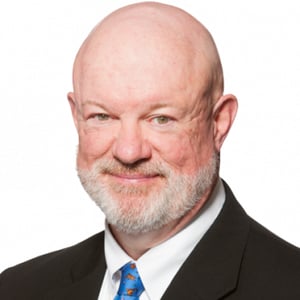
Senior Legal Fellow, the Meese Institute for the Rule of Law, Advancing American Freedom
Paul J. Larkin is a Senior Legal Fellow in the Meese Institute for the Rule of Law at Advancing American Freedom. Paul has held various positions in the federal and state governments throughout his career, such as being an attorney in the Organized Crime and Racketeering Section of the Criminal Division at the U.S. Department of Justice, an Assistant to the Solicitor General in the Office of the Solicitor General at the U.S. Department of Justice, Special Agent-in-Charge and Acting Director of the Criminal Investigation Division at the Environmental Protection Agency, and a member of the Parole Abolition and Sentencing Reform Commission and of the Juvenile Justice Reform Commission in the Office of Virginia Governor George Allen.
He has also worked at Verizon Communications and two law firms in Washington, D.C. His current research is principally in the fields of drug policy, criminal justice policy, and administrative law and policy. He has published numerous articles in law and public policy journals, both in print and online.

University Professor of Law and Executive Director, Liberty & Law Center, Antonin Scalia Law School, George Mason University
David Bernstein holds a University Professorship chair at the Antonin Scalia Law School, where he has been teaching since 1995. He has also been a visiting professor at the University of Michigan, Georgetown University, William & Mary, Brooklyn Law School, the University of Turin, and Hebrew University. Professor Bernstein teaches Constitutional Law, Evidence, and Products Liability.
A prolific author, Professor Bernstein often challenges the conventional wisdom with prodigious research and sharp, original analysis. He is the author of five books, and coauthor of two more. Professor Bernstein’s book Rehabilitating Lochner was praised across the political spectrum as “intellectual history in its highest form,” a “fresh perspective and a cogent analysis,” “delightful and informative,” “sharp and iconoclastic,” and “a terrific work of historical revisionism.” Columnist George Will praised Bernstein’s most recent book, Classified, The Untold Story of Racial Classification in America, as “perhaps the most consequential American book of 2022.”
Professor Bernstein has also written dozens of articles and essays published in major law reviews, including the California Law Review, Columbia Law Review, Michigan Law Review, and Yale Law Journal. An article he coauthored, Defending Daubert: It’s Time to Amend Federal Rule of Evidence 702, directly inspired a pending amendment to Rule 702.
Professor Bernstein blogs at the Instapundit.com, the Times of Israel, and the Volokh Conspiracy. He is a graduate of the Yale Law School, where he was senior editor of the Yale Law Journal and a John M. Olin Fellow in Law, Economics, and Public Policy.
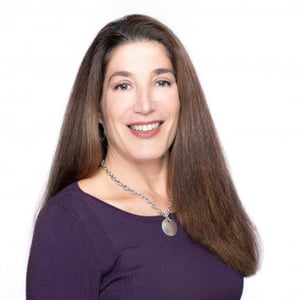
Director, Independent Women's Law Center, Independent Women's
Jennifer C. Braceras, a member of the Federalist Society Board of Visitors, is the director of Independent Women’s Law Center and a former member of the U.S. Commission on Civil Rights.
Ms. Braceras is a graduate of the Harvard Law School, where she served as an editor of the Law Review. After law school, she clerked for two federal judges and practiced labor and employment law with the Boston law firm Ropes & Gray.
A long time political columnist and editor, Ms. Braceras's writing has appeared in a variety of publications, including the Wall Street Journal, the Boston Globe, the Hill, and National Review Online. She co-hosts At the Bar, a bimonthly virtual happy hour discussion about issues at the intersection of law, politics, and culture.
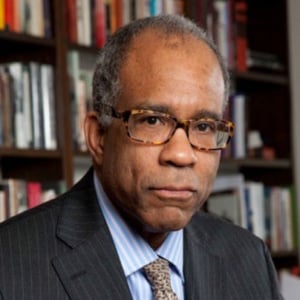
Michael R. Klein Professor of Law, Harvard Law School
Randall Kennedy is Michael R. Klein Professor at Harvard Law School where he teaches courses on contracts, criminal law, and the regulation of race relations. He was born in Columbia, South Carolina. For his education he attended St. Albans School, Princeton University, Oxford University, and Yale Law School. He served as a law clerk for Judge J. Skelly Wright of the United States Court of Appeals and for Justice Thurgood Marshall of the United States Supreme Court. He is a member of the bar of the District of Columbia and the Supreme Court of the United States. Awarded the 1998 Robert F. Kennedy Book Award for Race, Crime, and the Law, Mr Kennedy writes for a wide range of scholarly and general interest publications. His other books are For Discrimination: Race, Affirmative Action, and the Law (2013), The Persistence of the Color Line: Racial Politics and the Obama Presidency (2011), Sellout: The Politics of Racial Betrayal (2008), Interracial Intimacies: Sex, Marriage, Identity, and Adoption (2003), and Nigger: The Strange Career of a Troublesome Word (2002). A member of the American Law Institute, the American Academy of Arts and Sciences, and the American Philosophical Association, Mr. Kennedy is also a Trustee emeritus of Princeton University.
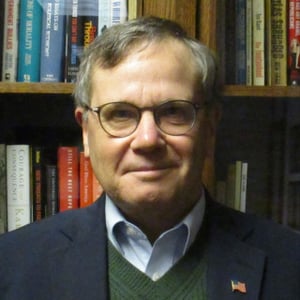
Senior Fellow in Constitutional Jurisprudence, Independence Institute
Professor Robert G. Natelson is a constitutional scholar and author.
Rob’s constitutional scholarship has been cited repeatedly by justices and parties at the U.S. Supreme Court—as well as by federal appeals courts, and at least 18 state supreme courts.
Rob’s research into the Constitution’s original meaning has carried him to libraries throughout the United States and in Britain, including four months at Oxford University. His books and articles span many different parts of the Constitution, including groundbreaking studies of the Necessary and Proper Clause, the Indian Commerce Clause, federalism, Founding-Era interpretation, regulation of elections, and the amendment process of Article V. He created the first-ever online bibliography for 18th century materials used in constitutional research. He is a contributing author to the Encyclopedia of the Supreme Court of the United States (on Magna Carta). He contributed eight essays to the third edition of the Heritage Guide to the Constitution: five on the amendment procedure and one each on the Guarantee Clause, the Postal Clause, and the Recess Appointments Clause.
U.S. Supreme Court justices have relied explicitly on Rob’s research in 41 citations in 13 separate cases.
Visiting Scholar, Center for Citizenship & Constitutional Government, University of Notre Dame

Chevron—Complicated, Start to Finish
Ronald A. Cass
Federalist Society Review, Volume 23
A Review of Thomas W. Merrill, The Chevron Doctrine: Its Rise and Fall, and the...
Revitalizing the Nondelegation Doctrine
Paul James Larkin
Federalist Society Review, Volume 23
A Review of The Administrative State Before the Supreme Court: Perspectives on the Nondelegation Doctrine (Peter...
Feddie Night Fights: Classified: Can We Separate Race And State?
David Bernstein, Jennifer C. Braceras, Randall Kennedy
Notre Dame Student Chapter
The Federalist Society’s Student Division & Notre Dame Student Chapter present Feddie Night Fights:Classified: Can We...
Topics
The Rise of the Undead Blaine Amendment
The Lemon test, a perennial ghoul of Establishment Clause jurisprudence, seems to have finally received...
Topics
Cert Petition Challenges Title VII Religious Accommodation “Undue Hardship” Standard
Last month, a Petition for Writ of Certiorari in the case of Groff v. DeJoy...
The Original Understanding of the Indian Commerce Clause: An Update
Robert G. Natelson
Federalist Society Review, Volume 23
The Congress shall have Power . . . To regulate Commerce with foreign Nations, and...
TransUnion, Article III, and Expanding the Judicial Role
Jacob Phillips
Federalist Society Review, Volume 23
In 2021’s TransUnion v. Ramirez, the Supreme Court confirmed that Article III standing requires a...
Rights Talk in a Post-Liberal Age: Mary Ann Glendon's Enduring Insight Into the American Rights Tradition
Gabrielle M. Girgis
Federalist Society Review, Volume 23
Gross human rights violations occur every day, often invisibly to most of us. Media coverage...
Topics
Kennedy v. Bremerton School District’s Effect on the Establishment Clause
On June 27, 2022, the U.S. Supreme Court decided Kennedy v. Bremerton School District. In...
Topics
What Adam Liptak Doesn’t Know about Brown v. Board and Originalism
Adam Liptak, the New York Times’ Supreme Court reporter, recently published an article in which...