
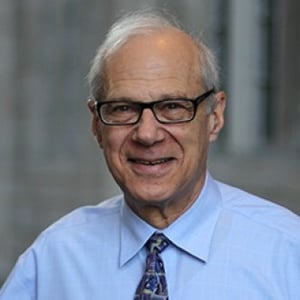
Nathaniel L. Nathanson Professor of Law Emeritus, Northwestern University Pritzker School of Law
A scholar in the field of constitutional law, Robert Bennett has been a member of the faculty of the Northwestern University School of Law since 1969, serving as the school’s dean from 1985 to 1995. Since 2002 he has been the Nathaniel L. Nathanson Professor of Law at Northwestern. With some regularity Professor Bennett teaches a seminar in the Law of American Democracy and courses in contracts, legislation, constitutional law, and constitutional theory. Professor Bennett has also taught as a visiting professor at the University of Illinois College of Law, the University of Virginia School of Law, the University of Southern California Law Center, Brooklyn Law School, and the Benjamin N. Cardozo School of Law of Yeshiva University.
Professor Bennett is a fellow of the American Bar Foundation, and served as the Foundation’s president from 1992 to 1994. He has been a member of the American Law Institute since 1979. He was also a co-founder of the Chicago Council of Lawyers and served as its president. Professor Bennett is the author of numerous books and articles. His two most recent books are Talking It Through: Puzzles of American Democracy, published by Cornell University Press in 2002 and Taming The Electoral College, published by Stanford University Press in 2006. At the present time he is at work on a (co-authored) book about constitutional interpretation for Cornell University Press, tentatively titled Originalism and Living Constitutionalism. Professor Bennett received his BA, summa cum laude, in 1962 from Harvard University and his LLB, cum laude, from Harvard Law School in 1965. At Harvard College he was elected to phi beta kappa and at Harvard Law School he was a member of the editorial board of the Harvard Law Review. Professor Bennett received a Knox Memorial Fellowship from Harvard University for study at the London School of Economics in 1965-66, and the following year he served as legal assistant to Commissioner Nicholas Johnson of the Federal Communications Commission. He was Reginald Heber Smith Fellow at the Office of Economic Opportunity, assigned to the Chicago Legal Aid Bureau in 1967-68, and he practiced law as an associate at the Chicago law firm of Mayer, Brown & Platt in 1968-69. Professor Bennett and his wife, Harriet Trop, live in Chicago and they have one daughter, Ariana Trop Bennett, who does as well.
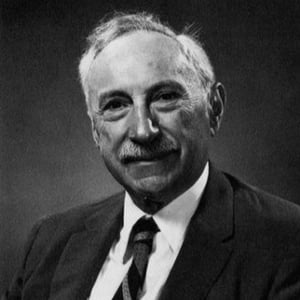
Charles Warren Senior Fellow in American Legal History, Harvard Law School
Raoul Berger (January 4, 1901 – September 23, 2000) was an American attorney and professor at The University of California at Berkeley and Harvard University School of Law. While at Harvard, he was the Charles Warren Senior Fellow in American Legal History.
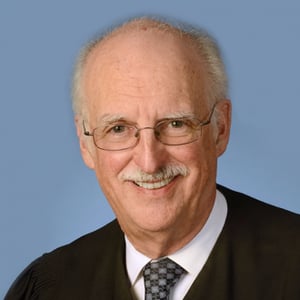
Senior Judge, United States Court of Appeals, District of Columbia Circuit
Circuit Judge Douglas H. Ginsburg was appointed to the United States Court of Appeals for the District of Columbia in 1986. After receiving his B.S. from Cornell University in 1970, and his J.D. from the University of Chicago Law School in 1973, he clerked on the D.C. Circuit and for Justice Thurgood Marshall on the United States Supreme Court. Thereafter, Judge Ginsburg was a professor at the Harvard Law School, the Deputy Assistant and then Assistant Attorney General for the Antitrust Division of the Department of Justice, as well as the Administrator of the Office of Information and Regulatory Affairs in the Office of Management and Budget. Concurrent with his service as a federal judge, Judge Ginsburg has taught at the University of Chicago Law School and the New York University School of Law. Judge Ginsburg is currently a Professor of Law at the George Mason University and a visiting professor at University College London, Faculty of Laws.
Judge Ginsburg is the Chairman of the International Advisory Board of the Global Antitrust Institute at the Law and Economics Center of the George Mason University School of Law. He also serves on the Advisory Boards of: Competition Policy International; the Harvard Journal of Law and Public Policy; the Journal of Competition Law and Economics; the Journal of Law, Economics & Policy; the Supreme Court Economic Review; the University of Chicago Law Review; the New York University Journal of Law and Liberty; and, at University College London, both the Centre for Law, Economics and Society and the Jevons Institute for Competition Law and Economics.
In 2020, Judge Ginsburg was the 11th recipient of the John Sherman Award, presented by the Antitrust Division of the Department of Justice in recognition of the awardee’s Lifetime Contributions to Antitrust Law and Policy.
In 2014, Judge Ginsburg received the Lifetime Achievement Award given annually by the Global Competition Review.
He is the author or co-author of several books and more than 100 articles on competition and regulation, including, most recently, Growing Convergence: The Limited Role of Antitrust in Standard Essential Patent Disputes, in CPI Antitrust Chronicle, Summer 2021, Vol. 1, No. 2.

Richard and Frances Mallery Professor of Law and Faculty Director, Constitutional Law Center, Stanford Law School
Michael W. McConnell is the Richard and Frances Mallery Professor and Faculty Director of the Constitutional Law Center at Stanford Law School, and a Senior Fellow at the Hoover Institution. From 2002 to 2009, he served as a Circuit Judge on the United States Court of Appeals for the Tenth Circuit. He was nominated by President George W. Bush, a Republican, and confirmed by a Democratic Senate by unanimous consent. McConnell has previously held chaired professorships at the University of Chicago and the University of Utah, and visiting professorships at Harvard and NYU. He teaches courses on constitutional law, constitutional history, First Amendment, and interpretive theory. He has published widely in the fields of constitutional law and theory, especially church and state, equal protection, and separation of powers. His book, “The President Who Would Not Be King: Executive Power Under the Constitution,” was published by Princeton University Press in 2020, based on the Tanner Lectures in Human Values, which he delivered at Princeton in 2019. His latest book, co-authored with Nathan Chapman, “Agreeing to Disagree: How the Establishment Clause Protects Religious Diversity and Freedom of Conscience,” was published by Oxford University Press in mid-2023. McConnell has argued sixteen cases in the United States Supreme Court, most recently Carney v. Adams (2020). defending a provision of the Delaware Constitution requiring political balance on that state’s courts. More recently, he was co-counsel in Gonzalez v. Google. He earned his B.A. from Michigan State University and his J.D. from the University of Chicago, and has received honorary degrees from Notre Dame University and Michigan State. He served as law clerk to Supreme Court Justice William J. Brennan, Jr. and D.C. Circuit Chief Judge J. Skelly Wright. He has been Assistant General Counsel of the Office of Management & Budget, Assistant to the Solicitor General of the Department of Justice, and a member of the President’s Intelligence Oversight Board. He is Senior of Counsel to the law firm Wilson, Sonsini, Goodrich & Rosati, and is co-chair of Meta’s Oversight Review Board.
Charles R. Walgreen, Jr. Chair in Law and Co-Director, Program in Law and Philosophy, University of Illinois College of Law
One of the country’s most prominent authorities on the intersection of law and philosophy, and widely regarded as the country’s leading theoretician of the criminal law, Professor Moore joined the faculty in 2002 as the Charles R. Walgreen, Jr. Chair, the first and only university-wide chair for the University of Illinois’ three campuses. He is jointly appointed as professor of law in the College of Law and as a professor with the Center for Advanced Studies, an honor bestowed on faculty on the basis of their outstanding scholarship and among the highest forms of campus recognition. Professor Moore was just the second UI College of Law faculty member to have held such an appointment.
Before coming to Illinois, Professor Moore served as the Warren Distinguished Professor of Law and as co-founder and co-director of the Institute for Law and Philosophy at the University of San Diego. From 1989-2000, he was the Leon Meltzer Professor of Law and Professor of Philosophy at the University of Pennsylvania, where he co-founded and directed the University of Pennsylvania Institute for Law and Philosophy.
Over the course of his career, he also has been a professor of law at the University of California at Berkeley, the University of Southern California (where he held the Robert Kingsley Chair), and the University of Kansas. In addition, he has been the William Minor Lile Distinguished Visiting Professor of Law at the University of Virginia, the Florence Rogatz Visiting Professor at the Yale Law School, The Mason Ladd Distinguished Visiting Professor at the University of Iowa Schools of Law and of Medicine, as well as a visiting professor at Stanford University, Northwestern University, Tel Aviv University in Israel, di Tella University in Buenos Aires, and the Universität Erlangen in Germany.
He has held a number of fellowships and visiting scholar positions, including two in the Law and Humanities Program of Harvard University, five at the Australian National University’s Research School of Social Sciences in Canberra, Australia, and one each at the Humanities Research Institute of the University of California at Irvine, the Rockefeller Center in Bellagio, Italy, the Georgetown University Law Center, the University of Pennsylvania’s Center for Neuroscience and Society, and the Yale Law School.
Over an academic career spanning more than 50 years Moore has published more than 140 books, articles, editorials, and other pieces of scholarship, documented recently in a festschrift published in his honor, K. Ferzan and S. Morse, eds., Legal, Moral, and Metaphysical Truth: The Philosophy of Michael S. Moore (Oxford University Press, 2016). He is the author of Placing Blame: A General Theory of the Criminal Law (Oxford University Press, 1997), widely regarded as the leading modern statement of the retributivist theory of the criminal law. In an earlier book, Act and Crime: The Philosophy of Action and its Implications for Criminal Law (Oxford University Press, 1993), Moore provided a unified theory of action that underlies English and American criminal jurisprudence. In a later book, Causation and Responsibility: An Essay in Law, Morals, and Metaphysics (Oxford University Press, 2009), Moore explored the nature of causation and its relation to both moral and legal responsibility. Earlier in his career, he authored Law and Psychiatry: Rethinking the Relationship (Cambridge University Press, 1984), which explored the tension that often exists between legal and psychiatric theories. His latest book, Mechanical Brains and Responsible Choices, still forthcoming, will return to these same issues, this time as they are raised by contemporary neuroscience rather than by dynamic psychiatry.
Professor Moore has presented hundreds of lectures and papers around the world in law, jurisprudence, political theory, legal philosophy, political science, economics, philosophy, psychology, psychiatry, and neuroscience, including most recently endowed, named lectures at Duke, Dartmouth, Columbia, Tel Aviv, Pennsylvania universities, as well as the annual Public Philosophy Lecture and the annual Center for Advanced Studies Lecture at the University of Illinois. He is on the board of editors of numerous journals in law and in philosophy and for a decade served as editor-in-chief of the journal, Law and Philosophy.
He regularly rotates his law teaching between first-year courses of criminal law, torts, contracts, property, and constitutional law, and upper-year courses in jurisprudence and legal philosophy. During his 13 years on the Philosophy Department faculty at Illinois he taught undergraduate courses in the philosophy of law and political philosophy and graduate seminars in neuroscience, ethics, the theory of action, and the metaphysics of causation.
Nathaniel L. Nathanson Professor of Law Emeritus, Northwestern University Pritzker School of Law
A scholar in the field of constitutional law, Robert Bennett has been a member of the faculty of the Northwestern University School of Law since 1969, serving as the school’s dean from 1985 to 1995. Since 2002 he has been the Nathaniel L. Nathanson Professor of Law at Northwestern. With some regularity Professor Bennett teaches a seminar in the Law of American Democracy and courses in contracts, legislation, constitutional law, and constitutional theory. Professor Bennett has also taught as a visiting professor at the University of Illinois College of Law, the University of Virginia School of Law, the University of Southern California Law Center, Brooklyn Law School, and the Benjamin N. Cardozo School of Law of Yeshiva University.
Professor Bennett is a fellow of the American Bar Foundation, and served as the Foundation’s president from 1992 to 1994. He has been a member of the American Law Institute since 1979. He was also a co-founder of the Chicago Council of Lawyers and served as its president. Professor Bennett is the author of numerous books and articles. His two most recent books are Talking It Through: Puzzles of American Democracy, published by Cornell University Press in 2002 and Taming The Electoral College, published by Stanford University Press in 2006. At the present time he is at work on a (co-authored) book about constitutional interpretation for Cornell University Press, tentatively titled Originalism and Living Constitutionalism. Professor Bennett received his BA, summa cum laude, in 1962 from Harvard University and his LLB, cum laude, from Harvard Law School in 1965. At Harvard College he was elected to phi beta kappa and at Harvard Law School he was a member of the editorial board of the Harvard Law Review. Professor Bennett received a Knox Memorial Fellowship from Harvard University for study at the London School of Economics in 1965-66, and the following year he served as legal assistant to Commissioner Nicholas Johnson of the Federal Communications Commission. He was Reginald Heber Smith Fellow at the Office of Economic Opportunity, assigned to the Chicago Legal Aid Bureau in 1967-68, and he practiced law as an associate at the Chicago law firm of Mayer, Brown & Platt in 1968-69. Professor Bennett and his wife, Harriet Trop, live in Chicago and they have one daughter, Ariana Trop Bennett, who does as well.
Charles Warren Senior Fellow in American Legal History, Harvard Law School
Raoul Berger (January 4, 1901 – September 23, 2000) was an American attorney and professor at The University of California at Berkeley and Harvard University School of Law. While at Harvard, he was the Charles Warren Senior Fellow in American Legal History.
Senior Judge, United States Court of Appeals, District of Columbia Circuit
Circuit Judge Douglas H. Ginsburg was appointed to the United States Court of Appeals for the District of Columbia in 1986. After receiving his B.S. from Cornell University in 1970, and his J.D. from the University of Chicago Law School in 1973, he clerked on the D.C. Circuit and for Justice Thurgood Marshall on the United States Supreme Court. Thereafter, Judge Ginsburg was a professor at the Harvard Law School, the Deputy Assistant and then Assistant Attorney General for the Antitrust Division of the Department of Justice, as well as the Administrator of the Office of Information and Regulatory Affairs in the Office of Management and Budget. Concurrent with his service as a federal judge, Judge Ginsburg has taught at the University of Chicago Law School and the New York University School of Law. Judge Ginsburg is currently a Professor of Law at the George Mason University and a visiting professor at University College London, Faculty of Laws.
Judge Ginsburg is the Chairman of the International Advisory Board of the Global Antitrust Institute at the Law and Economics Center of the George Mason University School of Law. He also serves on the Advisory Boards of: Competition Policy International; the Harvard Journal of Law and Public Policy; the Journal of Competition Law and Economics; the Journal of Law, Economics & Policy; the Supreme Court Economic Review; the University of Chicago Law Review; the New York University Journal of Law and Liberty; and, at University College London, both the Centre for Law, Economics and Society and the Jevons Institute for Competition Law and Economics.
In 2020, Judge Ginsburg was the 11th recipient of the John Sherman Award, presented by the Antitrust Division of the Department of Justice in recognition of the awardee’s Lifetime Contributions to Antitrust Law and Policy.
In 2014, Judge Ginsburg received the Lifetime Achievement Award given annually by the Global Competition Review.
He is the author or co-author of several books and more than 100 articles on competition and regulation, including, most recently, Growing Convergence: The Limited Role of Antitrust in Standard Essential Patent Disputes, in CPI Antitrust Chronicle, Summer 2021, Vol. 1, No. 2.
Richard and Frances Mallery Professor of Law and Faculty Director, Constitutional Law Center, Stanford Law School
Michael W. McConnell is the Richard and Frances Mallery Professor and Faculty Director of the Constitutional Law Center at Stanford Law School, and a Senior Fellow at the Hoover Institution. From 2002 to 2009, he served as a Circuit Judge on the United States Court of Appeals for the Tenth Circuit. He was nominated by President George W. Bush, a Republican, and confirmed by a Democratic Senate by unanimous consent. McConnell has previously held chaired professorships at the University of Chicago and the University of Utah, and visiting professorships at Harvard and NYU. He teaches courses on constitutional law, constitutional history, First Amendment, and interpretive theory. He has published widely in the fields of constitutional law and theory, especially church and state, equal protection, and separation of powers. His book, “The President Who Would Not Be King: Executive Power Under the Constitution,” was published by Princeton University Press in 2020, based on the Tanner Lectures in Human Values, which he delivered at Princeton in 2019. His latest book, co-authored with Nathan Chapman, “Agreeing to Disagree: How the Establishment Clause Protects Religious Diversity and Freedom of Conscience,” was published by Oxford University Press in mid-2023. McConnell has argued sixteen cases in the United States Supreme Court, most recently Carney v. Adams (2020). defending a provision of the Delaware Constitution requiring political balance on that state’s courts. More recently, he was co-counsel in Gonzalez v. Google. He earned his B.A. from Michigan State University and his J.D. from the University of Chicago, and has received honorary degrees from Notre Dame University and Michigan State. He served as law clerk to Supreme Court Justice William J. Brennan, Jr. and D.C. Circuit Chief Judge J. Skelly Wright. He has been Assistant General Counsel of the Office of Management & Budget, Assistant to the Solicitor General of the Department of Justice, and a member of the President’s Intelligence Oversight Board. He is Senior of Counsel to the law firm Wilson, Sonsini, Goodrich & Rosati, and is co-chair of Meta’s Oversight Review Board.
Charles R. Walgreen, Jr. Chair in Law and Co-Director, Program in Law and Philosophy, University of Illinois College of Law
One of the country’s most prominent authorities on the intersection of law and philosophy, and widely regarded as the country’s leading theoretician of the criminal law, Professor Moore joined the faculty in 2002 as the Charles R. Walgreen, Jr. Chair, the first and only university-wide chair for the University of Illinois’ three campuses. He is jointly appointed as professor of law in the College of Law and as a professor with the Center for Advanced Studies, an honor bestowed on faculty on the basis of their outstanding scholarship and among the highest forms of campus recognition. Professor Moore was just the second UI College of Law faculty member to have held such an appointment.
Before coming to Illinois, Professor Moore served as the Warren Distinguished Professor of Law and as co-founder and co-director of the Institute for Law and Philosophy at the University of San Diego. From 1989-2000, he was the Leon Meltzer Professor of Law and Professor of Philosophy at the University of Pennsylvania, where he co-founded and directed the University of Pennsylvania Institute for Law and Philosophy.
Over the course of his career, he also has been a professor of law at the University of California at Berkeley, the University of Southern California (where he held the Robert Kingsley Chair), and the University of Kansas. In addition, he has been the William Minor Lile Distinguished Visiting Professor of Law at the University of Virginia, the Florence Rogatz Visiting Professor at the Yale Law School, The Mason Ladd Distinguished Visiting Professor at the University of Iowa Schools of Law and of Medicine, as well as a visiting professor at Stanford University, Northwestern University, Tel Aviv University in Israel, di Tella University in Buenos Aires, and the Universität Erlangen in Germany.
He has held a number of fellowships and visiting scholar positions, including two in the Law and Humanities Program of Harvard University, five at the Australian National University’s Research School of Social Sciences in Canberra, Australia, and one each at the Humanities Research Institute of the University of California at Irvine, the Rockefeller Center in Bellagio, Italy, the Georgetown University Law Center, the University of Pennsylvania’s Center for Neuroscience and Society, and the Yale Law School.
Over an academic career spanning more than 50 years Moore has published more than 140 books, articles, editorials, and other pieces of scholarship, documented recently in a festschrift published in his honor, K. Ferzan and S. Morse, eds., Legal, Moral, and Metaphysical Truth: The Philosophy of Michael S. Moore (Oxford University Press, 2016). He is the author of Placing Blame: A General Theory of the Criminal Law (Oxford University Press, 1997), widely regarded as the leading modern statement of the retributivist theory of the criminal law. In an earlier book, Act and Crime: The Philosophy of Action and its Implications for Criminal Law (Oxford University Press, 1993), Moore provided a unified theory of action that underlies English and American criminal jurisprudence. In a later book, Causation and Responsibility: An Essay in Law, Morals, and Metaphysics (Oxford University Press, 2009), Moore explored the nature of causation and its relation to both moral and legal responsibility. Earlier in his career, he authored Law and Psychiatry: Rethinking the Relationship (Cambridge University Press, 1984), which explored the tension that often exists between legal and psychiatric theories. His latest book, Mechanical Brains and Responsible Choices, still forthcoming, will return to these same issues, this time as they are raised by contemporary neuroscience rather than by dynamic psychiatry.
Professor Moore has presented hundreds of lectures and papers around the world in law, jurisprudence, political theory, legal philosophy, political science, economics, philosophy, psychology, psychiatry, and neuroscience, including most recently endowed, named lectures at Duke, Dartmouth, Columbia, Tel Aviv, Pennsylvania universities, as well as the annual Public Philosophy Lecture and the annual Center for Advanced Studies Lecture at the University of Illinois. He is on the board of editors of numerous journals in law and in philosophy and for a decade served as editor-in-chief of the journal, Law and Philosophy.
He regularly rotates his law teaching between first-year courses of criminal law, torts, contracts, property, and constitutional law, and upper-year courses in jurisprudence and legal philosophy. During his 13 years on the Philosophy Department faculty at Illinois he taught undergraduate courses in the philosophy of law and political philosophy and graduate seminars in neuroscience, ethics, the theory of action, and the metaphysics of causation.

Emanuel S. Heller Professor of Law, University of California at Berkeley; Senior Research Fellow, School of Civic Leadership, Civitas Institute, University of Texas at Austin; Nonresident Senior Fellow, American Enterprise Institute
John Yoo is the Emanuel Heller Professor of Law. He is also Distinguished Visiting Scholar, School of Civic Leadership and Senior Research Fellow, Civitas Institute, at the University of Texas at Austin. He is also a Nonresident Senior Fellow at the American Enterprise Institute.
His most recent book, The Politically Incorrect Guide to the Supreme Court, co-authored with Robert Delahunty, was published in 2023. Professor Yoo’s other books include Defender-in-Chief: Trump’s Fight for Presidential Power; Striking Power: How Cyber, Robots, and Space Weapons Change the Rules for War, Point of Attack: Preventive War, International Law, and Global Welfare, and Crisis and Command: A History of Executive Power from George Washington to George Bush.
Professor Yoo has published more than 100 articles in academic journals on subjects including national security, constitutional law, international law, and the Supreme Court. He also regularly contributes to the editorial pages of the Wall Street Journal, New York Times, Washington Post, Los Angeles Times, and National Review, among others.
Professor Yoo has served in all three branches of government. He was an official in the U.S. Department of Justice, where he worked on national security and terrorism issues after the 9/11 attacks. He served as general counsel of the U.S. Senate Judiciary Committee. He has been a law clerk for Supreme Court Justice Clarence Thomas and federal appeals Judge Laurence Silberman. He has been a visiting professor at Seoul National University in South Korea, the Interdisciplinary Center in Israel, Keio University in Japan, Trento University in Italy, the University of Chicago, and the Free University of Amsterdam.
Professor Yoo supervises the Public Law and Policy Program and the California Constitution Center. He also serves on the boards of the Pacific Legal Foundation, the Federalist Society’s Separation of Powers and Federalism Division, the Universidad Cientifica del Sur Law School, and the Asia-Pacific Law Institute at Seoul National University. He is a winner of the Federalist Society’s Paul Bator award and been the Edwin Meese III Originalism Lecturer at the Heritage Foundation.
Professor Yoo graduated from Yale Law School and summa cum laude from Harvard College.
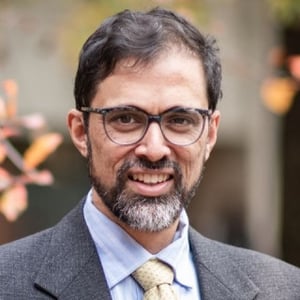
James Monroe Distinguished Professor of Law and Albert Clark Tate, Jr., Professor of Law, University of Virginia School of Law
Professor Saikrishna Prakash’s scholarship focuses on separation of powers, particularly executive powers. He teaches Constitutional Law, Foreign Relations Law and Presidential Powers at the Law School.
Prakash’s most recent book, “The Living Presidency: An Originalist Argument Against Its Ever-Expanding Powers,” was published by Harvard Belknap Press in 2020. He also authored “Imperial from the Beginning: The Constitution of the Original Executive” (Yale University Press, 2015). The former book focuses on the modern presidency while the latter considers the presidency of the Founders.
Prakash has authored over 75 law review articles. Among them are “Of Synchronicity and Supreme Law” in the Harvard Law Review, “The Indefensible Duty to Defend” in the Columbia Law Review, and “50 States, 50 Attorneys General and 50 Approaches to the Duty to Defend” and “The Executive Power Over Foreign Affairs” in the Yale Law Journal.
Prakash has published op-eds in The New York Times, The Wall Street Journal and the Los Angeles Times. At the request of Democrats and Republicans, he has testified before Congress on matters of presidential removal, the Mueller Report and how Congress might better check the presidency. He is currently a Miller Center Senior Fellow. In 2015, he received the Roger Traynor award for faculty scholarship. In the same year, he received an honorable mention from the American Society of Legal Writers for his book “Imperial from the Beginning.” He has given named lectures at William & Mary Law School, Princeton University and Toledo Law School, and keynote addresses at several conferences.
Prakash majored in economics and political science at Stanford University. At Yale Law School, he served as senior editor of the Yale Law Journal and received the John M. Olin Fellowship in Law, Economics and Public Policy. He subsequently clerked for Judge Laurence H. Silberman of the U.S. Court of Appeals for the District of Columbia Circuit and for Justice Clarence Thomas of the U.S. Supreme Court. After practicing in New York for two years, he served as a visiting professor at the University of Illinois College of Law and as an associate professor at Boston University School of Law. He then spent several years at the University of San Diego School of Law as the Herzog Research Professor of Law. Prakash has been a visiting professor at Northwestern University and the University of Chicago. He also has served as a James Madison Fellow at Princeton University and Visiting Research Fellow at the Hoover Institution of War & Peace at Stanford University.
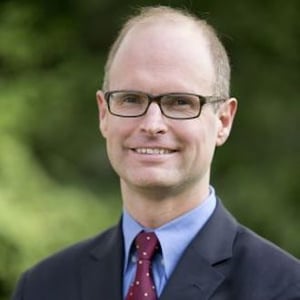
Professor of Law, Temple University Beasley School of Law
Professor Craig Green has taught and written in the fields of Administrative Law, American Legal History, Civil Procedure, Constitutional Law, and Federal Courts; he has also taught in the field of Reproductive Rights. Other teaching interests include Conflicts of Law, Remedies, Civil Procedure II, Complex Civil Litigation, Civil and Political Rights, First Amendment, Separation of Powers, Legislation, Federalism, Constitutional History, History of American Judging, and Sentencing. In 2009 and 2015, Green received Temple Law School’s George P. Williams Award as “Outstanding Professor of the Year,” and in 2010 he received Temple University’s Lindback Award for Distinguished Teaching.
Green’s research has addressed the role of federal courts in overseeing the executive branch, and the significance of iconic cases like Erie v. Tompkins in legal discourse. He has published articles concerning wartime detention, federal common law, judicial activism, precedential interpretation, equal protection, the federal sentencing guidelines, constitutional history, the economic recession of 2008, and customary international law. He has been invited to present research to the Sentencing Commission’s legal staff, as a keynote speaker at the Japanese-American Society for Legal Studies Annual Meeting in Kyoto, as a participant in the Turkish Institute for Justice’s conference “The Balance Between Freedom and Security in Fighting against Terrorism,” and as an organizing panelist for the British Association of Nineteenth-Century Americanists at the University of Warwick. In 2012, Green received Temple Law School’s Friel-Scanlan Award for Outstanding Scholarship.
In 2018, Green received a Ph.D from Princeton University’s History Department for completing his dissertation, “Creating American Land: A Territorial History from the Albany Plan to the U.S. Constitution.” The dissertation seeks to explain (1) how the United States’ imperial legal structure emerged from Revolution’s anti-imperial moment, (2) how American states and statehood emerged from the legal destruction of British colonies, (3) how Native American ideas about territory influenced and were affected by the law of Britain and the United States, and (4) what “law” meant in a context where institutional enforcement was most often impossible.
Green has an active interest in appellate litigation, and has served on moot courts for Supreme Court advocates at the University of Pennsylvania’s Supreme Court Institute, the Georgetown Law Center’s Supreme Court Institute, the National Association of Attorneys General, and law firms in Washington D.C.
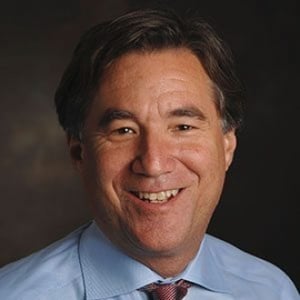
Ashe Family Chair Professor of Law, Georgia State University College of Law
Eric J. Segall graduated from Emory University, Phi Beta Kappa and summa cum laude, and from Vanderbilt Law School, where he was the research editor for the Law Review and member of Order of the Coif. He clerked for the Chief Judge Charles Moye Jr. for the Northern District of Georgia, and Albert J. Henderson of the 11th Circuit Court of Appeals. After his clerkships, Segall worked for Gibson, Dunn & Crutcher and the U.S. Department of Justice, before joining the Georgia State faculty in 1991.
Segall teaches federal courts and constitutional law I and II. He is the author of the books Originalism as Faith and Supreme Myths: Why the Supreme Court is not a Court and its Justices are not Judges. His articles on constitutional law have appeared in, among others, the Harvard Law Review Forum, the Stanford Law Review On Line, the UCLA Law Review, the George Washington Law Review, the Washington University Law Review, the University of Pennsylvania Journal of Constitutional Law, the Northwestern University Law Review Colloquy, and Constitutional Commentary among many others.
Segall’s op-eds and essays have appeared in the New York Times, the LA Times, The Atlantic, SLATE, Vox, Salon, and the Daily Beast, among others. He has appeared on CNN, Fox News, MSNBC, and France 24 and all four of Atlanta’s local television stations. He has also appeared on numerous local and national radio shows.
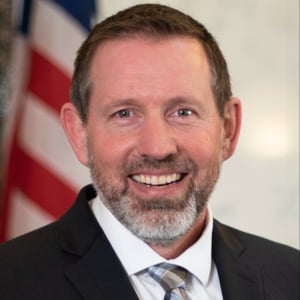
Judge, United States Court of Appeals, Ninth Circuit
Lawrence VanDyke serves as a circuit judge on the U.S. Court of Appeals for the Ninth Circuit. Prior to that appointment in January 2020, he served as a Deputy Assistant Attorney General in the Environment and Natural Resources Division of the United States Department of Justice. Before that, he served consecutively as the Solicitor General of two western states – Nevada and Montana. At the beginning of his legal career, he worked as an attorney in the Appellate and Constitutional Issues practice group at Gibson Dunn & Crutcher, LLP.
Judge VanDyke received his law degree magna cum laude from Harvard Law School, where he was an editor on the Harvard Law Review. He has engineering and theology undergraduate degrees and a masters degree in engineering management. He served as a law clerk to the Honorable Janice Rogers Brown of the United States Court of Appeals for the District of Columbia Circuit. Judge VanDyke and his wife Cheryl live in Reno, Nevada, and they have three children.

Professor, University of Minnesota Law School
Ilan Wurman is the Julius E. Davis Professor of Law at the University of Minnesota, where he teaches administrative law and constitutional law. He previously taught at Arizona State University. He writes primarily on the Fourteenth Amendment, administrative law, separation of powers, and constitutionalism. His academic writing has appeared in the Yale Law Journal, the Stanford Law Review, the University of Chicago Law Review, the University of Pennsylvania Law Review, the Virginia Law Review, the Duke Law Journal, the Minnesota Law Review, the Notre Dame Law Review, and the Texas Law Review among other journals.
Professor Wurman is the author of a casebook, Administrative Law Theory and Fundamentals: An Integrated Approach (Foundation Press 2d ed. 2024). He is also the author of A Debt Against the Living: An Introduction to Originalism (Cambridge 2017), and The Second Founding: An Introduction to the Fourteenth Amendment (Cambridge 2020). His next book, The Constitution of 1789: A New Introduction, is also forthcoming with Cambridge University Press.
Professor Wurman practices law with the firm Tully Bailey. He has litigated a variety of administrative law and constitutional law cases, including cases involving COVID-19 restrictions, transmission lines, and Appointments Clause challenges. He also devised winning public nuisance theories to force city governments to address the increasingly challenging public camping crises throughout the country.
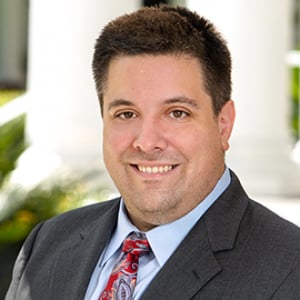
Sheila M. McDevitt Professor of Law and Faculty Director of the Election Law Center, Florida State University College of Law
Professor Morley joined FSU Law in 2018, and teaches and writes in the areas of election law, constitutional law, remedies, and the federal courts. He is best known for his work on election emergencies and post-election litigation, nationwide and other defendant-oriented injunctions, the jurisdiction of the federal courts and their equitable powers more generally. He has testified before congressional committees, made presentations to election officials for the U.S. Election Assistance Commission and participated in bipartisan blue-ribbon groups to develop election reforms. The governor of Florida also appointed Professor Morley to the Criminal Punishment Code Task Force, to propose potential revisions to the legislature.
The U.S. Supreme Court has cited several of his articles, and he was counsel of record for the successful Petitioner in a landmark campaign finance case. Professor Morley has appeared on C-SPAN, Court TV, Fox News and numerous local news programs, and has been quoted in the Washington Post, Los Angeles Times, Roll Call, Politico, U.S. News and World Report, and a wide range of other national publications. His work has been published in many of the nation’s top law reviews, including the Georgetown Law Journal, Northwestern University Law Review, Boston University Law Review and Emory Law Journal.
Before joining FSU Law, Professor Morley was a Climenko Fellow and Lecturer in Law at Harvard Law School. Prior to his experience in academia, he served in government as special assistant to the General Counsel of the Army at the Pentagon, as well as a law clerk for Judge Gerald B. Tjoflat of the U.S. Court of Appeals for the Eleventh Circuit. During his tenure with the Army General Counsel’s office, he was awarded the Meritorious Civilian Service Award and the Army Staff Lapel Pin. He also worked as an associate at Williams & Connolly LLP and the Supreme Court & Appellate group of Winston & Strawn, LLP, both in Washington, D.C.
Professor Morley earned his J.D. from Yale Law School in 2003, where he was a senior editor on the Yale Law Journal; served on the moot court board; and received the Thurman Arnold Prize for Best Oralist in the Morris Tyler Moot Court of Appeals.

Professor Emeritus, Paul M. Hebert Law Center, Louisiana State University
In memoriam
Dr. John Baker is Professor Emeritus of Law, and previously the Dale E. Bennett Professor of Law, at Louisiana State University Law School. He is currently Visiting Professor at Peking University School of Transnational Law (via Zoom) and has been Visiting Professor at The Center for the Constitution, Georgetown Law School (2013-2020). He has also been a Visiting Fellow at Oriel College, the University of Oxford (2012-2014) and taught at Blackfriars Hall, Oxford in 2014. Dr. Baker has also been an adjunct Fellow at the Heritage Foundation (Spring, 2008) and a Distinguished Scholar at the Catholic University of America Law School (2011-12). He has taught at Tulane Law School, George Mason Law School, Pepperdine Law School, New York Law School, Hong Kong University, and the University of Dallas, School of Management and also taught and/or lectured in 17 foreign countries. Notable among his foreign visits are the
following: Visiting Professor at the University of Lyon III (France) (1999-2011); Visiting Professor at the Universidad de los Andes, Chile (2012), as a Fulbright Specialist (2006); and a Fulbright Scholar at various universities in the Philippines. Dr. Baker received his J.D., with honors, from the University of Michigan Law School and his B.A., magna cum laude, from the University of Dallas. He also earned a Ph.D. in Political Thought from the University of London. Baker has taught over a dozen different subjects, mostly courses in public law. His main areas of interest are Constitutional Law (particularly federalism and separation of powers), Criminal Law, Anti-Terrorism Law, International Law, Health Care Law, Mediation, and Comparative Law.
In addition to law review articles and book chapters, Dr. Baker’s academic publications include Hall's Criminal Law: Cases and Materials (with Benson, Force and George; 5th ed. Michie, 1993); An Introduction to the Law of the United States (ed. with Levasseur; University Press of America, 1992). He has also published on Forbes.com, FoxNews.com, in The Washington Times, and a number of times in The Wall Street Journal. He argues in federal court, including two oral arguments in the U.S. Supreme Court. For many years, he co-taught courses for the Federalist Society on separation of powers with the late Supreme Court Justice Antonin Scalia. In September 2016, he co-taught a Supreme Court seminar in China with Justice Samuel Alito. Following law school, he served as a law clerk in federal district court and as an assistant district attorney in New Orleans before joining LSU in 1975. While a professor, he has been as a consultant to USAID, USIA (since rolled into the State Department), the Justice Department, the U.S. Senate Judiciary Subcommittee on Separation of Powers, and the Office of Planning in the White House. He served on an ABA Task Force which issued the report, The Federalization of Crime (1998) and later as a consultant to the “Bi-Partisan Task Force on the Over- federalization of Crime” (2012-2014) created by the U.S. House Judiciary Subcommittee on Crime. Dr. Baker was a co-founder of the first iteration (1995) of Stratfor Inc., a global intelligence agency. He co-authored its first book: The Intelligence Edge (with Friedman, Friedman and Chapman; Crown Books/Random House 1997). In 2022, he began a short, weekly video podcast available on YouTube and Rumble, The Baker Brief.
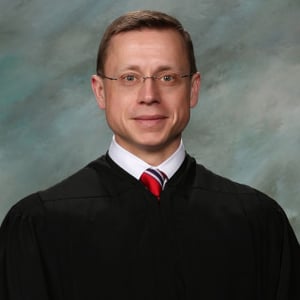
Judge, United States Court of Appeals, Fifth Circuit
Andrew Oldham is a Circuit Judge on the United States Court of Appeals for the Fifth Circuit. Before ascending to the bench, Judge Oldham served as General Counsel to Texas Governor Greg Abbott, where he advised the Governor on a range of issues under federal and state law and managed litigation in which the Governor was an interested party. Before that he served as Deputy Solicitor General for the State of Texas, where he represented Texas in federal courts across the country, including twice before the United States Supreme Court. Before moving to Texas, Judge Oldham was an attorney at Kellogg Hansen Todd Figel & Frederick in Washington, D.C. His practice focused on appellate litigation in federal courts of appeals throughout the country. Before entering private practice, Judge Oldham served as a law clerk to Justice Samuel A. Alito, Jr., at the Supreme Court of the United States and to Judge David B. Sentelle of the U.S. Court of Appeals for the District of Columbia Circuit. He also worked as an attorney-adviser in the Office of Legal Counsel at the U.S. Department of Justice from 2006 to 2008. Judge Oldham earned a B.A. from the University of Virginia with highest honors, a Truman Scholarship for graduate school, an M. Phil., first class (with distinction), from Cambridge University, and a J.D., magna cum laude, from Harvard Law School.
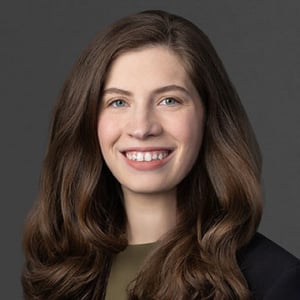
Associate, Kirkland & Ellis LLP
Rachel Daley is a litigation associate at Kirkland & Ellis LLP. Her practice focuses on drafting dispositive motions and appellate briefs in federal and state courts. Rachel previously served as a law clerk to Justice Neil M. Gorsuch on the Supreme Court of the United States, Judge Amul R. Thapar on the U.S. Coruts of Appeals for the Sixth Circuit, and Judge Andrew S. Oldham on the U.S. Court of Appeals for the Fifth Circuit. Rachel is a graduate of the University of Virginia School of Law. She served as president of the law school's Federalist Society chapter in 2021, when UVA received the Federalist Society's award for Chapter of the Year. She lives in Austin, Texas with her husband, Kevin, and their daughter.
Professor Emeritus, Paul M. Hebert Law Center, Louisiana State University
In memoriam
Dr. John Baker is Professor Emeritus of Law, and previously the Dale E. Bennett Professor of Law, at Louisiana State University Law School. He is currently Visiting Professor at Peking University School of Transnational Law (via Zoom) and has been Visiting Professor at The Center for the Constitution, Georgetown Law School (2013-2020). He has also been a Visiting Fellow at Oriel College, the University of Oxford (2012-2014) and taught at Blackfriars Hall, Oxford in 2014. Dr. Baker has also been an adjunct Fellow at the Heritage Foundation (Spring, 2008) and a Distinguished Scholar at the Catholic University of America Law School (2011-12). He has taught at Tulane Law School, George Mason Law School, Pepperdine Law School, New York Law School, Hong Kong University, and the University of Dallas, School of Management and also taught and/or lectured in 17 foreign countries. Notable among his foreign visits are the
following: Visiting Professor at the University of Lyon III (France) (1999-2011); Visiting Professor at the Universidad de los Andes, Chile (2012), as a Fulbright Specialist (2006); and a Fulbright Scholar at various universities in the Philippines. Dr. Baker received his J.D., with honors, from the University of Michigan Law School and his B.A., magna cum laude, from the University of Dallas. He also earned a Ph.D. in Political Thought from the University of London. Baker has taught over a dozen different subjects, mostly courses in public law. His main areas of interest are Constitutional Law (particularly federalism and separation of powers), Criminal Law, Anti-Terrorism Law, International Law, Health Care Law, Mediation, and Comparative Law.
In addition to law review articles and book chapters, Dr. Baker’s academic publications include Hall's Criminal Law: Cases and Materials (with Benson, Force and George; 5th ed. Michie, 1993); An Introduction to the Law of the United States (ed. with Levasseur; University Press of America, 1992). He has also published on Forbes.com, FoxNews.com, in The Washington Times, and a number of times in The Wall Street Journal. He argues in federal court, including two oral arguments in the U.S. Supreme Court. For many years, he co-taught courses for the Federalist Society on separation of powers with the late Supreme Court Justice Antonin Scalia. In September 2016, he co-taught a Supreme Court seminar in China with Justice Samuel Alito. Following law school, he served as a law clerk in federal district court and as an assistant district attorney in New Orleans before joining LSU in 1975. While a professor, he has been as a consultant to USAID, USIA (since rolled into the State Department), the Justice Department, the U.S. Senate Judiciary Subcommittee on Separation of Powers, and the Office of Planning in the White House. He served on an ABA Task Force which issued the report, The Federalization of Crime (1998) and later as a consultant to the “Bi-Partisan Task Force on the Over- federalization of Crime” (2012-2014) created by the U.S. House Judiciary Subcommittee on Crime. Dr. Baker was a co-founder of the first iteration (1995) of Stratfor Inc., a global intelligence agency. He co-authored its first book: The Intelligence Edge (with Friedman, Friedman and Chapman; Crown Books/Random House 1997). In 2022, he began a short, weekly video podcast available on YouTube and Rumble, The Baker Brief.
Judge, United States Court of Appeals, Fifth Circuit
Andrew Oldham is a Circuit Judge on the United States Court of Appeals for the Fifth Circuit. Before ascending to the bench, Judge Oldham served as General Counsel to Texas Governor Greg Abbott, where he advised the Governor on a range of issues under federal and state law and managed litigation in which the Governor was an interested party. Before that he served as Deputy Solicitor General for the State of Texas, where he represented Texas in federal courts across the country, including twice before the United States Supreme Court. Before moving to Texas, Judge Oldham was an attorney at Kellogg Hansen Todd Figel & Frederick in Washington, D.C. His practice focused on appellate litigation in federal courts of appeals throughout the country. Before entering private practice, Judge Oldham served as a law clerk to Justice Samuel A. Alito, Jr., at the Supreme Court of the United States and to Judge David B. Sentelle of the U.S. Court of Appeals for the District of Columbia Circuit. He also worked as an attorney-adviser in the Office of Legal Counsel at the U.S. Department of Justice from 2006 to 2008. Judge Oldham earned a B.A. from the University of Virginia with highest honors, a Truman Scholarship for graduate school, an M. Phil., first class (with distinction), from Cambridge University, and a J.D., magna cum laude, from Harvard Law School.
Associate, Kirkland & Ellis LLP
Rachel Daley is a litigation associate at Kirkland & Ellis LLP. Her practice focuses on drafting dispositive motions and appellate briefs in federal and state courts. Rachel previously served as a law clerk to Justice Neil M. Gorsuch on the Supreme Court of the United States, Judge Amul R. Thapar on the U.S. Coruts of Appeals for the Sixth Circuit, and Judge Andrew S. Oldham on the U.S. Court of Appeals for the Fifth Circuit. Rachel is a graduate of the University of Virginia School of Law. She served as president of the law school's Federalist Society chapter in 2021, when UVA received the Federalist Society's award for Chapter of the Year. She lives in Austin, Texas with her husband, Kevin, and their daughter.
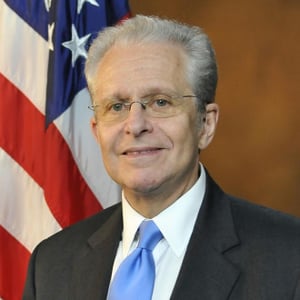
Carl M. Loeb University Professor, Harvard Law School
Laurence H. Tribe, the Carl M. Loeb University Professor and Professor of Constitutional Law at Harvard, has taught at its Law School since 1968 and was voted the best professor by the graduating class of 2000. The title “University Professor” is Harvard’s highest academic honor, awarded to just a handful of professors at any given time and to just 68 professors in all of Harvard University’s history. Born in China to Russian Jewish parents, Tribe entered Harvard in 1958 at 16; graduated summa cum laude in Mathematics (1962) and magna cum laude in Law (1966); clerked for the California and U.S. Supreme Courts(1966-68); received tenure at 30; was elected to the American Academy of Arts and Sciences at 38 and to the American Philosophical Society in 2010; helped write the constitutions of South Africa, the Czech Republic, and the Marshall Islands; has received eleven honorary degrees, most recently a degree honoris causa from the Government of Mexico in March 2011 that was never before awarded to an American and an honorary D. Litt. From Columbia University; has prevailed in three-fifths of the many appellate cases he has argued (including 35 in the U.S. Supreme Court); was appointed in 2010 by President Obama and Attorney General Holder to serve as the first Senior Counselor for Access to Justice; and has written 115 books and articles, including his treatise, American Constitutional Law, cited more than any other legal text since 1950. Former Solicitor General Erwin Griswold wrote: “[N]o book, and no lawyer not on the [Supreme] Court, has ever had a greater influence on the development of American constitutional law,” and the Northwestern Law Review opined that no-one else “in American history has… simultaneously achieved Tribe’s preeminence… as a practitioner and… scholar of constitutional law.”

Patrick Hotung Professor of Constitutional Law, Georgetown University Law Center
Randy Barnett is the Patrick Hotung Professor of Constitutional Law at Georgetown University Law Center. He has argued before the United States Supreme Court, tried murder cases to juries as a prosecutor in Chicago, and appeared as a prosecutor in the feature film Inalienable. He is the author of numerous books, including Restoring the Lost Constitution, The Structure of Liberty, Our Republican Constitution, and The Original Meaning of the Fourteenth Amendment. He has published two memoirs, A Life for Liberty: The Making of an American Originalist, and Felony Review: Tales of True Crime and Corruption in Chicago. He is currently working on a new book, Freedom and Flourishing: Libertarianism for the Real World.
Richard and Frances Mallery Professor of Law and Faculty Director, Constitutional Law Center, Stanford Law School
Michael W. McConnell is the Richard and Frances Mallery Professor and Faculty Director of the Constitutional Law Center at Stanford Law School, and a Senior Fellow at the Hoover Institution. From 2002 to 2009, he served as a Circuit Judge on the United States Court of Appeals for the Tenth Circuit. He was nominated by President George W. Bush, a Republican, and confirmed by a Democratic Senate by unanimous consent. McConnell has previously held chaired professorships at the University of Chicago and the University of Utah, and visiting professorships at Harvard and NYU. He teaches courses on constitutional law, constitutional history, First Amendment, and interpretive theory. He has published widely in the fields of constitutional law and theory, especially church and state, equal protection, and separation of powers. His book, “The President Who Would Not Be King: Executive Power Under the Constitution,” was published by Princeton University Press in 2020, based on the Tanner Lectures in Human Values, which he delivered at Princeton in 2019. His latest book, co-authored with Nathan Chapman, “Agreeing to Disagree: How the Establishment Clause Protects Religious Diversity and Freedom of Conscience,” was published by Oxford University Press in mid-2023. McConnell has argued sixteen cases in the United States Supreme Court, most recently Carney v. Adams (2020). defending a provision of the Delaware Constitution requiring political balance on that state’s courts. More recently, he was co-counsel in Gonzalez v. Google. He earned his B.A. from Michigan State University and his J.D. from the University of Chicago, and has received honorary degrees from Notre Dame University and Michigan State. He served as law clerk to Supreme Court Justice William J. Brennan, Jr. and D.C. Circuit Chief Judge J. Skelly Wright. He has been Assistant General Counsel of the Office of Management & Budget, Assistant to the Solicitor General of the Department of Justice, and a member of the President’s Intelligence Oversight Board. He is Senior of Counsel to the law firm Wilson, Sonsini, Goodrich & Rosati, and is co-chair of Meta’s Oversight Review Board.

Panel III: Originalist Theories of Constitutional Interpretation [Archive Collection]
Robert William Bennett, Raoul Berger, Douglas H. Ginsburg, Michael W. McConnell, Michael S. Moore
1987 National Student Symposium
On April 3-5, 1987, the Federalist Society's Chicago Student Chapter hosted the sixth annual National...
Panel III: Originalist Theories of Constitutional Interpretation [Archive Collection]
Robert William Bennett, Raoul Berger, Douglas H. Ginsburg, Michael W. McConnell, Michael S. Moore
1987 National Student Symposium
On April 3-5, 1987, the Federalist Society's Chicago Student Chapter hosted the sixth annual National...
Necessary & Proper Episode 58: Debate: The True Extent of Presidential Power
John C. Yoo, Saikrishna Prakash, Craig Green
On October 29, the Penn and Temple Student Chapters of the Federalist Society hosted former officemates...
Feddie Night Frights: Originalism: Trick or Treat?
Eric J. Segall, Lawrence VanDyke, Ilan Wurman
University of Texas Student Chapter
The Federalist Society's Student Division &University of Texas Student Chapter Present Feddie Night Frights:Night of...
Topics
Do Term Limits Make a Difference?
The Federalist Society is pleased to announce its Student Blog Initiative, a project of the...
Faithless Electors & the Electoral College [POLICYbrief]
Michael T. Morley
Short video featuring Michael Morley
When people vote in a presidential election, they are selecting a representative who will cast...
Feddie Night Fights: The Federalist/Anti-Federalist Debate
John S. Baker, Andrew Oldham, Rachel L. Daley
University of Virginia Student Chapter
On September 25, 2020, the Federalist Society's University of Virginia Student Chapter hosted the first...
Feddie Night Fights: The Federalist/Anti-Federalist Debate
John S. Baker, Andrew Oldham, Rachel L. Daley
University of Virginia Student Chapter
On September 25, 2020, the Federalist Society's University of Virginia Student Chapter hosted the first...
Retained by the People: The Ninth Amendment
Laurence H. Tribe, Randy E. Barnett, Michael W. McConnell
Short video featuring Laurence Tribe, Randy Barnett, and Michael McConnell
It has been called a dead letter, an inkblot, the most important amendment in the...
Necessary & Proper Episode 57: Constitution Day Lecture: Inside the Mind of James Madison
Colleen Sheehan
To celebrate Constitution Day, the Rutgers Law School chapter of the Federalist Society hosted Dr....