
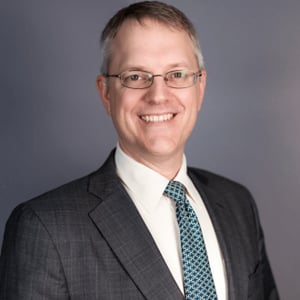
President and General Counsel, New Civil Liberties Alliance
NCLA’s President and General Counsel, Mark Chenoweth, has observed the administrative state up close and personal from perches in all four branches of the federal government. Mark served as the first chief of staff to Congressman Mike Pompeo, as legal counsel to Commissioner Anne Northup at the U.S. Consumer Product Safety Commission, as an attorney advisor in the Office of Legal Policy at the U.S. Department of Justice, and as a law clerk to the Hon. Danny J. Boggs on the U.S. Court of Appeals for the Sixth Circuit.
Mark has worked in several different roles in the private sector as well. He began his legal career in D.C. as a regulatory associate at Wilmer, Cutler & Pickering. He then returned to his home state of Kansas to serve as in-house counsel for Koch Industries. Most recently he spent over four years as general counsel of the Washington Legal Foundation.
Mark is a graduate of Yale College and the University of Chicago Law School, where he co-founded the Institute for Justice Clinic on Entrepreneurship and became a Tony Patiño Fellow. Mark has been widely quoted and/or published in newspapers and websites including the New York Times, San Francisco Chronicle, New Hampshire Union Leader, and Metropolitan Corporate Counsel. He has also had recurring op-eds in the Los Angeles Daily Journal, and at Forbes.com.
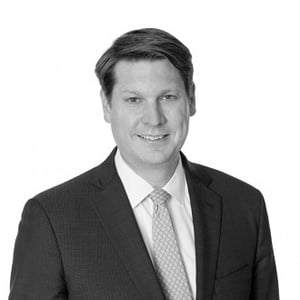
Former Acting Assistant Attorney General, United States Department of Justice; Partner, Winston & Strawn LLP
Jonathan “Jon” Brightbill is a trial and appellate lawyer in Winston’s Washington, D.C. office, and a partner in the firm’s Litigation and White Collar, Regulatory Defense, and Investigations Practices. He represents public and private companies, corporate officers, and other individuals across white collar, regulatory defense, and government and internal investigation matters and rulemaking challenges, as well as complex commercial disputes, citizen suits, and class actions. His commercial litigation experience encompasses business disputes, false advertising, consumer protection and fraud, FCA, and extensive class action defense work; antitrust and unfair competition matters; and intellectual property litigation, such as trademarks, patents, and trade secrets.
Jon served as the Nation’s lead environmental civil and criminal enforcement official and litigator, as Acting Assistant Attorney General for the Environment & Natural Resources Division (“ENRD”) of the U.S. Department of Justice (DOJ). Jon led ENRD’s 425 lawyers, overseeing 6,500 active matters and managing an annual budget of more than $150 million. Jon brings highly experienced executive leadership from among the most senior level of DOJ on white collar and regulatory enforcement, as well as on federal policymaking and rulemaking development and challenges. He speaks with authority on government decision-making processes, and the arguments and perspectives that move regulators and enforcers, best advising and positioning clients to deal with challenges.
Jon argued many of the government’s most significant cases during his time with the DOJ. This included the Navigable Waters Protection Rule and Clean Water Rule Repeal (10th Cir., district courts), the Affordable Clean Energy Rule and Clean Power Plan Repeal (D.C. Cir), defense of EPA actions on pesticide tolerances under FIFRA and the FDCA (9th Cir. en banc), among numerous others. Jon represented the United States in trial courts in both enforcement and defensive cases, including federal enforcement action against Jeffrey Lowe and the Tiger King Park, of Netflix fame, securing a first-of-its-kind injunction for violations of the Endangered Species Act and Animal Welfare Act. Jon directed the litigation and briefing of scores of additional federal cases nationwide, covering all of the major environmental and natural resources statutes, such as the Clean Air Act, the Clean Water Act, FIFRA (pesticides), FDCA (food safety), TSCA (toxics), CERCLA (land remediation), RCRA (waste), National Environmental Policy Act, Federal Land Policy and Management Act, and numerous other land- and resource-management statutes.
Jon has unmatched experience litigating legal and technical issues relating to climate change. He argued in the courts of appeals, including the D.C. Circuit, regarding the most significant climate change regulations by EPA, as well as the preemptive scope of the Clean Air Act. Jon also litigated climate change-related credit and trading schemes and international agreements in district court. During Jon’s time in leadership at ENRD, it successfully defeated one of the most wide-ranging lawsuits regarding climate change to date—obtaining a stay pending interlocutory appeal and dismissal just weeks before a scheduled three-month trial on federal government liability for climate change.
An accomplished trial lawyer, prior to working at DOJ, Jon was a partner in the Washington, D.C. office of another global law firm. He not only represents clients in court, but creatively counsels corporations on balancing business needs and realities with a broad range of litigation risks and compliance obligations. Jon is also an Adjunct Professor at Georgetown University Law Center. He served on the American Bar Association’s E-Discovery Working Group for Bankruptcy Practice, and was a frequent lecturer for District of Columbia Bar Association Continuing Legal Education Programs.
Jon served as an appellate clerk for the Honorable D. Brooks Smith, U.S. Court of Appeals for the Third Circuit, after graduating magna cum laude from the Georgetown University Law Center. He worked in state government as an Executive Policy Specialist for air, waste, land remediation, and radiation matters at the Pennsylvania Department of Environmental Protection.
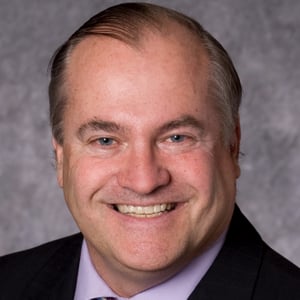
Robert F. Stanton Professor of Law, University of Maryland Carey School of Law
Robert V. Percival is the Robert F. Stanton Professor of Law and the Director of the Environmental Law Program at the University of Maryland School of Law. He received a B.A. summa cum laude from Macalester College, a J.D. from Stanford Law School and an M.A. in economics from Stanford University. At Stanford Percival was named the Nathan Abbott Scholar for graduating first in his law school class. Following graduation, he served as a law clerk for Judge Shirley M. Hufstedler of the U.S. Court of Appeals for the Ninth Circuit and for U.S. Supreme Court Justice Byron R. White. He joined the Maryland faculty in 1987 after serving as a senior attorney for the Environmental Defense Fund. Percival has served as a visiting professor of law at Harvard Law School, Georgetown University Law Center, the China University of Political Science and Law (Beijing), and Comenius University (Bratislava). He is the principal author of a leading environmental law casebook, now in its 9th edition, and the author of several articles about the Supreme Court and presidential authority over executive agencies. Percival wrote one of the first articles on the propriety of consent decrees to effectuate and enforce federal law “The Bounds of Consent: Consent Decrees, Settlements and Federal Environmental Policymaking,” 1987 Univ. Chic. Leg. F. 327 (1987). He also is the author of the first comprehensive analyses of what the papers of the late Justices Thurgood Marshall and Harry Blackmun reveal about the Supreme Court’s handling of environmental cases (“Environmental Law in the Supreme Court: Highlights from the Blackmun Papers,” 35 ELR 10637 (2005), and “Environmental Law in the Supreme Court: Highlights from the Marshall Papers,” 13 ELR 10606 (Oct. 1993)).
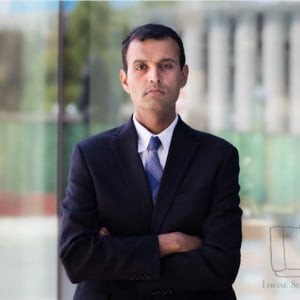
Managing Director, Berkeley Research Group (BRG)
Dr. Dasgupta served as Assistant Secretary for Trade and Economic Security, responsible for a comprehensive national security portfolio. His duties included oversight of the Committee on Foreign Investment in the United States (CFIUS), Team Telecom, the Forced Labor Enforcement Task Force (FLETF), Information and Communications Technology and Services (ICTS), Arctic security initiatives, the Icebreaker Collaboration Effort (ICE) Pact, and related trade matters. Sohan Dasgupta also served as political head of the Millennium Challenge Corporation (MCC), supporting U.S. foreign policy and national security objectives. Previously, he had served as Deputy General Counsel of the U.S. Department of Homeland Security (DHS).
Dr. Dasgupta holds a JD from the University of California, Berkeley, where he was elected to the Order of the Coif; a PhD in international trade and arbitration from the University of Cambridge; MSc from the University of Oxford; and BA in Economics–Operations Research and History from Columbia University. He commenced his legal career with clerkships on the U.S. Court of Appeals for the Ninth Circuit and the U.S. District Court for the Southern District of West Virginia.
Dr. Dasgupta has addressed the Hungarian, Romanian, and Guatemalan parliaments, and has spoken at the invitation of Members of the U.S. Congress, the British Parliament, the European Union Parliament, the Congress of the Philippines, and the Legislative Assembly of El Salvador.

Laurence A. Tisch Professor of Law and Director, Classical Liberal Institute, New York University School of Law; Director, Classical Liberal Institute, Civitas Institute University of Texas at Austin
Richard A. Epstein is the Laurence A. Tisch Professor of Law, at New York University, a senior research fellow at the Civitas Institute at the University of Texas Austin, and a senior Lecturer, the University of Chicago. He received an LL.D., h.c . from the University of Ghent, 2003 , and an LLD h.c . from the University of Siegen in 2018 and the Bradley Prize in 2011. He has been a member of the American Academy of Arts and Sciences since 1985. He has edited both the Journal of Legal Studies (1981-1991) and the Journal of Law and Economics (1991-2001). He is also a founder and director of the Classical Liberal Institute at NYU Law School. His most recent book is The Classical Liberal Constitution: The Uncertain Quest for Limited Government (2014). His other books include Takings: Private Property and the Power of Eminent Domain ( 1985); Bargaining with the State (1993); Simple Rules for a Complex World (1995); Principles for a Free Society: Reconciling Individual Liberty and the Common Good (1998); Skepticism and Freedom: A Modern Theory of Classical Liberalism (2003); Design for Liberty: Private Property, Public Administration and the Rule of Law (2011), and most recently, The Myth of Birthright citizenship—and Beyond (2026). He has taught courses in , administrative law, antitrust, constitutional, contracts, environmental law, land use planning; real property, torts and water law. He has written and spoken extensively on a wide range of topics, and is writes a regular column for Defining Ideas.
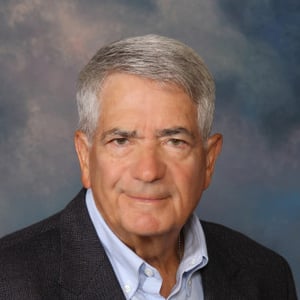
Professor Emeritus of Law, Indiana University; Co-Author, The Law of Lawyering
After graduating with honors from Harvard College in 1966, and from Rutgers Law School with highest honors in 1969, W. William Hodes began practice in a small civil rights and personal injury firm in New Orleans, where he had lived as a child. During the next eight years, he worked in Newark, New Jersey, first for the Kenneth Gibson administration, and then as senior staff attorney for the Education Law Center, a public interest law firm funded by the Ford Foundation.
In 1979, Hodes returned to the legal academy, first as a Bigelow Teaching Fellow at the University of Chicago Law School, and then as a Professor of Law at the Indiana University School of Law in Indianapolis. For the next twenty years, Professor Hodes taught in the areas of Civil Procedure, Constitutonal Law, Federal Courts, Administrative Law, and Professional Responsibility. He gained a national reputation as a scholar, consultant, and expert witness in the areas of Legal Ethics and Professional Responsbility, as they were then known.
Beginning in 1985 however, those subjects began to be known as "The Law of Lawyering," after a book of that name was published, co-authored by Professor Hodes and Professor Geoffrey C. Hazard, Jr., who had served as the Reporter to the Kutak Commission that developed the Model Rules of Professional Conduct. The treatise, which is now in its fourth edition and updated twice a year by Hodes and new co-author Peter R. Jarvis of Portland, Oregon, has become a mainstay resource for both the practicing bar and the academic community, and is often cited in court and ethics committee opinions.
While in the academy, Professor Hodes took two unusual sabbatical leaves. In the Spring of 1989, Hodes, who had spent his junior high school years in Beijing and is still fluent in Chinese, was a Visiting Scholar and Lecturer at the China University of Politics and Law, teaching a course in American Civil Procedure and conducting research into Chinese People's Mediation. (The course was suspended in April, when the events leading to the June 4th Tiananmen Massacre began to unfold, and Professor Hodes began to accompany his students on protest marches.)
During the October 1996 Term of the United States Supreme Court, Professor Hodes served as law clerk to Justice Ruth Bader Ginsburg, who had been his Civil Procedure and Conflicts of Law professor some thirty years earlier, during her Rutgers days. According to knowledgeable sources, Hodes was the oldest person to have served as a law clerk since the early 19th Century.
In 1999, W. William Hodes retired from law teaching (at age 56) in order to establish the William Hodes Professional Corporation, which was later renamed The William Hodes Law Firm; he became Professor Emeritus of Law at Indiana University as the new century began. Through this solo practice, Hodes can now devote full time to providing representation, consultation, expert testimony, legal opinions, and other counsel and assistance to lawyers in the areas of The Law of Lawyering, and Constitutional, Appellate, Supreme Court, and other complex litigation.
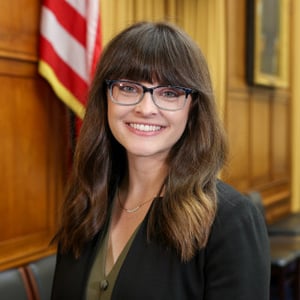
Senior Counsel, U.S. House of Representatives Judiciary Committee
Tessa E. Shurr serves as Senior Counsel to the U.S. House of Representatives Judiciary Committee (Majority).
Prior to joining the Judiciary Committee staff, Tessa served as a Litigation Associate at the Fairness Center, a non-profit law firm, where she represented clients who had been harmed by their public-sector union. Before that, she counseled high-level leadership at the U.S. Department of Justice’s Office of Legal Policy on legislative and regulatory matters, assisted the U.S. Department of Defense with procurement of supplies and services, and worked on both civil and criminal cases at the U.S. Attorney’s Office for the Middle District of Pennsylvania.
Tessa graduated from Penn State Dickinson Law in Carlisle, Pennsylvania. There, she served as Managing Editor of the Dickinson Law Review, one of the oldest legal journals in the United States. During her time in law school, Tessa earned CALI Excellence for the Future Awards in Advanced Federal Income Tax; Congressional Investigations; and Blockchain, Cryptocurrency, & Law. She also published an academic comment proposing a new regulatory scheme for digital assets and cryptocurrency.
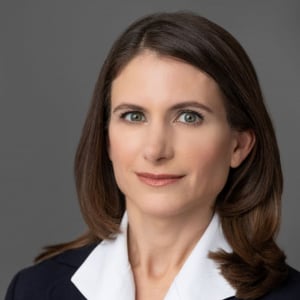
President and General Counsel, Hamilton Lincoln Law Institute
Anna St. John is an attorney with the Hamilton Lincoln Law Institute. She began working with the Center for Class Action Fairness, which has since moved to HLLI, in March 2015. She has argued appeals before the Second, Seventh, Ninth, and D.C. Circuits and state courts in New York and California, and presented argument to over a dozen federal and state trial courts. Her work has led to the return of over $100 million in settlement funds to class members.
Previously, she clerked for the Honorable Rhesa H. Barksdale on the Fifth Circuit Court of Appeals and was an attorney with Covington & Burling LLP.
St. John is a graduate of Columbia Law School, where she was named a James Kent Scholar. She is a member of the state bars of New York and Louisiana and the District of Columbia Bar. She has spoken on topics of class action fairness, government overreach and regulatory abuses, the First Amendment, and the U.S. Supreme Court.
She resides in New Orleans, Louisiana.
Laurence A. Tisch Professor of Law and Director, Classical Liberal Institute, New York University School of Law; Director, Classical Liberal Institute, Civitas Institute University of Texas at Austin
Richard A. Epstein is the Laurence A. Tisch Professor of Law, at New York University, a senior research fellow at the Civitas Institute at the University of Texas Austin, and a senior Lecturer, the University of Chicago. He received an LL.D., h.c . from the University of Ghent, 2003 , and an LLD h.c . from the University of Siegen in 2018 and the Bradley Prize in 2011. He has been a member of the American Academy of Arts and Sciences since 1985. He has edited both the Journal of Legal Studies (1981-1991) and the Journal of Law and Economics (1991-2001). He is also a founder and director of the Classical Liberal Institute at NYU Law School. His most recent book is The Classical Liberal Constitution: The Uncertain Quest for Limited Government (2014). His other books include Takings: Private Property and the Power of Eminent Domain ( 1985); Bargaining with the State (1993); Simple Rules for a Complex World (1995); Principles for a Free Society: Reconciling Individual Liberty and the Common Good (1998); Skepticism and Freedom: A Modern Theory of Classical Liberalism (2003); Design for Liberty: Private Property, Public Administration and the Rule of Law (2011), and most recently, The Myth of Birthright citizenship—and Beyond (2026). He has taught courses in , administrative law, antitrust, constitutional, contracts, environmental law, land use planning; real property, torts and water law. He has written and spoken extensively on a wide range of topics, and is writes a regular column for Defining Ideas.
Professor Emeritus of Law, Indiana University; Co-Author, The Law of Lawyering
After graduating with honors from Harvard College in 1966, and from Rutgers Law School with highest honors in 1969, W. William Hodes began practice in a small civil rights and personal injury firm in New Orleans, where he had lived as a child. During the next eight years, he worked in Newark, New Jersey, first for the Kenneth Gibson administration, and then as senior staff attorney for the Education Law Center, a public interest law firm funded by the Ford Foundation.
In 1979, Hodes returned to the legal academy, first as a Bigelow Teaching Fellow at the University of Chicago Law School, and then as a Professor of Law at the Indiana University School of Law in Indianapolis. For the next twenty years, Professor Hodes taught in the areas of Civil Procedure, Constitutonal Law, Federal Courts, Administrative Law, and Professional Responsibility. He gained a national reputation as a scholar, consultant, and expert witness in the areas of Legal Ethics and Professional Responsbility, as they were then known.
Beginning in 1985 however, those subjects began to be known as "The Law of Lawyering," after a book of that name was published, co-authored by Professor Hodes and Professor Geoffrey C. Hazard, Jr., who had served as the Reporter to the Kutak Commission that developed the Model Rules of Professional Conduct. The treatise, which is now in its fourth edition and updated twice a year by Hodes and new co-author Peter R. Jarvis of Portland, Oregon, has become a mainstay resource for both the practicing bar and the academic community, and is often cited in court and ethics committee opinions.
While in the academy, Professor Hodes took two unusual sabbatical leaves. In the Spring of 1989, Hodes, who had spent his junior high school years in Beijing and is still fluent in Chinese, was a Visiting Scholar and Lecturer at the China University of Politics and Law, teaching a course in American Civil Procedure and conducting research into Chinese People's Mediation. (The course was suspended in April, when the events leading to the June 4th Tiananmen Massacre began to unfold, and Professor Hodes began to accompany his students on protest marches.)
During the October 1996 Term of the United States Supreme Court, Professor Hodes served as law clerk to Justice Ruth Bader Ginsburg, who had been his Civil Procedure and Conflicts of Law professor some thirty years earlier, during her Rutgers days. According to knowledgeable sources, Hodes was the oldest person to have served as a law clerk since the early 19th Century.
In 1999, W. William Hodes retired from law teaching (at age 56) in order to establish the William Hodes Professional Corporation, which was later renamed The William Hodes Law Firm; he became Professor Emeritus of Law at Indiana University as the new century began. Through this solo practice, Hodes can now devote full time to providing representation, consultation, expert testimony, legal opinions, and other counsel and assistance to lawyers in the areas of The Law of Lawyering, and Constitutional, Appellate, Supreme Court, and other complex litigation.
Senior Counsel, U.S. House of Representatives Judiciary Committee
Tessa E. Shurr serves as Senior Counsel to the U.S. House of Representatives Judiciary Committee (Majority).
Prior to joining the Judiciary Committee staff, Tessa served as a Litigation Associate at the Fairness Center, a non-profit law firm, where she represented clients who had been harmed by their public-sector union. Before that, she counseled high-level leadership at the U.S. Department of Justice’s Office of Legal Policy on legislative and regulatory matters, assisted the U.S. Department of Defense with procurement of supplies and services, and worked on both civil and criminal cases at the U.S. Attorney’s Office for the Middle District of Pennsylvania.
Tessa graduated from Penn State Dickinson Law in Carlisle, Pennsylvania. There, she served as Managing Editor of the Dickinson Law Review, one of the oldest legal journals in the United States. During her time in law school, Tessa earned CALI Excellence for the Future Awards in Advanced Federal Income Tax; Congressional Investigations; and Blockchain, Cryptocurrency, & Law. She also published an academic comment proposing a new regulatory scheme for digital assets and cryptocurrency.
President and General Counsel, Hamilton Lincoln Law Institute
Anna St. John is an attorney with the Hamilton Lincoln Law Institute. She began working with the Center for Class Action Fairness, which has since moved to HLLI, in March 2015. She has argued appeals before the Second, Seventh, Ninth, and D.C. Circuits and state courts in New York and California, and presented argument to over a dozen federal and state trial courts. Her work has led to the return of over $100 million in settlement funds to class members.
Previously, she clerked for the Honorable Rhesa H. Barksdale on the Fifth Circuit Court of Appeals and was an attorney with Covington & Burling LLP.
St. John is a graduate of Columbia Law School, where she was named a James Kent Scholar. She is a member of the state bars of New York and Louisiana and the District of Columbia Bar. She has spoken on topics of class action fairness, government overreach and regulatory abuses, the First Amendment, and the U.S. Supreme Court.
She resides in New Orleans, Louisiana.
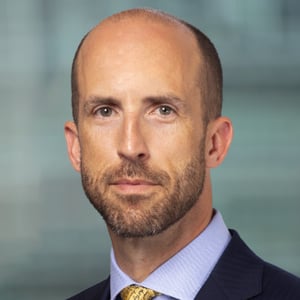
Director of Health Policy Studies, Cato Institute
Michael F. Cannon is the Cato Institute’s director of health policy studies. His scholarship spans public health; regulation of clinicians, medical facilities, pharmaceuticals, and medical devices; employer‐sponsored and other private health insurance; Medicare; Medicaid; CHIP; the Veterans Health Administration; medical malpractice litigation; administrative law; international health systems; political philosophy; and more. Cannon is “an influential health‐care wonk” (Washington Post) and “the most famous libertarian health care scholar” (Washington Examiner). Washingtonian magazine named Cannon one of Washington, DC’s “Most Influential People” in 2021, 2022, and 2023.
Cannon has appeared on ABC, Al Jazeera, BBC, CBS, CNN, CNBC, C‑SPAN, Fox News Channel, NPR, and other broadcast media. His articles have appeared in the Wall Street Journal; the New York Times; USA Today; the Washington Post; the Los Angeles Times; SCOTUSBlog; Forum for Health Economics and Policy; JAMA Internal Medicine; Health Matrix: Journal of Law‐Medicine; Harvard Health Policy Review; the Yale Journal of Health Policy, Law, and Ethics; the Journal of Health Politics, Policy and Law; and Quinnipiac Health Law Journal. His latest book is Recovery: A Guide to Reforming the U.S. Health Sector.
Cannon was previously a domestic policy analyst for the U.S. Senate Republican Policy Committee, where he advised the Senate leadership on health, education, labor, welfare, and the Second Amendment. He is a member of the Board of Advisers of Harvard Health Policy Review and the Federalist Society Regulatory Transparency Project’s FDA & Health Working Group.
Cannon holds an MA in economics and a JM in law and economics from George Mason University and a BA in American government from the University of Virginia.

Partner, King & Spalding LLP
A partner in the FDA and Life Sciences practice at King & Spalding LLP, Marisa Maleck focuses on litigation, regulatory matters and public policy, with a focus on consumer products. As a former senior counsel at a bio-tech company and in private practice, Marisa has substantial experience with and is skilled in providing creative solutions in the face of uncertainty.
Marisa represents clients in a variety of matters with a focus on FDA-regulated products like food, beverages, pharmaceuticals, medical devices, wellness products, cosmetics, tobacco and cannabis. As a former senior counsel at an FDA-regulated biotech company and as a former partner in King & Spalding’s Litigation and Global Disputes practice group, she handled hundreds of suits in a multi-district litigation, multiple agency inquiries, an FTC lawsuit and 10+ state Attorney Generals actions. With a special focus on consumer fraud, social-media marketing and personal injury/wrongful death lawsuits, Marisa has successfully drafted and/or argued appellate briefs and critical motions in numerous cases—including class actions and complex litigation—before the U.S. Supreme Court, federal and state courts of appeals, and federal and state trial courts. She has also advocated tirelessly for her clients through engagement with agencies and policy-makers. She also advises her clients about legal risk (and how to avoid it) in investigations, enforcement actions, private litigation and private-equity investments.
Marisa also advocates for her clients’ interests in the court of public opinion. She is often solicited for her balanced legal analysis by members of the media. Marisa has appeared on (tv/radio) MSNBC, MSN, CNBC and NPR, and in (print) Newsweek, the National Law Journal, The Wall Street Journal, The Washington Post and Politico.
In addition, Marisa has an active pro-bono practice representing indigent defendants through federal appellate appointments as part of the Criminal Justice Act program and as a screener for the Mid-Atlantic Innocence Project.
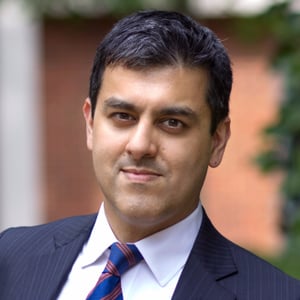
Professor of Law, University of Virginia School of Law
Aditya Bamzai is a professor of law at the University of Virginia. He teaches administrative law, civil procedure, computer crime and conflicts of law, and he has written about these and related subjects. He has argued cases relating to the separation of powers and national security in the U.S. Supreme Court, Foreign Intelligence Surveillance Court of Review, D.C. Circuit and other federal courts of appeals. From 2019 to 2021, he served as a Member of the Privacy and Civil Liberties Oversight Board, a federal agency charged with ensuring that the government’s national security efforts are balanced with the need to protect privacy and civil liberties. Before entering the academy, Bamzai was an attorney-adviser in the Office of Legal Counsel of the U.S. Department of Justice, and an appellate attorney in both private practice and for the National Security Division of the Department of Justice. Earlier in his career, he was a law clerk to Justice Antonin Scalia of the Supreme Court of the United States and to Judge Jeffrey Sutton of the Sixth Circuit Court of Appeals.
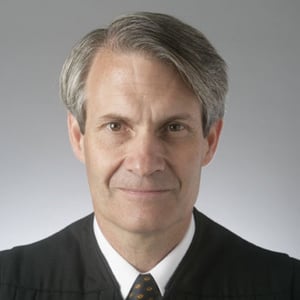
Special Counsel, Hunton Andrews Kurth
After serving on the United State Court of Appeals for the D. C. Circuit from 2005, Judge Griffith stepped down from the bench in 2020. Currently he is a Lecturer on Law at Harvard Law School, a Fellow at the Wheatley Institute at Brigham Young University, and Special Counsel in the Washington, DC office of the law firm of Hunton Andrews Kurth. Most recently, he was a member of President Biden's Commission on the Supreme Court. He is the author of Civic Charity and the Constitution , and the co-author, along with former judges Michael Luttig and Michael McConnell, of Lost, Not Stolen: The Conservative Case that Trump Lost and Biden Won the 2020 Presidential Election. https://lostnotstolen.org/ . Before being appointed to the D. C. Circuit, Judge Griffith was the General Counsel at BYU; Senate Legal Counsel, the non-partisan chief legal officer of the U. S. Senate; and a partner at Wiley, Rein & Fielding. Long active in rule-of-law programs in former communist nations, Judge Griffith is a member of the international advisory board of the CEELI Institute in Prague. He is a graduate of BYU and the University of Virginia School of Law and is a member of the American Law Institute.
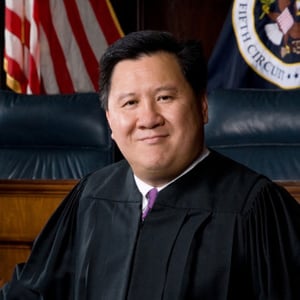
Judge, United States Court of Appeals, Fifth Circuit
James C. Ho is a Circuit Judge on the U.S. Court of Appeals for the Fifth Circuit. Before taking the bench on January 4, 2018, he was a partner and co-chair of the national Appellate and Constitutional Law practice group of Gibson, Dunn & Crutcher LLP.
As an appellate litigator for over a decade, including three years as the Solicitor General of Texas, Judge Ho presented 50 oral arguments in federal and state courts nationwide. He won numerous appeals, including three merits cases at the U.S. Supreme Court. He was routinely ranked among the nation’s leading lawyers by Benchmark, Chambers, Law360, The Legal 500, and The National Law Journal, among other publications. His work has been cited favorably by courts at every level of both the federal and state judiciaries. He won a Best Brief Award from the National Association of Attorneys General for every year that he served as solicitor general, and he is the only state solicitor general in history to be invited by the U.S. Supreme Court to express the views of a state.
Judge Ho has served in all three branches of the federal government. On the Senate Judiciary Committee, he served as chief counsel of the Subcommittees on the Constitution and Immigration under Senator John Cornyn. At the Justice Department, he served as Special Assistant to the Assistant Attorney General for Civil Rights and an attorney-advisor at the Office of Legal Counsel. He clerked for Judge Jerry E. Smith of the U.S. Court of Appeals for the Fifth Circuit and Justice Clarence Thomas of the U.S. Supreme Court.
His record of public service also includes appointments as vice chair of the Federal Judicial Evaluation Committee in Texas and co-chair of the National Asian Pacific American Bar Association Judiciary Committee, and as a member of the U.S. Magistrate Judge Merit Selection Panel for the Northern District of Texas, the U.S. delegation to the United Nations Committee on the Elimination of Racial Discrimination, and the Continuity of Government Commission.
In addition, Judge Ho has served as an Adjunct Professor of Law at the University of Texas School of Law, where he taught seminars on U.S. Supreme Court Litigation and Religious Liberty. He has authored numerous articles in respected law reviews nationwide, including an annual feature on exemplary judicial writing for The Green Bag Almanac & Reader. He previously served as senior editor of The Green Bag and as co-editor of Pub. L. Misc.
Judge Ho graduated from Stanford University with honors and a B.A. in Public Policy in 1995, and the University of Chicago Law School with high honors in 1999. Before law school, he was a legislative aide to California State Senator Quentin Kopp. He and his wife Allyson live in Dallas, Texas, with their twin daughter and son.
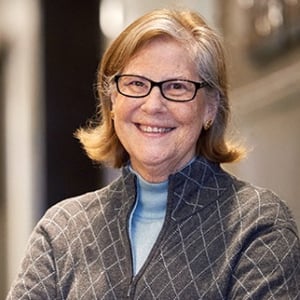
Professor of Practice and Distinguished Scholar in Residence; Co-Director of the Legislative and Regulatory Process Clinic, New York University School of Law
Sally Katzen served in the Clinton administration as administrator of the Office of Information and Regulatory Affairs in the Office of Management and Budget (OMB), as deputy assistant to the president for economic policy and deputy director of the National Economic Council in the White House, and then as the deputy director for management at OMB. She served as the head of the Agency Review Group for the Obama/Biden transition with responsibility for the Executive Office of the President and all government-wide agencies. She has taught both undergraduates and at various law schools. She is a member of the American Law Institute and the National Academy of Public Administration, has served on multiple panels for the National Academy of Sciences, testified frequently before Congress, and is on the board of several non-profit organizations. Before joining the Clinton administration, Katzen was a partner in the Washington, DC, law firm of Wilmer, Cutler & Pickering, specializing in regulatory and legislative matters, while serving in leadership roles in the American Bar Association (including chair of the Section on Administrative Law and Regulatory Practice and as DC delegate to the ABA’s House of Delegates), as president of the Federal Communications Bar Association and as president of the Women’s Legal Defense Fund. She graduated from Smith College and the University of Michigan Law School, where she was the first woman editor-in-chief of the Law Review. She clerked for Judge J. Skelly Wright of the United States Court of Appeals for the District of Columbia Circuit and served in the Carter administration as the general counsel of the Council on Wage and Price Stability in the Executive Office of the President.
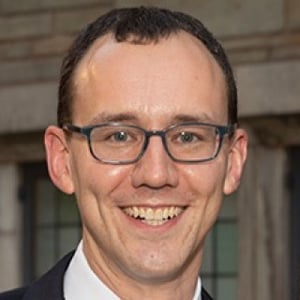
William K. Townsend Professor of Law, Yale Law School
Nicholas R. Parrillo is Townsend Professor of Law at Yale, with a secondary appointment as Professor of History. His research and teaching focus on administrative law and government bureaucracy and extend to legal history, remedies, and legislation. He has received the ABA’s award for the year’s best scholarship in administrative law and the Law and Society Association’s Hurst Prize for the year’s best book in legal history.
Parrillo’s Yale Law Journal article finding new originalist evidence of broad congressional delegations to agencies was discussed in the Solicitor General’s winning brief in the Supreme Court’s latest nondelegation case and in the en banc 5th Circuit opinion in that case. His Harvard Law Review article on how the judiciary handles the federal government’s disobedience to court orders has been discussed in The Washington Post, The Wall Street Journal, and The New York Times. Parrillo also authored a study that provided the empirical basis for best practices adopted by the Administrative Conference of the United States (ACUS) on the federal government’s ubiquitous but controversial use of guidance documents. Peer scholars at Jotwell, in selecting the “best new scholarship” in law, selected each of these three publications (one of them twice). Parrillo’s most recent article, invited for GW’s annual administrative law issue, reveals and analyzes dramatic variation among industries in their willingness to sue their federal health-and-safety regulators.
Parrillo has testified before Congress, been quoted by the Supreme Court, is a senior fellow of ACUS, and has been an instructor at the New York Historical Society’s graduate institute and an invited speaker before the 2nd Circuit Judicial Conference, the U.S. Department of Justice (in 2019 and again in 2024), the ACLU’s national legal staff, and the Federalist Society’s national convention (two times). He is a recipient of the Law School’s annual teaching award.
Professor of Law, University of Virginia School of Law
Aditya Bamzai is a professor of law at the University of Virginia. He teaches administrative law, civil procedure, computer crime and conflicts of law, and he has written about these and related subjects. He has argued cases relating to the separation of powers and national security in the U.S. Supreme Court, Foreign Intelligence Surveillance Court of Review, D.C. Circuit and other federal courts of appeals. From 2019 to 2021, he served as a Member of the Privacy and Civil Liberties Oversight Board, a federal agency charged with ensuring that the government’s national security efforts are balanced with the need to protect privacy and civil liberties. Before entering the academy, Bamzai was an attorney-adviser in the Office of Legal Counsel of the U.S. Department of Justice, and an appellate attorney in both private practice and for the National Security Division of the Department of Justice. Earlier in his career, he was a law clerk to Justice Antonin Scalia of the Supreme Court of the United States and to Judge Jeffrey Sutton of the Sixth Circuit Court of Appeals.
Special Counsel, Hunton Andrews Kurth
After serving on the United State Court of Appeals for the D. C. Circuit from 2005, Judge Griffith stepped down from the bench in 2020. Currently he is a Lecturer on Law at Harvard Law School, a Fellow at the Wheatley Institute at Brigham Young University, and Special Counsel in the Washington, DC office of the law firm of Hunton Andrews Kurth. Most recently, he was a member of President Biden's Commission on the Supreme Court. He is the author of Civic Charity and the Constitution , and the co-author, along with former judges Michael Luttig and Michael McConnell, of Lost, Not Stolen: The Conservative Case that Trump Lost and Biden Won the 2020 Presidential Election. https://lostnotstolen.org/ . Before being appointed to the D. C. Circuit, Judge Griffith was the General Counsel at BYU; Senate Legal Counsel, the non-partisan chief legal officer of the U. S. Senate; and a partner at Wiley, Rein & Fielding. Long active in rule-of-law programs in former communist nations, Judge Griffith is a member of the international advisory board of the CEELI Institute in Prague. He is a graduate of BYU and the University of Virginia School of Law and is a member of the American Law Institute.
Judge, United States Court of Appeals, Fifth Circuit
James C. Ho is a Circuit Judge on the U.S. Court of Appeals for the Fifth Circuit. Before taking the bench on January 4, 2018, he was a partner and co-chair of the national Appellate and Constitutional Law practice group of Gibson, Dunn & Crutcher LLP.
As an appellate litigator for over a decade, including three years as the Solicitor General of Texas, Judge Ho presented 50 oral arguments in federal and state courts nationwide. He won numerous appeals, including three merits cases at the U.S. Supreme Court. He was routinely ranked among the nation’s leading lawyers by Benchmark, Chambers, Law360, The Legal 500, and The National Law Journal, among other publications. His work has been cited favorably by courts at every level of both the federal and state judiciaries. He won a Best Brief Award from the National Association of Attorneys General for every year that he served as solicitor general, and he is the only state solicitor general in history to be invited by the U.S. Supreme Court to express the views of a state.
Judge Ho has served in all three branches of the federal government. On the Senate Judiciary Committee, he served as chief counsel of the Subcommittees on the Constitution and Immigration under Senator John Cornyn. At the Justice Department, he served as Special Assistant to the Assistant Attorney General for Civil Rights and an attorney-advisor at the Office of Legal Counsel. He clerked for Judge Jerry E. Smith of the U.S. Court of Appeals for the Fifth Circuit and Justice Clarence Thomas of the U.S. Supreme Court.
His record of public service also includes appointments as vice chair of the Federal Judicial Evaluation Committee in Texas and co-chair of the National Asian Pacific American Bar Association Judiciary Committee, and as a member of the U.S. Magistrate Judge Merit Selection Panel for the Northern District of Texas, the U.S. delegation to the United Nations Committee on the Elimination of Racial Discrimination, and the Continuity of Government Commission.
In addition, Judge Ho has served as an Adjunct Professor of Law at the University of Texas School of Law, where he taught seminars on U.S. Supreme Court Litigation and Religious Liberty. He has authored numerous articles in respected law reviews nationwide, including an annual feature on exemplary judicial writing for The Green Bag Almanac & Reader. He previously served as senior editor of The Green Bag and as co-editor of Pub. L. Misc.
Judge Ho graduated from Stanford University with honors and a B.A. in Public Policy in 1995, and the University of Chicago Law School with high honors in 1999. Before law school, he was a legislative aide to California State Senator Quentin Kopp. He and his wife Allyson live in Dallas, Texas, with their twin daughter and son.
Professor of Practice and Distinguished Scholar in Residence; Co-Director of the Legislative and Regulatory Process Clinic, New York University School of Law
Sally Katzen served in the Clinton administration as administrator of the Office of Information and Regulatory Affairs in the Office of Management and Budget (OMB), as deputy assistant to the president for economic policy and deputy director of the National Economic Council in the White House, and then as the deputy director for management at OMB. She served as the head of the Agency Review Group for the Obama/Biden transition with responsibility for the Executive Office of the President and all government-wide agencies. She has taught both undergraduates and at various law schools. She is a member of the American Law Institute and the National Academy of Public Administration, has served on multiple panels for the National Academy of Sciences, testified frequently before Congress, and is on the board of several non-profit organizations. Before joining the Clinton administration, Katzen was a partner in the Washington, DC, law firm of Wilmer, Cutler & Pickering, specializing in regulatory and legislative matters, while serving in leadership roles in the American Bar Association (including chair of the Section on Administrative Law and Regulatory Practice and as DC delegate to the ABA’s House of Delegates), as president of the Federal Communications Bar Association and as president of the Women’s Legal Defense Fund. She graduated from Smith College and the University of Michigan Law School, where she was the first woman editor-in-chief of the Law Review. She clerked for Judge J. Skelly Wright of the United States Court of Appeals for the District of Columbia Circuit and served in the Carter administration as the general counsel of the Council on Wage and Price Stability in the Executive Office of the President.
William K. Townsend Professor of Law, Yale Law School
Nicholas R. Parrillo is Townsend Professor of Law at Yale, with a secondary appointment as Professor of History. His research and teaching focus on administrative law and government bureaucracy and extend to legal history, remedies, and legislation. He has received the ABA’s award for the year’s best scholarship in administrative law and the Law and Society Association’s Hurst Prize for the year’s best book in legal history.
Parrillo’s Yale Law Journal article finding new originalist evidence of broad congressional delegations to agencies was discussed in the Solicitor General’s winning brief in the Supreme Court’s latest nondelegation case and in the en banc 5th Circuit opinion in that case. His Harvard Law Review article on how the judiciary handles the federal government’s disobedience to court orders has been discussed in The Washington Post, The Wall Street Journal, and The New York Times. Parrillo also authored a study that provided the empirical basis for best practices adopted by the Administrative Conference of the United States (ACUS) on the federal government’s ubiquitous but controversial use of guidance documents. Peer scholars at Jotwell, in selecting the “best new scholarship” in law, selected each of these three publications (one of them twice). Parrillo’s most recent article, invited for GW’s annual administrative law issue, reveals and analyzes dramatic variation among industries in their willingness to sue their federal health-and-safety regulators.
Parrillo has testified before Congress, been quoted by the Supreme Court, is a senior fellow of ACUS, and has been an instructor at the New York Historical Society’s graduate institute and an invited speaker before the 2nd Circuit Judicial Conference, the U.S. Department of Justice (in 2019 and again in 2024), the ACLU’s national legal staff, and the Federalist Society’s national convention (two times). He is a recipient of the Law School’s annual teaching award.
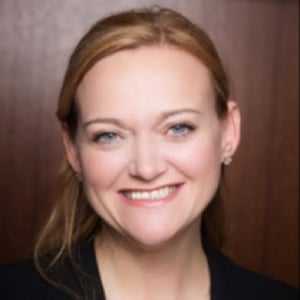
I. Beverly Lake, Jr. Chair in Constitutional Studies and Senior Counsel at the John Locke Foundation., John Locke Foundation
Jeanette Doran is the I. Beverly Lake, Jr. Chair in Constitutional Studies and Senior Counsel at the John Locke Foundation.
Doran began her legal career as a federal law clerk in the Middle District of North Carolina after graduating with honors from Campbell Law School. She then served as the Research and Writing Attorney in the appeals section of the Federal Public Defender’s Office, appearing before the U.S. Court of Appeals for the Fourth Circuit. In 2004, she joined the UNC–Chapel Hill School of Government, and a year later became staff attorney at NCICL, ultimately rising to executive director in 2011. Appointed in 2013 by the Governor to chair the Division of Employment Security’s Board of Review, she completed that public service in 2019.
Doran is also the president of the North Carolina Institute for Constitutional Law (NCICL), and she serves on the state’s Rules Review Commission. She is admitted to practice before the U.S. Supreme Court, the Fourth Circuit, multiple federal district courts, and all North Carolina courts. Doran holds a Juris Doctor from Campbell University.
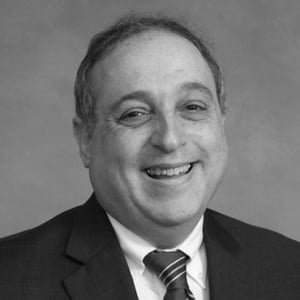
Executive Director, North Carolina Justice Center
Mr. Glazier has held his current position as Executive Director of the North Carolina Justice Center since 2015. The Justice Center focuses on anti-poverty work in the areas of education, immigration, health care, housing, workers’ rights, consumer law, and budget and tax policy.
Prior to his position as Executive Director of the Justice Center, Mr. Glazier served seven terms from 2003-2015 as state representative from Cumberland County in the North Carolina General Assembly. Mr. Glazier received multiple Legislator of Year Awards, and also received the Order of the Long Leaf Pine from Governor McCrory in 2015.
Mr. Glazier received his law degree from Wake Forest University School of Law in 1981 and his undergraduate degree from Penn State University in 1977.
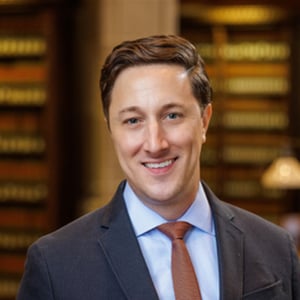
Professor of Law, Notre Dame Law School
Professor Derek Muller is a nationally-recognized scholar in the field of election law. His research focuses on the role of states in the administration of federal elections, the constitutional contours of voting rights and election administration, the limits of judicial power in the domain of elections, and the Electoral College.
He has published more than two dozen academic works, and his op-eds have appeared in the New York Times, the Los Angeles Times, and the Wall Street Journal. He has testified before Congress, and he is a contributor at the Election Law Blog. He is a co-author on a Federal Courts casebook published by Carolina Academic Press. He is also the co-reporter on a new Restatement of the Law, Election Litigation, an effort led by the American Law Institute.
Professor Muller teaches Election Law, Civil Procedure, and Evidence.
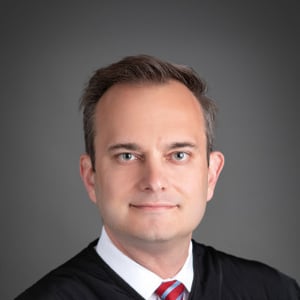
United States Magistrate Judge, Eastern District of North Carolina
Robert T. Numbers, II serves as a United States Magistrate Judge in the United States District Court for the Eastern District of North Carolina.
Judge Numbers received degrees in Political Science and Economics, with honors, from Wake Forest University. After completing his undergraduate work, Judge Numbers obtained his law degree from the University of Notre Dame where he served on the Notre Dame Law Review.
Upon his graduation from law school, Judge Numbers joined the Winston-Salem office of a large, regional law firm. From 2005 until 2010, Judge Numbers’ practice focused on civil rights claims against local municipalities and government contractors. In 2010, Judge Numbers joined the firm’s Raleigh office and concentrated his practice on complex business litigation in state and federal courts.
I. Beverly Lake, Jr. Chair in Constitutional Studies and Senior Counsel at the John Locke Foundation., John Locke Foundation
Jeanette Doran is the I. Beverly Lake, Jr. Chair in Constitutional Studies and Senior Counsel at the John Locke Foundation.
Doran began her legal career as a federal law clerk in the Middle District of North Carolina after graduating with honors from Campbell Law School. She then served as the Research and Writing Attorney in the appeals section of the Federal Public Defender’s Office, appearing before the U.S. Court of Appeals for the Fourth Circuit. In 2004, she joined the UNC–Chapel Hill School of Government, and a year later became staff attorney at NCICL, ultimately rising to executive director in 2011. Appointed in 2013 by the Governor to chair the Division of Employment Security’s Board of Review, she completed that public service in 2019.
Doran is also the president of the North Carolina Institute for Constitutional Law (NCICL), and she serves on the state’s Rules Review Commission. She is admitted to practice before the U.S. Supreme Court, the Fourth Circuit, multiple federal district courts, and all North Carolina courts. Doran holds a Juris Doctor from Campbell University.
Executive Director, North Carolina Justice Center
Mr. Glazier has held his current position as Executive Director of the North Carolina Justice Center since 2015. The Justice Center focuses on anti-poverty work in the areas of education, immigration, health care, housing, workers’ rights, consumer law, and budget and tax policy.
Prior to his position as Executive Director of the Justice Center, Mr. Glazier served seven terms from 2003-2015 as state representative from Cumberland County in the North Carolina General Assembly. Mr. Glazier received multiple Legislator of Year Awards, and also received the Order of the Long Leaf Pine from Governor McCrory in 2015.
Mr. Glazier received his law degree from Wake Forest University School of Law in 1981 and his undergraduate degree from Penn State University in 1977.
Professor of Law, Notre Dame Law School
Professor Derek Muller is a nationally-recognized scholar in the field of election law. His research focuses on the role of states in the administration of federal elections, the constitutional contours of voting rights and election administration, the limits of judicial power in the domain of elections, and the Electoral College.
He has published more than two dozen academic works, and his op-eds have appeared in the New York Times, the Los Angeles Times, and the Wall Street Journal. He has testified before Congress, and he is a contributor at the Election Law Blog. He is a co-author on a Federal Courts casebook published by Carolina Academic Press. He is also the co-reporter on a new Restatement of the Law, Election Litigation, an effort led by the American Law Institute.
Professor Muller teaches Election Law, Civil Procedure, and Evidence.
United States Magistrate Judge, Eastern District of North Carolina
Robert T. Numbers, II serves as a United States Magistrate Judge in the United States District Court for the Eastern District of North Carolina.
Judge Numbers received degrees in Political Science and Economics, with honors, from Wake Forest University. After completing his undergraduate work, Judge Numbers obtained his law degree from the University of Notre Dame where he served on the Notre Dame Law Review.
Upon his graduation from law school, Judge Numbers joined the Winston-Salem office of a large, regional law firm. From 2005 until 2010, Judge Numbers’ practice focused on civil rights claims against local municipalities and government contractors. In 2010, Judge Numbers joined the firm’s Raleigh office and concentrated his practice on complex business litigation in state and federal courts.

Courthouse Steps Oral Argument: Dept. of Ed. v. Brown & Biden v. Nebraska
Mark Chenoweth
February 28, 2023, the U.S. Supreme Court will hear oral argument in two cases challenging...
Deep Dive Episode 249 - Litigation Update: Ohio v. Environmental Protection Agency
Jonathan Brightbill, Robert V. Percival, Sohan Dasgupta
Regulatory Transparency Project's Fourth Branch Podcast
The EPA has rescinded The Safer Affordable Fuel Efficient Vehicles Rule Part One: One National...
A Seat at the Sitting - January 2023
Richard A. Epstein, William Hodes, Tessa Shurr Levensohn, Anna St. John
The January Docket in 90 minutes or Less
Each month, a panel of constitutional experts convenes to discuss the Court’s upcoming docket sitting...
A Seat at the Sitting - January 2023
Richard A. Epstein, William Hodes, Tessa Shurr Levensohn, Anna St. John
The January Docket in 90 minutes or Less
Each month, a panel of constitutional experts convenes to discuss the Court’s upcoming docket sitting...
Topics
Book Review: NOT Accountable, by Philip Howard (Part One)
Many of the grave and chronic maladies of modern American governance, including a loss of...
Explainer Episode 45 - Telehealth & COVID-19
Michael F. Cannon, Marisa Maleck
Regulatory Transparency Project's Fourth Branch Podcast
In this podcast episode, Michael Cannon, Director of Health Policy Studies at Cato Institute and...
Render Law Unto Congress and Execution Unto the Executive: The Supreme Court Rebalances Constitutional Power
Aditya Bamzai, Thomas B. Griffith, James C. Ho, Sally Katzen, Nicholas R. Parrillo
2022 National Lawyers Convention
The Roberts Court is recasting the administrative state according to its view of the separation...
Render Law Unto Congress and Execution Unto the Executive: The Supreme Court Rebalances Constitutional Power
Aditya Bamzai, Thomas B. Griffith, James C. Ho, Sally Katzen, Nicholas R. Parrillo
2022 National Lawyers Convention
The Roberts Court is recasting the administrative state according to its view of the separation...
NC NAACP v. Moore: The Impact of Unconstitutional Legislative Maps on a State Legislature's Ability to Propose Constitutional Amendments
Jeanette Doran, Rick Glazier, Derek T. Muller, Robert T. Numbers
In 2018, the North Carolina General Assembly placed several constitutional amendments before voters for ratification. Voters...
NC NAACP v. Moore: The Impact of Unconstitutional Legislative Maps on a State Legislature's Ability to Propose Constitutional Amendments
Jeanette Doran, Rick Glazier, Derek T. Muller, Robert T. Numbers
In 2018, the North Carolina General Assembly placed several constitutional amendments before voters for ratification. Voters...