
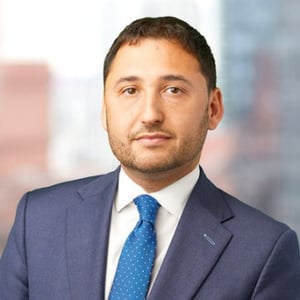
Partner, Troutman Pepper Locke LLP
Misha leads Troutman Peppers' national appellate and Supreme Court practice. Most recently, he successfully obtained orders from the Supreme Court blocking an unconstitutional restriction on places of worship, as well as overturning a lower court order that had blocked several state election laws. He has also argued and prevailed before the Supreme Court in Gill v. Whitford, one of the most significant redistricting cases in decades, as well as Murr v. Wisconsin, a high-stakes regulatory taking case.
Before joining Troutman, Misha served as Solicitor General of the State of Wisconsin. Misha previously served as a law clerk for the Honorable Anthony M. Kennedy of the Supreme Court, Janice Rogers Brown of the D.C. Circuit, and Alex Kozinski of the 9th Circuit. He graduated from Georgetown University Law Center, where he was President of the Federalist Society Chapter.
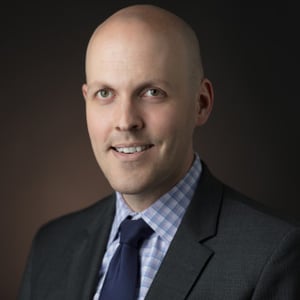
Partner, Barr & Klein PLLC
Steve Klein, a partner at Barr & Klein PLLC, is an experienced free speech attorney who has successfully fought for the First Amendment rights of his clients against local, state and federal regulators. As a lobbyist, Steve’s advocacy has led to the successful amendment of state laws to respect political engagement and prevented the enactment of laws that burden it. Steve has published articles in several legal journals, and his commentary has appeared in The Wall Street Journal, The Washington Times, The Detroit News, and other outlets. Steve earned a bachelors degree in politics at Hillsdale College and a law degree from Ave Maria School of Law, where he served as Managing Editor of the Ave Maria Law Review. He is licensed to practice law in the District of Columbia, Illinois and Michigan.
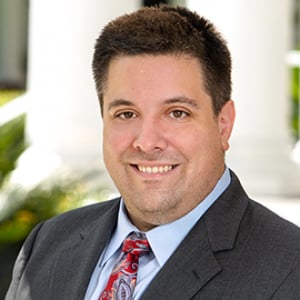
Sheila M. McDevitt Professor of Law and Faculty Director of the Election Law Center, Florida State University College of Law
Professor Morley joined FSU Law in 2018, and teaches and writes in the areas of election law, constitutional law, remedies, and the federal courts. He is best known for his work on election emergencies and post-election litigation, nationwide and other defendant-oriented injunctions, the jurisdiction of the federal courts and their equitable powers more generally. He has testified before congressional committees, made presentations to election officials for the U.S. Election Assistance Commission and participated in bipartisan blue-ribbon groups to develop election reforms. The governor of Florida also appointed Professor Morley to the Criminal Punishment Code Task Force, to propose potential revisions to the legislature.
The U.S. Supreme Court has cited several of his articles, and he was counsel of record for the successful Petitioner in a landmark campaign finance case. Professor Morley has appeared on C-SPAN, Court TV, Fox News and numerous local news programs, and has been quoted in the Washington Post, Los Angeles Times, Roll Call, Politico, U.S. News and World Report, and a wide range of other national publications. His work has been published in many of the nation’s top law reviews, including the Georgetown Law Journal, Northwestern University Law Review, Boston University Law Review and Emory Law Journal.
Before joining FSU Law, Professor Morley was a Climenko Fellow and Lecturer in Law at Harvard Law School. Prior to his experience in academia, he served in government as special assistant to the General Counsel of the Army at the Pentagon, as well as a law clerk for Judge Gerald B. Tjoflat of the U.S. Court of Appeals for the Eleventh Circuit. During his tenure with the Army General Counsel’s office, he was awarded the Meritorious Civilian Service Award and the Army Staff Lapel Pin. He also worked as an associate at Williams & Connolly LLP and the Supreme Court & Appellate group of Winston & Strawn, LLP, both in Washington, D.C.
Professor Morley earned his J.D. from Yale Law School in 2003, where he was a senior editor on the Yale Law Journal; served on the moot court board; and received the Thurman Arnold Prize for Best Oralist in the Morris Tyler Moot Court of Appeals.

Judge, United States Court of Appeals, Ninth Circuit
Judge Carlos Bea serves as a judge on the United States Court of Appeals for the Ninth Circuit. He received his Bachelor's Degree from Stanford University in 1956 and his J.D. from Stanford Law School in 1958. Judge Bea was born in San Sebastian, Spain, and immigrated with his family to Cuba in 1939. In 1952, he represented Cuba on the Cuban National basketball team in the Helsinki Olympics. Judge Bea became a naturalized citizen of the United States in 1958. He engaged in private practice in San Francisco, principally in the area of civil trials (jury and non-jury), from 1959-75 at Dunne, Phelps & Mills and from 1975-90 at Carlos Bea, A Law Corporation. He taught courses in civil litigation advocacy at Hastings College of Law and Stanford Law School. From 1990 to 2003, Judge Bea served as a judge of the San Francisco Superior Court. He was nominated by President George W. Bush to the United States Court of Appeals for the Ninth Circuit and was confirmed in 2003.
Judge Bea and his wife Louise reside in San Francisco, where they raised their four sons, Sebastian, Alexander, Nicholas, and Dominic.
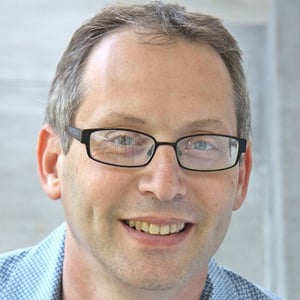
Chancellor's Professor of Law and Political Science, University of California, Irvine School of Law
Professor Richard L. Hasen is Chancellor’s Professor of Law and Political Science at the University of California, Irvine. Hasen is a nationally recognized expert in election law and campaign finance regulation, and is co-author of a leading casebook on election law.
From 2001-2010, he served (with Dan Lowenstein) as founding co-editor of the quarterly peer-reviewed publication, Election Law Journal. He is the author of over 100 articles on election law issues, published in numerous journals including the Harvard Law Review, Stanford Law Review and Supreme Court Review. He was elected to The American Law Institute in 2009 and served as an Adviser on ALI’s law reform project, Principles of Election Law: Resolution of Election Disputes.
Professor Hasen was named one of the 100 most influential lawyers in America by The National Law Journal in 2013, and one of the Top 100 Lawyers in California in 2005 and 2016 by the Los Angeles and San Francisco Daily Journal.
His op-eds and commentaries have appeared in many publications, including The New York Times, The Washington Post, Politico, and Slate. Hasen also writes the often-quoted Election Law Blog, which the ABA Journal named to its “Blawg 100 Hall of Fame” in 2015. His newest book, The Justice of Contradictions: Antonin Scalia and the Politics of Disruption, will be published in 2018 by Yale University Press.
Professor Hasen holds a B.A. degree (with highest honors) from UC Berkeley, and a J.D., M.A., and Ph.D. (Political Science) from UCLA. After law school, Hasen clerked for the Honorable David R. Thompson of the United States Court of Appeals for the Ninth Circuit, and then worked as a civil appellate lawyer at the Encino firm Horvitz and Levy.
From 1994-1997, Hasen taught at the Chicago-Kent College of Law and from 1998-2011 he taught at Loyola Law School, Los Angeles, where he was named the William H. Hannon Distinguished Professor of Law in 2005. He joined the UC Irvine School of Law faculty in July 2011, and is a faculty member of the UC Irvine Jack W. Peltason Center for the Study of Democracy.
Associate Attorney, Gibson, Dunn & Crutcher LLP
Joseph R. Rose is an associate in the San Francisco office of Gibson, Dunn & Crutcher. He practices in the firm’s Litigation Department, focusing on white collar defense, antitrust, and appellate litigation.
Representative matters include:
Mr. Rose also assists with internal investigations, and has achieved favorable resolution of government and regulatory inquiries on behalf of technology companies and financial institutions. Responsibilities include factual investigation, preparing for and conducting witness and employee interviews, managing document review and production, and drafting proffers and other reports to regulators.
Mr. Rose received his J.D. from the University of California, Berkeley School of Law in 2011, where he was Production Editor of the Berkeley Technology Law Journal, co-director of Berkeley Law’s McBaine Moot Court Competition, and a member of the Board of Advocates (moot court). Prior to law school, Mr. Rose worked as a Paralegal Specialist at the U.S. Department of Justice, Antitrust Division, assisting in grand jury investigations, civil merger reviews, and managing and presenting exhibits at trial. He earned his B.A. in Law, Letters and Society, with special honors, from the University of Chicago in 2005.
Chairman and Founder, Institute for Free Speech; Josiah H. Blackmore II/Shirley M. Nault Designated Professor of Law, Capital University Law School
Judge, United States Court of Appeals, Ninth Circuit
Judge Carlos Bea serves as a judge on the United States Court of Appeals for the Ninth Circuit. He received his Bachelor's Degree from Stanford University in 1956 and his J.D. from Stanford Law School in 1958. Judge Bea was born in San Sebastian, Spain, and immigrated with his family to Cuba in 1939. In 1952, he represented Cuba on the Cuban National basketball team in the Helsinki Olympics. Judge Bea became a naturalized citizen of the United States in 1958. He engaged in private practice in San Francisco, principally in the area of civil trials (jury and non-jury), from 1959-75 at Dunne, Phelps & Mills and from 1975-90 at Carlos Bea, A Law Corporation. He taught courses in civil litigation advocacy at Hastings College of Law and Stanford Law School. From 1990 to 2003, Judge Bea served as a judge of the San Francisco Superior Court. He was nominated by President George W. Bush to the United States Court of Appeals for the Ninth Circuit and was confirmed in 2003.
Judge Bea and his wife Louise reside in San Francisco, where they raised their four sons, Sebastian, Alexander, Nicholas, and Dominic.
Chancellor's Professor of Law and Political Science, University of California, Irvine School of Law
Professor Richard L. Hasen is Chancellor’s Professor of Law and Political Science at the University of California, Irvine. Hasen is a nationally recognized expert in election law and campaign finance regulation, and is co-author of a leading casebook on election law.
From 2001-2010, he served (with Dan Lowenstein) as founding co-editor of the quarterly peer-reviewed publication, Election Law Journal. He is the author of over 100 articles on election law issues, published in numerous journals including the Harvard Law Review, Stanford Law Review and Supreme Court Review. He was elected to The American Law Institute in 2009 and served as an Adviser on ALI’s law reform project, Principles of Election Law: Resolution of Election Disputes.
Professor Hasen was named one of the 100 most influential lawyers in America by The National Law Journal in 2013, and one of the Top 100 Lawyers in California in 2005 and 2016 by the Los Angeles and San Francisco Daily Journal.
His op-eds and commentaries have appeared in many publications, including The New York Times, The Washington Post, Politico, and Slate. Hasen also writes the often-quoted Election Law Blog, which the ABA Journal named to its “Blawg 100 Hall of Fame” in 2015. His newest book, The Justice of Contradictions: Antonin Scalia and the Politics of Disruption, will be published in 2018 by Yale University Press.
Professor Hasen holds a B.A. degree (with highest honors) from UC Berkeley, and a J.D., M.A., and Ph.D. (Political Science) from UCLA. After law school, Hasen clerked for the Honorable David R. Thompson of the United States Court of Appeals for the Ninth Circuit, and then worked as a civil appellate lawyer at the Encino firm Horvitz and Levy.
From 1994-1997, Hasen taught at the Chicago-Kent College of Law and from 1998-2011 he taught at Loyola Law School, Los Angeles, where he was named the William H. Hannon Distinguished Professor of Law in 2005. He joined the UC Irvine School of Law faculty in July 2011, and is a faculty member of the UC Irvine Jack W. Peltason Center for the Study of Democracy.
Associate Attorney, Gibson, Dunn & Crutcher LLP
Joseph R. Rose is an associate in the San Francisco office of Gibson, Dunn & Crutcher. He practices in the firm’s Litigation Department, focusing on white collar defense, antitrust, and appellate litigation.
Representative matters include:
Mr. Rose also assists with internal investigations, and has achieved favorable resolution of government and regulatory inquiries on behalf of technology companies and financial institutions. Responsibilities include factual investigation, preparing for and conducting witness and employee interviews, managing document review and production, and drafting proffers and other reports to regulators.
Mr. Rose received his J.D. from the University of California, Berkeley School of Law in 2011, where he was Production Editor of the Berkeley Technology Law Journal, co-director of Berkeley Law’s McBaine Moot Court Competition, and a member of the Board of Advocates (moot court). Prior to law school, Mr. Rose worked as a Paralegal Specialist at the U.S. Department of Justice, Antitrust Division, assisting in grand jury investigations, civil merger reviews, and managing and presenting exhibits at trial. He earned his B.A. in Law, Letters and Society, with special honors, from the University of Chicago in 2005.
Chairman and Founder, Institute for Free Speech; Josiah H. Blackmore II/Shirley M. Nault Designated Professor of Law, Capital University Law School
President and General Counsel, Public Interest Legal Foundation
J. Christian Adams is the President and General Counsel of the Public Interest Legal Foundation. He served from 2005 to 2010 in the Voting Section at the United States Department of Justice Voting Section. President Trump appointed Adams to the Presidential Advisory Commission on Election Integrity. President Trump also appointed Adams as a Commissioner to the United States Commission on Civil Rights where he also now serves with a term through 2025. He has been involved in election law lawsuits in 33 states and the territory of Guam. He has represented multiple presidential campaigns in election litigation. He has a law degree from the University of South Carolina School of Law. He is a member of the South Carolina and Virginia Bars.
Associate Attorney, Gibson Dunn
David Casazza is an associate in the Washington, D.C. office of Gibson, Dunn & Crutcher. He practices in the firm’s Appellate and Constitutional Law, and Administrative Law and Regulatory Practice groups.
Mr. Casazza has represented clients in appellate and regulatory litigation before the Supreme Court of the United States, federal appellate courts, and federal district courts. These cases have involved a wide range of subjects including separation of powers, federal rulemaking challenges, data privacy protections, anti-terrorism claims and foreign sovereign immunity, energy infrastructure permitting, and a variety of First Amendment speech and religious liberty claims. He has also represented clients in complex litigation, obtaining dismissal with prejudice of consumer class actions attacking major brand names. He has been named by Best Lawyers as a 2021 and 2022 “One to Watch” in Appellate Practice.
He graduated magna cum laude from Harvard Law School, where he served as a Managing Editor for the Harvard Journal of Law and Public Policy and as Executive Vice President of the Harvard Federalist Society. Mr. Casazza received an A.B. magna cum laude in history from Princeton and an M.A. in history from the Johns Hopkins University.
Mr. Casazza served as a law clerk to Justice Samuel Alito on the Supreme Court of the United States and for Judge Jennifer Walker Elrod on the United States Court of Appeals for the Fifth Circuit.
He is a member of the bars of New York and the District of Columbia and is admitted to practice in the United States Courts of Appeals for the Third, Fourth, Fifth, and Ninth Circuits and in the United States District Court for the District of Columbia.
Partner, Bell Giftos St. John LLC
Kevin St. John is a partner with Bell Giftos St. John LLC in Madison, Wisconsin. From 2011 to 2015, he served as Wisconsin’s Deputy Attorney General. Prior to his government service St. John practiced law with the Madison office of Michael Best & Friedrich LLP and the Washington D.C. office of Gibson, Dunn & Crutcher LLP. St. John is a graduate of the University of Wisconsin-Madison and earned his law degree from the University of Chicago.
St. John has contributed to Federalist Society as a speaker and in commentaries on topics including redistricting, free speech, and separation of powers.
Professor of Law, Harvard Law School
Nicholas Stephanopoulos’s research and teaching interests include election law, constitutional law, administrative law, legislation, and comparative law. His work is particularly focused on the intersection of democratic theory, empirical political science, and the American electoral system. His academic articles have appeared in, among others, the Columbia Law Review, Duke Law Journal, Harvard Law Review, Northwestern University Law Review, New York University Law Review, Stanford Law Review, University of Chicago Law Review, University of Pennsylvania Law Review, Virginia Law Review, and Yale Law Journal. He has also written for popular publications including the New York Times, Los Angeles Times, Chicago Tribune, Atlantic, New Republic, Slate, and Vox. He has been involved in several litigation efforts as well, including two partisan gerrymandering cases based on his scholarship and decided by the Supreme Court.
Before joining the Harvard Law School faculty, Stephanopoulos was a Professor of Law at the University of Chicago Law School. He was previously an Associate-in-Law at Columbia Law School and an Associate in the Washington, DC office of Jenner & Block LLP. Before entering private practice, he clerked for Judge Raymond C. Fisher of the Ninth Circuit Court of Appeals.
A graduate of Yale Law School, Stephanopoulos also holds an M.Phil. in European Studies from Cambridge University and an A.B. in Government from Harvard College, graduating summa cum laude. While at Yale, he served as Editor-in-Chief of the Yale Journal of International Law, received the Jewell Prize for best second-year student contribution to a law journal, and was a finalist in both the moot court and mock trial competitions.
Stephanopoulos is a frequent television and radio commentator on legal issues. He is a co-founder of PlanScore, a website evaluating past, present, and proposed district plans. He is a member of policy reform initiatives including the Campaign Legal Center’s Litigation Strategy Council and the Committee for the Study of Digital Platforms. He has been named to The Politico 50 list as well as the National Law Journal’s “Chicago’s 40 Under 40.”

Dr. John Eastman is the former Henry Salvatori Professor of Law & Community Service and former Dean at Chapman University's Dale E. Fowler School of Law, where he had been a member of the faculty since 1999, specializing in Constitutional Law, Legal History, and Property. He is a founding director of the Center for Constitutional Jurisprudence, a public interest law firm affiliated with the Claremont Institute that he founded in 1999. He has a Ph.D. in Government from the Claremont Graduate School and a J.D. from the University of Chicago Law School, and a B.A. in Politics and Economics from the University of Dallas. He serves as the Chairman of the Board of the National Organization for Marriage.
Prior to joining the Chapman law faculty, Dr. Eastman served as a law clerk to the Honorable Clarence Thomas, Associate Justice, Supreme Court of the United States, and to the Honorable J. Michael Luttig, Judge, United States Court of Appeals for the Fourth Circuit and practiced law with the national law firm of Kirkland & Ellis. Dr. Eastman has also represented numerous clients in important constitutional law matters and has argued before the Supreme Court. On behalf of the Claremont Institute Center for Constitutional Jurisprudence, he has participated as amicus curiae before the Supreme Court of the United States, U.S. Courts of Appeals, and State Supreme Courts in more than one hundred cases of constitutional significance, including Boy Scouts of America v. Dale, Zelman v. Simmons-Harris (the school vouchers case), Kelo v. New London, Ct. (eminent domain), and Van Orden v. Perry (the 10 Commandments case). He has also appeared as an expert legal commentator on numerous television and radio programs, including C-SPAN, Fox News, PBS, NewsHour, and The O'Reilly Factor.

Topics
Docket Watch: Maine Senate v. Secretary of State
In Maine Senate v. Secretary of State, the Maine Supreme Judicial Court (referred to as...
The End of Partisan Redistricting?: Benisek v. Lamone
Misha Tseytlin
On March 28, 2018, the Supreme Court heard Benisek v. Lamone, the second partisan gerrymandering...
Courthouse Steps: Minnesota Voters Alliance v. Mansky
Stephen R. Klein
Free Speech & Election Law Practice Group Teleforum
Most states have laws that prohibit electioneering within polling places on election day, and the...
Husted v. A. Philip Randolph Institute - Post-Argument SCOTUScast
Michael T. Morley
SCOTUScast featuring Michael Morley
On January 10, 2018, the Supreme Court heard argument in Husted v. A. Philip Randolph...
Donor privacy and Campaign-Related Speech
Carlos T. Bea, Richard Hasen, Joseph Rose, Bradley A. Smith
2018 Annual Western Chapters Conference
With federal proposals like the DISCLOSE Act sidelined by Republicans in Congress, some state governments...
Donor privacy and Campaign-Related Speech
Carlos T. Bea, Richard Hasen, Joseph Rose, Bradley A. Smith
2018 Annual Western Chapters Conference
With federal proposals like the DISCLOSE Act sidelined by Republicans in Congress, some state governments...
Nevada Recall
J. Christian Adams
Civil Rights Practice Group
A current lawsuit in federal court in Nevada is endeavoring to stop a recall election...
Gill v. Whitford - Post-Argument SCOTUScast
David W. Casazza
SCOTUScast featuring David Casazza
On October 3, 2017, the Supreme Court heard argument in Gill v. Whitford, a case...
The Limits of Political Redistricting: Gill v. Whitford
Kevin St. John, Nicholas Stephanopoulos
Partisan disputes over the drawing of legislative districts are as old as the Republic itself....
Supreme Court October 2017 Term Preview
John C. Eastman
Practice Groups Podcast
On Friday, October 6, The Federalist Society hosted a special 90-minute Teleforum to preview the significant...