
Partner, Gibson Dunn & Crutcher
Douglas R. Cox is a partner in the Washington, D.C. office of Gibson, Dunn & Crutcher and Vice-Chair of the firm's Crisis Management Practice Group. He practices in the areas of constitutional and general commercial litigation, appellate law, and governmental matters.
Mr. Cox has represented numerous clients in litigation before federal and state trial and appellate courts. He played a principal role in the firm's successful representation of the prevailing candidate before the Supreme Court of the United States in Bush v. Palm Beach County Canvassing Board and Bush v. Gore, stemming from the 2000 presidential election, and in other cases before the Supreme Court involving equal protection, voting rights and election law, the scope of the jury trial right under the Seventh Amendment, and other constitutional and statutory issues.
Mr. Cox successfully represented the National Association of Securities Dealers ("NASD") in a series of trial and appellate matters, including DL Capital Group, LLC v. Nasdaq Stock Market, Inc., 409 F.3d 93 (2d Cir. 2005) and Sparta Surgical Corp. v. NASD, 159 F.3d 1209 (9th Cir. 1998).
Mr. Cox frequently represents accounting firms in a variety of matters, including matters involving the SEC and PCAOB. He also has substantial experience representing clients before congressional investigating committees.
Mr. Cox previously served for five years during the Reagan and Bush Administrations in the Justice Department's Office of Legal Counsel, becoming Principal Deputy Assistant Attorney General during the Bush Administration. In that Office, he provided legal advice to Executive Branch departments; resolved legal disputes on behalf of the Attorney General between Executive Branch departments; prepared formal opinions of the Attorney General; drafted and issued opinions on legal issues of importance to the Executive Branch; and advised Congress as to the constitutionality of pending legislation.
From 1981 through 1987, Mr. Cox practiced in New York City with a national firm, representing major corporations in state and federal courts. His practice focused on intellectual property, securities, and international tax litigation.
Mr. Cox received his law degree, cum laude, from Harvard Law School in 1980, where he served as Editor-in-Chief of the Harvard Journal of Law and Public Policy from 1979-1980. He received his undergraduate degree in history, magna cum laude, from Princeton University in 1977. He attended Oxford University on a Knox Scholarship in 1980-1981.
In 2005, Chief Justice Rehnquist appointed Mr. Cox to serve as a member of the Judicial Conference Standing Committee on Rules of Practice and Procedure. In 2008 he was reappointed by Chief Justice Roberts.
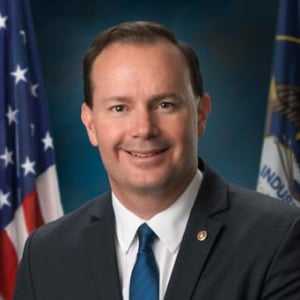
United States Senator, Utah
Elected in 2010 as Utah's 16th Senator, Mike Lee has spent his career defending the basic liberties of Americans and Utahns as a tireless advocate for our founding constitutional principles.
Senator Lee acquired a deep respect for the Constitution early on. His father, Rex Lee, who served as the Solicitor General under President Ronald Reagan, would often discuss varied aspects of judicial and constitutional doctrine around the kitchen table, from Due Process to the uses of Executive Plenary Power. He attended most of his father's arguments before the U.S. Supreme Court, giving him a unique, hands-on experience and understanding of government up close.
Lee graduated from Brigham Young University with a Bachelor of Science in Political Science, and served as BYU's Student Body President in his senior year. He graduated from BYU's Law School in 1997 and went on to serve as law clerk to Judge Dee Benson of the U.S. District Court for the District of Utah, and then with future Supreme Court Justice Judge Samuel A. Alito, Jr. on the U.S. Court of Appeals for the Third Circuit.
Lee spent several years as an attorney with the law firm Sidley & Austin specializing in appellate and Supreme Court litigation, and then served as an Assistant U.S. Attorney in Salt Lake City arguing cases before the U.S. Court of Appeals for the Tenth Circuit.
Lee served the state of Utah as Governor Jon Huntsman's General Counsel and was later honored to reunite with Justice Alito, now on the Supreme Court, for a one-year clerkship. He returned to private practice in 2007.
Throughout his career, Lee earned a reputation as an outstanding practitioner of the law based on his sound judgment, abilities in the courtroom, and thorough understanding of the Constitution.
Today, Lee fights to preserve America's proud founding document in the United States Senate. He advocates efforts to support constitutionally limited government, fiscal responsibility, individual liberty, and economic prosperity.
Lee is a member of the Judiciary Committee, and serves as Chairman of the Antitrust, Competition Policy and Consumer Rights Subcommittee protecting business competition and personal freedom.
He also oversees issues critical to Utah as the Chairman of the Water and Power Subcommittee of the Energy and Natural Resources Committee. He serves on the Commerce Committee and the Joint Economic Committee, as well.
In the 114th Congress, Lee also began his tenure as Chairman of the Senate Steering Committee, where he works with his Republican colleagues in the Senate to introduce bold and innovative solutions to issues facing the American people.
Lee and his wife Sharon live in Alpine, Utah, with their three children. He is a member of The Church of Jesus Christ of Latter-day Saints and served a two-year mission for the Church in the Texas Rio Grande Valley.

Former President & CEO, The Federalist Society for Law and Public Policy Studies
Eugene B. Meyer, former President and CEO of the Federalist Society, has served as Executive Director, CEO, and/or President of the organization for more than 40 years. He is responsible for shepherding the organization from a small group of law students to a community of 90,000 lawyers, law students, academics, judges, and others interested in the rule of law. The Society now includes a Student Chapter at nearly every ABA-accredited law school in the country and Lawyers Chapters in 220 major cities across the nation. Gene earned his B.A. in history at Yale in 1975 and his M.A. in political science from the London School of Economics in 1976. Gene currently serves on the boards of the U.S. Chess Center, the Holman Foundation, the Sarah Scaife Foundation, and the advisory board of the Adam Smith Society. He holds the title of International Chess Master.
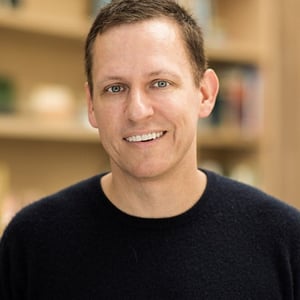
Co-Founder, PayPal and Partner, Founders Fund
Peter Thiel is an entrepreneur and investor. He cofounded PayPal, led it as CEO, and took it public; he made the first outside investment in Facebook, where he serves as a director; and he cofounded Palantir Technologies, where he serves as chairman. He has provided early funding for LinkedIn, Yelp, and dozens of startups, many run by former colleagues who have been dubbed the “PayPal Mafia.” He is a partner at Founders Fund, a Silicon Valley venture capital firm that has funded companies including SpaceX and Airbnb. He started the Thiel Fellowship, which funds young entrepreneurs, and he leads the Thiel Foundation, which works to advance technological progress and long-term thinking. He is also the #1 New York Times bestselling author of Zero to One: Notes on Startups, or How to Build the Future.
Former President & CEO, The Federalist Society for Law and Public Policy Studies
Eugene B. Meyer, former President and CEO of the Federalist Society, has served as Executive Director, CEO, and/or President of the organization for more than 40 years. He is responsible for shepherding the organization from a small group of law students to a community of 90,000 lawyers, law students, academics, judges, and others interested in the rule of law. The Society now includes a Student Chapter at nearly every ABA-accredited law school in the country and Lawyers Chapters in 220 major cities across the nation. Gene earned his B.A. in history at Yale in 1975 and his M.A. in political science from the London School of Economics in 1976. Gene currently serves on the boards of the U.S. Chess Center, the Holman Foundation, the Sarah Scaife Foundation, and the advisory board of the Adam Smith Society. He holds the title of International Chess Master.
Co-Founder, PayPal and Partner, Founders Fund
Peter Thiel is an entrepreneur and investor. He cofounded PayPal, led it as CEO, and took it public; he made the first outside investment in Facebook, where he serves as a director; and he cofounded Palantir Technologies, where he serves as chairman. He has provided early funding for LinkedIn, Yelp, and dozens of startups, many run by former colleagues who have been dubbed the “PayPal Mafia.” He is a partner at Founders Fund, a Silicon Valley venture capital firm that has funded companies including SpaceX and Airbnb. He started the Thiel Fellowship, which funds young entrepreneurs, and he leads the Thiel Foundation, which works to advance technological progress and long-term thinking. He is also the #1 New York Times bestselling author of Zero to One: Notes on Startups, or How to Build the Future.
Founder & President, Alliance of Iranian Women
Manda Zand Ervin is the founder and president of the Alliance of Iranian Women, an organization that informs world governments and human rights groups of the plight of women and children in Iran. During the Iranian revolution Manda witnessed the execution of many innocent people, the basic human rights of the women of Iran being brutally taken from them, and her homeland reverting back to 6th century Arabia.
Manda Zand Ervin has currently been working to inform Western governments about the plight of the women of Iran under Islamic law. She meets regularly with the members of the European Parliament and American Congress. In 2003 she garnered support from US Senators to pass a resolution on the Human rights of the women of Iran. She is frequently interviewed on national and international television and radio programs such as CNN, BBC, Radio France, VOA, and video America . She also lectures at Universities and conferences on the equal rights of women, human rights, and Islamic Sharia law. In February of 2008 Manda was appointed, by the President of the United States, as the United States’ Delegate to the United Nations’ Commission on the Status of Women.
Former Member, Danish Parliament
Naser Khader was born the 1st of July 1963 in Damascus, Syria. His father was Palestinian and his mother Syrian. His family lived a couple of years in Palestine and Jordan before they moved to Syria, where Naser Khader went to school.
When Naser Khader was 11 years old he moved to Denmark with his mother and siblings. His father had already been living in Denmark for a while when they came to live with him in the country where his father had managed to find a job. Naser Khader and his family became integrated into the Danish society.
Naser Khader has a master in economics from Copenhagen University. At the moment he studies theology also at the University of Copenhagen.
From 2001 - 2011 he was a member of the Danish parliament, Folketinget. His main political key issues are freedom of speech, the fight for democracy and democratic values in a multicultural society - subjects that have been intensively discussed in Denmark - particularly after the cartoon crisis in 2006. Naser Khader is member of The Conservative Party and he was spokesman of foreign policy and integration for the party. He has written several books about Islam and integration, he attends many debates, gives lectures and is often appears as an expert regarding the issues on Danish television and other medias.
Naser Khader has been awarded several prizes in recognition of his fight for the right to freedom of speech, secularity, and integration of immigrants into the Danish culture. Furthermore, he is the Co-Founder of the Association of Democratic Muslims in Denmark.
Naser Khader has a sincere interest in the “Arab Spring”, due to his origins and still having family living in Syria. This summer he therefore went to Syria and brought home much documentation (i.e. on video) of how the people in reality are being treated by the Assad regime and how they are fighting against the regime. He is considered one of Denmark’s leading experts in Middle East affairs, and he was one of the first to talk about an emerging civil courage amongst the civilians in the Arab countries (before the Arab spring).
With three phrases Naser Khaders describes himself primarily as a fanatic democrat, secondly as a Danish citizen and thirdly as cultural Muslim "ultra light".
Partner, Baker Hostetler LLP
David Rivkin is a member of the firm's litigation, international and environmental teams and is co-leader of the firm's national appellate practice. He has extensive experience in constitutional, administrative and international law litigation and has been involved in numerous high-profile cases. With his prior experience in the government sector, David draws on a wealth of knowledge when providing compliance advice to companies and handling enforcement proceedings before government agencies on issues arising out of multilateral and unilateral sanctions, the Foreign Corrupt Practices Act (FCPA), anti-boycott issues, bankruptcy and financial fraud matters, and environmental and energy issues.
David has developed and implemented legislative, regulatory and litigation initiatives for two presidential administrations. Over the years, he has published hundreds of articles, op-eds, book reviews and book chapters on a variety of international, legal, constitutional, defense, arms control, foreign policy, environmental and energy issues for various newspapers and magazines, including The Wall Street Journal, The Washington Post, The New York Times, USA Today and The Los Angeles Times, and has been a frequent commentator and guest on TV and radio shows including ABC, CBS, NBC, CNN, Fox News, NPR and PBS.
Founder & President, Alliance of Iranian Women
Manda Zand Ervin is the founder and president of the Alliance of Iranian Women, an organization that informs world governments and human rights groups of the plight of women and children in Iran. During the Iranian revolution Manda witnessed the execution of many innocent people, the basic human rights of the women of Iran being brutally taken from them, and her homeland reverting back to 6th century Arabia.
Manda Zand Ervin has currently been working to inform Western governments about the plight of the women of Iran under Islamic law. She meets regularly with the members of the European Parliament and American Congress. In 2003 she garnered support from US Senators to pass a resolution on the Human rights of the women of Iran. She is frequently interviewed on national and international television and radio programs such as CNN, BBC, Radio France, VOA, and video America . She also lectures at Universities and conferences on the equal rights of women, human rights, and Islamic Sharia law. In February of 2008 Manda was appointed, by the President of the United States, as the United States’ Delegate to the United Nations’ Commission on the Status of Women.
Former Member, Danish Parliament
Naser Khader was born the 1st of July 1963 in Damascus, Syria. His father was Palestinian and his mother Syrian. His family lived a couple of years in Palestine and Jordan before they moved to Syria, where Naser Khader went to school.
When Naser Khader was 11 years old he moved to Denmark with his mother and siblings. His father had already been living in Denmark for a while when they came to live with him in the country where his father had managed to find a job. Naser Khader and his family became integrated into the Danish society.
Naser Khader has a master in economics from Copenhagen University. At the moment he studies theology also at the University of Copenhagen.
From 2001 - 2011 he was a member of the Danish parliament, Folketinget. His main political key issues are freedom of speech, the fight for democracy and democratic values in a multicultural society - subjects that have been intensively discussed in Denmark - particularly after the cartoon crisis in 2006. Naser Khader is member of The Conservative Party and he was spokesman of foreign policy and integration for the party. He has written several books about Islam and integration, he attends many debates, gives lectures and is often appears as an expert regarding the issues on Danish television and other medias.
Naser Khader has been awarded several prizes in recognition of his fight for the right to freedom of speech, secularity, and integration of immigrants into the Danish culture. Furthermore, he is the Co-Founder of the Association of Democratic Muslims in Denmark.
Naser Khader has a sincere interest in the “Arab Spring”, due to his origins and still having family living in Syria. This summer he therefore went to Syria and brought home much documentation (i.e. on video) of how the people in reality are being treated by the Assad regime and how they are fighting against the regime. He is considered one of Denmark’s leading experts in Middle East affairs, and he was one of the first to talk about an emerging civil courage amongst the civilians in the Arab countries (before the Arab spring).
With three phrases Naser Khaders describes himself primarily as a fanatic democrat, secondly as a Danish citizen and thirdly as cultural Muslim "ultra light".
Partner, Baker Hostetler LLP
David Rivkin is a member of the firm's litigation, international and environmental teams and is co-leader of the firm's national appellate practice. He has extensive experience in constitutional, administrative and international law litigation and has been involved in numerous high-profile cases. With his prior experience in the government sector, David draws on a wealth of knowledge when providing compliance advice to companies and handling enforcement proceedings before government agencies on issues arising out of multilateral and unilateral sanctions, the Foreign Corrupt Practices Act (FCPA), anti-boycott issues, bankruptcy and financial fraud matters, and environmental and energy issues.
David has developed and implemented legislative, regulatory and litigation initiatives for two presidential administrations. Over the years, he has published hundreds of articles, op-eds, book reviews and book chapters on a variety of international, legal, constitutional, defense, arms control, foreign policy, environmental and energy issues for various newspapers and magazines, including The Wall Street Journal, The Washington Post, The New York Times, USA Today and The Los Angeles Times, and has been a frequent commentator and guest on TV and radio shows including ABC, CBS, NBC, CNN, Fox News, NPR and PBS.
Author and Columnist
Bruce Bawer is the author of several books, including the bestselling While Europe Slept: How Radical Islam Is Destroying the West from Within (2006), a finalist for the National Book Critics Circle Award, and Surrender: Appeasing Islam, Sacrificing Freedom (2009). His earlier books include the influential A Place at the Table: The Gay Individual in American Society (1993), which was a New York Times “Notable Book of the Year”; Stealing Jesus: How Fundamentalism Betrays Christianity (1997); and several volumes of literary criticism, film criticism, and poetry. His essays have appeared in The New Republic, The Nation, The New York Times Magazine, The American Scholar, Newsweek, The Wilson Quarterly, Standpoint, City Journal, and The Chronicle of Higher Education, and he has been a prolific book reviewer, contributing regularly to The New Criterion, The Hudson Review, The New York Times Book Review, The Washington Post Book World, and The Wall Street Journal. He is a native New Yorker, holds a doctorate in English from Stony Brook University, and has lived in Norway for over a decade. His website is http://www.brucebawer.com.
Barrister
Paul Diamond is a barrister who practices in the field of the law of religious liberty. He is one of Britain’s and Europe’s leading attorneys in this area. He has been instructed in some of the most controversial cases; for example, the case of the British Airways employee who was prevented from wearing a Cross (whilst other religious groups were permitted to manifest their faith), the right to free religious speech during a General Election by the ProLife Alliance and in cases over the repeated clash between the religious rights of individuals and the same sex agenda. In his recent major case, on the right of a Christian marriage counselor to be exempted from the counseling of same sex partners, he acted on behalf of the former Archbishop of Canterbury, Lord Carey. Paul’s counsel is sought after by a number of religious leaders and organizations.
The rapid growth of the militant secular agenda which seek to remove religious values from public life has turned a rather specialist and sleepy area of law into the front line in the battle to maintain Judeo Christian civilized values. This gave the opportunity to Paul to develop his legal skills.
Paul was always fascinated with the issue of religion and felt the call of God in his life. After studying Middle East Government, Paul attended Magdalene College, Cambridge to study law. From there, he won a scholarship to the Hague Academy of International Law, The Netherlands. An early article by Paul, attracted the attention of Lord Denning (the most famous British Judge) who openly supported Paul’s arguments. He commenced practice thereafter and has appeared before all levels of court including the House of Lords.
Early in his career, he became the barrister to the Keep Sunday Special Campaign (until the mid 1990s, Britain had a ban on Sunday trading and the campaign sought to keep Sundays as a ‘day of rest’). As standing Counsel, Paul handled many leading controversial cases and built a reputation for his future work in religious liberties. The issue of Sunday working was one that directly affected family life as the pressures on low income families to work has become relentless in recent years.
Paul has been involved in a number of controversial cases. In 2009, he was instructed to prevent a Hizbollah terrorist from entering the United Kingdom by the use of the threat of an international arrest warrant; and in 2011, Vladimir Bukovsky, the famous Soviet dissident instructed Paul to seek legal redress against former Soviet President Gorbachev.
Vicar of St Mary, Australia
Mark Durie completed an Arts Degree with First Class Honours and a University Medal in Germanic Languages and Linguistics. He gained his PhD in Linguistics from the Australian National University in 1984 with a study of the language of the Acehnese, a Muslim people of Indonesia. He conducted field research trips in Aceh during the 1980’s and 1990’s, producing several books, and many research articles. The dialects he documented were among those obliterated by the Indian Ocean Tsunami in 2004.
Dr. Durie was a visiting researcher at the University of Leiden in 1985, investigating the Dutch Acehnese manuscripts, many of which are concerned with Islamic jihad. Then he spent two years as a Harkness Fellow in the USA, holding positions as visiting researcher at the Massachusetts Institute of Technology, the University of California at Los Angeles and Stanford University. After coming to Melbourne, Dr. Durie became Head of the Department of Linguistics and Language Studies before taking up an Australian Research Council Senior Research Fellowship in the mid 1990’s. He was elected a Fellow of the Australian Academy of Humanities in 1991, and awarded an Australian Centennial Medal in 2001 for contributions to linguistics.
After a change in career, Dr. Durie now works as the Vicar of St Mary’s Anglican Church, Caulfield in Melbourne. He is a human rights activist, writing and speaking extensively in Australia and internationally on issues relating to freedom of religion, freedom of speech, and the persecution of religious minorities, particularly Christians living under the Islamic sharia. He speaks across Australia and internationally on Islam. He also writes on issues related to world missions, interfaith dialogue and religious conflict. His book Revelation: do we worship the same God? was published by CityHarvest in July 2006 and is into its second edition. His latest books The Third Choice and Liberty to the Captives, appeared in 2010. They are on understanding Islam, the experience of non-Muslims living under Islamic rule, and how to find spiritual freedom in the face of the challenge of Islam.
Author and Columnist
Bruce Bawer is the author of several books, including the bestselling While Europe Slept: How Radical Islam Is Destroying the West from Within (2006), a finalist for the National Book Critics Circle Award, and Surrender: Appeasing Islam, Sacrificing Freedom (2009). His earlier books include the influential A Place at the Table: The Gay Individual in American Society (1993), which was a New York Times “Notable Book of the Year”; Stealing Jesus: How Fundamentalism Betrays Christianity (1997); and several volumes of literary criticism, film criticism, and poetry. His essays have appeared in The New Republic, The Nation, The New York Times Magazine, The American Scholar, Newsweek, The Wilson Quarterly, Standpoint, City Journal, and The Chronicle of Higher Education, and he has been a prolific book reviewer, contributing regularly to The New Criterion, The Hudson Review, The New York Times Book Review, The Washington Post Book World, and The Wall Street Journal. He is a native New Yorker, holds a doctorate in English from Stony Brook University, and has lived in Norway for over a decade. His website is http://www.brucebawer.com.
Barrister
Paul Diamond is a barrister who practices in the field of the law of religious liberty. He is one of Britain’s and Europe’s leading attorneys in this area. He has been instructed in some of the most controversial cases; for example, the case of the British Airways employee who was prevented from wearing a Cross (whilst other religious groups were permitted to manifest their faith), the right to free religious speech during a General Election by the ProLife Alliance and in cases over the repeated clash between the religious rights of individuals and the same sex agenda. In his recent major case, on the right of a Christian marriage counselor to be exempted from the counseling of same sex partners, he acted on behalf of the former Archbishop of Canterbury, Lord Carey. Paul’s counsel is sought after by a number of religious leaders and organizations.
The rapid growth of the militant secular agenda which seek to remove religious values from public life has turned a rather specialist and sleepy area of law into the front line in the battle to maintain Judeo Christian civilized values. This gave the opportunity to Paul to develop his legal skills.
Paul was always fascinated with the issue of religion and felt the call of God in his life. After studying Middle East Government, Paul attended Magdalene College, Cambridge to study law. From there, he won a scholarship to the Hague Academy of International Law, The Netherlands. An early article by Paul, attracted the attention of Lord Denning (the most famous British Judge) who openly supported Paul’s arguments. He commenced practice thereafter and has appeared before all levels of court including the House of Lords.
Early in his career, he became the barrister to the Keep Sunday Special Campaign (until the mid 1990s, Britain had a ban on Sunday trading and the campaign sought to keep Sundays as a ‘day of rest’). As standing Counsel, Paul handled many leading controversial cases and built a reputation for his future work in religious liberties. The issue of Sunday working was one that directly affected family life as the pressures on low income families to work has become relentless in recent years.
Paul has been involved in a number of controversial cases. In 2009, he was instructed to prevent a Hizbollah terrorist from entering the United Kingdom by the use of the threat of an international arrest warrant; and in 2011, Vladimir Bukovsky, the famous Soviet dissident instructed Paul to seek legal redress against former Soviet President Gorbachev.
Vicar of St Mary, Australia
Mark Durie completed an Arts Degree with First Class Honours and a University Medal in Germanic Languages and Linguistics. He gained his PhD in Linguistics from the Australian National University in 1984 with a study of the language of the Acehnese, a Muslim people of Indonesia. He conducted field research trips in Aceh during the 1980’s and 1990’s, producing several books, and many research articles. The dialects he documented were among those obliterated by the Indian Ocean Tsunami in 2004.
Dr. Durie was a visiting researcher at the University of Leiden in 1985, investigating the Dutch Acehnese manuscripts, many of which are concerned with Islamic jihad. Then he spent two years as a Harkness Fellow in the USA, holding positions as visiting researcher at the Massachusetts Institute of Technology, the University of California at Los Angeles and Stanford University. After coming to Melbourne, Dr. Durie became Head of the Department of Linguistics and Language Studies before taking up an Australian Research Council Senior Research Fellowship in the mid 1990’s. He was elected a Fellow of the Australian Academy of Humanities in 1991, and awarded an Australian Centennial Medal in 2001 for contributions to linguistics.
After a change in career, Dr. Durie now works as the Vicar of St Mary’s Anglican Church, Caulfield in Melbourne. He is a human rights activist, writing and speaking extensively in Australia and internationally on issues relating to freedom of religion, freedom of speech, and the persecution of religious minorities, particularly Christians living under the Islamic sharia. He speaks across Australia and internationally on Islam. He also writes on issues related to world missions, interfaith dialogue and religious conflict. His book Revelation: do we worship the same God? was published by CityHarvest in July 2006 and is into its second edition. His latest books The Third Choice and Liberty to the Captives, appeared in 2010. They are on understanding Islam, the experience of non-Muslims living under Islamic rule, and how to find spiritual freedom in the face of the challenge of Islam.

Associate Justice, Supreme Court of the United States
Associate Justice Brett Kavanaugh was born in Washington, D.C., on February 12, 1965. He married Ashley Estes in 2004, and they have two daughters - Margaret and Liza. He received a B.A. from Yale College in 1987 and a J.D. from Yale Law School in 1990. He served as a law clerk for Judge Walter Stapleton of the U.S. Court of Appeals for the Third Circuit from 1990-1991, for Judge Alex Kozinski of the U.S. Court of Appeals for the Ninth Circuit from 1991-1992, and for Justice Anthony M. Kennedy of the U.S. Supreme Court during the 1993 Term. In 1992-1993, he was an attorney in the Office of the Solicitor General of the United States. From 1994 to 1997 and for a period in 1998, he was Associate Counsel in the Office of Independent Counsel. He was a partner at a Washington, D.C., law firm from 1997 to 1998 and again from 1999 to 2001. From 2001 to 2003, he was Associate Counsel and then Senior Associate Counsel to President George W. Bush. From 2003 to 2006, he was Assistant to the President and Staff Secretary for President Bush. He was appointed a Judge of the United States Court of Appeals for the District of Columbia Circuit in 2006. President Donald J. Trump nominated him as an Associate Justice of the Supreme Court, and he took his seat on October 6, 2018.
William Rand Kenan, Jr. Distinguished Professor of Law, University of North Carolina School of Law
William (Bill) Marshall joined the Carolina Law faculty in 2001 and serves as the William R. Kenan Jr. Distinguished Professor of Law. His teaching and research interests include the first amendment, presidential power, election law, federal jurisdiction, federal judicial selection, civil procedure, and media law. Marshall is the author of numerous book chapters, articles, and essays on free speech, separation of powers, the Establishment Clause, and the Free Exercise Clause. His work has appeared in the Harvard Law Review, the Yale Law Journal, the Supreme Court Review, and the University of Chicago Law Review, among others.
Marshall received his law degree from the University of Chicago and his undergraduate degree from the University of Pennsylvania. Marshall was Deputy Counsel to the President and Deputy Assistant to the President during the Clinton Administration and also served as the Solicitor General for the State of Ohio. He has taught at the Northwestern, Boston University, Vanderbilt, Ohio State, DePaul, Case Western Reserve, William and Mary, and the University Connecticut law schools. Prior to beginning his teaching career, Marshall was a Special Assistant Attorney General for the State of Minnesota.

Professor Emeritus of Law, Antonin Scalia Law School, George Mason University
Jeremy A. Rabkin is a Professor Emeritus of Law at the Antonin Scalia Law School, George Mason University. Before joining the faculty in June 2007, he was for over two decades a professor in the Department of Government at Cornell University. Professor Rabkin serves on the board of directors of the Center for Individual Rights, a public interest law firm based in Washington, D.C. Previously he was a board member of the U.S. Institute of Peace and the board of academic advisors of the American Enterprise Institute.
Professor Rabkin’s books include Law Without Nations? (Princeton University Press, 2005). He authored “If You Need a Friend, Don’t Call a Cosmopolitan,” a chapter in Varieties of Sovereignty and Citizenship (Sigal R. Ben-Porath & Rogers M. Smith eds., University of Pennsylvania Press, 2012). His articles have appeared in major law reviews and political science journals and his journalistic contributions in a range of magazines and newspapers, including the Washington Post and the Wall Street Journal.
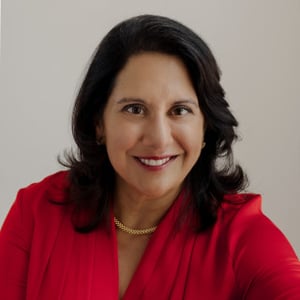
Judge, United States Court of Appeals, District of Columbia Circuit
Judge Rao was appointed to the United States Court of Appeals for the District of Columbia Circuit in March 2019. She graduated from Yale College in 1995 and the University of Chicago Law School in 1999. Following graduation, she served as a law clerk to Judge J. Harvie Wilkinson III of the U.S. Court of Appeals for the Fourth Circuit and, in the 2001 October Term, as law clerk to Justice Clarence Thomas of the U.S. Supreme Court. Between her clerkships, Judge Rao served as counsel for nominations and constitutional law to the U.S. Senate Committee on the Judiciary. In 2002, she joined the international arbitration group of Clifford Chance LLP in London, England. From 2005-2006, she served as Special Assistant and Associate White House Counsel to President George W. Bush. From 2006 to 2017, Judge Rao was a professor at the Antonin Scalia Law School at George Mason University, where she taught constitutional law, legislation and statutory interpretation, and the history and foundations of the administrative state. In 2014, she founded the Center for the Study of the Administrative State, a non-profit Center that promotes academic scholarship and public policy debates about administrative law. In July 2017, she was appointed to serve as the Administrator of the Office of Information and Regulatory Affairs in the Office of Management Budget. She served in this position until her appointment to the D.C. Circuit.
Associate Justice, Supreme Court of the United States
Associate Justice Brett Kavanaugh was born in Washington, D.C., on February 12, 1965. He married Ashley Estes in 2004, and they have two daughters - Margaret and Liza. He received a B.A. from Yale College in 1987 and a J.D. from Yale Law School in 1990. He served as a law clerk for Judge Walter Stapleton of the U.S. Court of Appeals for the Third Circuit from 1990-1991, for Judge Alex Kozinski of the U.S. Court of Appeals for the Ninth Circuit from 1991-1992, and for Justice Anthony M. Kennedy of the U.S. Supreme Court during the 1993 Term. In 1992-1993, he was an attorney in the Office of the Solicitor General of the United States. From 1994 to 1997 and for a period in 1998, he was Associate Counsel in the Office of Independent Counsel. He was a partner at a Washington, D.C., law firm from 1997 to 1998 and again from 1999 to 2001. From 2001 to 2003, he was Associate Counsel and then Senior Associate Counsel to President George W. Bush. From 2003 to 2006, he was Assistant to the President and Staff Secretary for President Bush. He was appointed a Judge of the United States Court of Appeals for the District of Columbia Circuit in 2006. President Donald J. Trump nominated him as an Associate Justice of the Supreme Court, and he took his seat on October 6, 2018.
William Rand Kenan, Jr. Distinguished Professor of Law, University of North Carolina School of Law
William (Bill) Marshall joined the Carolina Law faculty in 2001 and serves as the William R. Kenan Jr. Distinguished Professor of Law. His teaching and research interests include the first amendment, presidential power, election law, federal jurisdiction, federal judicial selection, civil procedure, and media law. Marshall is the author of numerous book chapters, articles, and essays on free speech, separation of powers, the Establishment Clause, and the Free Exercise Clause. His work has appeared in the Harvard Law Review, the Yale Law Journal, the Supreme Court Review, and the University of Chicago Law Review, among others.
Marshall received his law degree from the University of Chicago and his undergraduate degree from the University of Pennsylvania. Marshall was Deputy Counsel to the President and Deputy Assistant to the President during the Clinton Administration and also served as the Solicitor General for the State of Ohio. He has taught at the Northwestern, Boston University, Vanderbilt, Ohio State, DePaul, Case Western Reserve, William and Mary, and the University Connecticut law schools. Prior to beginning his teaching career, Marshall was a Special Assistant Attorney General for the State of Minnesota.
Professor Emeritus of Law, Antonin Scalia Law School, George Mason University
Jeremy A. Rabkin is a Professor Emeritus of Law at the Antonin Scalia Law School, George Mason University. Before joining the faculty in June 2007, he was for over two decades a professor in the Department of Government at Cornell University. Professor Rabkin serves on the board of directors of the Center for Individual Rights, a public interest law firm based in Washington, D.C. Previously he was a board member of the U.S. Institute of Peace and the board of academic advisors of the American Enterprise Institute.
Professor Rabkin’s books include Law Without Nations? (Princeton University Press, 2005). He authored “If You Need a Friend, Don’t Call a Cosmopolitan,” a chapter in Varieties of Sovereignty and Citizenship (Sigal R. Ben-Porath & Rogers M. Smith eds., University of Pennsylvania Press, 2012). His articles have appeared in major law reviews and political science journals and his journalistic contributions in a range of magazines and newspapers, including the Washington Post and the Wall Street Journal.
Judge, United States Court of Appeals, District of Columbia Circuit
Judge Rao was appointed to the United States Court of Appeals for the District of Columbia Circuit in March 2019. She graduated from Yale College in 1995 and the University of Chicago Law School in 1999. Following graduation, she served as a law clerk to Judge J. Harvie Wilkinson III of the U.S. Court of Appeals for the Fourth Circuit and, in the 2001 October Term, as law clerk to Justice Clarence Thomas of the U.S. Supreme Court. Between her clerkships, Judge Rao served as counsel for nominations and constitutional law to the U.S. Senate Committee on the Judiciary. In 2002, she joined the international arbitration group of Clifford Chance LLP in London, England. From 2005-2006, she served as Special Assistant and Associate White House Counsel to President George W. Bush. From 2006 to 2017, Judge Rao was a professor at the Antonin Scalia Law School at George Mason University, where she taught constitutional law, legislation and statutory interpretation, and the history and foundations of the administrative state. In 2014, she founded the Center for the Study of the Administrative State, a non-profit Center that promotes academic scholarship and public policy debates about administrative law. In July 2017, she was appointed to serve as the Administrator of the Office of Information and Regulatory Affairs in the Office of Management Budget. She served in this position until her appointment to the D.C. Circuit.
Milton R. Underwood Professor of Law Emeritus and Professor of History Emeritus, Vanderbilt University
James Ely is a renowned legal historian and property rights expert whose career accomplishments were recognized with both the Brigham-Kanner Property Rights Prize and the Owner's Counsel of American Crystal Eagle Award in 2006. He is the author of several books that have received widespread critical acclaim from legal scholars and historians, including The Guardian of Every Other Right: A Constitutional History of Property Rights, The Fuller Court: Justices, Rulings and Legacy in which he examines the work of the Supreme Court between 1888 and 1910, Railroads and American Law in which he systematically explores the way that the rise of the railroad shaped American legal culture, and The Contract Clause: A Constitutional History. He also is the author of numerous articles dealing with the rights of property owners. He served as an editor of both the Oxford Companion to the Supreme Court, and the second edition of the Oxford Guide to Supreme Court Decisions. Professor Ely received the Tennessee History Book Award in 2002 for A History of the Tennessee Supreme Court. Between 1987 and 1999, he served as an associate editor of the American Journal of Legal History. Since Professor Ely joined Vanderbilt faculty in 1972, he has been frequently recognized by students as one of the law school's outstanding teachers.
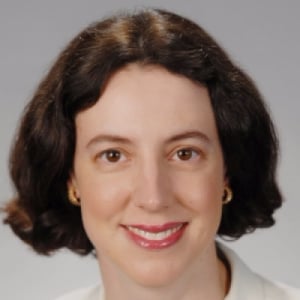
Donald Phillip Rothschild Research Professor, George Washington University Law School
Renée Lettow Lerner is Donald Phillip Rothschild Research Professor of Law at George Washington University Law School.
Professor Lerner works in the fields of U.S. and English legal history, civil and criminal procedure, and comparative law. She advises judges, lawyers, and government officials from the United States and countries in Europe, Latin America, and Asia about the differences between adversarial and nonadversarial legal systems.
She writes extensively about the history of American juries. Her work includes not only scholarly articles, but also online publications intended for a broader audience of legal professionals and the public. In many different settings, she has debated the role of juries with other academics and with lawyers. She has a book forthcoming with Oxford University Press in the Very Short Introduction Series entitled “The Jury.” She is also working on a book about the American civil jury, from the colonial period to the present.
She is the author, with John Langbein and Bruce Smith, of the book History of the Common Law: The Development of Anglo-American Legal Institutions (2009).
Her recent writings include a book review of Amalia D. Kessler’s Inventing American Exceptionalism: The Origins of American Adversarial Legal Culture, 1800-1877, 67 J. Legal Ed. 888 (2018); “How the Creation of Appellate Courts in England and the United States Limited Judicial Comment on Evidence to the Jury,” 40 Journal of the Legal Profession 215 (2016); “The Troublesome Inheritance of Americans in Magna Carta and Trial by Jury,” in Magna Carta and its Modern Legacy 77-98 (Robert Hazell and James Melton eds., Cambridge University Press 2015); and “The Failure of Originalism in Preserving Constitutional Rights to Civil Jury Trial,” 22 William & Mary Bill of Rights Journal 811 (2014).
Professor Lerner received an A.B. summa cum laude in history from Princeton University. She was a Rhodes Scholar at Oxford University, where she studied English legal history. At Yale Law School, she was Articles Editor of the Yale Law Journal. She served as a law clerk to Justice Anthony M. Kennedy of the U.S. Supreme Court and to Judge Stephen F. Williams of the U.S. Court of Appeals for the District of Columbia Circuit. From 2003 to 2005, she served as Deputy Assistant Attorney General in the Office of Legal Counsel at the U.S. Department of Justice.
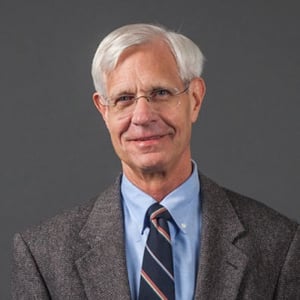
Distinguished University Professor, Antonin Scalia Law School, George Mason University
University Professor Nelson Lund is the author of Rousseau’s Rejuvenation of Political Philosophy: A New Introduction. He has also written widely in the field of constitutional law, including articles on constitutional interpretation, federalism, separation of powers, the Second Amendment, the Commerce Clause, the Speech or Debate Clause, the Equal Protection Clause, and the Uniformity Clause. In addition, he has published articles in the fields of employment discrimination and civil rights, the legal regulation of medical ethics, and the application of economic analysis to legal institutions and legal ethics.
Professor Lund graduated from St. John's College in Annapolis, Maryland, after which he received an MA in philosophy from the Catholic University of America and a PhD in political science from Harvard University. He left the faculty of the University of Chicago to attend its law school, where he served as executive editor of the University of Chicago Law Review and chapter chairman of the Federalist Society for Law and Public Policy Studies. After law school, he held positions at the United States Department of Justice in the Office of the Solicitor General and the Office of Legal Counsel. He also served as a law clerk to the Honorable Patrick E. Higginbotham of the United States Court of Appeals for the Fifth Circuit and to the Honorable Sandra Day O'Connor of the United States Supreme Court. Following his clerkship with Justice O'Connor, Professor Lund served in the White House as associate counsel to the president from 1989 to 1992.
Since joining the faculty at George Mason University's Antonin Scalia Law School, Professor Lund has taught Constitutional Law, Legislation, Federal Election Law, Employment Discrimination, State and Local Government, and seminars on the Second Amendment and on a variety of topics in Jurisprudence.
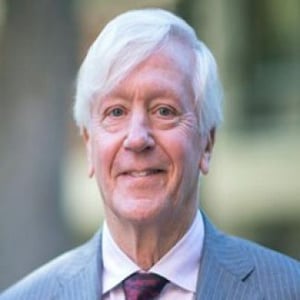
David and Mary Harrison Distinguished Professor of Law, University of Virginia School of Law
G. Edward White joined the Virginia law faculty in 1972 after a clerkship with Chief Justice Earl Warren of the Supreme Court of the United States and a year as visiting scholar at the American Bar Foundation. He was appointed John B. Minor Professor of Law and History in 1987, and held that chair until 2003, when he became David and Mary Harrison Distinguished Professor of Law. In 1992, he was appointed to a University Professorship, which he held until 2003. From 1990 until 1992 and from 2001-03, he was the Sullivan & Cromwell Research Professor; from 1994-97 the E. James Kelly Research Professor; and from 1999-2001 the Class of 1963 Research Professor. He has held visiting appointments at New York Law School, William & Mary School of Law, Brooklyn Law School, Arizona College of Law, the London School of Economics and Political Science, and Harvard Law School. He has been a Guggenheim Fellow, and twice a senior fellow of the National Endowment for the Humanities. He is a fellow of the American Academy of Arts & Sciences, a fellow of the Society of American Historians, and a member of the American Law Institute.He received the Roger and Madeleine Traynor Faculty Achievement Award in 2008.
White's 14 published books have won numerous honors and awards. These include final listing for the Pulitzer Prize in history, the Silver Gavel Award from the American Bar Association, the James Willard Hurst Prize from the Law & Society Association, the Littleton-Griswold Prize from the American Historical Association, the Scribes Award and the Association of American Law Schools' Triennial Coif Award. White's books have garnered 15 such honors and awards since 1976.
White was editor of the Studies in Legal History series for the North Carolina Press from 1980-85, and advisor on law manuscripts for Oxford University Press from 1986-96. He was on the editorial board of the Virginia Quarterly Review from 1980-2002. He has served on the Commission for Undergraduate Education in Law and the Humanities, and has taught summer humanities seminars for lawyers and judges under the auspices of the National Endowment for the Humanities.
White has delivered several endowed lectures, including the inaugural John Marshall Lecture, sponsored by the Boston Bar Association; the inaugural Jerome Hall Lecture at Hastings College of Law; the Swinford Lecture, sponsored by the University of Kentucky School of Law and the Kentucky Bar Association; the Keck Lecture at Amherst College, the Rosenthal Lectures at Northwestern University School of Law; the Neesima Lectures at Doshisha University, Japan; the Fulton Lecture at the University of Chicago School of Law and the Knowlton Distinguished Lecture at the University of South Carolina School of Law. His most recent lecture was the 2010 Hendricks Law and History Lecture at Washington & Lee Law School.
White's 1996 book, Creating the National Pastime: Baseball Transforms Itself, 1903-1953, reflects his life-long participation and interest in athletics. He lettered in four sports in college, formerly coached the Charlottesville High School girls soccer team, and has won a number of state- and citywide tournaments in doubles squash.
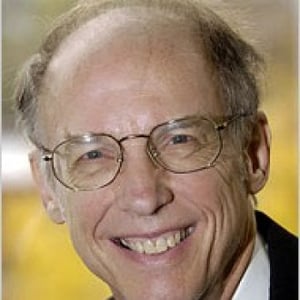
United States Court of Appeals, Fourth Circuit
James Harvie Wilkinson III is an Article III federal judge on the United States Court of Appeals for the Fourth Circuit. He joined the Court in 1984 after being nominated by President Ronald Reagan.
Born in New York City, New York, Wilkinson graduated from Yale University with his Bachelor's degree in 1967. Wilkinson served in the United States Army from 1968 to 1969 and received his Juris Doctor degree from the University of Virginia School of Law in 1972.
On the recommendation of Virginia U.S. Senator John Warner, Wilkinson was nominated to the United States Court of Appeals for the Fourth Circuit by President Ronald Reagan on January 30, 1984 to a seat vacated by John Butzner, Jr.,. Wilkinson was confirmed by the Senate on August 9, 1984 on a Senate vote and received commission on August 13, 1984. Wilkinson served as the Chief Judge of the Court from 1996 to 2003.

March 2013 DC Luncheon with Michael S. Lee
Douglas R. Cox, Mike S. Lee
Washington, DC Lawyers Chapter
With the recent passing of Judge Robert Bork, the Federalist Society hosted a special D.C....
12th Annual Barbara K. Olson Memorial Lecture
Eugene B. Meyer, Peter A. Thiel
2012 National Lawyers Convention
On September 11, 2001, at the age of 45 and at the height of her...
12th Annual Barbara K. Olson Memorial Lecture
Eugene B. Meyer, Peter A. Thiel
2012 National Lawyers Convention
On September 11, 2001, at the age of 45 and at the height of her...
Keynote Address and Commentary: Where Are the Muslim Moderates?
Manda Zand Ervin, Naser Khader, David B. Rivkin
Silenced: Are Global Trends to Ban Religious Defamation, Religious Insult, and Islamophobia a New Challenge to First Amendment Freedoms?
This keynote address by former member of the Danish Parliament Naser Khader on "Where Are...
Keynote Address and Commentary: Where Are the Muslim Moderates?
Manda Zand Ervin, Naser Khader, David B. Rivkin
Silenced: Are Global Trends to Ban Religious Defamation, Religious Insult, and Islamophobia a New Challenge to First Amendment Freedoms?
This keynote address by former member of the Danish Parliament Naser Khader on "Where Are...
Panel II: Growing Repression in the West
Bruce Bawer, Paul Diamond, Mark Durie
Silenced: Are Global Trends to Ban Religious Defamation, Religious Insult, and Islamophobia a New Challenge to First Amendment Freedoms?
The 1989 fatwa against Salman Rushdie and the deadly 2006 Danish cartoon riots brought worldwide...
Panel II: Growing Repression in the West
Bruce Bawer, Paul Diamond, Mark Durie
Silenced: Are Global Trends to Ban Religious Defamation, Religious Insult, and Islamophobia a New Challenge to First Amendment Freedoms?
The 1989 fatwa against Salman Rushdie and the deadly 2006 Danish cartoon riots brought worldwide...
Panel III: The Welfare State and American Exceptionalism
Matthew Glover, Brett M. Kavanaugh, William P. Marshall, Jeremy A. Rabkin, Neomi Rao
2011 National Student Symposium
With the recent passage of President Barack Obama's health care legislation, it is time to...
Panel III: The Welfare State and American Exceptionalism
Matthew Glover, Brett M. Kavanaugh, William P. Marshall, Jeremy A. Rabkin, Neomi Rao
2011 National Student Symposium
With the recent passage of President Barack Obama's health care legislation, it is time to...
Panel I: Economic Theory, Civic Virtue and the Meaning of the Constitution
James W. Ely, Renée Lettow Lerner, G. Brinton Lucas, Nelson Lund, G. Edward White, J. Harvie Wilkinson
2011 National Student Symposium
Justice Holmes' dissent in Lochner v. New York is well-known for the statement, "[A] constitution is not...