
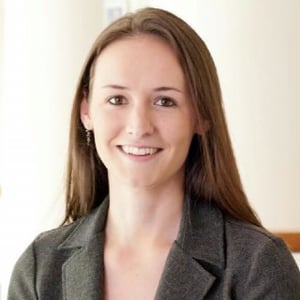
Attorney, Pacific Legal Foundation
Allison Daniel is an attorney at Pacific Legal Foundation, focusing on cases in which she can help restore the separation of powers between the branches of government and prevent federal agencies from creating laws through regulatory action. Her commitment to liberty began with an interest in politics and philosophy in high school and college. She was particularly inspired by Ron Paul and the works of Friedrich Hayek, Murray Rothbard, and Ayn Rand.
She received her law degree from the Florida State University College of Law, where she served as president of the Federalist Society chapter. She worked as a law clerk for Pacific Legal Foundation in the Sacramento office during her 1L summer. After law school, she joined the Institute for Justice as a staff attorney in the Florida office, where she defended the economic liberty and property rights of clients. Family commitments then led her to Ohio, where she clerked at the Ohio Court of Appeals and served as legal counsel to all statewide elected officeholders at the Ohio Attorney General’s Office.
She resides in Southwest Ohio with her husband and their four young children.

Of Counsel, Holtzman Vogel
Erielle Azerrad is Of Counsel with Holtzman Vogel and focuses her practice on commercial litigation, appellate law, and constitutional law matters.
Prior to joining the firm, Erielle clerked for the Honorable Steven J. Menashi on the U.S. Court of Appeals for the Second Circuit.
Erielle is also a co-founder of the Center for the Middle East and International Law through the Antonin Scalia Law School at George Mason University.

Vice President and Deputy Chief Counsel, U.S. Chamber Litigation Center, U.S. Chamber of Commerce
Jennifer B. Dickey is vice president and deputy chief counsel at the U.S. Chamber Litigation Center, the litigation arm of the U.S. Chamber of Commerce. Dickey handles a variety of litigation matters for the Chamber.
Dickey joined the Chamber following her service as Acting Assistant Attorney General and Principal Deputy Assistant Attorney General in the Civil Division at the U.S. Department of Justice. She also previously served as Deputy Associate Attorney General, providing strategic oversight of the Civil Division, Civil Rights Division, and Foreign Claims Settlement Commission, as well as Special Assistant to the President and Associate Counsel to the President. In the latter capacity, she provided legal advice on a wide array of executive actions and rulemakings, civil litigation, and judicial nominations.
Dickey also practiced law at Kirkland & Ellis LLP before her government service. She was a commercial and appellate litigator, representing businesses in federal and state courts.
Earlier in her career, Dickey served as a law clerk for the Honorable Clarence Thomas of the Supreme Court of the United States and the Honorable William H. Pryor Jr. of the United States Court of Appeals for the Eleventh Circuit.
Dickey earned her law degree magna cum laude from Duke University School of Law, where she was an Executive Editor of the Duke Law Journal, and her undergraduate degree magna cum laude from Dartmouth College.
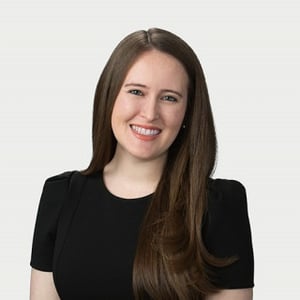
Associate, Gibson, Dunn & Crutcher LLP
Elizabeth A. Kiernan is a senior associate in the Appellate and Constitutional Law Practice Group at Gibson, Dunn & Crutcher, representing clients in their most consequential, high-stakes, and time-sensitive matters. Elizabeth specializes in appellate advocacy and sophisticated briefing. She has successfully argued before the Fifth Circuit and Texas Supreme Court and has supported arguments in various courts, including the U.S. Supreme Court and courts across the country.
Elizabeth’s most significant victories include obtaining and preserving at the Texas Supreme Court writs of mandamus directing dismissal of billions of dollars in personal injury and property damage claims across a 200-case, 20,000-plaintiff MDL; securing a landmark U.S. Supreme Court victory allowing an insurer responsible for millions of dollars in bankruptcy claims to be heard on objections to its insureds’ plan of reorganization; and persuading a unanimous Fifth Circuit panel to uphold dismissal of over $12 million in contractual and tort claims.
Chambers and Partners recently named Elizabeth an “Associate to Watch” for Litigation: Appellate (Texas), and she has been recognized as an Appellate “Rising Star” by Thomson Reuters’s Texas Super Lawyers magazine.
Prior to joining Gibson Dunn, Elizabeth earned her B.A. summa cum laude from the University of Alabama and her J.D. with Honors from the University of Chicago Law School. She served as a law clerk to the Honorable Jerry E. Smith of the U.S. Court of Appeals for the Fifth Circuit and the Honorable William H. Pryor Jr. of the U.S. Court of Appeals for the Eleventh Circuit. She also served as Special Counsel to U.S. Senator Josh Hawley for the confirmation of Justice Amy Coney Barrett.
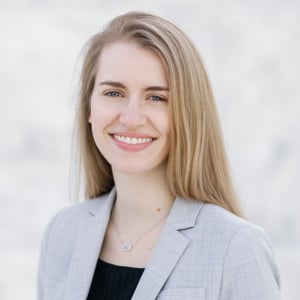
Counsel to the Assistant Attorney General, Civil Division, U.S. Department of Justice
Sarah Welch is an associate in the Firm's Issues & Appeals Practice based in the Cleveland Office of Jones Day.
Ms. Welch's practice focuses on appellate advocacy and significant motions. Before joining Jones Day, she served as a law clerk to the Associate Justice Brett M. Kavanaugh of the Supreme Court of the United States, the Honorable William H. Pryor Jr. of the U.S. Court of Appeals for the Eleventh Circuit, and the Honorable Jeffrey S. Sutton of the U.S. Court of Appeals for the Sixth Circuit.
During law school, Ms. Welch participated in briefing cases before the Supreme Court and federal courts of appeals through The University of Chicago Law School's Supreme Court and appellate clinic, as well as through internships with the Ohio and United States solicitors general. She volunteers on the case committee for Ohio's high school mock trial competition.

Partner, Gibson, Dunn & Crutcher LLP
Morgan Ratner is an experienced appellate advocate and legal-issues specialist who handles the most important cases around the country. She has argued ten cases before the U.S. Supreme Court, where she has had remarkable success at both the certiorari and merits stages.
Morgan regularly briefs and argues appeals and dispositive motions; provides strategic guidance for trial and administrative proceedings; and counsels clients confronting high-stakes legal issues. She has had particular success helping clients navigate—and, when appropriate, challenge—federal regulations. In the last 18 months, she has twice been named The American Lawyer’s “Litigator of the Week” (and her matters have been named three times more), including for prevailing in a landmark Delaware corporate-governance dispute and striking down the FCC’s net-neutrality rules. The American Lawyer named her the 2024 “Young Lawyer of the Year — Litigation”, and Law360 recently profiled her as one of “12 Lawyers Who Are The Future Of The Supreme Court Bar.”
Morgan served for more than four years in the Office of the Solicitor General at the U.S. Department of Justice, where she argued securities regulation, bankruptcy, employment, and intellectual property cases before the U.S. Supreme Court. During her tenure, she also filed more than 150 Supreme Court briefs at the merits and certiorari stages and received a John Marshall Award, DOJ’s highest award offered to lawyers for exceptional service to the Office of the Solicitor General and DOJ.
After graduating Harvard Law School—where she was awarded the Fay Diploma as the top student in her class—Morgan clerked for Chief Justice John G. Roberts, Jr. of the U.S. Supreme Court and then-Judge Brett M. Kavanaugh of the U.S. Court of Appeals for the D.C. Circuit. She is a member of the Edward Coke Appellate Inn of Court, a volunteer with Street Law, Inc., and a trustee of the Supreme Court Historical Society.

Partner, Taft Stettinius & Hollister
Robert McBride is the partner-in-charge of the Kentucky office of Taft Stettinius & Hollister. As a seasoned trial attorney, he is experienced in investigating and prosecuting a wide variety of criminal matters. As lead attorney, Bob prosecuted cases involving complex financial frauds, money laundering, federal tax violations, healthcare fraud, national security matters, violations of the Export Control Act, immigration, and human trafficking crimes, and public corruption. He also prosecuted narcotics trafficking organizations, firearms violations and crimes against children. As a prosecutor, Bob successfully tried many federal cases to jury verdict. Bob is also experienced in litigating forfeiture claims, habeas actions and appeals before the Sixth Circuit Court of Appeals.
Bob has a long record serving the United States as an attorney before entering private practice. He was an Assistant United States Attorney in the Eastern District of Kentucky for over 15 years. As an AUSA, Bob first chaired criminal jury trials in U.S. District Court and handled appeals before the Sixth Circuit Court of Appeals. Additionally, he was the District’s National Security Prosecutor and the Anti-Terrorism Advisory Council Coordinator. Bob also held several leadership positions. In 2006, he was assigned as the manager of the London Branch Office. Shortly thereafter, he was promoted to Criminal Chief and served in that position until January 2010. As Criminal Chief, Bob supervised the Criminal Division’s personnel and exercised oversight of all prosecutions in the District. More recently, he was the supervisor of the Ft. Mitchell Branch Office, where he handled a number of high profile investigations and prosecutions.
Bob also served in the United States Navy, Judge Advocate General’s Corps, for 10 years. His major assignments included senior prosecutor on the Island of Guam, Officer-in-Charge of a Detachment in New Orleans focusing on criminal defense, and Staff Judge Advocate, Recruit Training Command. Bob attained the rank of Lieutenant Commander. He was also an enlisted Combat Engineer in the Army National Guard.

General Counsel, American Suppressor Association
Michael first joined ASA in 2014, and served as ASA’s General Counsel from 2015 to 2016, before leaving to join the Administration in 2017.
Michael began his federal service at the White House Office of Management and Budget (OMB), where he served two years as an attorney in the Office of General Counsel and focused on federal budget and regulatory matters. He then transitioned to the West Wing in March of 2019, where he served as Deputy Assistant to the President and Counselor to White House Chief of Staff Mick Mulvaney. During his time in the West Wing, Michael advised the Chief of Staff and the President on numerous matters, and served as the top White House policy advisor on Second Amendment issues. Michael left the West Wing in July of 2020 to serve as Acting General Counsel at the US Department of Housing and Urban Development (HUD), where he managed a budget of over $100 million and supervised a staff of nearly 300 attorneys and 250 other professionals.
Partner, Taft Stettinius & Hollister
Robert McBride is the partner-in-charge of the Kentucky office of Taft Stettinius & Hollister. As a seasoned trial attorney, he is experienced in investigating and prosecuting a wide variety of criminal matters. As lead attorney, Bob prosecuted cases involving complex financial frauds, money laundering, federal tax violations, healthcare fraud, national security matters, violations of the Export Control Act, immigration, and human trafficking crimes, and public corruption. He also prosecuted narcotics trafficking organizations, firearms violations and crimes against children. As a prosecutor, Bob successfully tried many federal cases to jury verdict. Bob is also experienced in litigating forfeiture claims, habeas actions and appeals before the Sixth Circuit Court of Appeals.
Bob has a long record serving the United States as an attorney before entering private practice. He was an Assistant United States Attorney in the Eastern District of Kentucky for over 15 years. As an AUSA, Bob first chaired criminal jury trials in U.S. District Court and handled appeals before the Sixth Circuit Court of Appeals. Additionally, he was the District’s National Security Prosecutor and the Anti-Terrorism Advisory Council Coordinator. Bob also held several leadership positions. In 2006, he was assigned as the manager of the London Branch Office. Shortly thereafter, he was promoted to Criminal Chief and served in that position until January 2010. As Criminal Chief, Bob supervised the Criminal Division’s personnel and exercised oversight of all prosecutions in the District. More recently, he was the supervisor of the Ft. Mitchell Branch Office, where he handled a number of high profile investigations and prosecutions.
Bob also served in the United States Navy, Judge Advocate General’s Corps, for 10 years. His major assignments included senior prosecutor on the Island of Guam, Officer-in-Charge of a Detachment in New Orleans focusing on criminal defense, and Staff Judge Advocate, Recruit Training Command. Bob attained the rank of Lieutenant Commander. He was also an enlisted Combat Engineer in the Army National Guard.
General Counsel, American Suppressor Association
Michael first joined ASA in 2014, and served as ASA’s General Counsel from 2015 to 2016, before leaving to join the Administration in 2017.
Michael began his federal service at the White House Office of Management and Budget (OMB), where he served two years as an attorney in the Office of General Counsel and focused on federal budget and regulatory matters. He then transitioned to the West Wing in March of 2019, where he served as Deputy Assistant to the President and Counselor to White House Chief of Staff Mick Mulvaney. During his time in the West Wing, Michael advised the Chief of Staff and the President on numerous matters, and served as the top White House policy advisor on Second Amendment issues. Michael left the West Wing in July of 2020 to serve as Acting General Counsel at the US Department of Housing and Urban Development (HUD), where he managed a budget of over $100 million and supervised a staff of nearly 300 attorneys and 250 other professionals.
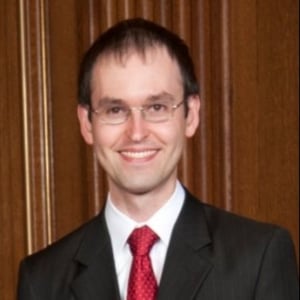
Partner, Cooper & Kirk PLLC
BRIAN W. BARNES has litigated high-stakes cases at all levels of the federal court system and has also argued numerous cases in state trial and appellate courts. He was the principal author of the briefs for the petitioners in Collins v Mnuchin, a multi-billion-dollar administrative law case challenging the nationalization of Fannie Mae and Freddie Mac, which is currently pending in the United States Supreme Court. In related litigation, Mr. Barnes deposed several of the current and former senior executives for Fannie Mae and Freddie Mac, including both companies’ former CEOs. Mr. Barnes also played a central role representing shareholders in disputes over the scope of the government’s discovery obligations in the Fannie Mae/Freddie Mac litigation, successfully persuading the Court of Federal Claims to order the government to show plaintiffs’ counsel most of the documents the government attempted to withhold under the deliberative process and bank examination privileges.
Mr. Barnes also has extensive experience representing plaintiffs in suits filed under the Racketeer Influenced and Corrupt Organizations Act (“RICO”). He briefed and argued St. Luke’s Health Network v. Lancaster General Hospital, 967 F.3d 295 (3d Cir. 2020), in which the Third Circuit reversed dismissal of RICO claims filed as part of a putative class action against a hospital that allegedly defrauded a Pennsylvania program that subsidizes care for indigent patients. Mr. Barnes also helped pioneer the use of RICO to sue state-legalized marijuana businesses: he filed the first such case, successfully argued the case on appeal after it was dismissed, and later helped try the case to a jury on remand. See Safe Streets Alliance v. Hickenlooper, 859 F.3d 865 (10th Cir. 2017).
Mr. Barnes has also worked on a wide range of other matters. He has briefed and argued cases concerning state preemption of local gun regulations in the trial and intermediate appellate courts of Illinois and Pennsylvania. In litigation over the Department of Education’s Title IX regulations, Mr. Barnes represents intervenors who are defending the regulations. And he has an active practice advising institutional investors on the probable outcomes of market-moving litigation in both state and federal courts.
Mr. Barnes clerked for Justice Samuel Alito during the Supreme Court’s 2012 Term and was previously a law clerk to Judge Thomas Griffith of the D.C. Circuit. He is a graduate of Yale Law School, where he was an Articles Editor for the Yale Law Journal and a member of the Yale Supreme Court Clinic. Mr. Barnes received his B.A. from Yale College and is a member of the Colorado and District of Columbia bars.
Partner, Cooper & Kirk PLLC
BRIAN W. BARNES has litigated high-stakes cases at all levels of the federal court system and has also argued numerous cases in state trial and appellate courts. He was the principal author of the briefs for the petitioners in Collins v Mnuchin, a multi-billion-dollar administrative law case challenging the nationalization of Fannie Mae and Freddie Mac, which is currently pending in the United States Supreme Court. In related litigation, Mr. Barnes deposed several of the current and former senior executives for Fannie Mae and Freddie Mac, including both companies’ former CEOs. Mr. Barnes also played a central role representing shareholders in disputes over the scope of the government’s discovery obligations in the Fannie Mae/Freddie Mac litigation, successfully persuading the Court of Federal Claims to order the government to show plaintiffs’ counsel most of the documents the government attempted to withhold under the deliberative process and bank examination privileges.
Mr. Barnes also has extensive experience representing plaintiffs in suits filed under the Racketeer Influenced and Corrupt Organizations Act (“RICO”). He briefed and argued St. Luke’s Health Network v. Lancaster General Hospital, 967 F.3d 295 (3d Cir. 2020), in which the Third Circuit reversed dismissal of RICO claims filed as part of a putative class action against a hospital that allegedly defrauded a Pennsylvania program that subsidizes care for indigent patients. Mr. Barnes also helped pioneer the use of RICO to sue state-legalized marijuana businesses: he filed the first such case, successfully argued the case on appeal after it was dismissed, and later helped try the case to a jury on remand. See Safe Streets Alliance v. Hickenlooper, 859 F.3d 865 (10th Cir. 2017).
Mr. Barnes has also worked on a wide range of other matters. He has briefed and argued cases concerning state preemption of local gun regulations in the trial and intermediate appellate courts of Illinois and Pennsylvania. In litigation over the Department of Education’s Title IX regulations, Mr. Barnes represents intervenors who are defending the regulations. And he has an active practice advising institutional investors on the probable outcomes of market-moving litigation in both state and federal courts.
Mr. Barnes clerked for Justice Samuel Alito during the Supreme Court’s 2012 Term and was previously a law clerk to Judge Thomas Griffith of the D.C. Circuit. He is a graduate of Yale Law School, where he was an Articles Editor for the Yale Law Journal and a member of the Yale Supreme Court Clinic. Mr. Barnes received his B.A. from Yale College and is a member of the Colorado and District of Columbia bars.

Partner, King & Spalding
John Richter is a trial and investigations partner in the Special Matters and Investigations Practice Group, and represents and defends companies, Boards of Directors, Board committees, and individuals facing a variety of white-collar criminal and regulatory enforcement matters, parallel civil litigation, and internal corporate investigations. John previously served as the Acting Assistant Attorney General in charge of the Criminal Division at the U.S. Department of Justice and as the U.S. Attorney for the Western District of Oklahoma, having been nominated by President George W. Bush and confirmed by unanimous consent of the U.S. Senate.
Partner, Husch Blackwell LLP
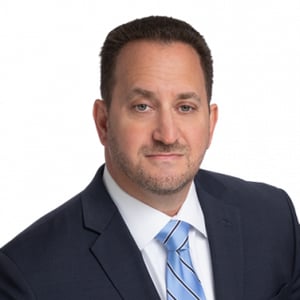
With three decades of experience as a prosecutor, Gregg counsels businesses and individuals in connection with a range of criminal, civil and regulatory matters, including government investigations, internal investigations, litigation, export control, sanctions, trade secrets and regulatory compliance.
Gregg’s extensive background in criminal and national security law, combined with his understanding of government practices and operations, allow him to pinpoint the risks and opportunities that arise in investigatory settings, to put together efficient and effective teams of legal professionals, and to mount a vigorous defense when necessary. Gregg has a strong track record as an accomplished trial lawyer, particularly in complex, high-profile jury trials.
Prior to entering private practice, Gregg served as the United States Attorney for the Western District of Texas—one of the largest and busiest United States Attorney’s Offices in the country—where he supervised more than 300 employees handling a diverse caseload, including matters involving complex white-collar crime, contract fraud, national security, cyber crimes, public corruption, money laundering, export violations, trade secrets, tax, large-scale drug and human trafficking, immigration, child exploitation and violent crime. Gregg has also served as Counselor to the Attorney General of the United States, where he handled both criminal and national security matters, as well as crisis response. He was an Assistant United States Attorney in the U.S. Attorney’s Office for the Western District of Texas for 14 years, where he developed a reputation as an aggressive litigator and indefatigable investigator while building an impressive record handling national security, fraud, violent crime and corruption cases. Before that, he served in various roles in both the Criminal and National Security Divisions of the Department of Justice in Washington, DC. Gregg was a state prosecutor as well, handling murder, gang and other complex cases in New York County for nearly 11 years.
Throughout his career, Gregg has worked closely with the Federal Bureau of Investigation, Internal Revenue Service, Department of Commerce and other federal law enforcement and intelligence agencies. He led task forces in the Department of Justice and spearheaded the Department’s effort to improve its electronic litigation capabilities, focusing heavily on discovery. Gregg understands criminal law, national security law, the justice system, government investigations and the discovery process inside and out. His extensive and varied background means that he can provide clients with realistic and accurate expectations of how a government investigation or prosecution will proceed and where challenges may arise.
Partner, King & Spalding
John Richter is a trial and investigations partner in the Special Matters and Investigations Practice Group, and represents and defends companies, Boards of Directors, Board committees, and individuals facing a variety of white-collar criminal and regulatory enforcement matters, parallel civil litigation, and internal corporate investigations. John previously served as the Acting Assistant Attorney General in charge of the Criminal Division at the U.S. Department of Justice and as the U.S. Attorney for the Western District of Oklahoma, having been nominated by President George W. Bush and confirmed by unanimous consent of the U.S. Senate.
Partner, Husch Blackwell LLP
With three decades of experience as a prosecutor, Gregg counsels businesses and individuals in connection with a range of criminal, civil and regulatory matters, including government investigations, internal investigations, litigation, export control, sanctions, trade secrets and regulatory compliance.
Gregg’s extensive background in criminal and national security law, combined with his understanding of government practices and operations, allow him to pinpoint the risks and opportunities that arise in investigatory settings, to put together efficient and effective teams of legal professionals, and to mount a vigorous defense when necessary. Gregg has a strong track record as an accomplished trial lawyer, particularly in complex, high-profile jury trials.
Prior to entering private practice, Gregg served as the United States Attorney for the Western District of Texas—one of the largest and busiest United States Attorney’s Offices in the country—where he supervised more than 300 employees handling a diverse caseload, including matters involving complex white-collar crime, contract fraud, national security, cyber crimes, public corruption, money laundering, export violations, trade secrets, tax, large-scale drug and human trafficking, immigration, child exploitation and violent crime. Gregg has also served as Counselor to the Attorney General of the United States, where he handled both criminal and national security matters, as well as crisis response. He was an Assistant United States Attorney in the U.S. Attorney’s Office for the Western District of Texas for 14 years, where he developed a reputation as an aggressive litigator and indefatigable investigator while building an impressive record handling national security, fraud, violent crime and corruption cases. Before that, he served in various roles in both the Criminal and National Security Divisions of the Department of Justice in Washington, DC. Gregg was a state prosecutor as well, handling murder, gang and other complex cases in New York County for nearly 11 years.
Throughout his career, Gregg has worked closely with the Federal Bureau of Investigation, Internal Revenue Service, Department of Commerce and other federal law enforcement and intelligence agencies. He led task forces in the Department of Justice and spearheaded the Department’s effort to improve its electronic litigation capabilities, focusing heavily on discovery. Gregg understands criminal law, national security law, the justice system, government investigations and the discovery process inside and out. His extensive and varied background means that he can provide clients with realistic and accurate expectations of how a government investigation or prosecution will proceed and where challenges may arise.

A Seat at the Sitting - March 2025
Allison Daniel, Erielle Azerrad, Jennifer B. Dickey, Elizabeth Kiernan, Sarah Welch, Morgan Ratner
The March Docket in 90 Minutes or Less
Each month, a panel of constitutional experts convenes to discuss the Court’s upcoming docket sitting...
Litigation Update: United States v. Peterson
Robert K. McBride, Michael Williams
In February 2025, the Fifth Circuit issued an opinion in United States v. Peterson, ruling...
Litigation Update: United States v. Peterson
Robert K. McBride, Michael Williams
In February 2025, the Fifth Circuit issued an opinion in United States v. Peterson, ruling...
Topics
Article III and the Canal Zone District Court: What Does the Constitution Require of Territorial Courts?
With President Donald Trump’s pledge to take back the Panama Canal, it’s worth looking back...
Topics
The Poison Pill in the Peanut Butter: A Culture-War Lawsuit Quietly Threatens Disability Rights
When a dog doesn’t want to take a pill, you coat it in peanut butter....
Topics
Does DC Have Standing to Sue the Federal Government? Probably Not.
If a house divided against itself cannot stand, then why would federal courts allow the...
Courthouse Steps Oral Argument: Smith & Wesson Brands, Inc. v. Estados Unidos Mexicanos
Brian W. Barnes
In Smith & Wesson Brands, Inc. v. Estados Unidos Mexicanos Mexico brought suit against several U.S....
Courthouse Steps Oral Argument: Smith & Wesson Brands, Inc. v. Estados Unidos Mexicanos
Brian W. Barnes
In Smith & Wesson Brands, Inc. v. Estados Unidos Mexicanos Mexico brought suit against several U.S....
DOJ in Transition: What May Be Coming Next?
John C. Richter, Gregg N. Sofer
President Trump and his Administration are moving quickly to focus on different priorities for and...
DOJ in Transition: What May Be Coming Next?
John C. Richter, Gregg N. Sofer
President Trump and his Administration are moving quickly to focus on different priorities for and...