The Supreme Court has ruled in consolidated cases that the assertion of jurisdiction under the Clean Water Act (CWA) by the United States Army Corps of Engineers (Corps) and the Environmental Protection Agency (EPA) is too broad. The CWA prohibits the discharge of pollutants (which include dredged and fill material) into “navigable waters” without a federal permit. The Act defines the term “navigable waters” as “waters of the United States.” That term has been interpreted to cover nearly any area over which water flows, including the shallow “wetlands” on Mr. Rapanos’s Michigan lots. Mr. Rapanos was charged with violating the CWA when he filled wetlands on his property without authorization. The district court found Mr. Rapanos liable with respect to one of his properties because the “wetlands” on the site were deemed adjacent to a tributary (i.e., a non-navigable, man-made drainage ditch) that flowed through a series of conduits to a navigable waterway up to twenty miles away. On appeal, the Sixth Circuit Court of Appeals affirmed the district court’s determination on the basis of the “hydrological connection” theory. Under this test, CWA jurisdiction exists no matter how remote or insubstantial the connection between a wetland and a navigable-in-fact waterbody. On June 19, 2006, the Supreme Court vacated the judgments of the Sixth Circuit and remanded the cases for further proceedings.

Senior Attorney, Pacific Legal Foundation
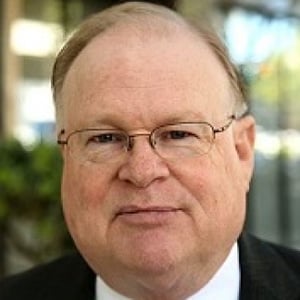
Reed Hopper is a Senior Attorney in PLF’s Environmental Law Practice Group. He oversees the Foundation’s Endangered Species Act Program that is designed to ensure that species protections are balanced with individual rights, the rule of law, and other social values. Reed also oversees PLF’s Clean Water Act Project that targets illegal federal regulation of local land and water use.
Reed has always had a strong patriotic spirit and a desire to serve his country. Before joining PLF in 1987, Reed served as an Environmental Protection Officer and Hearing Officer in the U.S. Coast Guard where he gained a love for the law. He also loves our constitutional way of life and cannot tolerate injustice. PLF affords him the opportunity to rectify unjust actions perpetrated by overreaching government. He enjoys getting up each morning to fight for a just cause.
Reed has litigated and won precedent-setting environmental and land use cases at all levels of the state and federal courts, including the U.S. Supreme Court. He has published numerous articles and testified before Congress as an expert witness.
Reed graduated from the University of California, Davis, with a Bachelors Degree in German and major work in biochemistry. He also did graduate business studies at California State University and Tulane University and earned his Juris Doctor Degree from the University of the Pacific, McGeorge School of Law.
Senior Attorney, Pacific Legal Foundation
Damien Schiff is a senior attorney at Pacific Legal Foundation. He leads its environmental practice group, a unique initiative that draws broadly from PLF’s expertise and success in property rights and separation of powers litigation. Over the years, Damien has represented hundreds of landowners and property rights advocates to defend their liberties against heavy-handed and unwarranted environmental and land-use regulation. His litigation experience includes Sackett v. U.S. Environmental Protection Agency, a groundbreaking decision in which the U.S. Supreme Court upheld the right of landowners to challenge Clean Water Act compliance orders issued by EPA, and Contoski v. Norton, PLF’s successful effort to force the federal government to make good on its promise to delist the bald eagle from the Endangered Species Act.
Besides litigation, Damien has written academic articles on a variety of subjects, including the Endangered Species Act, the Clean Water Act, greenhouse gas torts, the duty to rescue, and international water law. He has appeared on a variety of television and radio programs and has been quoted in The New York Times, The Wall Street Journal, Harper’s Magazine, and The Economist, among other publications.
He obtained his law degree magna cum laude from the University of San Diego School of Law, and his undergraduate degree magna cum laude from Georgetown University. While at USD, he was a research assistant for Professor Bernard Siegan, a leading constitutional theorist and advocate for property rights and economic liberty. Immediately prior to joining PLF, Damien clerked for Judge (and former PLF attorney) Victor Wolski of the United States Court of Federal Claims. Damien credits the mentoring and examples of Professor Siegan and Judge Wolski for his decision to pursue a career in liberty-based public interest litigation.
Damien lives in Sacramento with his wife, two young sons, four chickens, and a cat named Princess. In his off hours he enjoys stamp collecting, Gregorian chant, and martinis—preferably at the same time.