
Director of the Center for Energy and Environment and Senior Fellow, Competitive Enterprise Institute
Daren Bakst is Director of the Competitive Enterprise Institute’s Center for Energy and Environment and a Senior Fellow. In this role, he manages, develops, and leads the coalition, advocacy, and research activities of the Center, which is one of the most effective advocates for Free Market Environmentalism.
Before joining CEI as Deputy Director in March, 2023, Daren was a Senior Research Fellow in Environmental Policy and Regulation at the Heritage Foundation, where he played a leading role in the launch of the organization’s new energy and environment center, and created and hosted the Heritage Foundation’s energy and environment podcast the “PowerCast.” During his decade at Heritage, Daren wrote about energy and environmental policy, food and agricultural policy (including editing and co-authoring the book Farms and Free Enterprise), regulation, and trade among other topics.
Daren also worked on environmental policy and regulation at the U.S. Chamber of Commerce, where he was a policy counsel and served as the executive to the association’s Government Oversight, Operations & Consumer Affairs committee, which was responsible for issues such as regulatory process reform. Daren has significant state level experience, working for seven years at the Raleigh, N.C.-based John Locke Foundation, one of the largest state-based, free-market think tanks. As director of legal and regulatory studies, his broad portfolio included energy and environmental policy, regulatory reform, and property rights.
Daren has testified numerous times before Congress, regularly submits comments to federal agencies and has appeared in or been quoted by a wide range of media outlets such as The Wall Street Journal, USA Today, The Washington Times, CNN, Fox Business News, Al-Jazeera America, and U.S. News and World Report. He is a member of the Federalist Society’s Environmental Law and Property Rights Executive Committee and serves on the College Level Advisory Board for Constituting America, an organization that informs and educates about the importance of the U.S. Constitution.
Daren, who hails from Florida, received his bachelor’s and master’s degrees from George Washington University. A licensed attorney, he holds a law degree from the University of Miami and a master of laws degree from American University.
Professor of Law Emeritus; Senior Fellow for Climate Policy, Environmental Law Center, Vermont Law School
Patrick A. Parenteau is Emeritus Professor of Law and Senior Fellow for Climate Policy in the Environmental Law Center at Vermont Law School. He previously served as Director of the Environmental Law Center and was the founding director of the EAC (formerly the Environmental and Natural Resources Law Clinic) in 2004.
Professor Parenteau has an extensive background in environmental and natural resources law. His previous positions include Vice President for Conservation with the National Wildlife Federation in Washington, DC (1976-1984); Regional Counsel to the New England Regional Office of the EPA in Boston (1984-1987); Commissioner of the Vermont Department of Environmental Conservation (1987-1989); and Senior Counsel with the Perkins Coie law firm in Portland, Oregon (1989-1993).
Professor Parenteau has been involved in drafting, litigating, implementing, teaching, and writing about environmental law and policy for over three decades. His current focus is on confronting the profound challenges of climate change through his teaching, publishing, public speaking and litigation.
Professor Parenteau is a Fulbright US Scholar and a Fellow in the American College of Environmental Lawyers. In 2005 he received the National Wildlife Federation’s Conservation Achievement Award in recognition of his contributions to wildlife conservation and environmental education. In 2016 he received the Kerry Rydberg Award for excellence in public interest environmental law.
Professor Parenteau holds a B.S. from Regis University, a J.D. from Creighton University, and an LLM in Environmental Law from the George Washington U.
Senior Attorney, Pacific Legal Foundation
Damien Schiff is a senior attorney at Pacific Legal Foundation. He leads its environmental practice group, a unique initiative that draws broadly from PLF’s expertise and success in property rights and separation of powers litigation. Over the years, Damien has represented hundreds of landowners and property rights advocates to defend their liberties against heavy-handed and unwarranted environmental and land-use regulation. His litigation experience includes Sackett v. U.S. Environmental Protection Agency, a groundbreaking decision in which the U.S. Supreme Court upheld the right of landowners to challenge Clean Water Act compliance orders issued by EPA, and Contoski v. Norton, PLF’s successful effort to force the federal government to make good on its promise to delist the bald eagle from the Endangered Species Act.
Besides litigation, Damien has written academic articles on a variety of subjects, including the Endangered Species Act, the Clean Water Act, greenhouse gas torts, the duty to rescue, and international water law. He has appeared on a variety of television and radio programs and has been quoted in The New York Times, The Wall Street Journal, Harper’s Magazine, and The Economist, among other publications.
He obtained his law degree magna cum laude from the University of San Diego School of Law, and his undergraduate degree magna cum laude from Georgetown University. While at USD, he was a research assistant for Professor Bernard Siegan, a leading constitutional theorist and advocate for property rights and economic liberty. Immediately prior to joining PLF, Damien clerked for Judge (and former PLF attorney) Victor Wolski of the United States Court of Federal Claims. Damien credits the mentoring and examples of Professor Siegan and Judge Wolski for his decision to pursue a career in liberty-based public interest litigation.
Damien lives in Sacramento with his wife, two young sons, four chickens, and a cat named Princess. In his off hours he enjoys stamp collecting, Gregorian chant, and martinis—preferably at the same time.
Principal, Advantus Strategies, LLC
John Paul Woodley Jr. is currently the Principal of Environmental and Energy Practice Group for Advantus Strategies. From 2003 to 2009, Woodley served as Assistant Secretary of the Army for Civil Works, supervising the Army Corps of Engineers Civil Works Program. Under his leadership, the Corps Wetland Regulatory Program was strengthened. He also oversaw the restoration of the Florida Everglades and the reconstruction of the hurricane protection system for New Orleans following Hurricane Katrina.
Woodley also served as Assistant Deputy Under Secretary of Defense, Environment, where he was responsible for policy and oversight of the Defense Department’s environmental cleanup, compliance, pollution prevention and natural resource management.
He has also served as Secretary of Natural Resources for Virginia, where he was responsible for environmental protection and for permitting, outdoor recreation, open space management, inland and marine fisheries and historic resources in the Commonwealth.
Woodley served on active duty with the U.S. Army Judge Advocate General’s Corps from 1979 to 1985, and retired from the Army Reserve in August 2003 as a Lieutenant Colonel.
Woodley has been awarded the Legion of Merit, the Meritorious Service Medal (2nd Oak Leaf Cluster), the Army Commendation Medal (1st Oak Leaf Cluster), and the Army Achievement Medal. He has been honored with the U. S. Army Decoration for Distinguished Civilian Service, the Secretary of Defense Medal for Outstanding Public Service and the Silver de Fleury Medal from the Army Engineer Regiment.
Director of the Center for Energy and Environment and Senior Fellow, Competitive Enterprise Institute
Daren Bakst is Director of the Competitive Enterprise Institute’s Center for Energy and Environment and a Senior Fellow. In this role, he manages, develops, and leads the coalition, advocacy, and research activities of the Center, which is one of the most effective advocates for Free Market Environmentalism.
Before joining CEI as Deputy Director in March, 2023, Daren was a Senior Research Fellow in Environmental Policy and Regulation at the Heritage Foundation, where he played a leading role in the launch of the organization’s new energy and environment center, and created and hosted the Heritage Foundation’s energy and environment podcast the “PowerCast.” During his decade at Heritage, Daren wrote about energy and environmental policy, food and agricultural policy (including editing and co-authoring the book Farms and Free Enterprise), regulation, and trade among other topics.
Daren also worked on environmental policy and regulation at the U.S. Chamber of Commerce, where he was a policy counsel and served as the executive to the association’s Government Oversight, Operations & Consumer Affairs committee, which was responsible for issues such as regulatory process reform. Daren has significant state level experience, working for seven years at the Raleigh, N.C.-based John Locke Foundation, one of the largest state-based, free-market think tanks. As director of legal and regulatory studies, his broad portfolio included energy and environmental policy, regulatory reform, and property rights.
Daren has testified numerous times before Congress, regularly submits comments to federal agencies and has appeared in or been quoted by a wide range of media outlets such as The Wall Street Journal, USA Today, The Washington Times, CNN, Fox Business News, Al-Jazeera America, and U.S. News and World Report. He is a member of the Federalist Society’s Environmental Law and Property Rights Executive Committee and serves on the College Level Advisory Board for Constituting America, an organization that informs and educates about the importance of the U.S. Constitution.
Daren, who hails from Florida, received his bachelor’s and master’s degrees from George Washington University. A licensed attorney, he holds a law degree from the University of Miami and a master of laws degree from American University.

Government Affairs Director, American Conservation Coalition
Morgan Brummund is the Government Affairs Director for ACC. In this role, she leads ACC’s efforts to advance common-sense environmental and climate solutions on Capitol Hill. Morgan joined ACC from the energy policy world and has spent most of her professional career supporting the U.S. Department of Energy. Morgan was also selected for the 2022-2023 cohort of the Women Leaders in Energy and Climate Fellowship through the Atlantic Council.
Before joining DOE, Morgan worked as an energy policy analyst at the Idaho Governor’s Office of Energy and Mineral Resources. Morgan graduated summa cum laude from Boise State University, where her studies and co-curricular activities focused on the environment, the energy transition, and public policy. While at Boise State, she was selected as the Inaugural Cecil D. Andrus Center Scholar and given the opportunity to support the Idaho Bureau of Land Management’s public lands and NEPA portfolio.
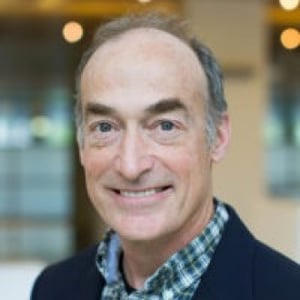
Professor of Law, Georgetown Law
William W. Buzbee is a professor of law at Georgetown University Law Center. In his teaching and scholarship, he specializes in environmental law, legislation and regulation, and administrative law. Recent publications focus on climate regulation, deregulation and law governing agency policy change, and federalism. He also offers seminars on advanced environmental, regulatory, and constitutional law subjects, with his most recent seminar focused on “The Art of Regulatory War.”
Professor Buzbee’s books include the recently published Fighting Westway: Environmental Law, Citizen Activism, and the Regulatory War that Transformed New York City (Cornell University Press 2014) and Preemption Choice: The Theory, Law and Reality of Federalism’s Core Question(Cambridge University Press, hardcover 2009, paperback 2011) (William W. Buzbee editor and contributor). He has been a co-author of the 5th , 6th, 7th and forthcoming 8th editions of Environmental Protection: Law and Policy (Aspen/Wolters Kluwer). Law review scholarship includes publications in New York University Law Review, University of Pennsylvania Law Review, Michigan Law Review, Stanford Law Review (co-authored), Cornell Law Review (co-authored), Duke Law Journal (forthcoming), George Washington Law Review, Iowa Law Review, The Journal of Law and Politics and in an array of other journals, books, news outlets, and blogs. Three of his articles have been named among the 10 best environmental or land use law articles of that year and republished in the Land Use and Environment Law Review. He regularly assists with appellate and Supreme Court environmental, federalism, and regulatory litigation, and also has testified before congressional committees on environmental and regulatory matters. He has published op-eds on regulatory and environmental issues with The New York Times, The Hill, CNN, and been quoted and interviewed by numerous press and media outlets.
Professor Buzbee joined Georgetown from Emory Law School, where he was a professor of law and directed its Environmental and Natural Resources Law Program. He also co-directed Emory’s Center on Federalism and Intersystemic Governance. He has been a visiting professor of law at Columbia, Cornell and Illinois law schools. He has also served as a professor for the Leiden-Amsterdam-Columbia Law School Summer Program in American Law. Professor Buzbee is a founding Member Scholar of the Center for Progressive Reform, a Washington D.C.-based regulatory think tank. Professor Buzbee was awarded the 2007-2008 Emory Williams Teaching Award for excellence in teaching. Professor Buzbee clerked for United States Judge Jose A. Cabranes, and before becoming a professor was an attorney-fellow at the Natural Resources Defense Council, and did environmental, land use and litigation work for the New York City law firm, Patterson, Belknap, Webb & Tyler. JD, Columbia Law School, 1986; BA, Amherst College, magna cum laude, 1983.
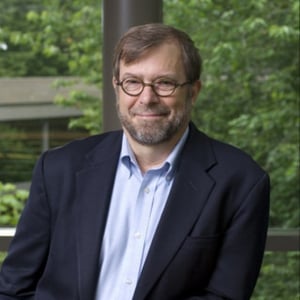
Lewis & Clark Distinguished Professor of Law Emeritus, Lewis & Clark Law School
Professor Funk is the author of American Constitutional Structure and a co-author of one of the leading administrative law casebooks, Administrative Procedure and Practice: Problems and Cases, as well as Administrative Law: Examples & Explanations and the Federal Administrative Procedure Sourcebook. Together with Professor Craig Johnston, Professor Funk is also a co-author of Legal Protection of the Environment, an environmental law casebook. In 2004-05, Funk was a Senior Fulbright Scholar at the University of Heidelberg, where he taught both American constitutional law and environmental law. Funk has published numerous articles on administrative and environmental issues, including in such publications as the Duke Law Journal, the Harvard Journal on Legislation, the Yale Journal on Regulation, the Administrative Law Review, and the U.C.L.A Journal of Environmental Law and Policy. He has chaired both the Administrative Law and Natural Resources Law Sections of the American Association of Law Schools. Funk is also active in the American Bar Association, where he recently served on the ABA’s President’s Task Force on Preemption of State Tort Law and where he is a Fellow of the Administrative Law and Regulatory Practice Section, which he formerly chaired and on whose Council he served. Professor Funk is also a Center for Progressive Reform Scholar, a member of the American Law Institute, and a Fellow of the American Bar Foundation. He has been admitted to practice in New York, the District of Columbia, and before the U.S. Supreme Court.
Before coming to the law school to teach, Professor Funk was an assistant general counsel at the U.S. Department of Energy and earned a special citation for exceptional performance from the Secretary of Energy. Prior to that Funk served as the principal staff member of the Legislation Subcommittee of the U.S. House of Representatives Permanent Select Committee on Intelligence, where he was instrumental in the drafting of the Foreign Intelligence Surveillance Act. Before joining the House Committee, Funk was a staff attorney in the Office of Legal Counsel of the U.S. Department of Justice, where he received a special commendation for outstanding service. Immediately after law school he clerked for Judge James Oakes of the U.S. Court of Appeals, Second Circuit.
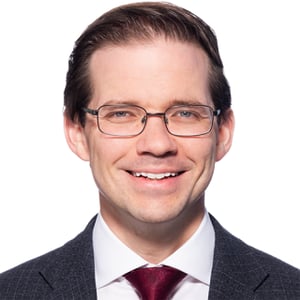
Of Counsel, Covington & Burling LLP
The Honorable Paul J. Ray is currently Of Counsel at Covington & Burling LLP where he advises clients on regulatory opportunities and challenges and helps them formulate and execute advocacy strategies for their regulatory policy priorities before the executive branch and Congress.
During the first Trump Administration, Paul held various senior positions at the Office of Information and Regulatory Affairs (OIRA) within the White House’s Office of Management and Budget, including as acting, and then Senate-confirmed, head of the office. As OIRA Administrator (the "regulations czar"), Paul supervised the review of hundreds of regulations from across the government, drafted numerous executive orders governing the regulatory process, and led the Administration’s regulatory reform effort. As a result of this experience, Paul is well-positioned to help clients understand and achieve regulatory policy priorities in the context of the government’s regulatory agenda and ongoing reform efforts.
Most recently, Paul was also the Director of the Roe Institute for Economic Policy Studies at The Heritage Foundation. In that role, he supervised the formulation of the Foundation’s economic and regulatory policy recommendations and provided technical assistance to congressional committees and staff regarding legislative changes to the regulatory process. In addition to his role at The Heritage Foundation, Paul also served as a Senior Advisor at a strategic advisory firm. Before his time in government, Paul practiced law at a law firm in Washington, specializing in administrative law matters.
Prior to his role at the White House, Paul was Counselor to the Secretary at the U.S. Department of Labor. There he led departmental efforts in high-profile rulemakings and helped formulate the Department’s legal positions and strategy.
Paul served as a law clerk to Supreme Court Justice Samuel Alito and as a law clerk to the Honorable Debra Livingston of the U.S. Court of Appeals for the Second Circuit.
Paul is a thought leader in the conservative legal movement and is a frequent commentator and speaker on regulatory policy and reform matters, including at law schools, professional gatherings, and other venues. He is the Chairman of Innovations in Peacebuilding International and the Regulatory Process Working Group of the Federalist Society’s Regulatory Transparency Project and a public member of the Administrative Conference of the United States. Paul is also an adjunct lecturer at the Hillsdale College School of Government.
Senior Attorney, Pacific Legal Foundation
Damien Schiff is a senior attorney at Pacific Legal Foundation. He leads its environmental practice group, a unique initiative that draws broadly from PLF’s expertise and success in property rights and separation of powers litigation. Over the years, Damien has represented hundreds of landowners and property rights advocates to defend their liberties against heavy-handed and unwarranted environmental and land-use regulation. His litigation experience includes Sackett v. U.S. Environmental Protection Agency, a groundbreaking decision in which the U.S. Supreme Court upheld the right of landowners to challenge Clean Water Act compliance orders issued by EPA, and Contoski v. Norton, PLF’s successful effort to force the federal government to make good on its promise to delist the bald eagle from the Endangered Species Act.
Besides litigation, Damien has written academic articles on a variety of subjects, including the Endangered Species Act, the Clean Water Act, greenhouse gas torts, the duty to rescue, and international water law. He has appeared on a variety of television and radio programs and has been quoted in The New York Times, The Wall Street Journal, Harper’s Magazine, and The Economist, among other publications.
He obtained his law degree magna cum laude from the University of San Diego School of Law, and his undergraduate degree magna cum laude from Georgetown University. While at USD, he was a research assistant for Professor Bernard Siegan, a leading constitutional theorist and advocate for property rights and economic liberty. Immediately prior to joining PLF, Damien clerked for Judge (and former PLF attorney) Victor Wolski of the United States Court of Federal Claims. Damien credits the mentoring and examples of Professor Siegan and Judge Wolski for his decision to pursue a career in liberty-based public interest litigation.
Damien lives in Sacramento with his wife, two young sons, four chickens, and a cat named Princess. In his off hours he enjoys stamp collecting, Gregorian chant, and martinis—preferably at the same time.
Assistant Administrator for the Office of Water, U.S. Environmental Protection Agency
Dave Ross is the Assistant Administrator for the Office of Water at the U.S. Environmental Protection Agency. Dave has more than 20 years of experience working on water issues in both state government and the private sector.
Prior to joining EPA in January 2018, Mr. Ross worked as the Director of the Environmental Protection Unit at the Wisconsin Department of Justice. During his tenure, he served as the lead environmental prosecutor for the State of Wisconsin and worked closely with the Wisconsin Department of Natural Resources on environmental and natural resources issues.
Mr. Ross has also worked in the Wyoming Attorney General’s Office representing the Water Quality Division of the Wyoming Department of Environmental Quality and as a partner in the land use and natural resources practice at an international law firm in Washington, D.C. Earlier in his career, he provided project management and environmental consulting services to the City of San Diego, California with a focus on designing, installing, and testing wastewater reclamation and repurification technologies.
Mr. Ross received his J.D. and Masters in Environmental Law from Vermont Law School and graduated with a Bachelor of Arts from the University of Wisconsin-Madison.
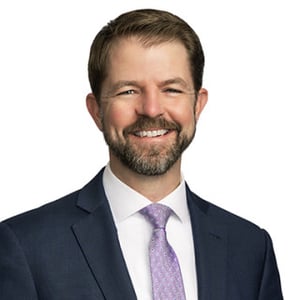
Partner, Baker Botts LLP
Drawing from two decades of experience in senior government, in-house corporate, and private law firm roles, Jeff Wood helps clients with federal enforcement, compliance, litigation, permitting, and policy challenges primarily in the energy and environmental fields.
Prior to joining Baker Botts, Mr. Wood served for almost two years as the Acting Assistant Attorney General (AAG) for the Justice Department's Environment and Natural Resources Division (ENRD). In that capacity, Mr. Wood led ENRD and its more than 600 attorneys and staff representing EPA, Departments of the Interior, Energy, and Defense, and other agencies in civil and criminal enforcement and defensive environmental, energy, and natural resources litigation.
As the top official in ENRD, Mr. Wood managed a complex organization with an annual budget exceeding $200 million and a docket of more than 6,000 cases and matters. E&E News noted that “Wood maintains a strong relationship with ENRD's career staff” (Greenwire, Oct. 31, 2018). He previously served on the staff of the United States Senate Committee on Environment and Public Works.
At the Justice Department, Mr. Wood oversaw the Division's civil and criminal enforcement programs and was responsible for developing legal strategies and approving briefs in key cases including filings before the Supreme Court and Courts of Appeals in coordination with the Office of Solicitor General. In this role, Mr. Wood held the highest level security clearance and worked closely with top leadership at DOJ, EPA, the Interior Department, USDA, the Energy Department, Transportation Department, FERC, NRC and across the Executive Branch, including the White House.
With many years of both private law firm and in-house legal experience, Mr. Wood has handled complex environmental enforcement, regulatory, policy, and litigation matters for electric utilities, energy companies, maritime companies, mining companies, real estate developers, financial institutions, industrial companies and manufacturers, business coalitions, associations, small businesses, and individual property owners. Drawing from his experiences in-house, Mr. Wood brings a common-sense, cost-effective, client-focused approach to his work every day.
With a strong national reputation, Mr. Wood is a frequent speaker on environmental law and policy matters, with recent speeches and presentations at the Environmental Law Institute, Harvard Law School, Vanderbilt Law School, American University Law School, American Bar Association Environmental Law Conferences, the Texas Environmental SuperConference, Air Force Judge Advocate General School's Advanced Environmental Law Course, Baker Institute's Center for Energy Studies (Rice University), and many other venues. He frequently appears in national news to share insights on significant environmental law and policy issues, including recent quotes in the New York Times, Washington Post, Wall Street Journal, Bloomberg, Law360, and E&E News, among others.

Professor of Law and Executive Director, Law and Economics Center, Antonin Scalia Law School, George Mason University
Donald Kochan is Professor of Law and Executive Director of the Law & Economics Center (LEC). Professor Kochan is an elected member of the American Law Institute (ALI) and serves as an Adviser to ALI's Restatement of the Law Fourth, Property project. Professor Kochan is a Nonresident Scholar at the Center for the Constitution at Georgetown University Law Center, where he was a Visiting Scholar in residence during Fall 2018. Before joining the Antonin Scalia Law School faculty, he was the Parker S. Kennedy Professor in Law at Chapman University’s Dale E. Fowler School of Law from 2004 to 2020. From 2003 to 2004, Professor Kochan was an Olin Fellow at the University of Virginia School of Law. During 2002-2003, he was a Visiting Assistant Professor of Law at George Mason’s Scalia Law School.
Professor Kochan’s scholarship focuses on areas of property law, constitutional law, administrative law, local government law, natural resources and environmental law, and law & economics. He has published several books and more than 50 scholarly articles and essays in well-regarded law journals. His work has been cited in more than a dozen state and federal court opinions, in more than 75 briefs filed in state and federal courts including more than 25 filed in the U.S. Supreme Court, in dozens of books and treatises, and in more than 800 scholarly articles.
Professor Kochan received his JD from Cornell Law School, where he was a John M. Olin Scholar in Law and Economics and managing editor of the Cornell International Law Journal. During law school, he also served as editor and executive editor of the Harvard Journal of Law & Public Policy symposium issues in 1997 and 1998. He received his BA from Western Michigan University, magna cum laude, with majors in both political science and philosophy, where he studied as the John W. Gill Medallion Scholar and was honored as the Presidential Scholar (awarded to the top graduate in the political science department).
After graduating from law school, Professor Kochan was a law clerk to The Honorable Richard F. Suhrheinrich of the United States Court of Appeals for the Sixth Circuit. Following his clerkship, Professor Kochan was an associate with the firm of Crowell & Moring LLP in Washington, D.C., where he specialized in natural resources & environmental law as well as tort, products, and consumer civil litigation & legislative affairs.
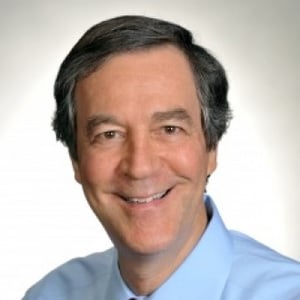
J. B. and Maurice C. Shapiro Professor of Environmental Law, George Washington University Law School
Robert L. Glicksman is a nationally and internationally recognized expert on environmental, natural resources, and administrative law issues. A graduate of the Cornell Law School, his areas of expertise include environmental, natural resources, administrative, and property law. Before joining the law school faculty in 2009, Professor Glicksman taught at the University of Kansas School of Law, where he joined the faculty in 1982 and was named the holder of the Robert W. Wagstaff Distinguished Professor of Law in 1995. Professor Glicksman has practiced with law firms in DC and New Jersey before joining and while on leave from academia, focusing on environmental, energy, and administrative law issues. He has consulted on various environmental and natural resources law issues, including work for the Secretariat of the Commission for Environmental Cooperation in Montreal, Canada.
Professor Glicksman has extensive publications in his areas of expertise. He is co-author of two law school casebooks, Environmental Protection: Law and Policy (6th ed. Aspen Publishers) and Administrative Law: Agency Action in Legal Context (Foundation Press); the four-volume treatise, Public Natural Resources Law (2d ed. Thomson/West); two monographs, Risk Regulation at Risk: A Pragmatic Approach, and Pollution Limits and Polluters’ Efforts to Comply: The Role of Government Monitoring and Enforcement, both published by Stanford University Press); and Modern Public Land Law in a Nutshell (3d ed. West). He has written numerous book chapters and articles on a variety of environmental and natural resources law topics, concentrating recently on topics such as climate change, federalism issues in environmental law, the challenges facing the federal land management agencies, and environmental enforcement. His articles have been published in law reviews and journals that include the Texas Law Review, Pennsylvania Law Review, the Northwestern University Law Review, the Duke Law Journal, the Vanderbilt Law Review, the Wake Forest Law Review, the Indiana Law Journal, the Stanford Environmental Law Journal, the Virginia Environmental Law Journal, and the Administrative Law Review.
Professor Glicksman has been a member scholar for the Center for Progressive Reform since 2002 and a member of the Center’s Board of Directors since 2008.
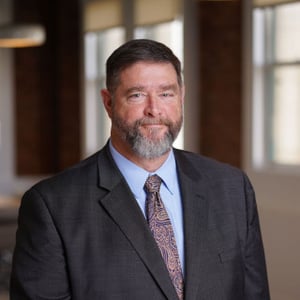
Partner, Briscoe Prows Kao Ivester & Bazel LLP
Tony Francois is experienced in Water and Real Property Law, Land Use and Zoning, Environmental Regulation, Natural Resources Development, Agricultural Law, and Constitutional Law. He has represented homeowners, builders, farmers and ranchers, trade associations, and water districts in administrative, civil, and criminal proceedings before state and federal administrative agencies and state and federal trial and appellate courts. He is a member of the California State Bar and the Northern, Eastern, and Central Districts of California and the Districts of New Mexico and North Dakota, and has litigated cases in federal courts in California, Oregon, Washington, Idaho, Montana, Nevada, Arizona, New Mexico, Colorado, North and South Dakota, Minnesota, Massachusetts, Maryland, South Carolina, and the District of Columbia, as well as the Sixth, Eighth, Ninth, and Tenth Circuit Courts of Appeals. He has appeared before the Supreme Courts of California, Idaho, Nevada, and the United States.
Prior to attending law school, he served as an infantry officer in the United States Army, and was stationed in the former West Germany during the fall of the Berlin Wall.
Tony was an Attorney at Pacific Legal Foundation from 2012 to 2021. He was a lobbyist for 10 years, first with California Farm Bureau Federation from 2003 to 2007, and then with KP Public Affairs from 2007 to 2012. He was an attorney at McQuaid, Bedford & Van Zandt in San Francisco from 1999 – 2003.
Senior Attorney, Pacific Legal Foundation
Damien Schiff is a senior attorney at Pacific Legal Foundation. He leads its environmental practice group, a unique initiative that draws broadly from PLF’s expertise and success in property rights and separation of powers litigation. Over the years, Damien has represented hundreds of landowners and property rights advocates to defend their liberties against heavy-handed and unwarranted environmental and land-use regulation. His litigation experience includes Sackett v. U.S. Environmental Protection Agency, a groundbreaking decision in which the U.S. Supreme Court upheld the right of landowners to challenge Clean Water Act compliance orders issued by EPA, and Contoski v. Norton, PLF’s successful effort to force the federal government to make good on its promise to delist the bald eagle from the Endangered Species Act.
Besides litigation, Damien has written academic articles on a variety of subjects, including the Endangered Species Act, the Clean Water Act, greenhouse gas torts, the duty to rescue, and international water law. He has appeared on a variety of television and radio programs and has been quoted in The New York Times, The Wall Street Journal, Harper’s Magazine, and The Economist, among other publications.
He obtained his law degree magna cum laude from the University of San Diego School of Law, and his undergraduate degree magna cum laude from Georgetown University. While at USD, he was a research assistant for Professor Bernard Siegan, a leading constitutional theorist and advocate for property rights and economic liberty. Immediately prior to joining PLF, Damien clerked for Judge (and former PLF attorney) Victor Wolski of the United States Court of Federal Claims. Damien credits the mentoring and examples of Professor Siegan and Judge Wolski for his decision to pursue a career in liberty-based public interest litigation.
Damien lives in Sacramento with his wife, two young sons, four chickens, and a cat named Princess. In his off hours he enjoys stamp collecting, Gregorian chant, and martinis—preferably at the same time.
Arthur Kaplan Professor of Law, Co-Director, Floersheimer Center, Benjamin N. Cardozo School of Law
Professor Michael E. Herz joined the faculty of the Benjamin N. Cardozo School of LAw from the Environmental Defense Fund, where he was a staff attorney for three years. Previously, he clerked for Associate Justice Byron R. White of the U.S. Supreme Court and for Chief Judge Levin H. Campbell of the U.S. Court of Appeals for the First Circuit. Professor Herz was Cardozo's Vice Dean from 2006 to 2009 and served as Senior Associate Dean from 1996 to 2000; he is currently the co-director of Cardozo's Floersheimer Center for Constitutional Democracy. He was a visiting professor at New York University School of Law from 2000 to 2001 and 2005 to 2006, has taught at Columbia and Princeton, and spent a year as a Fellow in Princeton's Program in Law and Public Affairs. Professor Herz is a former Chair of the ABA's Section of Administrative Law and Regulatory Practice and serves as a public member of the Administrative Conference of the United States.

George C. Dix Professor in Constitutional Law, Northwestern University Pritzker School of Law
John O. McGinnis is a graduate of Harvard College and Harvard Law School where he was an editor of the Harvard Law Review. He also has an MA degree from Balliol College, Oxford, in philosophy and theology. Professor McGinnis clerked on the U.S. Court of Appeals for the District of Columbia. From 1987 to 1991, he was deputy assistant attorney general in the Office of Legal Counsel at the Department of Justice. He is the author of Accelerating Democracy: Transforming Government Through Technology (Princeton 2013) and Originalism and the Good Constitution (Harvard 2013) (with M. Rappaport). He is a past winner of the Paul Bator award given by the Federalist Society to an outstanding academic under 40. He has been listed by the United States on the roster of panelists who may be called upon to decide World Trade Organization Disputes.
Dean and Robert Kramer Research Professor of Law, The George Washington University Law School
Blake D. Morant is the Dean of The George Washington University Law School and Robert Kramer Research Professor of Law. He assumed the deanship on September 1, 2014, after having served seven years as Dean of the Wake Forest University School of Law. Dean Morant is one of the nation’s best known and respected legal educators and scholars. He has served in numerous leadership positions in the Association of American Law Schools and the American Bar Association, and he regularly speaks across the country and abroad on legal education, diversity, and topics relating to his scholarly interests. He has taught at the law schools at American University, University of Toledo, University of Michigan, University of Alabama, and Washington & Lee. He has also been a visiting fellow of University College, Oxford. Prior to becoming a legal academic, he served in the Army’s Judge Advocate General Corps, as a senior associate with a Washington, D.C. law firm, and as an Assistant General Counsel for the Washington Metropolitan Area Transit Authority.
At Wake Forest, Dean Morant built a national reputation as an exceptional law school administrator, tireless advocate for students, and respected legal scholar. He has published extensively on his areas of scholarly focus, including contract theory, media law, and administrative law. Following many years of deep involvement at the committee level, Dean Morant was chosen to serve as President-elect of the Association of American Law Schools for 2014 and President in 2015. The AALS is an association of 176 law schools representing more than 10,000 faculty members in the United States. He also has served in numerous leadership positions for the American Bar Association (ABA), including as Vice Chair of the ABA Diversity Committee and as a site inspection team member for ABA law school accreditation. He was appointed to the Federal Judicial Center Foundation Board by U.S. Supreme Court Chief Justice John G. Roberts and by the Virginia Supreme Court to serve on a task force to study gender bias in the Virginia courts.
Among his many professional honors, Dean Morant was named the John R. Kramer Outstanding Law Dean by Equal Justice Works, was twice recognized by National Jurist magazine as one of the most influential people in legal education, and received the Chief Justice John Marshall Lifetime Achievement Award in 2012 from the Judge Advocates Association. He was twice named professor of the year by the Women Law Students Organization at Washington & Lee University and received five awards for outstanding teaching at the University of Toledo College of Law. In 2003, he was chosen as the first American to deliver the commemorative Thomas More address at St. Dunstan's Church, Canterbury, England. Dean Morant earned a BA with high distinction and Phi Beta Kappa honors and a JD, both from the University of Virginia. In addition, he received an honorary Doctor of Laws degree from Pepperdine University in 2010.

Executive Vice President and Senior Counselor to the President, The Federalist Society for Law and Public Policy Studies
B.A., Yale; J.D., University of Chicago. Lee Liberman Otis is the Executive Vice President and Senior Counselor to the President at the Federalist Society. She also serves as a member of the American Law Institute (ALI), a senior fellow of the Administrative Conference (ACUS), and as the co-chair of the National Constitution Center's Coalition of Freedom Advisory Board. She previously was a special assistant and an Associate Deputy Attorney General at the U.S. Department of Justice, General Counsel of the Department of Energy, an associate in the appellate section of Jones, Day, Reavis & Pogue, an associate counsel to President George H.W. Bush, and a law clerk to Associate Justice Antonin Scalia. She also served as an assistant professor of law at George Mason, where she taught legislation, federal jurisdiction, constitutional law, civil procedure, and appellate advocacy. Ms. Otis has been an important member of the Federalist Society team since the organization’s beginnings. Together with David McIntosh, she led the effort to start what became the Chicago chapter of the Society. She also helped organize the Society’s first conference at Yale, its second conference at Chicago, and its first Lawyers Division chapter in Washington DC, as well as the effort to incorporate the Society, recruit its permanent staff, and obtain its early funding. She was a Founding Director of the Federalist Society.
Associate Professor, University of Notre Dame Law School
Jeffrey Pojanowski joined the faculty and community of Notre Dame Law School in 2010. He teaches and writes in the areas of administrative law, jurisprudence, and torts. At present, his scholarship focuses on the legal theory of administrative action, as well as the philosophy and intellectual history of legal reasoning.
Prof. Pojanowski earned his A.B. in Public Policy with highest honors from Princeton University and graduated magna cum laude from Harvard Law School in 2004, where he was Articles Co-Chair for the Harvard Law Review. After law school, he served as a law clerk to then-Judge John Roberts on the United States Court of Appeals for the D.C. Circuit and then to Justice Anthony Kennedy on the Supreme Court of the United States. He then practiced law with Latham & Watkins in Washington, D.C., where he specialized in appellate litigation and administrative-law matters.
Betts Professor Emeritus of Law, Columbia Law School
Peter L. Strauss is the Betts Professor of Law at Columbia Law School. He teaches courses in administrative law, legal methods, and legislation. He joined the faculty in 1971, and has twice served as vice dean.
He received his LL.B. from Yale Law School in 1964 and his A.B. from Harvard College in 1961. Before joining the Law School, he clerked for David L. Bazelon and William J. Brennan in Washington, D.C.; spent two years lecturing on criminal law in the national university of Ethiopia; and three years as an attorney in the Office of the Solicitor General, briefing and arguing cases before the U.S. Supreme Court. During 1975 to 1977, Strauss was on leave from Columbia as the first general counsel of the United States Nuclear Regulatory Commission.
In 1987, the American Bar Association's section of administrative law and regulatory practice presented Strauss with its third annual award for distinguished scholarship in administrative law. From 1992 to 1993, he served as chair of the section. He has been a reporter for rulemaking on its APA and European Union administrative law projects, and was a member of its E-Rulemaking task force. In 2008, the American Constitution Society awarded him the first Richard Cudahy prize for his essay “Overseer or 'The Decider'? The President in Administrative Law.”
Strauss has been a visitor at the European University Institute, Harvard University, the Max Planck Institute for Comparative Public and International Law, and New York University, and has lectured widely on American administrative law abroad, including programs in Argentina, Australia, Belarus, Brazil, China, Colombia, England, France, Germany, Hong Kong, India, Italy, Japan, the Netherlands, New Zealand, Turkey, and Venezuela. During 2008 to 2009, he was Fernand Braudel Senior Fellow at the European Law Institute and Parsons Fellow at the University of Sydney Law School.
A life member of the American Law Institute, Strauss was elected in 2010 to the American Academy of Arts & Sciences. He has also long been a faculty member on the board of the Law School's Public Interest Law Foundation.
Chief Executive Officer, Association of American Law Schools
Kellye Y. Testy is the executive director and chief executive officer of the Association of American Law Schools which serves as the institutional membership organization for its 175 member law schools and as the learned society for the legal academy.
Prior to joining AALS, Testy served as the president and chief executive officer of the Law School Admission Council, where she led the organization in its committed efforts to advance law and justice by encouraging diverse, talented individuals to study law and by supporting their enrollment and learning journeys from prelaw through practice.
Testy served as dean and professor of law at University of Washington School of Law from 2009 to 2017 and at Seattle University School of Law from 2005 to 2009. She began her career as a law professor at the University of Puget Sound in 1992, which then became Seattle University. As a professor, Testy was an award-winning teacher and an insightful scholar who brought an equity lens to her focus on business and corporate law. Her areas of expertise include leadership, business and corporate law, gender and the law, and legal education. Testy earned her undergraduate degree in journalism from Indiana University in Bloomington, and her law degree from Indiana University Maurer School of Law—Bloomington.
In addition to her role at AALS, she serves on the boards of the Washington Law Institute and LSSSE and teaches law and leadership at a number of law schools across the country.

Professor of Law, University of Michigan Law School
Christopher J. Walker is a Professor of Law at the University of Michigan. Prior to joining Michigan law faculty in 2022, he spent a decade teaching at The Ohio State University Moritz College of Law. He previously clerked for Justice Anthony Kennedy of the U.S. Supreme Court, worked on the Civil Appellate Staff at the U.S. Department of Justice, and served on the Senate Judiciary Committee staff for the Gorsuch Supreme Court confirmation. Professor Walker’s research focuses on administrative law, regulation, and law and policy at the agency level. Outside the law school, he chaired the American Bar Association’s Section of Administrative Law and Regulatory Practice in 2020-21 and served as one of forty Public Members of the Administrative Conference of the United States from 2016-2022, and he continues to serve in both organizations in various capacities. He also works of counsel at the U.S. Chamber Litigation Center. In 2022, he received the Federalist Society’s Joseph Story Award.

Analysis of the New Proposed “Waters of the United States” (WOTUS) Rule
Daren Bakst, Patrick A. Parenteau, Damien Michael Schiff, John Paul Woodley
On November 20th, 2025, the EPA and the Army Corps of Engineers proposed a rule...
[Film Screening & Discussion] Sackett v. EPA: A Tale of Wetland Regulations
Daren Bakst, Morgan Brummund, William W. Buzbee
Join the Federalist Society and the American Conservation Coalition for a film screening and discussion...
Regulation and Red Tape: Sackett v. EPA: A Tale of Wetland Regulations
William Funk, Paul J. Ray, Damien Michael Schiff
At what point can Americans go to court to defend themselves against agency enforcement action?...
Clean Water & the Rule of Law: Recapping 4 Years of Reform and the Path Ahead
David P. Ross, Jeffrey H. Wood
Under the current administration, the U.S. Environmental Protection Agency (EPA) has adopted a variety of...
Topics
New Presidential Executive Orders Put the Brakes on Unfair Use of Agency Guidance
Ever since the Supreme Court announced the Chevron doctrine (that agency interpretations would prevail unless...
Waters of the United States: Interpreting the Clean Water Act
Donald J. Kochan, Robert Glicksman
What is the Clean Water Act? Have historical interpretations of its scope changed over the...
Will We Soon Have Clarity on Navigable Waters?: How the Supreme Court’s October 2017 Term Set the Stage
Tony Francois
Note from the Editor: This article discusses the longstanding legal battle over the meaning of...
Topics
U.S. Army Corps of Engineers v. Hawkes Co.
Background Imagine you own a plot of land. You may want to build a house...
U.S. Army Corps of Engineers v. Hawkes Co., Inc.: Wetlands Jurisdictional Determinations and the Right of Federal Judicial Review
Damien Michael Schiff
Note from the Editor: This article discusses U.S. Army Corps of Engineers v. Hawkes, a...
Panel: The New Chevron Skeptics
Michael E. Herz, John O. McGinnis, Blake D. Morant, Lee Liberman Otis, Jeffrey Pojanowski, Peter L. Strauss, Kellye Y. Testy, Christopher J. Walker
When Chevron was first decided it was generally welcomed on the right side of the...