
Courthouse Steps Oral Argument: Murthy v. Missouri
Murthy v. Missouri, originally filed as Missouri v. Biden, concerns whether federal government officials had...

The Regulatory Transparency Project was a nonprofit, nonpartisan effort dedicated to fostering discussion and a better understanding of regulatory policies.


Stewart A. Baker, Adam Candeub, Matthew Seligman
Murthy v. Missouri, originally filed as Missouri v. Biden, concerns whether federal government officials had...
Stewart A. Baker, Adam Candeub, Matthew Seligman
Murthy v. Missouri, originally filed as Missouri v. Biden, concerns whether federal government officials had...

RTP's Fourth Branch Podcast
In this episode, Jon Riches and James Sherk discuss fundamental questions related to government labor...

Michael Buschbacher, John Kendrick, Susan C. Morse, Molly Nixon, John F. Duffy
RTP's Fourth Branch Podcast
On February 20, 2024, the U.S. Supreme Court will hear oral argument in Corner Post,...

Michael Buschbacher, John F. Duffy, John Kendrick, Susan C. Morse, Molly Nixon
On February 20, 2024, the U.S. Supreme Court will hear oral argument in Corner Post,...
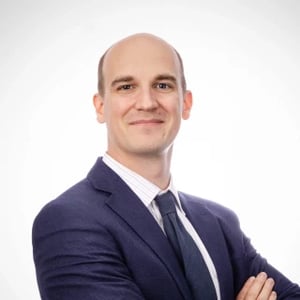
Managing Partner, Boyden Gray PLLC
Michael Buschbacher is the managing partner of Boyden Gray PLLC. He represents public and private companies, trade associations, non-profits, and individuals in high-stakes litigation and administrative proceedings, with a particular focus on environmental and energy matters.
In addition to trial-level work, Mr. Buschbacher maintains an active appellate practice, both as merits counsel and as counsel for amici curiae. He has written amicus briefs quoted by the Seventh and Ninth Circuits. And his Supreme Court advocacy has been cited by The New Yorker, The New York Times, and E&E News. Mr. Buschbacher’s commentary on legal issues has been published in The Wall Street Journal, Newsweek, and The American Conservative.
Before joining the firm, Mr. Buschbacher served at the U.S. Department of Justice as counsel to the Assistant Attorney General for the Environment and Natural Resources Division. There, he advised senior Department leadership, served as the lead attorney on several lawsuits, and helped draft policy memoranda for the Department on the proper scope and procedure for environmental enforcement. Prior to serving in the government, Mr. Buschbacher was an associate in the D.C. office of Sidley Austin.
Mr. Buschbacher is a former clerk to Judge Alice M. Batchelder of the U.S. Court of Appeals for the Sixth Circuit and to Magistrate Judge Paul R. Cherry of the U.S. District Court for the Northern District of Indiana.
Mr. Buschbacher holds a B.A. in Music and Germanic Studies from Indiana University and a J.D., magna cum laude, from Notre Dame Law School.

Counsel, Sen. Schmitt and the Senate Judiciary Committee
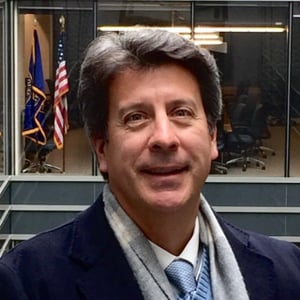
Senior Counsel, Committee on Oversight and Government Reform, U.S. House of Representatives
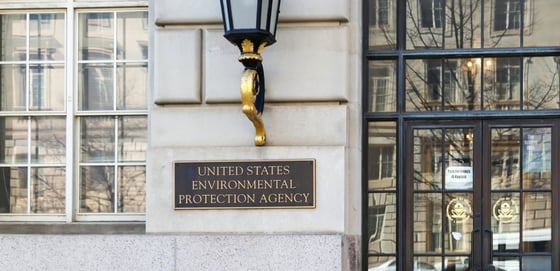
Daniel Flores is a Senior Counsel on the Republican staff of the Committee on Oversight and Government Reform, U.S. House of Representatives. Prior to his current position, he served in the House as Chief Counsel for the House Judiciary Committee's Subcommittee on Regulatory Reform, Commercial and Antitrust Law. Before coming to the House, he served as an Acting Associate Deputy General Counsel for the U.S. Environmental Protection Agency and in other roles in EPA's Office of General Counsel, as a Senior Trial Attorney for the U.S. Department of Justice, Environment and Natural Resources Division, and as an attorney in private practice in Washington, D.C. He serves as a House liaison to the Administrative Conference of the United States and has served on the Council of the American Bar Association’s Section on Administrative Law & Regulatory Practice.

Professor of Law, South Texas College of Law Houston
Josh Blackman is a national thought leader on constitutional law and the United States Supreme Court. Josh’s work was quoted during two presidential impeachment trials. He has testified before Congress and advises federal and state lawmakers. Josh regularly appears on TV, including NBC, CBS, ABC, Fox, and the BBC. Josh is also a frequent guest on NPR and other syndicated radio programs. He has published commentaries in the New York Times, Wall Street Journal, Washington Post, and leading national publications.
Since 2012, Josh has served as a professor at the South Texas College of Law Houston. He holds the Centennial Chair of Constitutional Law. Josh is an Adjunct Fellow at the Manhattan Institute. Josh has written more than seven dozen law review articles that have been cited more than a thousand times. Josh was selected as the Jurist of the Year by the Texas Journal of Law & Public Policy, received the inaugural Meese III Originalism Award, and was awarded the Inaugural Joseph Story Award. Josh was selected by Forbes Magazine for the “30 Under 30” in Law and Policy. Josh is the President of the Harlan Institute, and founded FantasySCOTUS, the Internet’s Premier Supreme Court Fantasy League. He blogs at the Volokh Conspiracyand posts@JoshMBlackman.
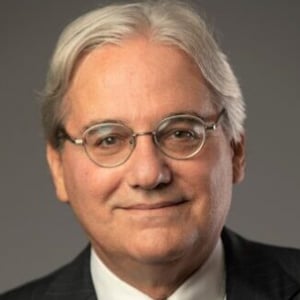
Clinical Professor of Law, Cornell Law School
William A. Jacobson is a Clinical Professor of Law and Director of the Securities Law Clinic.
He is a 1981 graduate of Hamilton College and a 1984 graduate of Harvard Law School. At Harvard he was Senior Editor of the Harvard International Law Journal and Director of Litigation for the Harvard Prison Legal Assistance Project.
Prior to joining the Cornell law faculty in 2007, Professor Jacobson had a highly successful civil litigation and arbitration practice in Providence, Rhode Island, concentrating in investment, employment, and business disputes in the securities industry, including many high profile cases reported in leading newspapers and magazines.
Professor Jacobson has argued cases in numerous federal and state courts, including the Courts of Appeal for the First, Fifth and Sixth Circuits, and the Rhode Island Supreme Court.
Professor Jacobson has a national reputation as a leading practitioner in securities arbitration. He was Treasurer, and is a former member of the Executive Committee and Board of Directors of the Public Investors Arbitration Bar Association, a professional organization of attorneys dedicated to protecting public investors. He frequently is quoted in national media on issues related to investment fraud and investor protection, and in the past has served as one of a small number of private practice attorneys who trained new arbitrators for the Financial Industry Regulatory Authority.
Professor Jacobson is co-author of the Securities Arbitration Desk Reference (Thomson-Reuters), updated annually.
Professor Jacobson also is the founder and publisher of Legal Insurrection, a popular politics and law website. He is frequently quoted in the media on political and legal topics, has authored many Op-Eds in major publications, and appears on television and radio to discuss politics and the law.
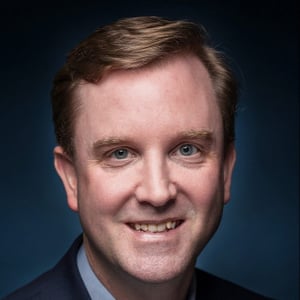
Vice President and Deputy Counsel, Wisconsin Institute for Law and Liberty
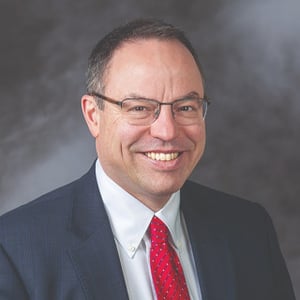
Professor of Law and J. Philip Johnson Faculty Fellow, University of North Dakota School of Law
Michael S. McGinniss is Professor of Law and J. Philip Johnson Faculty Fellow at the University of North Dakota School of Law, where he joined the faculty in 2010 and served as the Dean from 2019 to 2022. He chairs the executive committee for the Federalist Society's Practice Group on Professional Responsibility and Legal Education.
Before entering the legal academy, Professor McGinniss served for twelve years as a Disciplinary Counsel for the Supreme Court of Delaware. He currently teaches courses on Professional Responsibility, Advanced Legal Ethics, Civil Procedure, and Federal Courts. He also serves as Faculty Advisor for the North Dakota Law Review and the UND Law Federalist Society student chapter.
Professor McGinniss’ research and scholarship interests are wide-ranging and include lawyer and judicial ethics, lawyer discipline and regulation of the profession, constitutional law (especially First Amendment, separation of powers, and federalism), and cultural challenges faced by conservatives in the law schools and the legal profession. His most recent law review article, Declaring Independence to Secure Integrity: The Supreme Court Justices' Code of Conduct, was published in the Federalist Society Review. His article Expressing Conscience with Candor: Saint Thomas More and First Freedoms in the Legal Profession, was published in the Harvard Journal of Law & Public Policy.
Professor McGinniss has spoken to Federalist Society lawyer and student chapters across the country about judicial independence and ethics, especially relating to the federal courts and the United States Supreme Court Justices. In addition, he has spoken to several chapters about rising challenges to ideological diversity and targeting of conservative viewpoints in law schools and the legal profession. Although he is very pleased to speak on these and many other topics that may be of interest to lawyer and student chapters, in 2026-2027, he has particular interest in speaking on the topic “Lawyer Discipline as Political ‘Resistance’: Separation of Powers, Federalism, and the Rule of Law,” concerning his work-in-progress on the weaponization of professional disciplinary processes against conservative lawyers for political and ideological purposes.

Commissioner, U.S. Equal Employment Opportunity Commission

Founder, Chairman, and CEO, Louis D. Brandeis Center for Human Rights Under Law
Hon. Kenneth L. Marcus is an internationally recognized expert in civil and human rights, as well as a leader in the fight against anti-Semitism on and off university campuses. He is the Founder, Chairman, and CEO of The Louis D. Brandeis Center for Human Rights Under Law, the leading civil rights legal organization fighting against anti-Semitism. The New York Times has called him “The Man Who Helped Redefine Campus Anti-Semitism.” He been described, in that paper, as “the single most effective and respected force” to combat anti-Semitism.
During his public service career, Marcus served as Assistant U.S. Secretary of Education for Civil Rights; Staff Director at the U.S. Commission on Civil Rights; and General Deputy Assistant U.S. Secretary of Housing and Urban Development for Fair Housing and Equal Opportunity.
In academia, he serves as Professorial Lecturer in Law at George Washington University. He formerly held the Lillie and Nathan Ackerman Chair in Equality and Justice in America at the City University of New York’s Bernard M. Baruch College, served as Visiting Research Professor of Political Science at Yeshiva University, and was a Board of Visitors member George Mason University and Distinguished Senior Fellow at that university’s law school. He is a member of the editorial board of the Journal of Contemporary Antisemitism and previously served as Associate Editor of the Journal for the Study of Anti-Semitism.
Marcus is also author of The Definition of Anti-Semitism (Oxford University Press) and Jewish Identity and Civil Rights in America (Cambridge University Press). He has published widely in academic journals as well as in more popular venues such as The Wall Street Journal, Washington Post, Newsweek, USA Today, and Politico. He is a graduate of Williams College and the University of California at Berkeley School of Law.
Earlier in his career, he was a litigation partner in two major law firms, where he conducted complex commercial and constitutional litigation. He also serves as Chairman emeritus of the Executive Committee of the Federalist Society for Law & Public Policy Civil Rights Practice Group.
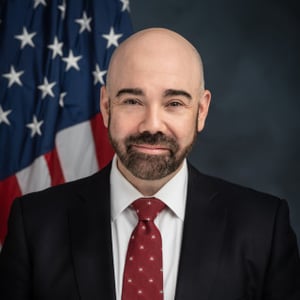
Assistant Secretary for Fair Housing and Equal Opportunity, United States Department of Housing and Urban Development
Craig Trainor is Assistant Secretary for Fair Housing and Equal Opportunity at the United States Department of Housing and Urban Development. President Trump nominated Mr. Trainor for this position on February 11, 2025, and the United States Senate confirmed him on October 7, 2025.
A “Day One” Trump-Vance Administration official, he previously served as Acting Assistant Secretary for Civil Rights and Principal Deputy Assistant Secretary for Civil Rights at the United States Department of Education, where he spearheaded the Department’s efforts to reorient America’s civil rights regime from an unjust spoils system to one that protects the rights of all Americans. Mr. Trainor’s February 14, 2025, “Dear Colleague” letter is widely considered the Trump Administration’s blueprint for enforcing civil rights laws and restoring the Constitution’s promise of equal protection.
Prior to serving in the Trump-Vance Administration, he was Senior Special Counsel with the United States House of Representatives Committee on the Judiciary under Chairman Jim Jordan (R-OH), and Senior Litigation Counsel with the America First Policy Institute under the Honorable Pam Bondi.
For over ten years, Mr. Trainor was a criminal defense and civil rights lawyer in New York City, litigating cases in New York state court and the United States District Court for the Southern and Eastern Districts of New York.
Prior to founding his law practice, he served as a New York City prosecutor, an associate attorney at a white collar criminal defense firm, and a law clerk to Chief Judge Frederick J. Scullin, Jr., United States District Court for the Northern District of New York.
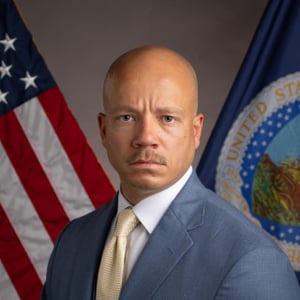
Assistant Secretary for Civil Rights, U.S. Department of Agriculture
Devon Westhill is the Assistant Secretary for Civil Rights at the U.S. Department of Agriculture. The U.S. Senate confirmed President Donald Trump’s nomination of Westhill on October 7, 2025.
Westhill returns to the USDA where he previously headed the civil rights office as Deputy Assistant Secretary in President Trump’s first term. His previous government appointments also include service at the U.S. Department of Labor, liaison to the Administrative Conference of the U.S., and liaison to the White House Initiative on Historically Black Colleges and Universities. Prior to returning to government service, Westhill was President and General Counsel of a nonprofit civil rights organization.
Westhill has testified on civil rights matters before Congress, federal agencies, and as an expert witness in federal court. He has spoken hundreds of times at college campuses, conferences, and on radio and TV programs, and he is frequently quoted in print publications, and his writing has appeared in numerous national outlets. A U.S. Navy veteran, Westhill earned his BA from the University of North Carolina at Chapel Hill and his JD from the University of Florida.

Partner, Steptoe & Johnson LLP
Stewart Baker is a partner in the law firm of Steptoe & Johnson in Washington, D.C. From 2005 to 2009, he was the first Assistant Secretary for Policy at the Department of Homeland Security. His law practice covers cybersecurity, data protection, homeland security, and travel and foreign investment regulation; he has been awarded one patent.
Mr. Baker has been General Counsel of the National Security Agency and General Counsel of the commission that investigated WMD intelligence failures prior to the Iraq war. He is the author of Skating on Stilts, a book on terrorism, cybersecurity, and other technology issues; he also hosts the weekly Cyberlaw Podcast.

Professor of Law, Michigan State University (currently serving as FCC General Counsel)
Professor Candeub joined the MSU Law faculty in fall 2004. He is also a Fellow with MSU's Institute of Public Utilities. Prior to joining MSU, he served as an advisor at the Federal Communications Commission (FCC). From 1998 to 2000, Professor Candeub was a litigation associate for the Washington D.C. firm of Jones, Day, Reavis & Pogue and also has served as a corporate associate with Cleary, Gottlieb, Steen & Hamilton, also in Washington, D.C. Immediately following law school, he clerked for Chief Judge J. Clifford Wallace, U.S. Court of Appeals for the Ninth Circuit. While in law school, Professor Candeub was an articles editor for the University of Pennsylvania Law Review.
Professor Candeub's scholarly interests focus on the law and regulation of communications, internet, technology. His numerous law review articles and scholarly papers have placed him at the center of legal and policy controversies, and he often writes for popular outlets such as the Wall Street Journal and US News. Federal courts, including the U.S. Supreme Court, have cited and relied upon his work.
He joined the Trump administration in 2019 as Deputy Assistant Secretary of Commerce for Telecommunications and Information and assumed the role of Acting Assistant Secretary. He later joined the Department of Justice as Deputy Associate Attorney General.
Professor Candeub is a senior fellow at the D.C.-based Center of Renewing America.
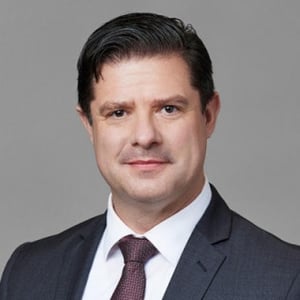
Partner, Stris & Maher LLP, Fellow, Constitutional Law Center, Stanford Law School
Matthew A. Seligman is a lawyer and legal scholar based in Los Angeles, California and Washington, D.C. His academic research focuses on election law, with a particular emphasis on disputed presidential elections. He is a partner at Stris & Maher LLP and a fellow at the Constitutional Law Center at Stanford Law School. His broader research interests span constitutional law, federal courts, contracts, and private law theory.
His scholarship has appeared in the Stanford Law Review, the Michigan Law Review, the Vanderbilt Law Review, Philosophy and Public Affairs, and elsewhere. His work on disputed presidential elections has received extensive coverage in the New York Times, the Washington Post, and dozens of other venues. He is a frequent commentator on election law issues, including numerous appearances on CNN, MSNBC, and other news channels.
He was previously a Climenko Fellow and Lecturer on Law at Harvard Law School, a Fellow at the Center for Private Law at Yale Law School, and a Visiting Assistant Professor at the Benjamin N. Cardozo School of Law.
Prior to his academic appointments, he practiced Supreme Court litigation at a boutique litigation firm in Washington, D.C. He clerked for the Honorable Douglas H. Ginsburg on the United States Court of Appeals for the District of Columbia Circuit.
He received a J.D. from Stanford Law School; a Ph.D. in philosophy from New York University, focusing on political and moral philosophy; an M.A. in philosophy from Stanford, and dual undergraduate degrees in mathematics and philosophy from Stanford.
Partner, Steptoe & Johnson LLP
Stewart Baker is a partner in the law firm of Steptoe & Johnson in Washington, D.C. From 2005 to 2009, he was the first Assistant Secretary for Policy at the Department of Homeland Security. His law practice covers cybersecurity, data protection, homeland security, and travel and foreign investment regulation; he has been awarded one patent.
Mr. Baker has been General Counsel of the National Security Agency and General Counsel of the commission that investigated WMD intelligence failures prior to the Iraq war. He is the author of Skating on Stilts, a book on terrorism, cybersecurity, and other technology issues; he also hosts the weekly Cyberlaw Podcast.
Professor of Law, Michigan State University (currently serving as FCC General Counsel)
Professor Candeub joined the MSU Law faculty in fall 2004. He is also a Fellow with MSU's Institute of Public Utilities. Prior to joining MSU, he served as an advisor at the Federal Communications Commission (FCC). From 1998 to 2000, Professor Candeub was a litigation associate for the Washington D.C. firm of Jones, Day, Reavis & Pogue and also has served as a corporate associate with Cleary, Gottlieb, Steen & Hamilton, also in Washington, D.C. Immediately following law school, he clerked for Chief Judge J. Clifford Wallace, U.S. Court of Appeals for the Ninth Circuit. While in law school, Professor Candeub was an articles editor for the University of Pennsylvania Law Review.
Professor Candeub's scholarly interests focus on the law and regulation of communications, internet, technology. His numerous law review articles and scholarly papers have placed him at the center of legal and policy controversies, and he often writes for popular outlets such as the Wall Street Journal and US News. Federal courts, including the U.S. Supreme Court, have cited and relied upon his work.
He joined the Trump administration in 2019 as Deputy Assistant Secretary of Commerce for Telecommunications and Information and assumed the role of Acting Assistant Secretary. He later joined the Department of Justice as Deputy Associate Attorney General.
Professor Candeub is a senior fellow at the D.C.-based Center of Renewing America.
Partner, Stris & Maher LLP, Fellow, Constitutional Law Center, Stanford Law School
Matthew A. Seligman is a lawyer and legal scholar based in Los Angeles, California and Washington, D.C. His academic research focuses on election law, with a particular emphasis on disputed presidential elections. He is a partner at Stris & Maher LLP and a fellow at the Constitutional Law Center at Stanford Law School. His broader research interests span constitutional law, federal courts, contracts, and private law theory.
His scholarship has appeared in the Stanford Law Review, the Michigan Law Review, the Vanderbilt Law Review, Philosophy and Public Affairs, and elsewhere. His work on disputed presidential elections has received extensive coverage in the New York Times, the Washington Post, and dozens of other venues. He is a frequent commentator on election law issues, including numerous appearances on CNN, MSNBC, and other news channels.
He was previously a Climenko Fellow and Lecturer on Law at Harvard Law School, a Fellow at the Center for Private Law at Yale Law School, and a Visiting Assistant Professor at the Benjamin N. Cardozo School of Law.
Prior to his academic appointments, he practiced Supreme Court litigation at a boutique litigation firm in Washington, D.C. He clerked for the Honorable Douglas H. Ginsburg on the United States Court of Appeals for the District of Columbia Circuit.
He received a J.D. from Stanford Law School; a Ph.D. in philosophy from New York University, focusing on political and moral philosophy; an M.A. in philosophy from Stanford, and dual undergraduate degrees in mathematics and philosophy from Stanford.
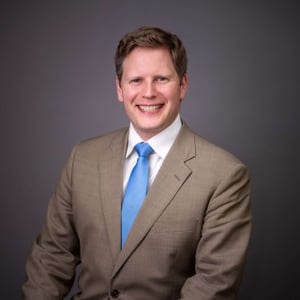
Director, Center for American Freedom, America First Policy Institute
James Sherk was born in Ontario, Canada, and immigrated with his family to Midland, Michigan while in middle school. He serves as AFPI’s Director of the Center for American Freedom. Sherk previously served as Special Assistant to the President for Domestic Policy on the White House Domestic Policy Council under President Donald Trump. James served as the Administration’s top civil service reform and labor policy advisor from 2017 to 2021. At the White House, he was the principal author of and/or policy lead for approximately two dozen executive orders and presidential memoranda. Sherk also served as a member of the President’s Council on Improving Federal Civic Architecture. Prior to his White House service, Sherk was a Research Fellow at the Heritage Foundation, where he was a nationally recognized expert on the civil service and labor policy. Sherk received a Bachelor of Science in Mathematics and Economics from Hillsdale College and an Master of Arts in Economics from the University of Rochester. Sherk and his wife, Jill, live in Northern Virginia with three beloved children who teach their parents to ponder inscrutable questions like “how much drawing can go on the walls before we have to repaint them?”
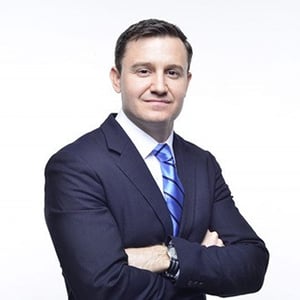
Vice President for Litigation & General Counsel, Goldwater Institute
Jon Riches is the Vice President for Litigation for the Goldwater Institute’s Scharf-Norton Center for Constitutional Litigation and General Counsel for the Institute. He litigates in federal and state trial and appellate courts in the areas of economic liberty, regulatory reform, free speech, taxpayer protections, public labor issues, government transparency, and school choice, among others.
Jon has developed and authored several pieces of legislation, including the landmark Right to Earn a Living Act, which provides some of the greatest protections in the country to job-seekers and entrepreneurs facing arbitrary licensing regulations. He also developed legislation eliminating deference to administrative agencies in Arizona—a first-of-its-kind regulatory reform that can serve as a model for the rest of the country.
His work at the Institute has been covered by national media, including the Wall Street Journal, New York Times, CBS This Morning, Bloomberg News, and Politico. Jon is also a member of the Federalist Society’s Regulatory Transparency Project: State and Local Working Group.
Prior to joining the Goldwater Institute, Jon served on active duty in the U.S. Navy Judge Advocate General’s (JAG) Corps. While on active duty, Jon represented hundreds of clients, litigated dozens of court-martial cases, and advised commanders on a vast array of legal issues.
He previously clerked for Sen. Jon Kyl on the U.S. Senate Judiciary Committee, worked for the Rules Committee in the Arizona State Senate, and clerked in the Office of Counsel to the President at the White House. Jon received his B.A. from Boston College, where he graduated magna cum laude and Phi Beta Kappa. He earned his J.D. from the University of Arizona, James E. Rogers College of Law.
Jon served as a presidentially appointed Panel Member on the Federal Service Impasses Panel. He is an officer in the U.S. Navy Reserve and an Adjunct Professor at Arizona State University School of Law. Jon is a native of Phoenix.
Managing Partner, Boyden Gray PLLC
Michael Buschbacher is the managing partner of Boyden Gray PLLC. He represents public and private companies, trade associations, non-profits, and individuals in high-stakes litigation and administrative proceedings, with a particular focus on environmental and energy matters.
In addition to trial-level work, Mr. Buschbacher maintains an active appellate practice, both as merits counsel and as counsel for amici curiae. He has written amicus briefs quoted by the Seventh and Ninth Circuits. And his Supreme Court advocacy has been cited by The New Yorker, The New York Times, and E&E News. Mr. Buschbacher’s commentary on legal issues has been published in The Wall Street Journal, Newsweek, and The American Conservative.
Before joining the firm, Mr. Buschbacher served at the U.S. Department of Justice as counsel to the Assistant Attorney General for the Environment and Natural Resources Division. There, he advised senior Department leadership, served as the lead attorney on several lawsuits, and helped draft policy memoranda for the Department on the proper scope and procedure for environmental enforcement. Prior to serving in the government, Mr. Buschbacher was an associate in the D.C. office of Sidley Austin.
Mr. Buschbacher is a former clerk to Judge Alice M. Batchelder of the U.S. Court of Appeals for the Sixth Circuit and to Magistrate Judge Paul R. Cherry of the U.S. District Court for the Northern District of Indiana.
Mr. Buschbacher holds a B.A. in Music and Germanic Studies from Indiana University and a J.D., magna cum laude, from Notre Dame Law School.
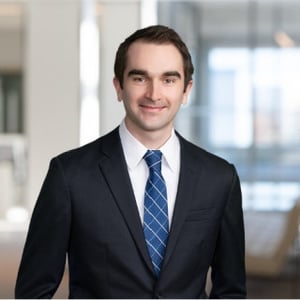
Associate, Covington
John Kendrick represents clients in antitrust matters before government agencies (both domestic and foreign) and in federal court. His experience includes complex, high-profile antitrust litigation spanning multiple jurisdictions. He also represents clients in antitrust investigations, including merger investigations under the HSR Act.
John has advised clients in the cellular, medical device, retail, semiconductor, and travel industries. He has particular experience handling complex issues for technology companies and intellectual property licensing companies.
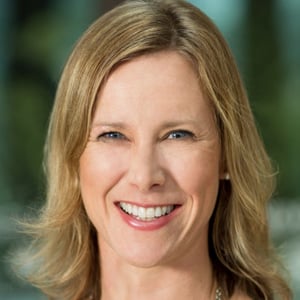
Angus G. Wynne, Sr. Professor in Civil Jurisprudence, The University of Texas at Austin School of Law
Susan Morse joined the University of Texas law faculty in 2013. She studies and writes about regulatory design and about international tax policy and tax compliance. She is interested in the interaction between legal systems and private ordering.
Recent writings in tax policy include Do Tax Compliance Robots Follow the Law? (symposium contribution), 16 Ohio State Tech. L. J. 278 (2020); GILTI: The Co-operative Potential of a Unilateral Minimum Tax, 2019 British Tax Rev. 512; Does Parenting Matter? U.S. Firms, Non-U.S. Firms, and Global Tax Accruals (with Eric J. Allen), 4 J. L. Fin. & Acct'g 239 (2019); International Cooperation and the 2017 Tax Act, 128 Yale L. J. Forum 362 (Oct. 25, 2018) and Seeking Comparable Transactions in Patent and Tax, 37 Rev. Litig. Brief (2018).
Recent writings in regulatory design include Government-to-Robot Enforcement, 2019 Ill. L. Rev. 1497; When Robots Make Legal Mistakes, 72 Okla. L. Rev. 213 (2019); Regulating by Example, 35 Yale J. Reg. 127 (2018) (with Leigh Osofsky) (featured in online symposium, How Agencies Communicate, at JREG); Safe Harbors, Sure Shipwrecks, 49 U.C. Davis L. Rev. 1385 (2016) (selected for Yale/Stanford/Harvard Junior Faculty Forum, 2015); and Entrepreneurship Incentives for Resource-Constrained Firms, Handbook of Law and Entrepreneurship (forthcoming).
Morse cowrote a Supreme Court amicus brief in 2020 supporting the government in CIC Services, LLC v. Internal Revenue Service (blog coverage here). Morse submitted cowritten Ninth Circuit amicus briefs in 2016, 2018 and 2019 in Altera Corp. v. Commissioner, supporting the government's position that it had validly issued a Treasury regulation that requires cost-sharing arrangements to include stock-based compensation. The Ninth Circuit held for the government and denied rehearing en banc, and the Supreme Court denied cert in 2020. Blog coverage here, here, here, here, here, and here.
Professor Morse teaches Property and Federal Income Tax, as well as the Financial Methods for Lawyers course, which she pioneered at Texas Law. She won the Women's Law Caucus Teacher of the Year award in 2016 and 2020. She edits the tax section at JOTWELL.com.
Professor Morse clerked for the Honorable Michael Boudin of the United States Court of Appeals for the First Circuit and spent seven years in business tax practice at Ropes & Gray, Boston and Wilson Sonsini Goodrich & Rosati, Palo Alto. Prior to joining the Texas faculty, she served as Associate Professor at UC Hastings College of the Law and as Research Assistant Professor at Santa Clara University School of Law.
Morse has also written Innovation and Taxation at Start-Up Firms, 69 Tax L. Rev. 357 (2016); Tax Anti-Avoidance Law in Australia and the United States, 49 Int'l Law. 111 (2015); A Simpler Offshore Profits Transition Tax, 76 Tax Notes Int'l 629 (Feb. 17, 2014); Startup Ltd.: Tax Planning and Initial Incorporation, 14 Fla. Tax Rev. 319 (2013); Tax Haven Incorporation for U.S. Firms: No Exodus Yet, 66 Nat’l Tax J. 395 (2013); The Transfer Pricing Regs Need a Good Edit, 40 Pepperdine L. Rev. 1415 (2013); and A Corporate Offshore Profits Transition Tax, 91 N.C. L. Rev. 549 (2013).
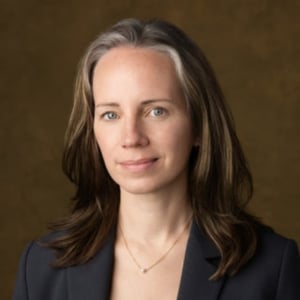
Senior Fellow in Executive Power, Cato Institute
Molly Nixon is a senior fellow at the Cato Institute, where she focuses on the scope, use, and history of executive power as well as its limits under the Constitution. Molly was previously an attorney with Pacific Legal Foundation’s separation of powers practice, where she litigated cases challenging congressional delegations of legislative power and executive branch overreach. Before that, she served as an Attorney-Advisor at the Department of the Interior and as Legislative Counsel for Congressman Justin Amash.
Molly holds a J.D. from New York University School of Law and a B.A. in History and International Relations from Boston University. She clerked for the U.S. District Court for the District of Alaska and practiced law at a firm in New York City for several years before moving to Washington, D.C.

Samuel H. McCoy II Professor of Law, University of Virginia School of Law
John F. Duffy is the Samuel H. McCoy II Professor of Law and Class of 1966 Research Professor of Law at the University of Virginia School of Law, where he teaches administrative law, torts and intellectual property. Professor Duffy has published articles on a wide range of administrative law and regulatory issues in journals such as University of Chicago Law Review, Yale Law Journal, Stanford Law Review, Virginia Law Review, Columbia Law Review, Texas Law Review, Northwestern University Law Review, NYU Law Review, University of Pennsylvania Law Review and the Supreme Court Review. His 1998 article Administrative Common Law in Judicial Review, 77 Tex. L. Rev. 113 (1998), was one of the first articles to criticize the Chevron doctrine as being irreconcilable with § 706 of the APA; it won the American Bar Association’s Scholarship Award in Administrative Law. His 2008 article “Are Administrative Patent Judges Unconstitutional?” was covered on National Public Radio), in the New York Times (Adam Liptak, In One Flaw, Questions on Validity of 46 Judges, May 6, 2008), and in the Wall Street Journal (Dan Slater, Patently Unconstitutional, May 6, 2008). The NYT and WSJ agreed that he was “a different kind of law professor,” “one of the lucky few” whose “writings actually wind up changing the law.”
As an attorney in the courts, Duffy has twice successfully convinced the Supreme Court to overturn lower court doctrines that had been applied in many cases over decades but that were unanimously held to be irreconcilable with Supreme Court precedents. See TC Heartland v. Kraft Foods Group Brands, 581 U.S. 258 (2017); KSR v. Teleflex, 550 U.S. 398 (2007).
Prior to entering legal academics, Duffy clerked on the D.C. Circuit for Stephen Williams and on the Supreme Court for Antonin Scalia. While clerking, he became known as Justice Scalia’s “hapless law clerk,” who had been tasked with unearthing three-quarters of a century of legislative history that made “no difference” to the outcome in an otherwise forgettable case. See Conroy v. Aniskoff, 507 U.S. 511, 527-28 (1993) (Scalia, J., concurring in the judgment).
In earlier days, Duffy enjoyed being a professional blackjack player unwelcome in all Atlantic City casinos and a semi-professional road runner (best marathon time 2:24:33). He holds an A.B. in physics from Harvard and a J.D. from the University of Chicago.
Managing Partner, Boyden Gray PLLC
Michael Buschbacher is the managing partner of Boyden Gray PLLC. He represents public and private companies, trade associations, non-profits, and individuals in high-stakes litigation and administrative proceedings, with a particular focus on environmental and energy matters.
In addition to trial-level work, Mr. Buschbacher maintains an active appellate practice, both as merits counsel and as counsel for amici curiae. He has written amicus briefs quoted by the Seventh and Ninth Circuits. And his Supreme Court advocacy has been cited by The New Yorker, The New York Times, and E&E News. Mr. Buschbacher’s commentary on legal issues has been published in The Wall Street Journal, Newsweek, and The American Conservative.
Before joining the firm, Mr. Buschbacher served at the U.S. Department of Justice as counsel to the Assistant Attorney General for the Environment and Natural Resources Division. There, he advised senior Department leadership, served as the lead attorney on several lawsuits, and helped draft policy memoranda for the Department on the proper scope and procedure for environmental enforcement. Prior to serving in the government, Mr. Buschbacher was an associate in the D.C. office of Sidley Austin.
Mr. Buschbacher is a former clerk to Judge Alice M. Batchelder of the U.S. Court of Appeals for the Sixth Circuit and to Magistrate Judge Paul R. Cherry of the U.S. District Court for the Northern District of Indiana.
Mr. Buschbacher holds a B.A. in Music and Germanic Studies from Indiana University and a J.D., magna cum laude, from Notre Dame Law School.
Samuel H. McCoy II Professor of Law, University of Virginia School of Law
John F. Duffy is the Samuel H. McCoy II Professor of Law and Class of 1966 Research Professor of Law at the University of Virginia School of Law, where he teaches administrative law, torts and intellectual property. Professor Duffy has published articles on a wide range of administrative law and regulatory issues in journals such as University of Chicago Law Review, Yale Law Journal, Stanford Law Review, Virginia Law Review, Columbia Law Review, Texas Law Review, Northwestern University Law Review, NYU Law Review, University of Pennsylvania Law Review and the Supreme Court Review. His 1998 article Administrative Common Law in Judicial Review, 77 Tex. L. Rev. 113 (1998), was one of the first articles to criticize the Chevron doctrine as being irreconcilable with § 706 of the APA; it won the American Bar Association’s Scholarship Award in Administrative Law. His 2008 article “Are Administrative Patent Judges Unconstitutional?” was covered on National Public Radio), in the New York Times (Adam Liptak, In One Flaw, Questions on Validity of 46 Judges, May 6, 2008), and in the Wall Street Journal (Dan Slater, Patently Unconstitutional, May 6, 2008). The NYT and WSJ agreed that he was “a different kind of law professor,” “one of the lucky few” whose “writings actually wind up changing the law.”
As an attorney in the courts, Duffy has twice successfully convinced the Supreme Court to overturn lower court doctrines that had been applied in many cases over decades but that were unanimously held to be irreconcilable with Supreme Court precedents. See TC Heartland v. Kraft Foods Group Brands, 581 U.S. 258 (2017); KSR v. Teleflex, 550 U.S. 398 (2007).
Prior to entering legal academics, Duffy clerked on the D.C. Circuit for Stephen Williams and on the Supreme Court for Antonin Scalia. While clerking, he became known as Justice Scalia’s “hapless law clerk,” who had been tasked with unearthing three-quarters of a century of legislative history that made “no difference” to the outcome in an otherwise forgettable case. See Conroy v. Aniskoff, 507 U.S. 511, 527-28 (1993) (Scalia, J., concurring in the judgment).
In earlier days, Duffy enjoyed being a professional blackjack player unwelcome in all Atlantic City casinos and a semi-professional road runner (best marathon time 2:24:33). He holds an A.B. in physics from Harvard and a J.D. from the University of Chicago.
Associate, Covington
John Kendrick represents clients in antitrust matters before government agencies (both domestic and foreign) and in federal court. His experience includes complex, high-profile antitrust litigation spanning multiple jurisdictions. He also represents clients in antitrust investigations, including merger investigations under the HSR Act.
John has advised clients in the cellular, medical device, retail, semiconductor, and travel industries. He has particular experience handling complex issues for technology companies and intellectual property licensing companies.
Angus G. Wynne, Sr. Professor in Civil Jurisprudence, The University of Texas at Austin School of Law
Susan Morse joined the University of Texas law faculty in 2013. She studies and writes about regulatory design and about international tax policy and tax compliance. She is interested in the interaction between legal systems and private ordering.
Recent writings in tax policy include Do Tax Compliance Robots Follow the Law? (symposium contribution), 16 Ohio State Tech. L. J. 278 (2020); GILTI: The Co-operative Potential of a Unilateral Minimum Tax, 2019 British Tax Rev. 512; Does Parenting Matter? U.S. Firms, Non-U.S. Firms, and Global Tax Accruals (with Eric J. Allen), 4 J. L. Fin. & Acct'g 239 (2019); International Cooperation and the 2017 Tax Act, 128 Yale L. J. Forum 362 (Oct. 25, 2018) and Seeking Comparable Transactions in Patent and Tax, 37 Rev. Litig. Brief (2018).
Recent writings in regulatory design include Government-to-Robot Enforcement, 2019 Ill. L. Rev. 1497; When Robots Make Legal Mistakes, 72 Okla. L. Rev. 213 (2019); Regulating by Example, 35 Yale J. Reg. 127 (2018) (with Leigh Osofsky) (featured in online symposium, How Agencies Communicate, at JREG); Safe Harbors, Sure Shipwrecks, 49 U.C. Davis L. Rev. 1385 (2016) (selected for Yale/Stanford/Harvard Junior Faculty Forum, 2015); and Entrepreneurship Incentives for Resource-Constrained Firms, Handbook of Law and Entrepreneurship (forthcoming).
Morse cowrote a Supreme Court amicus brief in 2020 supporting the government in CIC Services, LLC v. Internal Revenue Service (blog coverage here). Morse submitted cowritten Ninth Circuit amicus briefs in 2016, 2018 and 2019 in Altera Corp. v. Commissioner, supporting the government's position that it had validly issued a Treasury regulation that requires cost-sharing arrangements to include stock-based compensation. The Ninth Circuit held for the government and denied rehearing en banc, and the Supreme Court denied cert in 2020. Blog coverage here, here, here, here, here, and here.
Professor Morse teaches Property and Federal Income Tax, as well as the Financial Methods for Lawyers course, which she pioneered at Texas Law. She won the Women's Law Caucus Teacher of the Year award in 2016 and 2020. She edits the tax section at JOTWELL.com.
Professor Morse clerked for the Honorable Michael Boudin of the United States Court of Appeals for the First Circuit and spent seven years in business tax practice at Ropes & Gray, Boston and Wilson Sonsini Goodrich & Rosati, Palo Alto. Prior to joining the Texas faculty, she served as Associate Professor at UC Hastings College of the Law and as Research Assistant Professor at Santa Clara University School of Law.
Morse has also written Innovation and Taxation at Start-Up Firms, 69 Tax L. Rev. 357 (2016); Tax Anti-Avoidance Law in Australia and the United States, 49 Int'l Law. 111 (2015); A Simpler Offshore Profits Transition Tax, 76 Tax Notes Int'l 629 (Feb. 17, 2014); Startup Ltd.: Tax Planning and Initial Incorporation, 14 Fla. Tax Rev. 319 (2013); Tax Haven Incorporation for U.S. Firms: No Exodus Yet, 66 Nat’l Tax J. 395 (2013); The Transfer Pricing Regs Need a Good Edit, 40 Pepperdine L. Rev. 1415 (2013); and A Corporate Offshore Profits Transition Tax, 91 N.C. L. Rev. 549 (2013).
Senior Fellow in Executive Power, Cato Institute
Molly Nixon is a senior fellow at the Cato Institute, where she focuses on the scope, use, and history of executive power as well as its limits under the Constitution. Molly was previously an attorney with Pacific Legal Foundation’s separation of powers practice, where she litigated cases challenging congressional delegations of legislative power and executive branch overreach. Before that, she served as an Attorney-Advisor at the Department of the Interior and as Legislative Counsel for Congressman Justin Amash.
Molly holds a J.D. from New York University School of Law and a B.A. in History and International Relations from Boston University. She clerked for the U.S. District Court for the District of Alaska and practiced law at a firm in New York City for several years before moving to Washington, D.C.