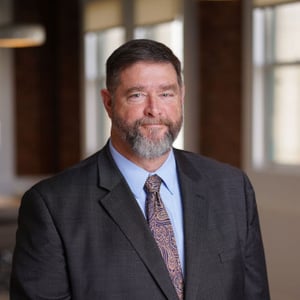
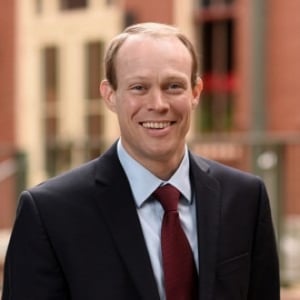
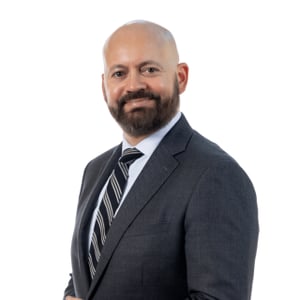
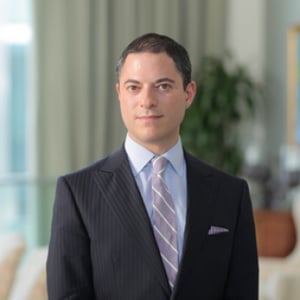
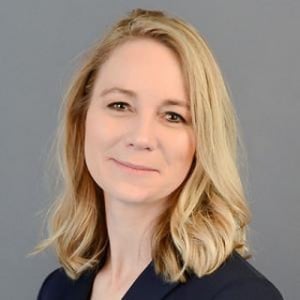
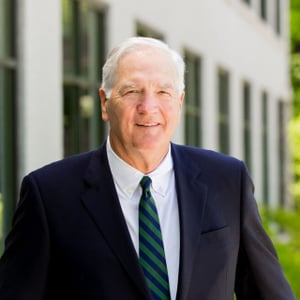
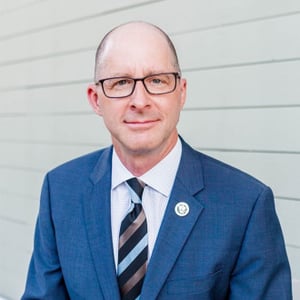
Tony Francois is experienced in Water and Real Property Law, Land Use and Zoning, Environmental Regulation, Natural Resources Development, Agricultural Law, and Constitutional Law. He has represented homeowners, builders, farmers and ranchers, trade associations, and water districts in administrative, civil, and criminal proceedings before state and federal administrative agencies and state and federal trial and appellate courts. He is a member of the California State Bar and the Northern, Eastern, and Central Districts of California and the Districts of New Mexico and North Dakota, and has litigated cases in federal courts in California, Oregon, Washington, Idaho, Montana, Nevada, Arizona, New Mexico, Colorado, North and South Dakota, Minnesota, Massachusetts, Maryland, South Carolina, and the District of Columbia, as well as the Sixth, Eighth, Ninth, and Tenth Circuit Courts of Appeals. He has appeared before the Supreme Courts of California, Idaho, Nevada, and the United States.
Prior to attending law school, he served as an infantry officer in the United States Army, and was stationed in the former West Germany during the fall of the Berlin Wall.
Tony was an Attorney at Pacific Legal Foundation from 2012 to 2021. He was a lobbyist for 10 years, first with California Farm Bureau Federation from 2003 to 2007, and then with KP Public Affairs from 2007 to 2012. He was an attorney at McQuaid, Bedford & Van Zandt in San Francisco from 1999 – 2003.
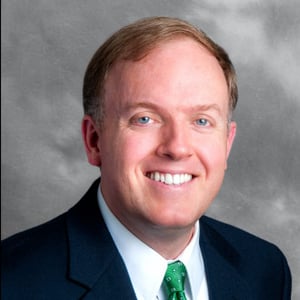
Kyle Wingfield is a native of Dalton and graduate of the University of Georgia. He joined the Foundation as president and CEO in April 2018 after spending nine years as an opinion columnist for The Atlanta Journal-Constitution. He has also worked for the Wall Street Journal, based in Brussels, Belgium, from 2004 to 2009, and for the Associated Press, based in Atlanta and Montgomery, Ala., from 2001 to 2004.
At the AJC, Kyle wrote often about state politics and policy, focusing especially on education and school choice, transportation, health care, and state and local taxation. He is a frequent guest on GPB’s “Political Rewind” show and was a finalist for the Reason Foundation’s Bastiat Prize for Journalism in 2013. Kyle’s weekly column continues to appear in 10 newspapers around the state.
Kyle received the UGA Grady College’s John E. Drewry Young Alumnus Award in 2006, was named to the UGA Alumni Association’s 40 Under 40 Class of 2012 and is a member of UGA’s Board of Visitors. He is a member of Leadership Georgia’s Class of 2018 and, as an Eagle Scout, remains an active volunteer in Scouting.
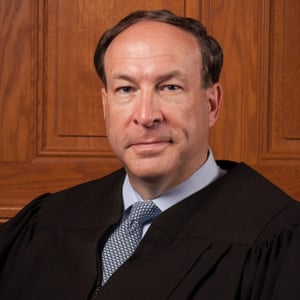
Judge, United States Court of Appeals, Seventh Circuit
Biography
Michael B. Brennan was confirmed and sworn in as a Circuit Judge for the U.S. Court of Appeals for the Seventh Circuit in May 2018.
He previously worked as a partner in the Milwaukee law firm of Gass Weber Mullins LLC, where he tried cases and handled appeals in federal and state courts, as a judge on the Milwaukee County Circuit, where he presided over a variety of criminal and civil calendars, and as an assistant district attorney in the Milwaukee County District Attorney’s office.
Brennan’s undergraduate degree is from the University of Notre Dame, and his law degree from Northwestern University School of Law, where he was an editor on the law review and the moot court champion. He served as a law clerk on the U.S. District Court for the Eastern District of Wisconsin and the U.S. Court of Appeals for the Seventh Circuit.
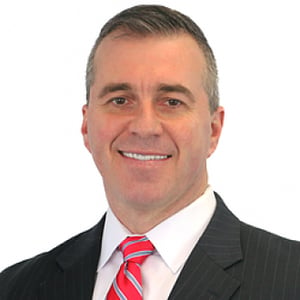
Matthew Dowd focuses his skills on complex appellate and trial litigation, with an emphasis on patent and intellectual property issues. Through his years of practice, Mr. Dowd has successfully worked on numerous high-stakes and eclectic legal matters, focusing primarily on all stages of complex patent matters (AIA proceedings, litigation, prosecution, and counseling). Mr. Dowd's expertise and leadership are regularly consulted, as he is frequently asked to comment in the press on leading intellectual property issues.
Mr. Dowd has substantial experience with Hatch-Waxman litigation, including all stages of opinion analysis, litigation, and appeals. His technical background in medicinal chemistry is ideally suited for litigating pharmaceutical patents. He has represented clients in a range of trial forums for patent disputes, such as the Eastern District of Texas and the District of Delaware, as well as the Patent Trial and Appeal Board at the USPTO.
He has argued and briefed numerous appeals before the U.S. Court of Appeals for the Federal Circuit and other courts involving issues such as patent law, Hatch-Waxman, administrative law, Fifth Amendment takings, contract claims, government employment issues, and criminal law. In 2018, Mr. Dowd is co-counsel with the Hon. Richard Posner (ret.) of U.S. Court of Appeals for the Seventh Circuit in an appeal before the U.S. Court of Appeals for the Fourth Circuit.
In 2013, Mr. Dowd represented Nobel Laureate James Watson, co-discoverer of the DNA double helix, as amicus curiae in the groundbreaking 2013 Supreme Court gene patent case. Mr. Dowd has over 15 years of experience representing clients before the U.S. Patent and Trademark Office.
Mr. Dowd is also well-known for his successful pro bono representation in the "free-range kids" case. The case was widely reported in the national, local, and international news.
Mr. Dowd attended The George Washington University Law School, graduating with high honors and being awarded Order of the Coif. While attending law school and before, Mr. Dowd worked full-time as a registered patent agent at the renowned IP boutique Sterne, Kessler, Goldstein & Fox.
After law school, Mr. Dowd clerked for the Honorable Paul R. Michel, Chief Judge (ret.) of the U.S. Court of Appeals for the Federal Circuit. While a law clerk, Mr. Dowd gained an insider's perspective on the appellate process. Understanding the appellate process is critical to maximizing success at the earlier stages of a case.
Mr. Dowd is currently appointed as a Professorial Lecturer in Law at The George Washington University Law School. He teaches appellate advocacy and is the coach for the student moot court team for the AIPLA Giles Sutherland Rich Moot Court Competition.
Prior to his legal career, Mr. Dowd spent four years in a Ph.D. program in medical chemistry, studying organic chemistry, pharmacology, and pharmaceutical drug design. During his Ph.D. program, Mr. Dowd's research discovered a novel structure-activity relationship for nicotinic ligands with potential utility in treating Alzheimer's and Parkinson's diseases. Mr. Dowd attended The College of William and Mary, in Williamsburg, VA, and Regis High School in New York City.
Professor of Law, St. Mary's University Law School
Biography
Adam MacLeod is a Professor at St. Mary's University School of Law. He has been a visiting fellow in the James Madison Program in American Ideals and Institutions at Princeton University, a fellow of the Center for Religion, Culture and Democracy, and a Senior Scholar and Thomas Edison Fellow in the Center for Intellectual Property x Innovation Policy at George Mason University. He is co-editor of Christie & Martin's Jurisprudence (4th ed. West 2020) and author of Property and Practical Reason (Cambridge University Press 2015). He has written two other books, dozens of scholarly articles, and more than one hundred essays and book reviews.
Professor MacLeod received his B.A., summa cum laude, from Gordon College and his J.D., magna cum laude, from the University of Notre Dame Law School. After law school, he served as law clerk to Chief Justice Christopher Armstrong and Justice Benjamin Kaplan of the Massachusetts Appeals Court and to Chief Judge Lewis Babcock of the United States District Court for the District of Colorado. He practiced law in the Boston area and has held appointment as a special Deputy Attorney General of Alabama and a lecturer in the Alabama Judicial College. He also serves as an Operational Auxiliarist in the U.S. Coast Guard, advising and providing operational training to Auxiliary and active-duty personnel.
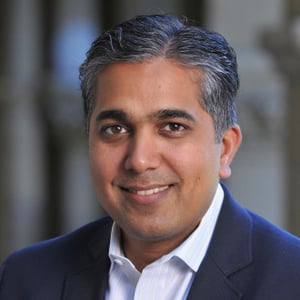
Raj M. Shah is currently the Co-founder and CEO of Arceo.ai, a start-up powering new approaches to cybersecurity through insurance and risk management. A seasoned entrepreneur and national security leader, Shah has transitioned often between the public and private sectors. Previously the Managing Partner of the Pentagon's Defense Innovation Unit Experimental (DIUx), he reported directly to the Secretary of Defense. Shah led DIUx in its efforts to strengthen our Armed Forces through contractual and cultural bridges between Silicon Valley and the Pentagon.
Previously, Shah was senior director of strategy at Palo Alto Networks, which acquired Morta Security, where he was Co-founder and CEO. He began his business career as a consultant with McKinsey & Co. Shah serves as a reserve F-16 pilot in the Air National Guard and has completed multiple combat tours. He holds an AB from Princeton University’s Woodrow Wilson School and an MBA from The Wharton School. Shah is also a visiting fellow at the Hoover Institution at Stanford University.
Chief Counsel, Cybersecurity and Infrastructure Security Agency (CISA)
Biography
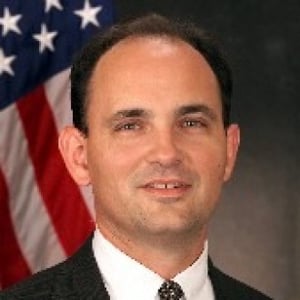
Daniel Sutherland is the Chief Counsel for CISA, the Cybersecurity and Infrastructure Security Agency. CISA is responsible for cybersecurity, telecommunications, risk management and infrastructure resilience, operating with a budget over $1 billion and a workforce of approximately 2,000. He leads an office of attorneys who negotiate complex technology agreements, provide daily operational support to a cybersecurity operations center, advocate the agency’s positions in litigation, draft and negotiate legislation, and respond to audits and investigations.
Mr. Sutherland’s position builds on a career focused on issues at the intersection of civil liberties and national security. In 2003, Mr. Sutherland was appointed by President Bush to serve as the first Officer for Civil Rights and Civil Liberties at the Department of Homeland Security. He provided advice to Secretaries Ridge and Chertoff on intelligence policy, disability law and policy, emergency preparedness and response, and immigration law. His speech on the need for the government to engage with American Arab and Muslim communities appeared in the publication Vital Speeches of the Day. Mr. Sutherland has also served in the Senior National Intelligence Service at the National Counterterrorism Center where he coordinated the government’s efforts to prevent violent extremism; Mr. Sutherland was referred to by Wired as “one of the government’s point people on stemming the appeal of al-Qaida.” Mr. Sutherland is a Certified Information Privacy Professional (CIPP/G).
Mr. Sutherland started his federal career as a civil rights attorney with the U.S. Department of Justice, where for 14 years he litigated cases in courts across the country. Mr. Sutherland is a graduate of the University of Louisville and University of Virginia School of Law.
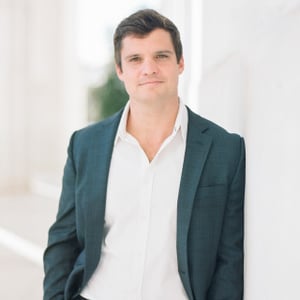
Daniel G. West invests in energy services, equipment, and technology companies at SCF Partners in Houston, Texas. He provides equity capital and strategic growth assistance to entrepreneurs and leaders of both start-up ventures and established, growing businesses.
Prior to joining the private sector, Mr. West served as an infantry officer in the United States Marine Corps. As a platoon commander with the 22nd Marine Expeditionary Unit aboard the USS Mesa Verde, he led the Tactical Recovery of Aircraft and Personnel force in support of the NATO aerial campaign over Libya. He then served as executive officer of India Company, 3rd Battalion, 9th Marines as it mentored Afghan forces to assume lead security responsibility and executed counter-narcotics missions in Marjah, Helmand Province, Afghanistan. He also served as a clerk for Judge Laurence H. Silberman on the U.S. Court of Appeals for the D.C. Circuit.
Mr. West holds degrees in law, business administration, and economics from Harvard University, where he served as an editor of the Harvard Law Review and taught undergraduate courses in economics and government. He is a member of the Executive Committee of the International & National Security Law Practice Group of the Federalist Society and a term member of the Council on Foreign Relations.
Milton R. Underwood Chair in Free Enterprise, Vanderbilt University Law School
Biography
Brian Fitzpatrick is the Milton R. Underwood Chair in Free Enterprise and Professor of Law at Vanderbilt Law School, where his research focuses on class action litigation, federal courts, judicial selection, and constitutional law. He is best known for his empirical studies of class action settlements as well as his book The Conservative Case for Class Actions (University of Chicago Press, 2019). Professor Fitzpatrick joined Vanderbilt's law faculty in 2007 after serving as the John M. Olin Fellow at New York University School of Law. He graduated first in his class from Harvard Law School and went on to clerk for Judge Diarmuid O'Scannlain on the U.S. Court of Appeals for the Ninth Circuit and Justice Antonin Scalia on the U.S. Supreme Court. After his clerkships, Professor Fitzpatrick practiced commercial and appellate litigation for several years at Sidley Austin in Washington, D.C., and served as Special Counsel for Supreme Court Nominations to U.S. Senator John Cornyn. Before earning his law degree, Fitzpatrick graduated summa cum laude with a bachelor's of science in chemical engineering from the University of Notre Dame. He has received the Hall-Hartman Outstanding Professor Award, which recognizes excellence in classroom teaching, for his Civil Procedure and Federal Courts courses.
Partner, BakerHostetler, Adjunct Fellow, The Manhattan Institute
Biography
Andrew Grossman leads BakerHostetler’s Appellate and Major Motion team. He has appeared before the U.S. Supreme Court, nearly all the federal courts of appeals, as well as some state appellate courts, litigating high-profile and complex commercial, administrative and constitutional issues.
Andrew works with practice groups across BakerHostetler to identify and tackle complex issues, advise on administrative law and strategy, tee up issues for appeal and tackle appeals. He has developed and implemented litigation and administrative strategies for clients in several fields and industries.
In addition to his practice, Andrew advises members of Congress on matters of constitutional and administrative law, having testified more than a dozen times before the House and Senate Judiciary Committees. He has been a frequent legal commentator on radio and television, having appeared on Fox News, CNN, MSNBC, CNBC, NPR and its affiliates, CBN and elsewhere. His legal commentary has also appeared in dozens of magazines and newspapers, including The Wall Street Journal, USA Today, The Washington Post, The Washington Times and many others.
Andrew is a Senior Legal Fellow at the Buckeye Institute, an Adjunct Fellow the Manhattan Institute and a member of the leadership of the Federalist Society. He previously served as an adjunct scholar at the Cato Institute’s Robert A. Levy Center for Constitutional Studies and a legal fellow at the Heritage Foundation’s Meese Center for Legal and Judicial Studies. He clerked for Judge Edith H. Jones on the U.S. Court of Appeals for the Fifth Circuit.
Erin Morrow Hawley serves as Chair of Lex Politica's Supreme Court and Appellate Practice overseeing the firm’s strategic appellate litigation and critical motions practice in the trial courts. Erin is an experienced litigator who represents clients in constitutional, regulatory, and appellate matters in federal and state courts throughout the country.
Erin has represented dozens of clients before the Supreme Court of the United States, served as lead counsel in high-profile cases raising novel constitutional and statutory issues, and authored numerous successful petitions for certiorari and briefs in opposition. She has argued in state and federal appellate and trial courts throughout the country, including the Supreme Court of the United States. Erin represents diverse clients in high-stakes litigation from state governments to faith-based nonprofits to Fortune 100 companies. She possesses expertise on a wide range of subject matters including administrative law, the First Amendment, religious liberty, federal jurisdiction, federal preemption, equitable jurisdiction, tax law, the Affordable Care Act, and Title IX.
Erin represents clients in cases where public communications strategy is paramount. She is a sought-after speaker and writer, has testified multiple times before Congress, and is a frequent presenter on constitutional and administrative law issues, including at the Oxford Union, the National Federalist Society Convention, and university campuses across the country. She is a frequent commentator to media outlets, including Fox News, MSNBC, the Wall Street Journal, WORLD, USA Today, the Federalist, and the Hill.
Erin previously oversaw Alliance Defending Freedom’s--where she still serves as Of Counsel--litigation strategies to empower women and protect the dignity of life, defend pregnancy centers’ First Amendment rights from government overreach, and safeguard Americans’ freedoms from the ever-encroaching administrative state.
Dean Reuter is Executive Vice President at the Federalist Society for Law and Public Policy Studies. He has served in two federal government agency Offices of the Inspector General, as Counsel to the Inspector General and Deputy Inspector General, responsible for policing the use of federal funds granted and contracted through those agencies. As such, he helped conduct and oversee criminal investigations across the country. He is the principal author of the non-fiction book, The Hidden Nazi: The Untold Story of America's Deal with the Devil, and editor of Liberty’s Nemesis: The Unchecked Expansion of the State and Confronting Terror: 9/11 and the Future of American National Security. He was appointed by the President and served as Vice-Chairman of the Board of Directors of the Corporation for National and Community Service, and recently served as an appointee on the U.S. Commission on Presidential Scholars. He is a graduate of Hood College (BA with Honors) and the University of Maryland School of Law.
Luther J. Strange, III is a former Republican member of the U.S. Senate from the state of Alabama. Strange was first appointed to the Senate position by Gov. Robert Bentley on February 9, 2017. He replaced Jeff Sessions, who was confirmed as United States Attorney General.
Strange is the former Republican Attorney General of Alabama. He was first elected to the statewide position in 2010 and assumed office on January 17, 2011. Strange's first four-year term ended on January 19, 2015, and he won re-election to a second term on November 4, 2014.
Prior to his election as Attorney General, Luther Strange practiced law in Birmingham, Alabama. In 2010, U.S. News-Best Lawyers "Best Law Firms" gave his firm a first-tier ranking, and the firm was named as one of the Top Ten Law Firms that Understand Economic Development by Southern Business & Development magazine.
Before establishing his own law firm, Strange was a partner with Bradley Arant Boult Cummings LLP. During his time in private practice, he was recognized in Best Lawyers in America® , named Best of the Bar by the Birmingham Business Journal, and called one of the "Best Lawyers" in Alabama by Birmingham magazine.
His tenure in office was marked by a strong emphasis on fighting public corruption, including the conviction and removal from office of the Alabama House Speaker in June 2016. He was also a leader in opposing costly overregulation and the expansion of the federal government at the expense of the states.
Luther Strange served as the court-appointed Coordinating Counsel for the Gulf Coast States in the historic Deepwater Horizon Oil spill litigation. Strange was actively involved in trying the case, which led to a landmark settlement agreement to compensate Alabama for both economic and environmental damages as a result of that disaster.
Among many civic commitments, he has served on the Advisory Board of the United States Merchant Marine Academy and as a Trustee of Talladega College, Alabama’s oldest historically black college.
An Eagle Scout since he was 13 and a recipient of the Distinguished Eagle Scout Award from the Boy Scouts of America in 2011, Strange is passionate about encouraging young people in Alabama to become involved in public service.
Strange received both his undergraduate and law degrees from Tulane University. He was a scholarship basketball player while earning his undergraduate degree at Tulane. In June of 2016, he was inducted into the Tulane Law School Hall of Fame.
Judge, U.S. District Court for the Southern District of Texas
Biography
Hon. Charles Eskridge, Judge, United States District Court for the Southern District of Texas, Houston Division, was born in Cleveland, Ohio, and arrived in Houston, Texas, at the age of 11 with his parents in 1974.
Judge Eskridge received a B.S. from Trinity University and a J.D. from Pepperdine University School of Law. He served as a law clerk to Chief Judge Charles Clark of the United States Court of Appeals for the Fifth Circuit, as a law clerk to Justice Byron White of the Supreme Court of the United States, and as a special assistant to the Hon. Howard Holtzmann of the Iran/U.S. Claims Tribunal in The Hague.
From 1994 to 2019, Judge Eskridge was in private practice in Houston, Texas, litigating complex commercial disputes. He teaches Origins of the Federal Constitution at the University of Houston Law Center and has served as the Distinguished Visiting Practitioner of Law at the Pepperdine University School of Law.
President Donald J. Trump nominated him to the federal bench on May 3, 2019. Following confirmation by the Senate, Judge Eskridge took his seat on October 22, 2019.