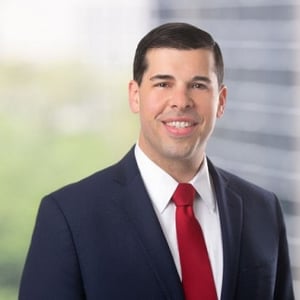
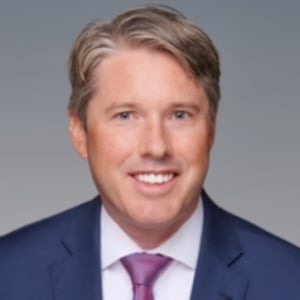
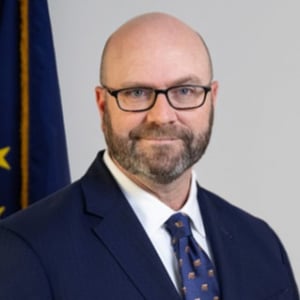
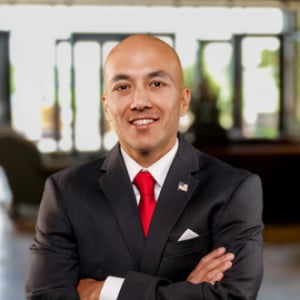
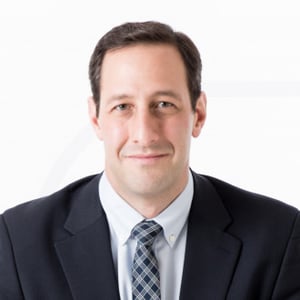
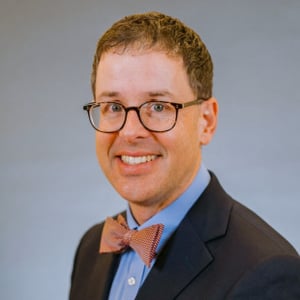
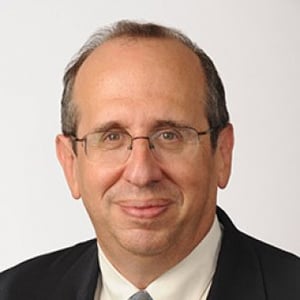
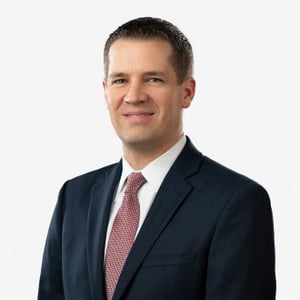
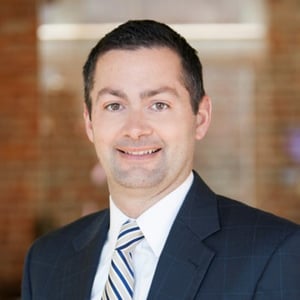
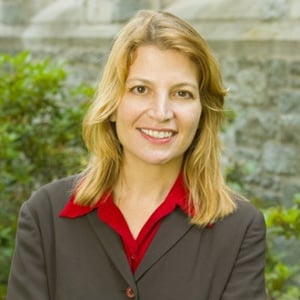
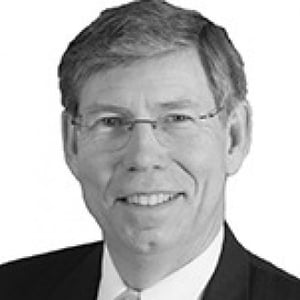
Jesse, the former third-ranking official at the U.S. Department of Justice, helps clients with their most difficult litigation and regulatory issues─whether that means defending against an enforcement action, pursuing high-stakes litigation and appeals, navigating regulatory thickets at federal and state agencies, or crafting a comprehensive strategy to manage a crisis. He approaches these problems with the knowledge gained both from his broad private-practice experience and from having served at the highest levels of federal and state government.
Jesse has experience across a range of substantive and regulatory areas. He has sued the federal government and has also been one of its top law-enforcement officials; he has represented states and has also navigated their regulatory agencies on behalf of clients; and he has represented companies in business disputes, both as defendants and plaintiffs.
Before joining the firm, Jesse was the Acting Associate Attorney General at the United States Department of Justice. In that role, he oversaw the civil and criminal work of the Antitrust, Civil, Civil Rights, Environment and Natural Resources, and Tax Divisions. During Jesse’s tenure, the Associate’s office closely managed the Department’s most significant litigation, including matters involving large financial institutions, healthcare companies, automakers, energy companies, and state and local governments. In addition, Jesse served as Chair of DOJ’s Regulatory Reform Task Force and Vice Chair of DOJ’s Task Force on Market Integrity and Consumer Fraud. Jesse regularly provided legal and strategic advice to the highest-level decision makers in the federal government, including the Attorney General and Deputy Attorney General, general counsels across the spectrum of federal agencies, and White House officials.
Jesse served for three years as the secretary of Florida’s labor, economic-development, and land-use agency, the Florida Department of Economic Opportunity. Before that, he served as Governor (now Senator) Rick Scott’s general counsel.
Jesse maintains offices in both Washington D.C. and Florida. From Washington, he focuses on federal litigation and crisis management. In Florida, in addition to federal litigation, Jesse employs his knowledge of state government and regulation to help clients in courts across the state, from trial through the Florida Supreme Court.
Jesse currently serves on the Florida Supreme Court Judicial Nominating Commission, the body that provides the governor with nominees for appointment to the Florida Supreme Court. Jesse is also a fellow at the Center for the Study of the Administrative State at the Scalia Law School at George Mason University, where he writes and speaks about administrative law.
Executive Vice President of Policy, Information Technology Industry Council
Biography
Rob Strayer serves as the Executive Vice President of Policy at the Information Technology Industry Council (ITI). He leads ITI’s efforts to shape technology policy around the globe to enable innovation, competition, and economic growth, while supporting governments efforts to achieve their public policy objectives. With a team of experienced professionals at ITI, he is responsible for developing and executing policy strategies in every region of the world and on a wide range of digital technology issues, including privacy and data protection, cybersecurity, trade and market access, standards, artificial intelligence, and taxation.
Prior to joining ITI, Strayer served as the Deputy Assistant Secretary of State for Cyber and International Communications and Information Policy at the U.S. State Department. In that role, he led dozens of bilateral and multilateral dialogues with foreign governments on digital economy regulatory and cybersecurity issues. He was named as an ambassador by the President to lead the 90-plus person U.S. delegation to the International Telecommunication Union (ITU) Plenipotentiary Conference in Dubai, United Arab Emirates in 2018.
Before joining the State Department, Strayer was the general counsel for the U.S. Senate Foreign Relations Committee. He also practiced telecommunications law at WilmerHale, and clerked for the U.S. Court of Appeals for the Eleventh Circuit.
Strayer received a law degree from Vanderbilt University Law School, and earned his B.A. in Economics, summa cum laude, from Denison University.
Stephen J. Cox serves as the 28th Attorney General of the State of Alaska, where he oversees the state’s legal affairs and serves as the chief prosecutor with oversight of all district attorneys, general counsel to the Governor and executive branch, and represents the State in all civil and criminal cases in federal and state court. He brings to the role a proven record of public service at the highest levels of the U.S. Department of Justice, combined with deep experience in Alaska’s private sector and community life.
Before his appointment, he was Senior Vice President, Chief Legal and Strategy Officer of Bristol Bay Industrial—an investment platform of the Bristol Bay Native Corporation—acting as the chief legal officer for the industrial services portfolio on behalf of the Alaska Native shareholders in the Bristol Bay region. In that role, he led legal, compliance, and strategic planning for major energy, infrastructure, and utility projects across the State and in the Lower 48.
Earlier in his career, beginning in 2011, Cox served as in-house counsel for Apache Corporation, where he was the principal attorney for Apache Alaska and focused on new ventures and exploratory work in Cook Inlet, including seismic initiatives and ongoing regulatory coordination with state agencies.
Cox is deeply rooted in Anchorage’s community and faith life. He and his family attend Holy Family Old Cathedral in downtown Anchorage and support Mission Alaska, the Dominican friars’ outreach ministry under the Western Dominican Province. He was the founding board president and chairman of a new classical school in South Anchorage.
On the national stage, Cox held senior leadership roles in the U.S. Department of Justice under the Trump Administration. As Deputy Associate Attorney General, he co-chaired the DOJ’s Regulatory Reform Task Force and the Working Group on Corporate Enforcement and Accountability, and helped implement landmark policies aimed at curbing regulatory overreach and aligning enforcement with fairness and oversight. Later, as U.S. Attorney for the Eastern District of Texas, he oversaw prosecutions and civil litigation spanning 43 counties, prioritizing healthcare fraud, elder fraud, and violent crime while ensuring enforcement remained transparent and fair.
Earlier in his career, Cox practiced complex litigation at a major international law firm, served as counselor to the Director of U.S. Immigration and Customs Enforcement, and helped lead the William H. Webster Commission, which reviewed FBI counterterrorism intelligence and operations following the Fort Hood tragedy.
He began his legal career with a clerkship for Judge J. L. Edmondson of the U.S. Court of Appeals for the Eleventh Circuit. Cox earned a B.S. in Computer Science from Texas A&M University and a J.D., summa cum laude, from the University of Houston Law Center. He and his wife, Cristina, are raising their three children in Anchorage, and have made Alaska their home.
Mike Berry serves as Chief Counsel for United States Senator Ted Cruz. As Chief Counsel for Senator Cruz, Mike provides advice and counsel to the Senator with special emphasis on the Senate’s advice and consent role pertaining to judicial nominations.
Prior to working on the Hill, Mike spent many years in public interest litigation with various non-profits. Mike served for seven years as an attorney with the U.S. Marine Corps, leaving active duty in 2013. Among his numerous positions within the Marine Corps, Mike deployed to Afghanistan in 2008 and he served as an Adjunct Professor of Law at the United States Naval Academy. Mr. Berry continues to proudly serve our nation as a member of the Marine Corps Reserve.
Mr. Berry earned his bachelor’s degree from Texas A&M University, and he earned his law degree from The Ohio State University.
Associate Professor of Law and Director, Religious Liberty Clini, Stanford Law School
Biography
Jim Sonne is a professor at law at Stanford Law School, and is the founding director of the law school’s Religious Liberty Clinic, the only full-time program in the country where students learn the practice of law through supervised litigation in that field. He is an experienced and award-winning teacher, practitioner, and scholar, with expertise in law and religion issues.
Professor Sonne received his BA with honors from Duke University and his JD with honors from Harvard Law School. He is a former law clerk to Judge Edith Brown Clement of the U.S. Court of Appeals for the Fifth Circuit. Before joining the law school in 2012, Sonne was an appellate lawyer at Horvitz & Levy in Los Angeles.
Dr Charles Edel is Senior Fellow and Visiting Scholar at the United States Studies Centre at the University of Sydney. Prior to this appointment, he was Associate Professor of Strategy and Policy at the US Naval War College, and served on the US Secretary of State’s Policy Planning Staff from 2015-2017. In that role, he advised Secretary of State John Kerry on political and security issues in the Asia-Pacific region.
He worked at Peking University's Center for International and Strategic Studies as a Henry Luce Scholar and was also awarded the Council on Foreign Relations International Affairs Fellowship.
He is the co-author of The Lessons of Tragedy: Statecraft and World Order (2019) and author of Nation Builder: John Quincy Adams and the Grand Strategy of the Republic (2014).
In addition to his scholarly publications, his writings have appeared in The New York Times, Foreign Affairs, Foreign Policy, The American Interest, and various other outlets. He holds a PhD in History from Yale University, and received a BA in Classics from Yale College.
Senior Counsel and VP, Appellate Advocacy, Alliance Defending Freedom
Biography
John Bursch is senior counsel and vice president of appellate advocacy with Alliance Defending Freedom. Bursch has argued 12 U.S. Supreme Court cases and more than 30 state supreme court cases since 2011, and a recent study concluded that among all frequent Supreme Court advocates who did not work for the federal government, he had the 3rd highest success rate for persuading justices to adopt his legal position.
Bursch served as solicitor general for the state of Michigan from 2011-2013. He has argued multiple Michigan Supreme Court cases in eight of the last ten terms and has successfully litigated hundreds of matters nationwide, including six with at least $1 billion at stake. As part of his private firm, Bursch Law PLLC, he has represented Fortune 500 companies, foreign and domestic governments, top public officials, and industry associations in high-profile cases, primarily on appeal. He was inducted into the American Academy of Appellate Lawyers and serves as a member of the American Law Institute. His work has resulted in repeated listings in Michigan Super Lawyers and Best Lawyers.
Before entering private practice, Bursch served as a law clerk to the Honorable James B. Loken on the U.S. Court of Appeals for the 8th Circuit. He received his J.D. magna cum laude in 1997 from the University of Minnesota Law School, where he served as Chief Note & Comment Editor for the Minnesota Law Review. Prior to that, he attended Western Michigan University, where he received degrees in mathematics and music performance summa cum laude.
Director and Senior Fellow, Berkeley Center for Law and Technology, University of California at Berkeley
Biography
Mark Cohen heads the Asia IP Project at the Berkeley Center for Law and Technology at Berkeley Law School. He is also responsible for teaching international trade law and research and writing on IP issues. Previously, Cohen was Senior Counsel, China in the Office of Policy and International Affairs at the U.S. Patent and Trademark Office, after serving as a visiting professor at Fordham Law School (2011-2012). Prior to that time, he served in such functions as: Director, International Intellectual Property at Microsoft Corporation; Of Counsel to Jones Day’s Beijing office; and Senior Intellectual Property Attaché at the U.S. Embassy in Beijing (2004- 2008). In total, he has over 30 years private, public sector, in-house and academic experience in China and transition economies, with a focus on technology trade and intellectual property.
Cohen was the first IPR Attaché posted by USPTO to handle IPR issues in a foreign country. In addition, he launched the annual “Ambassador’s IPR Roundtable” which he co-chaired for five years, devised IPR “toolkits”, “road shows”, pro-bono programs, internal training programs for the US government and external training programs, and worked with USPTO and other US agencies to engage China and Chinese IP agencies. Cohen led a China team at USPTO consisting of 21 individuals in DC, Beijing, Shanghai and Guangzhou, China on all aspects of USPTO’s activities in China. Among his book-length publications are Antimonopoly Law and Practice in China (Oxford University Press 2011, with Steve Harris et al.). He was also the editor of Chinese Intellectual Property Law and Practice (Kluwer Law International 1999) and has edited or published a number of on-line publications, including the blog www.chinaipr.com.
Mr. Cohen has taught and lectured at numerous universities in the United States, Asia and Europe. Amongst other honors, he was the recipient of the US Chamber of Commerce’s “IP Champion” award in 2014. Mr. Cohen holds a J.D. degree from Columbia University (1984), an M.A. from the University of Wisconsin in Chinese Language and Literature (1979) and a B.A. from the State University of New York at Albany in Chinese Studies (1977).
Dave Hanke is a go-to national security lawyer for domestic and foreign companies navigating the Committee on Foreign Investment in the United States (CFIUS) and its implementation of the Foreign Investment Risk Review Modernization Act (FIRRMA) – the most sweeping overhaul of CFIUS in 40 years – as well as new export controls on emerging and foundational technologies under the Export Control Reform Act of 2018.
He has assisted large multinational corporations, early-stage technology companies, and venture capital firms on various CFIUS issues, ranging from advising on the CFIUS implications of various transactions to preparing CFIUS filings. In addition, he helps U.S. companies prepare informal submissions to CFIUS to identify problematic foreign investments in their domestic competitors that may raise U.S. national security concerns and that have not already been filed with CFIUS.
Hanke also advises defense contractors and other companies on issues of foreign ownership, control, or influence (FOCI) in accordance with the government’s National Industrial Security Program Operating Manual (NISPOM). He has experience advising clients on security clearance issues, and he helps companies ensure they have in place policies, procedures, training, and systems relevant for access to classified information. Hanke also provides cybersecurity advice and representation to companies that contract with federal agencies.
Andy Keiser served 14 years on Capitol Hill for former House Intelligence Committee Chairman Mike Rogers - as Senior Advisor to the Committee, Chief of Staff, and Legislative Director handling all national security policy issues.
As Deputy National Security Senior Advisor to the pre-election phase of the Trump for America transition team, Mr. Keiser prepared and advised the transition's policy, personnel and agency action teams on all aspects of the national security portfolio. This included work in the Departments of Defense, State, Justice, Homeland Security, the Intelligence Community, and the National Security Council.
He was also the head writer for a nationally-syndicated radio program and assisted in the production of the CNN series “Declassified.”
Mr. Keiser has written extensively on intelligence, space and cyber policy, missile defense, Afghanistan, China, Iran, ISIS, North Korea, and Russia. He also helped shepherd six Intelligence Authorization Acts into law and managed Chairman Rogers’ cyber threat sharing legislation, which passed the House twice and the core of which was later signed into law by President Obama.
He has a Bachelor of Arts from Michigan State University and a Master of Arts from the United States Naval War College. He is active on various national security-focused policy projects at the Center for the Study of the Presidency and Congress, where he serves as a Senior Advisor, and at the National Security Institute at George Mason University’s Antonin Scalia Law School, where he serves as a Fellow. He also is a member of the OSS Society and serves on the Meridian International Center’s Global Leadership Council.
Mr. Keiser is currently a Principal at Navigators Global, where he focuses on cybersecurity and other national security priorities. Dubbed a “national security expert” by the Washington Post, Andy is a regular media commentator on national security issues.
Professor of Law, Southern Illinois University School of Law
Biography
Professor Mark F. Schultz joined the faculty in 2003. He teaches and writes primarily in the area of intellectual property.
Professor Schultz is a frequent author and speaker known for his work on the law and economics of the global intellectual property system. In one of his most influential projects, he worked with the Organization for Economic Cooperation and Development (OECD) to construct a groundbreaking global trade secret protection index (the TSPI). The TSPI is influencing policy discussions on this cutting-edge topic in capitals around the world. Other recent projects have included an empirical study that quantified for the first time the backlogs in patent offices worldwide, a report on how patented innovation is meeting global health challenges, and the construction of a new global index of copyright strength.
Professor Schultz is an influential voice in public policy debates regarding intellectual property. He has testified before the U.S. Congress on copyright law at the invitation of the House Judiciary Committee and has briefed the staff of the U.S. Senate Judiciary Committee on trade secret legislation. He speaks frequently around the world about the connection between secure and effective intellectual property rights and flourishing national economies and individual lives, with invitations from the U.S. Patent and Trademark Office, the U.S. Trade Representative, and the U.S. Copyright Office, as well as numerous academic institutions, think tanks, and industry groups. He served as an NGO delegate to the World Intellectual Property Organization (WIPO) for several years during the WIPO Development Agenda talks. He is also one of the organizers of an ongoing multilateral diplomatic dialogue on best practices in national trade secret laws, and is co-founder of the Center for Protection of Intellectual Property (CPIP) at George Mason University in Washington, D.C.
Among the awards and recognition he has received for his scholarship was the School of Law's Outstanding Scholar of the Year award in 2008. He has been a distinguished visiting scholar at the University of Botswana and a visiting professor at DePaul University College of Law.
Professor Schultz graduated with honors from the George Washington University School of Law. Following law school, he was a judicial clerk for the Hon. Daniel M. Friedman of the United States Court of Appeals for the Federal Circuit in Washington, D.C., and the Hon. Eric G. Bruggink of the United States Court of Federal Claims. Prior to joining academia, he practiced law for a decade, serving as outside general counsel to several tech startups and helping technology companies to expand their businesses and commercialize their intellectual property in dozens of countries. He holds a B.A. in International Economics from George Washington University and has done PhD level coursework in development economics at Southern Illinois University.
He is active in leadership roles in local and national organizations. He has served as chair of the Federalist Society's Intellectual Property Practice Group and the AALS Section on Internet and Computer Law. He is an officer of the American Bar Association's International IP Committee of the International Law Section and the American Intellectual Property Law Association’s Trade Secret Law Committee. He currently is chair of the Academic Advisory Board of the Copyright Alliance.
Professor Schultz teaches Copyright Law, Trade Secret Law, Trademark Law, and a senior seminar on Intellectual Property and Global Development. He established and directs both the Specialization in Intellectual Property Law and the IP Semester in Practice Externship Program. He also co-founded a Legal Globalization Class, offered every other year, that takes students to South Africa and Botswana after spending a semester learning about the legal system, culture, history, and politics of southern Africa. The popular course is a once-in-a-lifetime experience that introduces students to leading lawyers, judges, government officials, and human rights advocates, taking them from Cape Town to Johannesburg to Gaborone as well as many popular destinations including game reserves, national parks, the Cape of Good Hope, and the Cradle of Humankind.
Wallace Stevens Professor of Law, University of Connecticut School of Law
Biography
Professor Bethany Berger is a widely read scholar of Property Law and Legal History and one of the leading federal Indian Law scholars in the country. She is a co-author and member of the Editorial Board of Felix S. Cohen's Handbook of Federal Indian Law, the foundational treatise in the field, and co-author of leading casebooks in both Property Law and American Indian Law. Her articles have appeared in the Michigan Law Review, California Law Review, UCLA Law Review, and the Duke Law Journal, among other publications, and have been excerpted and discussed in many casebooks and edited collections as well as in briefs to the Supreme Court and testimony before Congress.
Professor Berger graduated with honors from Wesleyan University, where she was elected to phi beta kappa, and from Yale Law School. After law school, Professor Berger went to the Navajo and Hopi Nations to serve as the Director of the Native American Youth Law Project of DNA-People's Legal Services. There, she conducted litigation challenging discrimination against Indian children, drafted and secured the passage of tribal laws affecting children, and helped to create a Navajo alternative to detention program. She then became Managing Attorney of Advocates for Children of New York, where she worked on impact litigation and policy reform concerning the rights of children in public education.
At the University of Connecticut School of Law, Professor Berger teaches American Indian Law, Property, Tribal Law, and Conflict of Laws. She is also the Wallace Stevens Professor of Law, a chair named for one of America’s greatest poets, a lawyer who lived and worked in Hartford for most of his life. She has served as a judge for the Southwest Intertribal Court of Appeals and as a visiting professor at Harvard Law School and the University of Michigan Law School.
Former Florida Attorney General and Congressman Bill McCollum Co-Chairs Dentons' US State Attorney General Practice. His practice focuses on corporate compliance and investigations; complex state legal, regulatory and legislative matters; state anti-trust law enforcement; multi-state investigations and litigation; public policy; and advising and assisting companies with disruptive new technologies. He has represented and consulted for companies from a variety of industries with manufacturing and other business interests in Asia, Europe, the Middle East and Latin America
Bill served as the 36th Attorney General of Florida from 2007-2011. During his term of office he led the challenge by a large group of state attorneys general to the constitutionality of the Affordable Care Act, positioned Florida as a national leader in the fight against child pornography and internet child predators, and championed a wide range of consumer protection causes from claims coming out of the Deepwater Horizon oil spill to combatting mortgage fraud and Medicaid fraud. Since developing, advocating for and gaining enactment of a law in Florida capping contingency fees in state litigation outsourced to private attorneys, Bill has championed enactment of similar Transparency in Private Attorney Contracting legislation in many other states.
As a member of the Florida Cabinet, Bill was one of only four statewide elected officials who shared executive power over the state pension fund, the Financial Services Commission (insurance, banks and securities), the Division of Bond Finance, the Department of Revenue, the Land and Water Adjudicatory Commission, the Florida Highway Patrol and the Florida Department of Law Enforcement.
A Republican, Bill represented Florida’s 8th Congressional District in the US House of Representatives from 1981-2001, serving on the Judiciary, Banking and Financial Services and Intelligence Committees. He held a number of leadership positions including Chairman of the Judiciary Subcommittee on Crime; Chairman of the Subcommittee on Human Intelligence, Analysis and Counterintelligence; Vice Chairman of the Banking and Financial Services Committee; Ranking Member of the subcommittee overseeing the Federal Reserve; Founder and Chairman of the House Task Force on Terrorism; and served as Vice Chairman of the House Republican Conference for three terms. He was one of 15 Members selected to serve on the House Committee to Investigate the Iran-Contra Affair and was a House Manager for President Clinton’s impeachment trial.
Since 2013, Bill has served as Chairman of the Republican State Leadership Committee, a Section 527 organization dedicated to gaining and maintaining Republican control of state legislative bodies across the country and electing Republican lieutenant governors and secretaries of state.
Bill served on active duty in the US Navy from 1969-1972, and in 1992 retired from the Naval Reserve as a Commander, having served 23 years as an officer in the Judge Advocate General’s Corps (JAG). Prior to his election to Congress he was a litigation partner with the Orlando law firm Pitts, Eubanks & Ross. After retiring from Congress in 2001 until assuming office as Florida Attorney General in 2007 Bill was a partner with Baker & Hostetler, LLP. He was Chairman of Healthy Florida Foundation which in 2003 held a series of five professionally facilitated retreats with over 100 delegates representing a cross section of healthcare stakeholders who analyzed America’s health care delivery system, reached consensus and published 14 recommendations for reform. In 2005-2006, he served as a member of the State University System of Florida Board of Governors.