

This event has concluded.
The Adequacy of Antitrust Law: Is Big Tech Too Big?
Virginia Student Chapter
Zoom WebinarVirtual
Charlottesville, VA 22903

Here are the latest events.






Director of the Center for Energy and Environment and Senior Fellow, Competitive Enterprise Institute
Daren Bakst is Director of the Competitive Enterprise Institute’s Center for Energy and Environment and a Senior Fellow. In this role, he manages, develops, and leads the coalition, advocacy, and research activities of the Center, which is one of the most effective advocates for Free Market Environmentalism.
Before joining CEI as Deputy Director in March, 2023, Daren was a Senior Research Fellow in Environmental Policy and Regulation at the Heritage Foundation, where he played a leading role in the launch of the organization’s new energy and environment center, and created and hosted the Heritage Foundation’s energy and environment podcast the “PowerCast.” During his decade at Heritage, Daren wrote about energy and environmental policy, food and agricultural policy (including editing and co-authoring the book Farms and Free Enterprise), regulation, and trade among other topics.
Daren also worked on environmental policy and regulation at the U.S. Chamber of Commerce, where he was a policy counsel and served as the executive to the association’s Government Oversight, Operations & Consumer Affairs committee, which was responsible for issues such as regulatory process reform. Daren has significant state level experience, working for seven years at the Raleigh, N.C.-based John Locke Foundation, one of the largest state-based, free-market think tanks. As director of legal and regulatory studies, his broad portfolio included energy and environmental policy, regulatory reform, and property rights.
Daren has testified numerous times before Congress, regularly submits comments to federal agencies and has appeared in or been quoted by a wide range of media outlets such as The Wall Street Journal, USA Today, The Washington Times, CNN, Fox Business News, Al-Jazeera America, and U.S. News and World Report. He is a member of the Federalist Society’s Environmental Law and Property Rights Executive Committee and serves on the College Level Advisory Board for Constituting America, an organization that informs and educates about the importance of the U.S. Constitution.
Daren, who hails from Florida, received his bachelor’s and master’s degrees from George Washington University. A licensed attorney, he holds a law degree from the University of Miami and a master of laws degree from American University.
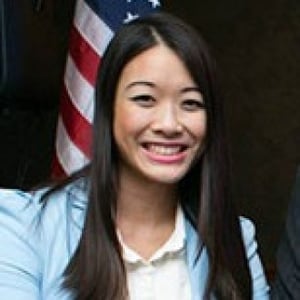
Chief Counsel to Senator Marsha Blackburn, United States Senate
Jessica Vu formerly served as Chief Counsel to Senator Marsha Blackburn (R-Tennessee), where she advises on Senate Judiciary Committee issues. Previously, as Counsel to Senator Chuck Grassley (R-Iowa), she worked on judicial nominations and the confirmation of Associate Justice Brett Kavanaugh to the United States Supreme Court.
Jessica has worked in all three branches of government, and has experience in local, state, and federal politics. After law school, she clerked on the Supreme Court of Texas for Judge Don Willett (now of the United States Court of Appeals for the Fifth Circuit). She then clerked for Judge John McBryde of the United States District Court for the Northern District of Texas. She was a prosecutor for three years at the Harris County District Attorney’s Office before going on to serve Texas Governor Greg Abbott as his Public Information Coordinator and Assistant General Counsel. She was then Counsel to the Assistant Attorney General for the Civil Rights Division at the United States Department of Justice, focusing on discrimination in higher education.
Jessica graduated from the University of California, Berkeley, with highest honors in Political Science, and a minor in Southeast Asian Studies. She received her J.D. from Harvard Law School, where she was Executive Editor of the Harvard Journal of Law and Public Policy. She is a member of the Asian Pacific American Bar Association of Washington, D.C. and serves on the board of the Federalist Society’s D.C. Young Lawyers Chapter.
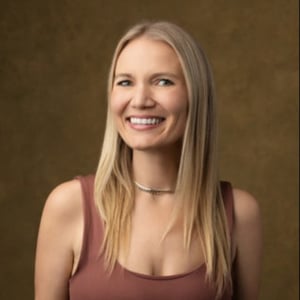
Constitutional Scholarship Director and Senior Legal Analyst, Pacific Legal Foundation
Anastasia Boden is Director of Constitutional Scholarship at Pacific Legal Foundation, where she leads the organization’s Supreme Court commentary and directs scholarly analysis in support of the firm’s litigation. She has represented entrepreneurs and small businesses nationwide in challenges to onerous licensing regimes, anti-competitive titling restrictions, Certificate of Need (“competitor’s veto”) laws, and other forms of unnecessary red tape that block economic opportunity.
Prior to this role, Anastasia developed nearly a dozen constitutional challenges to Certificate of Need laws across the country, helping spur legislative reform in Montana, Pennsylvania, and West Virginia. Her victories include a ruling invalidating Houston’s busking restrictions, multiple appellate decisions expanding access to the courts for civil rights plaintiffs, and the legislative repeal of Virginia’s happy-hour advertising ban.
Her writings on law and liberty have been featured in USA Today, The Washington Post, The Wall Street Journal, the Los Angeles Times, the Chicago Tribune, Forbes, and more, and she has appeared on Headline News, CBS News, Fox News, ReasonTV, Newsmax, and John Stossel. In 2020, she was featured on Libertarian Party presidential candidate Jo Jorgensen’s Supreme Court shortlist.
Anastasia earned her BA with dean’s honors from the University of California, Santa Barbara, and her JD from Georgetown University Law Center, where she was research assistant to Professor Randy E. Barnett—the “intellectual godfather” of the constitutional challenge to Obamacare. She is the co-creator of the podcast Dissed, about infamous Supreme Court dissents. She authors the biweekly newsletter SCOTUS Scoop and the column, “In Dissent” for SCOTUSblog.

Laurence A. Tisch Professor of Law and Director, Classical Liberal Institute, New York University School of Law; Director, Classical Liberal Institute, Civitas Institute University of Texas at Austin
Richard A. Epstein is the Laurence A. Tisch Professor of Law, at New York University, a senior research fellow at the Civitas Institute at the University of Texas Austin, and a senior Lecturer, the University of Chicago. He received an LL.D., h.c . from the University of Ghent, 2003 , and an LLD h.c . from the University of Siegen in 2018 and the Bradley Prize in 2011. He has been a member of the American Academy of Arts and Sciences since 1985. He has edited both the Journal of Legal Studies (1981-1991) and the Journal of Law and Economics (1991-2001). He is also a founder and director of the Classical Liberal Institute at NYU Law School. His most recent book is The Classical Liberal Constitution: The Uncertain Quest for Limited Government (2014). His other books include Takings: Private Property and the Power of Eminent Domain ( 1985); Bargaining with the State (1993); Simple Rules for a Complex World (1995); Principles for a Free Society: Reconciling Individual Liberty and the Common Good (1998); Skepticism and Freedom: A Modern Theory of Classical Liberalism (2003); Design for Liberty: Private Property, Public Administration and the Rule of Law (2011), and most recently, The Myth of Birthright citizenship—and Beyond (2026). He has taught courses in , administrative law, antitrust, constitutional, contracts, environmental law, land use planning; real property, torts and water law. He has written and spoken extensively on a wide range of topics, and is writes a regular column for Defining Ideas.

Deputy Litigation Director, Institute for Justice
Robert McNamara serves as Deputy Litigation Director with the Institute for Justice. He joined the Institute in August 2006 and litigates cutting-edge constitutional cases protecting free speech, property rights, economic liberty and other individual liberties in both federal and state courts.
Robert’s work has resulted in court victories for property owners fighting eminent domain abuse, tour guides fighting unconstitutional restrictions on their speech, taxi drivers seeking the right to own their own business, and many others. Robert also litigates in defense of innovation and entrepreneurship in medical care and was co-counsel in Flynn v. Holder, IJ’s landmark challenge to the federal prohibition on compensating bone marrow donors.
Robert’s writing has been published by outlets including The New York Times, The Wall Street Journal, The Washington Post and dozens more nationwide. His opinions and views on legal issues have been featured in radio and television programs ranging from National Public Radio’s All Things Considered to Fox News Channel’s Hannity & Colmes.
Robert is a graduate of Boston University and the New York University School of Law, where he was a founding member and eventual editor-in-chief of the NYU Journal of Law & Liberty. He currently lives in Virginia with his wife and children.
Robert McNamara is a member of the Virginia bar.
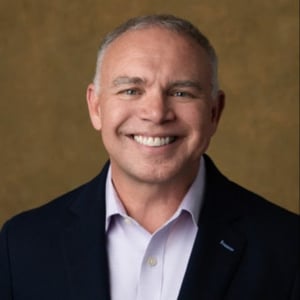
Vice President for Litigation & Strategy, Pacific Legal Foundation
Larry Salzman leads PLF’s litigation program and is responsible for shaping the organization’s overall legal strategy to advance the principles of individual rights and limited government. He oversees the Supreme Court docket at PLF and helps its nearly 75 litigating attorneys and support staff bring cases to secure enduring legal change for liberty.
Larry has been a public interest litigator for nearly two decades, focusing on property rights and economic freedom. Recent highlights include Sheetz v. County of El Dorado and Tyler v. Hennepin County at the Supreme Court. He has been with PLF for more than a decade. Previously, he was a judicial clerk at the U.S. Court of Federal Claims and a litigator at the Institute for Justice.
Between 2007 and 2011, Larry took a hiatus from litigation to work as CEO of an e-commerce company he had co-founded and built while attending law school at night. He loves his current role at PLF because it provides the rare opportunity to continue expressing dual passions for litigation and entrepreneurial management.
Larry’s commitment to liberty crystallized during college by studying philosophy and free-market economics. He experienced the importance of property rights in a very personal way in the 1990s when his family’s auto-repair business was taken by eminent domain and turned over by the city to a private developer on the promise that a big-box store would generate more tax revenue.
He graduated from the University of San Diego School of Law (J.D. 2002), where he was assistant editor of the San Diego Law Review. Larry was inspired in law school to pursue a career in public interest litigation while working as a research assistant to the late Bernard Siegan, a pioneer in the movement to revive constitutional protection for property rights and economic liberty. He also serves on the Board of Directors for the Ayn Rand Institute. When not working, he enjoys travel, an annual pass to Disneyland with family, and learning and growing alongside his daughter.
Larry is a member of the bar only in the state of California.
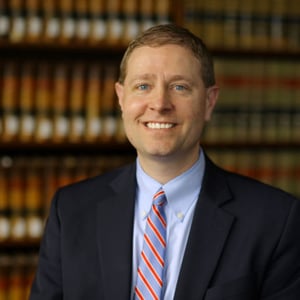
Executive Director, Salmon P. Chase Center for Civics, Culture, and Society, The Ohio State University
Professor Lee J. Strang serves as the inaugural executive director of the Salmon P. Chase Center for Civics, Culture, and Society at The Ohio State University.
Initiated in 2023 by the state of Ohio, the Chase Center will be an academic home at Ohio State for teaching, research, and programing on the foundations of the American constitutional order and its impact on society. As executive director, Professor Strang is responsible for organizing the center, overseeing the hiring and appointment of the center’s faculty, developing curriculum, and delivering student and academic programming. He also holds a faculty appointment in the Moritz College of Law at Ohio State.
Professor Strang is a nationally recognized legal scholar who has published dozens of articles in leading journals in the fields of constitutional law and interpretation, property law, and religion and the First Amendment. He co-edits the textbook Federal Constitutional Law, and his most recent book, Originalism’s Promise: A Natural Law Account of the American Constitution is the first book-length, natural law justification for originalism. He currently is writing on civic thought and leadership, and he is finalizing a book on the history of American Catholic legal education (with John M. Breen).
Before joining Ohio State, Professor Strang served as the inaugural director of the University of Toledo’s Institute of American Constitutional Thought & Leadership. He joined the Toledo College of Law faculty in 2008, was granted tenure in 2010, and was named John W. Stoepler Professor of Law & Values in 2015. The University of Toledo awarded Professor Strang its Outstanding Faculty Research and Scholarship Award in 2017. Before that, he was a visiting professor at Michigan State University College of Law. A graduate of the University of Iowa, where he was articles editor of the Iowa Law Review and Order of the Coif, Professor Strang holds an LL.M. degree from Harvard Law School.
Professor Strang has been a visiting scholar at the Georgetown Center for the Constitution and a visiting fellow at the James Madison Program at Princeton University. In 2016, he was appointed to the Ohio Advisory Committee of the U.S. Commission on Civil Rights and reappointed as chair in 2023.
Prior to teaching, Professor Strang served as a judicial clerk for Judge Alice M. Batchelder of the U.S. Court of Appeals for the Sixth Circuit. He was also an associate for Jenner & Block LLP in Chicago, where he practiced in general and appellate litigation.
Professor Strang is a frequent presenter at scholarly conferences. He is the president of the Board of Trustees of Northwest Ohio Classical Academy, Ohio’s first classical charter school. He is also a regular participant in debates at law schools across the country, a contributor to the media, and a speaker to political, civic, and religious groups.

Judge, U.S. Court of Appeals for the Third Circuit
Hon. Jennifer Mascott served as Associate Professor of Law and Director of the Separation of Powers Institute at The Catholic University of America’s Columbus School of Law before her appointment to the federal bench. On July 16, 2025, President Donald J. Trump nominated her to the U.S. Court of Appeals for the Third Circuit (Delaware), and she was confirmed on October 9, 2025.
Prior to her confirmation, Judge Mascott wrote extensively in administrative and constitutional law, statutory interpretation, and the separation of powers. Her scholarship—published in leading journals including the Stanford Law Review, Notre Dame Law Review, and Supreme Court Review—was cited by the U.S. Supreme Court and multiple federal courts. She also contributed Supreme Court commentary for NBC Universal.
Before joining Catholic Law, she was an Assistant Professor and Co-Director of The C. Boyden Gray Center at George Mason University’s Antonin Scalia Law School. In 2022 she became co-author of Beermann, Cass & Diver’s Administrative Law: Cases and Materials (9th ed.). In 2023 she received the Justice Joseph Story Award for excellence in scholarship, teaching, and advancing the rule of law.
Judge Mascott also served as a Council Member of the ABA’s Administrative Law Section and as a Public Member of the Administrative Conference of the United States. She frequently testified before Congress on executive power, regulatory reform, and judicial jurisdiction, and participated in multiple Supreme Court confirmation hearings.
From 2019 to 2021, she took leave from academia to serve as Deputy Assistant Attorney General in the Department of Justice’s Office of Legal Counsel and later as Associate Deputy Attorney General, where she argued federal cases and assisted with Justice Amy Coney Barrett’s confirmation. Earlier in her career, she clerked for Justice Clarence Thomas and for then-Judge Brett M. Kavanaugh on the D.C. Circuit.
Judge Mascott earned her J.D. summa cum laude from the George Washington University Law School and her B.A. from the same institution.
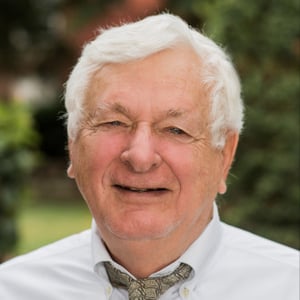
Lyle T. Alverson Professor of Law, George Washington University Law School
Professor Pierce is author of over twenty books and 130 articles on administrative law, government regulation, and the effects of various forms of government intervention on the performance of markets. His books and articles have been cited in hundreds of judicial opinions, including over a dozen opinions of the U.S. Supreme Court.
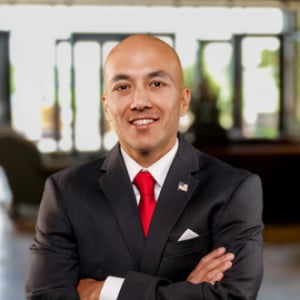
Chief Counsel, Senator Ted Cruz
Mike Berry serves as Chief Counsel for United States Senator Ted Cruz. As Chief Counsel for Senator Cruz, Mike provides advice and counsel to the Senator with special emphasis on the Senate’s advice and consent role pertaining to judicial nominations.
Prior to working on the Hill, Mike spent many years in public interest litigation with various non-profits. Mike served for seven years as an attorney with the U.S. Marine Corps, leaving active duty in 2013. Among his numerous positions within the Marine Corps, Mike deployed to Afghanistan in 2008 and he served as an Adjunct Professor of Law at the United States Naval Academy. Mr. Berry continues to proudly serve our nation as a member of the Marine Corps Reserve.
Mr. Berry earned his bachelor’s degree from Texas A&M University, and he earned his law degree from The Ohio State University.
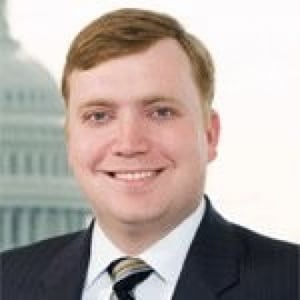
Solicitor General of Kentucky
Matt Kuhn serves as the Solicitor General of Kentucky. As Solicitor General, he oversees the office's civil and criminal appellate litigation and supervises the office's filing of amicus briefs. Since joining the Attorney General's office, he has argued in the Supreme Court of the United States, the United States Court of Appeals for the Sixth Circuit, and the Supreme Court of Kentucky. Before joining the Attorney General's office, he served as Chief Deputy General Counsel to the Governor of Kentucky. He also worked in private practice at Jones Day in Washington, D.C. and Stoll Keenon Ogden in Louisville, and served as a law clerk for Judge Raymond Gruender of the United States Court of Appeals for the Eighth Circuit. He is a graduate of Furman University and Columbia Law School.
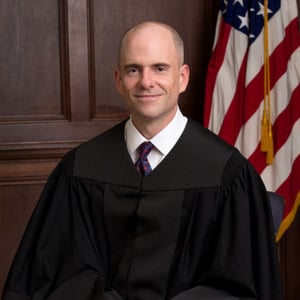
Judge, United States Court of Appeals, Eleventh Circuit
Judge Kevin C. Newsom is a member of the United States Court of Appeals for the Eleventh Circuit. He sits in Birmingham, Alabama.
Before his appointment to the bench, Judge Newsom was the head of the appellate practice group at Bradley Arant Boult Cummings LLP and, before that, the Solicitor General of Alabama. As a practicing lawyer, Judge Newsom argued four cases in the Supreme Court of the United States, and nearly 40 more in the United States Courts of Appeals and state supreme and appellate courts.
Judge Newsom graduated summa cum laude from Samford University and magna cum laude from Harvard Law School, where he was an articles editor on the Harvard Law Review. Following law school, Judge Newsom clerked for Judge Diarmuid F. O’Scannlain of the United States Court of Appeals for the Ninth Circuit and Justice David H. Souter of the Supreme Court of the United States.
Judge Newsom teaches at Harvard Law School, Yale Law School, Stanford Law School, and the University of Chicago Law School. His published work has appeared in the Yale Law Journal and the Harvard Law Review.
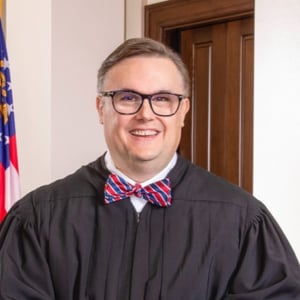
Presiding Judge, Georgia Court of Appeals
Presiding Judge Stephen Louis A. Dillard was appointed as the 73rd judge of the Court of Appeals of the State of Georgia on November 1, 2010 by Governor Sonny Perdue. Prior to his appointment, Judge Dillard was in private practice with James, Bates, Pope & Spivey in Macon, serving as chairman of the firm’s appellate practice group. Judge Dillard was elected and then reelected by his fellow Georgians in 2012, 2018, and 2024. On July 1, 2017, Judge Dillard was sworn in as the 30th Chief Judge of the Court of Appeals of Georgia for a two-year term that ended on June 30, 2019. He currently serves as the presiding judge of the Court’s Fourth Division, and will begin serving as the presiding judge of the Court’s Third Division in 2026.
Judge Dillard was born in Nashville, Tennessee on November 13, 1969. He attended and graduated from Hillwood High School in Nashville, Tennessee; Samford University (B.A. 1992); Mississippi College School of Law (J.D., cum laude, 1996); and Duke University School of Law (LL.M., Judicial Studies, 2025). In college, Judge Dillard was a member of The Sigma Chi Fraternity and Omicron Delta Kappa. He was also given the Evelyn Meadows Historical Essay Award, as well as the William McMillian Rogers Colonial Dames Overall Essay Award, for “The Tempting of America to be America: Alexander Hamilton and the Federalist Papers.” During law school, Judge Dillard was a member of the Moot Court Board and received the Judge Robert G. Gillespie Outstanding Achievement in Appellate Advocacy Award, as well as the American Jurisprudence Award in Appellate Advocacy. He also served as president of the Mississippi College Chapter of the Federalist Society for Law and Public Policy Studies.
After graduating from law school, Judge Dillard joined the Macon law firm of Stone and Baxter, where he practiced from 1996 until 2001. In September 2001, he left private practice for a two-year period to serve as a law clerk at the U.S. Court of Appeals for the Seventh Circuit for Judge Daniel A. Manion (who was appointed by President Ronald W. Reagan in 1986 and served until 2022). In September 2003, Judge Dillard joined James Bates as of counsel, specialized in appellate practice and complex litigation, and served as chairperson of the firm’s appellate practice group. While in practice, he received an AV® Preeminent™ Peer-Review Rating from Martindale-Hubbell and was named by Super Lawyers as one of Georgia’s “rising stars.”
Additionally, Judge Dillard was appointed by Governor Sonny Perdue to the Judicial Nominating Commission and the Public Defender Selection Panel for the Macon Judicial Circuit. He has published scholarly essays in the Encyclopedia of Civil Liberties, the Encyclopedia of Great American Judges, the Encyclopedia of Great American Lawyers, Judicature, the Green Bag Almanac & Reader, the Journal of Appellate Practice & Process, as well as two articles in the Mercer Law Review regarding the inner workings and culture of the Court of Appeals of the State of Georgia. He was also a participating lawyer with the Criminal Justice Act Appellate Panel for the U.S. Court of Appeals for the Eleventh Circuit, handling pro bono publico appeals for indigent individuals. Judge Dillard is a member of the State Bar of Georgia’s Appellate Practice and Judicial Sections, the Macon Bar Association, the Atlanta Bar Association, the Lawyers Club of Atlanta, the Saint Thomas More Society, the Judge Clarence Cooper American Inn of Court, the Logan E. Bleckley American Inn of Court, the William Augustus Bootle American Inn of Court, the Federalist Society for Law and Public Policy Studies, the Palaver Club of Macon, and the Samford Bulldog Club. He also has served as a mentor for The Appellate Project, which is “focused on empowering law students of color to pursue appellate work.”
Since joining the Court of Appeals, Judge Dillard has spoken to numerous organizations, participated in countless state and national seminars, held a wide variety of leadership positions, and received many awards. In 2025, one of Judge Dillard’s opinions—his concurrence in Board of Commissioners of Brantley County v. Brantley County Development Partners LLC et al.—was selected by The Green Bag Almanac and Reader as one of its works of “exemplary writing.” Judge Dillard was also named as the Milvain Chair in Advocacy by the University of Calgary Law Faculty that year, and he is the first American jurist and 43rd person to ever receive this honor. In 2024, Judge Dillard was appointed by Chief Justice Michael P. Boggs as co-chair of the Supreme Court of Georgia’s Study Committee on Legal Regulatory Reform, joined The Legal Accountability Project’s Advisory Board, and also gave the “Last Senior Lecture” to the Samford University Class of 2024. In 2023, Judge Dillard began serving his second term on Samford University’s Board of Overseers, and started the L.L.M. program for Judicial Studies at the Duke University School of Law. In 2022, he began serving on the Communications Committee of the Council of Chief Judges of the State Courts of Appeal. In 2021, Judge Dillard was given the “Significant Sig” award by The Sigma Chi Fraternity (one of its highest honors), which “recognizes those alumni members whose exemplary achievements in their fields of endeavor have brought great honor and prestige to the name of Sigma Chi.” He also began serving that year on the Dean Search Committee for Samford University’s Cumberland School of Law, and completed his work on that committee in April 2022. In 2020, Judge Dillard began serving his second two-year term as the president of the Samford University Alumni Association, a three-year term on Samford University’s Board of Overseers, as an advisor to the Pi Chapter of The Sigma Chi Fraternity at Samford University, and as a member of the Samford University Presidential Search Committee and the Samford University Task Force on Racial Justice. He was also given the Distinguished Judicial Service Award that year by the Young Lawyers Division of the State Bar of Georgia for the second time in his career. In 2019, Judge Dillard began teaching Appellate Practice and Procedure at Mercer University Law School and joined the National Advisory Board for The Constitutional Sources Project (“ConSource”), an organization dedicated to increasing access to and understanding of the United States Constitution and its history and creation. He was also named that year as the “Tweeter Laureate” of Georgia by the Georgia House of Representatives, as one of Atlanta’s 500 most powerful leaders by Atlanta Magazine, and as “Best Social Mediator” by the Fulton County Daily Report. In 2018, Judge Dillard began serving his first two-year term as president of the Samford University Alumni Association, as well as a member of the Samford University Athletic Director’s Cabinet. He also began his service that year as a member of the Supreme Court of Georgia’s Justice for Children Committee. In 2017, Judge Dillard was named Samford University’s “Alumnus of the Year,” which is the highest honor the university bestows on its graduates. In 2016, Judge Dillard began serving a two-year term as president of Samford University’s Atlanta Alumni chapter. He was also appointed that year as the co-chairperson of the Georgia Judicial Council’s Strategic Plan Standing Committee, and as a member of the Council’s Standing Committee on Technology. Finally, he was also named Samford University’s 2016 “Featured Alumnus” for the Howard College of Arts and Sciences. In 2015, Judge Dillard was appointed by Governor Nathan Deal to the Georgia Appellate Jurisdiction Review Commission. He was also appointed that year to serve on the Georgia Judicial Council, and as the chairperson of the Court Reporting Matters Committee. In 2014, Judge Dillard was named the “State Judge of the Year” by his alma mater, the Mississippi College School of Law, for his outstanding judicial service; and he also received the “Fastcase 50” award, which honors leaders in the world of law, scholarship, and legal technology. In 2013, Judge Dillard was awarded the Distinguished Judicial Service Award by the Young Lawyers Division of the State Bar of Georgia, recognizing his outstanding service on the bench and commitment to improving the practice of law. In 2012, Judge Dillard was appointed to the Code of Judicial Conduct Review Committee by Chief Judge John J. Ellington, and he also began serving as the special consultant to the Georgia High School Mock Trial Committee.
Among his many accomplishments in leadership at the Court of Appeals, Judge Dillard restructured the Court’s Central Staff Attorney Office, advocated for and implemented livestreaming and archiving of the Court’s oral arguments, helped design and shepherd a complete overhaul of the Court’s operational structure, had the primary responsibility for overseeing the Court’s move to the Nathan Deal Judicial Center (during his time as chief judge), drafted numerous Court rules (including the rule abolishing “physical precedent”) and IOM revisions, and lead the implementation of the Court’s transition to its first typography change in twenty years (i.e., the “Equity” font). Finally, he created, designed, and continues to oversee the Judge Herbert E. Phipps Fellowship program in partnership with Morehouse College.
Judge Dillard is married to the former Krista McDaniel, and they have three children. He is a parishioner of Saint Joseph Catholic Church and the former president of the School Board for Saint Joseph’s Catholic School.
Judge, United States District Court for the Northern District of Georgia
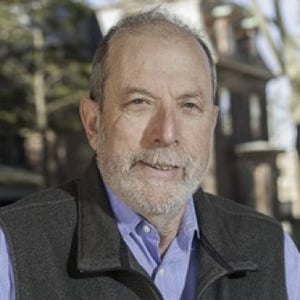
Distinguished Professor of Law, Rutgers Law School
Earl Maltz is a Distinguished Professor and the author of two books and more than 50 articles on constitutional law, statutory interpretation, the role of the courts and legal history. He teaches constitutional law, employment discrimination, conflicts of law and a seminar on the Supreme Court.
Professor Maltz is the author of Rethinking Constitutional Law: Originalism, Interventionism, and the Politics of Judicial Review (1994), Civil Rights, The Constitution and Congress, 1863-1865 (1990), and over 50 articles on constitutional law, statutory interpretation, the role of the courts and legal history. He received his B.A. from Northwestern University, where he was elected to Phi Beta Kappa, and his J.D. cum laude from Harvard. Professor Maltz teaches Constitutional Law, Employment Discrimination, Conflicts of Law, and a seminar on the Supreme Court.

Professor, University of Minnesota Law School
Ilan Wurman is the Julius E. Davis Professor of Law at the University of Minnesota, where he teaches administrative law and constitutional law. He previously taught at Arizona State University. He writes primarily on the Fourteenth Amendment, administrative law, separation of powers, and constitutionalism. His academic writing has appeared in the Yale Law Journal, the Stanford Law Review, the University of Chicago Law Review, the University of Pennsylvania Law Review, the Virginia Law Review, the Duke Law Journal, the Minnesota Law Review, the Notre Dame Law Review, and the Texas Law Review among other journals.
Professor Wurman is the author of a casebook, Administrative Law Theory and Fundamentals: An Integrated Approach (Foundation Press 2d ed. 2024). He is also the author of A Debt Against the Living: An Introduction to Originalism (Cambridge 2017), and The Second Founding: An Introduction to the Fourteenth Amendment (Cambridge 2020). His next book, The Constitution of 1789: A New Introduction, is also forthcoming with Cambridge University Press.
Professor Wurman practices law with the firm Tully Bailey. He has litigated a variety of administrative law and constitutional law cases, including cases involving COVID-19 restrictions, transmission lines, and Appointments Clause challenges. He also devised winning public nuisance theories to force city governments to address the increasingly challenging public camping crises throughout the country.
Florida Fourth District Court of Appeal
ALAN ORANTES FORST was appointed to a judge position on the Fourth District Court of Appeal by Governor Rick Scott on March 7, 2013; he was administered the oath of office on April 8, 2013. Prior to this appointment, Judge Forst served as Chairman of the Florida Reemployment Assistance Appeals Commission/Unemployment Appeals Commission commencing in July 2001, having been appointed to two terms by Governor Jeb Bush and a third term by Governor Charlie Crist. The Commission is an independent commission that conducts appellate review of contested unemployment compensation claims, issues final orders and, if necessary, defends those orders before the district courts of appeal. Prior to the 2001 appointment, Judge Forst was an associate and partner at the Stuart, Florida law firm Crary Buchanan. Earlier in his career, Judge Forst spent over two decades in Washington, D.C. A graduate of the Georgetown University School of Foreign Service and the Columbus School of Law of the Catholic University of America, Judge Forst served under Presidents Reagan, Bush, and Clinton in front office positions at the Departments of Justice and Labor (special assistant to the Administrators of OFCCP and the Wage and Hour Division), as counsel to the Vice Chair/Member of the Merit Systems Protection Board, and as special assistant/counsel to Chairman Clarence Thomas at the Equal Employment Opportunity Commission. Other stops included the Department of Commerce, two Senate offices, the National Legal Center for the Public Interest, the Commission on Civil Rights, the Legal Services Corporation, and Northern Virginia Law School. Judge Forst was President of the Martin County Bar Association in 2007-08 and Chair of the Florida Bar’s Labor and Employment Law Section in 2008-09. He resides in Martin County.

Lecturing Fellow and Supervising Attorney, First Amendment Clinic, Duke University School of Law
Nicole Ligon joined the Duke Law faculty in 2018 as a Lecturing Fellow and the Supervising Attorney of the First Amendment Clinic. In this capacity, she teaches First Amendment law in a clinical setting as well as Entertainment law. Through her work with the First Amendment Clinic, Ligon mentors students in honing their practical litigation skills and oversees their casework on behalf of clients who claim infringements of their free speech rights. While at Duke and in private practice, Ligon has represented and advocated on behalf of many individuals who have been discriminated against or otherwise targeted for expressing their viewpoints or opinions. She has also filed numerous amicus briefs in the U.S. Supreme Court and state courts in cases involving First Amendment and media law issues.
Ligon frequently contributes expert analysis and commentary to news stories involving First Amendment concerns. She has also published articles in outlets across the political spectrum concerning free expression. Some of her most recent works have focused on the constitutionality of statutes banning revenge pornography, campus speech issues, and the intersection between human rights laws and free speech rights with regard to casting practices. Ligon has also guest lectured on First Amendment law in the Summer Institute for Law, Language, & Culture (SILLC) and undergraduate workshops.
Ligon is a member of the Legal Network for Gender Equity, where she supervises students assisting individuals seeking guidance on speaking openly and publicly about their stories of sexual harassment while shielding against defamation concerns. She has been an invited webinar speaker on defamation claims related to sexual harassment for the Network.
Before joining Duke Law, Ligon was an attorney with Cahill Gordon & Reindel in New York City. She was a member of the firm’s litigation department, and her practice focused on First Amendment and media law matters. While in private practice, Ligon was honored by the Center for Appellate Litigation (CAL) for her work in helping its Books Beyond Bars project challenge proposed state packaging restrictions that would have prevented people incarcerated in New York prisons from receiving donated books by mail. Ligon’s extensive pro bono practice also included handling matters on issues related to reporter’s privilege, defamation, right of access, and other free speech concerns. Ligon also served on the board of a non-profit organization, Jazz Choreography Enterprises, from 2017-2018.
Ligon received her J.D. from Duke University School of Law, where she served as a Notes Editor for the Duke Law Journal. She received her B.A. from Emory University.
Ligon is licensed to practice law in New Jersey, New York, North Carolina, and South Carolina.
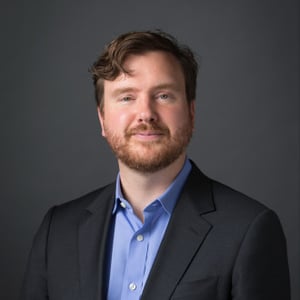
President and CEO, Foundation for Individual Rights in Education (FIRE)
Greg Lukianoff is an attorney, New York Times best-selling author, and the President and CEO of the Foundation for Individual Rights in Education (FIRE). He is the author of Unlearning Liberty: Campus Censorship and the End of American Debate, Freedom From Speech, and FIRE’s Guide to Free Speech on Campus. Most recently, he co-authored The Coddling of the American Mind: How Good Intentions and Bad Ideas Are Setting Up a Generation for Failure with Jonathan Haidt. This New York Times best-seller expands on their September 2015 Atlantic cover story of the same name. Greg is also an Executive Producer of Can We Take a Joke? (2015), a feature-length documentary that explores the collision between comedy, censorship, and outrage culture, both on and off campus, and of Mighty Ira: A Civil Liberties Story (2020), a feature-length film about the life and career of former ACLU Executive Director Ira Glasser.
Greg has been published in The New York Times, The Wall Street Journal, The Washington Post, Los Angeles Times, The Boston Globe, and numerous other publications. He frequently appears on TV shows and radio programs, including the CBS Evening News, The Today Show, and NPR’s Morning Edition. In 2008, he became the first-ever recipient of the Playboy Foundation’s Freedom of Expression Award, and he has testified before both the U.S. Senate and the House of Representatives about free speech issues on America’s college campuses.

John Marshall Harlan II Professor of Law Emerita, New York Law School; Former President, American Civil Liberties Union
Nadine Strossen, New York Law School Professor Emerita and Senior Fellow at FIRE (the Foundation for Individual Rights and Expression), was national President of the American Civil Liberties Union from 1991 to 2008. An internationally acclaimed free speech scholar and advocate, who regularly addresses diverse audiences and provides media commentary around the world, Strossen is also the Host and Project Consultant for Free To Speak, a 3-hour documentary film series distributed on public television in 2023. Her books about free speech include: Free Speech: What Everyone Needs to Know® (Oxford University Press 2023); HATE: Why We Should Resist It with Free Speech, Not Censorship (Oxford University Press 2018); and Defending Pornography: Free Speech, Sex, and the Fight for Women’s Rights (Scribner 1995), which was republished with a new Preface in 2024 as part of the NYU Classics Series. Her many honors and awards include the National Coalition Against Censorship’s Judy Blume Lifetime Achievement Award for Free Speech. She serves on the Advisory Boards of several organizations that do free speech work, including: ACLU, Academic Freedom Alliance, Foundation Against Intolerance and Racism (FAIR), Heterodox Academy, National Coalition Against Censorship, and the University of Austin.