Patrick Hotung Professor of Constitutional Law, Georgetown University Law Center; Faculty Director, Georgetown Center for the Constitution
Biography
Randy E. Barnett is the Patrick Hotung Professor of Constitutional Law at the Georgetown University Law Center and is the Faculty Director of the Georgetown Center for the Constitution. After graduating from Northwestern University and Harvard Law School, he tried many felony cases as a prosecutor in the Cook County States’ Attorney’s Office in Chicago. A recipient of a Guggenheim Fellowship in Constitutional Studies and the Bradley Prize, Professor Barnett has been a visiting professor at Penn, Northwestern and Harvard Law School.
Professor Barnett’s publications includes thirteen books, more than one hundred articles and reviews, as well as numerous op-eds. His most recent book is Felony Review: Tales of True Crime and Corruption in Chicago (2026). His other books on the Constitution include: A Life for Liberty: The Making of an American Originalist (2024); The Original Meaning of the Fourteenth Amendment: Its Letter and Spirit (2021) (with Evan Bernick); An Introduction to Constitutional Law: 100 Supreme Court Cases Everyone Should Know (2019) (with Josh Blackman); Restoring the Lost Constitution: The Presumption of Liberty (2nd ed. 2013); Our Republican Constitution: Securing the Liberty and Sovereignty of We the People (2016); and Constitutional Law: Cases in Context (5th ed. forthcoming 2027) (with Josh Blackman). His books on contracts are The Oxford Introductions to U.S. Law: Contracts (2010) and Contracts: Cases and Doctrine (7th ed. 2021) (with Nate Oman). And he is the author of The Structure of Liberty: Justice and the Rule of Law (2nd ed. 2014).
In 2004, he argued the medical marijuana case of Gonzalez v. Raich before the U.S. Supreme Court. In 2012, he was one of the lawyers representing the National Federation of Independent Business in its constitutional challenge to the Affordable Care Act in NFIB v. Sebelius. He’s appeared in numerous documentaries and portrayed a prosecutor in the 2010 science-fiction feature film, InAlienable: The Movie. On X he is @RandyEBarnett
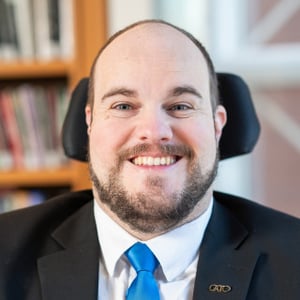
Trent McCotter is a partner with Boyden Gray PLLC. He previously served as Deputy Associate Attorney General of the United States and as an Assistant U.S. Attorney.
Mr. McCotter maintains an extensive appellate practice. He has considerable experience identifying and briefing cases that draw the Supreme Court’s attention, having persuaded the Court to grant certiorari in numerous cases raising issues of sovereignty, constitutional rights, due process, and criminal law. He has authored and submitted over 60 briefs at the Court.
He has also personally argued more than fifteen federal appeals across the Second, Fourth, Fifth, Sixth, Ninth, Eleventh, Federal, and D.C. Circuits—including once arguing three separate appeals in just four days. He has also twice argued before the 17-judge en banc Fifth Circuit. He has been counsel in over 50 other appeals raising matters from FOIA and the APA to constitutional rights and statutory construction.
As Deputy Associate Attorney General, Mr. McCotter oversaw DOJ’s Civil Appellate and Federal Programs branches, which are responsible for defending nearly all major litigation against the federal government. During his three years as a federal trial attorney in the Eastern District of Virginia’s “Rocket Docket,” Mr. McCotter won the Attorney General’s Award for Distinguished Service.
During his DOJ tenures, Mr. McCotter also assisted with the confirmations of two Supreme Court justices and over a dozen lower-court judges.
Mr. McCotter served as an inaugural clerk to the Hon. Steven J. Menashi on the U.S. Court of Appeals for the Second Circuit and also clerked for the Hon. R. Lanier Anderson III on the U.S. Court of Appeals for the Eleventh Circuit.
Warren Distinguished Professor of Law, University of San Diego School of Law
Biography
Michael D. Ramsey is Warren Distinguished Professor of Law at the University of San Diego School of Law, where he teaches and writes in the areas of Constitutional Law, Foreign Relations Law and International Law. He is the author of The Constitution’s Text in Foreign Affairs (Harvard University Press), co-editor of International Law in the U.S. Supreme Court: Continuity and Change (Cambridge University Press), and co-author of two casebooks, Transnational Law and Practice (2d ed., Aspen) and International Business Transactions: A Problem-Oriented Coursebook (14th ed., West). His scholarly articles have appeared in publications such as the Yale Law Journal, the University of Chicago Law Review, the Georgetown Law Journal and the American Journal of International Law. He received his B.A. magna cum laude from Dartmouth College and his J.D. summa cum laude from Stanford Law School. Prior to teaching, he served as a judicial clerk for Judge J. Clifford Wallace of the United States Court of Appeals for the Ninth Circuit and for Justice Antonin Scalia of the United States Supreme Court, and practiced law with the law firm of Latham & Watkins, where he specialized in international finance and investment. He has taught as a visiting professor at the University of California, San Diego, in the Department of Political Science and at the University of Paris – Sorbonne, in the Department of Comparative Law.
Ilan Wurman is the Julius E. Davis Professor of Law at the University of Minnesota, where he teaches administrative law and constitutional law. He previously taught at Arizona State University. He writes primarily on the Fourteenth Amendment, administrative law, separation of powers, and constitutionalism. His academic writing has appeared in the Yale Law Journal, the Stanford Law Review, the University of Chicago Law Review, the University of Pennsylvania Law Review, the Virginia Law Review, the Duke Law Journal, the Minnesota Law Review, the Notre Dame Law Review, and the Texas Law Review among other journals.
Professor Wurman is the author of the new book The Constitution of 1789: A New Introduction (Cambridge 2026). His previous books include A Debt Against the Living: An Introduction to Originalism (Cambridge 2017), and The Second Founding: An Introduction to the Fourteenth Amendment (Cambridge 2020). He is also the author of the casebook, Administrative Law Theory and Fundamentals: An Integrated Approach (Foundation Press 3d ed. 2025).
Professor Wurman practices law with the firm Tully Bailey. He has litigated a variety of administrative law and constitutional law cases, including cases involving COVID-19 restrictions, transmission lines, and Appointments Clause challenges. He also devised winning public nuisance theories to force city governments to address the increasingly challenging public camping crises throughout the country.
Adjunct Professor of Law, Texas Tech University School of Law
Speaker Information
Britt C. Grant
Judge, United States Court of Appeals, Eleventh Circuit
Biography
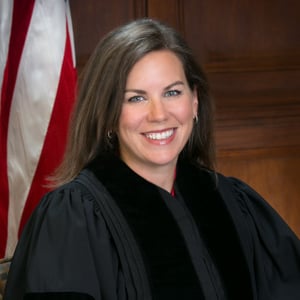
Britt C. Grant is a judge on the U.S. Court of Appeals for the Eleventh Circuit. Judge Grant was appointed to the federal bench in August 2018 after serving as a Justice on the Supreme Court of Georgia. Prior to her judicial appointment, she served as the Solicitor General of Georgia and practiced in the Washington, D.C. office of Kirkland & Ellis. Upon graduation from law school, Judge Grant served as a law clerk to then-Judge Brett M. Kavanaugh of the U.S. Court of Appeals for the District of Columbia Circuit. She earned her J.D., with distinction, from Stanford Law School, where she was the Co-Founder of the Stanford National Security and the Law Society, and the President of the Stanford Law chapter of the Federalist Society. Before enrolling in law school, Judge Grant served in The White House in a variety of domestic policy roles as well as on the staff of Congressman Nathan Deal. Judge Grant earned her B.A., summa cum laude, from Wake Forest University, where she was inducted into Phi Beta Kappa. She now lives in Atlanta, Georgia with her husband and three children.
Director, Project on Criminal Justice, Cato Institute
Biography
Matthew Cavedon is the Director of the Cato Institute’s Project on Criminal Justice. He focuses on reforming plea-driven mass adjudication, ensuring police accountability, and defending constitutional criminal originalism. Cavedon’s scholarship has been published (or is forthcoming in) publications including the Arizona State Law Journal, Cato Supreme Court Review, Seattle University Law Review, and Georgetown Journal of Law and Public Policy. Formerly a Georgia public defender and fellow at the Institute for Justice, Cavedon has taught law school courses on criminal law and procedure, as well as the First Amendment. Cavedon clerked for a U.S. district court and the Supreme Court of Georgia. He came to Cato following a fellowship at the Emory University Center for the Study of Law and Religion.
Krista is a trial lawyer specializing in First Amendment, defamation, and civil liberties work. She is the founder and managing attorney of Baughman Law PC. Krista’s cases have extended fair procedure rights to students wrongly expelled for their lawful speech, eradicated unconstitutional policies that stifled citizens at city council meetings, obtained multi-million-dollar verdicts for victims of online defamation, and achieved a landmark settlement to ensure the First Amendment rights of students at UC Berkeley.
Outside the courtroom, Krista is a frequent speaker, writer, and advisor in free speech and civil liberties matters. She is honored to serve on the Executive Committees of The Federalist Society’s Free Speech section and the San Francisco Bar Association’s Litigation section, and as the Membership Chairperson of the First Amendment Lawyers Association.
Krista is admitted to practice before the Supreme Court of the United States; the California, New York, and District of Columbia bars; the United States Courts of Appeal for the Ninth, Sixth, and Eleventh Circuits; as well as numerous federal trial courts.
Mathew Hoffmann serves as legal counsel on the Appellate Advocacy Team at Alliance Defending Freedom, where he represents ADF clients before state and federal appellate courts, including the U.S. Supreme Court. Previously, he served in ADF’s Center for Free Speech and Center for Academic Freedom. He has represented clients in free expression cases across the country and has argued before the U.S. Courts of Appeals for the Seventh and Ninth Circuits and the Alabama Supreme Court.
Before joining ADF, Hoffmann clerked for the Honorable Robert J. Luck of the U.S. Court of Appeals for the Eleventh Circuit and served as an associate at a large law firm.
Hoffmann earned his J.D. from the University of Notre Dame Law School in 2018. He graduated summa cum laude and served as an editor for the Notre Dame Law Review. He is a 2016 Blackstone Fellow. Before law school, Hoffmann graduated from Georgetown University with a Bachelor of Science with honors in chemistry and a double major in government.
Hoffmann is admitted to practice before the District of Columbia and Virginia bars, as well as numerous federal appellate and trial courts.
Kannon is the head of our Supreme Court & Appellate practice. He has argued 39 cases before the U.S. Supreme Court and has argued more than 150 appeals in courts across the country, including every federal court of appeals and numerous state courts.
Kannon is ranked as a “Star Individual” in appellate law by Chambers USA, where a client notes, “It’s hard to think of enough superlatives to describe his talent, his judgment, his ability, his experience – he is as good as it gets.” Legal 500 U.S. recognizes Kannon in its Hall of Fame for appellate work. A client shares, “His work is the best in the business, and he is a wonderful human being in addition to being a world-class appellate litigator.”
In 2024 and 2022, Kannon was a finalist for the American Lawyer’s “Litigator of the Year” award. He was named “Appellate Litigator of the Year” by Benchmark Litigation in 2021 and was a 2026 finalist for that recognition.
Before entering private practice, Kannon served as an Assistant to the Solicitor General at the U.S. Department of Justice.
President and Chairman of the Board, Judicial Education Institute
Biography
James Heilpern is President and Chairman of the Board of the Judicial Education Institute, a 501(c)(3) organization that provides high quality judicial education seminars to judges nationwide. He specializes in helping judges harness new technology to improve the interpretive process. In the last three years alone, he has trained approximately 250 judges from at least 50 different jurisdictions, as well as hundreds of practicing attorneys, on topics related artificial intelligence, corpus linguistics, and statutory interpretation. He also serves as counsel at the law firm Schaerr-Jaffe, where he regularly represents clients at all three levels of the federal judiciary, as well as before state supreme courts. He was part of the team the represented the state of Georgia in Texas v. Pennsylvania, et. al., successfully persuading the Supreme Court to dismiss Texas’ last-ditch effort to overturn the results of the 2020 presidential election. Heilpern’s scholarship has been cited by the Second Circuit, the DDC, and the Virginia Supreme Court, as well as dozens of times in the merits and amicus briefs of Trump v. Anderson. He is a Research Fellow at the Georgetown Center for the Constitution, and previously served as a Senior Fellow at the BYU Law School; as General Counsel of an ed-tech start up; and as a strategic advisor to an artificial intelligence company. He graduated magna cum laude from the BYU Law School and with highest honors and with distinction from the University of North Carolina at Chapel Hill. He previously clerked from Judge Edith Clement on the U.S. Court of Appeals for the Fifth Circuit and Judge Robert H. Cleland on the U.S. District Court for the Eastern District of Michigan.