Newsweek Senior Editor-at-Large, Syndicated Columnist, Host of "The Josh Hammer Show," Article III Project Senior Counsel, Newsweek, Salem Media, Article III Project, David Horowitz Freedom Center
Biography
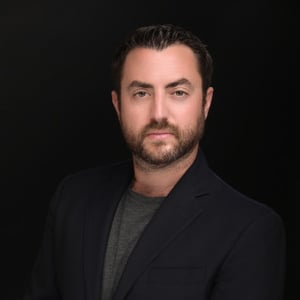
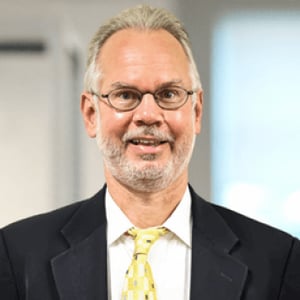
Josh Hammer is the senior editor-at-large of Newsweek and host of "The Josh Hammer Show," a podcast, a syndicated radio show, and TV program on Salem News Channel. A syndicated columnist through Creators Syndicate, Josh is a frequent pundit and essayist on political, legal, and cultural issues. He is also senior counsel for the Article III Project and Internet Accountability Project, as well as a Shillman Fellow with the David Horowitz Freedom Center and a fellow with the Palm Beach Freedom Institute.
An outspoken conservative, Josh opines on conservative intellectual trends, contemporary domestic and foreign policy debates, constitutional and legal issues, and the intersection of law, politics and culture. He has been published by many leading outlets, including the Los Angeles Times, the New York Post, Daily Mail, Newsweek, the Claremont Review of Books, National Affairs, American Affairs, The New Criterion, The National Interest, National Review, RealClearPolitics, First Things, City Journal, Public Discourse, Law & Liberty, Tablet Magazine, Deseret Magazine, Compact Magazine, Chronicles Magazine, The Spectator, The American Mind, The American Conservative, The European Conservative, American Greatness, American Compass, The Federalist, Blaze Media, TomKlingenstein.com, Townhall, The Daily Wire, The Daily Signal, The Daily Caller, The Epoch Times, Anchoring Truths, Fortune, Fox Business, The Jerusalem Post, The Times of Israel, The Forward, Jewish Telegraphic Agency and the Jewish Journal. He has also had legal scholarship published by the Harvard Journal of Law & Public Policy and the University of St. Thomas Law Journal.
Josh is a college campus speaker through Young America's Foundation and the Intercollegiate Studies Institute, and a law school campus speaker through the Federalist Society. Prior to Newsweek and The Daily Wire, where he was an editor, Josh worked at Kirkland & Ellis LLP and clerked for the Hon. James C. Ho on the U.S. Court of Appeals for the Fifth Circuit. Josh has also served as a John Marshall Fellow with the Claremont Institute and as a Fellow with the James Wilson Institute. He is the former host of "America on Trial with Josh Hammer," a one-season daily podcast with The First that covered the unique legal issues surrounding the 2024 presidential election.
Josh graduated from Duke University, where he majored in economics, and from the University of Chicago Law School. He lives in Florida, but remains an active member of the State Bar of Texas.
Doug Bandow is a senior fellow at the Cato Institute, specializing in foreign policy and civil liberties. He worked as special assistant to President Reagan and editor of the political magazine Inquiry. He writes regularly for leading publications such as Fortune magazine, National Interest, Wall Street Journal, and Washington Times. Bandow speaks frequently at academic conferences, on college campuses, and to business groups. Bandow has been a regular commentator on ABC, CBS, NBC, CNN, Fox News Channel, and MSNBC. He holds a J.D. from Stanford University.
Distinguished Senior Fellow and Antonin Scalia Chair in Constitutional Studies, Ethics and Public Policy Center
Biography
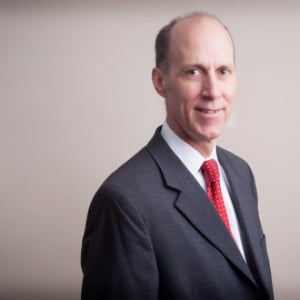
Edward Whelan is a Distinguished Senior Fellow of the Ethics and Public Policy Center and holds EPPC’s Antonin Scalia Chair in Constitutional Studies. He is the longest-serving President in EPPC’s history, having held that position from March 2004 through January 2021.
Mr. Whelan directs EPPC’s program on The Constitution, the Courts, and the Culture. His areas of expertise include constitutional law and the judicial confirmation process. As a contributor to National Review Online’s Bench Memos blog, he has been a leading commentator on nominations to the Supreme Court and the lower courts and on issues of constitutional law. He has written essays and op-eds for leading newspapers—including the Wall Street Journal, the New York Times, and the Washington Post—opinion journals, and academic symposia and law reviews. The National Law Journal has named Mr. Whelan among its “Champions and Visionaries” in the practice of law in D.C.
Mr. Whelan is co-editor of three volumes of Supreme Court Justice Antonin Scalia’s work: Scalia Speaks: Reflections on Law, Faith, and Life Well Lived (Crown Forum, 2017), a New York Times bestselling collection of speeches by Justice Scalia; On Faith: Lessons from an American Believer (Crown Forum, 2019), a collection of Justice Scalia’s writings on faith and religion; and The Essential Scalia: On the Constitution, the Courts, and the Rule of Law (Crown Forum, 2020), a collection of Justice Scalia’s views on legal issues.
Mr. Whelan, a lawyer and a former law clerk to Justice Scalia, has served in positions of responsibility in all three branches of the federal government. From just before the terrorist attacks of September 11, 2001, until joining EPPC in 2004, Mr. Whelan was the Principal Deputy Assistant Attorney General for the Office of Legal Counsel in the U.S. Department of Justice. In that capacity, he advised the White House Counsel’s Office, the Attorney General and other senior DOJ officials, and departments and agencies throughout the executive branch on difficult and sensitive legal questions. Mr. Whelan previously served on Capitol Hill as General Counsel to the U.S. Senate Committee on the Judiciary. In addition to clerking for Justice Scalia, he was a law clerk to Judge J. Clifford Wallace of the U.S. Court of Appeals for the Ninth Circuit.
In 1981 Mr. Whelan graduated with honors from Harvard College and was inducted into Phi Beta Kappa. He received his J.D. magna cum laude in 1985 from Harvard Law School, where he was a member of the Board of Editors of the Harvard Law Review.
For more on Mr. Whelan’s background, see this interview.
Professor of Law, University of Michigan Law School
Biography
Christopher J. Walker is a Professor of Law at the University of Michigan. Prior to joining Michigan law faculty in 2022, he spent a decade teaching at The Ohio State University Moritz College of Law. He previously clerked for Justice Anthony Kennedy of the U.S. Supreme Court, worked on the Civil Appellate Staff at the U.S. Department of Justice, and served on the Senate Judiciary Committee staff for the Gorsuch Supreme Court confirmation. Professor Walker’s research focuses on administrative law, regulation, and law and policy at the agency level. Outside the law school, he chaired the American Bar Association’s Section of Administrative Law and Regulatory Practice in 2020-21 and served as one of forty Public Members of the Administrative Conference of the United States from 2016-2022, and he continues to serve in both organizations in various capacities. He also works of counsel at the U.S. Chamber Litigation Center. In 2022, he received the Federalist Society’s Joseph Story Award.
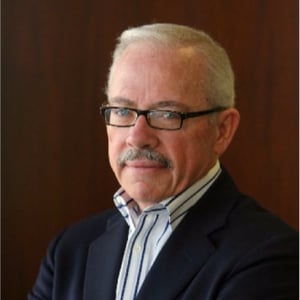
Bob Barr represented the 7th District of Georgia in the U. S. House of Representatives from 1995 to 2003, and now practices law in Atlanta, Georgia, where he serves as chairman of the state’s Judicial Qualifications Commission. Bob also chairs Liberty Guard, Inc. a non-profit and non-partisan organization dedicated to protecting individual liberty. He also heads a consulting firm, Liberty Strategies, Inc., and is a registered Mediator and Arbitrator. Bob has taught constitutional law at Atlanta’s John Marshall Law School and government at Kennesaw State University.
Bob is a member of the Board of Directors for the National Rifle Association, and serves on the Board of the Interactive College of Technology. He is a member of Tau Kappa Epsilon Fraternity.
From 2003 to 2008, Bob occupied the 21st Century Liberties Chair for Freedom and Privacy at the American Conservative Union. He served as a member of The Constitution Project’s Initiative on Liberty and Security, and from 2003 to 2005 was a member of a project at Harvard University’s Kennedy School of Government addressing matters of privacy and security. Barr has served as an advisory board member for Privacy International, headquartered in London, and was labeled “Mr. Privacy” by former New York Times columnist William Safire. He was the Libertarian Party nominee for President in 2008.
Bob has appeared on virtually every major cable and network television program dealing with public policy matters. He writes regularly for Townhall.com, The Daily Caller, and The Marietta Daily Journal, and has been a columnist and blogger for the Atlanta Journal-Constitution. He writes occasional pieces for other publications and hosts a regular podcast, “Bob Barr’s Laws of the Universe.” He is the author of three books: “The Meaning of Is: The Squandered Impeachment and Wasted Legacy of William Jefferson Clinton,” “Patriot Nation: Bob Barr’s Laws of the Universe Volume One,” and “Lessons in Liberty.”
Bob was appointed by President Reagan as the United States Attorney for the Northern District of Georgia (1986-90), served as President of Southeastern Legal Foundation from 1990-91, and was an official with the CIA from 1971-78. Additionally, he has served as a member of U.S. delegations at several United Nations conferences on firearms.
Bob Barr was awarded his law degree from Georgetown University, his master’s degree from The George Washington University, and his bachelor’s degree from the University of Southern California. He and his wife Jeri live in Smyrna, Georgia just outside Atlanta.
Founder and Director, James Wilson Institute on Natural Rights & the American Founding
Biography
Hadley Arkes joined the faculty of Amherst College in 1966. He became the Edward Ney Professor of Jurisprudence in 1987, and held that chair until he retired officially in July 2015. But he has not retired from writing and speaking. He has carried that teaching into a new phase; he has become the Founder and Director of the James Wilson Institute on Natural Rights and the American Founding in Washington, D.C. He has written eight books, mostly with Princeton and Cambridge University Presss. Among the books at Princeton have been: The Philosopher in the City (1981), First Things (1986), Beyond the Constitution (1990), and The Return of George Sutherland (1994). With Cambridge Press he has done Natural Rights and the Right to Choose (2002), and Constitutional Illusions & Anchoring Truths: The Touchstone of the Natural Law (2010). His most recent book, with Regnery Press is Mere Natural Law (2023) His articles have appeared in professional journals, but apart from his writing in more scholarly formats, he has become known to a wider audience through his writings in the Wall Street Journal, National Review, Civitas and First Things, a journal that took its name from his book of that title.
He was the main advocate, and architect, of the bill that became known as the Born-Alive Infants’ Protection Act. The account of his experience, in moving the bill through Congress, is contained as an epilogue or memoir in his book, Natural Rights & the Right to Choose. Arkes first prepared his proposal as part of the debating kit assembled for the first George Bush in 1988. The purpose of that proposal was to offer the “most modest first step” of all in legislating on abortion, and opening a conversation even with people who called themselves “pro-choice.” Professor Arkes proposed to begin simply by preserving the life of a child who survived an abortion–contrary to the holding of one federal judge, that such a child was not protected by the laws. Professor Arkes led the testimony on the bill before the Judiciary Committee of the U.S. House in July 2000, then again in July 2001. The legislative calendar was upended in the aftermath of September 11th, but in March 2002, the bill was brought to the floor of the House, where it passed unanimously. To the surprise of Professor Arkes, the bill was brought to the floor of the Senate on July 18 by the Deputy Majority Leader, Harry Reid, and passed in the same way. On August 5, President Bush signed the bill into law with Professor Arkes in attendance.
Professor Arkes was the founder, at Amherst, of the Committee for the American Founding, a group of alumni and students seeking to preserve, at Amherst, the doctrines of “natural rights” taught by the American Founders and Lincoln. That interest has been carried over now to the founding of a new center for the jurisprudence of natural law, in Washington, D.C.: the James Wilson Institute on Natural Rights and the American Founding, named for one of the premier minds among the American Founders. Professor Arkes has drawn to this project a cluster of accomplished federal judges who have wanted to get a firmer hold on the natural law, and brought them together with some gifted teachers of philosophy and law. The new institute will be sponsoring lectures and seminars in Washington and other parts of the country. The purpose of this new James Wilson Institute is to teach anew, to lawyers, judges, and students those principles of law that furnished the guide to the American Founders as they set about framing a Constitution. And the hope is to restore, to a new generation, the furnishings of mind of the men who formed this regime.
Somin’s work has appeared in numerous scholarly journals, including the Yale Law Journal, Stanford Law Review, Northwestern University Law Review, Georgetown Law Journal, Critical Review, and others. Somin has also published articles in a variety of popular press outlets, including the New York Times, Washington Post, Wall Street Journal, Los Angeles Times, CNN, NBC, The Atlantic, USA Today, Boston Globe, US News and World Report, South China Morning Post, National Law Journal and Reason. He has been quoted or interviewed by the New York Times, Washington Post, Wall Street Journal, Time, Newsweek, The Economist, the Christian Science Monitor, the Financial Times, The Guardian, the Associated Press, CBS, MSNBC, NPR, BBC, Reuters, the Canadian Broadcasting Corporation, the Australian Broadcasting Corporation, Radio Free Europe/Radio Liberty, Al Jazeera, and the Voice of America, among other media.
Somin’s writings have been cited in decisions by the United States Supreme Court, multiple state supreme courts and lower federal courts, and the Supreme Court of Israel. He is co-counsel for the plaintiffs in VOS Selections, Inc. v. Trump, a case challenging the constitutionality of President Trump’s “Liberation Day” tariffs. Somin has testified on the use of drones for targeted killing in the War on Terror before the US Senate Judiciary Subcommittee on the Constitution, Civil Rights, and Human Rights. In 2009, he testified on property rights issues at the United States Senate Judiciary Committee confirmation hearings for Supreme Court Justice Sonia Sotomayor. Somin writes regularly for the popularVolokh Conspiracylaw and politics blog, now affiliated with Reason magazine (previously affiliated with the Washington Post from 2014 to 2017). From 2006 to 2013, he served as Co-Editor of the Supreme Court Economic Review, one of the country’s top-rated law and economics journals.
Somin has served as a visiting professor at the University of Pennsylvania Law School. He has also been a visiting professor or scholar at the Georgetown University Law Center, the University of Hamburg, Germany, the University of Torcuato Di Tella in Buenos Aires, Argentina, Uriel Reichman University in Israel, and Zhengzhou University in China. He is a University Affiliate of the Schar School of Policy and Government at George Mason University, and an affiliated faculty member of the George Mason University Institute for Immigration Research. Before joining the faculty at George Mason, Somin was the John M. Olin Fellow in Law at Northwestern University Law School in 2002-2003. In 2001-2002, he clerked for the Hon. Judge Jerry E. Smith of the U.S. Court of Appeals for the Fifth Circuit. Professor Somin earned his B.A., Summa Cum Laude, at Amherst College, M.A. in Political Science from Harvard University, and J.D. from Yale Law School.
Executive Director, Salmon P. Chase Center for Civics, Culture, and Society, The Ohio State University
Biography
Professor Lee J. Strang serves as the inaugural executive director of the Salmon P. Chase Center for Civics, Culture, and Society at The Ohio State University.
Initiated in 2023 by the state of Ohio, the Chase Center will be an academic home at Ohio State for teaching, research, and programing on the foundations of the American constitutional order and its impact on society. As executive director, Professor Strang is responsible for organizing the center, overseeing the hiring and appointment of the center’s faculty, developing curriculum, and delivering student and academic programming. He also holds a faculty appointment in the Moritz College of Law at Ohio State.
Professor Strang is a nationally recognized legal scholar who has published dozens of articles in leading journals in the fields of constitutional law and interpretation, property law, and religion and the First Amendment. He co-edits the textbook Federal Constitutional Law, and his most recent book, Originalism’s Promise: A Natural Law Account of the American Constitution is the first book-length, natural law justification for originalism. He currently is writing on civic thought and leadership, and he is finalizing a book on the history of American Catholic legal education (with John M. Breen).
Before joining Ohio State, Professor Strang served as the inaugural director of the University of Toledo’s Institute of American Constitutional Thought & Leadership. He joined the Toledo College of Law faculty in 2008, was granted tenure in 2010, and was named John W. Stoepler Professor of Law & Values in 2015. The University of Toledo awarded Professor Strang its Outstanding Faculty Research and Scholarship Award in 2017. Before that, he was a visiting professor at Michigan State University College of Law. A graduate of the University of Iowa, where he was articles editor of the Iowa Law Review and Order of the Coif, Professor Strang holds an LL.M. degree from Harvard Law School.
Professor Strang has been a visiting scholar at the Georgetown Center for the Constitution and a visiting fellow at the James Madison Program at Princeton University. In 2016, he was appointed to the Ohio Advisory Committee of the U.S. Commission on Civil Rights and reappointed as chair in 2023.
Prior to teaching, Professor Strang served as a judicial clerk for Judge Alice M. Batchelder of the U.S. Court of Appeals for the Sixth Circuit. He was also an associate for Jenner & Block LLP in Chicago, where he practiced in general and appellate litigation.
Professor Strang is a frequent presenter at scholarly conferences. He is the president of the Board of Trustees of Northwest Ohio Classical Academy, Ohio’s first classical charter school. He is also a regular participant in debates at law schools across the country, a contributor to the media, and a speaker to political, civic, and religious groups.
Judge, United States District Court for the Western District of Kentucky
Biography
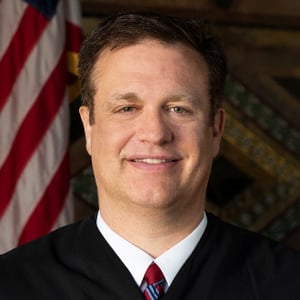
Prior to joining the bench, Judge Beaton was a Partner at Squire Patton Boggs LLP, where he co-chaired the firm’s Appellate & Supreme Court practice group. Judge Beaton’s represented clients engaged in complex commercial litigation in Federal and State courts, and before administrative agencies. Judge Beaton also served as an adjunct professor at the University of Louisville Brandeis School of Law, where he taught constitutional interpretation. Before joining Squire Patton Boggs, Judge Beaton practiced in the Washington, D.C. office of Sidley Austin, LLP, and also served as a legal fellow with the International Justice Mission in Kampala, Uganda. Upon graduation from law school, Judge Beaton served as a law clerk to Justice Ruth Bader Ginsburg of the United States Supreme Court, and to Judge A. Raymond Randolph of the United States Court of Appeals for the D.C. Circuit. Judge Beaton earned his B.A., summa cum laude, from Centre College, and his J.D. from Columbia Law School, where he served as an Articles Editor on the Columbia Law Review.
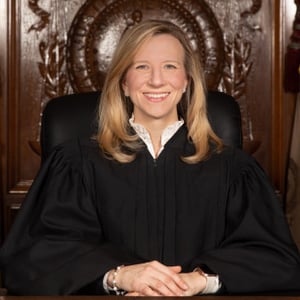
Justice Sarah Campbell was confirmed to the Tennessee Supreme Court in 2022. She previously served as an Associate Solicitor General in the Tennessee Attorney General’s Office and as an associate at the law firm of Williams & Connolly LLP in Washington, DC. Justice Campbell earned her law degree from Duke University School of Law, a Master of Public Policy degree from Duke University, and her undergraduate degree from the University of Tennessee, where she received the Torchbearer Award. She served as a law clerk for Justice Samuel A. Alito, Jr. on the United States Supreme Court and Judge William H. Pryor Jr. on the U.S. Court of Appeals for the Eleventh Circuit.
Judge, United States Court of Appeals, Ninth Circuit
Biography
Judge Nelson was confirmed to the Ninth Circuit in October 2018,as the youngest Circuit Judge to serve from Idaho and he has chambers in his hometown of Idaho Falls.Prior to his confirmation, Judge Nelson served for nine years as General Counsel of Idaho Falls-based Melaleuca, Inc., a consumer goods company. He previously worked in Washington, DC, where he served in all three branches of the federal government, including as Special Counsel for Supreme Court nominations to the Ranking Member of the Senate Judiciary Committee; Deputy General Counsel to the White House Office of Management and Budget; Deputy Assistant Attorney General in the Environment and Natural Resources Division of the United States Department of Justice; and a law clerk to Judge Henderson of the United States Court of Appeals for the D.C. Circuit. He has argued in most of the federal courts of appeals and worked on dozens of Supreme Court briefs. He started in the Washington, DC office of Sidley Austin as an appellate lawyer, after clerking for Judges Mosk and Brower of the Iran-U.S. Claims Tribunal at The Hague, and fornow-Judge Tom Griffith, then-Senate Legal Counsel, during the impeachment trial of President Clinton. Judge Nelson earned his B.A. from Brigham Young University and his J.D., with honors, from BYU Law School. Judge Nelson has been a member of the Federalist Society since 1998.
Bill Merkel joined the Charleston School of Law faculty in 2012. Merkel graduated from Johns Hopkins University with a B.A. in history in 1988 and proceeded to work as a cook in Baltimore and then as an analyst with the Department of Transportation in Washington, D.C. before returning to graduate studies in history and law.
He completed his J.D. at Columbia Law School in 1996 and then worked in appellate litigation with Wiley, Rein & Fielding in Washington, D.C. from 1997-1998. Merkel is the author, with the late Richard Uviller, of The Militia and the Right to Arms, Or, How the Second Amendment Fell Silent (Duke University Press, 2002). He taught American history at Oxford University from 2001-2003 and Comparative Introduction to American Law to foreign trained LL.M. students at Columbia Law School from 2003-2005. From 2005-2011, Merkel was an Associate Professor of Law at Washburn Law School in Topeka, Kansas, where he was named Professor of the Year by the graduating class in 2008. At Washburn, Merkel taught Constitutional Law I & II, Comparative Constitutional Law, Public International Law, and International Criminal Law and the Law of War. He received a doctorate in history from Oxford University in 2007.
Merkel has held visiting positions at the University of North Dakota School of Law in 2009 and at the University of South Carolina School of Law in 2011-12. In 2013 and 2014, Merkel taught The United States and the International Court of Justice in the Hague, Netherlands as part of the Charleston School of Law’s summer school consortium program administered by Stetson University School of Law. At the Charleston School of Law, Merkel continues to teach courses in Constitutional Law, International Law, Comparative Law, and Legal History. Merkel’s article “Jefferson’s Failed Anti-Slavery Proviso of 1784 and the Nascence of Free Soil Constitutionalism” was selected as the best submission in constitutional history by the Stanford/Yale Junior Faculty Forum in 2006. Merkel is in the process of revising his Oxford doctoral thesis “Race, Liberty, and Law: Thomas Jefferson and Slavery, 1770-1800” for publication as a book to be titled Ambiguous Beginnings: Thomas Jefferson, Slavery, and the Foundations of American Constitutionalism. Merkel has published numerous articles in journals including the Chicago-Kent Law Review, Connecticut Law Review, Lewis and Clark Law Review, Santa Clara Law Review, Seton Hall Law Review, Rutgers Law Review, and Law and History Review. His scholarship on the Second Amendment has been cited by many authors and jurists, including Justice Breyer in a dissenting opinion in McDonald v. City of Chicago. In 2013, following the successful defense of his dissertation “The Second Amendment and the Constitutional Right to Self-Defense,” Merkel was awarded a J.S.D. degree by Columbia University.
Merkel is a member of the District of Columbia, New York, and United States Supreme Court Bars.