Author, The Indispensable Electoral College: How the Founders’ Plan Saves Our Country from Mob Rule and Enlightened Democracy: The Case for the Electoral College
Biography
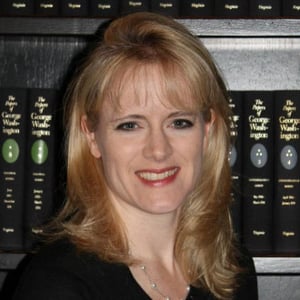
Tara Ross is nationally recognized for her expertise on the Electoral College. She is the author of Why We Need the Electoral College (2019), The Indispensable Electoral College: How the Founders’ Plan Saves Our Country from Mob Rule (2017), We Elect A President: The Story of our Electoral College (2016), and Enlightened Democracy: The Case for the Electoral College (2d ed. 2012). She is also the author of She Fought Too: Stories of Revolutionary War Heroines (2019), and a co-author of Under God: George Washington and the Question of Church and State (2008) (with Joseph C. Smith, Jr.). Her Prager University video, Do You Understand the Electoral College?, is Prager’s most-viewed video ever, with more than 60 million views.
Tara often appears as a guest on a variety of talk shows nationwide, and she regularly addresses civic, university, and legal audiences. She’s contributed to several law reviews and newspapers, including the National Law Journal, USA Today, the Washington Examiner, The Hill, The Washington Times, and FoxNews.com. She’s appeared before institutions such as the Cooper Union, Brown University, the Dole Institute of Politics, and Mount Vernon. She’s appeared on Fox News, CSPAN, NPR, and a variety of other national and local shows.
Tara is a retired lawyer and a former Editor-in-Chief of the Texas Review of Law & Politics. She obtained her B.A. from Rice University and her J.D. from the University of Texas School of Law. She resides in Dallas with her husband and children.
George Mason University Foundation Professor of Law, Antonin Scalia Law School, George Mason University
Biography
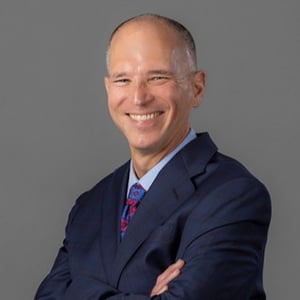
TODD J. ZYWICKI is George Mason University Foundation Professor of Law at Antonin Scalia Law School at George Mason University and Research Fellow of the George Mason Law and Economics Center. During the Fall 2023 semester he served as the Visiting Scholar in Conservative Thought and Policy for the Bruce Benson Center for the Study of Western Civilization at the University of Colorado-Boulder. From 2020-2021 he was Chair of the Consumer Financial Protection Bureau Taskforce on Federal Consumer Financial Law. In 2021 he was inducted to the American College of Consumer Financial Services Lawyers. He is also a Senior Fellow of the F.A. Hayek Program for the Advanced Study of Politics, Philosophy, and Economics at George Mason University and a former Senior Fellow of the Cato Institute. From 2015-2017 he was Executive Director of the George Mason Law and Economics Center. He served as Co-Editor of the Supreme Court Economic Review from 2006-2017. From 2003-2004, Professor Zywicki served as the Director of the Office of Policy Planning at the Federal Trade Commission. He has also taught at Vanderbilt University Law School, Georgetown University Law Center, Boston College Law School, Mississippi College School of Law, and China University of Political Science and Law.
Professor Zywicki clerked for Judge Jerry E. Smith of the U.S. Court of Appeals for the Fifth Circuit and worked as an associate at Alston & Bird in Atlanta, Georgia, where he practiced bankruptcy and commercial law. He received his J.D. from the University of Virginia, where he was executive editor of the Virginia Tax Review and John M. Olin Scholar in Law and Economics. Professor Zywicki also received an M.A. in Economics from Clemson University and an A.B. cum Laude with high honors in his major from Dartmouth College.
Professor Zywicki is also a Lone Mountain Fellow of the Property and Environment Research Center, a Fellow of the International Centre for Economic Research in Turin, Italy, and a former Senior Fellow of the Goldwater Institute. During the Fall 2008 Semester Professor Zywicki was the Searle Fellow of the George Mason University School of Law and was a 2008-09 W. Glenn Campbell and Rita Ricardo-Campbell National Fellow and the Arch W. Shaw National Fellow at the Hoover Institution on War, Revolution and Peace. He has lectured and consulted with government officials around the world, including Iceland, Italy, Japan, and Guatemala. In 2006 Professor Zywicki served as a Member of the United States Department of Justice Study Group on “Identifying Fraud, Abuse and Errors in the United States Bankruptcy System.”
Professor Zywicki is the author of more than 130 articles in leading law reviews and peer-reviewed economics journals. He is one of the Top 10 most-cited law professors in the field of Commercial Law and one of the Top 25 law professors on Twitter as measured by engagement levels. He is one of the Top 50 Most Downloaded Law Authors at the Social Science Research Network. He has testified multiple times before Congress on issues of consumer bankruptcy law and consumer credit and is a frequent commentator on legal issues in the print and broadcast media, including the Wall Street Journal, New York Times, The Washington Post, The Washington Times, Nightline, The Newshour with Jim Lehrer, Neil Cavuto Show, Fox & Friends, Smerconish, Fox News @ Night with Shannon Bream, Fox Business, CNN, CNBC, Bloomberg News, BBC, TheDiane Rehm Show, Lou Dobbs Show, Jerry Doyle Show, and The Laura Ingraham Show.
Tazewell Taylor Professor of Law and William H. Cabell Research Professor, William & Mary Law School
Biography
Jonathan H. Adler joined the William & Mary law faculty as the Tazwell Taylor Professor of Law and William H. Cabell Research Professor in 2025. Prior to joining the faculty, he was the inaugural Johan Verheij Memorial Professor of Law and the founding Director of the Coleman P. Burke Center for Environmental Law at the Case Western Reserve University School of Law.
Professor Adler is the author or editor of seven books, including Climate Liberalism: Perspectives on Liberty, Property and Pollution (Palgrave, 2023), Marijuana Federalism: Uncle Sam and Mary Jane (Brookings Institution Press, 2020), Business and the Roberts Court (Oxford University Press, 2016) and Rebuilding the Ark: New Perspectives on Endangered Species Act Reform (AEI Press, 2011).
His articles have appeared in publications ranging from the Harvard Environmental Law Review and Yale Journal on Regulation to the Wall Street Journal, New York Times, and Washington Post. He has testified before Congress a dozen times, and his work has been cited in the U.S. Supreme Court. A 2024 study identified Professor Adler as the seventh most cited legal academic in administrative and environmental law from 2019 to 2023.
Professor Adler is a contributing editor to Civitas Outlook and a regular contributor to the popular legal blog, The Volokh Conspiracy. A regular commentator on constitutional and regulatory issues, he has appeared on numerous radio and television programs, ranging from the PBS Newshour and National Public Radio to the Fox News Channel and Entertainment Tonight.
Professor Adler is a senior fellow at the Property & Environment Research Center in Bozeman, Montana. In 2018, Professor Adler was elected to membership in the American Law Institute and helped co-found the organization Checks and Balances. In 2024, Professor Adler was appointed a public member of the Administrative Conference of the United States.
Professor Adler clerked for the Honorable David B. Sentelle on the U.S. Court of Appeals for the District of Columbia Circuit.
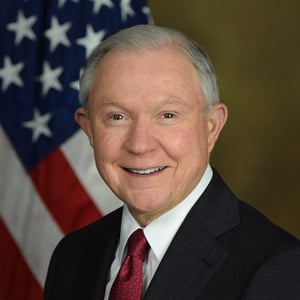
Jeff Sessions served as the 84th Attorney General of the United States from February 9, 2017 until November 7, 2018.
Prior to becoming Attorney General, Mr. Sessions served as a United States Senator for Alabama since 1996. As a United States Senator, he focused his energies on maintaining a strong military, upholding the rule of law, limiting the role of government, and providing tax relief to stimulate economic growth and to empower Americans to keep more of their hard-earned money.
Mr. Sessions was born in Selma, Alabama on December 24, 1946, and grew up in Hybart, the son of a country store owner. Growing up in the country, Sessions was instilled with certain core values – honesty, hard work, belief in God and parental respect – that define him today. In 1964, he became an Eagle Scout and thereafter received the Distinguished Eagle Scout Award. After attending school in nearby Camden, Sessions attended Huntingdon College in Montgomery, graduating with a Bachelor of Arts degree in 1969. He received a Juris Doctorate degree from the University of Alabama in 1973. Sessions served in the United States Army Reserve from 1973 to 1986, ultimately attaining the rank of Captain. He still considers that period to be one of the most rewarding chapters of his life.
Sessions’ interest in the law led to a distinguished legal career, first as a practicing attorney in Russellville, Alabama, and then in Mobile. Following a two-year stint as Assistant United States Attorney for the Southern District of Alabama (1975-1977), Sessions was nominated by President Reagan in 1981 and confirmed by the Senate to serve as the United States Attorney for the Southern District of Alabama, a position he held for 12 years. Sessions was elected Alabama Attorney General in 1995, serving as the State’s chief legal officer until 1996, when he entered the United States Senate.
Sessions and his wife, Mary Blackshear Sessions, originally of Gadsden, Alabama, have three children, Mary Abigail Reinhardt, Ruth Sessions Walk, and Sam. They have seven granddaughters, Jane Ritchie, Alexa, Gracie, Sophia, Hannah, Joanna, and Phoebe, and three grandsons, Jim Beau, Lewis, and Nicholas.
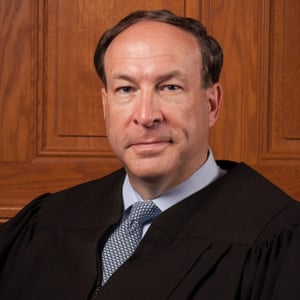
Judge, United States Court of Appeals, Seventh Circuit
Biography
Michael B. Brennan was confirmed and sworn in as a Circuit Judge for the U.S. Court of Appeals for the Seventh Circuit in May 2018.
He previously worked as a partner in the Milwaukee law firm of Gass Weber Mullins LLC, where he tried cases and handled appeals in federal and state courts, as a judge on the Milwaukee County Circuit, where he presided over a variety of criminal and civil calendars, and as an assistant district attorney in the Milwaukee County District Attorney’s office.
Brennan’s undergraduate degree is from the University of Notre Dame, and his law degree from Northwestern University School of Law, where he was an editor on the law review and the moot court champion. He served as a law clerk on the U.S. District Court for the Eastern District of Wisconsin and the U.S. Court of Appeals for the Seventh Circuit.
General Counsel, James Madison Center for Free Speech
Biography
Jim has been practicing law for over 50 years, crisscrossing the country advancing the conservative cause, defending Republican principles, policies, and politics, and defending individual liberties by providing legal advise and litigation services for political campaigns, public policy initiatives and First Amendment rights. During his storied career, Jim has continually proven his prowess in the courtroom by representing clients with vigorous advocacy and expert guidance through a myriad of red-tape, excessive government regulations and politically motivated pressures. He is widely recognized as the architect of the legal strategies that led to the U.S. Supreme Court's overturning of Roe v. Wade and ruling in Citizens United v. Federal Election Commission that corporations and labor unions can independently endorse candidates.