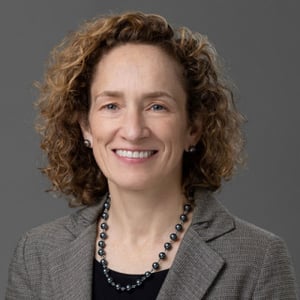
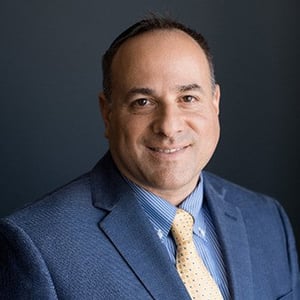
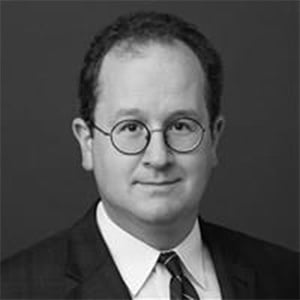
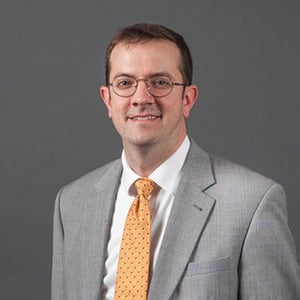
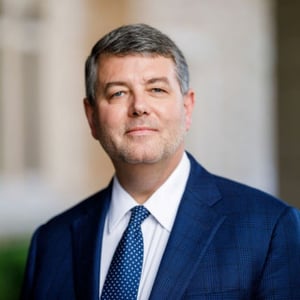
Boyd litigates and provides regulatory advice for a wide variety of telecommunications and technology clients.
EXPERIENCE
Representative Matters
Drafts dispositive motions and briefs in federal and state court.
Advises clients regarding comment drafting and developing strategy in proceedings before the Federal Communications Commission, National Institute of Standards and Technology, and other state and federal agencies.
Counsels clients regarding questions of federal, state, and international regulation.
Professional Experience
Student Attorney, Harvard Law School, Veterans Law & Disability Clinic (2016-2017)
Law Clerk, Texas Attorney General, Office of the Solicitor General (2016)
Kniffin also practices law at Kniffin Law PLLC, where he helps religious organizations and individuals protect their liberty and advance their mission. Before starting his solo practice, Kniffin worked at the U.S. Department of Justice’s Civil Rights Division, at the Becket Fund, and was a partner at Lewis Roca.
Kniffin has protected hundreds of religious employers from the HHS contraception and abortifacient mandate and the HHS gender transition mandate. He has represented the U.S. Conference of Catholic Bishops, the Knights of Columbus, and the Assemblies of God, among others, in amicus briefs before the Supreme Court. His work helping religious organizations understand, maximize, and defend their religious liberties has made him a nationally recognized expert in the field.
Kniffin is a sought-after commentator on religious liberty issues and has appeared in the Wall Street Journal, National Review, Huffington Post, National Catholic Register, Inside Higher Ed, and Washington Times, and has spoken regularly for The Federalist Society and The Heritage Foundation.
Senior Counsel, U.S. House of Representatives Judiciary Committee
Biography
Tessa E. Shurr serves as Senior Counsel to the U.S. House of Representatives Judiciary Committee (Majority).
Prior to joining the Judiciary Committee staff, Tessa served as a Litigation Associate at the Fairness Center, a non-profit law firm, where she represented clients who had been harmed by their public-sector union. Before that, she counseled high-level leadership at the U.S. Department of Justice’s Office of Legal Policy on legislative and regulatory matters, assisted the U.S. Department of Defense with procurement of supplies and services, and worked on both civil and criminal cases at the U.S. Attorney’s Office for the Middle District of Pennsylvania.
Tessa graduated from Penn State Dickinson Law in Carlisle, Pennsylvania. There, she served as Managing Editor of the Dickinson Law Review, one of the oldest legal journals in the United States. During her time in law school, Tessa earned CALI Excellence for the Future Awards in Advanced Federal Income Tax; Congressional Investigations; and Blockchain, Cryptocurrency, & Law. She also published an academic comment proposing a new regulatory scheme for digital assets and cryptocurrency.
Regulatory Counsel, Americans for Prosperity Foundation
Biography
Mike Pepson is regulatory counsel at Americans for Prosperity Foundation, which frequently files amicus briefs in the U.S. Supreme Court, U.S. Courts of Appeals, and state Supreme Courts, as well as public comments in various federal and state regulatory proceedings. Mike assists AFPF with its efforts involving separation of powers, administrative process, criminal justice reform, tech and innovation, and other issues.
He is also Special Counsel for Administrative Law at Cause of Action Institute, where he has been involved in complex civil and criminal litigation in federal district and appellate courts and administrative litigation before federal agencies in a variety of matters, including agency enforcement actions, statutory and constitutional challenges to federal regulations and agency decisions, and Section 1983 challenges to state statutes.
He received his LL.M. from Columbia Law School, J.D. from The Catholic University of America, Columbus School of Law, and B.A. from Loyola College in Baltimore, Maryland.
Alexandra Shapiro is one of the nation’s leading appellate lawyers. Noted for successful results in high profile white collar matters, she has won appellate reversals in many criminal and civil cases. These victories include two Supreme Court decisions narrowing the scope of the federal fraud statutes, Ciminelli v. United States and Percoco v. United States, as well as multiple Second Circuit rulings granting judgments of acquittal and new trials. Alexandra argued Salman v. United States, the first insider trading case heard by the Supreme Court in 20 years.
Alexandra is also an experienced trial lawyer, who began her career over 30 years ago as one of Justice Ruth Bader Ginsburg’s first clerks on the Supreme Court. Her practice focuses on appeals, white collar defense, and complex civil litigation. She has successfully represented prominent Wall Street professionals, public officials, as well as major public and private companies.
She served as President of the New York Council of Defense Lawyers and received its Ostrow Award honoring her work in the defense of liberty and the preservation of individual rights.
Prior to co-founding Shapiro Arato Bach LLP in 2009, Alexandra was a partner of a leading international law firm, and before that, an Assistant U.S. Attorney in the Southern District of New York, where she also served as Deputy Chief Appellate Attorney. In addition, she served as an attorney-adviser in the Office of Legal Counsel of the U.S. Department of Justice.
Alexandra wrote a novel about a wrongful white-collar prosecution, Presumed Guilty, which was published in 2022 and has received acclaim from Forbes, the New York Law Journal, and other publications.
Jeff Stier is a policy advisor to the Heartland Institute.
He is widely quoted in the media and has written health policy op-eds for The Wall Street Journal, the Los Angeles Times, USA Today, The New York Post, The Washington Examiner, and Foxnews.com. The New York Times, the Associated Press, Reuters, CNN, Fox News, CNBC, MSNBC, NPR and other major outlets have interviewed and quoted Stier on a wide range of topics.
Stier has testified at state and local legislatures throughout the U.S., at FDA scientific hearings and at the Office of Management and Budget. He has also been a voice for freedom at hearings at the United Nations and in Israel’s Knesset. During more than two decades of advancing public health and defending liberty, Stier has been a speaker at CPAC, policy retreats for elected officials and medical and legal conferences.
Stier advises leading investment firms on regulatory and legal risk.
Earlier, Mr. Stier crafted health and environmental policy in the Office of the Mayor during the Giuliani administration in New York City.
Mr. Stier serves on the boards of the non-profit Jewish International Connections and Park City Jewish Collective. While earning his law degree at the Benjamin N. Cardozo School of Law, Mr. Stier served two terms as Editor-In-Chief of the Cardozo Law Forum. Jeff and his canine, BB, served as a Certified Crisis Response Strike Team with NATIONAL Crisis Response Canines, supporting survivors and first-responders.
C. Wallace represents foreign and domestic financial institutions as to a variety of securities and banking regulatory matters, with a particular focus on the private wealth industry and the cross-border marketing of investment services and financial products.
He regularly represents clients before U.S. federal and state financial regulatory authorities, including the U.S. Securities and Exchange Commission and the Financial Industry Regulatory Authority. He also represents clients in filing comment letters and amicus briefs in connection with SEC rulemakings.
Associate Professor of Law, Antonin Scalia Law School, George Mason University
Biography
Associate Professor of Law J.W. Verret joined the Antonin Scalia Law School, George Mason University faculty in 2008. In 2013, he took leave for two years to serve as the Chief Economist and Senior Counsel for the U.S. House Committee on Financial Services. He received his JD and MA in Public Policy from Harvard Law School and the Harvard Kennedy School of Government, respectively, in 2006. While in law school, Professor Verret served an Olin Fellowship in Law and Economics at the Harvard Program on Corporate Governance under the guidance of Prof. Lucian Bebchuk.
Professor Verret then served as a law clerk for Vice-Chancellor John W. Noble of the Delaware Court of Chancery. Prior to joining the faculty at Scalia Law, Professor Verret was an associate in the SEC Enforcement Defense Practice Group at Skadden, Arps in Washington, D.C. He has written extensively on corporate law topics, including Delaware's Guidance, co-written with Chief Justice Myron T. Steele of the Delaware Supreme Court. His academic work has been featured in the Yale Journal on Regulation, The Business Lawyer, the Delaware Journal of Corporate Law, the Stanford Law Review, the University of Pennsylvania Journal of Business Law, and the Virginia Law and Business Review. Professor Verret was selected by the Northwestern Law School Searle Center on Law, Regulation, and Economic Growth for a 2009-2010 Searle-Kaufmann Research Fellowship.
Professor Verret is also a Senior Scholar at the Mercatus Center Working Group on Financial Markets, where he regularly briefs Congressional staff, members of Congress, SEC Commissioners and other financial regulatory agencies on financial regulation topics. He also directs the Corporate Federalism Initiative, where he obtains research grants for a network of students and faculty scholars who study the division between states and the federal government as sources of corporate law. Professor Verret has been invited to testify before various House and Senate Committees four times during the financial crisis of 2009 regarding all of the central provisions of the Obama Administration's 2009 financial regulatory reform proposals. For a full list of Professor Verret's C-Span appearances, including testimony before the U.S. House of Representatives and the U.S. Senate, see http://www.c-spanvideo.org/jwverret.
Professor Verret has been an invited panelist for various television appearances, including an interview on The NewsHour with Jim Lehrer. Professor Verret has been quoted in various media on financial regulation and corporate law topics, including the New York Times, CNN Money, the CNN Political Ticker, CNBC, ABC News, Investor's Business Daily, ESPN.com, The American Banker, The American Lawyer, The Huffington Post, CBS.com, and AP News. Professor Verret's op-eds have been featured in Forbes, The Chicago Tribune, The Orange County Register, and The Wall Street Journal. Professor Verret is also a regular guest contributor to three of the most noted corporate law and financial regulation law blogs: the Harvard Law School Corporate Governance and Financial Regulation Forum, Deallawyers.com, and The Conglomerate.
Lou Capozzi is the Solicitor General of Missouri. In that role, he oversees all appeals for the State of Missouri. He is also the Director of Special Litigation and litigates high-stakes cases at trial.
Lou previously worked at Jones Day, where he specialized in administrative and election law. At Jones Day, he helped lead a six-week bench trial in federal court, during which he cross-examined important expert and fact witnesses, delivered closing argument, asserted evidentiary objections, and argued several motions, including a motion for a directed verdict. He has also authored briefs at all phases of litigation--from evidentiary motions to dispositive motions and appeals.
Lou is also Lecturer in Law at the University of Pennsylvania Carey Law School and a Public Member of the Administrative Conference of the United States. He has published several academic articles focusing on administrative law.
Lou clerked for Justice Neil Gorsuch at the United States Supreme Court in the 2021 Term, as well as for Judges J. Harvie Wilkinson III of the United States Court of Appeals for the Fourth Circuit and Anthony Scirica of the United States Court of Appeals for the Third Circuit. He gradated as the valedictorian from the University of Pennsylvania Law School in 2019.
Judge, United States District Court, Southern District of New York
Speaker Information
Logan Beirne
Chief Legal Officer, Strive Asset Management
Biography
Logan Beirne is an American entrepreneur, attorney, businessman, and writer. He currently serves as Chief Legal Officer of Strive Asset Management and teaches at Yale Law School. His debut book, Blood of Tyrants: George Washington and the Forging of the Presidency, was a national bestseller and won the Colby Award for best military history.
Beirne founded the multinational legal technology company Matterhorn Transactions, Inc. in 2011, providing data analytics to thousands of law firms across the U.S., Canada, and the U.K. He successfully led the company to its acquisition by DealPulse, Inc. in 2023. In addition to Matterhorn, Beirne has co-founded and invested in several other businesses, including the museum systems company Collection Harbor and the music software firm Artusi Music, Inc.
A Fulbright Scholar at Queen's University in Belfast, Beirne studied economics before earning his J.D. from Yale Law School. At Yale, he received the Edgar M. Cullen Prize for constitutional scholarship and an Olin Fellowship for his work on presidential power.
Before founding Matterhorn, Beirne worked at GE Capital's private equity arm, Sullivan & Cromwell LLP, and J.P. Morgan & Co.
Assistant Professor of Law, Duquesne University School of Law
Biography
Professor Seth C. Oranburg studies the effect of law on innovation and the economy. His research includes Internet shareholder activism, crowdfunding, venture capital and angel investing, smart contracts, network effects, information brokerage, and other commercial activities that relate to securities regulation, corporate finance, business associations, contracts, and related legal issues. He publishes his research in esteemed journals such as the Rutgers University Law Review, Cornell Journal of Law & Public Policy, and Fordham Journal of Corporate Law, and he has been interviewed by popular publications such as the The Wall Street Journal, AboveTheLaw.com, and CommPro.biz.
Oranburg teaches Contracts and Corporations at Duquesne Law. Before joining the Duquesne faculty in 2016, he taught legal writing courses at the Chicago-Kent College of Law and taught Corporations, Closely Held Business Organizations, and Electronic Discovery of Digital Evidence at the Florida State University College of Law. Oranburg’s practice experience includes providing corporate counsel and managing venture capital transactions in Silicon Valley, Calif., and litigating antitrust matters in Washington, D.C.
Oranburg graduated with honors from the University of Chicago Law School, where he was a member of the Order of the Coif and a Kirkland & Ellis Scholar. He earned his bachelor's degree, magna cum laude, from the University of Florida with a double major in political science and English. Oranburg is a member of the State Bar of California and the Bar of the District of Columbia.
Special Counsel, Campus Advocacy, Foundation for Individual Rights and Expression (FIRE)
Biography
One of FIRE’s longest-serving employees, Robert Shibley began at FIRE straight out of Duke Law School in 2003, with the intention of doing nonprofit work for a couple of years before finding a permanent job. This lasted 19 years, including six as FIRE’s executive director. During his time at FIRE, Robert launched FIRE’s first major litigation initiative, traveled to dozens of campuses to speak about the First Amendment and Title IX issues on campus, and oversaw FIRE’s expansion into off-campus issues before a stint representing students and faculty members in private practice at the firm of Allen Harris PLLC.
Having realized things on campus were even worse than he had believed, Robert returned to FIRE as Special Counsel for Campus Advocacy in order to finish the job he started: restoring free speech and due process to America’s college campuses. Robert is the author of Twisting Title IX, from Encounter Books. His writing has appeared everywhere from The Wall Street Journal to The Washington Post, USA Today, and TIME, and he has appeared on national and international broadcasts including the BBC and NPR, The O’Reilly Factor, CNN Tonight, Tucker Carlson Tonight, and (perhaps most famously) Dr. Phil.
Judge, United States District Court, Southern District of Florida
Biography
On April 4, 2019, Judge Altman was confirmed to a seat on the U.S. District Court for the Southern District of Florida. At 36, he became the youngest federal district court judge in the country—and the youngest federal judge ever appointed in the Southern District of Florida.
Judge Altman received a BA from Columbia University, where he played quarterback on the football team and pitched for the baseball team—earning All-Ivy honors. Judge Altman received his JD from the Yale Law School, where he was projects editor of the Yale Law Journal. After law school, the Judge clerked on the 11th Circuit Court of Appeals for the Honorable Stanley Marcus.
Judge Altman then became a federal prosecutor at the U.S. Attorney’s Office in Miami, where he twice received the Director of the Executive Office of U.S. Attorneys’ Award for Superior Performance by a federal prosecutor. In 2013, Judge Altman was named “Federal Prosecutor of the Year” by the Miami-Dade Chiefs of Police and the Law Enforcement Officers’ Charitable Foundation.
In 2014, Judge Altman became a partner at the Miami law firm of Podhurst Orseck, where he represented the victims of airplane crashes and bank fraud conspiracies.
Judge, United States Court of Appeals, Ninth Circuit
Biography
Judge Nelson was confirmed to the Ninth Circuit in October 2018,as the youngest Circuit Judge to serve from Idaho and he has chambers in his hometown of Idaho Falls.Prior to his confirmation, Judge Nelson served for nine years as General Counsel of Idaho Falls-based Melaleuca, Inc., a consumer goods company. He previously worked in Washington, DC, where he served in all three branches of the federal government, including as Special Counsel for Supreme Court nominations to the Ranking Member of the Senate Judiciary Committee; Deputy General Counsel to the White House Office of Management and Budget; Deputy Assistant Attorney General in the Environment and Natural Resources Division of the United States Department of Justice; and a law clerk to Judge Henderson of the United States Court of Appeals for the D.C. Circuit. He has argued in most of the federal courts of appeals and worked on dozens of Supreme Court briefs. He started in the Washington, DC office of Sidley Austin as an appellate lawyer, after clerking for Judges Mosk and Brower of the Iran-U.S. Claims Tribunal at The Hague, and fornow-Judge Tom Griffith, then-Senate Legal Counsel, during the impeachment trial of President Clinton. Judge Nelson earned his B.A. from Brigham Young University and his J.D., with honors, from BYU Law School. Judge Nelson has been a member of the Federalist Society since 1998.
Partner, Co-chair of the Litigation & Trial Practice Group, Alston & Bird LLP
Biography
Adam Biegel is co-chair of Alston & Bird’s Litigation & Trial Practice Group and former co-chair of its Antitrust Team. He has substantial experience representing clients on antitrust counseling and litigation matters, including those involving government and internal investigations, mergers and joint ventures, pricing and distribution, compliance counseling and training, pre-merger reviews under the Hart-Scott-Rodino (HSR) Act, and multidistrict litigation. He regularly represents clients before the U.S. Department of Justice (DOJ) Antitrust Division, Federal Trade Commission (FTC) and state attorneys general, and in federal courts.
Adam is recognized for his antitrust experience by Chambers USA and selected to The Best Lawyers in America®, including his recognition as “Lawyer of the Year” for Antitrust Litigation in Washington, D.C., in 2022. He is a longtime member of the American Bar Association Antitrust Law Section’s leadership, currently serving as co-chair of its In-House Counsel Task Force and previously having served on its board, and chaired its Corporate Counseling Committee, Long Range Planning Committee, and Spring Meeting conference. He also serves on the board of the Federalist Society’s antitrust practice group.
Adam served as a law clerk to the Hon. Frank M. Hull, U.S. Court of Appeals for the Eleventh Circuit. Before attending law school, he worked as a newspaper reporter in Arkansas and on the legislative staff of U.S. Senator Orrin Hatch.
Partner in the Antitrust & Competition Practice Group, Sheppard Mullin
Biography
John’s practice focuses on civil and criminal antitrust matters, including mergers & acquisitions, strategic counseling and compliance, and global cartel investigations, where he represents clients before the Department of Justice Antitrust Division, Federal Trade Commission, and international and state antitrust enforcement authorities.
Prior to private practice, John was in the Mergers I Division of the Federal Trade Commission’s Bureau of Competition for several years. While with the FTC, he investigated, challenged, and negotiated settlements in a number of potentially anti-competitive business combinations in the aerospace, technology, consumer products, defense, healthcare, and pharmaceutical industries and received an Award for Meritorious Service for work on merger litigation.
John frequently speaks and writes on antitrust issues. He was the lead editor on the American Bar Association, Section of Antitrust Law’s Energy Antitrust Handbook, and has held leadership positions in that organization.
Rich’s primary practice area is complex litigation, with a particular emphasis on antitrust matters. He frequently represents plaintiffs and defendants in private litigation, in addition to representing parties and third parties in the context of DOJ, FTC, and State Attorney General investigations and litigation. He also advises clients regarding transactions—both their own and those of others—including mergers or acquisitions that may be subject to review by federal, state, or international antitrust authorities. His experience includes both criminal and civil antitrust jury trials, and he is relied upon by clients for clear and practical guidance shaped by years of experience in antitrust enforcement and private practice.
Rich rejoined the firm in December 2013 after serving for four years as the Director of the Bureau of Competition at the Federal Trade Commission. He directed the FTC’s antitrust enforcement activity during a period when approximately 80 enforcement actions were initiated in a wide variety of industries. Major matters included, among others, two victories in the Supreme Court (involving pay-for-delay and state action), successful challenges to hospital mergers, and Intel and Google consent orders. He also participated directly in drafting and implementing the 2010 Horizontal Merger Guidelines.
Prior to serving as Bureau Director, Rich was a partner in the firm’s Washington D.C. office from 2001 to 2009. From October 1998 to June 2001, he served as an Assistant Director of the Bureau of Competition, in charge of the Health Care Services and Products Division. The work of that Division focused on antitrust enforcement in the health care industry, including anticompetitive practices and mergers involving health care providers, and anticompetitive conduct in the pharmaceutical industry.
Before initially entering private practice in 1985, Rich worked as a trial attorney in the Antitrust Division of the U.S. Department of Justice, and also served as Acting Deputy Director of the Division’s Office of Policy Planning and as Acting Assistant Chief of the Division’s Energy Section.
Research Manager, American Economic Liberties Project
Biography
Laurel manages AELP’s team of policy analysts and coordinates with expert advisors and fellows to develop original research and policy briefs. An experienced attorney, she also frequently writes and speaks about high profile court cases that impact the economic liberties of the American people.
In private practice, Laurel represented firms of all sizes– from startups to Fortune 500 companies– spanning a wide variety of industries, from software to generic pharmaceuticals to semiconductors. At Comar Mollé LLP, a boutique firm that specializes in serving startups and investors, she provided strategic counseling on employment, privacy, and transactional matters. At Goodwin Procter LLP, a global biglaw firm, she litigated high stakes patent and complex commercial disputes and counseled clients on technology transactions.
Before joining AELP, Laurel researched competition policy issues for the Balanced Economy Project in Europe. Earlier in her career, she analyzed legislation promoting access to essential medicines at the World Health Organization, coordinated patent law training workshops for Vietnamese research institutions through the Public Intellectual Property Resource for Agriculture, and developed public outreach materials for the American Association for the Advancement of Science. She has also developed and taught courses on topics ranging from legal practice skills to emerging policy issues.
Partner, Global Chair, Antitrust and Competition, Fried Frank
Biography
Bernard A. Nigro Jr. (“Barry”) is Global Chair of Fried Frank's Antitrust and Competition Department. Barry previously served as the Department of Justice’s Principal Deputy Assistant Attorney General for Antitrust and the Federal Trade Commission’s Deputy Director for the Bureau of Competition.
During his almost 40 years of practice and government service, Barry has handled hundreds of civil and criminal matters in dozens of industries ranging from concrete to high tech and everything in between. For example, Barry has been involved in some of the largest M&A transactions during the past decade, served as the antitrust compliance monitor in United States v. Apple Inc. (S.D.N.Y. 2013), worked on a variety of cartel matters, and counseled on complex compliance and litigation matters. While in government, Barry supported the rollout of the Procurement Collusion Strike Force, an initiative to modernize the merger review process, and revisions to the merger guidelines and remedies policies.
Barry is recognized as a leader by Chambers USA: America’s Leading Lawyers for Business, a “Leading Lawyer” by Legal 500 in Antitrust: Merger Control, and a “Global Leader” by Who’s Who Legal: Competition. Clients say "Barry is very adept at getting deals across the finish lines. He knows the inside game very well," “he is a skilled and knowledgeable antitrust lawyer with a very practical approach,” and “knows how to marry business and antitrust.” Other clients describe him as “the rare combination of DOJ and FTC expertise that is invaluable to clients who need to understand the agencies’ latest thinking” and note that “his decades of experience generally, and recent experience as the number-two lawyer in the Antitrust Division, make him a knowledgeable and skilled counselor on a broad array of government enforcement matters.” Clients say he is “fabulous” and “figures out quickly what’s important and focuses energies there.” Clients also report that “[n]o one compares to Barry Nigro in terms of goodwill” and note his “years of experience make his counsel and perspective, particularly seeing what is coming down the road, exceptional.”
Barry’s commitment to public service includes having served as Vice Chair of the American Bar Association’s Section of Antitrust Law (numbering over 10,000 members from across the globe), President of the George Washington University Law Alumni Association, a member of the Executive Committee of Higher Achievement’s DC President’s Council, a member of St. Albans School’s Development Committee, a member of Bishop Ireton High School’s Campaign Leadership Committee, and a member of Georgetown University’s Class of 1982 Executive Committee, among many other roles.
Alexander Hamilton Professor of Business Law, George Washington University Law School
Biography
Barak Richman’s primary research interests include the economics of contracting, new institutional economics, antitrust, and healthcare policy. His work has been published in the Columbia Law Review, the University of Pennsylvania Law Review, Law and Social Inquiry, the New England Journal of Medicine, the Journal of the American Medical Association, and Health Affairs. In 2006, he co-edited with Clark Havighurst a symposium volume of Law and Contemporary Problems entitled "Who Pays? Who Benefits? Distributional Issues in Health Care,” and his book Stateless Commercewas published by Harvard University Press in 2017.
Professor Richman represented the NFL Coaches Association in an amicus curiae brief in American Needle v. The Nat’l Football League, which was argued before the U.S. Supreme Court in January 2010 and again in Brady v. The Nat’l Football League in 2011. His recent work challenging illegal practices by Rabbinical Associations was featured in the New York Times. And in 2020, he was a member of the Working Group on Platform Scale at Stanford University’s Program on Democracy and the Internet that proposed middleware as a solution to stem the economic and political power of dominant internet platforms.
Professor Richman is also a Senior Scholar at the Clinical Excellence Research Center at the Stanford University School of Medicine and is currently a special counsel for competition policy at the Department of Health and Human Services. He won Duke Law School's Blueprint Award in 2005 and was named Teacher of the Year in 2010. He has had visiting appointments at Columbia, Harvard, and Stanford.
Professor Richman has an AB, magna cum laude, from Brown University, a JD, magna cum laude, from Harvard Law School, and a PhD from the University of California, Berkeley, where he studied under Nobel Laureate in Economics Oliver Williamson. He served as a law clerk to Judge Bruce M. Selya of the United States Court of Appeals for the First Circuit, and from 1994-1996 he handled international trade legislation as a staff member of the United States Senate Committee on Finance, then chaired by Senator Daniel Patrick Moynihan
John P. Murphy Foundation Professor of Law, Notre Dame Law School
Biography
Barry Cushman came to Notre Dame in 2012 following fifteen years on the faculty at the University of Virginia, where he was the James Monroe Distinguished Professor of Law and Professor of History. Cushman's scholarship examines the relations among constitutional law, political economy, and social reform movements in the late 19th and early 20th centuries. His book, Rethinking the New Deal Court: The Structure of a Constitutional Revolution (Oxford University Press), was awarded the American Historical Association's Littleton-Griswold Prize in American Law and Society. His article, “Court-Packing in Context,” was recognized with the Hughes-Gossett Award from the Supreme Court Historical Society. He has held research fellowships at New York University School of Law and in the Politics Department at Princeton University. In 2003, he was honored with the University of Virginia's All-University Teaching Award.
Before entering teaching, Cushman practiced as an estate planning and probate attorney with the Los Angeles firm of Riordan & McKinzie. He has served on the Board of Directors and the Executive Committee of the American Society for Legal History, on the Board of Directors of the University of Virginia Press, on the Scholar Advisory Board for the National Constitution Center, and on the Indiana State Probate Commission. He currently serves on the editorial board of the Journal of Supreme Court History, on the boards of the Albemarle County Rotary Club and the Albemarle County Rotary Club Foundation, and as Deputy Grand Knight of the Father Justin Cunningham Council of the Knights of Columbus.
Senior Fellow and Director of Constitutional Studies, Manhattan Institute
Biography
Ilya Shapiro is a senior fellow and director of constitutional studies at the Manhattan Institute and a contributing editor of City Journal. Previously he was executive director and senior lecturer at the Georgetown Center for the Constitution, and before that a vice president of the Cato Institute.
Shapiro has testified many times before Congress and state legislatures and has filed more than 500 amicus curiae “friend of the court” briefs in the Supreme Court. He lectures regularly on behalf of the Federalist Society, is a member of the board of fellows of the Jewish Policy Center, was an inaugural Washington Fellow at the National Review Institute, and has been an adjunct law professor at the George Washington University and University of Mississippi. He is also the chairman of the board of advisers of the Mississippi Justice Institute, a barrister in the Edward Coke Appellate Inn of Court, and a former member of the Virginia Advisory Committee to the U.S. Commission on Civil Rights.
Earlier in his career, Shapiro was a special assistant/adviser to the Multi-National Force in Iraq on rule-of-law issues and practiced at Patton Boggs and Cleary Gottlieb. Before entering private practice, he clerked for Judge E. Grady Jolly of the U.S. Court of Appeals for the Fifth Circuit. He holds an AB from Princeton University, an MSc from the London School of Economics, and a JD from the University of Chicago Law School.