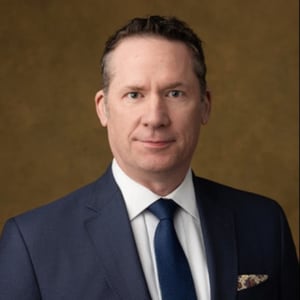
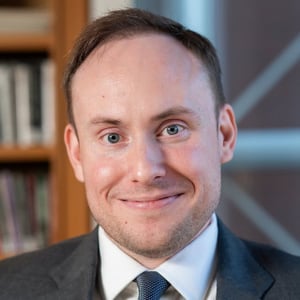
Kannon is the head of our Supreme Court & Appellate practice. He has argued 39 cases before the U.S. Supreme Court and has argued more than 150 appeals in courts across the country, including every federal court of appeals and numerous state courts.
Kannon is ranked as a “Star Individual” in appellate law by Chambers USA, where a client notes, “It’s hard to think of enough superlatives to describe his talent, his judgment, his ability, his experience – he is as good as it gets.” Legal 500 U.S. recognizes Kannon in its Hall of Fame for appellate work. A client shares, “His work is the best in the business, and he is a wonderful human being in addition to being a world-class appellate litigator.”
In 2024 and 2022, Kannon was a finalist for the American Lawyer’s “Litigator of the Year” award. He was named “Appellate Litigator of the Year” by Benchmark Litigation in 2021 and was a 2026 finalist for that recognition.
Before entering private practice, Kannon served as an Assistant to the Solicitor General at the U.S. Department of Justice.
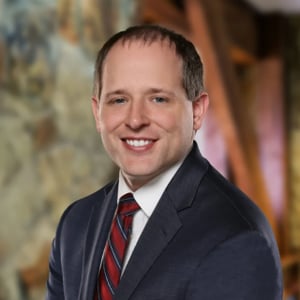
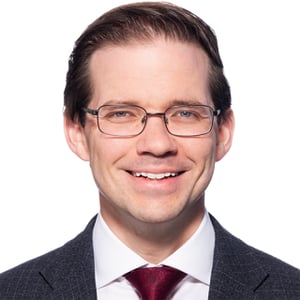
Oliver Dunford joined the Pacific Legal Foundation in March 2017. He litigates across the country to defend and advance individual liberty and the rule of law. Oliver’s cases involve the separation of powers, economic liberty, property rights, and the First Amendment.
Oliver remains inspired by the Classical Liberal ideals upon which our Founders declared independence and secured the blessings of liberty. The Constitution’s promises, however, are not self-executing. As James Madison explained, “In framing a government which is to be administered by men over men, the great difficulty lies in this: you must first enable the government to control the governed; and in the next place oblige it to control itself.” Oliver feels lucky that his work helps oblige the government to control itself—to the end that all individuals may pursue their rights of life, liberty, and the pursuit of happiness.
Before joining PLF, Oliver clerked at the Ohio Supreme Court and the Ohio Court of Appeals, and spent more than a decade in private practice working on complex commercial litigation. Originally from Cleveland, Oliver is a graduate of the University of Dayton and Cleveland-Marshall College of Law, where he was a managing editor for the Cleveland State Law Review. Oliver is admitted to the state bars of Florida, California, and Ohio, as well as several federal courts including the United States Supreme Court.
Oliver spends all of his free time following the Cleveland Indians.
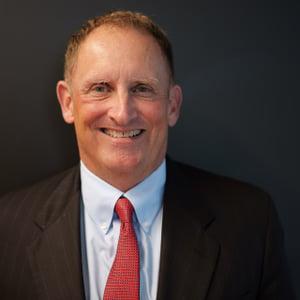
In February 2022, Ryan Gardner joined the First Liberty Institute as Counsel after spending over four years at large Dallas law firm handling complex commercial disputes at both before both trial and appellate courts. Before his time in private practice, Ryan worked in Washington D.C. as a law clerk to the Honorable Janice Rogers Brown of the U.S. Court of Appeals for the D.C. Circuit. Ryan graduated as Valedictorian from the Pepperdine University School of Law, where he served as the Lead Articles Editor for the Pepperdine Law Review and the President of the Pepperdine chapter of the Federalist Society. While in law school, Ryan also externed at the U.S. Court of Appeals for the Ninth Circuit for the Honorable Sandra Ikuta and worked in Pepperdine’s Ninth Circuit Clinic. Ryan received his bachelor’s degree in Criminal Justice with a minor in Psychology from Harding University, where he graduated summa cum laude. Ryan is a member of the Texas State Bar and is admitted to practice in various federal district and appellate courts.
WFFC Distinguished Chair, Spring Arbor University; Counselor of the Ministry & President Emeritus, Salt & Light Global; Distinguished Professor Emeritus, Western Michigan University Cooley Law School
Biography
Following distinguished service as a federal judge and tenured university professor, William Wagner dedicated his life to full-time ministry. Now holding the rank of Distinguished Professor Emeritus, he is the Founder and President Emeritus of Salt & Light Global. He currently holds the WFFC Distinguished Chair for Faith & Freedom at Spring Arbor University.
Seasoning the public dialog with Truth, Wagner fights to protect free expression, religious conscience, and good governance under the rule of law. A frequent speaker at world conferences, his writing is published in a number of articles, books, and other publications, including an Amazon national best seller (#1in its category). As lead amicus counsel in many matters before the United States Supreme Court, he authored briefs on behalf of various organizations. He also authored written testimony, evidence, and briefs in such forums as the Swedish Supreme Court, the U.S. Congress, and the U.K. Parliament. He has further addressed many executive, legislative, parliamentary, and judicial audiences throughout the world, and presented at various diplomatic forums including the United Nations Human Rights Council in Geneva.
As a Federal Judge, Wagner adjudicated cases arising under the Constitution and laws of the United States. Prior to his appointment on the federal bench, he served as the chief American diplomat for the Department of Justice at an American Embassy in Africa. There he led a diplomatic mission charged with strengthening good governance and the rule of law.
During his career in public service, he provided international assistance to the justice sector institutions of numerous countries on five continents. Professor Wagner also served as Senior Assistant United States Attorney, litigating hundreds of federal cases and serving as chief of appellate litigation for the Office of the United States Attorney. Professor Wagner served as legal counsel in the United States Senate and as chief counsel to the Senate Judiciary Committee of the Michigan legislature. Most recently he served as Senior Advisor for Global Criminal Justice at the Department of State.
Director, Robert A. Levy Center for Constitutional Studies, Cato Institute
Biography
Thomas Berry is the director in the Cato Institute’s Robert A. Levy Center for Constitutional Studies and editor in chief of the Cato Supreme Court Review. Before joining Cato, he was an attorney at Pacific Legal Foundation and clerked for Judge E. Grady Jolly of the U.S. Court of Appeals for the Fifth Circuit. His academic work has appeared in NYU Journal of Law and Liberty, Washington and Lee Law Review Online, and Federalist Society Review. His popular writing has appeared in The Wall Street Journal, National Law Journal, Investor’s Business Daily, National Review Online, and The Hill Online. He has testified before the U.S. Senate, and his work has been cited by the U.S. District Court for the District of Columbia.
Berry holds a J.D. from Stanford Law School, where he was a senior editor on the Stanford Law and Policy Review and a Bradley Student Fellow in the Stanford Constitutional Law Center. He graduated with a B.A. in Liberal Arts from St. John’s College, Santa Fe.
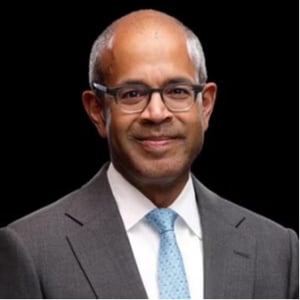
Sanjai Bhagat, PhD, is professor of finance at University of Colorado. Previously, he has taught finance at Princeton University, and University of Chicago. He has deep expertise in finance and investments, cybersecurity governance, IPO valuation, energy and ESG, and M&A. He has advised the U.S. Securities & Exchange Commission, and U.S. Department of Treasury on finance and corporate governance. He has served as a board member of a venture capital company focused on cutting-edge technologies in life sciences. Currently, he is serving as an Independent Board Member of an enterprise-level application software company.
The Honorable Paul J. Ray is currently Of Counsel at Covington & Burling LLP where he advises clients on regulatory opportunities and challenges and helps them formulate and execute advocacy strategies for their regulatory policy priorities before the executive branch and Congress.
During the first Trump Administration, Paul held various senior positions at the Office of Information and Regulatory Affairs (OIRA) within the White House’s Office of Management and Budget, including as acting, and then Senate-confirmed, head of the office. As OIRA Administrator (the "regulations czar"), Paul supervised the review of hundreds of regulations from across the government, drafted numerous executive orders governing the regulatory process, and led the Administration’s regulatory reform effort. As a result of this experience, Paul is well-positioned to help clients understand and achieve regulatory policy priorities in the context of the government’s regulatory agenda and ongoing reform efforts.
Most recently, Paul was also the Director of the Roe Institute for Economic Policy Studies at The Heritage Foundation. In that role, he supervised the formulation of the Foundation’s economic and regulatory policy recommendations and provided technical assistance to congressional committees and staff regarding legislative changes to the regulatory process. In addition to his role at The Heritage Foundation, Paul also served as a Senior Advisor at a strategic advisory firm. Before his time in government, Paul practiced law at a law firm in Washington, specializing in administrative law matters.
Prior to his role at the White House, Paul was Counselor to the Secretary at the U.S. Department of Labor. There he led departmental efforts in high-profile rulemakings and helped formulate the Department’s legal positions and strategy.
Paul served as a law clerk to Supreme Court Justice Samuel Alito and as a law clerk to the Honorable Debra Livingston of the U.S. Court of Appeals for the Second Circuit.
Paul is a thought leader in the conservative legal movement and is a frequent commentator and speaker on regulatory policy and reform matters, including at law schools, professional gatherings, and other venues. He is the Chairman of Innovations in Peacebuilding International and the Regulatory Process Working Group of the Federalist Society’s Regulatory Transparency Project and a public member of the Administrative Conference of the United States. Paul is also an adjunct lecturer at the Hillsdale College School of Government.
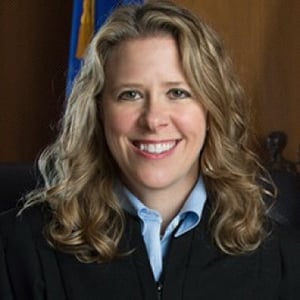
Justice Rebecca Grassl Bradley, a Milwaukee native, was elected to the Supreme Court in 2016 after being appointed by Gov. Scott Walker in 2015. She is the first Wisconsin Supreme Court Justice to have served as an intermediate appellate court judge as well as a circuit court judge. Before joining the Supreme Court, Justice Bradley served as a District I Court of Appeals judge (appointed 2015), a Milwaukee County Circuit Court Judge (appointed 2012, elected 2013) and worked as an attorney in private practice (1996-2012), including serving as vice president of legal operations for a global software company.
Justice Bradley graduated from Marquette University in 1993 with an honors B.S. in Business Administration and Business Economics and received her juris doctor from the University of Wisconsin Law School in 1996.
Justice Bradley is a member of the Supreme Court Finance Committee and chairs the Supreme Court Legislative Committee as the Chief Justice's designee. She is a member of the Board of Advisors and past president of the Milwaukee Lawyers Chapter of the Federalist Society; serves on the Wisconsin State Advisory Committee of the U.S. Commission on Civil Rights; and is a member of the Bench and Bar Committee of the Wisconsin State Bar. She previously served on the Board of Governors of the St. Thomas More Lawyers Society; the Wisconsin Juvenile Jury Instructions Committee; the Wisconsin Juvenile Benchbook Committee; and as a member of the Milwaukee Trial Judges Association and the Wisconsin Trial Judges Association. While in private practice, Justice Bradley served as an American Arbitration Association Arbitrator and Chairman of the State Bar Business Law Section.
Justice Bradley's current term expires July 31, 2026.
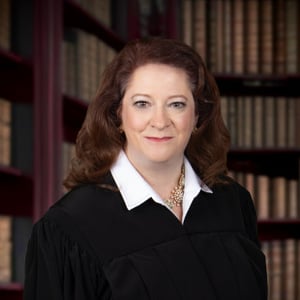
HON. MARIA S. LAZAR, Wisconsin Court of Appeals, District II, August, 2022—present. Waukesha County Circuit Court Judge, August, 2015-July, 2022, rotations included Presiding Judge Juvenile Division; Criminal Division, Presiding Judge; Drug Treatment Court Judge; and Civil Division. Formerly a Wisconsin Assistant Attorney General, in the Special Litigation and Appeals unit and was in private practice for 20 years. She was President of the Milwaukee Bar Association, was on its Board of Directors and served two terms on the State of Wisconsin’s Board of Governors. Judge Lazar earned her B.A. degree, magna cum laude, from Mount Mary College and her J.D. from Georgetown University Law Center.