

This event has concluded.
Dinner & Discussion on In-House Counsel - POSTPONED
Empire Steak (West)237 W 54th St
New York, NY 10019

Here are the latest events.



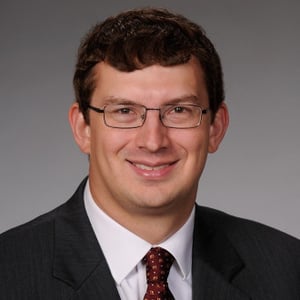
Mr. Pekron’s practice is primarily devoted to complex business, tort, and class action litigation. Mr. Pekron is listed in The Best Lawyers in America® in the area of Commercial Litigation, recognized as a Rising Star in the area of Business Litigation by Mid-South Super Lawyers, and a Future Star in Litigation by Benchmark Litigation. He has represented companies and individuals in cases throughout the nation involving breach of contract, professional liability, consumer fraud, products liability, and ERISA issues. He has significant experience in representing accounting firms, publicly-traded companies, and corporate officers and directors in securities litigation, regulatory matters, professional malpractice actions, and internal investigations.
Mr. Pekron also has an active appellate practice and has appeared in numerous state and federal appellate courts, including the Supreme Court of Illinois, the New York Court of Appeals, and the United States Courts of Appeals for the Third, Fourth, Fifth, and Sixth Circuits. He has argued cases before the Arkansas Supreme Court, the Arkansas Court of Appeals, and the United States Court of Appeals for the Seventh Circuit. He has also been responsible for petitions for certiorari and amicus briefs in the United States Supreme Court.
Mr. Pekron received his law degree from Yale Law School, where he served as Book Reviews Editor of the Yale Law Journal. His work has been published in the Hamline Law Review.
After graduating from law school, Mr. Pekron clerked for Judge Morris Sheppard Arnold of the United States Court of Appeals for the Eighth Circuit. During his clerkship, he served as an adjunct professor of law at the University of Arkansas at Little Rock School of Law. He then worked as an associate at the Chicago law firm of Sidley Austin LLP.
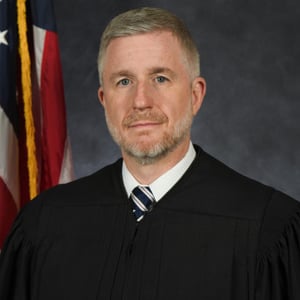
Judge, United States Court of Appeals, Third Circuit
Judge Paul Matey was appointed to the United States Court of Appeals for the Third Circuit in 2019 by President Trump.
Before his judicial service, Judge Matey was a partner at Lowenstein Sandler in New Jersey where he practiced complex commercial litigation and criminal defense. Earlier, Judge Matey was the Senior Vice President, General Counsel and Secretary for University Hospital Newark, an academic medical center and teaching hospital.
He also served as the Deputy Chief Counsel to Governor Chris Christie, and as an Assistant United States Attorney in the District of New Jersey, where he was awarded the Justice Department’s Director’s Award for Superior Performance. He also practiced at the Washington D.C. firm of Kellogg, Hansen, Todd, Figel & Frederick, and served as a law clerk to judges on the United States Court of Appeals for the Third Circuit and the United States District Court for the District of New Jersey.
He earned his bachelor’s degree from the University of Scranton, a Jesuit University, in 1993, and his juris doctorate, summa cum laude, from Seton Hall University School of Law in 2001, where he served as Editor-in-Chief of the Seton Hall Law Review.
In 2019, Judge Matey was elected to membership in the American Law Institute and, since 2020, has lectured on administrative law and the American legal history at Seton Hall.
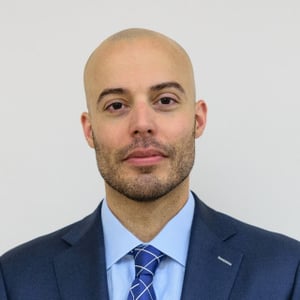
Executive Director, Wyoming Stable Token Commission
Anthony Apollo is the Exeuctive Director of the Wyoming Stable Token Commission, which is responsible for developing and issuing the first publicly-issued, fully-reserved stablecoin in the United States, the Wyoming Stable Token (WYST). The WYST is backed by U.S. Treasury securities and cash, and is designed to be redeemable for U.S. dollars.
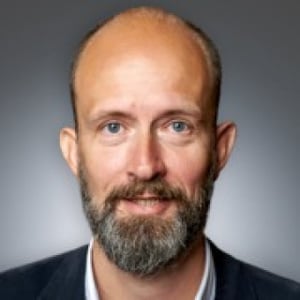
Beth and Marc Goldberg Professor of Law, Cornell Law School
Dan Awrey is the Beth and Marc Goldberg Professor of Law at Cornell Law School. Dan’s teaching and research interests reside in the field of financial regulation, including the regulation of banks, investment funds, derivatives markets, payment systems, and financial market infrastructure. Dan has undertaken research and provided advice at the request of organizations including the Bank for International Settlements, U.S. Treasury Department, Federal Reserve Board, the President’s Working Group on Financial Markets, Her Majesty’s Treasury, UK Financial Conduct Authority, Commonwealth Secretariat, Canadian Department of Finance, and European Securities and Markets Authority. His research has been featured in publications including the Yale Law Journal, New York University Law Review, Georgetown Law Journal, Duke Law Journal, Cornell Law Review, Yale Journal on Regulation, Harvard Business Law Review, and the Journal of Comparative Economics. Dan is a co-author of one of the leading textbooks on financial regulation, Principles of Financial Regulation, published by Oxford University Press. He is also a founding co-managing editor of the Journal of Financial Regulation. His latest book, Beyond Banks: Technology, Regulation, and the Future of Money was published by Princeton University Press in October 2024.
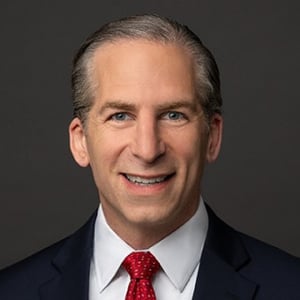
Partner, Cahill Gordon & Reindel LLP; Special Professor of Law, Maurice A. Dean School of Law, Hofstra University
Gary E. Kalbaugh is a nationally recognized leader in commodities, futures, and derivatives law.
Gary is a partner in the New York office of Cahill Gordon & Reindel LLP as well as a Special Professor of Law at the Maurice A. Deane School of Law at Hofstra University, where he teaches derivatives law and banking law.
A preeminent authority in the derivatives field, Gary is the author of the principal treatise Derivatives Law and Regulation (3rd ed. 2021) and serves as Editor-in-Chief of the Futures and Derivatives Law Report, the foremost industry publication. He is a past chair of the New York City Bar Association’s Committee on the Regulation of Futures and Derivatives and has over 15 years of experience as a professor teaching derivatives and banking law.
Gary is the leading derivatives lawyer in the digital assets space, and one of few to truly understand the technical side of emerging financial technology. He serves on the CFTC’s Future of Finance Subcommittee, reflecting his recognized leadership at the intersection of financial regulation and emerging technologies. A frequent speaker, writer, and commentator on derivatives, banking law, artificial intelligence, and digital assets regulation, he has served as conference co-chair for the American Bar Association’s “Artificial Intelligence and Derivatives Market” conference and regularly speaks at major industry conferences on cutting-edge issues in financial regulation and technology. Gary is sought after as a thought leader on the evolving landscape of digital asset regulation and the regulatory implications of AI in financial markets.
At ING, Gary served as Deputy General Counsel and Director, where he chaired swap dealer and security-based swap dealer regulatory committees and provided strategic leadership on U.S., European, and other regulations impacting the organization. He had global responsibility for U.S. derivatives regulatory issues and maintained strong relationships with regulators. Gary also co-developed ING legal’s global artificial intelligence training program and was responsible for U.S. regulatory issues relating to ING’s blockchain-based pilot programs and crypto initiatives.
Previously, Gary served as a lecturer-in-law at Columbia Law School and held senior roles at WestLB, where he was executive director, counsel, and chief U.S. data protection officer and chaired the global Dodd-Frank and underwriting committees. He began his career as an associate at a notable international firm.
Head of Legal for Blockchain, Crypto and Digital Currencies, Paypal Inc.
Jerome Roche is an experienced legal professional specializing in blockchain, cryptocurrency, and digital currencies, currently serving as the Head of Legal at PayPal. Previously, Jerome held partner positions at Linklaters and Mayer Brown, and served as Associate General Counsel at TIAA-CREF, along with an associate role at WilmerHale. Jerome earned a Juris Doctor from the University of Michigan Law School (1994-1997) and a Bachelor of Science in Mathematics from Purdue University (1988-1992)
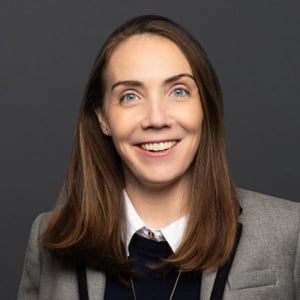
General Counsel and Corporate Secretary, Circle
Sarah is responsible for leading Circle’s legal function to progress the company’s vision and priorities across commercial and M&A transactions, regulatory and product initiatives, corporate governance, and litigation. Sarah honed her corporate legal practice at Sullivan & Cromwell LLP before transitioning in-house, most recently serving as the Chief Legal Officer of a PE-backed company.
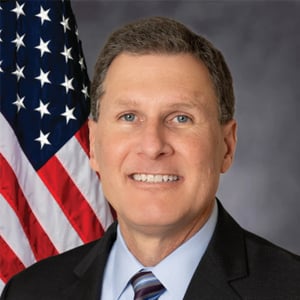
United States Attorney, Eastern District of California
Mr. Grant was appointed by Attorney General Pam Bondi to serve as the United States Attorney for the Eastern District of California beginning on August 11, 2025. Pursuant to 28 U.S.C. § 546(d), he was further appointed by the district court effective December 9, 2025.
Mr. Grant is a veteran of the Department of Justice, having served twice in Washington, D.C.: from 1991 to 1993 as an Attorney-Adviser in the Office of Legal Counsel, and from 2017 to 2021 as a Deputy Assistant Attorney General in the Environment and Natural Resources Division (ENRD). During his tenure at ENRD, he supervised more than a hundred Department litigators advancing the interests of the United States and its agencies in both enforcement and defensive matters, both civil and criminal.
In addition to his service in the Department, Mr. Grant has decades of experience in private practice in Washington, D.C. and Sacramento. That experience includes arguments in the U.S. Supreme Court, the California Supreme Court, and numerous other federal and state courts.
Mr. Grant served as a law clerk to Chief Justice Warren E. Burger (retired) and Associate Justice Clarence Thomas during the Supreme Court’s October 1994 Term. Earlier he served as a law clerk to Judge Edith H. Jones of the U.S. Court of Appeals for the Fifth Circuit in Houston, Texas.
Mr. Grant grew up in Modesto, California and raised his family in Sacramento County. He attended the University of California, Berkeley, from which he earned a bachelor’s degree in economics (1986) and a law degree (1990).
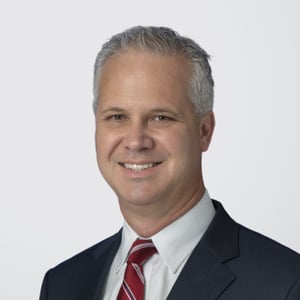
Partner, Hunton Andrews Kurth
Mr. Leopold is a Partner with the law firm of Hunton Andrews Kurth in Washington, DC. He is the former Senate-confirmed general counsel of the U.S. EPA from 2018-2020, and he previously was a litigator at the U.S. Department of Justice, Environment and Natural Resources Division form 2007-2013. As EPA General Counsel, he counseled on the development and defense of EPA’s most significant rulemakings, including the Affordable Clean Energy Rule, the Navigable Waters Protection Rule, and the Safe Affordable Fuel‐Efficient (SAFE) Vehicles Rule, as well as several pesticide actions. He was personally involved in defending EPA in litigation, including the County of Maui v. Hawaii Wildlife Fund in the U.S. Supreme Court. Mr. Leopold’s prior government service also includes working in Florida as general counsel of the Florida Department of Environmental Protection. He now represents clients in regulatory advocacy before federal agencies, litigates federal environmental actions, and defends clients with EPA enforcement issues.
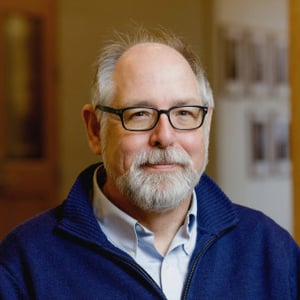
Emmett Visiting Assistant Clinical Professor of Law in Environmental Law, Harvard Law School
Andrew Mergen is a Visiting Assistant Clinical Professor of Law and Faculty Director of the Emmett Environmental Law & Policy Clinic. Prior to joining the Harvard Law School faculty, Andrew Mergen served in the Appellate Section of the Environment & Natural Resources Division (ENRD) at the United States Department of Justice. Professor Mergen began his career at the Justice Department in the Honors Program and concluded his career as Chief of ENRD’s Appellate Section. He has presented oral arguments in all 13 federal courts of appeals, including two en banc courts, and before several state intermediate and supreme courts. He has also worked on over a dozen merits cases in the Supreme Court of the United States. In addition, in 2009, Professor Mergen assisted the Office of White House Counsel on the confirmation of the Honorable Sonia Sotomayor as Associate Justice of the Supreme Court. During his career at the Justice Department, Professor Mergen received the Attorney General’s Award for Distinguished Service three times. He also received ENRD’s Muskee-Chafee Award, honoring his work’s significant contribution to protecting the environment.
Before entering clinical teaching, Professor Mergen taught at several law schools including, Harvard Law School (Advanced Environmental Law), the University of Michigan Law School (Natural Resources Law) and the William S. Richardson School of Law, University of Hawaii-Manoa (Administrative Law). Professor Mergen has written about federal water rights in “A Misplaced Sensitivity: The Draft Opinions in Wyoming v. United States” (68 Colo. L. Rev. 683 (1997), with Sylvia F. Liu); energy development on public lands in “Surface Tension: The Problem of Federal Private Split Estates” (33 Land & Water L. Rev. 419 (1998)); climate change and the Endangered Species Act in “The Role of Climate Change in ESA Listing Decisions” (53 Rocky Mt. Min. L. Fdn. 67 (2016), with Murray Feldman) and the accommodation of Native American sacred sites on federal land in “Finding the Path Forward for Indigenous Sacred and Cultural Spaces on Federal Public Land,” 68 Nat. Resources & Energy L. Inst. 32-1 (2022). Professor Mergen is a graduate of the University of Wisconsin—Madison and the George Washington University Law School.
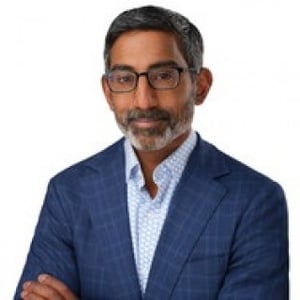
Senior Vice President of Programs, Earthjustice
Sam Sankar is Earthjustice’s Senior Vice President for Programs. Sam leads our Program Leadership Team, which develops Earthjustice’s strategy for carrying out our mission through litigation, lobbying and regulatory advocacy, and communications.
Sam has been working on environmental issues throughout his career, which has included service as a line attorney at the Justice Department’s Environment and Natural Resources Division, as a senior executive at General Electric, and as deputy chief counsel of a presidential commission formed to investigate the 2010 Deepwater Horizon oil spill. He has also worked as a boat captain, machinist, and senior advisor to The Nature Conservancy.
Sam received his B.S. in civil engineering from Cornell University, an M.S. in environmental engineering from Stanford University, and his law degree from the University of California, Berkeley. After law school, he clerked for Judge William Fletcher of the Ninth Circuit, Judge Louis Pollak of the Eastern District of Pennsylvania, and Justice Sandra Day O’Connor of the U.S. Supreme Court.
Sam lives in Washington, D.C., with his wife and two children.
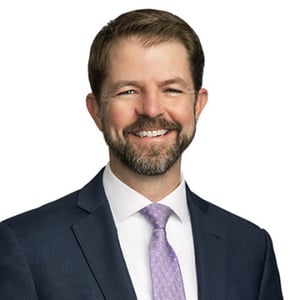
Partner, Baker Botts LLP
Drawing from two decades of experience in senior government, in-house corporate, and private law firm roles, Jeff Wood helps clients with federal enforcement, compliance, litigation, permitting, and policy challenges primarily in the energy and environmental fields.
Prior to joining Baker Botts, Mr. Wood served for almost two years as the Acting Assistant Attorney General (AAG) for the Justice Department's Environment and Natural Resources Division (ENRD). In that capacity, Mr. Wood led ENRD and its more than 600 attorneys and staff representing EPA, Departments of the Interior, Energy, and Defense, and other agencies in civil and criminal enforcement and defensive environmental, energy, and natural resources litigation.
As the top official in ENRD, Mr. Wood managed a complex organization with an annual budget exceeding $200 million and a docket of more than 6,000 cases and matters. E&E News noted that “Wood maintains a strong relationship with ENRD's career staff” (Greenwire, Oct. 31, 2018). He previously served on the staff of the United States Senate Committee on Environment and Public Works.
At the Justice Department, Mr. Wood oversaw the Division's civil and criminal enforcement programs and was responsible for developing legal strategies and approving briefs in key cases including filings before the Supreme Court and Courts of Appeals in coordination with the Office of Solicitor General. In this role, Mr. Wood held the highest level security clearance and worked closely with top leadership at DOJ, EPA, the Interior Department, USDA, the Energy Department, Transportation Department, FERC, NRC and across the Executive Branch, including the White House.
With many years of both private law firm and in-house legal experience, Mr. Wood has handled complex environmental enforcement, regulatory, policy, and litigation matters for electric utilities, energy companies, maritime companies, mining companies, real estate developers, financial institutions, industrial companies and manufacturers, business coalitions, associations, small businesses, and individual property owners. Drawing from his experiences in-house, Mr. Wood brings a common-sense, cost-effective, client-focused approach to his work every day.
With a strong national reputation, Mr. Wood is a frequent speaker on environmental law and policy matters, with recent speeches and presentations at the Environmental Law Institute, Harvard Law School, Vanderbilt Law School, American University Law School, American Bar Association Environmental Law Conferences, the Texas Environmental SuperConference, Air Force Judge Advocate General School's Advanced Environmental Law Course, Baker Institute's Center for Energy Studies (Rice University), and many other venues. He frequently appears in national news to share insights on significant environmental law and policy issues, including recent quotes in the New York Times, Washington Post, Wall Street Journal, Bloomberg, Law360, and E&E News, among others.
Former Adjunct Professor of Law; former Special Counsel to the President; former federal prosecutor, Georgetown Law (ret.)
Bill Otis is a former Adjunct Professor of Law at Georgetown University, a one-time federal prosecutor, and a former Special White House Counsel for President George H. W. Bush. After graduating from Stanford Law School, he started his career in the Criminal Division of the Justice Department, then became chief of appeals for the US Attorney's Office for the Eastern District of Virginia. In the 1980's he served on the Department's "Train the Trainer" team, which taught US Attorneys Offices across the county how to implement the then-new Sentencing Reform Act. He has held several posts in the federal government, including Special Assistant to the Secretary of Energy and Counselor to the head of the Drug Enforcement Administration, in addition to the White House post. He has testified before Congress on issues in criminal procedure, illegal drugs, the US Sentencing Commission, and the death penalty, and has given numerous media interviews on those and other subjects. He currently teaches a seminar at Georgetown Law titled "Conservatism in Law in America" with his wife, Federalist Society co-founder Lee Liberman Otis.
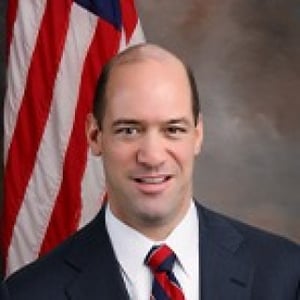
State’s Attorney, DuPage County, Illinois
A career prosecutor with over 31 years of experience and counting, Bob Berlin was sworn in as DuPage County State’s Attorney on December 14, 2010, after being appointed to complete the unexpired term of Joseph Birkett. In 2012, 2016, and 2020, Bob was elected to full four-year terms as DuPage County State’s Attorney. He serves as the Chief Law Enforcement Officer for the 2nd largest county in Illinois and leads an office of 87 Assistant State’s Attorneys and 90 support staff and investigators.
Berlin began his career in 1987 as an Assistant State’s Attorney in Cook County. During his tenure in Cook County, Bob’s assignments included the criminal appeals, misdemeanor, felony review, homicide-sexual assault preliminary hearing, child exploitation, and felony trial divisions. In 2001, Bob left the Cook County State’s Attorney’s Office opting to continue his career as First Assistant State’s Attorney for the Kane County State’s Attorney’s Office. As First Assistant State’s Attorney, Bob managed and supervised the entire Office staff of more than 140 lawyers and support staff.
While in Kane County, Bob developed and implemented new policies including the Community Prosecutions and a Felony Review Unit. Bob also served as Chief of the Priority Prosecutions Unit. In 2004, Bob began working for the DuPage County State’s Attorney’s Office as Deputy Chief of the Office’s Juvenile Division. During the next several years, Bob was promoted to Deputy Chief of the Felony Trial Division and in April 2010, Chief of the Criminal Bureau, where he supervised all Assistant State’s Attorneys charged with the criminal prosecutions function of the Office.
In his 31-year career as a prosecutor, Bob has tried more than 85 felony jury trials, 55 of which involved first-degree murder. Bob has also tried hundreds of felony bench trials, including more than 50 homicide cases.
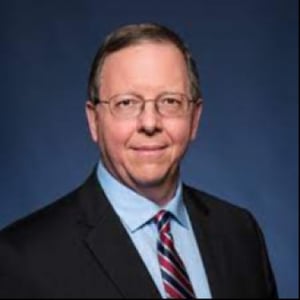
Professor of Political Science, University of Chicago, Department of Political Science
Robert A. Pape is Professor of Political Science at the University of Chicago specializing in international security affairs. His publications include Cutting the Fuse: The Explosion of Global Suicide Terrorism and How to Stop It (Chicago 2010) (with James Feldman); Dying to Win: The Strategic Logic of Suicide Terrorism (Random House 2005); Bombing to Win: Air Power and Coercion in War (Cornell 1996), "Why Economic Sanctions Do Not Work," International Security (1997), "The Determinants of International Moral Action," International Organization (1999); "The Strategic Logic of Suicide Terrorism," American Political Science Review (2003); and "Soft Balancing against the United States," International Security (2005). His commentary on international security policy has appeared in The New York Times, Washington Post, New Republic, Boston Globe, Los Angeles Times, and Bulletin of Atomic Scientists, as well as on Nightline, ABC News, CBS News, CNN, Fox News, and National Public Radio. Before coming to Chicago in 1999, he taught international relations at Dartmouth College for five years and air power strategy for the USAF's School of Advanced Airpower Studies for three years. He received his PhD from the University of Chicago in 1988 and graduated summa cum laude and Phi Beta Kappa from the University of Pittsburgh in 1982. His current work focuses on the causes of suicide terrorism and the politics of unipolarity. He is the director of the Chicago Project on Security and Threats.
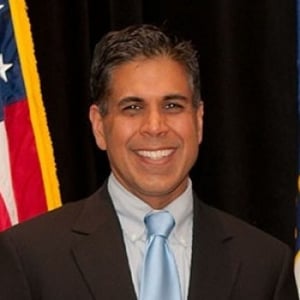
Judge, United States Court of Appeals, Sixth Circuit
Amul R. Thapar serves as a judge on the United States Court of Appeals for the Sixth Circuit. His judicial career began in 2007 when President George W. Bush nominated him to serve on the Eastern District of Kentucky, making him the first South Asian Article III judge in American history. In 2017, he became President Donald J. Trump’s first appellate court nominee.
Before joining the bench, Judge Thapar served as the United States Attorney for the Eastern District of Kentucky. While United States Attorney, Judge Thapar worked on the Attorney General’s Advisory Committee (“AGAC”) and chaired the AGAC’s Controlled Substances and Asset Forfeiture subcommittee. He also served on the Terrorism and National Security subcommittee, the Violent Crime subcommittee, and the Child Exploitation working group.
Judge Thapar has worked in private practice, at Williams & Connolly in Washington, D.C., and Squire, Sanders & Dempsey in Cincinnati, Ohio. He also served as an Assistant United States Attorney in both the Southern District of Ohio and the District of Columbia.
Judge Thapar received his undergraduate degree from Boston College and his law degree from the University of California, Berkeley. After graduating, Judge Thapar worked as a law clerk to the Honorable S. Arthur Spiegel of the United States District Court for the Southern District of Ohio, and the Honorable Nathaniel R. Jones of the United States Court of Appeals for the Sixth Circuit.
Judge Thapar has also published in the Yale Law Journal, Michigan Law Review, and Catholic University Law Review. He teaches courses on originalism, the Federalists and Anti-Federalists, and legal writing at Notre Dame Law School, the University of Virginia School of Law, and Vanderbilt Law School.

Dr. John Eastman is the former Henry Salvatori Professor of Law & Community Service and former Dean at Chapman University's Dale E. Fowler School of Law, where he had been a member of the faculty since 1999, specializing in Constitutional Law, Legal History, and Property. He is a founding director of the Center for Constitutional Jurisprudence, a public interest law firm affiliated with the Claremont Institute that he founded in 1999. He has a Ph.D. in Government from the Claremont Graduate School and a J.D. from the University of Chicago Law School, and a B.A. in Politics and Economics from the University of Dallas. He serves as the Chairman of the Board of the National Organization for Marriage.
Prior to joining the Chapman law faculty, Dr. Eastman served as a law clerk to the Honorable Clarence Thomas, Associate Justice, Supreme Court of the United States, and to the Honorable J. Michael Luttig, Judge, United States Court of Appeals for the Fourth Circuit and practiced law with the national law firm of Kirkland & Ellis. Dr. Eastman has also represented numerous clients in important constitutional law matters and has argued before the Supreme Court. On behalf of the Claremont Institute Center for Constitutional Jurisprudence, he has participated as amicus curiae before the Supreme Court of the United States, U.S. Courts of Appeals, and State Supreme Courts in more than one hundred cases of constitutional significance, including Boy Scouts of America v. Dale, Zelman v. Simmons-Harris (the school vouchers case), Kelo v. New London, Ct. (eminent domain), and Van Orden v. Perry (the 10 Commandments case). He has also appeared as an expert legal commentator on numerous television and radio programs, including C-SPAN, Fox News, PBS, NewsHour, and The O'Reilly Factor.
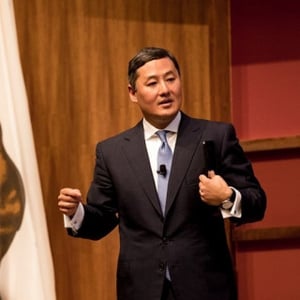
Emanuel S. Heller Professor of Law, University of California at Berkeley; Thomas Smith Senior Research Fellow, Civitas Institute, University of Texas at Austin
John Yoo is the Emanuel Heller Professor of Law at the University of California at Berkeley. He is also the Thomas Smith Senior Research Fellow, Civitas Institute, at the University of Texas at Austin. He is also a Nonresident Senior Fellow at the American Enterprise Institute.
His most recent book, The Politically Incorrect Guide to the Supreme Court, co-authored with Robert Delahunty, was published in 2023. Professor Yoo’s other books include Defender-in-Chief: Trump’s Fight for Presidential Power; Striking Power: How Cyber, Robots, and Space Weapons Change the Rules for War; Point of Attack: Preventive War, International Law, and Global Welfare; and Crisis and Command: A History of Executive Power from George Washington to George Bush.
He is a co-author of volumes 1 and 2 of R. Rossum, G. Tarr, V. Munoz & J. Yoo American Constitution Law (Routledge, 2026), and a co-editor of the eight-volume series on the 250th anniversary of the American Revolution, We Hold These Truths, with Yuval Levin and Adam White of the American Enterprise Institute.
Professor Yoo has published more than 100 articles in academic journals on subjects including national security, constitutional law, international law, and the Supreme Court. He also regularly contributes to the editorial pages of the Wall Street Journal, New York Times, Washington Post, Los Angeles Times, and National Review, among others.
Professor Yoo has served in all three branches of government. He was an official in the U.S. Department of Justice, where he worked on national security and terrorism issues after the 9/11 attacks. He served as general counsel of the U.S. Senate Judiciary Committee. He has been a law clerk for Supreme Court Justice Clarence Thomas and federal appeals Judge Laurence Silberman. He has been a visiting professor at the University of Texas at Austin’s School of Civic Leadership, Seoul National University, the Interdisciplinary Center Herzliya, Keio University, Trento University, the University of Chicago, and the Free University of Amsterdam.
Professor Yoo supervises the Public Law and Policy Program and the California Constitution Center. He also serves on the boards of Founding Forward, the Washington Legal Foundation, the Pacific Legal Foundation, the Ulysses Grant Institute, the Federalist Society’s Separation of Powers and Federalism Division, the Universidad Cientifica del Sur Law School, and the Asia-Pacific Law Institute at Seoul National University. He is a winner of the Federalist Society’s Paul Bator award and the Heritage Foundation’s Edwin Meese III Originalism Lectureship.
Professor Yoo graduated from Yale Law School and summa cum laude from Harvard College.
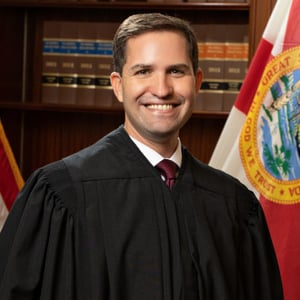
Chief Justice, Florida Supreme Court
John D. Couriel is the 58th Chief Justice of the State of Florida and the 90th Justice of the Florida Supreme Court. Justice Couriel was born in Miami, Florida in 1978. He is married to Rebecca L. Toonkel, M.D. They have two children.
Justice Couriel received his A.B. magna cum laude from Harvard College in 2000 and his J.D. from Harvard Law School in 2003. He clerked for the Honorable John D. Bates of the United States District Court for the District of Columbia before joining Davis Polk & Wardwell in New York. His practice there included securities offerings, mergers and acquisitions, bankruptcy matters, and investigations. In 2009, he became an Assistant United States Attorney for the Southern District of Florida. He prosecuted hundreds of federal offenses, including international money laundering, public integrity, healthcare fraud, and human trafficking crimes. In 2013, he joined Kobre & Kim LLP, where he specialized in cross-border disputes and investigations relating to financial products and services, asset recovery, and government enforcement defense, with an emphasis on clients in Latin America.
Justice Couriel is a native speaker of Spanish. His parents emigrated from Cuba in the 1960s, his father as one of approximately 14,000 unaccompanied minors welcomed to the United States as part of Operation Pedro Pan.
He was appointed to the Florida Supreme Court by Governor Ron DeSantis on June 1, 2020.