SMU & Dallas Fed Soc Rise & Shine Mentorship Event
Dallas Young Lawyer Chapter
Gibson, Dunn & Crutcher LLP2001 Ross Ave, Suite 2100
Dallas, TX 75201
Here are the latest events.
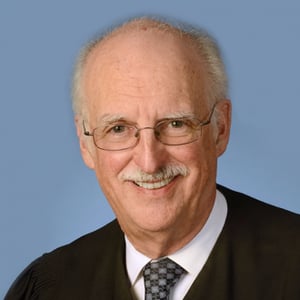
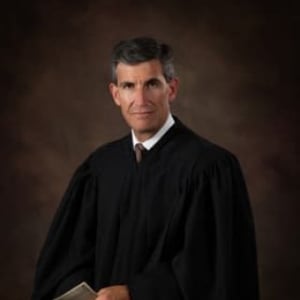
Justice, Supreme Court of Pennsylvania
David N. Wecht is a Pennsylvania Supreme Court justice. Wecht is one of three Democrats elected to the Pennsylvania Supreme Court in November 2015. He was sworn in to office on January 7, 2016, for a term that expires on January 4, 2026.
United States District Judge, Eastern District of Pennsylvania
Upon graduating law school, Wolson served as a law clerk to Judge Jan E. DuBois of the U.S. District Court for Eastern PA. Wolson then became an associate in the litigation and antitrust groups of Covington & Burling in Washington DC. for eight years. He returned to Philadelphia and joined Dilworth Paxson's litigation group in 2008, becoming a partner in 2010.
Wolson now serves as United States District Judge for the Eastern District of Pennsylvania. He received his judicial commission on May 28, 2019.
Professor of Law and Faculty Co-Director for the Georgetown Center for the Constitution, Georgetown University Law Center
Stephanie Barclay is a Professor of Law at Georgetown Law School, and the Faculty Co-Director of the Georgetown Center for the Constitution. Her research focuses on the role our different democratic institutions play in protecting minority rights, particularly at the intersection of free speech and religious exercise. Barclay‘s work is published or is forthcoming in leading journals such as the Harvard Law Review, the Chicago Law Review, the University of Pennsylvania Law Review, and the Yale Law Journal Forum. One of her articles was also selected for the 2020 Stanford/Harvard/Yale Junior Faculty Forum. Her work has been featured in many media outlets, including The New York Times, The Wall Street Journal, The Washington Post, USA Today, Bloomberg BNA, The Hill, and Law 360. And her work has also been cited by the U.S. Supreme Court.
Prior to joining Georgetown, Barclay was twice voted Professor of the Year. Barclay has also litigated constitutional cases at both the trial and appellate level, including before the U.S. Supreme Court. Barclay served as a law clerk to Judge N. Randy Smith on the U.S. Court of Appeals for the Ninth Circuit, and to Justice Neil M. Gorsuch of the U.S. Supreme Court.
Barclay is a Faculty Affiliate at the Constitutional Law Center at Stanford Law School; and she is a Nootbaar Fellow at the Nootbaar Institute on Law, Religion, and Ethics at Pepperdine University. She currently serves as the Chair for the AALS Law and Religion Section and as a Member of the Executive Committee for the AALS Constitutional Law Section. She graduated summa cum laude from BYU Law School, where she was elected to the Order of the Coif. She is completing a Ph.D. in Law at Oxford University as a Clarendon Scholar and a Tang Scholar.
Judge, United States District Court, District of Columbia
Judge Trevor N. McFadden was appointed to the United States District Court for the District of Columbia in 2017. He received his B.A. in 2001 from Wheaton College, IL, magna cum laude. In 2006, he received his J.D. from the University of Virginia School of Law, where he graduated Order of the Coif and was an editor for the Virginia Law Review.
Following graduation from law school, Judge McFadden clerked for Judge Steven Colloton, U.S. Court of Appeals for the Eighth Circuit. He then joined the U.S. Department of Justice, where he served as Counsel to the Deputy Attorney General and as Assistant U.S. Attorney in the District of Columbia. Judge McFadden subsequently became a partner at Baker & McKenzie LLP in Washington, DC, where he focused on white collar investigations. He is also co-author of a treatise, Corporate Settlement Tools: DPAs, NPAs, and Cooperation Agreements.
After four years in private practice, Judge McFadden returned to the U.S. Department of Justice, where he was Deputy Assistant Attorney General and acted as the second-in-command of the Department's Criminal Division. As Deputy Assistant Attorney General, he managed the Division's Fraud and Appellate Sections.
Judge McFadden also has extensive experience in law enforcement. He served as an officer with the Fairfax County, VA, Police Department and as a deputy sheriff in Madison County, VA.
Distinguished Senior Fellow and Antonin Scalia Chair in Constitutional Studies, Ethics and Public Policy Center
Edward Whelan is a Distinguished Senior Fellow of the Ethics and Public Policy Center and holds EPPC’s Antonin Scalia Chair in Constitutional Studies. He is the longest-serving President in EPPC’s history, having held that position from March 2004 through January 2021.
Mr. Whelan directs EPPC’s program on The Constitution, the Courts, and the Culture. His areas of expertise include constitutional law and the judicial confirmation process. As a contributor to National Review Online’s Bench Memos blog, he has been a leading commentator on nominations to the Supreme Court and the lower courts and on issues of constitutional law. He has written essays and op-eds for leading newspapers—including the Wall Street Journal, the New York Times, and the Washington Post—opinion journals, and academic symposia and law reviews. The National Law Journal has named Mr. Whelan among its “Champions and Visionaries” in the practice of law in D.C.
Mr. Whelan is co-editor of three volumes of Supreme Court Justice Antonin Scalia’s work: Scalia Speaks: Reflections on Law, Faith, and Life Well Lived (Crown Forum, 2017), a New York Times bestselling collection of speeches by Justice Scalia; On Faith: Lessons from an American Believer (Crown Forum, 2019), a collection of Justice Scalia’s writings on faith and religion; and The Essential Scalia: On the Constitution, the Courts, and the Rule of Law (Crown Forum, 2020), a collection of Justice Scalia’s views on legal issues.
Mr. Whelan, a lawyer and a former law clerk to Justice Scalia, has served in positions of responsibility in all three branches of the federal government. From just before the terrorist attacks of September 11, 2001, until joining EPPC in 2004, Mr. Whelan was the Principal Deputy Assistant Attorney General for the Office of Legal Counsel in the U.S. Department of Justice. In that capacity, he advised the White House Counsel’s Office, the Attorney General and other senior DOJ officials, and departments and agencies throughout the executive branch on difficult and sensitive legal questions. Mr. Whelan previously served on Capitol Hill as General Counsel to the U.S. Senate Committee on the Judiciary. In addition to clerking for Justice Scalia, he was a law clerk to Judge J. Clifford Wallace of the U.S. Court of Appeals for the Ninth Circuit.
In 1981 Mr. Whelan graduated with honors from Harvard College and was inducted into Phi Beta Kappa. He received his J.D. magna cum laude in 1985 from Harvard Law School, where he was a member of the Board of Editors of the Harvard Law Review.
For more on Mr. Whelan’s background, see this interview.
Partner, Baker & Hostetler LLP
Prior to joining BakerHostetler, Allen spent 15 years at the center of the national debate over political regulation. At the FEC, he worked across party lines to restore a key regulatory player to functioning order after years of neglect and partisan gridlock. Those efforts led to the first adoption of a new regulation in over a decade, reform of the commission’s investigations and interagency practices, and more than 150 Statements of Reasons interpreting the Federal Election Campaign Act (FECA). Substantively, Allen prioritized developments at the edges of the FEC’s jurisdiction, particularly those cases where federal election rules conflict with broader principles of corporate, administrative, and constitutional law.
Previously, Allen spent nearly a decade representing organizations across the political spectrum in First Amendment challenges to state and federal laws governing civil society. His practice emphasized motions and appeals, including a dozen arguments before federal appellate and state supreme courts, and appearances before regulatory agencies. In addition to purely campaign finance matters, Allen's cases included the first federal lawsuit in decades addressing the constitutional scope of lobbying laws, litigation establishing the standard for constitutional challenges to FECA under that statute’s specialized review procedures and the successful defense of a state attorney general leading to the invalidation of an FEC regulation.
Professor of Law, Brooklyn Law School
Joel Gora has been a professor at Brooklyn Law School since 1978, teaching constitutional law, civil procedure and a number of other related courses. He also served as Associate Dean for Academic Affairs from 1993-1997 and again from 2002 through 2006. He is the author of a number of books and articles dealing with First Amendment and other constitutional law issues. He is also an expert on campaign finance law matters, working in the field as both an advocate and an academic. Prior to joining the Brooklyn Law School faculty, Professor Gora was a law clerk at the United States Court of Appeals for the Second Circuit for two years after he graduated from law school, and then a full-time lawyer with the American Civil Liberties Union for almost ten years. During his ACLU career, he worked on dozens of United States Supreme Court cases, including many landmark rulings. Chief among them was the case of Buckley v. Valeo, the Court’s historic 1976 decision on the relationship between campaign finance restrictions and First Amendment rights. He has worked, on behalf of the ACLU, on almost every one of the important campaign finance cases to come before the Court. He also served for more than 25 years on the board of directors of the New York Civil Liberties Union, and as one of its general counsel. He has served as well on a number of policy committees of the New York City Bar, and was also a member of the board of the Federal Bar Council. Professor Gora received his B.A. from Pomona College and LL.B. from Columbia Law School.
Executive Director, Campaign Legal Center
Adav Noti coordinates all of CLC's operations and programmatic activities, overseeing CLC's efforts to protect elections, advance voter freedom, fix the campaign finance system, ensure fair redistricting, and promote government ethics.
Adav has conducted dozens of constitutional cases in trial and appellate courts and the United States Supreme Court. He also advises Members of Congress and other policymakers on advancing democracy through legislation. Prior to joining CLC, Adav served for more than 10 years in nonpartisan leadership capacities within the Office of General Counsel of the Federal Election Commission, and he served as a Special Assistant United States Attorney for the District of Columbia.
Adav regularly provides expert analysis for television, radio, and print journalism. He has appeared on broadcasts such as The Rachel Maddow Show, Anderson Cooper 360, PBS NewsHour, and National Public Radio's Morning Edition, and he is regularly cited in publications nationwide, including the New York Times, Washington Post, USA Today, Politico, Slate, and Reuters.
Adav is a graduate of New York University School of Law (J.D.), Georgetown University (M.A.L.S.) and the University of Pennsylvania (B.A.). He is admitted to the bars of New York and the District of Columbia.
Chairman and Founder, Institute for Free Speech; Josiah H. Blackmore II/Shirley M. Nault Designated Professor of Law, Capital University Law School
Smith has authored over 40 articles on campaign finance reform, appearing in academic publications such as the Yale Law Journal and Georgetown Law Journal, and popular publications such as The Wall Street Journal, USA Today, and National Review. He has appeared on The O’Reilly Factor, Hardball with Chris Matthews, Bill Moyers Journal, the Lehrer News Hour, Fox News Special Report, ABC News, Washington Journal, and numerous other national and local television and radio programs.
As an FEC Commissioner, Smith won plaudits for his integrity and refusal to put partisan interests ahead of his duties, as well as his steadfast support for free speech. For his honesty and integrity, the Wall Street Journal dubbed him, “the only honorable man in this bordello.” Smith now serves as the Josiah H. Blackmore II/Shirley M. Nault Designated Professor of Law at Capital University Law School. He has won numerous awards for his scholarship and teaching, and is a past member of the Advisory Committee to the American Bar Association’s Standing Committee on Election Law. He currently serves on the Editorial Board of the Election Law Journal, and the Editorial Advisory Board of the Harvard Journal of Law and Public Policy. Smith also serves on the Board of Trustees of the Buckeye Institute for Public Policy Studies, is a senior fellow at the Goldwater Institute and is a member of the Board of Scholars of the Mackinac Center for Public Policy. Smith is a cum laude graduate of Harvard Law School and Kalamazoo College and holds an honorary doctorate from Augustana College.
Of Counsel, Dickinson Wright PLLC
Based in Dickinson Wright’s Washington, D.C. office, Lindsey focuses on government affairs and political law. She advises clients on compliance with federal and state rules governing campaign finance, lobbying, ethics, and gift laws. Her practice includes guiding nonprofit organizations—including 501(c)(3), 501(c)(4), 501(c)(6), and 527 groups—on political activity and government engagement in an increasingly complex legal environment.
Lindsey has more than a decade of experience working at the intersection of law, policy, and nonprofit operations. She works with in-house legal, policy, and communications teams and represents clients before state and federal regulatory agencies including the Federal Election Commission. She also helps organizations assess legal and policy risks and respond in ways that align with their goals.
Before joining Dickinson Wright, Lindsey worked in both government and nonprofit legal roles, most recently as a senior attorney for Stand Together and Americans for Prosperity and before that as Counsel to the Republican Commissioners at the Federal Election Commission.
Vice President, Legal Strategy, Stand Together
Casey Mattox is Vice President for Legal Strategy at Stand Together and Senior Advisor at
Americans for Prosperity. In these roles he advocates for and creates strategies and
partnerships to ensure a constitutionally limited government that protects the civil liberties of all
Americans. Prior to joining Stand Together and AFP Casey’s legal career focused on defending
the First Amendment rights of students, faculty, healthcare workers and religious organizations.
Casey has a J.D. from Boston College School of Law and an undergraduate degree from the
University of Virginia. You can find him on Twitter at @CaseyMattox_ and on LinkedIn at
@Casey-Mattox-ST.
John Marshall Harlan II Professor of Law Emerita, New York Law School; Former President, American Civil Liberties Union
Nadine Strossen, New York Law School Professor Emerita and Senior Fellow at FIRE (the Foundation for Individual Rights and Expression), was national President of the American Civil Liberties Union from 1991 to 2008. An internationally acclaimed free speech scholar and advocate, who regularly addresses diverse audiences and provides media commentary around the world, Strossen is also the Host and Project Consultant for Free To Speak, a 3-hour documentary film series distributed on public television in 2023. Her books about free speech include: Free Speech: What Everyone Needs to Know® (Oxford University Press 2023); HATE: Why We Should Resist It with Free Speech, Not Censorship (Oxford University Press 2018); and Defending Pornography: Free Speech, Sex, and the Fight for Women’s Rights (Scribner 1995), which was republished with a new Preface in 2024 as part of the NYU Classics Series. Her many honors and awards include the National Coalition Against Censorship’s Judy Blume Lifetime Achievement Award for Free Speech. She serves on the Advisory Boards of several organizations that do free speech work, including: ACLU, Academic Freedom Alliance, Foundation Against Intolerance and Racism (FAIR), Heterodox Academy, National Coalition Against Censorship, and the University of Austin.
Vice President for Litigation & General Counsel, Goldwater Institute
Jon Riches is the Vice President for Litigation for the Goldwater Institute’s Scharf-Norton Center for Constitutional Litigation and General Counsel for the Institute. He litigates in federal and state trial and appellate courts in the areas of economic liberty, regulatory reform, free speech, taxpayer protections, public labor issues, government transparency, and school choice, among others.
Jon has developed and authored several pieces of legislation, including the landmark Right to Earn a Living Act, which provides some of the greatest protections in the country to job-seekers and entrepreneurs facing arbitrary licensing regulations. He also developed legislation eliminating deference to administrative agencies in Arizona—a first-of-its-kind regulatory reform that can serve as a model for the rest of the country.
His work at the Institute has been covered by national media, including the Wall Street Journal, New York Times, CBS This Morning, Bloomberg News, and Politico. Jon is also a member of the Federalist Society’s Regulatory Transparency Project: State and Local Working Group.
Prior to joining the Goldwater Institute, Jon served on active duty in the U.S. Navy Judge Advocate General’s (JAG) Corps. While on active duty, Jon represented hundreds of clients, litigated dozens of court-martial cases, and advised commanders on a vast array of legal issues.
He previously clerked for Sen. Jon Kyl on the U.S. Senate Judiciary Committee, worked for the Rules Committee in the Arizona State Senate, and clerked in the Office of Counsel to the President at the White House. Jon received his B.A. from Boston College, where he graduated magna cum laude and Phi Beta Kappa. He earned his J.D. from the University of Arizona, James E. Rogers College of Law.
Jon served as a presidentially appointed Panel Member on the Federal Service Impasses Panel. He is an officer in the U.S. Navy Reserve and an Adjunct Professor at Arizona State University School of Law. Jon is a native of Phoenix.
Founder, Law Offices of William L. Shipley & Associates
Bill’s legal career spanning more than 32 years has been built in the courtroom, not in the office.
After starting out his career with four years in private practice, In 1992 Bill joined the United States Attorney’s Office for the Eastern District of California where he initially represented the United States in civil litigation – including cases involving millions of dollars in dispute.
The desire to handle trials in front of juries led him to move to the Criminal Division of the US Attorney’s Office, where he served as a criminal prosecutor from 1995 to 2002 in California, and from 2003 until 2013 in the United States Attorney’s Office for the District of Hawaii.
Bill was the lead federal prosecutor in every federal criminal trial he was involved in except for his very first one. He was responsible for overseeing and prosecuting cases involving organized crime, white-collar crime, drug crimes, violent crimes, environmental crimes, contract and commercial fraud, tax fraud, and health care fraud. Over the course of his career, he handled more than 1000 cases, took more than 60 jury trials to verdict as lead counsel, handled dozens of appeals, and appeared nearly 20 times before the Ninth Circuit Court of Appeals as counsel for the United States.
He received national recognition and awards from the Department of Justice and his peers in law enforcement for his successful prosecutions of individuals and companies trafficking in chemicals used to manufacture methamphetamine.
In private practice, he has taken all his experience and training as a prosecutor and used it on behalf of his clients to ensure no one is wrongfully accused or convicted. He understands the power and resources the government can employ against his clients, and that his skills and tenacity are the weapons that he can employ on behalf of his clients to defend themselves.
Since starting his private law practice in 2013, Bill has represented defendants in federal criminal cases, as well as plaintiffs in civil fraud cases, employment matters, trade secrets cases, civil rights claims, probate disputes, and medical malpractice matters. He has tried cases in state and federal court, as well as appearing again before the U.S. Ninth Circuit Court of Appeals, and has argued twice before the D.C. Circuit.
Beginning in the fall of 2021, Bill began representing individuals charged in connection with the riot on Capitol Hill on January 6, 2021. Over the course of three years he represented approximately 90 defendants, with 12 of those chosing to take their cases to trial. He represented two different Oath Keeper members in separate trials, one of whom was the only January 6 defendant to be acquitted by a jury on all the felony counts against him. He was also the first defense attorney to obtain an acquittal in a bench trial on the controversial 18 U.S.C. Sec. 1512(c)(2) charge that was later ruled inapplicable to the January 6 riot by the Supreme Court in Fischer v. United States.
Bill is a graduate of UCLA, where he obtained undergraduate degrees in both Political Science and Sociology. He received his law degree from the Antonin Scalia School of Law at George Mason University in Virginia.