Certification of State-Law Questions by Federal Courts

Event Video




In Lindenberg v. Jackson National Life Ins. Co., 912 F.3d 348 (2018), the Sixth Circuit declared unconstitutional Tennessee’s law capping punitive damages based on the Tennessee constitution. But in the wake of Lindenberg, Tennessee state courts continue to reduce punitive damage awards in reliance on the statutory cap because the Tennessee Supreme Court has not directly addressed the law’s constitutionality. And in a case on a different statutory damages cap, the Tennessee Supreme Court indicated it likely would have disagreed with the Sixth Circuit. McClay v. Airport Mgmt Svcs, 596 S.W.3d 686, 693 n.6 (Tenn. 2020)
Federal court certification of state law questions to state high courts is a thorny issue with competing concerns. All states but North Carolina permit certification, but the federal courts control which questions presented in the case it certifies for resolution. State courts are free to decline to answer the questions certified and to do so after a period of months, as happened in Lindenberg. Some experts point out that even when the state court chooses to answer the questions certified, the process can be time consuming and inefficient.
Our panel will explore the issues of federalism, efficiency, and prudence presented when considering the question certification process between federal and state courts.
Featuring:
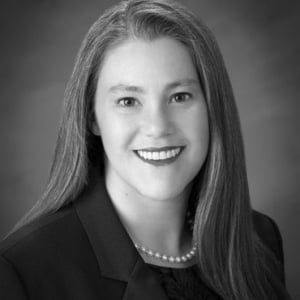
- Hon. Rachel Wainer Apter, Associate Justice, Supreme Court of New Jersey
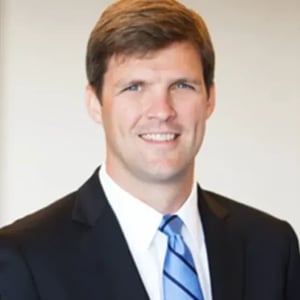
- Hon. Benjamin Beaton, United States District Court for the Western District of Kentucky
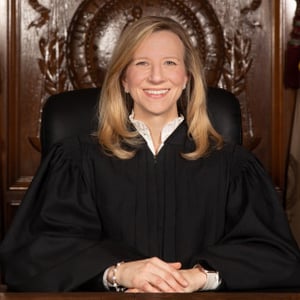
- Hon. Sarah Keeton Campbell, Justice, Supreme Court of Tennessee
- Moderator: Hon. Jennifer Perkins, Arizona Court of Appeals, Division One
---
To register, click the link above.
*******
As always, the Federalist Society takes no position on particular legal or public policy issues; all expressions of opinion are those of the speaker.
Event Transcript
Edith Harold: Hello everyone and welcome to this Federalist Society virtual event. My name is Edith Harold and I'm an Assistant Director of Practice Groups with the Federalist Society. Today we're excited to host this webinar discussing the certification of state law questions by federal courts. This panel features as speakers the Honorable Rachel Wainer Apter, who serves as Justice on the Supreme Court of New Jersey, the Honorable Benjamin Beaton who serves on the US District Court for the Western District of Kentucky and the Honorable Sarah Campbell who serves as Justice on the Supreme Court of Tennessee. As moderator, we are joined by the Honorable Jennifer Perkins who serves on the Arizona Court of Appeals Division one. If you'd like to learn more about today's moderator or speakers, their full bios can be viewed on our website fed soc.org. During the program, we may turn to the audience for questions. If you have a question, please enter it into the Q&A function at the bottom of your Zoom window and we'll do our best to answer as many as we can. Finally, I'll note that as always, all expressions of opinion today are those of our guest speakers, not the Federalist Society. With that Judge Perkins, thank you for joining us today and I'll hand things over to you.
Hon. Jennifer Perkins: Great, good morning. Thank you Edith for that introduction and thank you to the audience for joining us today and those who will watch this later. I suppose I will just very briefly introduce the speakers in topic before we will kick things off. As Edith pointed out, more robust biographical information available on the program page found on the Federalist Society's website. And just to give credit where it's due, I am noting at the outset that a fair amount of my information when I chime in comes from articles authored by Professor Rachel Breland in the 2024 Fordham Law Review, Professors Jason Cantone and Carly Giffen in the 2021 University of Toledo Law Review, and Judge David Neffer in his Duke Law program thesis from 2018. Okay, certification as we have just been discussing kind of a big topic, so we're not going to plumb the depth today, just give a little bit of an introduction to the topic itself just to the nuts and bolts. Certification, through this process, as generally understood, a federal court may send an unsettled state law issue to the highest court of the relevant state to address the issue in the first instance. Some states do allow certification of issues internally and between state courts, but today we are focused on the federal to state practice.
Florida is the state that originated allowance of this practice back in 1945, but it didn't immediately promulgate related rules and the practice was largely dormant until 1960 when Justice Frankfurter writing for the court commented favorably on Florida's law in the Clay v. Sun Insurance Office Ltd. opinion at that time. Justices Black and Douglas raised concerns with certification in their dissents could result in piecemeal decision making. It's a long and expensive road to justice et cetera, but soon thereafter, heeding Justice Frankfurter's encouragement, the National Conference of Commissioners on Uniform State Laws approved a uniform act for state certification laws. Adoption still didn't really take off until after one more SCOTUS weigh in, Lehman Brothers v. Scheinin in 1974 There, Justice Douglas, I'm not sure perhaps having spent more time with Justice Frankfurter talking about this this time, wrote for the court and they vacated and remanded the judgment for the Second Circuit to consider whether it should certify questions to the Florida Supreme Court. So not obligatory, but I guess a very strong suggestion from the high nine. The court noted that it would in the long run save time, energy and resources and help build a cooperative judicial federalism. It's a term I think might come up again later. Certification was particularly appropriate in Lehman Brothers v. Schein according to Justices at this point, "In view of the novelty of the question and the great unsettlement of Florida law on that question presented" which was whether Florida would hold a corporate officer who disclosed confidential earnings projections to outsiders liable based on a theory of misappropriating corporate assets.
The Second Circuit, somewhat unsurprisingly, took the suggestion and the Florida Supreme Court answered the questions thus resolving that case and since then, 49 states and the District of Columbia have adopted some system for certification. So each time certification occurs, there are two exercises of discretion. The federal court's initial decision that the issue presented is appropriate for certification and then the state court gets to make the same evaluation whether the issued is appropriate for acceptance of that certification. So this two-step discretionary process is going to provide the playground for our ruminations today, I think we're going to use a little bit loosely as our framework, the experience of the Sixth Circuit in the state of Tennessee in the Lindenberg v. Jackson National Life Insurance Company case. This is a Sixth Circuit opinion issued in 2018. I'll note we intend for this to be a conversational hour together. We welcome your questions. As Edith mentioned, I will attempt to stay on top of them, so please use the Q&A function and we'll see what we can get to.
So starting our conversation today and helping us to lay the groundwork with the Lindenberg case is as mentioned Justice Sarah Campbell of the Tennessee Supreme Court. I'll just briefly note before her appointment to that court in 2022, Justice Campbell served in the Tennessee Attorney General's office as Associate Solicitor General and Special Assistant to the AG. Following Justice Campbell's comments, we will hear from Justice Rachel Apter of the New Jersey Supreme Court, also a 2022 appointee. Immediately proceeding her appointment. Justice Apter served as the director of the New Jersey Division on Civil Rights. And after we get, I imagine what will be a fairly robust state law perspective, we will give Judge Benjamin Beaton of the Federal District Court in the Western district of Kentucky the opportunity to weigh in. And before he joined the bench in 2020, judge Beaton was a trial lawyer and of particular expertise in appellate litigation in private practice. I'm going to attempt to bring in, as I mentioned, the questions those submitters, those that happen to inspire me along the way and I've done a little bit of digging into this certification as an issue here in my home state of Arizona. So as relevant, I may bring in some of those statistics, but for now, Justice Campbell, would you like to get us started?
Hon. Sarah K. Campbell: Sure. Thank you Judge Perkins and thanks to all of you for joining us. I'm really happy to be here and especially happy to be here with two good friends and very highly respected jurists, so it's great to be with you today. So as Judge Perkins mentioned before I was on the Tennessee Supreme Court, I was in the Tennessee Attorney General's office and that was actually where my experience with the Lindenberg case began. I worked on it a bit when I was in the attorney general's office when we filed a cert petition from the Sixth Circuit's decision. So let's go all the way back to 2011. That is when Tennessee's legislature passed a law capping both punitive and non-economic damages. So there was a breach of contract action that included a bad faith breach of contract claim that was originally filed in Tennessee State court. It was removed to federal court pursuant to diversity jurisdiction and the plaintiffs in that case eventually obtained a quite large punitive damages award.
The district court capped that pursuant to the cap on punitive damage, the statutory cap on punitive damages, the plaintiffs challenged that cap as unconstitutional under the Tennessee Constitution claiming that it violated the separation of powers provision and the Tennessee constitutional right to a jury trial. So the district court certified those constitutional questions to the Tennessee Supreme Court. Under Tennessee's Rule 23, it's the Tennessee Supreme Court Rule 23 - different states have different ways of outlining their certification procedure in Tennessee - it's a Tennessee Supreme Court rule. So the court certified the questions the Tennessee Supreme Court actually declined to accept the certified questions. It issued an order explaining why, and the primary reason was that there was an antecedent question about whether punitive damages were even available at all for the bad faith breach of contract claim. That question had not been certified and it had not been resolved.
So under Tennessee's rule, the certified questions have to be determinative of the cause and because it appeared that the constitutional questions may not be the court declined to accept the certified questions, the order however did point out that nothing in that order should be interpreted as precluding the sixth circuit from later certifying the same questions. So the case goes up to the Sixth Circuit and the state who has intervened in the case to defend the constitutionality of damages caps asks the sixth circuit to certify in a footnote. In its brief, the other parties don't ask for certification, but at oral argument they were asked about it, nobody objects. So everyone agrees that certification is appropriate, but the Sixth Circuit panel does not certify the question and instead it holds that the punitive damages cap is unconstitutional. Relying on Tennessee's jury trial provision in the Tennessee Constitution. There was a dissent. Judge Larson dissented disagreed on the constitutional question but also pointed out that certification was appropriate, highly appropriate in this case. There was a petition for rehearing en banc, which the full sixth circuit denied Judge Bush wrote a strong dissent from the denial of rehearing, again arguing that certification was appropriate and also urging the Sixth Circuit to establish some guidelines for how to exercise its discretion with respect to certification.
There was another separate opinion, which this is kind of an interesting procedural issue, just making the point that this panel's decision to decline to certify would not preclude a future panel or federal district court from certifying the questions at a later date. All right, so that's the state of the law in the Sixth Circuit - that the punitive damages cap is unconstitutional. A couple of years later, a similar issue involving the constitutionality of the non-economic damages cap made its way to the Tennessee Supreme Court also via certification, another case that was in federal court pursuant to diversity jurisdiction. So that question, the constitutional questions again were certified and this time the Tennessee Supreme Court accepted the certified questions and held in a decision called McClay v. Airport Management Services that the non-economic damages cap is constitutional. It's dropped a footnote saying - this was before I was on the court, I should say - dropped a footnote pointing out that Lindenberg had reached a different conclusion with respect to the punitive damages cap made clear that McClay was not addressing the punitive damages cap, but also indicated that it found the sixth circuit's reasoning in Lindenberg. So as things currently stand, we have a six circuit decision holding that the punitive damages cap is unconstitutional and we have a Tennessee Supreme Court decision holding that the non-economic damages cap is constitutional. It appears that in the wake of these decisions, federal district courts and the Sixth Circuit are still following the Lindenberg holding with respect to punitive damages. And so this is a great case I think to tee up some of the interesting questions that we'll be talking about today.
Hon. Jennifer Perkins: Great. Justice Apter, would you like to talk next? I think New Jersey has some distinctions in your process there, so if you could highlight some of those and keep the conversation going.
Hon. Rachel Apter:
Sure. Thank you so much. I also wanted to acknowledge how happy I am to be participating with my close friends Justice Campbell and Judge Beaton and how happy I am to have gotten to know Judge Perkins through this process. And I think that this is a really interesting topic. Judge Perkins shared some of the national history of certification. I wanted to share some of the New Jersey's specific history because it is somewhat unique. So first, just to take a step back, certification of state law questions by federal courts really only arose after the Supreme Court's decision in Erie v. Tompkins in 1938 in which Justice Brandeis for the court held that federal courts sitting in diversity jurisdiction must apply state substantive law and cannot create or apply federal common law. And so that leads to the question in some cases of what is the state common law on a particular question.
For example, the one that Justice Campbell just discussed, and it can require federal courts to predict how a state's highest court would decide a particular question. Throughout between the 1970s and the 1990s, increasing states adopted certification procedures and federal judges in the Third Circuit and the District of New Jersey begin to urge in published opinions resolutions, law review articles, et cetera, New Jersey to establish such a certification procedure. It still did not have one in the 1990s, the New Jersey State Bar Association also urged the court to adopt a certification procedure and one example of how the third circuit was urging this in published opinions is a case in 1995 in which Judge Becker who was joined only on this point by then, Judge Alito now Justice Alito and Judge Nygard. So he wrote in an opinion specifically, "The lack of the certification procedure disadvantages both New Jersey and the federal judiciary, especially in cases where little authority governs the result, the litigants are left to watch the federal court spin the wheel. In effect we're forced to make important state policy and contravention of basic federalism principles."
So after that decision in the late 1990s, the New Jersey Supreme Court tasked New Jersey's existing six person civil practice committee with reporting on whether the court should adopt a certification procedure. Four members of the six person committee supported creating a certification procedure. They recommended that the New Jersey Supreme Court adopt a rule that would allow it to answer a question of law certified to it by an appellate court of the United States or by the highest court of another state. And I'm quoting here the answer would be determinative of a pending litigation in the certifying court and New Jersey law on the issue is unsettled. The majority specifically recommended that only federal appellate courts and not federal district courts - sorry, Judge Beaton - be permitted to certify questions so that the factual record in each case would be sufficiently developed to provide context for any New Jersey Supreme Court decision.
And then two dissenting members of the committee believe that a certification process would create undue litigation delay and expense, would needlessly burden the court and would likely be unconstitutional. The New Jersey Constitution expressly sets forth when appeals may be taken to the Supreme Court and the dissenting members essentially argued that certified questions are not appeals. But in 1999 the New Jersey Supreme Court adopted rule 2:12 A, which became effective the following year, which allows the Supreme Court to answer a question of law certified to it by the United States Court of Appeals for the third circuit if the answer may be determinative of an issue in litigation pending in the third circuit. And if there's no controlling appellate decision, constitutional provision or statute in this state, it also allows the court to reformulate any question of law that is certified to it. So the new rule thus allowed the only the Third Circuit and no other court to certify questions to the New Jersey Supreme Court as I mentioned, that makes New Jersey somewhat unique.
Currently every state but North Carolina allows their state high courts to hear questions certified by federal courts. New Jersey is the only one that does not authorize questions certified by the US Supreme Court and it's also an outlier in limiting certification to only the Third Circuit and no other federal courts of appeals. 48 states authorized certification from any federal court of appeals and most allow certification from district courts as well. Since rule 2:12 A went into effect in 2000, the third circuit has certified questions of law to the New Jersey Supreme Court in 22 total appeals. The court accepted certification in 14 cases and denied it in seven. In one other the request for certification was withdrawn. I'm happy to discuss some of those cases or some of the pros and cons to certification and I'm also happy to seed the floor to Judge Beaton to provide a federal perspective and then to come back to those topics.
Hon. Benjamin Beaton: Thank you all very much. Did I freeze? Alright, thank you all very much. Like Rachel and Sarah said, I'm just delighted to join with my friends and my new friend Jennifer for this panel. I suppose my role is to stand up for the big bad feds and offer a few counterpoints to my friends on higher state courts who as they will remind us, are closer to the people, more accountable, and undoubtedly more well-versed with their state's laws, all of which are relevant to many of the justifications, some quite powerful, that we find offered in support of certification. As I dug in, which I had to because I have never certified a question as Rachel mentioned, some states wouldn't even allow me - a lowly trial judge - to do so. But as I dug in, I was surprised by a number of things. I expected that my priors to lean in a pro-federalism direction, maybe that means actually more of an anti-federalist perspective and to be more sympathetic by the theory, but skeptical of the efficiency benefits.
I remain skeptical of the efficiency benefits and I am now more skeptical of the doctrinal and jurisprudential foundations as well. You'll find in certification decisions, briefs, arguments, comments typically unsupported and perhaps unsupportable about how certification saves time, energy, and resources and helps build a cooperative judicial federalism. This is from the syllabus of Justice Ginsburg's decision in Arizonans for Official English v. Arizona. I am not sure that anyone could make the case that taking many months, perhaps years to certify a question to a state Supreme Court trying to wedge itself in the very crowded docket of a state high court, many of which have much less control than what we're familiar with at the US Supreme Court. Kentucky Supreme Court for example, has a huge mandatory docket that is very time consuming. I'm not convinced that process would save the time, energy, and resources of anyone except perhaps very importantly the trial judge or court of appeals judge or panel that is avoiding that question.
It seems like we have questions of varying difficulty involving state law that come across my desk all the time and my job as I view it is to decide those questions to do so as quickly and as well as I can. And I am hard pressed to think of instances in which the litigants and frankly even the development of the law would be net better off if I sent a question out packing to the Kentucky Supreme Court or the Tennessee Supreme Court or what have you, there is an obvious tension, shall we say, with the basis for diversity jurisdiction. The reason these questions are in front of me in the first place, and more fundamentally, and I'll perhaps pose this question to my colleagues here, I recognize there is a sort of felt understanding that in a case like Lindenberg, it is somehow more offensive, incongruous - seems, just seems wronger - that this invalidation came from a federal court construing Tennessee's constitution and a Tennessee dispute and a conflict with the Tennessee statute.
But it seems to me, Sarah, that this fundamentally comes down to where are we most likely to find errors and how are we best able to design procedures that avoid errors? And I worry that by teeing up questions as somehow different from the ones that judges like us adjudicate all day every day and saying this is something special. It's different. It needs to go to the state Supreme Court that buying into some of the bad part of Erie and treating state law questions as somehow different than normal legal interpretation that state supreme court judges, state trial judges, federal trial judges, the US Supreme Court ought to be approaching in a consistent way trying to get the answer right using the tools at our disposal. And I find myself questioning whether my view on certification is colored more by a just sort of a gestalt sense that it is somehow less bad if the state court screws up than the federal court because if we get it right, it doesn't matter presumably. And I'm curious where that feeling comes from if it's got more to do with who's likeliest it's to screw up if more to do with who ought to be making a decision and in what way?
Hon. Jennifer Perkins: Well, I think we might start Justice Campbell with a response there. I mean I think Lindenberg itself raises this interesting issue of what happens after a federal court has made a determination and then those litigating under diversity jurisdiction or otherwise are bound by that determination or at least find themselves presumably bound by it, whereas the state court has now said something quite different, perhaps not in the precise circumstance but in an analogous one. So that does tee up this question a little bit. I welcome your thoughts on that.
Hon. Sarah K. Campbell: Yeah, so I appreciate your commitment to exercising your unflagging jurisdiction as the federal court and I do think that your comments really highlight the tension here. Our founders designed a system where federal and state courts do have overlapping authority. State courts can adjudicate both federal and state law issues. Federal courts can also adjudicate both federal and state law issues. So there is going to be some conflict given that overlapping authority. And I think what to me really points up the need for a certification procedure is the fact that when a federal court does get it wrong, makes an incorrect eerie guess. The only way that a state work can correct that error is to wait for an appropriate case to arise in the state court system so that it can hear that case or hear that issue and decide that issue definitively. And there are a few factors here that have made that possibility.
I think even more likely in our current times you have a diversity monetary threshold that hasn't been increased in three decades. You have the Class Action Fairness Act, which kind of relaxes diversity requirements. So you have various factors I think combining to remove certain kinds of cases from the state courts. I mean there are certain kinds of disputes that are just end up in federal court and a state court might be waiting years or perhaps never really get a case that presents that same issue. So there is a chance of error and by contrast, when my court decides an issue of federal law, for example, and let's say we decide that issue incorrectly, the US Supreme Court can take that case and correct that error. So I think that's where you have a little bit of an imbalance where maybe it's not more likely that a federal court would make an error with respect to state law, but it's just that the means of correcting that error are a little harder to come by.
So I do think that certification is a really important procedure to protect our federal state balance. And I do think the Lindenberg case just really is a great illustration of that, but I acknowledge that federal courts have the authority to decide state law questions and often do a really good job at that. So it's not the case that a federal court needs to just certify every state law issue that comes before it. I don't think state courts would be a big fan of that approach, but I do think that these federalism concerns that animated the adoption of the certification procedure to begin with are really important and just ought to be considered when courts are making the discretionary decision whether to certify. And I think it ought to be discretionary and there are a lot of different factors that come into play in deciding whether it's warranted. But I think there are circumstances where it is clearly warranted and important to preserve our federal-state balance.
Hon. Rachel Apter: I agree with Sarah to a large extent, and I think that the entire goal of certification is to avoid problems associated with federal courts predicting how a state's highest court would decide a question of state law and predicting it incorrectly. But I think that there are a few caveats that explain why. I also agree with Ben that certification should not be something that is relied on in every case or in even a large number of cases. I think that the third circuit certifying a total of 22 cases to the New Jersey Supreme Court since in the past 25 years and New Jersey accepting 14 of them makes it clear that at least here it is used very sparingly. And the point that I would make there is the New Jersey Supreme Court rule specifically provides that the Supreme Court can answer a certified question if it would be outcome determinative, which is a given, but also if there's no controlling state law authority IE no controlling appellate division decision in our appellate division cases, once an appellate division decision is published, it's then precedential on other appellate courts, other intermediate appellate panels in New Jersey.
So if there's no controlling appellate division decision, constitutional provision or statute in this state, and I think that that makes clear that in ordinary run of the mill cases of statutory interpretation of a New Jersey statute or even constitutional interpretation of the New Jersey Constitution where it seems like the constitution is providing very clear guidance on how to answer the question or whether it seems like the statute is providing very clear guidance on how it should be interpreted or applied. The New Jersey Supreme Court ordinarily would not accept certification in such a case. It's really only where there is no controlling authority. So the statute would have to be unclear. The constitutional provision of course would have to be unclear. And it really arises in New Jersey more often in common law cases where as Judge Becker said, in that Third Circuit dissent "In effect we're forced to make important state policy and contravention of basic federalism principles."
And state common law is an area where courts are generally guided by fairness. And this was something that actually was very new to me when I joined the New Jersey Supreme Court because I previously had practiced much more in federal court where as we all know, there is no such thing as federal common law. So you're not really making arguments to federal courts that they should change common law in a specific way or be guided by fairness in their interpretation of federal common law. But that really is still in the province of state courts when it comes to a lot of common law questions. And so I think specifically there that at least has been where the New Jersey Supreme Court has granted certification and answered certified questions. Either it's been around how different statutes interact or a pure common law question or sometimes even a pure court rule question where it's how the New Jersey court rules apply in a particular circumstance. And I think that really raises this federalism concern about not what the decision is, but who decides.
Hon. Benjamin Beaton: Yeah, so much of this to me points up real fundamental and interesting questions about what is the role of a judge, and in particular, as you say, Rachel, a state common law judge and Judge Becker's language about making state policy I think is really telling. And if you subscribe to a more evolutionary and policymaking, fairness driven conception of state law, even in this late date in which most areas whether tort or property or what have you are touched by not just precedent but also statute and regulation and uniform acts, advisory opinions, there's a lot of law out there at this stage in the republic's history much more than when Pullman abstention emerged. If you view that as policymaking, then I totally subscribe that someone who's elected or appointed in a more accountable method who's much more familiar close to the ground ought to be the person making that decision.
I find myself more skeptical that there are many instances in which that's actually true and that the judge, whether state or federal, is making policy so to speak or ought to be conceiving of his or her role as making the best attempt to interpret, understand and apply the law rather than making a policy decision. When you view it that way, the more eerie maximalist view that the law is what the state high court says it is, then it's hard to think about errors that way because they're the decision maker. If you view the judge in a more limited role as an interpreter, then I think the instances in which certification is attractive are fewer and farther between. It's not going to be a null set. There are areas in which there's true expertise or broader implications, but a narrow conception of the judge's role, I believe, and a narrow conception of the remedy that is available, I think can avoid some of these affronts to federalism problems that Sarah, you laid out at the beginning.
Hon. Rachel Apter: Just wanted to clarify that I agree with Ben to a large extent on the role of a judge in interpreting statutes and interpreting state constitutional provisions. And when it comes to state common law, it is always important to recognize that something only continues to exist as state common law all the way in 2024 because the legislature has declined to act. So in every common law case that we get before the New Jersey Supreme Court, it is explicitly because the legislature has declined to act in a particular area sometimes despite decisions requesting the legislature to act or pointing out that this is really a question of fairness and public policy that should be decided by the legislature. So we even had a common law case this term where I was in the dissent again, pointing out that this specific issue of it was about liability for injury on a sidewalk is one that is determined based on questions of fairness and public policy and really should be determined by the legislature. And in that case, as I said, I was in the dissent because I saw the majority's decision as an expansion of a common law duty that I thought should have been a decision made by the legislature. But there will be common law cases that keep coming in state courts in a way that, again, I wasn't used to when I was practicing in federal court because the legislature has not acted even despite a request that it do so, and even despite the court saying this is an area of public policy that really should be decided by the legislature.
Hon. Sarah K. Campbell: That's to me why that maybe we need a certification procedure whereby we can certify questions to the legislature.
Hon. Jennifer Perkins: Ooh, that's a fun idea. Maybe get intermediate courts in on that. So just to throw out something a little bit akin to what we've been talking about in terms of subject matter, something that stands out to me from the recent Arizona statistics. So I talked to the staff attorney's office and between 2011 and 2023 I, the Arizona Supreme Court received 18 certification requests, but only seven of those came in the first six years and 11 of them came in the latter six years of that timeframe almost exclusively in bankruptcy and insurance cases. And our staff attorney's office had some kind of sense that it seems like especially in insurance cases, both district and circuit courts are kicking those questions in particular back. My sense is they're not the most interesting questions for our state supreme court, but they've done their best and they haven't declined at least that I could find a question since 2012. So I'm curious if any of you, in your experience in the area of state certification certification, the one way certification we currently have available to Justice Campbell's point, if there is a predominance of a particular area of law that is driving, if there is an increase in other states, we are seeing an increase or have seen an increase in Arizona in recent years and it is in those specific subject matter areas.
Hon. Sarah K. Campbell: A lot of our questions here on the Tennessee Supreme Court, at least during my time on the court, they've been mostly just statutory interpretation questions. I'm not as familiar with the questions before I joined the court. Just by way of comparison, I have some stats from Tennessee on numbers and our acceptance rate that might be interesting. So since 1999, so in the past 25 years or so, we have had 69 rule 23 requests for certification and we accepted 41 of those. So that is about a 80% acceptance rate, which based on some of the materials I think we all read in preparation for this, looking at other states' acceptance rates is pretty high. I think there likely have been points in time where there have been certain kinds of cases that were getting certified more than others, just given a recently enacted statute that was still kind of being applied and interpreted. But I guess I don't have a sense of any particular category at this time that is coming to us with increasing frequency.
Hon. Rachel Apter: I can speak a little bit to that and it does actually confirm Jennifer, at least the insurance piece of it. I'm not sure if it's for the same reason that the federal court was not particularly interested, but there is one recent case that was an insurance question as I noted, since 2000, the third circuit has certified 22 questions to the New Jersey Supreme Court and the New Jersey Supreme Court accepted certification in 14 of them. So it's not nearly as frequent as the Tennessee experience. There are three recent certification decisions. One from 2019 is an insurance case, but it's not a statutory interpretation case as much as what happens if the specific requirements of the statute are fulfilled but the intent is not. It involved New Jersey's insurable interest statute, which provided that "No person shall procure, or cause to be procured any insurance contract upon the life health or bodily safety of another individual unless the benefits under that contract are payable to the individual insured or his personal representative or to a person having at the time the contract was made, an insurable interest in the individual insured."
So the idea there is that it doesn't allow for insurance policies taken out on the life of a stranger. In this particular 2019 case, a group of investors paid for a life insurance policy through a trust. The insured was a stranger to them, but when the policy was issued, the insurance grandson was the beneficiary. And then five weeks later the trust was amended and the strangers who invested in the policy became the beneficiaries That had been the plan all along the district court held that the policy was a stranger originated life insurance policy that violated the statute even though the policy technically complied with the statute because the insured's grandson had been the beneficiary at the moment that it was signed. The third circuit certified the question to this court and this court held that if a third party without an insurable interest procures or causes an insurance policy to be procured in a way that bains compliance with the insurable interest requirement, the policy is a cover for a wager on the life of another and violates New Jersey's public policy. So that was kind of a question of what happens if it looks like there's technical compliance with the statute, but not compliance with the purpose of the statute to not allow these wagers on the life of another that the beneficiaries have no relationship with. And so that was an example, I guess, of a recent certification question that was accepted that as Jennifer mentioned, is both an insurance question and not a straight question of statutory interpretation and more a common law. What violates New Jersey's public policy type of question. Other recent certification decisions? One was about the interpretation of a court rule and one was actually about whether claims could lie under the New Jersey Consumer Fraud Act or whether they were subsumed under the New Jersey Product Liability Act. So kind of how two different statutes could be interpreted harmoniously.
Hon. Sarah K. Campbell: I have a question for Ben. I'm curious. I think there was a question from one of the audience members about timing. How long does it take? And some of the articles we read, I think in some cases it could take more than a year for a state court to even decide whether it's going to accept the certified questions. And then once that decision is made, then there's the briefing and arguments and writing the opinion or whatever procedure the state court follows. So it can take a long time. And I'm curious, so this Breland article that Judge Perkins mentioned at the beginning or at the outset had some recommendations for state courts, things that state courts can do to make this a little more efficient, and one of those was having a deadline by which the court will decide whether to certify or to accept certification. So Ben, my question for you is how much does - you mentioned efficiency I think in your opening remarks - so how much does that play into it? Just that this is going to really drag things out and if you had more certainty about how long it would take, would you be more likely to certify?
Hon. Benjamin Beaton: I think undoubtedly yes. I think a deadline to decide would be helpful. A deadline to decide whether to decide. Of course that would come only as the first piece. The second would be the actual decision making on the merits from the state Supreme Court, but at least you wouldn't. A trial judge does or should feel a lot of responsibility for, I think respecting the time of others and how we manage our dockets when there's a jury in the box, when someone is an accused criminal defendant who is waiting for a day in court. I think that aspect of this job informs a lot of our decisions. And the idea, at least for me, this is just one judge speaking, I don't think you'll find a doctrinal hook for this anywhere as pushing something off to a different court out of your jurisdiction whose procedures you aren't terribly familiar with feels like kind of a dodge that will have certain costs for the litigants in front of you with very uncertain benefits. And so to my lights the answer is usually to answer, to make the decision to decide, not decide not to decide, but certainly around the margins there are ways you can help that. Of course, that's an impingement itself. I'll mention on the autonomy of the state courts who may not want or have a deadline for deciding when and whether to decide, and I would worry about the incentives that a state court system might create for additional burdensome certification request. If y'all make it too easy on overburdened federal judges who I'm sure you don't think are necessarily overburdened relative your own docket size to pass questions your way.
Hon. Jennifer Perkins: Definitely. Just a quick comment on that, I think that this is just the first and a two-step process is a big part of that. We've recently had an opinion issued on a certified question in which the argument, the oral argument before the Arizona Supreme Court occurred in the spring of 2022. So it was a little over two years after the decision to accept certification to opinion. That's very unusual. Typically it's faster, but that does certainly impact I think the efficiency evaluation. We had another interesting question. How does certification square with the fundamental rule that courts will not supply advisory opinions? Does anybody have some thoughts on that?
Hon. Benjamin Beaton: Well, I suppose another aspect of federalism is that state courts can sometimes must issue advisory opinions. So that I think is perhaps a point on the state side of the scoreboard here, at least if the state court judge is authorized to do that. But again, I think the commenter maybe driving at a deeper point that, boy, it seems odd to tee up a question outside the normal path of adjudication and give it to someone else. I wonder if judges who grew uncomfortable with the oddities of the Brand X and Chevron regime treating decisions as something other than just giving the best reading of a statute, treating a federal court or even a Supreme Court decision as somehow contingent on the action of a different decision maker in that case an agency in this case a state court is one of the sort of felt more than necessarily logically driven reasons for some of us to be a little less comfortable with this process.
Hon. Rachel Apter: I just wanted to follow up and reiterate one thing that Ben just mentioned, that because of the differences in the wording of state constitutions, many state courts have very different views of standing than federal courts. And so they do not have the same case and controversy language as Article III of the federal constitution. And the same standing rules do not apply, not in all state courts, it depends on the wording of their individual state constitutions and their own court's precedent. But again, that's something that's very different in state and federal court there, as I mentioned in the New Jersey committee that was tasked with looking at this two dissenting members that believed that it would not be constitutional for the state court to answer certified questions under the New Jersey specific language of the New Jersey constitution, there has never been a constitutional challenge since the certification rule was created in 2000 or went into effect in 2000.
Hon. Sarah K. Campbell: So we did have - oh, go ahead Rachel.
Hon. Rachel Apter: One other thing just in terms of I think it's different from the interpretation of a federal agency regardless of Chevron or Loper Bright, is that the name of the Supreme Court's recent decision? Just because at least under our rule certification can only be granted if it's outcome determinative in the Third Circuit and the Third Circuit is only certifying the question if it is a question of state law that they believe that the New Jersey Supreme Court has the authority to decide and they do not. So I don't think there is a circumstance where a federal court would say, okay, the New Jersey Supreme Court has decided that the New Jersey state law or the way that this statute is read is X, or the common law answer is Y, but we are not going to abide by that or we're not going to treat it as anything other than persuasive authority. I think the reason that the third circuit is certifying a question is because they want the New Jersey Supreme Court to answer it.
Hon. Sarah K. Campbell: So on the advisory opinion point, so Tennessee's certification procedure did face a constitutional challenge. The case was called Haley v. University of Tennessee Knoxville. It was actually in 2006, which is interesting because the certification procedure had been around for a few decades at that point. So after we had been using it for quite a while, there was a constitutional challenge based on the constitutional provision that gives the Tennessee Supreme Court appellate jurisdiction. So the argument was that this is not an exercise of the court's appellate jurisdiction to answer certified questions. So that Tennessee Supreme Court rejected that challenge and said that answering certified questions is part of its inherent authority as the head of Tennessee's judicial branch and sort of distinguished answering a certified question from adjudication. Whereas adjudication is definitively resolving a case when you're answering a certified question, you're not adjudicating a whole case, you're really just answering a single issue and then the adjudication of the case rests with the federal court that has certified the question. And to my knowledge, we have not had a constitutional challenge since then.
Hon. Jennifer Perkins: Alright, we're winding down here, but we'll try to get to a couple of these questions. We have one that asks about the nature of a federal appellate court's projection or best guess as to an issue of state law. How should, and I think perhaps Judge Beaton, I'll just tag you for this one because it says, how should for example, a federal district court view such a ruling? Is it ever truly binding unlike a standard matter of, for example, federal statutory interpretation? Would it the meaning of the words is not being continually informed over time. A guess as to how a state's highest court would rule would be continually informed with each release of decisions by the state's highest court. This may impact the argument as to whether a federal appellate court's keeping a state law question is truly creating more efficiency over certification because federal district court still must make a new evaluation, not withstanding the appellate ruling. There's kind of an implied question there, and I'll just note that this does tie into the first question about the footnote in McClay whether or not the sixth circuit can continue to persist in its quote error, whereas Tennessee's rejection of lindenberg something like a clear statement which should bind, for example, a future federal district court. Sounds like they don't think so per Justice Campbell's earlier comments, but Judge, do you have any thoughts on that?
Hon. Benjamin Beaton: Well, I think the point Sarah makes here, and in other remarks I've heard about the lock-in effect of an erroneous federal appellate decision on state law questions is probably the most powerful argument in favor of certification. I'll note parenthetically, that wouldn't apply to a ruling of mine. I can't bind anyone except the parties in front of me. And so I would encourage my federal trial judges to give you your best shot because your analysis, the law can only add, not lock in, could only add to the understanding of state law, not lock in and misperception, but it seems like this opportunity for revision of a quote, erroneous federal appellate decision makes certification less necessary because I think even on a very strong reading of lindenberg and similar decisions, there is an opportunity to revisit it. Now, I'm not sure why federal district judges within our circuit haven't gotten the memo perhaps and continued to follow Lindenberg. Maybe that's a reminder that complex systems can lead to their own errors in the process. But certainly a panel, and you saw a lot of debate at the on banc and the panel level in the Lindenberg litigation at Six Circuit. This is an opportunity to revisit those rulings in a way that wouldn't, you wouldn't expect, for example, if you had a binding Supreme Court decision on point in which in theory should allow the Tennessee Supreme Court more space than might otherwise exist.
Hon. Sarah K. Campbell: I think my understanding is that the circuits vary a bit on whether a panel, a panel's decision not to certify is itself binding on future panels. And Judge Nalbandian I think talks about this some in his statement, respecting the denial of rehearing on bonk and the Lindenberg case. And that's actually pretty fascinating and I think it may vary depending on whether the circuit allows rehearing on bon on state law questions. Circuits I think vary on that as well. So for example, I think the lindenberg statement, the judge now Bandon statement mentions the fifth circuit. So I think in the Fifth Circuit, perhaps maybe getting this wrong, but I think in the Fifth Circuit, a panel's decision not to certify is binding on future panels, but the court can grant rehearing on banc to address state law issues. So lots of procedural nuances and quirks here that I think make this area even more interesting.
Hon. Jennifer Perkins: Right. Well, I see us winding down to the end of the hour. I'm just going to ask if there are any panel - we do have a couple of questions pending, but since we only have a couple minutes left, if there are any closing thoughts by any of our panel members, if you want to jump in before we say farewell?
Hon. Benjamin Beaton: I'll perhaps try to write to the defense belatedly of my state court friends. And another thing that surprised me in my readings for what I found to be a really enjoyable webinar, so many of the early decisions that paved the way towards certification that as we know it today, didn't involve just tricky questions of state law. They involved requests for anticipatory and in some cases broad federal remedies that would create all sorts of erasure fallacy problems and party specific relief problems if we viewed them today. And so I wonder whether the teachings of Sam Bray and others who have over the last 15 years taught us to think a lot more carefully about things like nationwide injunctions and party specific relief and declaratory rulings, if that will mitigate some of those early concerns that the US Supreme Court quite rightly had about broad federal court decisions, often from one district judge that could have very broad lock-in effects of their own. So I think that's an interesting part of the origin story that we're dealing with today in a different way that's nevertheless relevant to certification.
Hon. Rachel Apter: Go ahead. Oh, sorry. I'll just jump in to say that I've really enjoyed participating and thank you so much to Jennifer for moderating and to Edith for putting everything together and to the whole team. It's a really interesting question and one that I imagine we all have a lot more thinking to do about as well.
Hon. Sarah K. Campbell: Yeah, and I'll just quickly add my thanks and just say quickly that I do think it's important for state courts to think creatively about how to make the process as efficient as it can be for our federal counterparts.
Edith Harold: Yes, on behalf of the Federalist Society, thank you to Justice Apter, Judge Beaton and Justice Campbell for speaking and to Judge Perkins for moderating. We're so grateful for your time and expertise today. Thank you also to our audience for joining us. We greatly appreciate your participation. You can stay up to date with announcements and upcoming webinars on our website, fedsoc.org or on all major social media platforms. Thank you once more for tuning in and we are adjourned.