
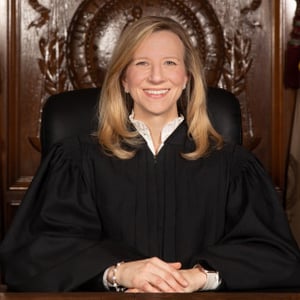
Justice, Supreme Court of Tennessee
Justice Sarah Campbell was confirmed to the Tennessee Supreme Court in 2022. She previously served as an Associate Solicitor General in the Tennessee Attorney General’s Office and as an associate at the law firm of Williams & Connolly LLP in Washington, DC. Justice Campbell earned her law degree from Duke University School of Law, a Master of Public Policy degree from Duke University, and her undergraduate degree from the University of Tennessee, where she received the Torchbearer Award. She served as a law clerk for Justice Samuel A. Alito, Jr. on the United States Supreme Court and Judge William H. Pryor Jr. on the U.S. Court of Appeals for the Eleventh Circuit.
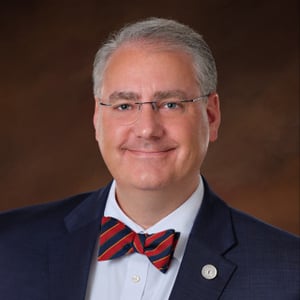
Judge, Court of Criminal Appeals Judge, Tennessee Court of Appeals
Judge Tom Greenholtz serves on the Tennessee Court of Criminal Appeals, Eastern Section, where he hears direct appeals in criminal and post-conviction matters from across the state. Appointed by Governor Bill Lee and confirmed by the General Assembly in 2022, he brings to the appellate bench a record that includes seven years as a judge in Hamilton County Criminal Court and prior private practice with Chambliss, Bahner & Stophel, where his work encompassed municipal and governmental law, complex civil litigation, labor and employment matters, and appellate advocacy. He began his legal career as a law clerk to the Honorable William M. Barker of the Tennessee Supreme Court. He earned his juris doctor from the University of Tennessee, summa cum laude.
Beyond his judicial responsibilities, Judge Greenholtz serves on the Tennessee Supreme Court’s Technology Oversight Committee, and he is an ex-officio member of the supreme court’s Advisory Commission on the Rules of Practice and Procedure. A Fellow of the Chattanooga, Tennessee, and American Bar Foundations, he has long served as an adjunct professor of political science at the University of Tennessee at Chattanooga, teaching courses on constitutional law, civil liberties, and the judicial process. He and his wife, Kate, have two children and have called Chattanooga home since the mid-1980s.
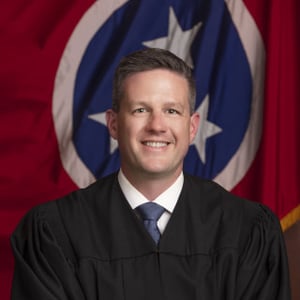
Justice, Tennessee Supreme Court
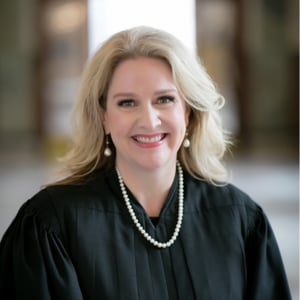
Judge, Tennessee Court of Appeals
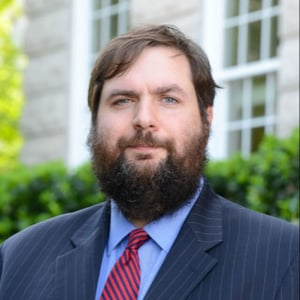
Judge, Tennessee Court of Appeal
Jeffrey Usman is a member of the Tennessee Court of Appeals. He earned his bachelor's degree from Georgetown University, his J.D. from Vanderbilt Law School, and his LL.M. from Harvard Law School. He clerked for Judge W. Harold Albritton of the United States District Court for the Middle District of Alabama and Judge Mary Beck Briscoe of the United States Court of Appeals for the Tenth Circuit. He also previously served as a career clerk for Justice William C. Koch, Jr. of the Tennessee Supreme Court and as an Assistant Attorney General for the State of Tennessee. Most recently, he was professor at the Belmont University College of Law for over a decade. At Belmont, he taught constitutional law related courses and was recognized 5 times with a best professor award.
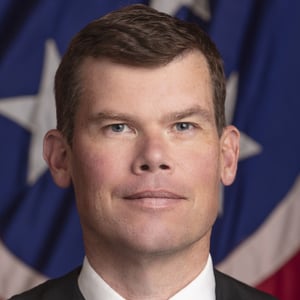
Judge, Tennessee Court of Criminal Appeals
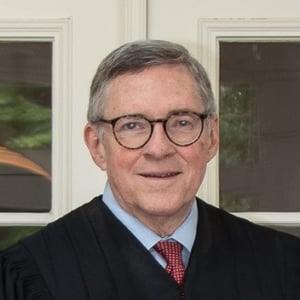
Circuit Court Judge, State of Tennessee, 21st Judicial District
Judge Woodruff has served as the Division I Circuit Judge of Tennessee’s 21st Judicial District since his election in 2014. The 21st is one of Tennessee’s busiest judicial districts and each judge sits as a chancellor, criminal and civil circuit court judge. Prior to redistricting in 2022, the 21st Judicial District had the largest ratio of population per judge of any of Tennessee’s 31 judicial districts. Today, the 21st remains in the top tier of that statistic. He was re-elected in 2022 without opposition.
Before becoming a judge, Woody was a partner in the litigation group at Waller Lansden Dortch & Davis, LLP, where he represented clients in state and federal trial and appellate courtrooms in a nationwide practice focusing on the healthcare and financial services industries. From 2004 through 2007, he was the lead lawyer of the team representing the State of Tennessee in litigation against the Maddox Foundation. This bitter interstate legal battle concluded with a settlement returning $55 million to Tennessee reviving the charitable foundation originally established by Nashville philanthropists Dan and Margaret Maddox.
Woody began his legal career as an officer in the US Army JAG Corps. During his six years of active duty, he tried to verdict more than 100 contested cases involving military justice, administrative law and federal tort claims actions. In 1986, he successfully represented a military intelligence agent charged with financial crimes related to covert activities and stemming from a sweeping criminal investigation into the official actions of high-ranking commissioned officers. His client was the first defendant tried, and only defendant to be acquitted. Following active duty, Woody served as a JAG in the US Army Reserve and retired at the rank of Lieutenant Colonel.
He earned his JD degree in 1981 from the University of Alabama School of Law. In law school, he was the recipient of the Dean M. Leigh Harrison Award, the Hugo Black Award, and was a member of the Order of the Coif, among other honors. He has published scholarly articles in various legal periodicals, as well as newspaper columns and blogs on college football. He has been an adjunct professor at the Belmont University School of Law, and is an active member of the Tenn. John Marshall Chapter, American Inns of Court and the Federalist Society for Law and Public Policy.
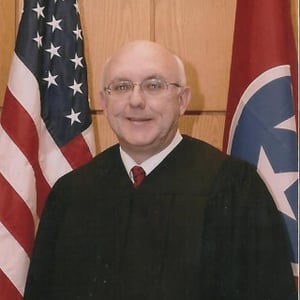
Judge, Tennessee 5th Judicial District, Blount County Circuit Court
David R. Duggan, Blount County circuit judge, is the author of the book, Alcoa: A Century in Words and Pictures. He also co-authored Alcoa and Maryville in Arcadia Publishing’s Images of America series. He is Alcoa city historian, a former Blount County Library board chair, and lay representative, a Sunday School teacher, and church historian at Alcoa First Methodist Church. He serves as lay leader of the MidSouth Annual Conference of the Global Methodist Church (GMC), and he is a member of the GMC’s global Ecumenical Relations Commission. He chaired the City of Alcoa’s 75th Anniversary and Centennial Committees. Named to the Daily Times Alumni Wall of Fame in 2010, he received the Blount Historic Trust Champion Award in 2015. He also received, in 2018, a Community History Award, and in 2022 an Award of Distinction, from the East Tennessee Historical Society. He is president and a director of the Faith and Family Coalition, Inc. He serves as a member of the executive committee of the Knoxville chapter of the Federalist Society. Duggan also serves on the Mr. P Foundation board. Alcoa High School’s lyceum is named in his honor.
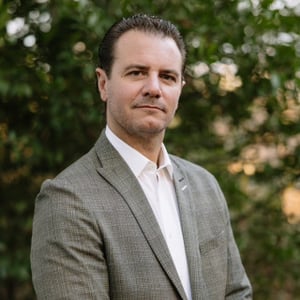
Circuit Court Judge of the Tenth Judicial District, State of Tennessee
Judge Andrew Mark Freiberg is a Circuit Court Judge for criminal matters in the Tenth Judicial District in Tennessee, covering the counties of Bradley, McMinn, Monroe, and Polk. He was elected to the court in 2014 and was reelected to office in 2022.
Judge Freiberg received his undergraduate degree from the University of Wisconsin-Madison in 2001, majoring in Psychology and minoring in Criminal Justice. He received his Juris Doctorate degree from the University of Tennessee College of Law in 2004. From 2004-2011, he was a Prosecutor in the District Attorney’s Office, 10th Judicial District, Tennessee, and from 2011-2014, prior to his election, he was a litigation attorney in a local law firm. He has also served part-time as an Adjunct Professor at Tennessee Wesleyan University.
As a judge, he has presided over criminal jurisdiction matters throughout Southeast Tennessee having adjudicated over eleven thousand felony jury trials, motion hearings and pleas involving the criminally accused. He has served with distinction as the presiding Judge for the Tenth Judicial Recovery Court, which is a judicially monitored, intensive out-patient treatment program for non-violent offenders seeking to overcome addiction and mental illness. He also founded a successful Mental Health Court rehabilitation program for the Tenth Judicial District serving the mentally ill convicted of non-violent offenses.
While attending law school at UT, Judge Freiberg met his wife, Crystal Freiberg, with whom he shares two amazing children, Archer and Berkley Freiberg. He is a member of First Lutheran Church in Cleveland, Tennessee where he has served as both President and Vice-President. He is also a member of the Federalist Society, Heritage Foundation, NRA, National Association of Drug Court Professionals, and Benevolent and Protective Order of the Elks. He is also an avid sports fan and a fanatic of the Green Bay Packers and the Tennessee Vols.
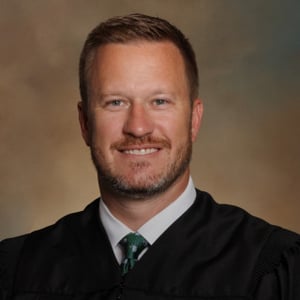
Circuit Court Judge, State of Tennessee
A West Tennessee native, Judge Jimmy Turner graduated from Middle Tennessee State University in 2006 with a Bachelor of Science in Aerospace Administration. He graduated from Nashville School of Law in 2011. As an attorney, his practice focused on criminal defense, domestic relations and personal injury litigation representing both plaintiffs and defendants. He also served as the City Attorney for Eagleville, Tennessee. In 2021, Judge Turner was appointed by Governor Bill Lee as Circuit Court Judge for the 16th Judicial District. He presides over a criminal docket. Judge Turner and his wife Erin reside in Lascassas, Tennessee with their two sons, Hudson and Harrison.
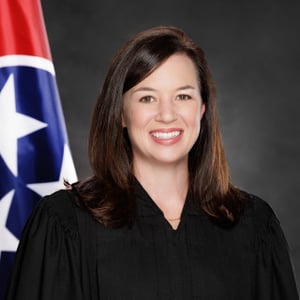
Justice, Tennessee Supreme Court
Tennessee Gov. Bill Haslam appointed Mary L. Wagner of Memphis as Circuit Court Judge, Division VII, for the 30th Judicial District on October 24, 2016. Wagner was elected to this judgeship in August 2018.
“With her extensive background in Shelby County, Mary Wagner is well prepared for a seat on the circuit court in the 30th Judicial District,” Haslam said. “We are fortunate to have someone with her experience, and we are pleased to announce this appointment.”
Prior to her appointment Wagner practiced with the Memphis law firm Rice, Amundsen & Caperton PLLC, where she had a general civil litigation practice. While at the firm, she taught at the Cecil C. Humphreys School of Law at the University of Memphis from 2012-2014 as an adjunct professor, teaching second-year law students advanced skills in legal writing and oral advocacy and first-year students legal writing, research and analysis.
Before joining Rice, Amundsen & Caperton, Wagner practiced with a regional insurance defense firm. She served as a law clerk from 2009-2010 for Judge Steven Stafford of the Tennessee Court of Appeals, law clerk for Judge Robert L. Childers in the Shelby County Circuit Court from 2008-2009 and worked as an extern in 2008 with the U.S. Attorney’s office for the Western District of Tennessee. Wagner was a research assistant in 2007 for Prof. Andrew McClurg during law school.
Wagner received her law degree from the University of Memphis in 2009 graduating magna cum laude, 4th in her class. While in law school, Wagner served as a Notes Editor for the University of Memphis Law Review. She received a bachelor’s degree in 2006 from the University of Colorado, majoring in political science.
Throughout her career, Wagner has been active in the legal community. She is a member of the Tennessee, Mississippi and Memphis Bar Associations. She serves on various committees and board for these associations. In 2018, Wagner was elected as a Fellow of the Memphis Bar Foundation. Also, in 2018, Wagner was selected as one of the Twelve Most Outstanding Women, Honoring Women in the Judicial System by the Memphis Inter-Denominational Fellowship Inc. Wagner is also active in the Tennessee Judicial Conference, where she served as Secretary and currently serves on the Tennessee Pattern Jury Instruction Committee and Legislation Committee. Wagner is also a member of the Tennessee Trial Judges Association. In 2019, Wagner received the Chancellor Charles A. Round Memorial Award for Outstanding Judge of the Year from the Young Lawyers’ Division of the Memphis Bar Association.
Judge Wagner has also been appointed by the Tennessee Supreme Court as special judge for the Tennessee Worker’s Compensation Appeals Panel and as a member of a Three-Judge panel in a constitutional case.
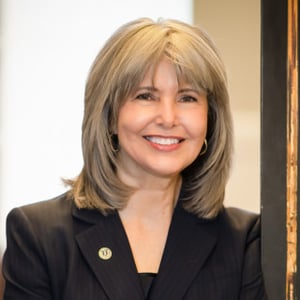
Associate Justice, Tennessee Supreme Court
Sworn in by Governor Bill Haslam in September 2014, Tennessee Supreme Court Justice Holly Kirby is the first graduate of the University of Memphis ever to sit on Tennessee’s highest court. A career jurist, Justice Kirby has authored well over a thousand opinions from appeals all across the state.
Prior to her appointment to the Supreme Court, Justice Kirby served for almost 19 years on the Tennessee Court of Appeals, Tennessee’s intermediate appellate court for civil cases. She represented a gender milestone on the Court of Appeals—when she was appointed in 1995, she became the first woman ever to sit on that Court.
A lifelong Tennessean, Justice Kirby was born in Memphis and graduated from high school in Columbia, Tennessee. As an undergraduate at the University of Memphis, she held a number of student leadership positions and graduated in 1979 with high honors, with a B.S. in mechanical engineering.
In 1982, Justice Kirby graduated from the University of Memphis School of Law with high honors. Upon graduation, she served as a judicial law clerk on the U.S. Court of Appeals for the Sixth Circuit.
After her clerkship, Justice Kirby joined the Memphis law firm of Burch, Porter & Johnson, where she was active in politics and community service. When she was selected as partner in 1990, she became the firm’s first female partner.
From the time of her appointment to the Court of Appeals in 1995 to the present, Justice Kirby has won 5 statewide elections, in 1996, 1998, 2006, 2014, and 2016.
Justice Kirby was chosen as Outstanding Young Alumna for the University of Memphis in 1996, Outstanding Alumna for the University of Memphis College of Engineering in 2002, and Special Distinguished Alumna for the School of Law in 2016. She is married to Memphis businessman Russell Ingram and has two grown children. The family belongs to Idlewild Presbyterian Church.
Justice, Tennessee Supreme Court
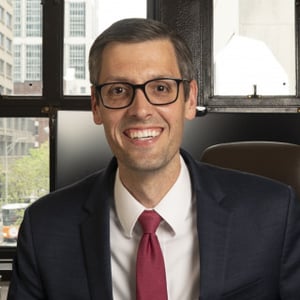
Solicitor General, Tennessee Attorney General's Office
Matt Rice serves as the Solicitor General of Tennessee. Before joining the State, Matt worked in private practice at Williams & Connolly LLP. He clerked for Justice Clarence Thomas on the United States Supreme Court as well as Judge Sandra Ikuta on the United States Court of Appeals for the Ninth Circuit. Before his legal career, Matt played professional baseball in the Tampa Bay Rays organization.
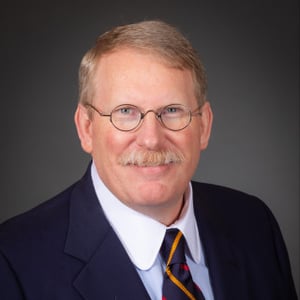
Co-Founder and President, Defense of Freedom Institute
Bob is a co-founder and President of DFI. He previously served as Senior Counselor to the Secretary of Education from 2017 through 2020 and Deputy General Counsel of the U.S. Department of Education from 2005 until 2009.
During his most recent tenure at the Department, Bob served on the Secretary’s Leadership Team as a strategic and legal adviser on higher education, civil rights, and congressional oversight matters. As the Department’s Regulatory Reform Officer, he also supervised the implementation of the Secretary’s regulatory agenda and was an architect of the Secretary’s reforms concerning Title IX and the Higher Education Act. As Deputy General Counsel, Bob advised on a wide variety of regulatory, legislative, and oversight matters.
Prior to joining the Department in 2017, Bob was vice president for regulatory compliance matters for several postsecondary institutions and practiced education and employment law in Washington, D.C. Before coming to the Department in 2005, he practiced law in New Orleans, litigating commercial, employment, and bankruptcy cases in Louisiana, Texas, and Mississippi.
Bob earned his A.B. in History from Georgetown University, studied British government and international politics at the London School of Economics and Political Science, and received his law degree from Tulane University Law School. His articles have been published by National Review, Real Clear Education, Washington Examiner, and other media outlets. Fox News has featured his work.
Bob is a member of the District of Columbia and Louisiana Bars and the Federalist Society for Law and Public Policy Studies.

Principal, Helwink Legal Group, PLLC
Jonathan served as an attorney at the U.S. Department of Education during the first Trump administration and is currently principal at Helwink Legal Group, PLLC.
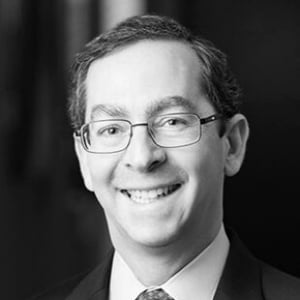
Visiting Lecturer in Formal Organizations, Trinity College

Vice President & Senior Legal Fellow, Defending Education
Sarah Parshall Perry is vice president and senior legal fellow at Defending Education.
Before coming to Defending Education, Sarah served as a Senior Legal Fellow for the Edwin Meese III Center for Legal and Judicial Studies, part of the Institute for Constitutional Government at Heritage, where her work centered on civil rights and the proper role of the courts.
Sarah joined Heritage after serving as Senior Counsel to the Assistant Secretary for Civil Rights at the U.S. Department of Education where she focused on policy reform, technical guidance, and the Office for Civil Rights’ (OCR) annual report to Congress. While at OCR, she was appointed by the Acting Assistant Secretary to co-chair the Employment Engagement, Diversity, & Inclusion Council and, in coordination with the Deputy Assistant Secretary for Enforcement oversee the hiring of dozens of attorneys for OCR’s 12 regional offices nationwide. Prior to her tenure at the Department of Education, she spent six years at the Family Research Council in Washington, D.C. where she was Senior Fellow for Education Reform and later, became the regular substitute host for the “Washington Watch” radio show. Her work at the Family Research Council also included the building and oversight of multiple policy coalitions geared toward the fight against antisemitism in academia, curbing tech censorship, and protecting religious liberty.
Before joining FRC, Sarah was in-house counsel and director of development for a Baltimore advertising agency, providing management of all new business transactions from pitch to contract execution for the multi-million-dollar enterprise. She began her practice at the litigation firm of Simms Showers, LLP where her work included Title VII employment discrimination, maritime/admiralty, and False Claims Act (“Qui Tam”) law. Sarah has a law degree from the University of Virginia School of Law, where she was an editor of the Virginia Journal of International Law, a recipient of the American Jurisprudence award, a Phi Delta Phi honor society member, and a student practitioner in the appellate litigation clinic where she argued before the 4th Circuit Court of Appeals. She holds a B.S. in Journalism with honors from Liberty University.
Her commentary and analysis have appeared in media outlets across the country, including the AP, BBC, Fox News, NPR, The Hill, Washington Post, Washington Times, and the New York Times. She is the mother of three children, and the author of just as many books on the trials and triumphs of parenting children on the autism spectrum. Sarah is a member of the Kirkpatrick Society at the American Enterprise Institute, and makes her home north of Baltimore, Maryland.

Deputy Assistant to the President for Economic Policy, The White House
Ryan Baasch serves as the Deputy Director of President Trump's National Economic Council (NEC), and as Deputy Assistant to the President on Economic Policy, where he focuses on cutting-edge technology issues at the frontier of AI regulation, space commercialization, and telecommunications networks. Before joining NEC, Ryan occupied multiple positions in the Texas Attorney General's office where he supervised all of the office's offensive civil litigation and maintained a heavy appellate caseload touching First Amendment and technology issues. Ryan began his career as a law clerk to Judge Karen LeCraft Henderson and spent five years at a large law firm in Washington D.C. and New York.
Justice, Supreme Court of Tennessee
Justice Sarah Campbell was confirmed to the Tennessee Supreme Court in 2022. She previously served as an Associate Solicitor General in the Tennessee Attorney General’s Office and as an associate at the law firm of Williams & Connolly LLP in Washington, DC. Justice Campbell earned her law degree from Duke University School of Law, a Master of Public Policy degree from Duke University, and her undergraduate degree from the University of Tennessee, where she received the Torchbearer Award. She served as a law clerk for Justice Samuel A. Alito, Jr. on the United States Supreme Court and Judge William H. Pryor Jr. on the U.S. Court of Appeals for the Eleventh Circuit.

Deputy General Counsel for Administrative Law, Federal Communications Commission (FCC)
Michael Carlson is Senior Corporate Counsel at Amazon’s Project Kuiper, where he leads a legal team advising on regulatory issues and strategic initiatives related to satellite communications and broadband deployment. Prior to joining Amazon, he served as Deputy General Counsel at the Federal Communications Commission, overseeing the Office of General Counsel’s Administrative Law Division.
Mr. Carlson has also served as an attorney in the U.S. intelligence community, advising on legal and policy issues related to national security, and as a corporate strategist at Microsoft, where he focused on emerging technologies and global regulatory trends. He teaches Communications Law at George Mason University’s Antonin Scalia Law School.
He earned his J.D. from the University of Pennsylvania Law School, and clerked for Judge Deborah Cook on the U.S. Court of Appeals for the Sixth Circuit. He lives in Arlington, VA with his wife and four children.
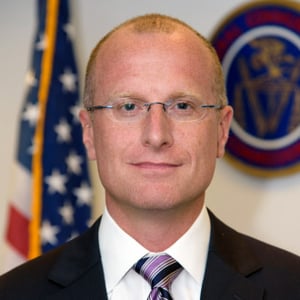
Chairman, Federal Communications Commission
Brendan Carr is the Chairman of the Federal Communications Commission. He previously served as the senior Republican Commissioner and as the FCC’s General Counsel. Nominated by both President Trump and President Biden, Carr has been confirmed unanimously by the Senate three times.
Described by Axios as “the FCC’s 5G crusader,” Carr has led the FCC’s work to modernize its infrastructure rules and accelerate the buildout of high-speed networks. His reforms cut billions of dollars in red tape, enabled the private sector to construct high-speed networks in communities across the country, and extended America’s global leadership in 5G.
Chairman Carr is also focused on expanding America’s skilled workforce—the tower climbers and construction crews needed to build next-gen networks. His jobs initiative promotes community colleges and apprenticeships as a pipeline for good-paying 5G jobs. He is recognizing America’s talented tower crews through a series of “5G Ready” Hard Hat presentations.
Chairman Carr leads a groundbreaking telehealth initiative at the FCC. The Connected Care Pilot Program supports the delivery of high-quality care to low-income Americans and veterans.
Chairman Carr’s time outside of Washington helps inform his approach to the job. He regularly hits the road to hear directly from community members and learn how changes in federal policies could help improve their lives.
Chairman Carr brings nearly 20 years of private and public sector experience in communications and tech policy to his position. Before joining the FCC as a staffer back in 2012, he worked as an attorney at Wiley Rein LLP in the firm’s appellate, litigation, and telecom practices. Previously, Chairman Carr clerked on the U.S. Court of Appeals for the Fourth Circuit for Judge Dennis Shedd. After attending Georgetown University for his undergrad, Chairman Carr earned his J.D. magna cum laude from the Catholic University of America’s Columbus School of Law where he served as an editor of the Catholic University Law Review.
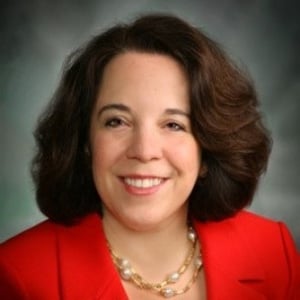
Vice President, Technology Policy & Regulation, Lockheed Martin Government Affairs
Jennifer A. Warren is currently Vice President, Global Regulatory Affairs & Public Policy for Lockheed Martin Corporation. In this capacity, she is responsible for leading the corporate team’s engagement and strategy across the Executive Branch, Independent Agencies and Intergovernmental Bodies across a broad business, regulatory and public policy portfolio.
Her responsibilities also include leading corporate relationships with Intergovernmental Bodies, such as ITU, CITEL, ICAO, UN Office of Outer Space Affairs, and major trade associations; Ms. Warren is the former Chair (twice) of the Satellite Industry Association (SIA), and currently serves on the Boards of the SIA, US ITU Association, and the Professional Services Corporation, and as the co-chair of the U.S. Chamber of Commerce’s Telecommunications and E-Commerce Committee. She also participates on the ITI Space Enterprise Council and the US Chamber Space Council.
Ms. Warren has broad private sector engagement across government, having been a member of the Department of Commerce Spectrum Management Advisory Committee (CSMAC), FAA Commercial Space Transportation Advisory Committee, Department of State International Telecommunications Advisory Committee (now International Digital Economy & Telecommunications Advisory Committee), and NASA Advisory Committee/Regulatory Policy Committee, as well as served on the FCC’s WRC Advisory Committee.
From 1991-1996, Ms. Warren held several senior roles in the U.S. Federal Communications Commission, including as Assistant Chief in the Wireless Telecommunications Bureau and Senior Legal Advisor in the International Bureau. In 1991, she graduated from Georgetown University Law Center (J.D.), where she subsequently served as an Adjunct Professor in International Communications Regulation and Policy for close to 20 years. She is also a graduate of Georgetown University (B.S. in Languages), and a member of the Illinois State and D.C. Bars, the Federal Communications Bar Association, and American Bar Association. Her civic activities include the Boards of the George Washington Legacy Foundation and Gadsby Tavern Museum Society in Old Town Alexandria, and the Foundation of the National Archives & Records Administration.
Ms. Warren lives in Old Town Alexandria, Virginia, with her husband Ed, and their puppy - Madison.

Dinner and Keynote
2026 Tennessee Chapters Conference
Nashville, TNPanel 2: How Appealing: Our Constitutions as Seen from the Second-Highest Bench
2026 Tennessee Chapters Conference
Nashville, TNPanel 1: Matter of First Impression: The Constitution on the Front Lines
2026 Tennessee Chapters Conference
Nashville, TNAccreditation of Higher Education: A Primer
Robert S. Eitel, Jonathan Helwink, Adam Kissel, Sarah Parshall Perry
Unlike most nations, the United States eschews centralized control over its system of higher...
A Conversation with Justice Kirby
Nashville Lawyer Chapter
Nashville, TNAmerica 250: Reflections on American Criminal Law
Knoxville Lawyer Chapter
Knoxville, TNPlenary Session 4: Federalism with the Feds– Unique Partnerships Between State Executives and Federal Agencies
Featuring: Mr. Louis J. Capozzi III, Solicitor General, Missouri Attorney General's Office Ms. Madeline Clark, Principal...
Dinner Discussion: Branches, Boundaries, and the Bench– A Judicious Conversation
Featuring: Hon. John Bush, U.S. Court of Appeals, Sixth Circuit Hon. John Nielsen, Supreme Court of...
TN Supreme Court Review
Nashville Lawyer Chapter
Nashville, TNThe FCC and the U.S. Space Agenda
Ryan Baasch, Sarah Keeton Campbell, Michael Carlson, Brendan Carr, Jeff Schwarz, Jennifer Warren
America’s technological leadership faces growing challenges from international rivals, especially from China, in critical areas...