
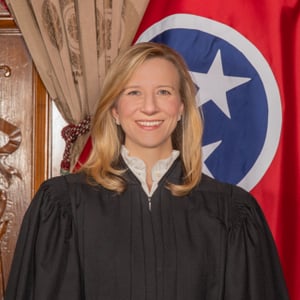
Justice, Supreme Court of Tennessee
Justice Sarah Campbell was confirmed to the Tennessee Supreme Court in 2022. She previously served as an Associate Solicitor General in the Tennessee Attorney General’s Office and as an associate at the law firm of Williams & Connolly LLP in Washington, DC. Justice Campbell earned her law degree from Duke University School of Law, a Master of Public Policy degree from Duke University, and her undergraduate degree from the University of Tennessee, where she received the Torchbearer Award. She served as a law clerk for Justice Samuel A. Alito, Jr. on the United States Supreme Court and Judge William H. Pryor Jr. on the U.S. Court of Appeals for the Eleventh Circuit.
Judge, United States District Court, Northern District of Texas
Matthew J. Kacsmaryk serves as United States District Judge for the Northern District of Texas.
He previously served as (1) an Associate in the Dallas office of Baker Botts LLP, (2) an Assistant United States Attorney, and (3) Deputy General Counsel to FLI.
He is an Honors graduate of the University of Texas Law School.
In 2013, he earned the Attorney General’s Award for Excellence in Furthering the Interest of U.S. National Security.
In 2026, he was named Jurist of the Year by the Texas Review of Law & Politics, the conservative law review at the University of Texas.

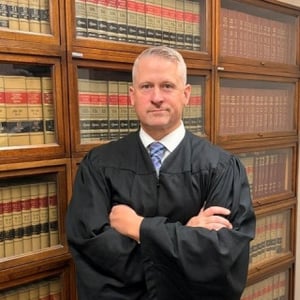
Chief Judge, United States Court of Appeals, Eleventh Circuit
William H. Pryor Jr. serves as Chief Circuit Judge on the United States Court of Appeals for the Eleventh Circuit.
In 2013–18, he served on the United States Sentencing Commission and, in 2017–18, served as Acting Chair.
He has taught as a visiting professor at the University of Alabama School of Law and previously taught as an adjunct professor at the Cumberland School of Law of Samford University.
He served as the 45th Attorney General of Alabama from 1997 to 2004. When he took office, he was the youngest attorney general in the nation. In his reelection, he received the highest percentage of votes of any statewide candidate.
He graduated magna cum laude from Tulane Law School where he finished first in the common-law curriculum and was editor in chief of the Tulane Law Review. He then served as a law clerk for Judge John Minor Wisdom of the U.S. Court of Appeals for the Fifth Circuit.
He is a member of The American Law Institute and an Adviser for the RESTATEMENT OF THE LAW THIRD, CONFLICT OF LAWS. He is a coauthor with Bryan Garner, Justices Gorsuch and Kavanaugh, and several other judges of a treatise, THE LAW OF JUDICIAL PRECEDENT. He has published in the Yale Law Journal, Columbia Law Review, Virginia Law Review, Notre Dame Law Review, Harvard Journal of Law & Public Policy, Yale Law & Policy Review, George Mason Law Review, Florida Law Review, Alabama Law Review, Case Western Reserve Law Review, and Tulane Law Review. He has published op-eds in The Wall Street Journal, The New York Times, National Review, and USA Today. He has debated at National Lawyers’ Conventions of the Federalist Society (including on National Public Radio) and at the Oxford Union in the United Kingdom. And he is listed among several “widely admired judicial writers” in Bryan Garner’s The Redbook: A Manual on Legal Style.
He is a member of the Tulane Law School Hall of Fame and has received the Defender of the Constitution Award from the Heritage Foundation, the Jurist of the Year Award from the Texas Review of Law & Politics, and the St. Thomas More Award from the St. Thomas More Society of Atlanta. Judge Pryor is also a proud member of the National Society of the Sons of the American Revolution.
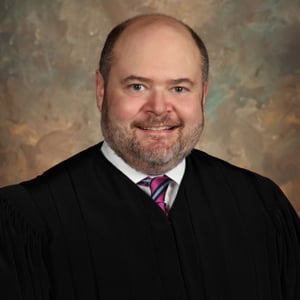
Judge, United States Court of Appeals, Eighth Circuit
David Stras became a judge on the United States Court of Appeals for the Eighth Circuit on January 31, 2018. Before serving on the Eighth Circuit, Judge Stras was an Associate Justice of the Minnesota Supreme Court, a position he occupied from July 1, 2010 until his appointment to the Eighth Circuit.
Prior to becoming a judge, Stras was a member of the faculty of the University of Minnesota Law School from 2004 through 2010. He taught and wrote in the areas of federal courts and jurisdiction, constitutional law, criminal law, and law and politics.
Judge Stras received his Bachelor of Arts degree, with highest distinction, in 1995 and his Master of Business Administration in 1999, both from the University of Kansas. He also received his law degree from the University of Kansas School of Law in 1999, where he served as Editor-in-Chief of the Criminal Procedure Edition of the Kansas Law Review.
Following law school, Stras clerked for The Honorable Melvin Brunetti of the United States Court of Appeals for the Ninth Circuit and then for The Honorable J. Michael Luttig of the United States Court of Appeals for the Fourth Circuit.
From 2001 to 2002, he practiced white-collar criminal and appellate litigation with the Washington, D.C., office of Sidley Austin Brown & Wood. Following his year in practice, he clerked for The Honorable Clarence Thomas of the Supreme Court of the United States.
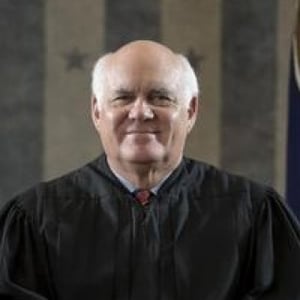
District Judge W. Keith Watkins was appointed by President George W.
Bush to a vacancy in the Middle District of Alabama on December 27,
2005. Judge Watkins was elevated to Chief District Judge on May 18, 2011,
and he served as Chief Judge until January 31, 2019. He assumed senior
status in 2019 and is still active with the court. A native of Troy, Alabama,
Judge Watkins practiced law in Tuscaloosa for two years and in Troy for 28
years, with a broad general practice. He is a graduate of Auburn University
and The University of Alabama School of Law. Among other positions in the
bar, Judge Watkins is a Fellow in the Alabama Law Foundation and served
as the Bar Commissioner for the Twelfth Judicial Circuit and as a member
of the Alabama State Bar Task Force for Alternative Dispute Resolution. He
served as the mediator in over 200 civil cases in state and federal courts in
Alabama and Georgia prior to taking the bench. Judge Watkins serves on
the board of the Rosa Parks Museum and is chair of the board of The
American Village. He is a former board member of the Federal Judges
Association and The Frank M. Johnson, Jr. Institute. He also served on the
Federal-State Jurisdiction Committee, a national committee of the
Administrative Office of Courts, and on three panels of the Eleventh Circuit
Court of Appeals. Judge Watkins and his wife Teresa have two grown
children and seven grandchildren. Known for his various and sometimes
cryptic sayings (shared liberally with his children, grandchildren, and law
clerks), two favorites are: “Live your life so that opportunities seek you”;
and “Don’t leave this earth without anyone knowing you were ever here.”
Education
Auburn University, B.S., 1973
The University of Alabama School of Law, J.D., 1976
Justice, Supreme Court of Tennessee
Justice Sarah Campbell was confirmed to the Tennessee Supreme Court in 2022. She previously served as an Associate Solicitor General in the Tennessee Attorney General’s Office and as an associate at the law firm of Williams & Connolly LLP in Washington, DC. Justice Campbell earned her law degree from Duke University School of Law, a Master of Public Policy degree from Duke University, and her undergraduate degree from the University of Tennessee, where she received the Torchbearer Award. She served as a law clerk for Justice Samuel A. Alito, Jr. on the United States Supreme Court and Judge William H. Pryor Jr. on the U.S. Court of Appeals for the Eleventh Circuit.
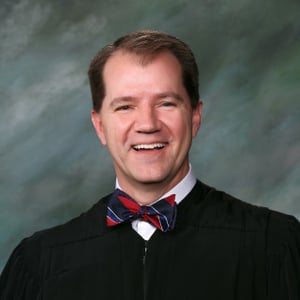
Judge, U.S. Court of Appeals, Fifth Circuit
Don Willett serves on the United States Court of Appeals for the Fifth Circuit.
Before joining the federal bench, Judge Willett served 13 years on the Supreme Court
of Texas. His career spans decades of public service, including roles as legal counsel to
a Texas Attorney General, a Texas Governor, a U.S. Attorney General, and the
President of the United States.
Raised by a heroic widowed mom in a doublewide trailer in a town of 32, Judge
Willett is his family’s first college graduate. He earned a triple-major B.B.A. from Baylor
University—where he serves on the Board of Regents—and three degrees from Duke
University—where he serves on the Board of Visitors: a J.D. with honors, an A.M. in
political science, and an LL.M. in judicial studies. After law school, he clerked on the
Fifth Circuit and practiced at Haynes and Boone before entering public service.
Judge Willett publishes widely in both leading law reviews and national media, including
The Yale Law Journal, The University of Pennsylvania Law Review, and The Wall Street
Journal. The longtime editor-in-chief of Judicature—the Scholarly Journal for Judges, he
holds academic appointments at various law schools and has received more than a
dozen Green Bag honors for “exemplary legal writing.” He was named Distinguished
Jurist of the Year by the Texas Review of Law & Politics, and he is a member of the
American Law Institute and a Life Fellow of the American, Texas, and Austin Bar
Foundations.
A onetime bull rider and professional drummer, Judge Willett was named “Tweeter
Laureate of Texas” in 2015. He is the namesake of Don R. Willett Elementary
School—home of mighty Willett Wranglers—located just a mile from where he grew up.
He and his radiant wife, Tiffany have three children—Jacob, Shane-David, and
Geneviève—plus the family pup, Amicus.
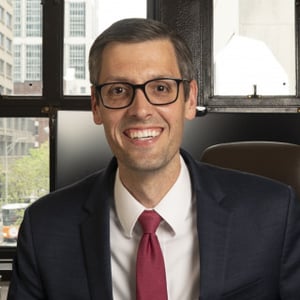
Solicitor General, Tennessee Attorney General's Office
Matt Rice serves as the Solicitor General of Tennessee. Before joining the State, Matt worked in private practice at Williams & Connolly LLP. He clerked for Justice Clarence Thomas on the United States Supreme Court as well as Judge Sandra Ikuta on the United States Court of Appeals for the Ninth Circuit. Before his legal career, Matt played professional baseball in the Tampa Bay Rays organization.
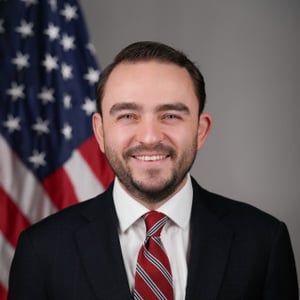
Associate Counsel to the President, White House Counsel's Office
Samuel Adkisson serves as Associate Counsel to the President in the White House Counsel’s Office.
Mr. Adkisson previously practiced law at Cooper & Kirk PLLC, where he focused on high-stakes civil-rights, political, and constitutional disputes. His matters included class actions challenging the FAA’s race-based air traffic controller hiring practices and the University of Oklahoma’s financial aid policies; appellate work on behalf of X Corp.; and the successful defense of Florida’s actions during a 2024 abortion referendum. Before joining Cooper & Kirk, he worked on the landmark case challenging Harvard’s affirmative action policies and helped launch a successful challenge to the State Bar of Texas’s membership policies.
Mr. Adkisson clerked for Chief Justice of the United States John G. Roberts, Jr., Judge Amul R. Thapar of the U.S. Court of Appeals for the Sixth Circuit, and Judge Gregory G. Katsas of the U.S. Court of Appeals for the D.C. Circuit. During Justice Kavanaugh’s confirmation hearings, he worked for Chairman of the Senate Judiciary Committee Charles E. Grassley.
Mr. Adkisson received his J.D. from Yale Law School, where he was President of the Yale Law School Federalist Society and an editor of the Yale Law Journal. He graduated summa cum laude from Vanderbilt University. Prior to joining the Trump Administration in January 2025, he lived on Signal Mountain, TN, with his wife and three children.
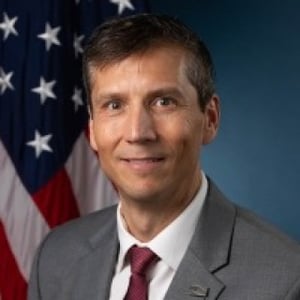
U.S. Attorney, Middle District of Tennessee, U.S. Department of Justice
Braden Boucek was sworn in on December 24, 2025, as the United States Attorney for the Middle District of Tennessee. Prior to becoming United States Attorney, Mr. Boucek served as the senior vice president of litigation at the Southeastern Legal Foundation having previously served as the vice president of legal affairs at the Beacon Center. Mr. Boucek has extensive experience as a prosecutor, starting his career at the Tennessee Attorney General’s Office before serving for two years as an Assistant District Attorney General in Williamson County. He was a federal prosecutor for ten years, first serving as an Assistant United States Attorney in the Western District of Tennessee from 2005 to 2011. From 2011 to 2015, Mr. Boucek was an Assistant United States Attorney in the Middle District of Tennessee, the district he now leads as the United States Attorney.
Justice, Supreme Court of Tennessee
Justice Sarah Campbell was confirmed to the Tennessee Supreme Court in 2022. She previously served as an Associate Solicitor General in the Tennessee Attorney General’s Office and as an associate at the law firm of Williams & Connolly LLP in Washington, DC. Justice Campbell earned her law degree from Duke University School of Law, a Master of Public Policy degree from Duke University, and her undergraduate degree from the University of Tennessee, where she received the Torchbearer Award. She served as a law clerk for Justice Samuel A. Alito, Jr. on the United States Supreme Court and Judge William H. Pryor Jr. on the U.S. Court of Appeals for the Eleventh Circuit.

Member, Sherrard Roe Voigt & Harbison, PLC
Bill Harbison works primarily in the areas of corporate law and trusts and estates.
He also handles litigation in those same practice categories.
Mr. Harbison graduated cum laude from Harvard Law School and received his bachelor’s degree with highest honors in English from the University of
North Carolina at Chapel Hill. He is a member of Phi Beta Kappa.
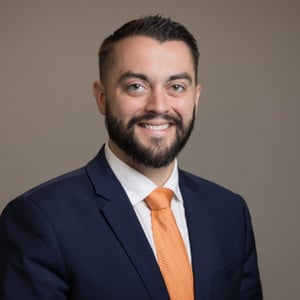
Partner, Consovoy McCarthy PLLC
Mr. Norris helps clients win important questions of federal law in trial and appellate courts across the country. He has represented prominent nonprofits, many States, the Republican Party, and the former President of the United States. He has argued in eight of the twelve federal circuits and twice at the U.S. Supreme Court, including the landmark case Students for Fair Admissions v. Harvard.
Mr. Norris is barred in Tennessee and Virginia, and is an elected member of the American Law Institute. Mr. Norris lives with his family in Knoxville, Tennessee.

Vice President of Legal Affairs, Beacon Center of Tennessee
Wen Fa is the Vice President of Legal Affairs at the Beacon Center of Tennessee. He also serves on Beacon’s senior leadership team. Wen leads Beacon’s legal department in its efforts to protect the constitutional rights of property owners, entrepreneurs, and other Americans in courts across the United States. Having immigrated to America from Beijing, Wen believes that property rights, economic liberty, and equality under the law are essential to a free society and strives to advance those principles through his work.
Before joining Beacon, Wen was a senior attorney with Pacific Legal Foundation, where he litigated numerous cases involving equality under the law, free speech, economic liberty, and property rights. Wen litigated two Supreme Court cases: Minnesota Voters Alliance v. Mansky, which vindicated the free speech rights of voters, and Cedar Point Nursery v. Hassid, which secured the property rights of agricultural businesses. Wen has also secured important victories for farmers standing up against a racially discriminatory federal farm loan forgiveness program and small business owners who fought back against racial preferences in small business grants.
In addition to litigation, Wen promotes liberty through speeches, debates, and op-eds. Wen testified before Congress in 2021 and has published numerous op-eds in newspapers such as the Wall Street Journal, the Hill, and San Francisco Chronicle. He has spoken about his work in podcasts, on television, and in speeches to students at Georgetown, Duke, and law schools around the country.
Wen graduated with a bachelor’s degree in finance from the University of Texas-Dallas, a master’s degree in political theory from the London School of Economics, where he studied under libertarian scholar Chandran Kukathas, and a law degree from the University of Michigan. Wen is licensed to practice law in California, Texas, and several federal courts, including the Supreme Court of the United States.

Milton R. Underwood Chair in Free Enterprise, Vanderbilt University Law School
Brian Fitzpatrick is the Milton R. Underwood Chair in Free Enterprise and Professor of Law at Vanderbilt Law School, where his research focuses on class action litigation, federal courts, judicial selection, and constitutional law. He is best known for his empirical studies of class action settlements as well as his book The Conservative Case for Class Actions (University of Chicago Press, 2019). Professor Fitzpatrick joined Vanderbilt's law faculty in 2007 after serving as the John M. Olin Fellow at New York University School of Law. He graduated first in his class from Harvard Law School and went on to clerk for Judge Diarmuid O'Scannlain on the U.S. Court of Appeals for the Ninth Circuit and Justice Antonin Scalia on the U.S. Supreme Court. After his clerkships, Professor Fitzpatrick practiced commercial and appellate litigation for several years at Sidley Austin in Washington, D.C., and served as Special Counsel for Supreme Court Nominations to U.S. Senator John Cornyn. Before earning his law degree, Fitzpatrick graduated summa cum laude with a bachelor's of science in chemical engineering from the University of Notre Dame. He has received the Hall-Hartman Outstanding Professor Award, which recognizes excellence in classroom teaching, for his Civil Procedure and Federal Courts courses.
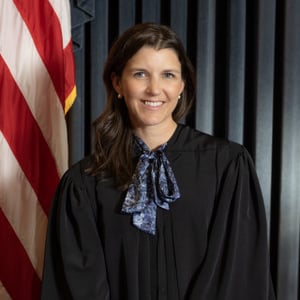
Judge, United States Court of Appeals, Sixth Circuit
The Honorable Whitney Hermandorfer is a judge on the United States Court of Appeals for the Sixth Circuit. She was nominated to the court by President Donald Trump (R) on May 12, 2025, and confirmed by the United States Senate on July 14, 2025.
Prior to her appointment, she worked in the Office of the Tennessee Attorney General as Director of the Strategic Litigation Unit. In that role, Whitney focused on leading constitutional, statutory, and administrative-law challenges to federal agency action, as well as on defending the State in complex matters at the trial and appellate level.
Whitney previously worked at Williams & Connolly LLP in Washington, DC, where she focused on appellate and administrative-law litigation. Whitney clerked for Justice Samuel Alito in the OT 2018 Supreme Court term and for Justice Amy Coney Barrett during her inaugural OT 2020 term. Prior to that, Whitney clerked for then-Judge Kavanaugh on the D.C. Circuit, and Judge Richard Leon on the U.S. District Court for D.C. Whitney is a graduate of Princeton University and George Washington University Law School.

Associate, Sims Funk
George Scoville is a commercial litigator in Nashville. A second-career lawyer, George previously worked as a public policy analyst and communications strategist, serving think tanks like the Cato Institute, political candidates and committees, industry groups, and private companies. In addition to his regular law practice, he is a pro bono Adjunct Fellow at the Institute for Free Speech in Washington, which is the nation's largest organization dedicated solely to protecting political speech rights, and the executive director and treasurer of the Tennesseans for Sensible Election Laws political action committee, which promotes common-sense state law reforms designed to reduce unreasonable governmental interference in Tennessee's political process. George also teaches American government and constitutional law at Belmont University in Nashville.

Director and Associate General Counsel, Tennessee Valley Authority
David Ayliffe serves in TVA’s Office of the General Counsel where he is responsible for directing litigation involving TVA and leading the team that represents TVA in all non-employment litigation in federal trial and appellate courts across the TVA region. An experienced litigator, David has represented TVA as lead counsel in cases at both the trial and appellate level and also has represented TVA in cases before the United States Supreme Court. During his twenty years at TVA, David’s work has extended beyond litigation to include experience with a broad range of issues of legal and strategic significance to TVA.
Prior to joining TVA, David served as a non-commissioned officer in the United States Marine Corps and was honorably discharged in 2003. David earned a Bachelor of Arts in History and German from the University of Tennessee, Knoxville, and his law degree from the University of Memphis.
David lives in Knoxville with his wife, Ying, and their two children. Outside of work, he is involved in various professional and community organizations. David is a member of the Federalist Society, serving on the Steering Committee for the Knoxville Lawyers Chapter, and he is a member of the Knoxville Symphony Orchestra Board. He is a graduate of Leadership Knoxville’s class of 2019. David also serves
as an Elder at Eastminster Presbyterian Church in Knoxville.
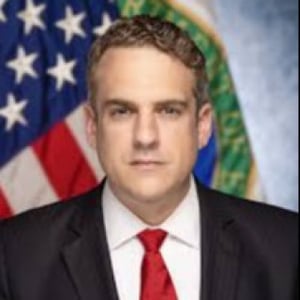
Deputy Secretary of Energy
James P. Danly was sworn in as Deputy Secretary on June 9, 2025.
Before arriving at the Department, Deputy Secretary Danly was a partner and the Energy Regulatory Group leader at Skadden in Washington, D.C. This followed his service at the Federal Energy Regulatory Commission, first as the Commission’s general counsel then as the commissioner and chairman.
Deputy Secretary Danly was an officer in the United States Army. He served two tours in Iraq, receiving a Bronze Star and a Purple Heart.
A graduate of Yale University, Deputy Secretary Danly earned his J.D. from Vanderbilt University Law School. He clerked for Judge Danny J. Boggs of the Sixth Circuit.
Deputy Chief, General Crimes Unit and Acting Appellate Chief, Middle District of Tennessee, Department of Justice
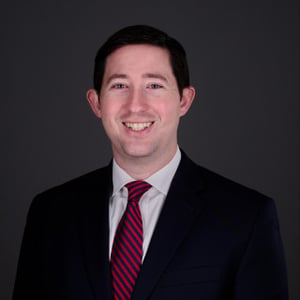
Partner, Cooper & Kirk, PLLC
Clark L. Hildabrand focuses his practice at Cooper & Kirk, PLLC, on constitutional and administrative law and complex commercial litigation. Mr. Hildabrand has briefed and argued cases in both state and federal appellate courts. He clerked for Judge Jeffrey S. Sutton of the U.S. Court of Appeals for the Sixth Circuit and then practiced in the Washington, D.C. office of Sullivan & Cromwell, LLP. Subsequently, he served in the Tennessee Attorney General’s Office, first as Assistant Solicitor General and later as Deputy Chief of Staff & Senior Counsel.
Mr. Hildabrand graduated from Yale Law School and Washington & Lee University, summa cum laude. During college, he studied a year at Worcester College, University of Oxford. At Yale Law School, Mr. Hildabrand was a finalist in the Morris Tyler Moot Court of Appeals, earning the Benjamin N. Cardozo Prize. He also served as an Articles Editor on the Yale Law Journal. Mr. Hildabrand is admitted to the bars of the State of Tennessee and the District of Columbia.
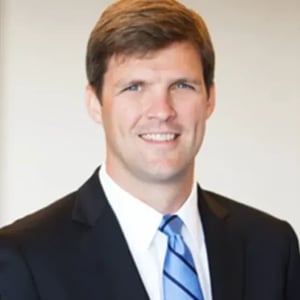
Judge, United States District Court for the Western District of Kentucky
Prior to joining the bench, Judge Beaton was a Partner at Squire Patton Boggs LLP, where he co-chaired the firm’s Appellate & Supreme Court practice group. Judge Beaton’s represented clients engaged in complex commercial litigation in Federal and State courts, and before administrative agencies. Judge Beaton also served as an adjunct professor at the University of Louisville Brandeis School of Law, where he taught constitutional interpretation. Before joining Squire Patton Boggs, Judge Beaton practiced in the Washington, D.C. office of Sidley Austin, LLP, and also served as a legal fellow with the International Justice Mission in Kampala, Uganda. Upon graduation from law school, Judge Beaton served as a law clerk to Justice Ruth Bader Ginsburg of the United States Supreme Court, and to Judge A. Raymond Randolph of the United States Court of Appeals for the D.C. Circuit. Judge Beaton earned his B.A., summa cum laude, from Centre College, and his J.D. from Columbia Law School, where he served as an Articles Editor on the Columbia Law Review.
Justice, Supreme Court of Tennessee
Justice Sarah Campbell was confirmed to the Tennessee Supreme Court in 2022. She previously served as an Associate Solicitor General in the Tennessee Attorney General’s Office and as an associate at the law firm of Williams & Connolly LLP in Washington, DC. Justice Campbell earned her law degree from Duke University School of Law, a Master of Public Policy degree from Duke University, and her undergraduate degree from the University of Tennessee, where she received the Torchbearer Award. She served as a law clerk for Justice Samuel A. Alito, Jr. on the United States Supreme Court and Judge William H. Pryor Jr. on the U.S. Court of Appeals for the Eleventh Circuit.
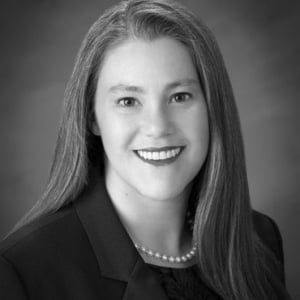
Judge, Arizona Court of Appeals, Division One
The Honorable Jennifer M. Perkins began service on the Arizona Court of Appeals, Division One, on October 30, 2017. At the time of her appointment by Governor Douglas Ducey, Judge Perkins was Assistant Solicitor General for the State of Arizona.
Judge Perkins was born in Portales, New Mexico, and primarily raised in Albuquerque. She attended the prestigious Albuquerque Academy from 1988-1995, before moving to Washington D.C. to attend the Elliott School of International Affairs at the George Washington University as a National Merit Scholar. Therafter, she relocated again to Dallas, Texas, and earned her juris doctor from the SMU Dedman School of Law, graduating cum laude in 2002.
Judge Perkins started her career at the law firm of Browning & Peifer (now Peifer, Hanson, Mullins, and Baker) in Albuquerque, New Mexico. While there, she litigated complex commercial matters including class action plaintiff and defense work, and assisted with employment and contract litigation. In 2003, the judge accompanied the Honorable James O. Browning in transitioning to the federal district court bench, serving as his first law clerk.
After her clerkship, Judge Perkins moved to Arizona to work for the Institute for Justice, Arizona Chapter, a public interest law firm. She spent five years with IJ-AZ litigating civil rights cases in Arizona and across the country. In 2009, the judge became Disciplinary Counsel for the Arizona Commission on Judicial Conduct, where she reviewed and prosecuted ethics complaints against state court judges throughout Arizona. After five years serving the state in this capacity, Judge Perkins entered private practice by joining an appellate law firm in Phoenix. While there, she worked on state and federal appeals involving a wide range of legal subjects, including complex business disputes, property rights, judicial ethics, and personal injury matters.
In January 2015, Judge Perkins joined the Office of the Arizona Attorney General to serve as the first Assistant Solicitor General; in that capacity, she was responsible for oversight of Attorney General Opinions and served as ethics counsel to the entire office. In addition to these two primary roles, the judge assisted on a variety of matters including trial and appellate litigation of election-related matters; federal appellate litigation with the Federalism Unit; state criminal appeals; and drafting amicus briefs on behalf of Arizona in state and federal courts.

Associate Justice, New Jersey Supreme Court
Justice Rachel Wainer Apter was nominated by Gov. Phil Murphy and was sworn in as an associate justice on Oct. 21, 2022.
Born on July 22, 1980, Justice Wainer Apter grew up in Rockaway. She graduated from the University of Pennsylvania and received her law degree from Harvard Law School. After law school, she served as a law clerk for U.S. District Judge Jed Rakoff, U.S. Circuit Judge Robert Katzmann, and U.S Supreme Court Associate Justice Ruth Bader Ginsburg.
At the time of her appointment, Justice Wainer Apter was serving as director of the New Jersey Division on Civil Rights. She previously served as counsel to the New Jersey Attorney General and assistant attorney general.
Before joining the Attorney General’s Office, Justice Wainer Apter worked as a senior staff attorney at the American Civil Liberties Union (ACLU) and in the Supreme Court and Appellate practice at Orrick, Herrington & Sutcliffe.
Justice Wainer Apter and her husband have three children.
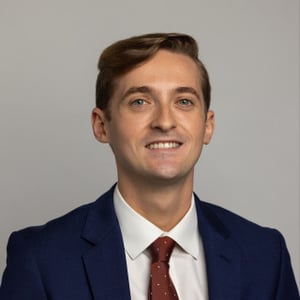
Litigation Fellow, Institute for Justice
Matt Liles is a Litigation Fellow at the Institute for Justice. He returns to IJ after having worked as both a law clerk and intern in IJ’s Arlington, Virginia office. In his role as a Litigation Fellow, Matt litigates cutting-edge constitutional cases protecting Americans' property rights and economic liberty.
Matt received his J.D. from the University of Texas School of Law, where he served on the executive board of the Texas Federalist Society and as Submissions Editor for the Texas Review of Law & Politics. He also received his B.A. in Government from the University of Texas. As an undergraduate, Matt was a plaintiff in a successful First Amendment lawsuit on behalf of campus free speech.
After completing the Fellowship, Matt will serve as a law clerk in the U.S. District Court for the Northern District of Texas. He is a member of the District of Columbia bar.
Judge, United States District Court for the Western District of Kentucky
Prior to joining the bench, Judge Beaton was a Partner at Squire Patton Boggs LLP, where he co-chaired the firm’s Appellate & Supreme Court practice group. Judge Beaton’s represented clients engaged in complex commercial litigation in Federal and State courts, and before administrative agencies. Judge Beaton also served as an adjunct professor at the University of Louisville Brandeis School of Law, where he taught constitutional interpretation. Before joining Squire Patton Boggs, Judge Beaton practiced in the Washington, D.C. office of Sidley Austin, LLP, and also served as a legal fellow with the International Justice Mission in Kampala, Uganda. Upon graduation from law school, Judge Beaton served as a law clerk to Justice Ruth Bader Ginsburg of the United States Supreme Court, and to Judge A. Raymond Randolph of the United States Court of Appeals for the D.C. Circuit. Judge Beaton earned his B.A., summa cum laude, from Centre College, and his J.D. from Columbia Law School, where he served as an Articles Editor on the Columbia Law Review.
Justice, Supreme Court of Tennessee
Justice Sarah Campbell was confirmed to the Tennessee Supreme Court in 2022. She previously served as an Associate Solicitor General in the Tennessee Attorney General’s Office and as an associate at the law firm of Williams & Connolly LLP in Washington, DC. Justice Campbell earned her law degree from Duke University School of Law, a Master of Public Policy degree from Duke University, and her undergraduate degree from the University of Tennessee, where she received the Torchbearer Award. She served as a law clerk for Justice Samuel A. Alito, Jr. on the United States Supreme Court and Judge William H. Pryor Jr. on the U.S. Court of Appeals for the Eleventh Circuit.
Judge, Arizona Court of Appeals, Division One
The Honorable Jennifer M. Perkins began service on the Arizona Court of Appeals, Division One, on October 30, 2017. At the time of her appointment by Governor Douglas Ducey, Judge Perkins was Assistant Solicitor General for the State of Arizona.
Judge Perkins was born in Portales, New Mexico, and primarily raised in Albuquerque. She attended the prestigious Albuquerque Academy from 1988-1995, before moving to Washington D.C. to attend the Elliott School of International Affairs at the George Washington University as a National Merit Scholar. Therafter, she relocated again to Dallas, Texas, and earned her juris doctor from the SMU Dedman School of Law, graduating cum laude in 2002.
Judge Perkins started her career at the law firm of Browning & Peifer (now Peifer, Hanson, Mullins, and Baker) in Albuquerque, New Mexico. While there, she litigated complex commercial matters including class action plaintiff and defense work, and assisted with employment and contract litigation. In 2003, the judge accompanied the Honorable James O. Browning in transitioning to the federal district court bench, serving as his first law clerk.
After her clerkship, Judge Perkins moved to Arizona to work for the Institute for Justice, Arizona Chapter, a public interest law firm. She spent five years with IJ-AZ litigating civil rights cases in Arizona and across the country. In 2009, the judge became Disciplinary Counsel for the Arizona Commission on Judicial Conduct, where she reviewed and prosecuted ethics complaints against state court judges throughout Arizona. After five years serving the state in this capacity, Judge Perkins entered private practice by joining an appellate law firm in Phoenix. While there, she worked on state and federal appeals involving a wide range of legal subjects, including complex business disputes, property rights, judicial ethics, and personal injury matters.
In January 2015, Judge Perkins joined the Office of the Arizona Attorney General to serve as the first Assistant Solicitor General; in that capacity, she was responsible for oversight of Attorney General Opinions and served as ethics counsel to the entire office. In addition to these two primary roles, the judge assisted on a variety of matters including trial and appellate litigation of election-related matters; federal appellate litigation with the Federalism Unit; state criminal appeals; and drafting amicus briefs on behalf of Arizona in state and federal courts.
Associate Justice, New Jersey Supreme Court
Justice Rachel Wainer Apter was nominated by Gov. Phil Murphy and was sworn in as an associate justice on Oct. 21, 2022.
Born on July 22, 1980, Justice Wainer Apter grew up in Rockaway. She graduated from the University of Pennsylvania and received her law degree from Harvard Law School. After law school, she served as a law clerk for U.S. District Judge Jed Rakoff, U.S. Circuit Judge Robert Katzmann, and U.S Supreme Court Associate Justice Ruth Bader Ginsburg.
At the time of her appointment, Justice Wainer Apter was serving as director of the New Jersey Division on Civil Rights. She previously served as counsel to the New Jersey Attorney General and assistant attorney general.
Before joining the Attorney General’s Office, Justice Wainer Apter worked as a senior staff attorney at the American Civil Liberties Union (ACLU) and in the Supreme Court and Appellate practice at Orrick, Herrington & Sutcliffe.
Justice Wainer Apter and her husband have three children.
Judge, United States District Court for the Western District of Kentucky
Prior to joining the bench, Judge Beaton was a Partner at Squire Patton Boggs LLP, where he co-chaired the firm’s Appellate & Supreme Court practice group. Judge Beaton’s represented clients engaged in complex commercial litigation in Federal and State courts, and before administrative agencies. Judge Beaton also served as an adjunct professor at the University of Louisville Brandeis School of Law, where he taught constitutional interpretation. Before joining Squire Patton Boggs, Judge Beaton practiced in the Washington, D.C. office of Sidley Austin, LLP, and also served as a legal fellow with the International Justice Mission in Kampala, Uganda. Upon graduation from law school, Judge Beaton served as a law clerk to Justice Ruth Bader Ginsburg of the United States Supreme Court, and to Judge A. Raymond Randolph of the United States Court of Appeals for the D.C. Circuit. Judge Beaton earned his B.A., summa cum laude, from Centre College, and his J.D. from Columbia Law School, where he served as an Articles Editor on the Columbia Law Review.
Justice, Supreme Court of Tennessee
Justice Sarah Campbell was confirmed to the Tennessee Supreme Court in 2022. She previously served as an Associate Solicitor General in the Tennessee Attorney General’s Office and as an associate at the law firm of Williams & Connolly LLP in Washington, DC. Justice Campbell earned her law degree from Duke University School of Law, a Master of Public Policy degree from Duke University, and her undergraduate degree from the University of Tennessee, where she received the Torchbearer Award. She served as a law clerk for Justice Samuel A. Alito, Jr. on the United States Supreme Court and Judge William H. Pryor Jr. on the U.S. Court of Appeals for the Eleventh Circuit.
Judge, Arizona Court of Appeals, Division One
The Honorable Jennifer M. Perkins began service on the Arizona Court of Appeals, Division One, on October 30, 2017. At the time of her appointment by Governor Douglas Ducey, Judge Perkins was Assistant Solicitor General for the State of Arizona.
Judge Perkins was born in Portales, New Mexico, and primarily raised in Albuquerque. She attended the prestigious Albuquerque Academy from 1988-1995, before moving to Washington D.C. to attend the Elliott School of International Affairs at the George Washington University as a National Merit Scholar. Therafter, she relocated again to Dallas, Texas, and earned her juris doctor from the SMU Dedman School of Law, graduating cum laude in 2002.
Judge Perkins started her career at the law firm of Browning & Peifer (now Peifer, Hanson, Mullins, and Baker) in Albuquerque, New Mexico. While there, she litigated complex commercial matters including class action plaintiff and defense work, and assisted with employment and contract litigation. In 2003, the judge accompanied the Honorable James O. Browning in transitioning to the federal district court bench, serving as his first law clerk.
After her clerkship, Judge Perkins moved to Arizona to work for the Institute for Justice, Arizona Chapter, a public interest law firm. She spent five years with IJ-AZ litigating civil rights cases in Arizona and across the country. In 2009, the judge became Disciplinary Counsel for the Arizona Commission on Judicial Conduct, where she reviewed and prosecuted ethics complaints against state court judges throughout Arizona. After five years serving the state in this capacity, Judge Perkins entered private practice by joining an appellate law firm in Phoenix. While there, she worked on state and federal appeals involving a wide range of legal subjects, including complex business disputes, property rights, judicial ethics, and personal injury matters.
In January 2015, Judge Perkins joined the Office of the Arizona Attorney General to serve as the first Assistant Solicitor General; in that capacity, she was responsible for oversight of Attorney General Opinions and served as ethics counsel to the entire office. In addition to these two primary roles, the judge assisted on a variety of matters including trial and appellate litigation of election-related matters; federal appellate litigation with the Federalism Unit; state criminal appeals; and drafting amicus briefs on behalf of Arizona in state and federal courts.
Associate Justice, New Jersey Supreme Court
Justice Rachel Wainer Apter was nominated by Gov. Phil Murphy and was sworn in as an associate justice on Oct. 21, 2022.
Born on July 22, 1980, Justice Wainer Apter grew up in Rockaway. She graduated from the University of Pennsylvania and received her law degree from Harvard Law School. After law school, she served as a law clerk for U.S. District Judge Jed Rakoff, U.S. Circuit Judge Robert Katzmann, and U.S Supreme Court Associate Justice Ruth Bader Ginsburg.
At the time of her appointment, Justice Wainer Apter was serving as director of the New Jersey Division on Civil Rights. She previously served as counsel to the New Jersey Attorney General and assistant attorney general.
Before joining the Attorney General’s Office, Justice Wainer Apter worked as a senior staff attorney at the American Civil Liberties Union (ACLU) and in the Supreme Court and Appellate practice at Orrick, Herrington & Sutcliffe.
Justice Wainer Apter and her husband have three children.


Panel 2: Benchmarking Liberty: America 250
Birmingham, ALLife and the Law: A Conversation with Judge Willett and Justice Campbell
Duke Student Chapter
Durham, NCTN Supreme Court Review
Nashville Lawyers Chapter
Nashville, TNUnrecorded Deeds and Adverse Possession at the Tennessee Supreme Court
Matt Liles
You may remember the typical requirements for making an adverse possession claim from law...
Panel III: Strategic Litigation for Civil Rights
2024 Tennessee Chapters Conference
Nashville, TNPanel II: Strategic Litigation for Liberty
2024 Tennessee Chapters Conference
Nashville, TNPanel I: Defending Against Strategic Litigation
2024 Tennessee Chapters Conference
Nashville, TNCertification of State-Law Questions by Federal Courts
Benjamin Beaton, Sarah Keeton Campbell, Jennifer Perkins, Rachel Wainer Apter
In Lindenberg v. Jackson National Life Ins. Co., 912 F.3d 348 (2018), the Sixth Circuit declared...
Certification of State-Law Questions by Federal Courts
Benjamin Beaton, Sarah Keeton Campbell, Jennifer Perkins, Rachel Wainer Apter
In Lindenberg v. Jackson National Life Ins. Co., 912 F.3d 348 (2018), the Sixth Circuit declared...
Certification of State-Law Questions by Federal Courts