2026 Law and Religion Cases at the Supreme Court: Looking Back and Forward
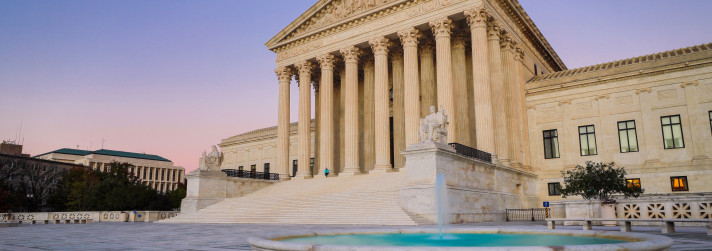
In Landor v. Louisiana Department of Corrections and Public Safety, handed down in June, the Supreme Court held that a prisoner who alleged that state officials burdened his religious free exercise could not recover damages from them under the Religious Land Use and Institutionalized Persons Act (RLUIPA). RLUIPA rests on Congress’s spending power, and the Court held that individuals may not be held personally liable under a Spending Clause statute unless they have voluntarily and knowingly consented to answer suits under it.
In the Court's Free Exercise jurisprudence, meanwhile, questions persist about the scope and viability of Employment Division v. Smith and when excluding religious institutions from public-benefit programs violates the Free Exercise Clause. Next Term, in St. Mary Catholic Parish v. Roy, the Court will consider a challenge to Colorado’s exclusion of Catholic preschools from its universal preschool program because of their religiously informed admissions and employment practices.
Join our panel of experts as they examine what Landor means for religious liberty litigation and what questions await the Court in St. Mary Catholic Parish and beyond.
Featuring:
- Prof. Richard W. Garnett, Paul J. Schierl Professor of Law, University of Notre Dame Law School
- Prof. Douglas Laycock, Robert E. Scott Distinguished Professor of Law Emeritus, University of Virginia School of Law; Alice McKean Young Regents Chair in Law Emeritus, University of Texas
- Amanda Salz, Counsel, Becket Fund for Religious Liberty
- (Moderator) Christopher Bates, Shareholder, Kirton McConkie
*******
As always, the Federalist Society takes no position on particular legal or public policy issues; all expressions of opinion are those of the speaker.