
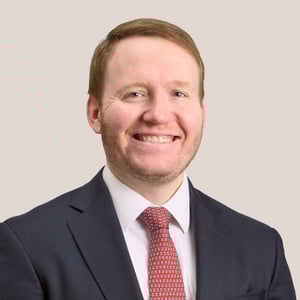
Shareholder, Kirton McConkie
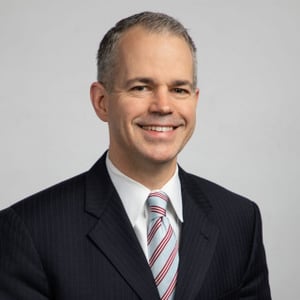
Christopher Bates is co-chair of the firm’s Appellate section and a member of the Litigation and First Amendment and Religious Organizations sections. His practice focuses on appeals and critical motions in complex cases. He has argued dozens of cases in courts across the country, including the Utah Supreme Court, Utah Court of Appeals, and eleven of the thirteen federal circuits. He has also handled a variety of dispositive motions in both state and federal court. Chris’s subject matter experience includes a range of constitutional, regulatory, and commercial issues.
Chris has significant experience in senior positions in both state and federal government. Before joining Kirton McConkie, Chris served as deputy solicitor general for Utah. In that position, he managed complex ligation for the state on a range of topics and routinely appeared in both appellate and trial courts. He also led the state’s amicus efforts in the U.S. Supreme Court and federal courts of appeals. Prior to that, Chris served as senior counsel to the Assistant Attorney General for the Civil Division at the U.S. Department of Justice, where he defended agency rulemakings and other administrative actions against statutory and constitutional challenges.
Earlier in his career, Chris was chief counsel to U.S. Senator Orrin G. Hatch on the Senate Judiciary Committee. In that role, he served as Senator Hatch’s chief legal advisor on intellectual property, antitrust, and criminal law. He led introduction and passage of several key pieces of legislation and staffed the senator at two Supreme Court confirmation hearings. He brings this legislative experience to bear in analyzing complex statutes and building coalitions in multiparty litigation.
Chris began his career by serving as a law clerk to Judge Thomas B. Griffith on the U.S. Court of Appeals for the D.C. Circuit. He was then a litigation associate in Sidley Austin’s Supreme Court and Appellate Practice in Washington, DC. He has also taught college-level courses on constitutional law and legal studies.
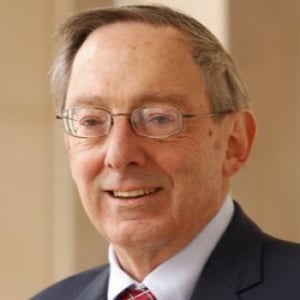
Robert E. Scott Distinguished Professor of Law Emeritus, University of Virginia School of Law; Alice McKean Young Regents Chair in Law Emeritus, University of Texas
Douglas Laycock is perhaps the nation’s leading authority on the law of religious liberty and also on the law of remedies. He has taught and written about these topics for more than four decades at the University of Chicago, the University of Texas, the University of Michigan and the University of Virginia. He retired from teaching at UVA Law School in May 2023.
Laycock has testified frequently before Congress and has argued many cases in the courts, including the U.S. Supreme Court, where he has served as lead counsel in six cases and has also filed influential amicus briefs. He is the author (co-author in the most recent edition) of the leading casebook Modern American Remedies, the award-winning monograph The Death of the Irreparable Injury Rule and many articles in leading law reviews. He co-edited a collection of essays, Same-Sex Marriage and Religious Liberty.
His many writings on religious liberty have been republished in a five-volume collection:
Laycock resigned from the council and as first vice president of the American Law Institute to become co-reporter for the Restatement (Third) of Torts: Remedies. He is a fellow of the American Academy of Arts and Sciences. He earned his B.A. from Michigan State University and his J.D. from the University of Chicago.
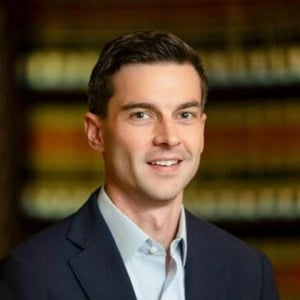
Associate Clinical Professor and Director of the Lindsay and Matt Moroun Religious Liberty Clinic, Notre Dame Law School
John Meiser is an associate clinical professor of law and the director of the Law School's Lindsay and Matt Moroun Religious Liberty Clinic. He researches and teaches courses focused on religious liberty, litigation practice, and federal courts.
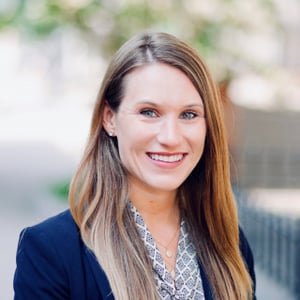
Counsel, Becket Fund for Religious Liberty
Amanda Salz is counsel at the Becket Fund for Religious Liberty, where her practice focuses on First Amendment litigation at both the trial and appellate levels. She is also a member of the Federalist Society’s Religious Liberties Executive Committee.
Before joining Becket, Amanda worked as an associate at Morgan, Lewis & Bockius LLP. As a member of the firm’s appellate group, Amanda litigated many cases involving constitutional and administrative issues. In addition to her experience in private practice, Amanda clerked for the Honorable Andrew S. Oldham of the U.S. Court of Appeals for the Fifth Circuit and the Honorable Reed C. O’Connor of the U.S. District Court for the Northern District of Texas.
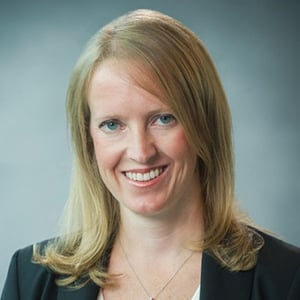
Partner, Clement & Murphy, PLLC
Erin Murphy is founding partner of Clement & Murphy, PLLC. She is widely recognized as one of the nation’s leading Supreme Court and appellate advocates. She has argued dozens of cases in appellate and trial courts throughout the country, including the Supreme Court and nearly all of the federal courts of appeals. Erin has long been ranked by Chambers & Partners rankings as a leading appellate practitioner, and the National Law Journal has named her one of the nation’s “Outstanding Women Lawyers.” Erin also has an active pro bono practice, through which she has successfully represented many religious organizations and adherents, criminal defendants, asylum applicants, adoptive parents, and more.
Erin is an adjunct professor at her alma mater the Georgetown University Law Center, a member and former officer of the Edward Coke Appellate Inn of Court, and a frequent speaker on topics relating to the Supreme Court and appellate advocacy. In her spare time, Erin serves on the board of directors of Street Law.
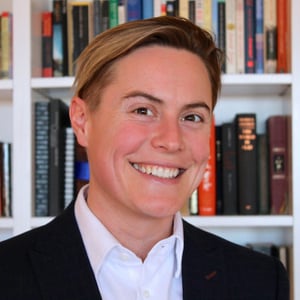
Associate Professor of Legal Studies & Business Ethics, The University of Pennsylvania Wharton School of Business
Amanda Shanor is an Assistant Professor at the University of Pennsylvania Wharton School, where her scholarship focuses on constitutional and administrative law, and in particular the First Amendment.
Shanor is a graduate of Yale Law School and Yale College, and a PhD candidate in law at Yale University. She served as a law clerk to Judges Cornelia T.L. Pillard and Judith W. Rogers on the D.C. Circuit, and Judge Robert W. Sweet in the Southern District of New York. She has taught at both Yale and Georgetown law schools and has published in the New York University Law Review, the Harvard Law Review Forum, and the Yale Law Journal Forum, among others. She is a contributor to Take Care and the co-author of a textbook on counterterrorism law.
Prior to joining the academy, Amanda worked in the National Legal Department of the American Civil Liberties Union on the organization’s Supreme Court litigation, including Masterpiece Cakeshop. Previously, she litigated a number of constitutional and national security cases with Professor David Cole, including Humanitarian Law Project v. Holder, while a fellow at Georgetown.
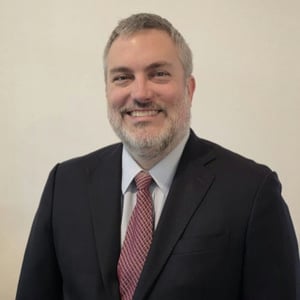
Host, The Prosecutors Podcast; Partner, Culper Law
Brett J. Talley is former a federal prosecutor (appellate chief in the Middle District of Alabama) and host of the true crime podcast "The Prosecutors." Brett has served as nominations chief and deputy assistant attorney general at the US Department of Justice, Advisor to the White House Counsel, speechwriter to Senator Rob Portman, a political and legal communications professional, deputy state solicitor general, staff writer for a presidential campaign, award-nominated horror fiction author (possibly related to the previous items on the list), US District and 11th Circuit judicial clerk, and adjunct law school professor. He is currently a partner ar Culper Law. Along the way, Brett has been involved at some level in the confirmation of a full majority of the sitting justices on the U.S. Supreme Court and scores of U.S. district and appellate court judges. A native Alabamian, Brett earned his undergraduate degree in History and Philosophy from the University of Alabama and JD from Harvard Law School. He lives in Montgomery with his wife Annie and their three small kids.
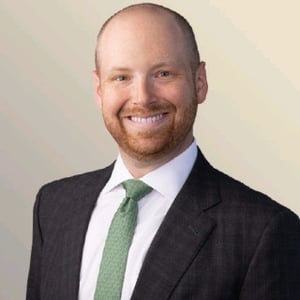
Solicitor General, Iowa Office of the Attorney General
Eric Wessan serves as Iowa’s Solicitor General in the Iowa Attorney General’s Office. In that role, Wessan leads Iowa’s litigation before State and federal appellate courts, including the Iowa and U.S. Supreme Courts. Before that role, Wessan worked on complex commercial litigation at two large law firms in Chicago. Wessan also served as a law clerk for the Honorable James C. Ho on the U.S. Court of Appeals for the Fifth Circuit and for the Honorable John F. Kness on the U.S. District Court for the Northern District of Illinois. Wessan is a graduate of the University of Chicago Law School, with honors, and of the University of Chicago.

Laurence H. Silberman Chair in Constitutional Governance, American Enterprise Institute; Executive Director, Antonin Scalia Law School’s C. Boyden Gray Center for the Study of the Administrative State
Adam J. White is the Laurence H. Silberman Chair in Constitutional Governance and senior fellow at the American Enterprise Institute, where he focuses on the Supreme Court and the administrative state. He also directs the Antonin Scalia Law School’s C. Boyden Gray Center for the Study of the Administrative State.
He writes on regulation and constitutional government for a variety of publications. He practiced law in Washington, D.C., after clerking for the D.C. Circuit's Judge David Sentelle. He also has been chairman of the ABA's Administrative Law Section.
In 2021, he served on the Presidential Commission on the Supreme Court of the United States, where he criticized “Court packing” and other efforts to restructure the Supreme Court.
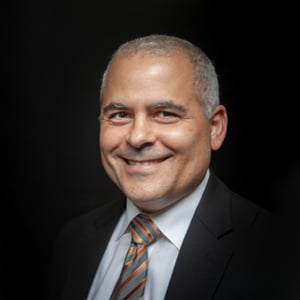
Associate Dean for Academic Affairs and Professor of Law, Ave Maria School of Law
Antony “Tony” Kolenc joined the Ave Maria School of Law faculty in 2022 as the Director of the Veterans and Servicemembers Law Clinic (VSLC), which gives students the opportunity to help those who have served in the U.S. Armed Forces, representing them in litigation, administrative proceedings, and veterans treatment courts. Professor Kolenc taught in several law schools after serving over 21 years in the United States Air Force, retiring as a Lieutenant Colonel from the Judge Advocate General’s (JAG) Corps. During his career as a JAG, he litigated both civil and criminal cases before trial and appellate courts, including the Court of Appeals for the Armed Forces and the U.S. Court of Appeals for the Tenth Circuit. He has also taught at the United States Air Force Academy in Colorado Springs and Florida Coastal School of Law as a tenured professor.
Professor Kolenc received his Juris Doctor degree in 1999, graduating at the top of his class from the University of Florida Levin College of Law. While there, he served as a senior editor on the Florida Law Review and as a competitor and coach on the Justice Campbell Thornal Moot Court Board. He also earned his Master of Arts degree in Theology and Christian Ministry from the Franciscan University of Steubenville. His professional writings have focused on matters of constitutional law and military policy, especially focusing on Freedom of Religion. His articles have appeared in several academic legal journals and magazines. He also writes a regular legal column for homeschooling families in Practical Homeschooling Magazine and has penned an award-winning historical fiction trilogy for teens. He and his wife, Alisa, homeschooled their five children. You can learn more about him at www.antonykolenc.com.
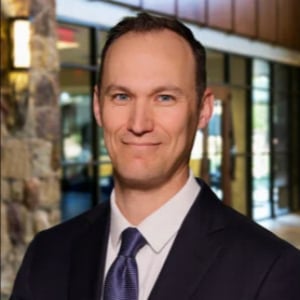
Senior Counsel, First Liberty Institute
Christopher J. Motz serves as Senior Counsel with First Liberty Institute. His practice focuses on First Amendment free exercise and Establishment Clause rights of United States service members domestically and internationally, chaplains of varying denominations, veterans, and defense industry contractors. He has also represented Catholic bishops and priests against state officials.
Chris currently serves part-time as a judge advocate in the Air Force Reserve Component, holding the rank of lieutenant colonel. Prior to that, he served as a Marine infantry officer, leading Marines on several combat tours. He has been forward deployed alongside soldiers, sailors, Marines, airmen, and Coast Guardsmen. His advocacy for the religious rights of service members has been published in the Wall Street Journal.
Before joining First Liberty, Chris served as general counsel and chief of staff to a Catholic diocese, where he led the Catholic Church’s efforts to oppose a state constitutional ballot measure reinstating Roe v. Wade, achieving a record-setting 18-point victory, a nationwide first in the wake of the Dobbs decision. Earlier in his career, he led a state Catholic conference, where he steered the successful passage of a state religious freedom restoration act. A member of the Knights of Columbus, he is a past member of the National Diocesan Attorneys Association and the National Association of State Catholic Conference Directors.
He graduated cum laude from the University of St. Thomas School of Law, where he served as editor-in-chief of the Journal of Law and Public Policy, represented a Messianic Jewish prisoner before the U.S. Court of Appeals for the Ninth Circuit with the school’s Religious Liberty Appellate Clinic, and published articles on attorney ethics and legal issues around drone strikes.
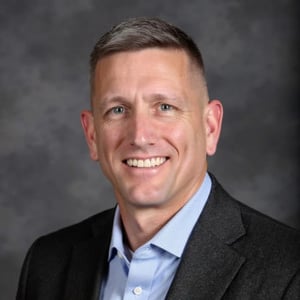
Chief Defense Counsel, U.S. Marine Corps
Colonel Iain Pedden currently serves as Chief Defense Counsel of the Marine Corps. His career experience includes trial and appellate litigation, academic instruction, constitutional advocacy, and service-level policy development within the military justice system.
Colonel Pedden’s recent litigation background includes serving as Director of the Appellate Government Division for the Navy and Marine Corps, where he led the representation of the United States in all criminal appeals within the Department of the Navy. He previously served as Chief Victims' Legal Counsel of the Marine Corps, Senior Defense Counsel, and Trial Counsel. His foundational appellate experience includes service as a clerk drafting briefs for the Illinois Attorney General’s Criminal Appeals Division in cases before the Illinois Supreme Court, the Seventh Circuit, and the United States Supreme Court.
Apart from litigation assignments, Colonel Pedden served as Associate Professor of Criminal Law at the U.S. Army Judge Advocate General’s Legal Center and School, teaching evidence and constitutional law. He later served as Branch Head of Military Justice at Headquarters Marine Corps, advising senior leaders on federal legislation, implementing the Military Justice Act of 2016, and drafting policy on criminal justice data-sharing protocols with the FBI. His operational assignments include a combat deployment to Afghanistan and service as a Staff Judge Advocate (general counsel) to the 26th Marine Expeditionary Unit. He went on to command Marines providing security at diplomatic facilities in Scandinavia, Western Europe and the Mediterranean.
Colonel Pedden holds an M.S. from the National War College, an LL.M. (International Law) from the U.S. Army JAG School, and a J.D. from Loyola University Chicago. He holds certifications as Victims’ Legal Counsel and military judge and is admitted to practice in Illinois and before the Navy-Marine Corps Court of Criminal Appeals and the U.S. Court of Appeals for the Armed Forces.
Colonel Pedden’s participation in programming, unless noted otherwise, is in his personal capacity. The views expressed are those of the speaker and do not necessarily represent the views of the Department of War, the Department of the Navy, the Marine Corps, or the U.S. Government.
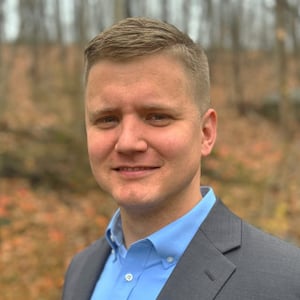
Special Counsel, Office of the Secretary of Defense, U.S. Department of Defense
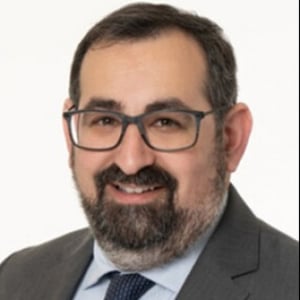
Research Scholar in Law and Executive Director, Center for Academic Freedom and Free Speech, Yale Law School
Joe Cohn is a research scholar in law at Yale Law school and the executive director of the Center for Academic Freedom and Free Speech (CAFFS).
Cohn has served as a staff attorney at the AIDS Law Project of Pennsylvania, a staff attorney for the Court of Appeals for the 3rd Circuit, an adjunct professor of law at the University of Pennsylvania Law School, where he supervised law students representing clients in litigation in state and federal courts, and as the interim legal director for ACLU affiliates in Nevada and Utah.
A majority of Cohn’s career has been dedicated to defending civil liberties on college campuses and free expression in society at large. As the Foundation for Individual Rights and Expression’s (FIRE’s) founding legislative and policy director, from 2012 to 2023, he testified on numerous occasions in legislatures across America and in Congress, drafted legislation on campus free speech, campus due process, and academic freedom that has been enacted in states across the country. Immediately before joining CAFFS, Cohn advocated for open inquiry, viewpoint diversity, and constructive disagreement in higher education as Heterodox Academy’s director of policy.
Cohn writes extensively on civil liberties, with articles published in a wide array of media outlets, including the Wall Street Journal, the Washington Post, Newsweek, the Hill, the New York Daily News, the Chicago Tribune, the Las Vegas Review Journal, the Minnesota Star Tribune, the Chronicle of Higher Education, Inside Higher Ed, and the Volokh Conspiracy.
He earned his bachelor of arts from the University of Nevada at Las Vegas in 2000. He is a 2004 graduate of the University of Pennsylvania Carey School of Law and the Fels Institute of Government Administration, where he earned his J.D. and M.A. in Government Administration.
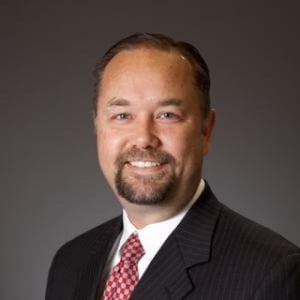
Senior Counsel, Director of Center for Academic Freedom, Alliance Defending Freedom
Tyson Langhofer serves as senior counsel and director of the Center for Academic Freedom with Alliance Defending Freedom.
Langhofer represents students and faculty at public high schools and colleges in defending their First Amendment rights. For example, in Denton v. Hecht, he successfully defended a Florida State University student after he was removed as Student Senate President simply for sharing his Catholic views in a private group chat. In Cross v. Loudoun County Public Schools, he successfully defended an elementary school gym teacher after the school suspended him for peacefully sharing his views on a proposed policy at a public school board meeting.
Langhofer has extensive experience in civil litigation and constitutional law. Before joining ADF, Langhofer was a partner with Stinson LLP, where he worked as a commercial litigation attorney from 2000 until he joined ADF in 2015.
Langhofer is Peer Review Rated AV® Preeminent in Martindale-Hubbell. He is a sought-after speaker on legal and cultural issues. He regularly comments on free speech issues in television, radio, and print media. He has appeared as a guest and written pieces for numerous major media outlets, including The Washington Post, The Washington Times, USA Today, Townhall, The Federalist, and The Daily Wire.
Langhofer earned his Juris Doctor from Regent University School of Law in 1999, graduating cum laude. Langhofer is admitted to practice in multiple states, the Supreme Court, and numerous federal district and appellate courts.
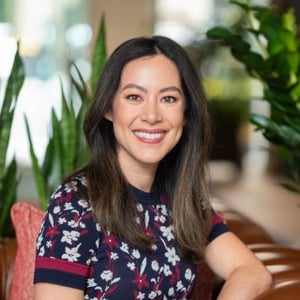
Director, Independent Women's Law Center; Owner, MPL Strategies
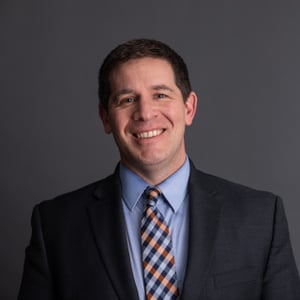
Vice President for Legal Strategy, Stand Together
Casey Mattox is Vice President for Legal Strategy at Stand Together and Senior Advisor at
Americans for Prosperity. In these roles he advocates for and creates strategies and
partnerships to ensure a constitutionally limited government that protects the civil liberties of all
Americans. Prior to joining Stand Together and AFP Casey’s legal career focused on defending
the First Amendment rights of students, faculty, healthcare workers and religious organizations.
Casey has a J.D. from Boston College School of Law and an undergraduate degree from the
University of Virginia. You can find him on Twitter at @CaseyMattox_ and on LinkedIn at
@Casey-Mattox-ST.
Senior Attorney, Institute for Justice
Michael Bindas is a senior attorney with the Institute for Justice (IJ) and leads IJ’s educational choice team. In this role, he oversees a talented group of IJ attorneys who help policymakers design constitutionally defensible educational choice programs and who defend educational choice programs in courtrooms nationwide. He joined IJ in 2005.
Michael was part of IJ’s litigation team in Espinoza v. Montana Department of Revenue, in which the U.S. Supreme Court held the exclusion of religious options from Montana’s educational choice program unconstitutional, and he led IJ’s defense of the Choice Scholarship Program for elementary and secondary students in Douglas County, Colorado. He also successfully challenged Washington’s denial of special education services to children in religious schools, as well as the state’s exclusion of sectarian options from its state work study program. Currently, he leads IJ’s team in Carson v. Makin, challenging Maine’s exclusion of religious options from its educational choice program.
Prior to leading IJ’s educational choice team, Michael litigated extensively to secure economic liberty, property rights, and freedom of speech throughout the nation. He was counsel of record at the U.S. Supreme Court for Kimbrough Fine Wine & Spirits in Tennessee Wine and Spirits Retailers Association v. Thomas, a successful challenge to Tennessee’s durational residency requirements for retail liquor licenses. He also led successful challenges to the municipal sign codes of St. Louis, Mo. and Norfolk, Va., after those cities attempted to silence protests of their abusive eminent domain practices.
Prior to joining IJ, Michael spent three years as an attorney with Perkins Coie LLP. He is a former law clerk to Judge Rhesa Hawkins Barksdale of the U.S. Court of Appeals for the Fifth Circuit and served as an engineer officer in the United States Army and Pennsylvania Army National Guard before beginning his legal career.
Michael received his law degree cum laude from the University of Pennsylvania Law School in 2001, where he served as Articles Editor for the Journal of Constitutional Law and was elected to the Order of the Coif. He received his undergraduate degree from the United States Military Academy at West Point in 1995.
John P. Murphy Foundation Professor of Law and Associate Dean for External Engagement, University of Notre Dame Law School
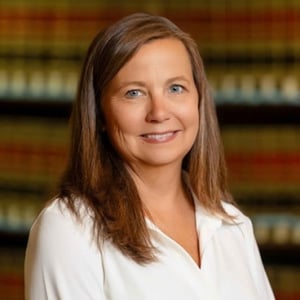
Nicole Stelle Garnett is the John P. Murphy Foundation Professor of Law at Notre Dame Law School, where she also serves as the Associate Dean for External Engagement and directs the Notre Dame Education Law Project. Her teaching and research focus on education law and policy, religious liberty, and topics related to property law (especially land use and urban development policies). In addition to dozens of articles on these subjects, she is the author of Lost Classroom, Lost Community: Catholic Schools' Importance in Urban America (University of Chicago Press, 2014) and Ordering the City: Land Use, Policing and the Restoration of Urban America (Yale University Press, 2009).
Garnett received her B.A. with distinction in Political Science from Stanford University and her J.D. from Yale Law School. After law school, she clerked for the Honorable Morris S. Arnold of the United States Court of Appeals for the Eighth Circuit and for Associate Justice Clarence Thomas of the Supreme Court of the United States. Before joining the law school faculty in 1999, she worked for two years as a staff attorney at the Institute for Justice, a non-profit public-interest law firm in Washington, D.C., where she helped to defend the constitutionality of the nation's first private-school-choice programs.
At Notre Dame, Garnett is a faculty fellow in the Institute for Educational Initiatives, Kellogg Institute for International Studies, Fitzgerald Institute for Real Estate, and deNicola Center for Ethics and Culture. She also is an elected member of the American Law Institute and a Senior Fellow at the Manhattan Institute.
Senior Fellow, American Federation for Children
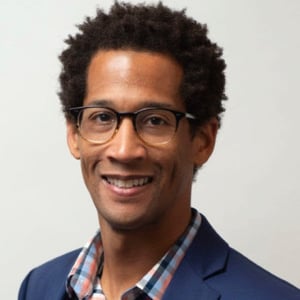
Shaka Mitchell serves as a Senior Fellow for the American Federation for Children.
He brings experience from several high-performing charter school networks, including Rocketship Education and LEAD Public schools, that serve over 2,500 students in Nashville.
Shaka began his career in education as the Associate Director of Policy and Planning at the D.C.-based Center for Education Reform. He then led outreach efforts at the Institute for Justice, a constitutional law firm based in Arlington, VA.
He is an alumnus of Belmont University where he teaches American Government and Constitutional Law as an adjunct faculty member. He earned his Juris Doctorate from the Wake Forest University School of Law where he sits on the Board of Advisors for the Journal of Law and Policy. Shaka is a co-founder of MoreMarrowDonors.org, a non-profit committed to providing scholarships to bone marrow donors who are matches for patients with various blood diseases. Shaka is the Chair of the Tennessee State Advisory Committee to the U.S. Commission on Civil Rights.
He is a member of the American Enterprise Institute’s Leadership Network and Aspen Institute Civil Society Fellowship. Shaka and his wife Stephanie are members of Edgefield Church in Nashville and are active in several non-profit organizations.
Associate Professor and C. Boyden Gray Distinguished Scholar, University of North Carolina School of Law
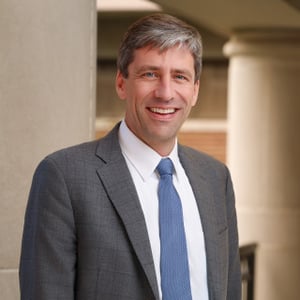
Mark Storslee joined the Carolina Law faculty in 2025 and serves as Associate Professor and C. Boyden Gray Distinguished Scholar. His teaching and research interests include constitutional law, civil procedure, administrative law, and federal courts. Among other topics, his scholarship focuses on constitutional history, religious freedom, and First Amendment law generally. Storslee’s work has appeared in publications such as the University of Chicago Law Review, the University of Pennsylvania Law Review, the University of Virginia Law Review, Vanderbilt University Law Review, and the Journal of Law & Religion.
Storslee holds a J.D. from Stanford Law School and a Ph.D. in Religious Studies (ethics) from the University of Virginia. He also holds masters degrees from Duke University and the University of Edinburgh and a B.A. from Furman University. After law school, Storslee clerked for Judge Diarmuid O’Scannlain on the United States Court of Appeals for the Ninth Circuit, and later for Associate Justice Neil Gorsuch on the United States Supreme Court. He previously taught at Penn State Law School and Emory Law School, and served as the Executive Director of the Constitutional Law Center at Stanford Law School. He also worked as an appellate litigator at Williams & Connolly LLP.
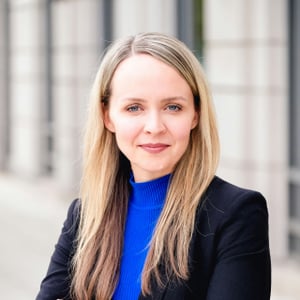
Professor of Law and Faculty Director for the Georgetown Center for the Constitution, Georgetown University Law Center
Stephanie Barclay is a Professor of Law at Georgetown Law School, and the Faculty Director of the Georgetown Center for the Constitution. Her research focuses on the role our different democratic institutions play in protecting minority rights, particularly at the intersection of free speech and religious exercise. Barclay‘s work is published or is forthcoming in leading journals such as the Harvard Law Review, the Chicago Law Review, the University of Pennsylvania Law Review, and the Yale Law Journal Forum. One of her articles was also selected for the 2020 Stanford/Harvard/Yale Junior Faculty Forum. Her work has been featured in many media outlets, including The New York Times, The Wall Street Journal, The Washington Post, USA Today, Bloomberg BNA, The Hill, and Law 360. And her work has also been cited by the U.S. Supreme Court.
Prior to joining Georgetown, Barclay was twice voted Professor of the Year. Barclay has also litigated constitutional cases at both the trial and appellate level, including before the U.S. Supreme Court. Barclay served as a law clerk to Judge N. Randy Smith on the U.S. Court of Appeals for the Ninth Circuit, and to Justice Neil M. Gorsuch of the U.S. Supreme Court.
Barclay is a Faculty Affiliate at the Constitutional Law Center at Stanford Law School; and she is a Nootbaar Fellow at the Nootbaar Institute on Law, Religion, and Ethics at Pepperdine University. She currently serves as the Chair for the AALS Law and Religion Section and as a Member of the Executive Committee for the AALS Constitutional Law Section. She graduated summa cum laude from BYU Law School, where she was elected to the Order of the Coif. She is completing a Ph.D. in Law at Oxford University as a Clarendon Scholar and a Tang Scholar.
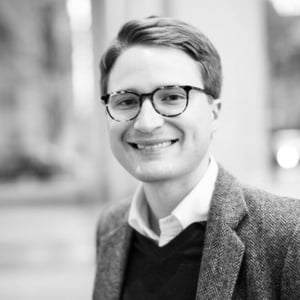
Senior Counsel, The Becket Fund for Religious Liberty
Joe Davis joined Becket in 2017 as Legal Counsel. His work at Becket has included appellate litigation in both federal and state courts, including representing religious entities and governments sued because of their openness to religious expression in precedent-setting victories before the Third, Fifth, Seventh, and Eleventh Circuits. Joe has appeared in national media to discuss religious liberty issues, including on Fox News and numerous radio and print outlets, and his academic work on topics related to religious liberty has been published at venues including the Yale Law Journal Forum and the Notre Dame Law Review Online.
Before joining Becket, Joe worked as a litigator at Jones Walker LLP in New Orleans, Louisiana, where he worked on a variety of matters from commercial and criminal litigation to bankruptcy. From 2014 to 2015, he clerked for the Honorable E. Grady Jolly of the U.S. Court of Appeals for the Fifth Circuit.
Joe graduated summa cum laude from the University of Virginia School of Law in 2014, where he served on the Virginia Law Review and was elected to the Order of the Coif. While in law school, Joe studied religious liberty law with one of the top religious liberty scholars and litigators in the nation. He also worked as a researcher for the law school’s Supreme Court Litigation Clinic. Before going to law school, Joe received his B.A. in Economics with a minor in Religion, summa cum laude, from Mississippi State University.
Joe is married to his high school sweetheart. When he’s not helping her corral their four young children, he tends to be reading the classics, watching college football, or listening to his vinyl collection.
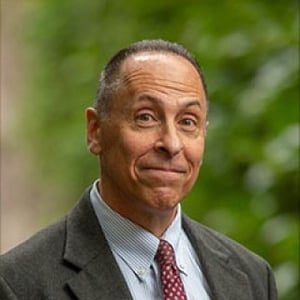
John Paul Stevens Professor of Law, Northwestern University School of Law
Andrew Koppelman is John Paul Stevens Professor of Law, Professor (by courtesy) of Political Science, and Philosophy Department Affiliated Faculty at Northwestern University. He received the Walder Award for Research Excellence from Northwestern, the Hart-Dworkin award in legal philosophy from the Association of American Law Schools, and the Edward S. Corwin Prize from the American Political Science Association. His scholarship focuses on issues at the intersection of law and political philosophy. He has written more than 100 scholarly articles and eight books, most recently Burning Down the House: How Libertarian Philosophy Was Corrupted by Delusion and Greed, (St. Martin’s Press). His column appears regularly at The Hill. You can find his recent work at andrewkoppelman.com.

Richard and Frances Mallery Professor of Law and Faculty Director, Constitutional Law Center, Stanford Law School
Michael W. McConnell is the Richard and Frances Mallery Professor and Faculty Director of the Constitutional Law Center at Stanford Law School, and a Senior Fellow at the Hoover Institution. From 2002 to 2009, he served as a Circuit Judge on the United States Court of Appeals for the Tenth Circuit. He was nominated by President George W. Bush, a Republican, and confirmed by a Democratic Senate by unanimous consent. McConnell has previously held chaired professorships at the University of Chicago and the University of Utah, and visiting professorships at Harvard and NYU. He teaches courses on constitutional law, constitutional history, First Amendment, and interpretive theory. He has published widely in the fields of constitutional law and theory, especially church and state, equal protection, and separation of powers. His book, “The President Who Would Not Be King: Executive Power Under the Constitution,” was published by Princeton University Press in 2020, based on the Tanner Lectures in Human Values, which he delivered at Princeton in 2019. His latest book, co-authored with Nathan Chapman, “Agreeing to Disagree: How the Establishment Clause Protects Religious Diversity and Freedom of Conscience,” was published by Oxford University Press in mid-2023. McConnell has argued sixteen cases in the United States Supreme Court, most recently Carney v. Adams (2020). defending a provision of the Delaware Constitution requiring political balance on that state’s courts. More recently, he was co-counsel in Gonzalez v. Google. He earned his B.A. from Michigan State University and his J.D. from the University of Chicago, and has received honorary degrees from Notre Dame University and Michigan State. He served as law clerk to Supreme Court Justice William J. Brennan, Jr. and D.C. Circuit Chief Judge J. Skelly Wright. He has been Assistant General Counsel of the Office of Management & Budget, Assistant to the Solicitor General of the Department of Justice, and a member of the President’s Intelligence Oversight Board. He is Senior of Counsel to the law firm Wilson, Sonsini, Goodrich & Rosati, and is co-chair of Meta’s Oversight Review Board.
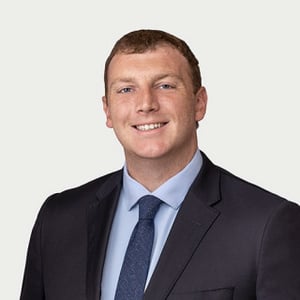
Associate Attorney, Gibson, Dunn & Crutcher LLP
Branton Nestor is an associate in the Orange County office of Gibson Dunn. He practices in the firm’s Litigation Department and is a member of the firm’s Appellate and Constitutional Law Practice Group.
Branton has represented clients in appellate, regulatory, and complex litigation matters across various industries. His experience spans a wide range of subject matters, including constitutional law and administrative law.
He clerked for Judge Diarmuid F. O’Scannlain on the U.S. Court of Appeals for the Ninth Circuit, and Judge Julius N. Richardson on the U.S. Court of Appeals for the Fourth Circuit. He graduated from Harvard Law School in 2019, and Westmont College in 2016. His scholarship has been cited at the U.S. Supreme Court.
Branton is a member of the California bar.
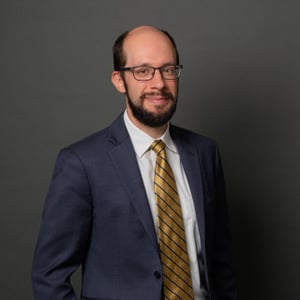
Assistant Professor of Law, Antonin Scalia Law School, George Mason University
Lael Weinberger is an assistant professor of law at George Mason University Antonin Scalia Law School. Previously, Lael clerked for Justice Neil Gorsuch on the United States Supreme Court, Judge Frank Easterbrook on the Seventh Circuit Court of Appeals, and Chief Justice Daniel Eismann on the Idaho Supreme Court. Lael also practiced law at the Washington, D.C., office of Gibson Dunn and held fellowships at Stanford and Harvard law schools. Lael earned a law degree and a Ph.D. in history, both from the University of Chicago. Lael's academic work has appeared in journals such as the University of Chicago Law Review, Notre Dame Law Review, and Constitutional Commentary, among others. He has also written widely for broader public audiences, with his writings and reviews appearing in publications including Newsweek, National Review, Claremont Review, First Things, Christianity Today, LA Review of Books, World, and the New Rambler Review.

2026 Law and Religion Cases at the Supreme Court: Looking Back and Forward
Supreme Court Preview: What Is in Store for October Term 2026?
Erin E. Murphy, Amanda Shanor, Brett J. Talley, Eric Wessan, Adam White
Registration is now closed No registration is needed to view the live stream, which will be...
Service Members & the First Amendment
Antony Kolenc, Christopher J. Motz, Iain Pedden, Thomas N. Wheatley
Recent litigation has resurfaced longstanding debates over the scope of First Amendment protections for members...
Academic Freedom and the First Amendment: Who Decides What Is Taught?
Joe Cohn, Tyson Langhofer, May Mailman, Casey Mattox
In 2022, Florida enacted the Stop WOKE (Wrongs to Our Kids and Employees) Act,...
How Did the Founders View the Role of Education?
Michael Bindas, Nicole Stelle Garnett, Shaka Laurence Mitchell, Mark Storslee
In this Federalist Society America 250 series, experts analyze modern legal and policy debates through...
Dinner Discussion: Branches, Boundaries, and the Bench– A Judicious Conversation
Featuring: Hon. John Bush, U.S. Court of Appeals, Sixth Circuit Hon. John Nielsen, Supreme Court of...
Panel 4: Going Nuclear: European Decline and American Revival?
CLE credit for this event is available at On-Demand CLE. The contrast between American and European...
Lunch & Roundtable: Foot on the Gas? The Accelerate or Decelerate AI Debate
What exactly is all this electricity for, anyway? Join leading AI experts for a lunchtime...
Litigation Update: Ten Commandments in Public Schools
Stephanie Barclay, Joseph Davis, Andrew Koppelman
This week, the en banc U.S. Court of Appeals for the Fifth Circuit held that...
How Does the First Amendment Protect Churches in Court?
Michael W. McConnell, Branton J. Nestor, Lael Weinberger
The First Amendment’s church autonomy doctrine sets a structural constitutional barrier keeping the State...