

Director, Faculty Relations, The Federalist Society
Katie McClendon is the Director of Faculty Relations at the Federalist Society, where she has worked since 2015.
Katie holds a J.D. from the University of Pennsylvania Law School and a B.A. in Political Science from Biola University, where she was a member of the Torrey Honors Institute. She is a fellow of the John Jay Institute and the Blackstone Legal Fellowship. Katie is originally from Los Angeles, and she now lives with her husband and four children in Atlanta.
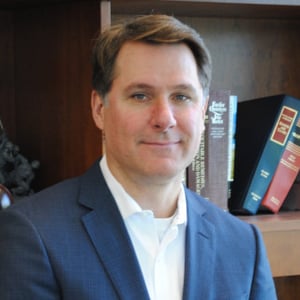
Vice President of Legal Affairs, Landmark Legal Foundation
Vice President of Legal Affairs, Landmark Legal Foundation
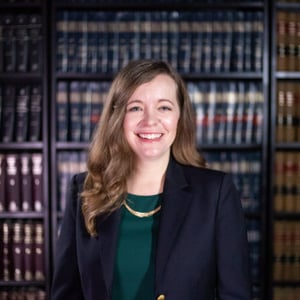
Associate Corporate Counsel and Staff Attorney, National Right to Work Legal Defense and Education Foundation, Inc.
Since January 2020, Amanda Freeman has been the National Right To Work Legal Defense Foundation’s Associate Corporate Counsel, working closely with Corporate Counsel Richard Clair who has been with the Foundation for more than forty-five years.
Amanda has also been, and continues to be, a staff attorney at the Foundation since September 2013. As a staff attorney, Amanda represents both public and private sector employees in disputes in federal and state courts and administrative agencies. She has also handled many settlements with employers and unions resolving disputes before they reached a court or agency.
Amanda was lead attorney in many cases and unfair labor practice charges challenging and seeking implementation of Michigan’s Right to Work law, which was effective March 28, 2013 – February 13, 2024. Clarkston Educ. Ass’n v. Conwell, 319 Mich. App. 422 (2017), appeal denied, 501 Mich. 1027 (2019); Saginaw Educ. Ass’n v. Eady-Miskiewicz, 319 Mich. App. 422 (2017), appeal denied, 501 Mich. 1027 (2018) (lead counsel for Appellees Snyder and Carr).
Prior to joining the Foundation, Amanda clerked for the Honorable Glen A. Huff (August 2011 – August 2013) and for the Honorable Robert J. Humphreys (August 2009 – July 2011) who were both on the Court of Appeals of Virginia.
Before and during law school, Amanda gained experience in the legal field while working as an administrative assistant and then a paralegal at Mauck & Baker, LLC in Chicago, Illinois, and as an intern at Lentz, Stepanovich & Bergethon, PLC in Virginia Beach, VA.

Shareholder, Littler
Bradford J. Kelley has a broad practice representing employers in employment anti-discrimination and wage and hour matters. He focuses on advising clients about emerging technologies, including artificial intelligence (AI), and their impact in the workplace.
Brad is an internationally recognized workplace AI authority. He advises clients on how to maximize the benefits of using AI in the workplace while minimizing potential legal and business risks. His deep background in this area provides employers with the tools and insights they need to develop, deploy, and monetize AI and other emerging technologies to bolster business operations and efficiency.
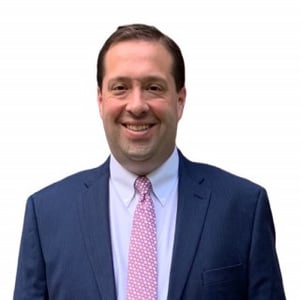
U.S. Equal Employment Opportunity Commission, Chief Counsel and Chief of Staff (OCL)
Mr. Rogers is Chief Counsel and Chief of Staff to a Commissioner at the U.S. EEOC, where he works extensively on regulations, guidance, policies, and proposed litigation and amicus briefs. Previously, he served in the Wage and Hour Division at the U.S. DOL after 12 years in private practice, representing and advising clients on wage and hour, discrimination, labor relations, and workplace violence issues.
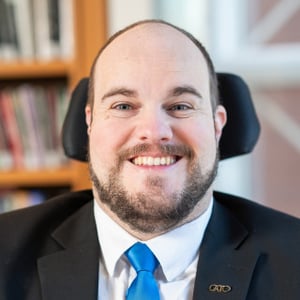
Director, Project on Criminal Justice, Cato Institute
Matthew Cavedon is the Director of the Cato Institute’s Project on Criminal Justice. He focuses on reforming plea-driven mass adjudication, ensuring police accountability, and defending constitutional criminal originalism. Cavedon’s scholarship has been published (or is forthcoming in) publications including the Arizona State Law Journal, Cato Supreme Court Review, Seattle University Law Review, and Georgetown Journal of Law and Public Policy. Formerly a Georgia public defender and fellow at the Institute for Justice, Cavedon has taught law school courses on criminal law and procedure, as well as the First Amendment. Cavedon clerked for a U.S. district court and the Supreme Court of Georgia. He came to Cato following a fellowship at the Emory University Center for the Study of Law and Religion.
Director, Project on Criminal Justice, Cato Institute
Matthew Cavedon is the Director of the Cato Institute’s Project on Criminal Justice. He focuses on reforming plea-driven mass adjudication, ensuring police accountability, and defending constitutional criminal originalism. Cavedon’s scholarship has been published (or is forthcoming in) publications including the Arizona State Law Journal, Cato Supreme Court Review, Seattle University Law Review, and Georgetown Journal of Law and Public Policy. Formerly a Georgia public defender and fellow at the Institute for Justice, Cavedon has taught law school courses on criminal law and procedure, as well as the First Amendment. Cavedon clerked for a U.S. district court and the Supreme Court of Georgia. He came to Cato following a fellowship at the Emory University Center for the Study of Law and Religion.

James Madison Distinguished Professor of Law and Class of 1941 Research Professor of Law, University of Virginia School of Law
Professor John C. Harrison is the James Madison Distinguished Professor of Law and Class of 1941 Research Professor of Law at the University of Virginia School of Law. He joined the faculty at University of Virginia in 1993 as an associate professor of law after a distinguished career with the U.S. Department of Justice. His teaching subjects include constitutional history, federal courts, remedies, corporations, civil procedure, legislation and property. In 2008 he was on leave from the Law School to serve as counselor on international law in the Office of the Legal Adviser at the U.S. Department of State.
A 1977 graduate of the University of Virginia, Harrison earned his law degree in 1980 at Yale, where he served as editor of the Yale Law Journal and editor and articles editor of the Yale Studies in World Public Order. He was an associate at Patton Boggs & Blow in Washington, D.C., and clerked for Judge Robert Bork on the U.S. Court of Appeals for the District of Columbia Circuit. He worked with the Department of Justice from 1983-93, serving in numerous capacities, including deputy assistant attorney general in the Office of Legal Counsel (1990-93).
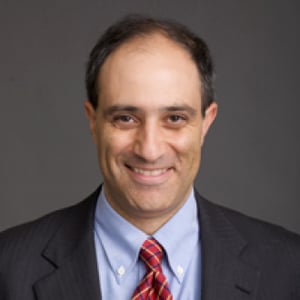
Carroll Professor of Jurisprudence, Georgetown Law
John Mikhail is the Carroll Professor of Jurisprudence at Georgetown University Law Center, where he has taught since 2004. He teaches and writes on a variety of topics, including constitutional law, moral psychology, moral and legal theory, and legal history. His recent scholarship has focused mainly on American constitutional history, including the original understanding of the Preamble, Tenth Amendment, and Emoluments, Ex Post Facto, and Necessary and Proper Clauses. Professor Mikhail received his B.A. from Amherst College, a Ph.D. in Philosophy from Cornell University, and his J.D. from Stanford Law School, where he was Senior Article Editor of the Stanford Law Review and Senior Submissions Editor of the Stanford Journal of International Law. Before coming to Georgetown, he was a Lecturer and Research Affiliate at MIT, an associate at Simpson, Thacher & Bartlett, and a judicial clerk to Judge Rosemary Barkett on the U.S. Court of Appeals for the Eleventh Circuit. Professor Mikhail served as the Law Center's Associate Dean for Research and Academic Programs from 2017 to 2020 and its Associate Dean for International and Transnational Programs from 2011 to 2013.

United States District Judge, United States District Court for the District of Columbia

Topics
Bye Bye, DEI: President Trump Issues Executive Order Revoking Biden’s Diversity, Equity, and Inclusion Rules and Axing Affirmative Action
January 20, 2025, will certainly go down in history as a major policy pivot-point, and...
Topics
Does a New Critique of Originalism by a Historian Neglect the Constitution?
Over at Law & Liberty, Professors John O. McGinnis and Mike Rappaport review a new...
Topics
What Is the Future of Antitrust?
The 2024 National Lawyers Convention featured a panel on the Future of Antitrust which offered...
Federalist Society Review, Volume 25
Katie McClendon
Federalist Society Review, Volume 25
The Federalist Society Review is the legal journal of the Federalist Society. The Review is...
Courthouse Steps Decision: E.M.D. Sales, Inc. v. Carrera
Michael J. O'Neill
E.M.D. Sales, Inc. v. Carrera concerns what standard of evidence the court should apply in...
Courthouse Steps Decision: E.M.D. Sales, Inc. v. Carrera
Michael J. O'Neill
E.M.D. Sales, Inc. v. Carrera concerns what standard of evidence the court should apply in...
Politics in the Workplace: The Legal and Business Challenges
Amanda K. Freeman, Bradford J. Kelley, Andrew Rogers
In the aftermath of the 2024 elections, and as citizens continue to engage in discourse...
Courthouse Steps Oral Argument: Barnes v. Felix
Matthew P. Cavedon
In Barnes v. Felix the Supreme Court is set to address a circuit split concerning...
Courthouse Steps Oral Argument: Barnes v. Felix
Matthew P. Cavedon
In Barnes v. Felix the Supreme Court is set to address a circuit split concerning...
Daniel Webster Debate Series: Does the Federal Government Have Broad Implied Powers?
John C. Harrison, John Mikhail, Ana Reyes
The Federalist Society's Georgetown Law Chapter'sDaniel Webster Debate Series presents Daniel Webster Debate Series:Does the...