
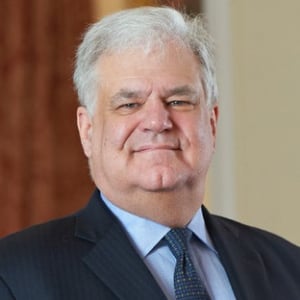
Stuyvesant P. Comfort Professor of Law; Director, Center for Financial Institutions; and Co-Director, Center for Civil Justice, New York University School of Law
Geoffrey Miller is an author or editor of a dozen books and more than 200 articles in the fields of financial institutions, contract law, corporate and securities law, constitutional law, civil procedure, legal history, jurisprudence, and ancient law. He has taught a wide range of subjects including law and economics, corporations, compliance and risk management, property, regulation of financial institutions, land development, securities law, the legal profession, and legal theory. Miller received his BA magna cum laude from Princeton in 1973 and his JD from Columbia in 1978, where he was a Stone Scholar and editor-in-chief of the Columbia Law Review. He clerked for Judge Carl McGowan of the US Court of Appeals for the District of Columbia Circuit and Justice Byron White of the US Supreme Court. After two years as an attorney adviser at the Office of Legal Counsel of the US Department of Justice and one year with a Washington, DC, law firm, he joined the faculty of the University of Chicago Law School in 1983 and NYU School of Law in 1995.
Miller has been a visiting professor or visiting scholar at Columbia University, Harvard University, University of Minnesota, University of Basel (Switzerland), University of Genoa (Italy), Collegio Carlo Alberto (Italy), Study Center Gerzensee (Switzerland), Vanderbilt University, University of St. Gallen (Switzerland), University of Frankfurt (Germany), University of Sydney (Australia), University of Auckland (New Zealand), and the Bank of Japan. Miller is a founder of the Society for Empirical Legal Studies, a scholarly organization devoted to promoting statistical and other empirical techniques in the study of legal institutions. He is founder and director of NYU School of Law’s Center for Financial Institutions, co-director of the Center for Civil Justice, co-founder of and Senior Academic Fellow at NYU's Program on Corporate Compliance and Enforcement, co-convener of the Global Economic Policy Forum, a member of the board of directors of State Farm Bank, and a fellow in the American Academy of Arts and Sciences.
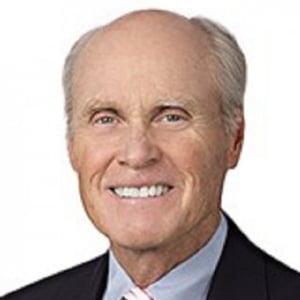
Former United States Assistant Attorney General, Civil Rights Division, United States Department of Justice
William Bradford served as the United States Assistant Attorney General for the Civil Rights Division from 1981 to 1988.
Reynolds was Senior Counsel in BakerBotts Antitrust and Competition division. He graduated with a LL.B. from Vanderbilt University Law School in 1967 where he was Order of the Coif and Editor-in-Chief of the Vanderbilt Law Review. In 1964, he received a B.A. from Yale University.
Reynolds passed away on September 14, 2019, in Seabrook Island, South Carolina at age 77.
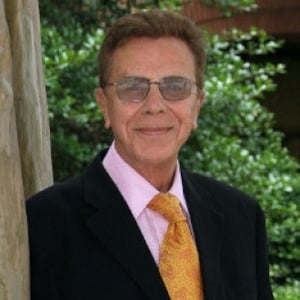
Professor of Law, Emeritus, Marshall-Wythe Law School at the College of William and Mary
William W. Van Alstyne, one of the nation's foremost constitutional law scholars, and William & Mary’s Lee Professor of Law from 2004 to 2012, died on January 29, 2019, in Southern California.
Professor Van Alstyne was appointed Lee Professor of Law at the Marshall-Wythe Law School at the College of William and Mary in 2004. He is a graduate of the University of Southern California (B.A. in philosophy, magna cum laude) and Stanford University Law School (J.D., Articles and Book Review Editor of The Stanford Law Review). Following his admission to the California Bar and brief service as Deputy Attorney General of California, he joined the Civil Rights Division of the U. S. Department of Justice handling voting rights cases in the South. After active duty with the U. S. Air Force, he was appointed to the law faculty of the Ohio State University, advancing to full professor in three years. Appointed to the Duke law faculty shortly thereafter, he was named to the William R. & Thomas S. Perkins Chair of Law in 1974.
Professor Van Alstyne’s professional writings have appeared during four decades in the principal law journals in the United States, with frequent republication in foreign journals. They address virtually every major subject in the field of constitutional law. His work has been cited in a large number of judicial opinions including those of the Supreme Court. The Journal of Legal Studies for January, 2000, named Professor Van Alstyne in the top forty most frequently cited legal scholars in the United States of the preceding half-century.
Professor Van Alstyne has also taught and given professional papers internationally, in Germany, Austria, and Denmark, in Chile, the former Soviet Union, China, Japan, Canada, and Australia. He has been a visiting faculty member on the law faculties of the University of Chicago, Stanford, California (Berkeley and UCLA), Pennsylvania, Michigan, and Illinois, a Fulbright Lecturer in Chile, a Senior Fellow at the Yale Law School, and a faculty fellow at the Hague International Court of Justice. He has appeared as counsel and as amicus curiae in constitutional litigation in the federal courts, including the Supreme Court. He has also appeared in numerous hearings before Senate and House Committees, on legislation affecting the separation of powers, war powers, constitutional amendments, impeachments, legislation affecting civil rights and civil liberties, and nominations to the Supreme Court.
In 1987, Professor Van Alstyne was selected in a poll of federal judges, lawyers, and academics by the New York Law Journal as one of three academics among "the ten most qualified" persons in the country for appointment to the Supreme Court, a distinction repeated in a similar poll by The American Lawyer, in 1991. Past National President of the American Association of University Professors, and former member of the National Board of Directors of the A.C.L.U., he was elected into the American Academy of Arts and Sciences in 1994.
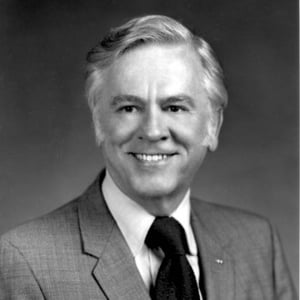
Former United States Representative, Florida
Charles Edward Bennett was a member of the United States House of Representatives from Jacksonville from 1949 to 1993. He was a Democrat.
He was born December 2, 1910 in Canton, New York and moved to Jacksonville by the end of his childhood. Bennett was an Eagle Scout and recipient of the Distinguished Eagle Scout Award from the Boy Scouts of America. He was a lawyer and a member of the United States Army during World War II before being elected to Congress from what was then the 2nd District. He was reelected 21 more times from this Jacksonville-based district. He rarely faced serious opposition even as Jacksonville fell under increasing Republican influence.
In 1951, he began proposing a code of ethics for government employees, nicknamed The Ten Commandments. After the Sherman-Adams Affair, the code was adopted as the first Code of ethics for Government Service in 1958. In 1954, he sponsored the bill that added the words “In God We Trust” to both the nation’s coins and currency.
Bennett died in Jacksonville on September 6, 2003 and is buried at Arlington National Cemetery. He is still the longest-serving member of either house of Congress in Florida’s history. The Charles E. Bennett Federal Building is named after him.
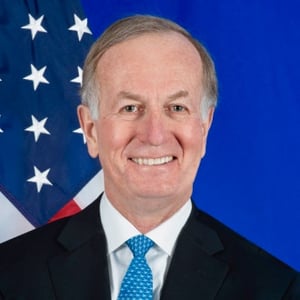
United States Ambassador to Australia
President Donald J. Trump nominated Ambassador Arthur B. (A.B.) Culvahouse Jr. to be the United States Ambassador to Australia on November 6, 2018. Confirmed by the U.S. Senate on January 2, 2019 by unanimous consent, he was formally sworn in by Vice President Mike Pence on February 19, 2019 and presented his credentials to the Governor-General, Sir Peter Cosgrove, on March 13, 2019.
Ambassador Culvahouse serves as the President’s personal representative to the government and people of Australia. He leads the U.S. Mission to Australia, which is comprised of the embassy in Canberra and three consulates in Melbourne, Sydney, and Perth.
Ambassador Culvahouse has a long and distinguished career. He is the former Chair of O’Melveny & Myers, an international law firm he was associated with for more than four decades. He began his career as Chief Legislative Assistant to United States Senator Howard H. Baker, Jr. and later served as White House Counsel to President Ronald Reagan. In 1989, President Reagan awarded Ambassador Culvahouse the Presidential Citizens’ Medal, an award to “recognize citizens who performed exemplary deeds of service for the country or their fellow citizens.” In December 1992, then-Secretary of Defense Dick Cheney awarded Ambassador Culvahouse the Defense Medal for Distinguished Public Service for his work on the Federal Advisory Committee on Nuclear Failsafe and Risk Reduction.
Both President Trump and the late-Senator John McCain tapped Ambassador Culvahouse to head the search to select their running mates.
Ambassador Culvahouse was raised in Ten Mile, Tennessee and attended the University of Tennessee and the New York University School of Law. He is the proud father of three accomplished daughters.
Former United States Representative, Florida
Charles Edward Bennett was a member of the United States House of Representatives from Jacksonville from 1949 to 1993. He was a Democrat.
He was born December 2, 1910 in Canton, New York and moved to Jacksonville by the end of his childhood. Bennett was an Eagle Scout and recipient of the Distinguished Eagle Scout Award from the Boy Scouts of America. He was a lawyer and a member of the United States Army during World War II before being elected to Congress from what was then the 2nd District. He was reelected 21 more times from this Jacksonville-based district. He rarely faced serious opposition even as Jacksonville fell under increasing Republican influence.
In 1951, he began proposing a code of ethics for government employees, nicknamed The Ten Commandments. After the Sherman-Adams Affair, the code was adopted as the first Code of ethics for Government Service in 1958. In 1954, he sponsored the bill that added the words “In God We Trust” to both the nation’s coins and currency.
Bennett died in Jacksonville on September 6, 2003 and is buried at Arlington National Cemetery. He is still the longest-serving member of either house of Congress in Florida’s history. The Charles E. Bennett Federal Building is named after him.
United States Ambassador to Australia
President Donald J. Trump nominated Ambassador Arthur B. (A.B.) Culvahouse Jr. to be the United States Ambassador to Australia on November 6, 2018. Confirmed by the U.S. Senate on January 2, 2019 by unanimous consent, he was formally sworn in by Vice President Mike Pence on February 19, 2019 and presented his credentials to the Governor-General, Sir Peter Cosgrove, on March 13, 2019.
Ambassador Culvahouse serves as the President’s personal representative to the government and people of Australia. He leads the U.S. Mission to Australia, which is comprised of the embassy in Canberra and three consulates in Melbourne, Sydney, and Perth.
Ambassador Culvahouse has a long and distinguished career. He is the former Chair of O’Melveny & Myers, an international law firm he was associated with for more than four decades. He began his career as Chief Legislative Assistant to United States Senator Howard H. Baker, Jr. and later served as White House Counsel to President Ronald Reagan. In 1989, President Reagan awarded Ambassador Culvahouse the Presidential Citizens’ Medal, an award to “recognize citizens who performed exemplary deeds of service for the country or their fellow citizens.” In December 1992, then-Secretary of Defense Dick Cheney awarded Ambassador Culvahouse the Defense Medal for Distinguished Public Service for his work on the Federal Advisory Committee on Nuclear Failsafe and Risk Reduction.
Both President Trump and the late-Senator John McCain tapped Ambassador Culvahouse to head the search to select their running mates.
Ambassador Culvahouse was raised in Ten Mile, Tennessee and attended the University of Tennessee and the New York University School of Law. He is the proud father of three accomplished daughters.
Stuyvesant P. Comfort Professor of Law; Director, Center for Financial Institutions; and Co-Director, Center for Civil Justice, New York University School of Law
Geoffrey Miller is an author or editor of a dozen books and more than 200 articles in the fields of financial institutions, contract law, corporate and securities law, constitutional law, civil procedure, legal history, jurisprudence, and ancient law. He has taught a wide range of subjects including law and economics, corporations, compliance and risk management, property, regulation of financial institutions, land development, securities law, the legal profession, and legal theory. Miller received his BA magna cum laude from Princeton in 1973 and his JD from Columbia in 1978, where he was a Stone Scholar and editor-in-chief of the Columbia Law Review. He clerked for Judge Carl McGowan of the US Court of Appeals for the District of Columbia Circuit and Justice Byron White of the US Supreme Court. After two years as an attorney adviser at the Office of Legal Counsel of the US Department of Justice and one year with a Washington, DC, law firm, he joined the faculty of the University of Chicago Law School in 1983 and NYU School of Law in 1995.
Miller has been a visiting professor or visiting scholar at Columbia University, Harvard University, University of Minnesota, University of Basel (Switzerland), University of Genoa (Italy), Collegio Carlo Alberto (Italy), Study Center Gerzensee (Switzerland), Vanderbilt University, University of St. Gallen (Switzerland), University of Frankfurt (Germany), University of Sydney (Australia), University of Auckland (New Zealand), and the Bank of Japan. Miller is a founder of the Society for Empirical Legal Studies, a scholarly organization devoted to promoting statistical and other empirical techniques in the study of legal institutions. He is founder and director of NYU School of Law’s Center for Financial Institutions, co-director of the Center for Civil Justice, co-founder of and Senior Academic Fellow at NYU's Program on Corporate Compliance and Enforcement, co-convener of the Global Economic Policy Forum, a member of the board of directors of State Farm Bank, and a fellow in the American Academy of Arts and Sciences.
Former United States Assistant Attorney General, Civil Rights Division, United States Department of Justice
William Bradford served as the United States Assistant Attorney General for the Civil Rights Division from 1981 to 1988.
Reynolds was Senior Counsel in BakerBotts Antitrust and Competition division. He graduated with a LL.B. from Vanderbilt University Law School in 1967 where he was Order of the Coif and Editor-in-Chief of the Vanderbilt Law Review. In 1964, he received a B.A. from Yale University.
Reynolds passed away on September 14, 2019, in Seabrook Island, South Carolina at age 77.
Professor of Law, Emeritus, Marshall-Wythe Law School at the College of William and Mary
William W. Van Alstyne, one of the nation's foremost constitutional law scholars, and William & Mary’s Lee Professor of Law from 2004 to 2012, died on January 29, 2019, in Southern California.
Professor Van Alstyne was appointed Lee Professor of Law at the Marshall-Wythe Law School at the College of William and Mary in 2004. He is a graduate of the University of Southern California (B.A. in philosophy, magna cum laude) and Stanford University Law School (J.D., Articles and Book Review Editor of The Stanford Law Review). Following his admission to the California Bar and brief service as Deputy Attorney General of California, he joined the Civil Rights Division of the U. S. Department of Justice handling voting rights cases in the South. After active duty with the U. S. Air Force, he was appointed to the law faculty of the Ohio State University, advancing to full professor in three years. Appointed to the Duke law faculty shortly thereafter, he was named to the William R. & Thomas S. Perkins Chair of Law in 1974.
Professor Van Alstyne’s professional writings have appeared during four decades in the principal law journals in the United States, with frequent republication in foreign journals. They address virtually every major subject in the field of constitutional law. His work has been cited in a large number of judicial opinions including those of the Supreme Court. The Journal of Legal Studies for January, 2000, named Professor Van Alstyne in the top forty most frequently cited legal scholars in the United States of the preceding half-century.
Professor Van Alstyne has also taught and given professional papers internationally, in Germany, Austria, and Denmark, in Chile, the former Soviet Union, China, Japan, Canada, and Australia. He has been a visiting faculty member on the law faculties of the University of Chicago, Stanford, California (Berkeley and UCLA), Pennsylvania, Michigan, and Illinois, a Fulbright Lecturer in Chile, a Senior Fellow at the Yale Law School, and a faculty fellow at the Hague International Court of Justice. He has appeared as counsel and as amicus curiae in constitutional litigation in the federal courts, including the Supreme Court. He has also appeared in numerous hearings before Senate and House Committees, on legislation affecting the separation of powers, war powers, constitutional amendments, impeachments, legislation affecting civil rights and civil liberties, and nominations to the Supreme Court.
In 1987, Professor Van Alstyne was selected in a poll of federal judges, lawyers, and academics by the New York Law Journal as one of three academics among "the ten most qualified" persons in the country for appointment to the Supreme Court, a distinction repeated in a similar poll by The American Lawyer, in 1991. Past National President of the American Association of University Professors, and former member of the National Board of Directors of the A.C.L.U., he was elected into the American Academy of Arts and Sciences in 1994.
Wayne A. Abernathy, Wild Bells
Wayne A. Abernathy is a former U.S. Treasury Assistant Secretary for Financial Institutions under President George W. Bush, receiving the Alexander Hamilton Award in recognition of his service. In that office he was also a member of the Board of Directors of the Securities Investor Protection Corporation. Prior to his work at the Treasury, Mr. Abernathy served as Staff Director of the Senate Banking Committee, under Chairman Phil Gramm.
Following his service at the Treasury, Mr. Abernathy worked for 15 years on the staff of the American Bankers Association, as Executive Vice President for Financial Institutions Policy and Regulatory Affairs.
Previous experience with the Senate Banking Committee includes serving as Staff Director of the Subcommittee on Securities during 1995-1998. From 1989 until 1994, Mr. Abernathy was a Republican economist for the committee. He previously worked as a senior legislative assistant for Senator Gramm during 1987-1989 and as an economist for the Banking Committee’s Subcommittee on International Finance and Monetary Policy during 1981-1986, under Chairman Jake Garn.
Mr. Abernathy earned his bachelor’s degree in International Studies from The Johns Hopkins University in 1978. In 1980, he received a master’s degree in International Studies from the School of Advanced International Studies of The Johns Hopkins University.
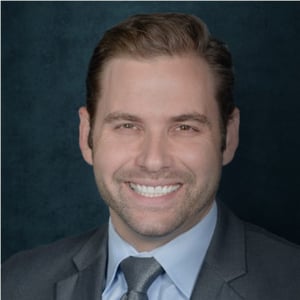
Vice President for the Program on Technology, Criminal Justice and Civil Liberties, Lincoln Network
Arthur Rizer is the Vice President for the Program on Technology, Criminal Justice and Civil Liberties at Lincoln Network. In addition to his work at Lincoln, Arthur is a visiting lecturer at University College London, and an adjunct professor at George Mason University’s Antonin Scalia Law School. Arthur is also a member of Columbia University Justice Lab’s Executive Session for the Future of Justice Policy, the Federalist Society’s Executive Committee of the Criminal Law Practice Group, the Virginia Advisory Committee to the U.S. Commission on Civil Rights, and other advisory bodies.
Before joining Lincoln, Arthur was founding director of the R Street Institute’s program on criminal justice and civil liberties. Prior to that, Arthur taught at West Virginia University’s College of Law, and was a visiting professor at Georgetown University Law Center. He also served as a trial attorney with the U.S. Justice Department, primarily as a federal prosecutor in the Criminal Division, where he targeted command-and-control drug cartel leaders and narco-terrorists. He also served as a prosecutor in the U.S. Attorney’s Office for the Southern District of California and in the civil division. Earlier in his career, Arthur served in the U.S. Army, originally enlisting as a private before later receiving a commission. He served as an armor officer, later becoming the commander of a military police company and a Reserve Officers’ Training Corps assistant professor. He deployed to Fallujah, Iraq, with the mission to train the Iraqi Infantry and served as an MP acting battalion commander and executive officer. He retired as a lieutenant colonel from the U.S. Army (WVNG). During his Army career, Arthur received the Bronze Star, Purple Heart, Meritorious Service and Iraq Campaign medals.
Arthur is the author of three books: Lincoln’s Counsel (2010); The National Security Implications of Immigration Law (2013); and Jefferson’s Pen: The Art of Persuasion (2016).
Arthur earned his bachelor’s degree in political science from Pacific Lutheran University; a master of laws, with distinction, from Georgetown University’s Law Center; and his JD, magna cum laude, from Gonzaga University School of Law. He is also a graduate of the U.S. Marine Corps’ Command Staff College. He is in the final stages of a doctorate at the University of Oxford, Faculty of Law, Centre of Criminology that focuses on policing.
Brett Tolman, the former U.S. Attorney for Utah and former chief counsel for crime and terrorism in the U.S. Senate Judiciary Committee, founded the Tolman Group and focuses on public policy and reforming government.

Dr. John Eastman is the former Henry Salvatori Professor of Law & Community Service and former Dean at Chapman University's Dale E. Fowler School of Law, where he had been a member of the faculty since 1999, specializing in Constitutional Law, Legal History, and Property. He is a founding director of the Center for Constitutional Jurisprudence, a public interest law firm affiliated with the Claremont Institute that he founded in 1999. He has a Ph.D. in Government from the Claremont Graduate School and a J.D. from the University of Chicago Law School, and a B.A. in Politics and Economics from the University of Dallas. He serves as the Chairman of the Board of the National Organization for Marriage.
Prior to joining the Chapman law faculty, Dr. Eastman served as a law clerk to the Honorable Clarence Thomas, Associate Justice, Supreme Court of the United States, and to the Honorable J. Michael Luttig, Judge, United States Court of Appeals for the Fourth Circuit and practiced law with the national law firm of Kirkland & Ellis. Dr. Eastman has also represented numerous clients in important constitutional law matters and has argued before the Supreme Court. On behalf of the Claremont Institute Center for Constitutional Jurisprudence, he has participated as amicus curiae before the Supreme Court of the United States, U.S. Courts of Appeals, and State Supreme Courts in more than one hundred cases of constitutional significance, including Boy Scouts of America v. Dale, Zelman v. Simmons-Harris (the school vouchers case), Kelo v. New London, Ct. (eminent domain), and Van Orden v. Perry (the 10 Commandments case). He has also appeared as an expert legal commentator on numerous television and radio programs, including C-SPAN, Fox News, PBS, NewsHour, and The O'Reilly Factor.
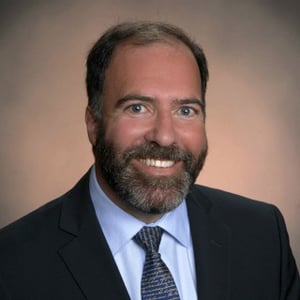
Professor of Law, Widener University Commonwealth Law School
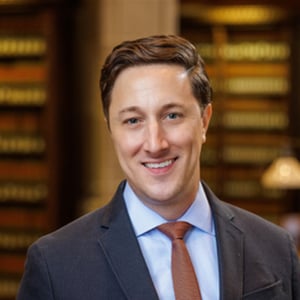
Professor of Law, Notre Dame Law School
Professor Derek Muller is a nationally-recognized scholar in the field of election law. His research focuses on the role of states in the administration of federal elections, the constitutional contours of voting rights and election administration, the limits of judicial power in the domain of elections, and the Electoral College.
He has published more than two dozen academic works, and his op-eds have appeared in the New York Times, the Los Angeles Times, and the Wall Street Journal. He has testified before Congress, and he is a contributor at the Election Law Blog. He is a co-author on a Federal Courts casebook published by Carolina Academic Press. He is also the co-reporter on a new Restatement of the Law, Election Litigation, an effort led by the American Law Institute.
Professor Muller teaches Election Law, Civil Procedure, and Evidence.

Laurence A. Tisch Professor of Law and Director, Classical Liberal Institute, New York University School of Law; Director, Classical Liberal Institute, Civitas Institute University of Texas at Austin
Richard A. Epstein is the Laurence A. Tisch Professor of Law, at New York University, a senior research fellow at the Civitas Institute at the University of Texas Austin, and a senior Lecturer, the University of Chicago. He received an LL.D., h.c . from the University of Ghent, 2003 , and an LLD h.c . from the University of Siegen in 2018 and the Bradley Prize in 2011. He has been a member of the American Academy of Arts and Sciences since 1985. He has edited both the Journal of Legal Studies (1981-1991) and the Journal of Law and Economics (1991-2001). He is also a founder and director of the Classical Liberal Institute at NYU Law School. His most recent book is The Classical Liberal Constitution: The Uncertain Quest for Limited Government (2014). His other books include Takings: Private Property and the Power of Eminent Domain ( 1985); Bargaining with the State (1993); Simple Rules for a Complex World (1995); Principles for a Free Society: Reconciling Individual Liberty and the Common Good (1998); Skepticism and Freedom: A Modern Theory of Classical Liberalism (2003); Design for Liberty: Private Property, Public Administration and the Rule of Law (2011), and most recently, The Myth of Birthright citizenship—and Beyond (2026). He has taught courses in , administrative law, antitrust, constitutional, contracts, environmental law, land use planning; real property, torts and water law. He has written and spoken extensively on a wide range of topics, and is writes a regular column for Defining Ideas.
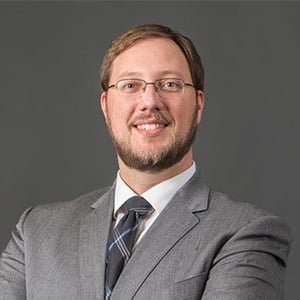
Laurence H. Silberman Chair in Constitutional Governance and Senior Fellow, American Enterprise Institute; Co-Director, Antonin Scalia Law School’s C. Boyden Gray Center for the Study of the Administrative State
Adam J. White is the Laurence H. Silberman Chair in Constitutional Governance and senior fellow at the American Enterprise Institute, where he focuses on the Supreme Court and the administrative state. Concurrently, he codirects the Antonin Scalia Law School’s C. Boyden Gray Center for the Study of the Administrative State.
Mr. White practiced constitutional and administrative law, particularly in the regulation of energy and financial markets. He started his legal career as a law clerk for Judge David B. Sentelle at the US Court of Appeals for the DC Circuit.
Mr. White has written for the Wall Street Journal, the New York Times, the Washington Post, National Affairs, Commentary, Harvard Journal of Law & Public Policy, and Notre Dame Law Review, among other publications. He is a regular contributor to the Yale Journal on Regulation’s Notice and Comment blog, and for many years, he was one of the Weekly Standard’s lead writers on constitutional law and the Supreme Court.
Mr. White has testified often before Congress, including before the Senate’s Committees on the Judiciary; Commerce, Science, and Transportation; and Homeland Security and Governmental Affairs and before the House’s Judiciary and Financial Services Committees. In 2018, the Senate Committee on the Judiciary called him to testify in Brett Kavanaugh’s Supreme Court confirmation hearings to advise senators on Kavanaugh’s approach to administrative law.
In 2021, he served on the Presidential Commission on the Supreme Court of the United States, where he criticized “Court packing” and other efforts to restructure the Supreme Court. In 2017, he was appointed to serve on the Administrative Conference of the United States. He also serves on the leadership council for the American Bar Association’s Administrative Law and Regulatory Practice Section, which he will chair in 2023–24. Before joining AEI, he was a research fellow at Stanford University’s Hoover Institution and an adjunct fellow at the Manhattan Institute.
Mr. White has a JD from Harvard Law School and a bachelor of business administration from the College of Business at the University of Iowa.
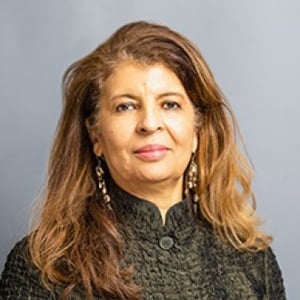
Professor of Law and Co-Director, Racial Justice Project, New York Law School
Penelope Andrews joined NYLS in January 2019 and teaches comparative and international law courses. She also serves as Co-Director of NYLS’s Racial Justice Project, focusing on international and South African issues.
Professor Andrews was the 2018–19 Sabbatical Scholar at the Center for the Study of Law and Culture at Columbia Law School. She previously completed two terms as Dean: From 2016 to 2018 as the first Black dean at the University of Cape Town Faculty of Law, and from 2012 to 2015 as the first female dean of Albany Law School in New York. She was previously the Associate Dean for Academic Affairs at the City University of New York (CUNY) School of Law and Director of International Programs at Valparaiso Law School.
She began her teaching career at La Trobe University in Melbourne, Australia, where she taught for eight years before moving to CUNY, where she was on the faculty for 15 years, teaching public international law, gender and law, race and law, comparative law, torts, and lawyering. She has also held visiting appointments at several law schools in the U.S. and internationally, including in South Africa, Canada and Australia. Professor Andrews received her B.A. and. LL.B. degrees from the University of KwaZulu-Natal (formerly University of Natal) in South Africa and an LL.M. from Columbia Law School.
Professor Andrews is active in international collaborative research and mentoring networks and is particularly committed to ensuring the relevance of law and society scholarship to academic communities in the global south and global north. She is an editor of the International Journal of Law in Context, the Human Rights and the Global Economy E-Journal, and the African Law E-Journal.
She has also published several books and articles that focus on comparative constitutional law, gender and racial equality, human rights—particularly the tension between respect for indigenous law and implementing broader human rights norms—the judiciary, and legal education. Her book From Cape Town to Kabul: Rethinking Strategies for Pursuing Women’s Human Rights was published in 2012. She publishes regularly in the popular media and on social media, focusing on issues of race, poverty, legal education, public interest litigation, and the ongoing challenges of transforming an economically unequal and racially divided society.
Professor Andrews’s focus on the judiciary in South Africa seeks to bridge the divide between theory and practice. She is a trainer for the Judicial Institute for Africa, focusing on opinion writing and communications skills for new and experienced judges. She also served as an Acting Judge of the North Gauteng High Court in Pretoria for the 2018 third term, presiding over criminal appeals, motion court, and civil trials. She has served as an arbitrator in hearings on racial discrimination in South Africa.
She has served on significant law school committees and the boards of public interest and human rights organizations, including the Africa Section of Human Rights Watch, South Africa Partners, the Legal Resources Center, and the National Center for Law and Economic Justice. Professor Andrews has received many awards for her work, including, in 2015, the National Bar Association’s International Award for her global human rights advocacy. In recognition of her human rights work, the University of KwaZulu-Natal provides an annual award in her name.
She will start her two-year term as the President of the Law and Society Association in June 2019.

Panel I: The President's Powers as Commander-in-Chief vs. Congress's War Power and Appropriations Power [Archive Collection]
Geoffrey P. Miller, Wm. Bradford Reynolds, William Van Alstyne, Charles E. Bennett, A.B. Culvahouse
Foreign Affairs and the Constitution
On November 6-7, 1987, The Federalist Society held a symposium at the Grand Hyatt Hotel...
Panel I: The President's Powers as Commander-in-Chief vs. Congress's War Power and Appropriations Power [Archive Collection]
Charles E. Bennett, A.B. Culvahouse, Geoffrey P. Miller, Wm. Bradford Reynolds, William Van Alstyne
Foreign Affairs and the Constitution
On November 6-7, 1987, The Federalist Society held a symposium at the Grand Hyatt Hotel...
The Resolution of Too Big to Fail
Wayne A. Abernathy
Federalist Society Review, Volume 21
Note from the Editor: The Federalist Society takes no positions on particular legal and public...
Seeking Success: Reforming America’s Community Supervision System
Arthur Rizer, Brett Tolman
Federalist Society Review, Volume 21
Note from the Editor: The Federalist Society takes no positions on particular legal and public...
Seila Law, LLC v. Consumer Financial Protection Bureau (CFPB) - Post-Decision SCOTUScast
John C. Eastman
featuring John C. Eastman and Brian Johnson
On June 29, 2020, the Supreme Court decided Seila Law, LLC v. Consumer Financial Protection...
Topics
Supreme Court Protects The Rights of Religious Schools
Yesterday, the Supreme Court in Our Lady of Guadalupe v. Morrissey-Berru made clear that the...
Courthouse Steps Decision: The Limits of Robocalls, Barr v. American Association of Political Consultants, Inc.
Michael R. Dimino
In Barr v. American Association of Political Consultants, Inc., the Supreme Court held unconstitutional a...
Courthouse Steps Decision: CO Dept. of State v. Baca and Chiafalo v. WA
Derek T. Muller
In Chiafalo v. Washington and its companion case Colorado Department of State v. Baca, the Supreme Court...
Book Review: The Dubious Morality of Modern Administrative Law by Richard Epstein
Richard A. Epstein, Adam White
Richard Epstein’s The Dubious Morality of Modern Administrative Law examines how the growth of the...
Is Social Justice Just? The Moral Obligations of Social Justice [POLICYbrief]
Penelope Andrews
Short video featuring Penelope Andrews
Social justice is a disputed concept in law and philosophy. In this episode of POLICYbrief,...