
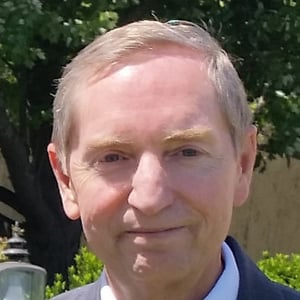
Legal Director & General Counsel, Criminal Justice Legal Foundation
Kent S. Scheidegger has been the Legal Director of the Criminal Justice Legal Foundation since December 1986. He also served as Chairman of the Criminal Law Practice Group of the Federalist Society 2003 to 2005. His articles on criminal and constitutional law have been published in law reviews, national legal publications, and congressional reports. Legal arguments authored by Mr. Scheidegger have been cited and incorporated in several precedent-setting United States Supreme Court decisions.
After receiving a degree in physics with honors from New Mexico State University in 1976, Mr. Scheidegger served for six years in the United States Air Force as a Nuclear Research Officer. He took his law degree with distinction from the University of the Pacific, McGeorge School of Law in 1982 and practiced civil law in Northern California. He was general counsel of California Cooler, Inc. from 1984 until 1986, when he joined the Foundation.
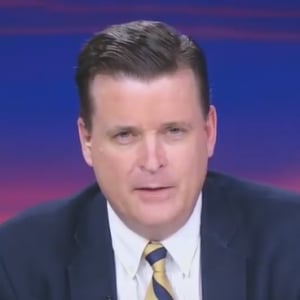
Director of Litigation, Immigration Reform Law Institute
Mr. Hajec joined the Immigration Reform Law Institute (IRLI) in 2017 as its Director of Litigation, and is responsible for overseeing IRLI’s public interest litigation. Previously, he has focused his career on constitutional and other civil rights law in the public interest, and has had an abiding concern about the many adverse effects of illegal and excessive legal immigration on American jobs and communities.
At IRLI, in addition to representing plaintiffs in immigration-related civil lawsuits, he has overseen the drafting and filing of nearly 100 briefs, mostly amicus curiae briefs in defense of the Trump administration’s immigration initiatives, which have been subjected to an unprecedented degree of legal assault by well-funded interest groups.
Prior to joining IRLI, Mr. Hajec was an attorney at the Center for Individual Rights (CIR), where he litigated a string of high-profile cases, including the defense of videographer James O’Keefe in suits brought by former ACORN employees, a class action suit on behalf of Asian American students discriminated against by the New York City public schools, and a case that resulted in the U.S. Court of Appeals for the Fifth Circuit’s striking down Texas’s psychologists licensing statute as an overbroad restriction on free speech.
Before CIR, Mr. Hajec was an officer in the Navy Judge Advocate General’s Corps, where he served as a defense counsel before courts-martial and then as Appellate Government Counsel, arguing over 100 appeals before the Navy-Marine Corps Court of Criminal Appeals and the Court of Appeals for the Armed Forces. He received the Navy Commendation Medal for his legal work, and also because of his poor handling of an emergency during a hurricane.
He received his law degree from the University of Pennsylvania Law School and his undergraduate degree, cum laude, from the University of Michigan. He has a Ph.D. in philosophy from the University of Miami, and studied philosophy and sociology at Oxford University.

Professor of Law, Antonin Scalia Law School, George Mason University
ILYA SOMIN is Professor of Law at George Mason University and the B. Kenneth Simon Chair in Constitutional Studies at the Cato Institute. His research focuses on constitutional law, property law, democratic theory, federalism, and migration rights. He is the author of Free to Move: Foot Voting, Migration, and Political Freedom (Oxford University Press, revised and expanded edition, 2022), Democracy and Political Ignorance: Why Smaller Government is Smarter (Stanford University Press, revised and expanded second edition, 2016), and The Grasping Hand: Kelo v. City of New London and the Limits of Eminent Domain (University of Chicago Press, 2015, rev. paperback ed., 2016), coauthor of A Conspiracy Against Obamacare: The Volokh Conspiracy and the Health Care Case (Palgrave Macmillan, 2013), and co-editor of Eminent Domain: A Comparative Perspective (Cambridge University Press, 2017). Democracy and Political Ignorance has been translated into Italian and Japanese.
Somin’s work has appeared in numerous scholarly journals, including the Yale Law Journal, Stanford Law Review, Northwestern University Law Review, Georgetown Law Journal, Critical Review, and others. Somin has also published articles in a variety of popular press outlets, including the New York Times, Washington Post, Wall Street Journal, Los Angeles Times, CNN, NBC, The Atlantic, USA Today, Boston Globe, US News and World Report, South China Morning Post, National Law Journal and Reason. He has been quoted or interviewed by the New York Times, Washington Post, Wall Street Journal, Time, Newsweek, The Economist, the Christian Science Monitor, the Financial Times, The Guardian, the Associated Press, CBS, MSNBC, NPR, BBC, Reuters, the Canadian Broadcasting Corporation, the Australian Broadcasting Corporation, Radio Free Europe/Radio Liberty, Al Jazeera, and the Voice of America, among other media.
Somin’s writings have been cited in decisions by the United States Supreme Court, multiple state supreme courts and lower federal courts, and the Supreme Court of Israel. He is co-counsel for the plaintiffs in VOS Selections, Inc. v. Trump, a case challenging the constitutionality of President Trump’s “Liberation Day” tariffs. Somin has testified on the use of drones for targeted killing in the War on Terror before the US Senate Judiciary Subcommittee on the Constitution, Civil Rights, and Human Rights. In 2009, he testified on property rights issues at the United States Senate Judiciary Committee confirmation hearings for Supreme Court Justice Sonia Sotomayor. Somin writes regularly for the popular Volokh Conspiracy law and politics blog, now affiliated with Reason magazine (previously affiliated with the Washington Post from 2014 to 2017). From 2006 to 2013, he served as Co-Editor of the Supreme Court Economic Review, one of the country’s top-rated law and economics journals.
Somin has served as a visiting professor at the University of Pennsylvania Law School. He has also been a visiting professor or scholar at the Georgetown University Law Center, the University of Hamburg, Germany, the University of Torcuato Di Tella in Buenos Aires, Argentina, Uriel Reichman University in Israel, and Zhengzhou University in China. He is a University Affiliate of the Schar School of Policy and Government at George Mason University, and an affiliated faculty member of the George Mason University Institute for Immigration Research. Before joining the faculty at George Mason, Somin was the John M. Olin Fellow in Law at Northwestern University Law School in 2002-2003. In 2001-2002, he clerked for the Hon. Judge Jerry E. Smith of the U.S. Court of Appeals for the Fifth Circuit. Professor Somin earned his B.A., Summa Cum Laude, at Amherst College, M.A. in Political Science from Harvard University, and J.D. from Yale Law School.
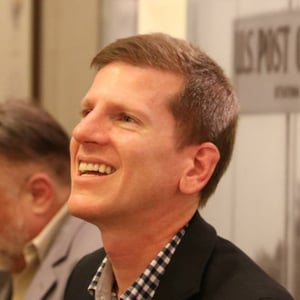
Historian and Author
Garrett Peck is an author, historian and tour guide in the nation's capital. He leads tours through The Smithsonian Associates, and his Temperance Tour of Prohibition-related sites has been featured on C-SPAN Book TV and the History Channel program "Ten Things You Didn't Know About" with punk rock legend Henry Rollins. He was featured on a two-hour documentary about Prohibition by the Smithsonian Channel. His seventh book, The Great War in America: World War I and Its Aftermath, was published in 2018.
Peck was involved with the DC Craft Bartenders Guild in lobbying the DC City Council to have the Rickey declared Washington's native cocktail in 2011. He researched and pinpointed the Washington Brewery site at Navy Yard, and is particularly proud that Green Hat Gin is named after a character Peck wrote about in Prohibition in Washington, D.C.: congressional bootlegger George Cassiday. He has lectured at the Library of Congress, the National Archives, and the Smithsonian Institution, and often speaks at historical societies, literary clubs and trade associations.
Peck is on the board of the Woodrow Wilson House and is a member of the Association of the Oldest Inhabitants of D.C. A native Californian and graduate of the Virginia Military Institute and George Washington University and U.S. Army veteran, he lives in Arlington, Virginia.
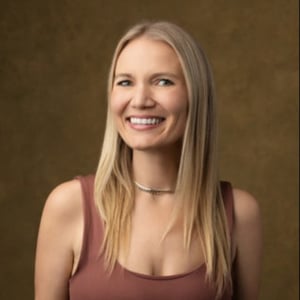
Constitutional Scholarship Director and Senior Legal Analyst, Pacific Legal Foundation
Anastasia Boden is Director of Constitutional Scholarship at Pacific Legal Foundation, where she leads the organization’s Supreme Court commentary and directs scholarly analysis in support of the firm’s litigation. She has represented entrepreneurs and small businesses nationwide in challenges to onerous licensing regimes, anti-competitive titling restrictions, Certificate of Need (“competitor’s veto”) laws, and other forms of unnecessary red tape that block economic opportunity.
Prior to this role, Anastasia developed nearly a dozen constitutional challenges to Certificate of Need laws across the country, helping spur legislative reform in Montana, Pennsylvania, and West Virginia. Her victories include a ruling invalidating Houston’s busking restrictions, multiple appellate decisions expanding access to the courts for civil rights plaintiffs, and the legislative repeal of Virginia’s happy-hour advertising ban.
Her writings on law and liberty have been featured in USA Today, The Washington Post, The Wall Street Journal, the Los Angeles Times, the Chicago Tribune, Forbes, and more, and she has appeared on Headline News, CBS News, Fox News, ReasonTV, Newsmax, and John Stossel. In 2020, she was featured on Libertarian Party presidential candidate Jo Jorgensen’s Supreme Court shortlist.
Anastasia earned her BA with dean’s honors from the University of California, Santa Barbara, and her JD from Georgetown University Law Center, where she was research assistant to Professor Randy E. Barnett—the “intellectual godfather” of the constitutional challenge to Obamacare. She is the co-creator of the podcast Dissed, about infamous Supreme Court dissents. She authors the biweekly newsletter SCOTUS Scoop and the column, “In Dissent” for SCOTUSblog.
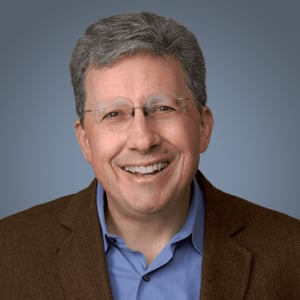
General Counsel, Competitive Enterprise Institute
Daniel Greenberg is the General Counsel at the Competitive Enterprise Institute. His research focuses on civil asset forfeiture and regulatory reform. He served as senior policy advisor at the U.S. Department of Labor from 2017-2021. From 2011-2017, he was president of the Advance Arkansas Institute, a nonprofit research and educational organization.
He has been an adjunct professor of law and political science at the University of Arkansas at Little Rock as well as senior counsel for the Center for Class Action Fairness. He served in the Arkansas House of Representatives from 2007-2011, and on the Pulaski County Quorum Court for four years prior to that. As a state legislator, he received National Review’s “2010 Challenge / Best Conservative Idea” award for his work on federalism issues as well as the Arkansas Press Association’s Freedom of Information Award for his work on First Amendment issues.
During the 1990s, he served as a congressional staffer for Congressman Jay Dickey and Tim Hutchinson before moving to the Heritage Foundation and then to the Cato Institute. He has published extensively on government and public policy in newspapers, magazines and academic journals, including the New York Times, National Review, the Monist, the John Marshall Law Review, and the Ohio State Law Journal. He holds degrees from Brown University, Bowling Green State University, and UALR’s Bowen School of Law.

Of Counsel, Spencer Fane LLP
Anthony J. “A.J.” Ferate has built a multi-faceted background in the areas of the law, policy, energy, campaigns and elections, and defense over the last 20 years.
Through recent representation as Vice President of Regulatory Affairs for the Oklahoma Independent Petroleum Association (“OIPA”), A.J. held responsibilities over government efforts outside of the legislative branch on matters as broad as water, electric generation, commodity marketing, land matters, and seismicity. A.J. also maintained responsibility for legal matters at OIPA, including amicus briefing in appellate matters. A.J.’s extensive experience also includes management of public policy strategy for a Fortune 500 company.
For the past eleven years, A.J. has volunteered as General Counsel and spokesman for the Oklahoma Republican Party and has represented a number of elected officials, including U.S. Senator James Lankford, former statewide elected officials, a number of state legislators, and members of Congress.
Additionally, A.J. has assisted elected officials serve their constituents in all branches of government. Early in his career, A.J. held legislative aide duties in the Nebraska Legislature, then went on to work for former Nebraska Treasurer David Heineman. A.J. gained experience in the judiciary while serving Judge Gary L. Lumpkin at the Oklahoma Court of Criminal Appeals, the highest criminal appellate court in Oklahoma. Following this service, A.J. began work with Denise A. Bode of the Oklahoma Corporation Commission, assisting her in her duties regulating 70 percent of Oklahoma’s economy, including oil and gas and electric utilities.
A.J. honorably served ten years as an intelligence analyst for the United States Naval Reserve, including time at the Office of Naval Intelligence in the greater Washington DC area.
Opinion pieces authored or ghostwritten by A.J. have been published in the Seattle Times, Politico, Law360, The Oklahoman, Tulsa World and The Journal Record. A.J. has also been interviewed by national and international newspapers, and has also appeared on national radio programs including NPR’s The Diane Rehm Show and On Point with Tom Ashbrook.

Professor of Law, South Texas College of Law Houston
Josh Blackman is a national thought leader on constitutional law and the United States Supreme Court. Josh’s work was quoted during two presidential impeachment trials. He has testified before Congress and advises federal and state lawmakers. Josh regularly appears on TV, including NBC, CBS, ABC, Fox, and the BBC. Josh is also a frequent guest on NPR and other syndicated radio programs. He has published commentaries in the New York Times, Wall Street Journal, Washington Post, and leading national publications.
Since 2012, Josh has served as a professor at the South Texas College of Law Houston. He holds the Centennial Chair of Constitutional Law. Josh is an Adjunct Fellow at the Manhattan Institute. Josh has written more than seven dozen law review articles that have been cited more than a thousand times. Josh was selected as the Jurist of the Year by the Texas Journal of Law & Public Policy, received the inaugural Meese III Originalism Award, and was awarded the Inaugural Joseph Story Award. Josh was selected by Forbes Magazine for the “30 Under 30” in Law and Policy. Josh is the President of the Harlan Institute, and founded FantasySCOTUS, the Internet’s Premier Supreme Court Fantasy League. He blogs at the Volokh Conspiracyand posts@JoshMBlackman.
U.S. Court of Appeals, Sixth Circuit
Danny Julián Boggs is a Judge on the United States Court of Appeals for the Sixth Circuit. He was appointed to a newly created seat on that court on January 29, 1986 by President Ronald Reagan, confirmed by the U.S. Senate on March 3, and received his commission on March 25. He served as the Chief Judge of the Sixth Circuit from 2003 to 2009.
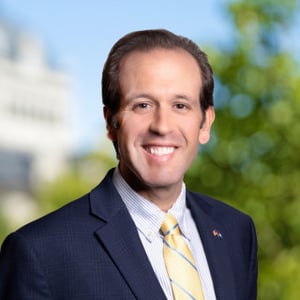
Member, Sturgill, Turner, Barker & Moloney, PLLC
Currently a litigator in private practice, Carmine has served the public as counsel and director for executive and regulatory agencies in Kentucky. Most recently as Chief of Staff and as General Counsel to the Kentucky Attorney General, he provided comprehensive strategic, policy, political, and legal advice and counsel to the Attorney General and the office’s divisions on issues involving complex litigation, government law, ethics, and compliance.
He previously served as Executive Director of the Attorney General’s Office of Civil & Environmental Law, where he oversaw trial litigation throughout the Commonwealth as well as appeals under the Open Meetings and Open Records Acts, and Opinions of the Attorney General. In this role, he was chiefly responsible for defending state statutes challenged as unconstitutional and for the defense of executive and judicial branch officials. While at the Attorney General’s office, he authored an Opinion of the Attorney General which concluded that ESG investment practices are inconsistent with Kentucky law governing public pensions—the first such opinion in the country.
Before joining the Office of the Attorney General, Carmine served as Governor-appointed General Counsel of the Kentucky Public Protection Cabinet, where he was chief counsel to the Cabinet and its 12 agencies charged with regulating horse racing, financial institutions, insurance, alcoholic beverages, construction, professional licensing, and charitable gaming. While at the Cabinet, he litigated throughout state and federal court, including a case defending the Kentucky Horse Racing Commission’s declaration of the winner of the 145th running of the Kentucky Derby.
Professor of Law, South Texas College of Law Houston
Josh Blackman is a national thought leader on constitutional law and the United States Supreme Court. Josh’s work was quoted during two presidential impeachment trials. He has testified before Congress and advises federal and state lawmakers. Josh regularly appears on TV, including NBC, CBS, ABC, Fox, and the BBC. Josh is also a frequent guest on NPR and other syndicated radio programs. He has published commentaries in the New York Times, Wall Street Journal, Washington Post, and leading national publications.
Since 2012, Josh has served as a professor at the South Texas College of Law Houston. He holds the Centennial Chair of Constitutional Law. Josh is an Adjunct Fellow at the Manhattan Institute. Josh has written more than seven dozen law review articles that have been cited more than a thousand times. Josh was selected as the Jurist of the Year by the Texas Journal of Law & Public Policy, received the inaugural Meese III Originalism Award, and was awarded the Inaugural Joseph Story Award. Josh was selected by Forbes Magazine for the “30 Under 30” in Law and Policy. Josh is the President of the Harlan Institute, and founded FantasySCOTUS, the Internet’s Premier Supreme Court Fantasy League. He blogs at the Volokh Conspiracyand posts@JoshMBlackman.
U.S. Court of Appeals, Sixth Circuit
Danny Julián Boggs is a Judge on the United States Court of Appeals for the Sixth Circuit. He was appointed to a newly created seat on that court on January 29, 1986 by President Ronald Reagan, confirmed by the U.S. Senate on March 3, and received his commission on March 25. He served as the Chief Judge of the Sixth Circuit from 2003 to 2009.
Member, Sturgill, Turner, Barker & Moloney, PLLC
Currently a litigator in private practice, Carmine has served the public as counsel and director for executive and regulatory agencies in Kentucky. Most recently as Chief of Staff and as General Counsel to the Kentucky Attorney General, he provided comprehensive strategic, policy, political, and legal advice and counsel to the Attorney General and the office’s divisions on issues involving complex litigation, government law, ethics, and compliance.
He previously served as Executive Director of the Attorney General’s Office of Civil & Environmental Law, where he oversaw trial litigation throughout the Commonwealth as well as appeals under the Open Meetings and Open Records Acts, and Opinions of the Attorney General. In this role, he was chiefly responsible for defending state statutes challenged as unconstitutional and for the defense of executive and judicial branch officials. While at the Attorney General’s office, he authored an Opinion of the Attorney General which concluded that ESG investment practices are inconsistent with Kentucky law governing public pensions—the first such opinion in the country.
Before joining the Office of the Attorney General, Carmine served as Governor-appointed General Counsel of the Kentucky Public Protection Cabinet, where he was chief counsel to the Cabinet and its 12 agencies charged with regulating horse racing, financial institutions, insurance, alcoholic beverages, construction, professional licensing, and charitable gaming. While at the Cabinet, he litigated throughout state and federal court, including a case defending the Kentucky Horse Racing Commission’s declaration of the winner of the 145th running of the Kentucky Derby.
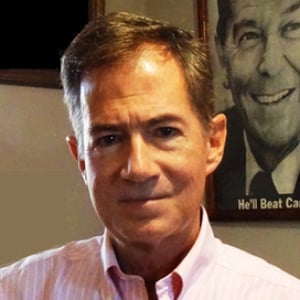
Former General Counsel of the U.S. Immigration and Naturalization, Former United States Ambassador to East Timor
Grover Joseph Rees is a Louisiana native whose family has lived in the Breaux Bridge/Lafayette area since the 1700s.
His first job after college was as an assistant to Congressman Dave Treen (R-LA3), who had just been elected as the first Republican Congressman from Louisiana since Reconstruction.
Rees graduated with honors from LSU Law School, where he served as Editor-in-Chief of the Louisiana Law Review. While in law school he worked on Ronald Reagan’s 1976 presidential campaign and was a Reagan delegate from Louisiana to the Republican National Convention. He also served as a member of the Lafayette Parish Republican Executive Committee and as a board member of Acadiana Right to Life.
In 1979, when Congressman Treen ran successfully for Governor, he asked Rees to write his authorized biography. The book, Dave Treen of Louisiana, was read and discussed widely during the campaign and after Treen’s election.
In 1985-86 Rees served as Special Counsel for Judicial Selection in President Reagan’s Justice Department, working closely with Attorney General Ed Meese to reorganize the judicial selection process to make it more philosophically oriented. These efforts resulted in the appointment of over 100 federal judges and were widely credited with transforming the federal judiciary.
From 1986 through 1991 Rees served as Chief Justice of the High Court of American Samoa, an Article I federal judicial position.
From 1991 through 1993 he was General Counsel of the U.S. Immigration and Naturalization Service.
In 1995 Rees went to work for the new Republican Congress as staff director and chief counsel of the Subcommittee on International Operations and Human Rights. He worked with subcommittee chairman Chris Smith (R.-N.J.) to cut U.S. funding for the International Planned Parenthood Federation and other organizations that perform and promote abortions overseas. Rees also worked on the drafting and enactment of the International Religious Freedom Act, the Trafficking Victims Protection Act, and other legislation that has helped to bring U.S. foreign policy into closer alignment not only with our national interests but also with our values.
In 2001-2002 Rees worked for Congressman Henry Hyde (R.-Ill.), who was then serving as Chairman of the House International Relations Committee.
From 2002 until 2006 Rees served as the first United States Ambassador to newly independent East Timor.
From 2006 until 2009 Ambassador Rees was the United States Special Representative for Social Issues, responsible for representing the United States on issues relating to vulnerable persons and the family within the United Nations system.
Ambassador Rees retired from government service in January 2009 and returned to Lafayette. He is married to Lan Dai Nguyen Rees and is a member of St. Genevieve’s Catholic parish in Lafayette. He was recently elected to serve as a member of the Louisiana Republican State Central Committee.

Borden v. United States - Post-Decision SCOTUScast
Kent Scheidegger
On June 10th, 2021, the Supreme Court decided Borden v. United States. The issue before...
COVID Lockdowns At The Border
Christopher Hajec, Ilya Somin
This teleforum will examine the president's use of travel bans during the SARS-2 pandemic Two...
The Twenty-First Amendment: The End of Prohibition | American Craft: What Beer Can Teach Us About Well-Crafted Laws
Garrett Peck
In 1933, the Twenty-First Amendment to the US Constitution was ratified, which repealed the Eighteenth...
Explainer Episode 27 – Occupational Regulations in the Beauty Industry
Anastasia P. Boden, Daniel Greenberg
Regulatory Transparency Project's Fourth Branch Podcast
In this episode, Anastasia P. Boden interviews Daniel Greenberg about his new article, "Regulating Glamour: A Quantitative Analysis...
Topics
The Growing Legal Controversy about Drone Trespass
The questions have been raised in the pages of the Wall Street Journal, law reviews,...
Sanchez v. Mayorkas - Post-Decision SCOTUScast
On June 7, 2021, the Supreme Court decided Sanchez v. Mayorkas. The issue before the...
United States v. Cooley - Post-Decision SCOTUScast
Anthony J. Ferate
featuring Anthony Ferate
On June 1, 2021 the Supreme Court decided United States v. Cooley. The issue was...
Conversations with the Sixth Circuit: An Interview with Judge Danny Boggs
Josh Blackman, Danny J. Boggs, Carmine G. Iaccarino
Central Kentucky Lawyers Chapter
On May 28, 2021, the Federalist Society's Central Kentucky Lawyers Chapter featured the first installment...
Conversations with the Sixth Circuit: An Interview with Judge Danny Boggs
Josh Blackman, Danny J. Boggs, Carmine G. Iaccarino
Central Kentucky Lawyers Chapter
On May 28, 2021, the Federalist Society's Central Kentucky Lawyers Chapter featured the first installment...
Sanchez v. Mayorkas -- Post-Decision SCOTUScast
Grover Joseph Rees
On June 7, 2021, the Supreme Court decided Sanchez v. Mayorkas. The issue before the...