
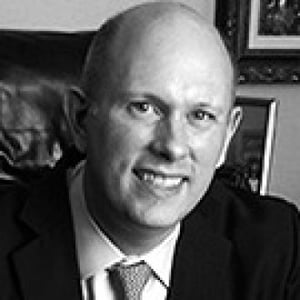
Of Counsel, Spencer Fane LLP
Anthony J. “A.J.” Ferate has built a multi-faceted background in the areas of the law, policy, energy, campaigns and elections, and defense over the last 20 years.
Through recent representation as Vice President of Regulatory Affairs for the Oklahoma Independent Petroleum Association (“OIPA”), A.J. held responsibilities over government efforts outside of the legislative branch on matters as broad as water, electric generation, commodity marketing, land matters, and seismicity. A.J. also maintained responsibility for legal matters at OIPA, including amicus briefing in appellate matters. A.J.’s extensive experience also includes management of public policy strategy for a Fortune 500 company.
For the past eleven years, A.J. has volunteered as General Counsel and spokesman for the Oklahoma Republican Party and has represented a number of elected officials, including U.S. Senator James Lankford, former statewide elected officials, a number of state legislators, and members of Congress.
Additionally, A.J. has assisted elected officials serve their constituents in all branches of government. Early in his career, A.J. held legislative aide duties in the Nebraska Legislature, then went on to work for former Nebraska Treasurer David Heineman. A.J. gained experience in the judiciary while serving Judge Gary L. Lumpkin at the Oklahoma Court of Criminal Appeals, the highest criminal appellate court in Oklahoma. Following this service, A.J. began work with Denise A. Bode of the Oklahoma Corporation Commission, assisting her in her duties regulating 70 percent of Oklahoma’s economy, including oil and gas and electric utilities.
A.J. honorably served ten years as an intelligence analyst for the United States Naval Reserve, including time at the Office of Naval Intelligence in the greater Washington DC area.
Opinion pieces authored or ghostwritten by A.J. have been published in the Seattle Times, Politico, Law360, The Oklahoman, Tulsa World and The Journal Record. A.J. has also been interviewed by national and international newspapers, and has also appeared on national radio programs including NPR’s The Diane Rehm Show and On Point with Tom Ashbrook.
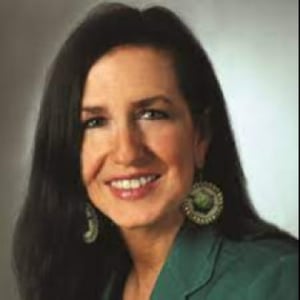
Shareholder, Greenberg Traurig
Jennifer Weddle is the Co-Chair of Greenberg Traurig's American Indian Law Practice and has wide-ranging experience in complex regulatory and jurisdictional issues, with a focus in Indian law, handling a variety of matters for tribal and non-tribal clients. She has a dynamic, inter-disciplinary practice that centers on providing strategies for resolving complex jurisdictional problems. Much of her practice focuses in the areas of tribal economic development and natural resources development. Jennifer also has U.S. Supreme Court experience, including serving as one of the attorneys for the respondent in Nevada v. Hicks (2001) and representing the petitioners in Ute Mountain Ute Tribe v. Padilla (2012) and Grand Canyon Skywalk Development, LLC v. Grand Canyon Resort Corporation (2013) and cert stage amici in Saginaw-Chippewa Tribe v. NLRB (2016) and United States v. Cooley (2020) and amici on the merits in Lewis v. Clarke (2017), U.S. v. Washington (2018), Carpenter v. Murphy (2018), McGirt v. Oklahoma (2020), and United States v. Cooley (2021).
Jennifer's work also includes negotiations for mineral leasing employment matters and representation before federal agencies. She has also been involved in civil litigation, working on numerous complex federal, state and tribal litigation matters, including class action tort litigation and large commercial disputes. Her transactional experience includes oil and gas renewables projects throughout the west, as well as Endangered Species Act work. Jennifer frequently assists tribes, banks and non-bank entities with financing and regulatory matters with Indian law components. Jennifer has wide-ranging project siting experience, including the application of NEPA, NHPA, and other environmental laws on tribal and public lands, including with respect to large linear multi-state energy and infrastructure projects. Jennifer has deep transactional, regulatory and litigation experience involving very complex matters with both legal and policy components.
Jennifer is past President of the National Native American Bar Association and past two-term Chair of the Federal Bar Association Indian Law Section. She currently serves as the Tenth Circuit Representative on the American Bar Association Standing Committee on the Federal Judiciary, a role she has held since 2018, spanning the evaluations for more than two dozen federal judicial nominees at every level of the federal courts. She is a ’00 graduate of Harvard Law School and a ’97 graduate of the University of Michigan (Classical Languages and Literature).
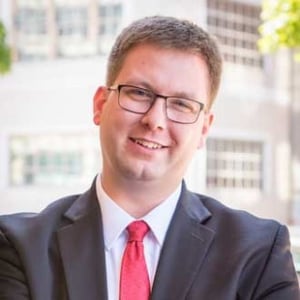
Senior Associate, Holtzman Vogel Josefiak Torchinsky PLLC
Drew Watkins is a senior associate with Holtzman Vogel Josefiak Torchinsky PLLC, providing counsel in the areas of campaign finance and election law, lobbying and ethics compliance, and tax-exempt organizations.
Prior to joining the firm, Drew served as a law clerk to the Honorable Joseph R. Goeke, Senior Judge of the United States Tax Court in Washington, D.C., and worked in the Office of General Counsel for the Governor of Kentucky, Matthew G. Bevin. While in law school, Drew served as a law clerk for the Kentucky Executive Branch Ethics Commission and interned for Senate Majority Leader Mitch McConnell in his office in Washington, D.C.
Drew graduated from the University of Louisville with a B.S. in Justice Administration. He earned his Juris Doctor, magna cum laude, from the University of Kentucky College of Law and was a member of the Order of the Coif. During law school, he served as a senior staff editor on the Kentucky Law Journal and authored a published student note on the Justice Against Sponsors of Terrorism Act. He is a member of the Kentucky, D.C. and Virginia bars and the Federalist Society.
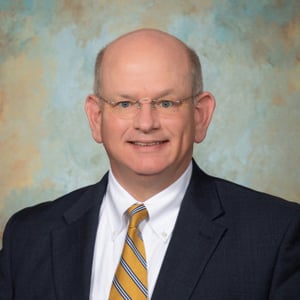
Dean and Associate Professor of Law, Faulkner University, Jones School of Law
Professor Campbell joined the faculty in 2007. He graduated from Auburn University in 1988 with a degree in International Business and from the University of Virginia School of Law in 1993. Following a judicial clerkship for the Hon. Emmett R. Cox on the United States Court of Appeals for the Eleventh Circuit, Professor Campbell entered private practice in Montgomery and Birmingham.
In 2000, Professor Campbell became an Assistant Attorney General in the Alabama Attorney General’s office, where his practice focused on constitutional law and civil rights, with an emphasis on the First, Eleventh, and Fourteenth Amendments, state immunity, election law, and the Voting Rights Act of 1965. In Spring 2002, he was a National Association of Attorneys General Supreme Court Fellow. In 2006, Professor Campbell became Deputy Chief Counsel to United States Senator Jeff Sessions, Chairman, and then Ranking Member, of the U.S. Senate Judiciary Subcommittee on Administrative Oversight and the Courts. His responsibilities included legislative analysis, drafting, and negotiations, management of hearings, and review of judicial nominations.
Professor Campbell teaches federal and Alabama civil procedure. In addition, he serves as President of the Board of Directors of Health Talents International, Inc., a nonprofit medical missions agency operating in Guatemala and Nicaragua.
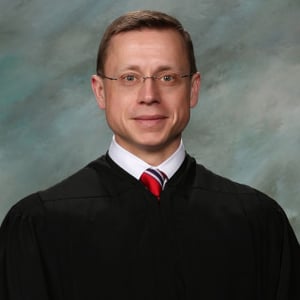
Judge, United States Court of Appeals, Fifth Circuit
Andrew Oldham is a Circuit Judge on the United States Court of Appeals for the Fifth Circuit. Before ascending to the bench, Judge Oldham served as General Counsel to Texas Governor Greg Abbott, where he advised the Governor on a range of issues under federal and state law and managed litigation in which the Governor was an interested party. Before that he served as Deputy Solicitor General for the State of Texas, where he represented Texas in federal courts across the country, including twice before the United States Supreme Court. Before moving to Texas, Judge Oldham was an attorney at Kellogg Hansen Todd Figel & Frederick in Washington, D.C. His practice focused on appellate litigation in federal courts of appeals throughout the country. Before entering private practice, Judge Oldham served as a law clerk to Justice Samuel A. Alito, Jr., at the Supreme Court of the United States and to Judge David B. Sentelle of the U.S. Court of Appeals for the District of Columbia Circuit. He also worked as an attorney-adviser in the Office of Legal Counsel at the U.S. Department of Justice from 2006 to 2008. Judge Oldham earned a B.A. from the University of Virginia with highest honors, a Truman Scholarship for graduate school, an M. Phil., first class (with distinction), from Cambridge University, and a J.D., magna cum laude, from Harvard Law School.
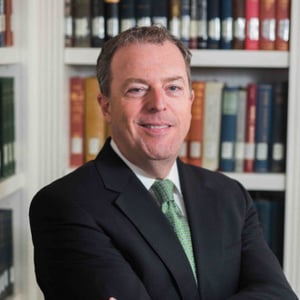
Vice President of Washington Operations and Dean of the Van Andel Graduate School of Government, Hillsdale College
Matthew Spalding is the Kirby Professor in Constitutional Government at Hillsdale College and the Dean of the Van Andel Graduate School of Government at Hillsdale College’s Washington, D.C., campus. As Vice President for Washington Operations, he also oversees the Allan P. Kirby, Jr. Center for Constitutional Studies and Citizenship and the academic and educational programs of Hillsdale in the nation’s capital.
He is the best-selling author of We Still Hold These Truths: Rediscovering Our Principles, Reclaiming Our Future, which details America’s core principles, shows how they have come under assault by modern progressive-liberalism, and lays out a strategy to recover them. Spalding is also executive editor of The Heritage Guide to the Constitution, a line-by-line analysis of each clause of the U.S. Constitution. His other books include A Sacred Union of Citizens: Washington’s Farewell Address and the American Character; Patriot Sage: George Washington and the American Political Tradition; and The Founders’ Almanac: A Practical Guide to the Notable Events, Greatest Leaders & Most Eloquent Words of the American Founding.
Prior to joining Hillsdale, Dr. Spalding was vice president of American Studies at The Heritage Foundation and founding director of its B. Kenneth Simon Center for Principles and Politics. He is a Fellow at the Claremont Institute for the Study of Statesmanship and Political Philosophy, and serves on the boards of the Steamboat Institute and the Philadelphia Society.
He received his B.A. from Claremont McKenna College and his M.A. and Ph.D. in government from the Claremont Graduate School. In addition to teaching at Hillsdale, he has taught at George Mason University, the Catholic University of America, and Claremont McKenna College. He and his wife Elizabeth, a Hillsdale alumna, reside with their two children in Arlington, Virginia.
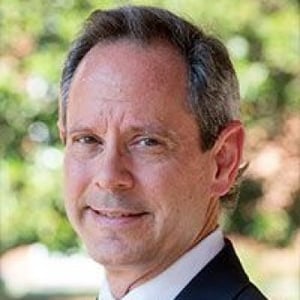
Professor, Christopher Newport University
Dr. Jeffry Morrison is Professor of American Studies at Christopher Newport University in Newport News, Virginia, and Director of Academics at the federal government’s James Madison Foundation in Alexandria, Virginia. He graduated with distinction from Boston College and from Georgetown University, where he earned the M.A. and Ph.D. in Government. Dr. Morrison has also held faculty positions at Princeton University, the U.S. Air Force Academy, Georgetown University, and Regent University. He has published as author or editor five books on American political culture, including The Political Philosophy of George Washington (Johns Hopkins University Press, 2009), and chapters, articles, and reviews in numerous scholarly publications in fields including history, political science, and religion. He has lectured at colleges and historic sites throughout the United States and in England (Hertford College, Oxford), and made media appearances on radio, in journalism, and on television (C-SPAN and the BBC).
Dean and Associate Professor of Law, Faulkner University, Jones School of Law
Professor Campbell joined the faculty in 2007. He graduated from Auburn University in 1988 with a degree in International Business and from the University of Virginia School of Law in 1993. Following a judicial clerkship for the Hon. Emmett R. Cox on the United States Court of Appeals for the Eleventh Circuit, Professor Campbell entered private practice in Montgomery and Birmingham.
In 2000, Professor Campbell became an Assistant Attorney General in the Alabama Attorney General’s office, where his practice focused on constitutional law and civil rights, with an emphasis on the First, Eleventh, and Fourteenth Amendments, state immunity, election law, and the Voting Rights Act of 1965. In Spring 2002, he was a National Association of Attorneys General Supreme Court Fellow. In 2006, Professor Campbell became Deputy Chief Counsel to United States Senator Jeff Sessions, Chairman, and then Ranking Member, of the U.S. Senate Judiciary Subcommittee on Administrative Oversight and the Courts. His responsibilities included legislative analysis, drafting, and negotiations, management of hearings, and review of judicial nominations.
Professor Campbell teaches federal and Alabama civil procedure. In addition, he serves as President of the Board of Directors of Health Talents International, Inc., a nonprofit medical missions agency operating in Guatemala and Nicaragua.
Dean and Associate Professor of Law, Faulkner University, Jones School of Law
Professor Campbell joined the faculty in 2007. He graduated from Auburn University in 1988 with a degree in International Business and from the University of Virginia School of Law in 1993. Following a judicial clerkship for the Hon. Emmett R. Cox on the United States Court of Appeals for the Eleventh Circuit, Professor Campbell entered private practice in Montgomery and Birmingham.
In 2000, Professor Campbell became an Assistant Attorney General in the Alabama Attorney General’s office, where his practice focused on constitutional law and civil rights, with an emphasis on the First, Eleventh, and Fourteenth Amendments, state immunity, election law, and the Voting Rights Act of 1965. In Spring 2002, he was a National Association of Attorneys General Supreme Court Fellow. In 2006, Professor Campbell became Deputy Chief Counsel to United States Senator Jeff Sessions, Chairman, and then Ranking Member, of the U.S. Senate Judiciary Subcommittee on Administrative Oversight and the Courts. His responsibilities included legislative analysis, drafting, and negotiations, management of hearings, and review of judicial nominations.
Professor Campbell teaches federal and Alabama civil procedure. In addition, he serves as President of the Board of Directors of Health Talents International, Inc., a nonprofit medical missions agency operating in Guatemala and Nicaragua.
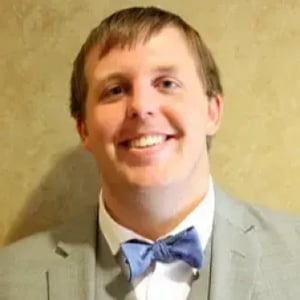
UC Foundation Assistant Professor, U.T. Chattanooga
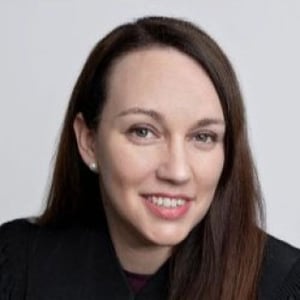
Judge, United States District Court for the Eastern District of Tennessee
On December 23, 2020, Katherine A. Crytzer was sworn in as a United States District Judge for the Eastern District of Tennessee following confirmation by the United States Senate. Judge Crytzer sits in Knoxville, Tennessee. Prior to her confirmation, Judge Crytzer served as Principal Deputy Assistant Attorney General at the Department of Justice’s Office of Legal Policy in Washington, D.C., where she provided legal and policy advice to the Assistant Attorney General and Department of Justice Leadership. Before joining the Department of Justice’s Main Office, Judge Crytzer served as an Assistant United States Attorney in the United States Attorney’s Office for the Eastern District of Kentucky. In advance of entering public service, Judge Crytzer was a litigator at Kirkland & Ellis LLP. She began her legal career as a law clerk to The Honorable Raymond W. Gruender on the United States Court of Appeals for the Eighth Circuit. Judge Crytzer earned her Juris Doctor, magna cum laude, from George Mason University’s Antonin Scalia School of Law and her Bachelor of Science, summa cum laude, from Middle Tennessee State University.
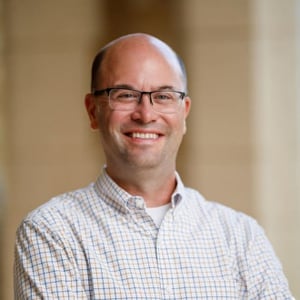
Paul J. Schierl Professor of Law, University of Notre Dame Law School
Professor Richard W. Garnett teaches and writes in the areas of constitutional law, criminal law, the First Amendment, and law and religion. He is a leading authority on questions and debates regarding religious freedom and church-state relations, and is the founding director of Notre Dame Law School’s Program on Church, State, and Society.
Garnett clerked for the late Chief Justice of the United States, William H. Rehnquist, and also for the late Chief Judge of the United States Court of Appeals for the Eighth Circuit, Richard S. Arnold. He earned his J.D. from Yale Law School in 1995 and his B.A., summa cum laude, from Duke University in 1990. He joined the faculty in 1999 after practicing law in Washington, D.C. with Miller, Cassidy, Larroca & Lewin.
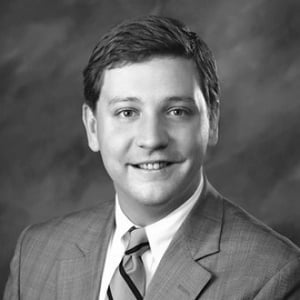
Shareholder, Spears, Moore, Rebman & Williams, PC
Alan Jackson practices in a variety of areas in state and federal courts. Prior to joining Spears, Moore, Rebman & Williams, P.C. in 2013, he served for two years as law clerk for the Honorable Walter E. Johnson of the United States District Court for the Northern District of Georgia.
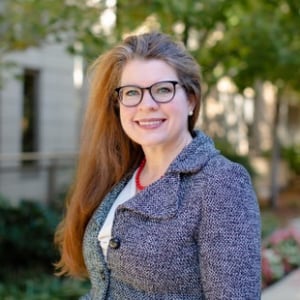
Vice President and Senior Counsel, The Becket Fund for Religious Liberty
Lori Windham is vice president and senior counsel at Becket, where she has represented clients on cutting-edge religious freedom issues since 2005. She has represented parties before the Supreme Court, arguing Becket’s unanimous victory on behalf of foster families in Fulton v. Philadelphia, as well as working with the Becket team on its Supreme Court victories in Hosanna-Tabor, Hobby Lobby, and Little Sisters of the Poor. She won a victory for the world’s largest religious media network in EWTN v. Azar, staving off millions of dollars in government fines under unlawful the HHS mandate. She has won more than a dozen victories in federal appellate courts, including successful defense of cities and school districts sued for accommodating religion, victories for houses of worship facing discrimination in the land use process, and overturning a multimillion-dollar judgment against a major evangelical ministry. She recently won a first-in-the-nation injunction for an adoption agency threatened with shutdown for its religious beliefs.
Recognized in Washington as an expert on religious freedom issues, Lori has testified in Congressional oversight hearings before the U.S. House of Representatives Judiciary Committee and before the U.S. Commission on Civil Rights. Outside Washington, Lori is sought-after speaker on First Amendment law, including appearances at Yale Law School, Harvard Law School, Stanford Law School, Georgetown University Law Center, Central European University, and many others.
In addition to these venues, Lori also defends her clients in the media, including television appearances on CBS This Morning, Hardball, CNN Tonight, On the Record, America’s Newsroom, Opinion Journal, and many others. Her work has been covered by the New York Times, Wall Street Journal, Washington Post, and dozens of other papers. She is also a regular guest on radio, with appearances on shows ranging from Sean Hannity to NPR.
Lori has successfully represented a wide array of clients, including a Santeria priest prohibited from making animal sacrifices, synagogues prohibited from building on their own land, and religious student organizations penalized for their religious speech. One of her most challenging cases involved travel to a remote farming community to ensure that members of the local Amish community were not jailed for using their traditional building methods.
Lori is a graduate of Harvard Law School and earned her B.A. summa cum laude at Abilene Christian University. She has served on the Board of Visitors of Abilene Christian University and received the ACU Young Alumnus of the Year award for her work at Becket. She sits on the board of Dominion Christian School and the visiting committee of the Fund for American Studies’ Summer Law Fellowship.
UC Foundation Assistant Professor, U.T. Chattanooga
Judge, United States District Court for the Eastern District of Tennessee
On December 23, 2020, Katherine A. Crytzer was sworn in as a United States District Judge for the Eastern District of Tennessee following confirmation by the United States Senate. Judge Crytzer sits in Knoxville, Tennessee. Prior to her confirmation, Judge Crytzer served as Principal Deputy Assistant Attorney General at the Department of Justice’s Office of Legal Policy in Washington, D.C., where she provided legal and policy advice to the Assistant Attorney General and Department of Justice Leadership. Before joining the Department of Justice’s Main Office, Judge Crytzer served as an Assistant United States Attorney in the United States Attorney’s Office for the Eastern District of Kentucky. In advance of entering public service, Judge Crytzer was a litigator at Kirkland & Ellis LLP. She began her legal career as a law clerk to The Honorable Raymond W. Gruender on the United States Court of Appeals for the Eighth Circuit. Judge Crytzer earned her Juris Doctor, magna cum laude, from George Mason University’s Antonin Scalia School of Law and her Bachelor of Science, summa cum laude, from Middle Tennessee State University.
Paul J. Schierl Professor of Law, University of Notre Dame Law School
Professor Richard W. Garnett teaches and writes in the areas of constitutional law, criminal law, the First Amendment, and law and religion. He is a leading authority on questions and debates regarding religious freedom and church-state relations, and is the founding director of Notre Dame Law School’s Program on Church, State, and Society.
Garnett clerked for the late Chief Justice of the United States, William H. Rehnquist, and also for the late Chief Judge of the United States Court of Appeals for the Eighth Circuit, Richard S. Arnold. He earned his J.D. from Yale Law School in 1995 and his B.A., summa cum laude, from Duke University in 1990. He joined the faculty in 1999 after practicing law in Washington, D.C. with Miller, Cassidy, Larroca & Lewin.
Shareholder, Spears, Moore, Rebman & Williams, PC
Alan Jackson practices in a variety of areas in state and federal courts. Prior to joining Spears, Moore, Rebman & Williams, P.C. in 2013, he served for two years as law clerk for the Honorable Walter E. Johnson of the United States District Court for the Northern District of Georgia.
Vice President and Senior Counsel, The Becket Fund for Religious Liberty
Lori Windham is vice president and senior counsel at Becket, where she has represented clients on cutting-edge religious freedom issues since 2005. She has represented parties before the Supreme Court, arguing Becket’s unanimous victory on behalf of foster families in Fulton v. Philadelphia, as well as working with the Becket team on its Supreme Court victories in Hosanna-Tabor, Hobby Lobby, and Little Sisters of the Poor. She won a victory for the world’s largest religious media network in EWTN v. Azar, staving off millions of dollars in government fines under unlawful the HHS mandate. She has won more than a dozen victories in federal appellate courts, including successful defense of cities and school districts sued for accommodating religion, victories for houses of worship facing discrimination in the land use process, and overturning a multimillion-dollar judgment against a major evangelical ministry. She recently won a first-in-the-nation injunction for an adoption agency threatened with shutdown for its religious beliefs.
Recognized in Washington as an expert on religious freedom issues, Lori has testified in Congressional oversight hearings before the U.S. House of Representatives Judiciary Committee and before the U.S. Commission on Civil Rights. Outside Washington, Lori is sought-after speaker on First Amendment law, including appearances at Yale Law School, Harvard Law School, Stanford Law School, Georgetown University Law Center, Central European University, and many others.
In addition to these venues, Lori also defends her clients in the media, including television appearances on CBS This Morning, Hardball, CNN Tonight, On the Record, America’s Newsroom, Opinion Journal, and many others. Her work has been covered by the New York Times, Wall Street Journal, Washington Post, and dozens of other papers. She is also a regular guest on radio, with appearances on shows ranging from Sean Hannity to NPR.
Lori has successfully represented a wide array of clients, including a Santeria priest prohibited from making animal sacrifices, synagogues prohibited from building on their own land, and religious student organizations penalized for their religious speech. One of her most challenging cases involved travel to a remote farming community to ensure that members of the local Amish community were not jailed for using their traditional building methods.
Lori is a graduate of Harvard Law School and earned her B.A. summa cum laude at Abilene Christian University. She has served on the Board of Visitors of Abilene Christian University and received the ACU Young Alumnus of the Year award for her work at Becket. She sits on the board of Dominion Christian School and the visiting committee of the Fund for American Studies’ Summer Law Fellowship.

Courthouse Steps Decision Teleforum: United States v. Cooley
Anthony J. Ferate, Jennifer H. Weddle
In a 9-0 opinion written by Justice Breyer that could have far-reaching implications, the Supreme Court...
State Court Docket Watch: Zignego v. Wisconsin Elections Commission
Andrew Watkins
Note from the Editor: The Federalist Society takes no positions on particular legal and public...
City of San Antonio, Texas v. Hotels.com - Post-Decision SCOTUScast
Charles Campbell
featuring Charles Campbell
On June 1, 2021 the Supreme Court decided City of San Antonio, Texas v. Hotels.com...
Topics
The CDC’s Eviction Moratorium Is Unconstitutional
Note: This blog was originally posted at the Cato Institute's Cato at Liberty blog. ...
They Called Him Mr. President | American Cincinnatus: George Washington Lays Down His Sword
Andrew Oldham, Matthew Spalding, Jeffry Morrison
In February of 1789, George Washington was unanimously elected the first president of the United...
Topics
Federalism is Still a Priority in a Pandemic
The COVID-19 pandemic has upended the lives of billions of people across the globe. State...
Courthouse Steps Decision Teleforum: San Antonio, TX v. Hotels.com
Charles Campbell
On May 27, the Supreme Court issued its 9-0 decision in San Antonio, TX v. Hotels.com holding...
Courthouse Steps Decision Teleforum: San Antonio, TX v. Hotels.com
Charles Campbell
On May 27, the Supreme Court issued its 9-0 decision in San Antonio, TX v. Hotels.com holding...
From Employment Division v. Smith to Fulton v. City of Philadelphia: The Free Exercise Clause in 2021
Kody Cooper, Katherine Amber Crytzer, Richard W. Garnett, J. Alan Jackson, Lori Windham
Chattanooga and Nashville Lawyers Chapter - Online Event
On May 19, 2021 the Nashville and Chattanooga Lawyers Chapters co-hosted a discussion on the...
From Employment Division v. Smith to Fulton v. City of Philadelphia: The Free Exercise Clause in 2021
Kody Cooper, Katherine Amber Crytzer, Richard W. Garnett, J. Alan Jackson, Lori Windham
Chattanooga and Nashville Lawyers Chapter - Online Event
On May 19, 2021 the Nashville and Chattanooga Lawyers Chapters co-hosted a discussion on the...