

Tazewell Taylor Professor of Law and William H. Cabell Research Professor, William & Mary Law School
Jonathan H. Adler joined the William & Mary law faculty as the Tazwell Taylor Professor of Law and William H. Cabell Research Professor in 2025. Prior to joining the faculty, he was the inaugural Johan Verheij Memorial Professor of Law and the founding Director of the Coleman P. Burke Center for Environmental Law at the Case Western Reserve University School of Law.
Professor Adler is the author or editor of seven books, including Climate Liberalism: Perspectives on Liberty, Property and Pollution (Palgrave, 2023), Marijuana Federalism: Uncle Sam and Mary Jane (Brookings Institution Press, 2020), Business and the Roberts Court (Oxford University Press, 2016) and Rebuilding the Ark: New Perspectives on Endangered Species Act Reform (AEI Press, 2011).
His articles have appeared in publications ranging from the Harvard Environmental Law Review and Yale Journal on Regulation to the Wall Street Journal, New York Times, and Washington Post. He has testified before Congress a dozen times, and his work has been cited in the U.S. Supreme Court. A 2024 study identified Professor Adler as the seventh most cited legal academic in administrative and environmental law from 2019 to 2023.
Professor Adler is a contributing editor to Civitas Outlook and a regular contributor to the popular legal blog, The Volokh Conspiracy. A regular commentator on constitutional and regulatory issues, he has appeared on numerous radio and television programs, ranging from the PBS Newshour and National Public Radio to the Fox News Channel and Entertainment Tonight.
Professor Adler is a senior fellow at the Property & Environment Research Center in Bozeman, Montana. In 2018, Professor Adler was elected to membership in the American Law Institute and helped co-found the organization Checks and Balances. In 2024, Professor Adler was appointed a public member of the Administrative Conference of the United States.
Professor Adler clerked for the Honorable David B. Sentelle on the U.S. Court of Appeals for the District of Columbia Circuit.
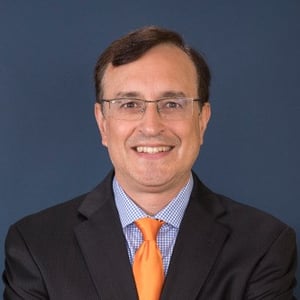
President, Center for Individual Rights
Todd Gaziano is the President of the Center for Individual Rights. Mr. Gaziano received his J.D. in 1988 from the University of Chicago Law School, where he was a John M. Olin Fellow in Law and Economics. He received his B.A. from West Virginia University, summa cum laude in 1985. He was selected as a Truman Scholar from West Virginia while an undergraduate.
Mr. Gaziano’s previous legal work includes service as a law clerk for U.S. Court of Appeals for the Fifth Circuit Judge Edith Jones, as an attorney in the U.S. Department of Justice Office of Legal Counsel, as a chief subcommittee counsel in the U.S. House of Representatives, as a Houston trial attorney, and as a chief corporate legal officer. He also served a six-year term as commissioner on the U.S. Commission on Civil Rights (2008-2013), where he helped conduct oversight and investigations of civil rights agencies.
For most of the last 25 years, Mr. Gaziano was a legal scholar and public interest law leader, promoting individual liberty in the Supreme Court and Congress. From 1997 to 2013, he was the founding director of the Edwin Meese Center for Legal and Judicial Studies at The Heritage Foundation. From 2014 until he joined CIR, he was the Chief of Legal Policy and Strategic Research, and Director of the Center for the Separation of Powers, at Pacific Legal Foundation.
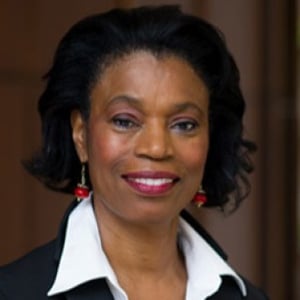
Henry R. Silverman Professor of Law and Professor of Philosophy, University of Pennsylvania Carey Law School
Anita L. Allen is the Henry R. Silverman Professor of Law and Professor of Philosophy. A graduate of Harvard Law School with a PhD from the University of Michigan in Philosophy, Allen is internationally renown as an expert on philosophical dimensions of privacy and data protection law, ethics, bioethics, legal philosophy, women’s rights, and diversity in higher education. She was Penn’s Vice Provost for Faculty from 2013-2020, and chaired the Provost's Arts Advisory Council. Allen is an elected member of the National Academy of Medicine, the American Law Institute and a fellow of the American Academy of Arts and Sciences. In 2018-19 she served as President of the Eastern Division of the American Philosiphical Association.
From 2010 to 2017, Allen served on President Obama’s Presidential Commission for the Study of Bioethical Issues. She was presented the Lifetime Achievement Award of the Electronic Privacy Information Center in 2015, and chaired its Board, 2019-2022. Allen has served on the faculty of the School of Criticism and Theory at Cornell, for which she is an advisor. A two-year term as an Associate of the Johns Hopkins Humanities Center concluded in 2018. She has been a visiting Professor at Tel Aviv University, Waseda University, Villanova, the University of Arizona, Harvard and Yale, and a Law and Public Affairs Fellow at Princeton. She was awarded an honorary Doctorate from Tilburg University (Netherlands) in 2019. She has written over a hundred articles and chapters, and her books include Unpopular Privacy: What Must We Hide (Oxford, 2011); Privacy Law and Society (Thomson/West, 2017); The New Ethics: A Guided Tour of the 21st Century Moral Landscape (Miramax/Hyperion, 2004); Why Privacy Isn’t Everything: Feminist Reflections on Personal Accountability (Rowman and Littlefield, 2003), and Uneasy Access: Privacy of Women in a Free Society (1988). Allen has given hundreds of talks all over the world and appeared on television, radio and written for major media. She currently serves on the Board of the National Constitution Center, and has served on numerous other boards and professional advisory boards, including the Pennsylvania Board of Continuing Judicial Education, the Association for Practical and Professional Ethics, the Bazelon Center for Mental Health Law, the AALS Executive Committee, the Maternity Care Coalition and the West Philadelphia Alliance for Children. She is a member of the Pennsylvania and New York bars, and formerly taught at Georgetown University Law Center for ten years and the University of Pittsburgh, after practicing briefly at Carvath, Swaine & Moore.
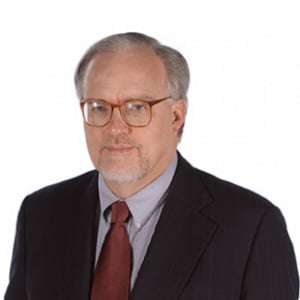
Chauncey Stillman Professor of Law, University of Michigan Law School
Carl E. Schneider, '79, the Chauncey Stillman Professor of Law and Professor of Internal Medicine, teaches courses on law and medicine, regulating research, property, law and morals, the sociology and ethics of the legal profession, and writing briefs. He holds a joint appointment in U-M’s Medical School.
A central theme in his scholarship criticizes some dominant regulatory ideas, particularly those in the law of medicine. For example, his book The Censor's Hand: The Misregulation of Human Subject Research (MIT Press, 2015), examines a regulatory system whose usefulness is widely assumed but quite unproved and argues that that system is so perversely constructed that it cannot help doing more harm than good. Another example is More Than You Wanted to Know: The Failure of Mandated Disclosure (Princeton University Press, 2014), coauthored with Omri Ben-Shahar. It explains why government-mandated disclosure may be the most adored, most used, and least successful regulatory method in our time. His The Practice of Autonomy: Patients, Doctors, and Medical Decisions (Oxford University Press, 1998), which analyzes the malign effects of making patient autonomy the regulatory summum bonum, is another example of the project.
Professor Schneider is also the coauthor of two innovative casebooks: With Marsha Garrison, he wrote The Law of Bioethics: Individual Autonomy and Social Regulation (West, 2015, 3rd edition), a pioneering casebook in what was then a new field. With Margaret F. Brinig, he wrote An Invitation to Family Law (West, 2007, 3rd edition). This casebook approaches family law conceptually: Each chapter discusses an area of family law, and each chapter introduces students to a systematic discussion of a recurring jurisprudential issue (like the problem of rules and discretion, or the legal principle of autonomy).
Professor Schneider served two terms on the President's Bioethics Council. He has been a visiting professor at Cambridge University, the University of Tokyo, Kyoto University, and the United States Air Force Academy (twice).
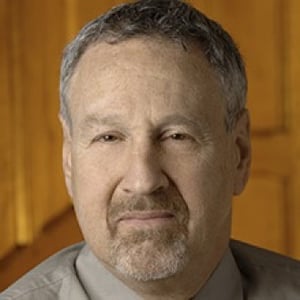
Simeon E. Baldwin Professor Emeritus of Law, Yale Law School
Peter H. Schuck is the Simeon E. Baldwin Professor Emeritus of Law and Professor (Adjunct) of Law at Yale Law School where he has held the chair since 1984. He has also served as Deputy Dean. His major fields of teaching and research are tort law; immigration, citizenship, and refugee law; groups, diversity, and law; and administrative law. His most recent books include Targeting in Social Programs: Avoiding Bad Bets, Removing Bad Apples; Meditations of a Militant Moderate: Cool Views on Hot Topics; Immigration Stories; Foundations of Administrative Law; Diversity in America: Keeping Government at a Safe Distance; and The Limits of Law: Essays on Democratic Governance. He is also co-editor, with James Q. Wilson, of Understanding America. He is a member of the American Law Institute's advisory committee for the Restatement of Torts (Third), Basic Principles, and a contributing editor to The American Lawyer. Prior to joining Yale, he was Principal Deputy Assistant Secretary for Planning and Evaluation in the U.S. Department of Health, Education, and Welfare. Professor Schuck holds a B.A. from Cornell, a J.D. from Harvard Law School, an LL.M. in International Law from N.Y.U., and an M.A. in Government from Harvard.
Senior Litigation Counsel, American Center for Law and Justice
Walter M. Weber is Senior Counsel for the ACLJ in the Washington, D.C. office. A highly regarded legal writer, Weber received his bachelor’s degree from Princeton University and his law degree from Yale Law School.
Weber emphasizes First Amendment law and has written briefs in many landmark cases at the Supreme Court including NOW v. Scheidler, Lamb’s Chapel v. Center Moriches School District and Bray v. Alexandria Women’s Health Clinic.
Weber has argued more than a dozen times in appeals before federal and state courts. Prior to joining the ACLJ, Weber served as a staff attorney with the Catholic League for Religious and Civil Rights.

Professor of Law, Dean Emerita, and Co-Director, Sports Law Track - Graduate Program in Entertainment, Arts and Sports Law LL.M., University of Miami School of Law
Patricia D. White is a Professor of Law and was the University of Miami School of Law's eleventh dean from 2009-2019. Her legal career spans over four decades as an attorney and educator. She was the first woman law school dean in Arizona and the longest serving one in the history of Arizona State University’s Sandra Day O’Connor College of Law. Her prominence in the field of legal education has led to her being recognized as one of the most influential and innovative people in legal education by National Jurist magazine in 2016, 2015, 2014, 2013 and in the 2012 ranking she was named the top woman on the list.
White chairs the ABA's Commission on the Future of Legal Education, which aims to influence dramatic changes in the legal profession over the next decade. Under White’s leadership, Miami Law has also been recognized by Pre-Law Magazine as one the “20 Most Innovative Law Schools” in 2017. Similarly, Innovation 800, published in 2017 by Cambridge University, included Miami Law as a "Leader in Learning" and one of the most innovative law schools. The London-based Financial Times, considered one of the premiere international daily newspapers with a special emphasis on business and economic news, has also tipped its hat to Miami Law’s innovation. In its “FT Special Report on Innovative Law Schools”, it ranked Miami Law as one of the most innovative law schools in the world in 2015 and 2016. Innovation accolades also came for Miami Law's specialty areas, such as the Billboard Magazine 2017 ranking of Miami Law as a top school for music law in the U.S. The Legal Services Innovation Index ranked the University of Miami Law in the top four for law schools delivering innovation and technology programs in 2017.
After becoming the dean of Miami Law in 2009, White continued her longstanding commitment to students, the transformation of legal education and public service. She transformed Miami Law’s student services program, including adding the unique Student Development Program, the AskUs Fellows initiative, Academic Achievement Program and the Office of Professionalism to name a few. She established the LawWithoutWalls program, linking students and faculty from over 30 academic institutions around the world to examine issues and develop new solutions in legal education and practice; and Legal Corps a novel fellowship program that placed new law school graduates in not for profit and public sector organizations across the nations and the globe.
Under White's leadership, the number of clinics at Miami Law more than doubled, bringing the total to 10. In 2011 Miami Law was honored by the American Bar Association Law Student Division with the Judy M. Weightman Memorial Public Interest Award, in recognition of the law school's strong commitment to public interest through the HOPE Public Interest Resource Center. She has won many awards, including the 2012 Equal Justice Leadership Award, given by Legal Services of Greater Miami for her commitment to public service, and the Judge Learned Hand Award for distinguished public service, from the Arizona chapter of the American Jewish Committee.
White received degrees in philosophy and law (B.A. 1971, J.D. 1974, M.A. 1974) from the University of Michigan. While attending law school, she was also a graduate student in philosophy and an associate editor of the law review. She began her legal practice in Washington, D.C., at Steptoe & Johnson and then moved to Caplin & Drysdale. Georgetown University Law hired White onto the faculty in 1979, and in 1988 she joined her alma mater, the University of Michigan. While at Michigan, she was of counsel to the Detroit firm Bodman, Longley & Dahling, and served for a year as tax advisor to the Economic Study Committee of Major League Baseball. In 1994, she joined the law faculty at the University of Utah, and was of counsel to Parsons, Behle & Latimer. She is a member of the bars of the District of Columbia, Michigan, and Utah, and is an elected Fellow of the American College of Tax Counsel.
During her career, White has worked in the areas of tax law, torts, bioethics, philosophy of law, and trusts and estates, and has published in prominent law and bioethics journals.
Henry R. Silverman Professor of Law and Professor of Philosophy, University of Pennsylvania Carey Law School
Anita L. Allen is the Henry R. Silverman Professor of Law and Professor of Philosophy. A graduate of Harvard Law School with a PhD from the University of Michigan in Philosophy, Allen is internationally renown as an expert on philosophical dimensions of privacy and data protection law, ethics, bioethics, legal philosophy, women’s rights, and diversity in higher education. She was Penn’s Vice Provost for Faculty from 2013-2020, and chaired the Provost's Arts Advisory Council. Allen is an elected member of the National Academy of Medicine, the American Law Institute and a fellow of the American Academy of Arts and Sciences. In 2018-19 she served as President of the Eastern Division of the American Philosiphical Association.
From 2010 to 2017, Allen served on President Obama’s Presidential Commission for the Study of Bioethical Issues. She was presented the Lifetime Achievement Award of the Electronic Privacy Information Center in 2015, and chaired its Board, 2019-2022. Allen has served on the faculty of the School of Criticism and Theory at Cornell, for which she is an advisor. A two-year term as an Associate of the Johns Hopkins Humanities Center concluded in 2018. She has been a visiting Professor at Tel Aviv University, Waseda University, Villanova, the University of Arizona, Harvard and Yale, and a Law and Public Affairs Fellow at Princeton. She was awarded an honorary Doctorate from Tilburg University (Netherlands) in 2019. She has written over a hundred articles and chapters, and her books include Unpopular Privacy: What Must We Hide (Oxford, 2011); Privacy Law and Society (Thomson/West, 2017); The New Ethics: A Guided Tour of the 21st Century Moral Landscape (Miramax/Hyperion, 2004); Why Privacy Isn’t Everything: Feminist Reflections on Personal Accountability (Rowman and Littlefield, 2003), and Uneasy Access: Privacy of Women in a Free Society (1988). Allen has given hundreds of talks all over the world and appeared on television, radio and written for major media. She currently serves on the Board of the National Constitution Center, and has served on numerous other boards and professional advisory boards, including the Pennsylvania Board of Continuing Judicial Education, the Association for Practical and Professional Ethics, the Bazelon Center for Mental Health Law, the AALS Executive Committee, the Maternity Care Coalition and the West Philadelphia Alliance for Children. She is a member of the Pennsylvania and New York bars, and formerly taught at Georgetown University Law Center for ten years and the University of Pittsburgh, after practicing briefly at Carvath, Swaine & Moore.
Chauncey Stillman Professor of Law, University of Michigan Law School
Carl E. Schneider, '79, the Chauncey Stillman Professor of Law and Professor of Internal Medicine, teaches courses on law and medicine, regulating research, property, law and morals, the sociology and ethics of the legal profession, and writing briefs. He holds a joint appointment in U-M’s Medical School.
A central theme in his scholarship criticizes some dominant regulatory ideas, particularly those in the law of medicine. For example, his book The Censor's Hand: The Misregulation of Human Subject Research (MIT Press, 2015), examines a regulatory system whose usefulness is widely assumed but quite unproved and argues that that system is so perversely constructed that it cannot help doing more harm than good. Another example is More Than You Wanted to Know: The Failure of Mandated Disclosure (Princeton University Press, 2014), coauthored with Omri Ben-Shahar. It explains why government-mandated disclosure may be the most adored, most used, and least successful regulatory method in our time. His The Practice of Autonomy: Patients, Doctors, and Medical Decisions (Oxford University Press, 1998), which analyzes the malign effects of making patient autonomy the regulatory summum bonum, is another example of the project.
Professor Schneider is also the coauthor of two innovative casebooks: With Marsha Garrison, he wrote The Law of Bioethics: Individual Autonomy and Social Regulation (West, 2015, 3rd edition), a pioneering casebook in what was then a new field. With Margaret F. Brinig, he wrote An Invitation to Family Law (West, 2007, 3rd edition). This casebook approaches family law conceptually: Each chapter discusses an area of family law, and each chapter introduces students to a systematic discussion of a recurring jurisprudential issue (like the problem of rules and discretion, or the legal principle of autonomy).
Professor Schneider served two terms on the President's Bioethics Council. He has been a visiting professor at Cambridge University, the University of Tokyo, Kyoto University, and the United States Air Force Academy (twice).
Simeon E. Baldwin Professor Emeritus of Law, Yale Law School
Peter H. Schuck is the Simeon E. Baldwin Professor Emeritus of Law and Professor (Adjunct) of Law at Yale Law School where he has held the chair since 1984. He has also served as Deputy Dean. His major fields of teaching and research are tort law; immigration, citizenship, and refugee law; groups, diversity, and law; and administrative law. His most recent books include Targeting in Social Programs: Avoiding Bad Bets, Removing Bad Apples; Meditations of a Militant Moderate: Cool Views on Hot Topics; Immigration Stories; Foundations of Administrative Law; Diversity in America: Keeping Government at a Safe Distance; and The Limits of Law: Essays on Democratic Governance. He is also co-editor, with James Q. Wilson, of Understanding America. He is a member of the American Law Institute's advisory committee for the Restatement of Torts (Third), Basic Principles, and a contributing editor to The American Lawyer. Prior to joining Yale, he was Principal Deputy Assistant Secretary for Planning and Evaluation in the U.S. Department of Health, Education, and Welfare. Professor Schuck holds a B.A. from Cornell, a J.D. from Harvard Law School, an LL.M. in International Law from N.Y.U., and an M.A. in Government from Harvard.
Senior Litigation Counsel, American Center for Law and Justice
Walter M. Weber is Senior Counsel for the ACLJ in the Washington, D.C. office. A highly regarded legal writer, Weber received his bachelor’s degree from Princeton University and his law degree from Yale Law School.
Weber emphasizes First Amendment law and has written briefs in many landmark cases at the Supreme Court including NOW v. Scheidler, Lamb’s Chapel v. Center Moriches School District and Bray v. Alexandria Women’s Health Clinic.
Weber has argued more than a dozen times in appeals before federal and state courts. Prior to joining the ACLJ, Weber served as a staff attorney with the Catholic League for Religious and Civil Rights.
Professor of Law, Dean Emerita, and Co-Director, Sports Law Track - Graduate Program in Entertainment, Arts and Sports Law LL.M., University of Miami School of Law
Patricia D. White is a Professor of Law and was the University of Miami School of Law's eleventh dean from 2009-2019. Her legal career spans over four decades as an attorney and educator. She was the first woman law school dean in Arizona and the longest serving one in the history of Arizona State University’s Sandra Day O’Connor College of Law. Her prominence in the field of legal education has led to her being recognized as one of the most influential and innovative people in legal education by National Jurist magazine in 2016, 2015, 2014, 2013 and in the 2012 ranking she was named the top woman on the list.
White chairs the ABA's Commission on the Future of Legal Education, which aims to influence dramatic changes in the legal profession over the next decade. Under White’s leadership, Miami Law has also been recognized by Pre-Law Magazine as one the “20 Most Innovative Law Schools” in 2017. Similarly, Innovation 800, published in 2017 by Cambridge University, included Miami Law as a "Leader in Learning" and one of the most innovative law schools. The London-based Financial Times, considered one of the premiere international daily newspapers with a special emphasis on business and economic news, has also tipped its hat to Miami Law’s innovation. In its “FT Special Report on Innovative Law Schools”, it ranked Miami Law as one of the most innovative law schools in the world in 2015 and 2016. Innovation accolades also came for Miami Law's specialty areas, such as the Billboard Magazine 2017 ranking of Miami Law as a top school for music law in the U.S. The Legal Services Innovation Index ranked the University of Miami Law in the top four for law schools delivering innovation and technology programs in 2017.
After becoming the dean of Miami Law in 2009, White continued her longstanding commitment to students, the transformation of legal education and public service. She transformed Miami Law’s student services program, including adding the unique Student Development Program, the AskUs Fellows initiative, Academic Achievement Program and the Office of Professionalism to name a few. She established the LawWithoutWalls program, linking students and faculty from over 30 academic institutions around the world to examine issues and develop new solutions in legal education and practice; and Legal Corps a novel fellowship program that placed new law school graduates in not for profit and public sector organizations across the nations and the globe.
Under White's leadership, the number of clinics at Miami Law more than doubled, bringing the total to 10. In 2011 Miami Law was honored by the American Bar Association Law Student Division with the Judy M. Weightman Memorial Public Interest Award, in recognition of the law school's strong commitment to public interest through the HOPE Public Interest Resource Center. She has won many awards, including the 2012 Equal Justice Leadership Award, given by Legal Services of Greater Miami for her commitment to public service, and the Judge Learned Hand Award for distinguished public service, from the Arizona chapter of the American Jewish Committee.
White received degrees in philosophy and law (B.A. 1971, J.D. 1974, M.A. 1974) from the University of Michigan. While attending law school, she was also a graduate student in philosophy and an associate editor of the law review. She began her legal practice in Washington, D.C., at Steptoe & Johnson and then moved to Caplin & Drysdale. Georgetown University Law hired White onto the faculty in 1979, and in 1988 she joined her alma mater, the University of Michigan. While at Michigan, she was of counsel to the Detroit firm Bodman, Longley & Dahling, and served for a year as tax advisor to the Economic Study Committee of Major League Baseball. In 1994, she joined the law faculty at the University of Utah, and was of counsel to Parsons, Behle & Latimer. She is a member of the bars of the District of Columbia, Michigan, and Utah, and is an elected Fellow of the American College of Tax Counsel.
During her career, White has worked in the areas of tax law, torts, bioethics, philosophy of law, and trusts and estates, and has published in prominent law and bioethics journals.
Partner, Capitol Counsel LLC
Martin B. Gold is a partner with Capitol Counsel LLC. In service to our clients, he brings over 40 years of experience, both on Senate staff and in private practice. He is a recognized authority on matters of congressional rules and parliamentary strategies.
Gold is the author of “Senate Procedure and Practice,” a widely consulted primer on Senate Floor procedure, now in its third edition (2013). He frequently advises in offices of Senators and serves on the adjunct faculty at George Washington University. Before domestic business, professional and academic audiences, he often speaks about Congress as well as political and public policy developments.
Gold has been a guest lecturer at Tsinghua University and the Beijing Foreign Studies University, Moscow State University, the Moscow State Institute of International Relations, the State Parliament of Ukraine, and the Federation Council of the Russian Federal Assembly. He published in China “The Grand Institution: A Profile of the United States Senate.” (2011)
Between 1972 to 1982, Gold worked in senior staff positions at the Senate, culminating as counsel to Senate Majority Leader Howard H. Baker, Jr. (R-TN). Gold began his career as a legal assistant to Senator Mark O. Hatfield (R-OR) and later served as republican staff director and counsel to the Senate Rules Committee and as a professional staff member on the Senate Select Committee on Intelligence. In 2003, Gold was floor adviser and counsel to Senate Majority Leader Bill Frist (R-TN).
Gold was president of the lobbying firm Gold and Liebengood, which he co-founded in 1984. He joined the government relations firm, Johnson, Smith, Dover, Kitzmiller & Stewart, Inc. in 1995. Later, Gold co-founded The Legislative Strategies Group, a leading government affairs practice.
In 2004, Gold became a partner at Covington & Burling LLC, one of the nation’s most prominent law firms. While co-chair of Covington’s government affairs practice, Gold was instrumental in securing adoption of congressional resolutions expressing regret for the Chinese exclusion laws. For this pro bono project, he was awarded the Champion of Justice Award by the Chinese American Citizens Alliance. In 2012, he authored “Forbidden Citizens: Chinese Exclusion and the U.S. Congress: A Legislative History.” His book was awarded the Benjamin Franklin Gold Medal by the Independent Book Publishers of America and was named an Honor Book by the Asian and Pacific American Librarians Association. At the end of 2016, Gold published “A Legislative History of the Taiwan Relations Act; Bridging the Strait.”
In 2006, President George W. Bush appointed Gold to serve as a member of the United States Commission for the Preservation of America’s Heritage Abroad. On the commission, Gold commemorated the work of D. Ho Feng Shan, a Chinese diplomat who, while serving as a consular officer in Austria, issued visas to Shanghai to save several thousand Jews from Nazi persecution. In 2008, the Senate adopted a resolution honoring Dr. Ho’s selfless heroism.
Gold is a member of the Cosmos Club in Washington, D.C. He was elected in 2000 in recognition for excellence in the field of political science.
Gold is a graduate of the Washington College of Law at The American University and serves on the Board of the Friends of the Law Library of the Library of Congress.
Senior Advisor, Covington & Burling
Senator Jon Kyl advises companies on domestic and international policies that influence U.S. and multi-national businesses and assists corporate clients on tax, health care, national security, and intellectual property matters, among others.
Jon served in the U.S. Senate from 1995 to 2013, retiring as the second-highest ranking Republican senator. He returned to the Senate in September 2018 after being appointed to succeed the late John McCain, and retired again at the end of 2018.
During Jon’s 26 years in Congress, he built a reputation for mastering the complexities of legislative policy and coalition building, first in the House of Representatives and then in the Senate. In 2010, Time magazine called him one of the 100 most influential people in the world, noting his "encyclopedic knowledge of domestic and foreign policy, and his hard work and leadership" and his "power to persuade."
Jon sat on the powerful Senate Finance Committee and was the ranking Republican on the Senate Judiciary Committee’s Subcommittee on Crime and Terrorism. A member of the Republican Leadership for well over a decade, Jon chaired the Senate Republican Policy Committee and the Senate Republican Conference, before becoming Senate Republican Whip. In filling Senator McCain’s seat, he served on the Armed Services and Homeland Security Committees.
Partner, Sidley Austin
Peter Roskam, a former six-term U.S. Representative from Illinois, provides strategic counsel and guidance to clients whose business needs involve law, government, media and public policy. He also serves on the firm’s COVID-19 Task Force. Peter held some of the most significant positions in the U.S. House of Representatives during his tenure (2007–2019). In addition to serving in the House Leadership as the Chief Deputy Whip, he chaired three major subcommittees of the House Ways and Means Committee. As Chairman of the Subcommittee on Tax Policy, he was a chief architect of the historic 2017 overhaul of the nation’s tax code. As Chairman of Subcommittee on Health, he began the “Medicare Red Tape Relief Project,” led a series of hearings addressing the opioid crisis and authored several bills to make opioid addiction treatment more accessible. In addition, as the Chairman of the Subcommittee on Oversight, he spearheaded efforts to increase supervision of the Internal Revenue Service and championed efforts to overhaul the IRS’s civil asset forfeiture program.
Peter also served on the House Financial Services Committee, including the Capital Markets, Insurance and Government Sponsored Enterprises Subcommittee and the Domestic and International Monetary Policy, Trade and Technology Subcommittee. He was a member of the Select Committee on Events surrounding the 2012 Terrorist Attack in Benghazi, Libya.
He chaired the U.S. House Democracy Partnership, a bipartisan commission supporting emerging democracies abroad and co-chaired the Korea Caucus, the India Caucus, the Bipartisan Task Force to Combat Anti-Semitism and the Republican Israel Caucus.
Before his work on Capitol Hill in Washington, Peter represented Chicago’s western suburbs for 13 years in the Illinois House of Representatives and the Illinois State Senate where he developed a close working relationship with then-state Sen. Barack Obama. During his tenure in the state legislature he also was in the private practice of law in Illinois.
Partner, Capitol Counsel LLC
Martin B. Gold is a partner with Capitol Counsel LLC. In service to our clients, he brings over 40 years of experience, both on Senate staff and in private practice. He is a recognized authority on matters of congressional rules and parliamentary strategies.
Gold is the author of “Senate Procedure and Practice,” a widely consulted primer on Senate Floor procedure, now in its third edition (2013). He frequently advises in offices of Senators and serves on the adjunct faculty at George Washington University. Before domestic business, professional and academic audiences, he often speaks about Congress as well as political and public policy developments.
Gold has been a guest lecturer at Tsinghua University and the Beijing Foreign Studies University, Moscow State University, the Moscow State Institute of International Relations, the State Parliament of Ukraine, and the Federation Council of the Russian Federal Assembly. He published in China “The Grand Institution: A Profile of the United States Senate.” (2011)
Between 1972 to 1982, Gold worked in senior staff positions at the Senate, culminating as counsel to Senate Majority Leader Howard H. Baker, Jr. (R-TN). Gold began his career as a legal assistant to Senator Mark O. Hatfield (R-OR) and later served as republican staff director and counsel to the Senate Rules Committee and as a professional staff member on the Senate Select Committee on Intelligence. In 2003, Gold was floor adviser and counsel to Senate Majority Leader Bill Frist (R-TN).
Gold was president of the lobbying firm Gold and Liebengood, which he co-founded in 1984. He joined the government relations firm, Johnson, Smith, Dover, Kitzmiller & Stewart, Inc. in 1995. Later, Gold co-founded The Legislative Strategies Group, a leading government affairs practice.
In 2004, Gold became a partner at Covington & Burling LLC, one of the nation’s most prominent law firms. While co-chair of Covington’s government affairs practice, Gold was instrumental in securing adoption of congressional resolutions expressing regret for the Chinese exclusion laws. For this pro bono project, he was awarded the Champion of Justice Award by the Chinese American Citizens Alliance. In 2012, he authored “Forbidden Citizens: Chinese Exclusion and the U.S. Congress: A Legislative History.” His book was awarded the Benjamin Franklin Gold Medal by the Independent Book Publishers of America and was named an Honor Book by the Asian and Pacific American Librarians Association. At the end of 2016, Gold published “A Legislative History of the Taiwan Relations Act; Bridging the Strait.”
In 2006, President George W. Bush appointed Gold to serve as a member of the United States Commission for the Preservation of America’s Heritage Abroad. On the commission, Gold commemorated the work of D. Ho Feng Shan, a Chinese diplomat who, while serving as a consular officer in Austria, issued visas to Shanghai to save several thousand Jews from Nazi persecution. In 2008, the Senate adopted a resolution honoring Dr. Ho’s selfless heroism.
Gold is a member of the Cosmos Club in Washington, D.C. He was elected in 2000 in recognition for excellence in the field of political science.
Gold is a graduate of the Washington College of Law at The American University and serves on the Board of the Friends of the Law Library of the Library of Congress.
Senior Advisor, Covington & Burling
Senator Jon Kyl advises companies on domestic and international policies that influence U.S. and multi-national businesses and assists corporate clients on tax, health care, national security, and intellectual property matters, among others.
Jon served in the U.S. Senate from 1995 to 2013, retiring as the second-highest ranking Republican senator. He returned to the Senate in September 2018 after being appointed to succeed the late John McCain, and retired again at the end of 2018.
During Jon’s 26 years in Congress, he built a reputation for mastering the complexities of legislative policy and coalition building, first in the House of Representatives and then in the Senate. In 2010, Time magazine called him one of the 100 most influential people in the world, noting his "encyclopedic knowledge of domestic and foreign policy, and his hard work and leadership" and his "power to persuade."
Jon sat on the powerful Senate Finance Committee and was the ranking Republican on the Senate Judiciary Committee’s Subcommittee on Crime and Terrorism. A member of the Republican Leadership for well over a decade, Jon chaired the Senate Republican Policy Committee and the Senate Republican Conference, before becoming Senate Republican Whip. In filling Senator McCain’s seat, he served on the Armed Services and Homeland Security Committees.
Partner, Sidley Austin
Peter Roskam, a former six-term U.S. Representative from Illinois, provides strategic counsel and guidance to clients whose business needs involve law, government, media and public policy. He also serves on the firm’s COVID-19 Task Force. Peter held some of the most significant positions in the U.S. House of Representatives during his tenure (2007–2019). In addition to serving in the House Leadership as the Chief Deputy Whip, he chaired three major subcommittees of the House Ways and Means Committee. As Chairman of the Subcommittee on Tax Policy, he was a chief architect of the historic 2017 overhaul of the nation’s tax code. As Chairman of Subcommittee on Health, he began the “Medicare Red Tape Relief Project,” led a series of hearings addressing the opioid crisis and authored several bills to make opioid addiction treatment more accessible. In addition, as the Chairman of the Subcommittee on Oversight, he spearheaded efforts to increase supervision of the Internal Revenue Service and championed efforts to overhaul the IRS’s civil asset forfeiture program.
Peter also served on the House Financial Services Committee, including the Capital Markets, Insurance and Government Sponsored Enterprises Subcommittee and the Domestic and International Monetary Policy, Trade and Technology Subcommittee. He was a member of the Select Committee on Events surrounding the 2012 Terrorist Attack in Benghazi, Libya.
He chaired the U.S. House Democracy Partnership, a bipartisan commission supporting emerging democracies abroad and co-chaired the Korea Caucus, the India Caucus, the Bipartisan Task Force to Combat Anti-Semitism and the Republican Israel Caucus.
Before his work on Capitol Hill in Washington, Peter represented Chicago’s western suburbs for 13 years in the Illinois House of Representatives and the Illinois State Senate where he developed a close working relationship with then-state Sen. Barack Obama. During his tenure in the state legislature he also was in the private practice of law in Illinois.
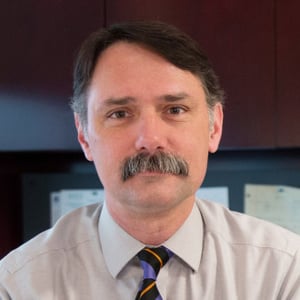
Partner, Bona Law PC
Steve Cernak is a respected leader in the international antitrust and competition law community. He served as in-house antitrust attorney at General Motors for more than 20 years, ultimately responsible for global antitrust compliance, merger reviews and litigation. As a result, Steve has experience tackling the toughest antitrust issues, and explaining them to everyone in an organization from the CEO to workers in the factories.
After leaving GM, Steve spent seven years at Schiff Hardin’s Ann Arbor office, serving clients both inside and outside the automotive community. As he did at Schiff Hardin, Steve now assists clients big and small on a wide array of competition and consumer protection matters, including compliance programs; joint efforts with competitors; pricing strategies and programs; and merger reviews and filings.
Steve has served in the leadership of the Antitrust Section of the American Bar Association for more than 20 years, and is currently the Section Chief Marketing Officer. That position keeps him connected to the global community and up-to-date on developments.
Steve is a prolific writer for The Antitrust Lawyer Blog, WoltersKluwer’s AntitrustConnect Blog and various Law360, Lexis and Westlaw publications. The second edition of his textbook of antitrust summaries and materials, Antitrust Simulations, was published in 2019 by West Academic. He updates his Antitrust in Distribution and Franchising annually for publication in the LexisNexis Antitrust Law & Strategy Series. Steve is also a frequent commenter on antitrust developments, both on social and mainstream media.
Steve is a regular teacher at both the University of Michigan Law School and the Thomas M. Cooley Law School Corporate & Finance LLM program at Western Michigan University. He also taught for three years at Wayne State University Law School.
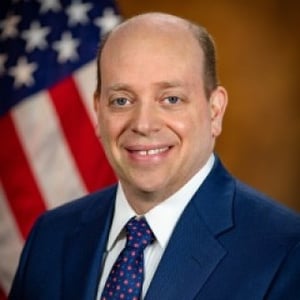
Deputy Assistant Attorney General, Antitrust Division, United States Department of Justice
Michael Kades is a Deputy Assistant Attorney General for the Antitrust Division with a focus on civil enforcement.
Prior to coming to the US Department of Justice, Michael was director for markets and competition policy at the Washington Center for Equitable Growth. His research focused on competition and antitrust enforcement, with an emphasis on consumers, wages, equality, and innovation. He testified before Congress multiple times and authored several reports and articles on antitrust policy.
Prior to joining Equitable Growth, Michael worked as antitrust counsel for Sen. Amy Klobuchar (D-MN), on detail to the from the Federal Trade Commission. He worked on the CREATES Act, the Holocaust Expropriated Art Recovery Act, and the Trade Secrets Protection Act, all of which Congress enacted. He was also the primary staffer on the Merger Filing Fee Modernization Act and the Consolidation Prevention and Competition Protection Act.
Michael spent 20 years investigating and litigating antitrust actions as an attorney at the Federal Trade Commission. From 2013-15, he was the Deputy Chief Trial Counsel for the Bureau of Competition where he participated in a number of merger investigations and litigations. From 2006-2013, served as attorney advisor to Chairman Jon Leibowitz. He oversaw the Commission’s strategy to address anticompetitive patent settlements, worked on the 2010 horizontal merger guidelines, and advised the Chairman on antitrust issues. From 1997-2006, he was an attorney in the Health Care Products Services. He argued In re Schering Plough and In re South Carolina Board of Dentistry before the Commission as well as appearing in federal court. He played a leading role in FTC v. Mylan in which the Commission obtained $100 million in disgorgement. While at the Commission, he received the Chairman’s Award and the Paul Rand Dixon Award.
Kades is a graduate of Yale University and the University of Wisconsin Law School.

Professor of Law, Antonin Scalia Law School, George Mason University
Professor of Law Bruce H. Kobayashi’s background in economics makes him a vital part of the law and economics focus at the Antonin Scalia Law School, George Mason University. Since coming to Scalia Law in 1992, he has been a frequent contributor to economics and law and economics journals. He previously served as a senior economist with the Federal Trade Commission, a senior research associate with the U.S. Sentencing Commission, and an economist with the U.S. Department of Justice. He recently served as the director of the FTC’s Bureau of Economics.
Professor Kobayashi was educated at the University of California, Los Angeles, earning his BS in Economics and System Science (1981), and his MA (1982) and PhD (1986) in Economics.
He teaches Litigation and Dispute Resolution Theory, Quantitative Forensics, and Legal and Economic Theory of Intellectual Property.
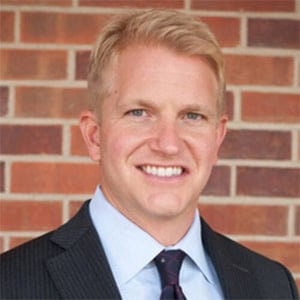
Wall Chair in Corporate Law and Governance and Professor of Law, University of Missouri School of Law
Thomas Lambert is the Wall Chair in Corporate Law and Governance and Professor of Law at the University of Missouri School of Law.
Prof. Lambert’s scholarship focuses on antitrust, corporate and regulatory matters. He is the author of How to Regulate: A Guide for Policymakers (Cambridge Univ. Press 2017) and co-author of Antitrust Law: Interpretation and Implementation (5th ed., Foundation Press, 2013). He has also authored or co-authored numerous book chapters and more than 20 journal articles in such publications as the Antitrust Bulletin, the Boston College Law Review, the Minnesota Law Review, the Texas Law Review and the Yale Journal on Regulation. He blogs regularly at Truth on the Market, a site focused on academic commentary on antitrust, business and economic legal issues.
In 2017, Professor Lambert received the University of Missouri’s Kemper Faculty Fellowship (awarded annually to five professors throughout the university for exemplary teaching). He has also received the law school’s Blackwell Sanders Award for Teaching Excellence and the university-wide Gold Chalk Award for excellence in graduate teaching. He is a three-time winner of the University of Missouri Law School’s Shook Hardy & Bacon Excellence in Research Award, which is awarded annually for most outstanding faculty scholarship.
Before entering academia, Professor Lambert practiced law in the Chicago office of Sidley Austin and was a John M. Olin Fellow at Northwestern University School of Law and the Center for the Study of American Business (now the Murray Weidenbaum Center) at Washington University. After graduating from law school, he clerked for Judge Jerry E. Smith of the U.S. Court of Appeals for the Fifth Circuit.
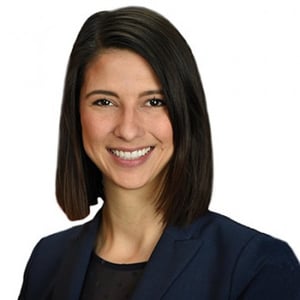
Partner, Baker Botts L.L.P.
Taylor Owings is a partner in the Antitrust and Competition Practice Group of Baker Botts L.L.P. She represents clients in civil merger and non-merger matters both in front of government agencies and in private litigation. She also counsels clients on the application of antitrust law to their business activities, with special experience in issues related to the digital economy.
Prior to joining the firm, Ms. Owings served as Senior Counsel and Chief of Staff in the Antitrust Division of the U.S. Department of Justice from 2018 to 2021. In that role, Ms. Owings was a key advisor to the Assistant Attorney General on the application of antitrust law to technology industries, including in the Department of Justice’s review of the business practices of market-leading online platforms and in the application of antitrust law to the exercise of intellectual property rights and standard setting organizations. As Chief of Staff of the Antitrust Division, Ms. Owings was responsible for ensuring the high quality of all public advocacy issued by the Division, including court filings, policy statements, and speeches.
Ms. Owings has experience crafting both trial and appellate strategy in headline-making antitrust litigations. She has argued in the First and Fourth Circuits. Earlier in her career, she clerked for the Honorable Douglas H. Ginsburg on the U.S. Court of Appeals for the D.C. Circuit, and for the Honorable Richard J. Leon on the U.S. District Court for the District of Columbia.
Ms. Owings handles all aspects of merger review. She draws on her first-hand experience investigating and reviewing mergers at the Antitrust Division to advise clients and to represent them in front of the agencies. She has special experience in merger matters with complex legal questions, for instance vertical mergers, the acquisition of a nascent or potential competitor, and the implications of a merger on innovation and data accumulation.
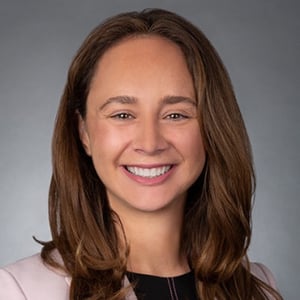
Partner, Kirkland & Ellis LLP
Elyse Dorsey is a partner in the Washington, D.C., office of Kirkland & Ellis LLP. Elyse's practice encompasses a wide array of antitrust and competition matters across the globe. She is uniquely situated to advise clients in domestic and international competition matters, given her combination of government and private practice experience.
Elyse has a focus in cutting edge competition issues, as well as privacy, data security, and consumer protection matters. She has represented clients across levels of government, from state agencies to the U.S. Supreme Court. Prior to joining Kirkland, Elyse served as Counsel to the Assistant Attorney General at the U.S. Department of Justice's Antitrust Division. Her work at the Antitrust Division covered a spectrum of legal and policy matters, including IP and technology issues, the Division's appellate and amicus brief programs, and its international and competition policy efforts. Elyse joined the Division from the U.S. Federal Trade Commission, where she served as Attorney Advisor to Commission Noah Joshua Phillips. While at the Commission, she advised on key cases, matters, and policies affecting industries across the economy--from digital and tech to pharmaceuticals and hospitals and more.
Elyse is a recognized thought leader in the antitrust and competition communities. She has been a frequent nominee and recipient of antitrust writing awards for her scholarship in this space. She has also served as an adjunct professor at George Mason University's Scalia Law School for several years, helping to launch their Antitrust LL.M. program; and she previously served as a visiting scholar at the University of Virginia.

Senior Attorney, Institute of Justice
Kirby Thomas West is a senior attorney at the Institute for Justice, where she is also the co-director of IJ’s National Initiative to End Forfeiture Abuse. She joined IJ in 2018 and litigates cases defending property rights, free speech, and educational choice.
In her time at IJ, Kirby has launched challenges to unconstitutional civil forfeiture and impoundment schemes. She has also litigated educational choice cases, including as part of the IJ team that litigated Carson v. Makin, a landmark educational choice case decided in 2022.
In 2024, Kirby was a Wasserstein Public Interest Fellow at Harvard Law School.
Before joining IJ, Kirby Was an attorney at Baker Botts LLP, in Washington D.C. She clerked for Judge Dennis Shedd of the U.S. Court of Appeals for the Fourth Circuit.
Kirby received her law degree cum laude from Harvard Law School in 2015.
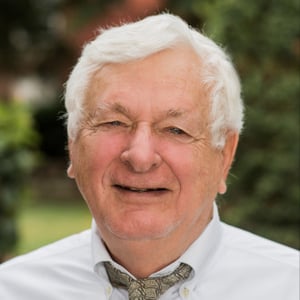
Lyle T. Alverson Professor of Law, George Washington University Law School
Professor Pierce is author of over twenty books and 130 articles on administrative law, government regulation, and the effects of various forms of government intervention on the performance of markets. His books and articles have been cited in hundreds of judicial opinions, including over a dozen opinions of the U.S. Supreme Court.
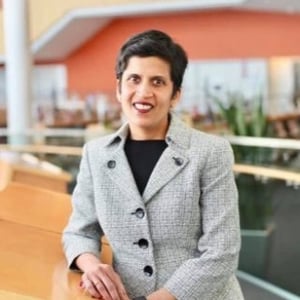
Associate Dean for Diversity, Equity, and Inclusion, Samuel Weiss Faculty Scholar and Clinical Professor of Law, and Director, Center for Immigrants' Rights Clinic, The Pennsylvania State University
Shoba Sivaprasad Wadhia is Associate Dean for Diversity, Equity, and Inclusion; the Samuel Weiss Faculty Scholar; and Clinical Professor of Law at Penn State Law in University Park. Her research focuses on the role of prosecutorial discretion in immigration law and the intersections of race, national security, and immigration. Her work has been published in numerous law journals, including Duke Law Journal, Emory Law Journal, Texas Law Review, Washington and Lee Law Review, Harvard Latino Law Review, Administrative Law Review, Howard Law Journal, Georgetown Immigration Law Journal, and Columbia Journal of Race and Law. Wadhia is the author of two award-winning books with New York University Press: Beyond Deportation: The Role of Prosecutorial Discretion in Immigration Cases (2015) and Banned: Immigration Enforcement in the Time of Trump (2019). She is also the author of Immigration and Nationality Law: Problems and Solutions, (w. Steve Yale-Loehr and Lenni Benson), published by Carolina Academic Press.
Wadhia’s scholarship has been cited in dozens of law journals and by numerous federal circuit courts, including Judge Richard Posner (article on deferred action), Judge Paul J. Watford (article on the role of discretion in speed deportation), and Judge Kim McLane Wardlaw (“See generally” citation to book Beyond Deportation), Judge Julius N. Richardson (co-authored article and Chevron deference and immigration), and Judge Andrew S. Oldham (co-authored article on Chevron deference and immigration). She serves as the inaugural Editor-In-Chief of the American Immigration Lawyers Association (AILA) Law Journal, a partnership between AILA and Fastcase. In 2019, she served as the Enlund Scholar In Residence at DePaul University School of Law. In 2019, Wadhia testified before Congress on the historical role of prosecutorial discretion and deferred action in immigration cases.
Wadhia has written or been quoted by numerous media outlets, including New York Times, USA Today, Los Angeles Times, Philadelphia Inquirer, The Hill, SCOTUS blog, blog of the Harvard Law Review, American Constitution Society, Yale Journal on Regulation’s Notice & Comment, and Immigration Law Professors Blog. She has also served as an expert witness, lead author, or co-counsel in connection with Deferred Action for Childhood Arrivals (DACA), the asylum ban, the travel ban, and prosecutorial discretion more generally.
At Penn State Law, Professor Wadhia teaches doctrinal courses in immigration and asylum and refugee law. She is also the founder/director of the Center for Immigrants’ Rights Clinic (CIRC), where she supervises students in three areas: 1) community outreach; 2) legal support in individual immigration cases; and 3) policy work for institutional clients. CIRC has earned a national reputation for its high-quality work product and impact in the community. 2018 marked the 10-year anniversary of CIRC. CIRC was honored with the Excellence in Legal Advocacy Award in 2017 by the American-Arab Anti-Discrimination Committee and named legal organization of the year in 2019 by the Pennsylvania Immigration Resource Center.
Prior to joining Penn State, Professor Wadhia was deputy director for legal affairs at the National Immigration Forum in Washington, D.C., where she provided legal and policy expertise on multiple legislative efforts, including the creation of the Department of Homeland Security, comprehensive immigration reform, immigration enforcement, and immigration policy post 9-11. Wadhia has also been an associate with the immigration law firm, Maggio Kattar of P.C. in Washington, D.C., where she represented individuals and families in asylum, deportation, family, and employment-based immigration.
Wadhia has received many awards for her scholarship, teaching, and service, including Pro Bono Attorney of the Year by the American-Arab Anti-Discrimination Committee in 2003, leadership awards by the Department of Homeland Security’s Office of Civil Rights and Civil Liberties and Office of the Inspector General in 2008, 2017 Honoree by the National Immigration Project, Arnold Addison Award for Town and Gown Relations by the Borough of State College in 2019, and the 2019 Elmer Friend Excellence in Teaching Award by the American Immigration Lawyers Association. In 2020, Wadhia received the university-wide Rosemary Schraer Mentoring Award and was named a Fastcase 50 Awardee, which honors 50 of “the law’s smartest, most courageous innovators, techies, visionaries, & leaders.”

Professor of Law, University of Michigan Law School
Christopher J. Walker is a Professor of Law at the University of Michigan. Prior to joining Michigan law faculty in 2022, he spent a decade teaching at The Ohio State University Moritz College of Law. He previously clerked for Justice Anthony Kennedy of the U.S. Supreme Court, worked on the Civil Appellate Staff at the U.S. Department of Justice, and served on the Senate Judiciary Committee staff for the Gorsuch Supreme Court confirmation. Professor Walker’s research focuses on administrative law, regulation, and law and policy at the agency level. Outside the law school, he chaired the American Bar Association’s Section of Administrative Law and Regulatory Practice in 2020-21 and served as one of forty Public Members of the Administrative Conference of the United States from 2016-2022, and he continues to serve in both organizations in various capacities. He also works of counsel at the U.S. Chamber Litigation Center. In 2022, he received the Federalist Society’s Joseph Story Award.
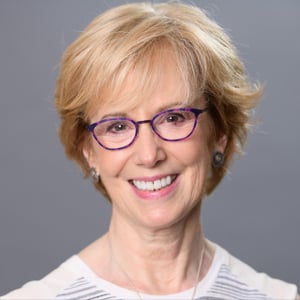
Director, GW Regulatory Studies Center & Distinguished Professor of Practice, Trachtenberg School of Public Policy & Public Administration, The George Washington University
Susan Dudley is the Founder and Director of the George Washington University Regulatory Studies Center, established in 2009 to raise awareness of regulations’ effects and improve regulatory policy through research, education, and outreach. She is also a distinguished professor of practice in the Trachtenberg School of Public Policy and Public Administration. She is past-president of the Society for Benefit Cost Analysis, a senior fellow of the Administrative Conference of the United States, and on the Regulatory Transparency Project Regulatory Practice Working Group. Her book, Regulation: A Primer, with Jerry Brito, is available on Amazon.com.
From April 2007 through January 2009, Professor Dudley served as the Presidentially-appointed Administrator of the Office of Information and Regulatory Affairs in the U.S. Office of Management and Budget and was responsible for the review of draft executive branch regulations under Executive Order 12866, the collection of federal-government-wide information under the Paperwork Reduction Act, the development and implementation of government-wide policies in the areas of information policy, privacy, and statistical policy, and international regulatory cooperation efforts.
Prior to OIRA, she directed the Regulatory Studies Program at the Mercatus Center at George Mason University, and taught courses on regulation at the George Mason University School of Law. Earlier in her career, Professor Dudley served as an economist at OIRA, as well as the Environmental Protection Agency and the Commodity Futures Trading Commission. She was also a consultant to government and private clients at Economists Incorporated. She holds a Master of Science degree from the Sloan School of Management at MIT and a Bachelor of Science degree (summa cum laude) in Resource Economics from the University of Massachusetts, Amherst.

The Implications of the Latest Congressional Review Act Disapprovals
Jonathan H. Adler, Todd F. Gaziano
Administrative Law & Regulation Practice Group Teleforum
The Congressional Review Act (CRA) was used in 2017 to overturn 15 rules issued near...
Panel V: Ownership of Life
Anita L. Allen, Carl E. Schneider, Peter H. Schuck, Walter M. Weber, Patricia D. White
1989 National Student Symposium
On March 10-11, 1989, the Federalist Society's University of Michigan student chapter hosted the eighth...
Panel V: Ownership of Life
Anita L. Allen, Carl E. Schneider, Peter H. Schuck, Walter M. Weber, Patricia D. White
1989 National Student Symposium
On March 10-11, 1989, the Federalist Society's University of Michigan student chapter hosted the eighth...
The U.S. Senate Filibuster: A Feature of or Impediment to Democracy?
Martin B. Gold, Jon Kyl, Peter Roskam
Chicago Lawyers Chapter - Online Event
Then-Senator Biden said in 2005 that “American citizens have benefited from the Senate’s check on...
The U.S. Senate Filibuster: A Feature of or Impediment to Democracy?
Martin B. Gold, Jon Kyl, Peter Roskam
Chicago Lawyers Chapter - Online Event
Then-Senator Biden said in 2005 that “American citizens have benefited from the Senate’s check on...
Deep Dive Episode 189 – A Dawning Era for Vertical Mergers? The New Vertical Merger Guidelines, Illumina/Grail, and More
Steve Cernak, Michael Kades, Bruce Kobayashi, Thomas Lambert, Taylor Owings, Elyse Dorsey
Regulatory Transparency Project's Fourth Branch Podcast
The antitrust agencies’ approach to vertical mergers has been the subject of significant debate —...
Learning to Change: New Takes on Education Reform
Kirby Thomas West
Federalist Society Review, Volume 22
A Review of: The Choice We Face: How Segregation, Race, and Power Have Shaped America’s...
Topics
The Conservative Case Against the Big Business Case Against Class Actions
I am grateful to William Barnette for his review of my book The Conservative Case...
Topics
IRS Reverses After Denying Tax-Exemption to Christian Non-Profit
The Internal Revenue Service (IRS) recently faced a legal, media, and political firestorm after denying...
Deep Dive Episode 188 – Immigration Policymaking in the Biden Administration
Richard J. Pierce, Shoba Sivaprasad Wadhia, Christopher J. Walker, Susan E. Dudley
Regulatory Transparency Project's Fourth Branch Podcast
Motivated in part by Congress’s failure to modernize immigration policy in the United States, Presidents...