
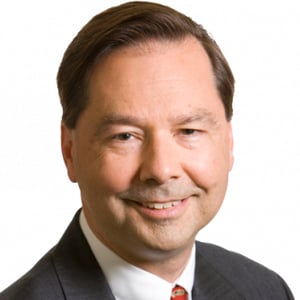
Senior Legal Fellow, Edwin Meese III Institute for the Rule of Law, Advancing American Freedom
Associate, Greehan, Taves, Pandak & Stoner, PLLC
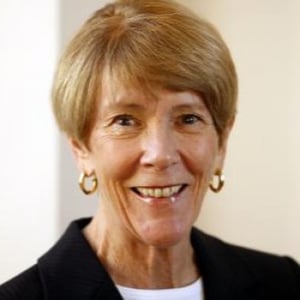
David and Mary Harrison Distinguished Professor of Law Emeritus, University of Virginia School of Law
Lillian BeVier taught constitutional law (with special emphasis on First Amendment issues), intellectual property (trademark, copyright), real property and torts from 1973-2010 at the Law School, and now teaches a January Term course on judicial philosophy.
At Stanford Law School, BeVier was revising editor for the Stanford Law Review and a member of the Order of the Coif. Before coming to Virginia, she was associate professor of law at the University of Santa Clara Law School; practiced law with Spaeth Blase Valentine & Klein in Palo Alto, Calif.; served as research associate to Professor William F. Baxter at Stanford University Law School, working on the FAA-ABA study of the legal aspects of airport noise and the sonic boom; and was assistant to the general secretary and assistant staff legal counsel for Stanford University.
BeVier received the University of Virginia Alumni Association Distinguished Professor Award in 2006. The Raven Society elected her to membership in 1993 and honored her with the faculty award in 2010. She delivered the Henry Miller Memorial Lecture at Georgia State Law School in 2005, the Coen Memorial Lecture at the University of Colorado Law School in 2000, and the David C. Baum Lecture on Civil Rights and Civil Liberties at the University of Illinois Law School in 1996. In 1999, at the invitation of the Supreme Court Historical Society, she spoke to the Society on Free Expression in the Warren and Burger Courts. Suffolk University awarded her an honorary S.J.D. degree in 1998. In the fall of 2003, she was a visiting scholar at the National Constitution Center in Philadelphia.
Having been nominated by President Bush and confirmed by the Senate in 2003, she served as vice-chair of the Board of Directors of the Legal Services Corporation until 2009. She serves on the national Board of Visitors of the Federalist Society. Within the Charlottesville community, BeVier has served as chair of the Board of Trustees of St. Anne’s-Belfield School and of the Martha Jefferson Hospital. She is currently chair of the board of the Martha Jefferson Health Services Corporation and of Piedmont CASA (Court-Appointed Special Advocates).
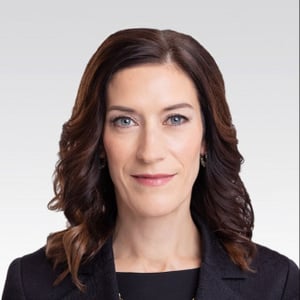
Executive Vice President of Global Governance, Chief Legal Officer and Corporate Secretary, Walmart Inc.
Rachel Brand is Walmart’s executive vice president of global governance, chief legal officer, and corporate secretary. She oversees the company’s global legal, compliance, ethics, corporate governance, digital citizenship, aviation, investigative, and corporate security functions, including Walmart’s Emergency Operations Center.
Immediately before joining Walmart, Rachel served as the United States Associate Attorney General and holds the distinction of being the first woman to serve in this role. She had previously served in the U.S. Department of Justice as the Assistant Attorney General for the Office of Legal Policy during President George W. Bush’s administration. Her other government service includes an appointment by President Obama to serve as a Member of the U.S. Privacy and Civil Liberties Oversight Board, service as an Associate Counsel to the President at the White House, and judicial clerkships with Justice Charles Fried of the Supreme Judicial Court of Massachusetts and Justice Anthony Kennedy at the Supreme Court of the United States. In the private sector, Rachel was a lawyer in private practice at two law firms in Washington, D.C. and served as the Vice President and Chief Counsel for Regulatory Litigation at the U.S. Chamber of Commerce Litigation Center.
Rachel serves on the board of directors for the Walmart Foundation and is the executive sponsor for Walmart’s Tribal Voices Associate Resource Group. Outside of Walmart, she serves on the board of directors for the International Justice Mission and is a member of The American Law Institute.
Rachel earned her Bachelor of Arts degree from the University of Minnesota-Morris and her J.D. from Harvard Law School.
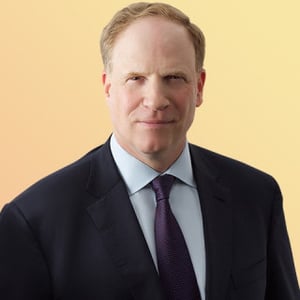
Partner, King & Spalding
Drew Hruska focuses on criminal and regulatory litigation and investigations, internal investigations, regulatory compliance and risk advice. A partner in our Special Matters and Investigations practice, Drew represents major financial services and industrial companies, family offices and prominent individuals.
Drew represents a variety of financial services clients, including securities, commercial banking, insurance, insurance brokerage, hedge funds and private equity funds, along with major industrial companies, concerning enforcement and national security investigations by government agencies, including the U.S. Department of Justice, OFAC, SEC, state attorneys general, and many others. Matters under investigation typically involve fraud, money laundering, international sanctions, foreign corrupt practices, banking regulation, false claims, taxation, data privacy and security, antitrust and immigration restrictions.
In addition, Drew consults with numerous multinational companies on a range of criminal, regulatory compliance, and risk issues. Drew speaks Russian and is frequently engaged on financial enforcement issues involving Russia and Eastern Europe. He has also served in independent roles a Monitor appointed by an international organization, an independent legal advisor for the Federal Reserve and Office of the Controller of the Currency, and as a court-appointed Examiner in bankruptcy.
Before joining our firm, Drew served as the Chief Assistant U.S. Attorney for the Eastern District of New York, where he supervised the criminal and civil divisions. He also oversaw the office’s corporate fraud offensive, including investigations of Computer Associates and Symbol Technologies. Drew served as Acting U.S. Attorney for the prosecution of the New York Racing Association on tax conspiracy charges. He also led the criminal investigation of the Staten Island Ferry crash of October 15, 2003, that resulted in a manslaughter conviction for New York City’s Ferry Service Director.
Previously, Drew served as Senior Counsel to U.S. Deputy Attorney General Larry Thompson, and as an Assistant District Attorney in the Manhattan District Attorney’s Office, where he prosecuted major securities, bank and insurance fraud cases as a member of the Frauds Bureau.
Drew is recognized by Chambers, Benchmark Litigation, Legal 500, and Who’s Who Legal. He serves on the World Jewish Congress President’s Security Advisory Committee and on the Dewey Medal Prize Committee for the New York City District Attorneys’ Offices.

Partner, Schaerr | Jaffe LLP
Erik Jaffe has been involved in appeals on a broad range of legal issues, including First Amendment challenges to campaign finance reform, Commerce Clause challenges to Health Care Reform and other federal legislation, Equal Protection Clause challenges to affirmative action in education, First Amendment challenges to school vouchers, Fifth Amendment challenges to takings of property, Second Amendment challenges to restrictions on gun ownership, and a wide variety of cases involving patents, copyrights, ERISA, securities fraud, federal preemption, environmental regulation, and other state and federal constitutional and statutory matters. He has represented businesses and non-profit groups, Judges, Senators, former government officials, Nobel Prize winners, and a broad cross-section of private individuals. Mr. Jaffe has been involved in over 120 Supreme Court matters, including filing over 30 cert. petitions, representing half-a-dozen parties on the merits, and filing over 70 amicus briefs at both the cert. and merits stages.
A 1990 graduate of the Columbia University School of Law, Mr. Jaffe was a law clerk to Judge Douglas H. Ginsburg of the United States Court of Appeals for the District of Columbia Circuit from 1990 to 1991. Following that clerkship he spent five years in litigation practice with the Washington, D.C. law firm of Williams & Connolly. In the summer of 1996 he left Williams & Connolly to clerk for Supreme Court Justice Clarence Thomas. At the end of that clerkship he started his own practice, and he was a sole practitioner from 1997 to 2018. He joined the firm of Schaerr | Jaffe LLP in 2018.
David and Mary Harrison Distinguished Professor of Law Emeritus, University of Virginia School of Law
Lillian BeVier taught constitutional law (with special emphasis on First Amendment issues), intellectual property (trademark, copyright), real property and torts from 1973-2010 at the Law School, and now teaches a January Term course on judicial philosophy.
At Stanford Law School, BeVier was revising editor for the Stanford Law Review and a member of the Order of the Coif. Before coming to Virginia, she was associate professor of law at the University of Santa Clara Law School; practiced law with Spaeth Blase Valentine & Klein in Palo Alto, Calif.; served as research associate to Professor William F. Baxter at Stanford University Law School, working on the FAA-ABA study of the legal aspects of airport noise and the sonic boom; and was assistant to the general secretary and assistant staff legal counsel for Stanford University.
BeVier received the University of Virginia Alumni Association Distinguished Professor Award in 2006. The Raven Society elected her to membership in 1993 and honored her with the faculty award in 2010. She delivered the Henry Miller Memorial Lecture at Georgia State Law School in 2005, the Coen Memorial Lecture at the University of Colorado Law School in 2000, and the David C. Baum Lecture on Civil Rights and Civil Liberties at the University of Illinois Law School in 1996. In 1999, at the invitation of the Supreme Court Historical Society, she spoke to the Society on Free Expression in the Warren and Burger Courts. Suffolk University awarded her an honorary S.J.D. degree in 1998. In the fall of 2003, she was a visiting scholar at the National Constitution Center in Philadelphia.
Having been nominated by President Bush and confirmed by the Senate in 2003, she served as vice-chair of the Board of Directors of the Legal Services Corporation until 2009. She serves on the national Board of Visitors of the Federalist Society. Within the Charlottesville community, BeVier has served as chair of the Board of Trustees of St. Anne’s-Belfield School and of the Martha Jefferson Hospital. She is currently chair of the board of the Martha Jefferson Health Services Corporation and of Piedmont CASA (Court-Appointed Special Advocates).
Executive Vice President of Global Governance, Chief Legal Officer and Corporate Secretary, Walmart Inc.
Rachel Brand is Walmart’s executive vice president of global governance, chief legal officer, and corporate secretary. She oversees the company’s global legal, compliance, ethics, corporate governance, digital citizenship, aviation, investigative, and corporate security functions, including Walmart’s Emergency Operations Center.
Immediately before joining Walmart, Rachel served as the United States Associate Attorney General and holds the distinction of being the first woman to serve in this role. She had previously served in the U.S. Department of Justice as the Assistant Attorney General for the Office of Legal Policy during President George W. Bush’s administration. Her other government service includes an appointment by President Obama to serve as a Member of the U.S. Privacy and Civil Liberties Oversight Board, service as an Associate Counsel to the President at the White House, and judicial clerkships with Justice Charles Fried of the Supreme Judicial Court of Massachusetts and Justice Anthony Kennedy at the Supreme Court of the United States. In the private sector, Rachel was a lawyer in private practice at two law firms in Washington, D.C. and served as the Vice President and Chief Counsel for Regulatory Litigation at the U.S. Chamber of Commerce Litigation Center.
Rachel serves on the board of directors for the Walmart Foundation and is the executive sponsor for Walmart’s Tribal Voices Associate Resource Group. Outside of Walmart, she serves on the board of directors for the International Justice Mission and is a member of The American Law Institute.
Rachel earned her Bachelor of Arts degree from the University of Minnesota-Morris and her J.D. from Harvard Law School.
Partner, King & Spalding
Drew Hruska focuses on criminal and regulatory litigation and investigations, internal investigations, regulatory compliance and risk advice. A partner in our Special Matters and Investigations practice, Drew represents major financial services and industrial companies, family offices and prominent individuals.
Drew represents a variety of financial services clients, including securities, commercial banking, insurance, insurance brokerage, hedge funds and private equity funds, along with major industrial companies, concerning enforcement and national security investigations by government agencies, including the U.S. Department of Justice, OFAC, SEC, state attorneys general, and many others. Matters under investigation typically involve fraud, money laundering, international sanctions, foreign corrupt practices, banking regulation, false claims, taxation, data privacy and security, antitrust and immigration restrictions.
In addition, Drew consults with numerous multinational companies on a range of criminal, regulatory compliance, and risk issues. Drew speaks Russian and is frequently engaged on financial enforcement issues involving Russia and Eastern Europe. He has also served in independent roles a Monitor appointed by an international organization, an independent legal advisor for the Federal Reserve and Office of the Controller of the Currency, and as a court-appointed Examiner in bankruptcy.
Before joining our firm, Drew served as the Chief Assistant U.S. Attorney for the Eastern District of New York, where he supervised the criminal and civil divisions. He also oversaw the office’s corporate fraud offensive, including investigations of Computer Associates and Symbol Technologies. Drew served as Acting U.S. Attorney for the prosecution of the New York Racing Association on tax conspiracy charges. He also led the criminal investigation of the Staten Island Ferry crash of October 15, 2003, that resulted in a manslaughter conviction for New York City’s Ferry Service Director.
Previously, Drew served as Senior Counsel to U.S. Deputy Attorney General Larry Thompson, and as an Assistant District Attorney in the Manhattan District Attorney’s Office, where he prosecuted major securities, bank and insurance fraud cases as a member of the Frauds Bureau.
Drew is recognized by Chambers, Benchmark Litigation, Legal 500, and Who’s Who Legal. He serves on the World Jewish Congress President’s Security Advisory Committee and on the Dewey Medal Prize Committee for the New York City District Attorneys’ Offices.
Partner, Schaerr | Jaffe LLP
Erik Jaffe has been involved in appeals on a broad range of legal issues, including First Amendment challenges to campaign finance reform, Commerce Clause challenges to Health Care Reform and other federal legislation, Equal Protection Clause challenges to affirmative action in education, First Amendment challenges to school vouchers, Fifth Amendment challenges to takings of property, Second Amendment challenges to restrictions on gun ownership, and a wide variety of cases involving patents, copyrights, ERISA, securities fraud, federal preemption, environmental regulation, and other state and federal constitutional and statutory matters. He has represented businesses and non-profit groups, Judges, Senators, former government officials, Nobel Prize winners, and a broad cross-section of private individuals. Mr. Jaffe has been involved in over 120 Supreme Court matters, including filing over 30 cert. petitions, representing half-a-dozen parties on the merits, and filing over 70 amicus briefs at both the cert. and merits stages.
A 1990 graduate of the Columbia University School of Law, Mr. Jaffe was a law clerk to Judge Douglas H. Ginsburg of the United States Court of Appeals for the District of Columbia Circuit from 1990 to 1991. Following that clerkship he spent five years in litigation practice with the Washington, D.C. law firm of Williams & Connolly. In the summer of 1996 he left Williams & Connolly to clerk for Supreme Court Justice Clarence Thomas. At the end of that clerkship he started his own practice, and he was a sole practitioner from 1997 to 2018. He joined the firm of Schaerr | Jaffe LLP in 2018.
Justice, Supreme Court of Alabama (Retired); Professor of Law, Belmont University College of Law?
Partner, Waller Lansden Dortch & Davis LLP
Paul Summers is a partner with Waller Lansden and practices in the area of trial and appellate litigation; regulatory matters; and government affairs. Prior to joining the firm, he served as Attorney General of the State of Tennessee. As Attorney General, he led a staff of 340, including 170 attorneys, in all civil litigation and criminal appellate litigation before state and federal courts. Major accomplishments during his term included the conclusion of a 36-year-old higher education desegregation lawsuit, Geier v. Sundquist. General Summers also successfully argued the death penalty case of Rahman v. Bell (2002) before the United States Supreme Court. While serving as the state's chief legal officer, General Summers was twice named to Business Tennessee's Power 100 list of Tennessee's most powerful people. He is recognized in The Best Lawyers in America (Woodward White, Inc.) for his work in commercial litigation and is listed in the 2009-2010 Edition of Who's Who in American Law.
Before he was appointed Attorney General in 1999 by the Tennessee Supreme Court, General Summers served as Judge of the Tennessee Court of Criminal Appeals. He was appointed to the bench by Governor Ned McWherter in 1990 and elected in statewide retention elections in 1992 and 1998. Prior to this service, General Summers was elected District Attorney General for the multi-county 25th judicial district in West Tennessee. During his nearly nine-year tenure as a DA, General Summers also served as President of the Tennessee District Attorneys General Conference. Prior to state service, he was in private practice in his hometown of Somerville, Tenn.
General Summers served as a JAG officer for more than three decades in both active and reserve duty with the Air Force, Army and National Guard. His last duty assignment was Command Staff Judge Advocate, Tennessee Army National Guard. He retired with the rank of colonel in the U.S. Army. Upon his retirement after 33 years of commissioned military service, Tennessee Governor Phil Bredesen awarded General Summers the National Guard Distinguished Service Medal. General Summers was awarded the Legion of Merit by President George W. Bush.
General Summers is a Fellow of the Tennessee Bar Foundation and the Nashville Bar Foundation. He is the past Chair of the Jason Foundation, Inc., a national nonprofit foundation dedicated to the education and prevention of teenage suicide. He performs regular volunteer work for the Jason Foundation.
Justice, Supreme Court of Alabama (Retired); Professor of Law, Belmont University College of Law?
Partner, Waller Lansden Dortch & Davis LLP
Paul Summers is a partner with Waller Lansden and practices in the area of trial and appellate litigation; regulatory matters; and government affairs. Prior to joining the firm, he served as Attorney General of the State of Tennessee. As Attorney General, he led a staff of 340, including 170 attorneys, in all civil litigation and criminal appellate litigation before state and federal courts. Major accomplishments during his term included the conclusion of a 36-year-old higher education desegregation lawsuit, Geier v. Sundquist. General Summers also successfully argued the death penalty case of Rahman v. Bell (2002) before the United States Supreme Court. While serving as the state's chief legal officer, General Summers was twice named to Business Tennessee's Power 100 list of Tennessee's most powerful people. He is recognized in The Best Lawyers in America (Woodward White, Inc.) for his work in commercial litigation and is listed in the 2009-2010 Edition of Who's Who in American Law.
Before he was appointed Attorney General in 1999 by the Tennessee Supreme Court, General Summers served as Judge of the Tennessee Court of Criminal Appeals. He was appointed to the bench by Governor Ned McWherter in 1990 and elected in statewide retention elections in 1992 and 1998. Prior to this service, General Summers was elected District Attorney General for the multi-county 25th judicial district in West Tennessee. During his nearly nine-year tenure as a DA, General Summers also served as President of the Tennessee District Attorneys General Conference. Prior to state service, he was in private practice in his hometown of Somerville, Tenn.
General Summers served as a JAG officer for more than three decades in both active and reserve duty with the Air Force, Army and National Guard. His last duty assignment was Command Staff Judge Advocate, Tennessee Army National Guard. He retired with the rank of colonel in the U.S. Army. Upon his retirement after 33 years of commissioned military service, Tennessee Governor Phil Bredesen awarded General Summers the National Guard Distinguished Service Medal. General Summers was awarded the Legion of Merit by President George W. Bush.
General Summers is a Fellow of the Tennessee Bar Foundation and the Nashville Bar Foundation. He is the past Chair of the Jason Foundation, Inc., a national nonprofit foundation dedicated to the education and prevention of teenage suicide. He performs regular volunteer work for the Jason Foundation.
Retired
Tom Gede retired in 2023 as a principal in Morgan Lewis Consulting LLC and of counsel to the firm. He currently consults on a variety of legal and policy matters for both public and private clients. Tom has a national reputation and distinguished background in federal Indian law. Prior to retirement, he represented clients in complex governmental matters in litigation, administrative and regulatory proceedings, including high-profile matters involving state governments. A former senior deputy in the California Attorney General’s office, Tom was amicus coordinator and Supreme Court counsel, and argued cases in the US Supreme Court, the California Supreme Court, and numerous state and federal appellate courts.
Tom also served as executive director of the Conference of Western Attorneys General (CWAG), coordinating activities on key legal and policy issues, such as federal Indian law, energy, environmental, public lands, financial services, and telecommunications, for the attorneys general of 18 western states and territories. In 2016, Tom was elected as a Member of the American Law Institute (ALI), and served as an Adviser on the Restatement of the Law Third - The Law of American Indians. Tom also taught federal Indian law as an adjunct law professor at the University of the Pacific - McGeorge School of Law. He served as an assistant editor for and the author of the Indian gaming chapter in CWAG’s American Indian Law Deskbook (2d & 3d eds.). He has been engaged in Indian gaming and Indian law matters for more than three decades, having focused on the gaming compacts with Indian tribes, as well as complex civil and criminal jurisdiction, land, natural resources, water and law enforcement issues in Indian country. He has testified before Congress on American Indian and Native Alaskan issues. In 2012 he was appointed by Speaker John Boehner to serve on the United States Indian Law and Order Commission, where he examined criminal justice issues in Indian country and Alaska, resulting in the issuance of an important report to the President and Congress.

Associate, Jones Day
Shay Dvoretzky specializes in appellate advocacy, complex motions in trial courts, and legal strategy. He has argued before numerous courts, including the U.S. Courts of Appeals for the Second, Sixth, Eighth, Ninth, Eleventh, and District of Columbia Circuits. He has represented Firm clients in the Supreme Court of the United States and in federal and state courts throughout the country. His practice has spanned a wide range of subject areas, including constitutional law, Title VII, ERISA, LMRA, the NLRA, election law and voting rights, intellectual property, securities fraud, RICO, administrative law, products liability, section 1983 claims, energy law, taxation, bankruptcy, and general commercial litigation.
Shay has particular experience in labor and employment law and employment class actions. For example, he has successfully argued appeals involving the vesting of retiree health benefits and the arbitrability of disputes over such benefits after a collective bargaining agreement expires, see Crown Cork & Seal Co. v. International Association of Machinists and Aerospace Workers, __ F.3d __, 2007 WL 2701208 (8th Cir. Sept. 18, 2007); ERISA's anti-cutback and merger rules, see McCay v. Siemens Corp., 2007 WL 2119827 (11th Cir. July 25, 2007); and the denial of certification of a 3,000-member class, see Love v. Johanns, 439 F.3d 723 (D.C. Cir. 2006).
In addition, Shay maintains an active pro bono practice and has represented indigent individuals in numerous cases. For example, in Turner v. Bagley, 401 F.3d 718 (6th Cir. 2005), which Shay argued before the Sixth Circuit, the court of appeals reversed the district court's judgment and granted Jones Day's client a writ of habeas corpus based on constitutional violations related to his state conviction.
Shay regularly speaks and writes on issues including appellate advocacy, the Supreme Court, and employment law. He also serves as the D.C. Circuit editor for the ABA Appellate Practice Journal, frequently judges moot courts for various organizations, and belongs to the Edward Coke Appellate Inn of Court.
Shay joined Jones Day following clerkships on the U.S. Court of Appeals for the Fourth Circuit and the Supreme Court of the United States. Before law school he worked for several years as a management consultant.
Law Clerk to Hon. J. Michael Luttig, U.S. Court of Appeals, Fourth Circuit (2000-2001) and Law Clerk to Hon. Antonin Scalia, Supreme Court of the United States (2001-2002)
Yale University (Phi Beta Kappa; Distinction in the Political Science Major; James Bennett Prize for Outstanding Senior Thesis; B.A. summa cum laude 1995; Coker Fellow; Olin Fellow; Yale Club Scholar; William Wang Prize in Corporate Law; Yale Law Journal; J.D. 2000)
Associate Dean for Research and Intellectual Life, McKnight Presidential Professor in Law, Distinguished McKnight University Professor, Harlan Albert Rogers Professor in Law, Associate Director, Corporate Institute, University of Minnesota Law School
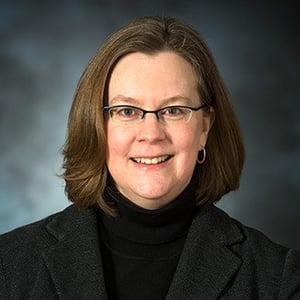
Professor Kristin E. Hickman is the McKnight Presidential Professor in Law, a Distinguished McKnight University Professor, and Harlan Albert Rogers Professor in Law at the University of Minnesota Law School. She also has taught at Harvard Law School and Northwestern University School of Law. Professor Hickman teaches and writes primarily in the areas of administrative law, tax administration, and statutory interpretation. Her articles on these topics have appeared in the Columbia Law Review, Cornell Law Review, Virginia Law Review, Duke Law Journal, and other publications. She also co-authors the Administrative Law Treatise with Richard J. Pierce, Jr., and a casebook on federal administrative law with Pierce and Christopher J. Walker. Her scholarly work has been cited several times in opinions of the United States Supreme Court as well as regularly in lower court judicial opinions and court briefs.
In 2018-19, Professor Hickman served as Special Adviser to the Administrator of the Office of Information and Regulatory Affairs in Washington, D.C. She presently serves as a Senior Fellow, and previously served as a public member and chair of the judicial review committee, for the Administrative Conference of the United States. She also is a Fellow of the American College of Tax Counsel.
Professor Hickman received her B.S. degree in business administration with a concentration in accounting and a secondary major in history from Trinity University in San Antonio, Texas. After practicing for several years as a certified public accountant, Professor Hickman earned her J.D. degree, magna cum laude, from Northwestern University School of Law, where she was awarded the Raoul Berger Prize and the Lowden Wigmore Prize for her scholarly writings. Following law school, Professor Hickman clerked for The Honorable David B. Sentelle of the United States Court of Appeals for the District of Columbia Circuit and practiced law as an associate with the Chicago office of Skadden, Arps, Slate, Meagher & Flom, concentrating on corporate and international tax transactions and matters.

SCOTUScast 5-5-08 featuring Hans von Spakovsky
Hans A. Von Spakovsky
Crawford v. Marion County
On April 28, 2008, in Crawford v. Marion County, the Supreme Court dismissed a constitutional...
SCOTUScast 5-5-08 featuring Alan Smith
Alan Smith
Meacham v. Knolls Atomic Power Laboratory
On April 23, 2008, the Supreme Court heard oral argument in Meacham v. Knolls Atomic Power...
Reporters' Shield
Lillian R. BeVier, Rachel L. Brand, Andrew C. Hruska, Erik S. Jaffe, Lee Levine
Free Speech & Election Law Practice Group
A number of high profile court orders in the recent past have demanded reporters divulge...
Reporters' Shield
Lillian R. BeVier, Rachel L. Brand, Andrew C. Hruska, Erik S. Jaffe, Lee Levine
Free Speech & Election Law Practice Group
A number of high profile court orders in the recent past have demanded reporters divulge...
Is the Election of Judges Good Public Policy?
Harold F. See, Paul Summers, Joseph A. Woodruff
Nashville Lawyers Chapter
The Nashville Lawyers Chapter hosted this event on April 28, 2008. Hon. Harold F. See,...
Is the Election of Judges Good Public Policy?
Harold F. See, Paul Summers, Joseph A. Woodruff
Nashville Lawyers Chapter
The Nashville Lawyers Chapter hosted this event on April 28, 2008. Hon. Harold F. See,...
SCOTUScast 4-29-08 featuring Tom Gede
Thomas F. Gede
Plains Commerce Bank v. Long Family Land & Cattle
On April 14, 2008, the Supreme Court heard oral argument in Plains Commerce Bank v....
SCOTUScast 4-29-08 featuring Shay Dvoretzky
Shay Dvoretzky
LaRue v. DeWolff and Sprint/United Management Co v. Mendelsohn
*Please note that the pronunciation of Mr. Dvoretzky's name is wrong in the introduction of...
2007 Annual Report
The Federalist Society's 2007 Annual Report.
SCOTUScast 4-28-08 featuring Kristin Hickman
Kristin E. Hickman
United States v. Clintwood Elkhorn Mining Co.
On April 15, 2008, the Suprme Court decided United States v. Clintwood Elkhorn Mining Co.,...