Counsel to Senator Jeff Sessions, Senate Judiciary Committee
Executive Vice President, The Federalist Society
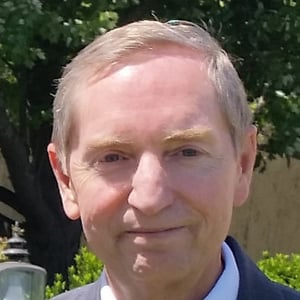
Dean Reuter is Executive Vice President at the Federalist Society for Law and Public Policy Studies. He has served in two federal government agency Offices of the Inspector General, as Counsel to the Inspector General and Deputy Inspector General, responsible for policing the use of federal funds granted and contracted through those agencies. As such, he helped conduct and oversee criminal investigations across the country. He is the principal author of the non-fiction book, The Hidden Nazi: The Untold Story of America's Deal with the Devil, and editor of Liberty’s Nemesis: The Unchecked Expansion of the State and Confronting Terror: 9/11 and the Future of American National Security. He was appointed by the President and served as Vice-Chairman of the Board of Directors of the Corporation for National and Community Service, and recently served as an appointee on the U.S. Commission on Presidential Scholars. He is a graduate of Hood College (BA with Honors) and the University of Maryland School of Law.
Senior Vice President, Law and Policy, US Telecomm
Communications industry veteran Jonathan Banks joined USTelecom in March 2007, and directs the association’s policy development and advocacy work before the Federal Communications Commission, the Federal Trade Commission (FTC) and the courts. Banks comes to USTelecom from BellSouth where he played several leadership roles in the company’s federal advocacy, and his experience at one of the leading communications companies in the industry makes him an invaluable asset to the association.
Banks joined BellSouth in 1995 and most recently served as vice president – executive and regulatory affairs with responsibility for federal public policy advocacy. He also provided legal expertise as general counsel in BellSouth’s Washington office.
Previously, Banks held positions at the FTC, managing a staff litigating competition cases; Armstrong World Industries, where he was responsible for antitrust compliance and litigation at a Fortune 500 company; and the Association of American Railroads, overseeing regulation and state taxation issues.
President & CEO, National Cable & Telecommunications Association
Vice President for Research and Senior Fellow, Technology Policy Institute
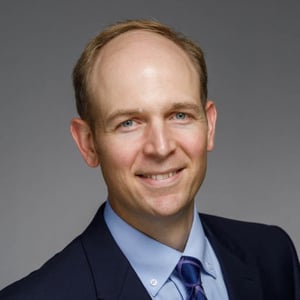
Scott Wallsten is vice president for research and senior fellow at the Technology Policy Institute. An economist with expertise in industrial organization and public policy, Wallsten's research focuses on telecommunications, regulation, competition, and technology policy. His papers have been published in numerous academic journals and his commentaries have appeared in newspapers and newsmagazines around the world.
Wallsten is also a senior fellow at the Georgetown Center for Business and Public Policy and a lecturer in Public Policy at Stanford University. He served as economics director of the Federal Communications Commission's Broadband Task Force. He has been director of communications policy studies and senior fellow at The Progress & Freedom Foundation, a senior fellow at the AEI - Brookings Joint Center for Regulatory Studies and a resident scholar at the American Enterprise Institute, an economist at The World Bank, a scholar at the Stanford Institute for Economic Policy Research, and a staff economist at the U.S. President's Council of Economic Advisers.
Wallsten holds a PhD in economics from Stanford University.
Senior Vice President, Law and Policy, US Telecomm
Communications industry veteran Jonathan Banks joined USTelecom in March 2007, and directs the association’s policy development and advocacy work before the Federal Communications Commission, the Federal Trade Commission (FTC) and the courts. Banks comes to USTelecom from BellSouth where he played several leadership roles in the company’s federal advocacy, and his experience at one of the leading communications companies in the industry makes him an invaluable asset to the association.
Banks joined BellSouth in 1995 and most recently served as vice president – executive and regulatory affairs with responsibility for federal public policy advocacy. He also provided legal expertise as general counsel in BellSouth’s Washington office.
Previously, Banks held positions at the FTC, managing a staff litigating competition cases; Armstrong World Industries, where he was responsible for antitrust compliance and litigation at a Fortune 500 company; and the Association of American Railroads, overseeing regulation and state taxation issues.
President & CEO, National Cable & Telecommunications Association
Vice President for Research and Senior Fellow, Technology Policy Institute
Scott Wallsten is vice president for research and senior fellow at the Technology Policy Institute. An economist with expertise in industrial organization and public policy, Wallsten's research focuses on telecommunications, regulation, competition, and technology policy. His papers have been published in numerous academic journals and his commentaries have appeared in newspapers and newsmagazines around the world.
Wallsten is also a senior fellow at the Georgetown Center for Business and Public Policy and a lecturer in Public Policy at Stanford University. He served as economics director of the Federal Communications Commission's Broadband Task Force. He has been director of communications policy studies and senior fellow at The Progress & Freedom Foundation, a senior fellow at the AEI - Brookings Joint Center for Regulatory Studies and a resident scholar at the American Enterprise Institute, an economist at The World Bank, a scholar at the Stanford Institute for Economic Policy Research, and a staff economist at the U.S. President's Council of Economic Advisers.
Wallsten holds a PhD in economics from Stanford University.
United States Senator, Arizona
Former Governor, Massachusetts
Former Massachusetts Governor Mitt Romney has been widely recognized for his leadership and accomplishments as a public servant and in private enterprise.
Elected in 2002, Governor Romney presided over a dramatic reversal of state fortunes and a period of sustained economic expansion. Without raising taxes or increasing debt, Governor Romney balanced the budget every year of his administration, closing a $3 billion budget gap inherited when he took office. By eliminating waste, streamlining the government, and enacting comprehensive economic reforms to stimulate growth in Massachusetts, Romney got the economy moving again and transformed deficits into surpluses.
At the beginning of Governor Romney's term, Massachusetts was losing thousands of jobs every month. Today, the unemployment rate is lower, hundreds of companies have expanded or moved to Massachusetts and the state has added approximately 60,000 jobs in the last two years.
One of Governor Romney's top priorities was reforming the education system so that young people could compete for good paying jobs in the global economy of the future. In 2004, Governor Romney established the John and Abigail Adams Scholarship Program to reward the top 25 percent of Massachusetts high school students with a four-year, tuition-free scholarship to any Massachusetts public university or college. He has also championed a package of education reforms, including merit pay, an emphasis on math and science instruction, important new intervention programs for failing schools and English immersion for foreign-speaking students.
In 2006, Governor Romney proposed and signed into law a private, market-based reform that ensures every Massachusetts citizen will have health insurance, without a government takeover and without raising taxes.
Governor Romney was elected to the Chairmanship of the Republican Governors Association by his fellow Governors for the 2006 election cycle, and raised a record $27 million for candidates running in State House contests around the country.
Romney first gained national recognition for his role in turning around the 2002 Winter Olympics. With the 2002 Games mired in controversy and facing a financial crisis, Romney left behind a successful career as an entrepreneur to take over as President and CEO of the Salt Lake Organizing Committee.
Governor Romney has said he felt compelled to assume the seemingly impossible task of rescuing the Games by both the urgings of his wife, Ann, and by the memory of his father, George Romney, who had been a successful businessman, three-term Governor of Michigan, and a tireless advocate of volunteerism in America.
In his three years at the helm in Salt Lake, Romney erased a $379 million operating deficit, organized 23,000 volunteers, galvanized community spirit and oversaw an unprecedented security mobilization just months after the September 11th attacks, leading to one of the most successful Olympics in our country's history.
Prior to his Olympic service, Mitt Romney enjoyed a successful career helping businesses grow and improve their operations. From 1978 to 1984, Mr. Romney was a Vice President at Bain & Company, Inc., a leading management consulting firm. In 1984, Romney founded Bain Capital, one of the nation's most successful venture capital and investment companies. Bain Capital helped launch hundreds of companies on a successful course, including Staples, Bright Horizons Family Solutions, Domino's Pizza, Sealy, Brookstone, and The Sports Authority. He was asked to return to Bain & Company as CEO several years later in order to lead a financial restructuring of the organization. Today, Bain & Company employs more than 2,000 people in 25 offices worldwide.
Governor Romney has been deeply involved in community and civic affairs, serving extensively in his church and numerous charities including City Year, the Boy Scouts, and the Points of Light Foundation. He was also the Republican nominee for U.S. Senate in 1994.
Former Governor, Arkansas
Former Arkansas governor Mike Huckabee recently formed HuckPac to assist Republicans running for office nationwide. Mike Huckabee believes conservative leadership is best suited to lead America forward in the 21st Century.
In the past year, Huckabee campaigned for the Republican nomination for President — and to share his message of vertical politics that he says reflects American values and priorities.
From 1996-2007, Huckabee served as the 44th Governor of Arkansas. When he left office on January 9, 2007, he set out on a nationwide tour to promote his fifth book, "From Hope to Higher Ground: 12 STOPS to Restoring America's Greatness." The book reveals his optimistic vision for what America can become with the right kind of leadership and a clear direction.
Huckabee is recognized as a national leader, having been honored by several renowned publications and organizations for his numerous accomplishments. Governing Magazine named him as one of its 'Public Officials of the Year' for 2005, Time Magazine honored him as one of the five best governors in America, and later in the same year, Huckabee received the American Association of Retired Person's Impact Award. In 2007, he was presented with the Music for Life Award by the National Association of Music Merchants (NAMM) for his commitment to music education.
Huckabee became governor in July 1996 when his predecessor resigned. He was one of the youngest governors in the country at the time. Huckabee was elected to a full four-year term as governor in 1998, attracting the largest percentage of the vote ever received by a Republican gubernatorial nominee in Arkansas, and was re-elected to another four-year term in November 2002.
Huckabee first was elected lieutenant governor in a 1993 special election and was elected to a full four-year term in 1994. He was only the fourth Republican to be elected to statewide office since Reconstruction.
A significant part of his adult life was spent as a pastor and denominational leader. He became the youngest president ever of the Arkansas Baptist State Convention, the largest denomination in Arkansas. Huckabee led rapidly growing congregations in Pine Bluff and Texarkana. He said those experiences gave him a deep sense of the problems faced by individuals and families.
Huckabee's efforts to improve his own health have received national attention. Diagnosed with Type II diabetes in 2003, he lost 110 pounds. Barely two years later, he has completed four marathons: The 2005 and 2006 Little Rock Marathons, the Marine Corps Marathon and the ING New York City Marathon. As a result of his accomplishments, The Road Runners Club of America named him its 'Southern Region Runner of the Year' and USA Track & Field has named him their 'Athlete of the Week' for the country.
Continuing to call for a national emphasis on living a healthy lifestyle, Huckabee completed his fourth book, "Quit Digging Your Grave With A Knife and Fork." This 12-stop program is a no-nonsense approach to managing one's health through lifestyle change rather than a simple diet and exercise plan.
Huckabee, 52, enjoys playing bass guitar in his rock-n-roll band, Capitol Offense, which has opened for artists such as Willie Nelson and the Charlie Daniels Band, and has played the House of Blues in New Orleans, the Red Rocks Amphitheater in Denver, CO and for two presidential inauguration balls.
The former governor and his wife, Janet, live in North Little Rock. They have three grown children: John Mark, David and Sarah.
Former United States Representative, 14th Congressional District of Texas
PAUL, Ronald Ernest, (father of Rand Paul), a Representative from Texas; born in Pittsburgh, Allegheny County, Pa., August 20, 1935; graduated from Dormont High School, Dormont, Pa., 1953; B.A., Gettysburg College, Gettysburg, Pa., 1957; M.D., Duke University Medical Center, Durham, N.C., 1961; internship and residency training, Henry Ford Hospital, Detroit, Mich., 1961 and 1962; obstetrics and gynecology training, University of Pittsburgh, Pittsburgh, Pa., 1965-1968; medical doctor; United States Air Force, 1963-1965; United States Air National Guard, 1965-1968; delegate, Texas state Republican convention, 1974; unsuccessful candidate for election to the Ninety-fourth Congress in 1974; elected as a Republican to the Ninety-fourth Congress, by special election to fill the vacancy created by the resignation of United States Representative Robert R. Casey (April 3, 1976-January 3, 1977); unsuccessful candidate for reelection to the Ninety-fifth Congress in 1976; elected to the Ninety-sixth and to the two succeeding Congresses (January 3, 1979-January 3, 1985); was not a candidate for reelection to the House of Representatives in 1984, but was an unsuccessful candidate for nomination to the United States Senate; author; unsuccessful Libertarian Party candidate for election for President of the United States in 1988; elected as a Republican to the One Hundred Fifth and to the seven succeeding Congresses (January 3, 1997-January 3, 2013); unsuccessful candidate for the Republican presidential nomination in 2008; unsuccessful candidate for the Republican presidential nomination in 2012; was not a candidate for reelection to the One Hundred Thirteenth Congress in 2012.
Burton Craige Distinguished Professor of Jurisprudence, UNC School of Law
Michael Gerhardt joined the Carolina Law faculty in 2005 and serves as the Burton Craige Distinguished Professor of Jurisprudence. His teaching and research focuses on constitutional conflicts between presidents and Congress. Gerhardt is the author of six books, including leading treatises on impeachment, appointments, presidential power, Supreme Court precedent, and separation of powers. He has written more than a hundred law review articles and dozens of op eds in the nation’s leading news publications, including SCOTUSblog, The New York Times, and Washington Post. His book, The Forgotten Presidents (Oxford University Press 2013), was named by The Financial Times as one of the best non-fiction books of 2013. He was inducted into the American Law Institute in 2016. Gerhardt attended the University of Chicago Law School, where he graduated order of the coif and served as a research assistant to both Phil Kurland and Cass Sunstein and as one of the two student editors of The Supreme Court Review. After law school, he clerked for Chief District Judge Robert McRae of the U.S. District Court of the Western District of Tennessee and Judge Gilbert Merritt of the U.S. Court of Appeals for the Sixth Circuit. He served as Deputy Media Director of Al Gore’s first Senate campaign, practiced law for three years for two boutique litigation firms in Washington and Atlanta, and taught for more than a decade at William & Mary Law School before joining Carolina Law.
Gerhardt’s extensive public service has included his testifying more than a dozen times before Congress, including as the only joint witness in the Clinton impeachment proceedings in the House; speaking behind closed doors to the entire House of Representatives about the history of impeachment in 1998; and serving as special counsel to the Senate Judiciary Committee for seven of the nine sitting Supreme Court justices. In 2015, he became the first legal scholar to be asked by the Library of Congress to serve as its principal adviser in revising the official United States Constitution Annotated. In 2019, the Order of the Coif named Gerhardt as its Distinguished Visitor for 2020, an award given to only one law professor each year for outstanding legal scholarship.
Former President & CEO, The Federalist Society for Law and Public Policy Studies
Eugene B. Meyer, former President and CEO of the Federalist Society, has served as Executive Director, CEO, and/or President of the organization for more than 40 years. He is responsible for shepherding the organization from a small group of law students to a community of 90,000 lawyers, law students, academics, judges, and others interested in the rule of law. The Society now includes a Student Chapter at nearly every ABA-accredited law school in the country and Lawyers Chapters in 220 major cities across the nation. Gene earned his B.A. in history at Yale in 1975 and his M.A. in political science from the London School of Economics in 1976. Gene currently serves on the boards of the U.S. Chess Center, the Holman Foundation, the Sarah Scaife Foundation, and the advisory board of the Adam Smith Society. He holds the title of International Chess Master.
Writer, Washington Bureau, Los Angeles Times
David G. Savage has covered the Supreme Court and legal issues for the Los Angeles Times in the Washington bureau since 1986. He has covered the Senate confirmation hearings for all of the nine justices, from Antonin Scalia to Elena Kagan. In addition to writing about the court’s work, he has written on the legal battles that have raged in Washington, from the Clinton impeachment in the 1990s to the Florida recount after 2000 presidential election, the “war on terrorism” in the years after the 9/11 attacks, and more recently, on voting rights and gay marriage. He joined The Times in 1981 and was an education writer on the Metro staff for five years.
Former United States Senator, Commonwealth of Pennsylvania
Partner, Wise Carter Child & Caraway -- Jackson, Miss.
Distinguished Senior Fellow and Antonin Scalia Chair in Constitutional Studies, Ethics and Public Policy Center
Edward Whelan is a Distinguished Senior Fellow of the Ethics and Public Policy Center and holds EPPC’s Antonin Scalia Chair in Constitutional Studies. He is the longest-serving President in EPPC’s history, having held that position from March 2004 through January 2021.
Mr. Whelan directs EPPC’s program on The Constitution, the Courts, and the Culture. His areas of expertise include constitutional law and the judicial confirmation process. As a contributor to National Review Online’s Bench Memos blog, he has been a leading commentator on nominations to the Supreme Court and the lower courts and on issues of constitutional law. He has written essays and op-eds for leading newspapers—including the Wall Street Journal, the New York Times, and the Washington Post—opinion journals, and academic symposia and law reviews. The National Law Journal has named Mr. Whelan among its “Champions and Visionaries” in the practice of law in D.C.
Mr. Whelan is co-editor of three volumes of Supreme Court Justice Antonin Scalia’s work: Scalia Speaks: Reflections on Law, Faith, and Life Well Lived (Crown Forum, 2017), a New York Times bestselling collection of speeches by Justice Scalia; On Faith: Lessons from an American Believer (Crown Forum, 2019), a collection of Justice Scalia’s writings on faith and religion; and The Essential Scalia: On the Constitution, the Courts, and the Rule of Law (Crown Forum, 2020), a collection of Justice Scalia’s views on legal issues.
Mr. Whelan, a lawyer and a former law clerk to Justice Scalia, has served in positions of responsibility in all three branches of the federal government. From just before the terrorist attacks of September 11, 2001, until joining EPPC in 2004, Mr. Whelan was the Principal Deputy Assistant Attorney General for the Office of Legal Counsel in the U.S. Department of Justice. In that capacity, he advised the White House Counsel’s Office, the Attorney General and other senior DOJ officials, and departments and agencies throughout the executive branch on difficult and sensitive legal questions. Mr. Whelan previously served on Capitol Hill as General Counsel to the U.S. Senate Committee on the Judiciary. In addition to clerking for Justice Scalia, he was a law clerk to Judge J. Clifford Wallace of the U.S. Court of Appeals for the Ninth Circuit.
In 1981 Mr. Whelan graduated with honors from Harvard College and was inducted into Phi Beta Kappa. He received his J.D. magna cum laude in 1985 from Harvard Law School, where he was a member of the Board of Editors of the Harvard Law Review.
For more on Mr. Whelan’s background, see this interview.
Burton Craige Distinguished Professor of Jurisprudence, UNC School of Law
Michael Gerhardt joined the Carolina Law faculty in 2005 and serves as the Burton Craige Distinguished Professor of Jurisprudence. His teaching and research focuses on constitutional conflicts between presidents and Congress. Gerhardt is the author of six books, including leading treatises on impeachment, appointments, presidential power, Supreme Court precedent, and separation of powers. He has written more than a hundred law review articles and dozens of op eds in the nation’s leading news publications, including SCOTUSblog, The New York Times, and Washington Post. His book, The Forgotten Presidents (Oxford University Press 2013), was named by The Financial Times as one of the best non-fiction books of 2013. He was inducted into the American Law Institute in 2016. Gerhardt attended the University of Chicago Law School, where he graduated order of the coif and served as a research assistant to both Phil Kurland and Cass Sunstein and as one of the two student editors of The Supreme Court Review. After law school, he clerked for Chief District Judge Robert McRae of the U.S. District Court of the Western District of Tennessee and Judge Gilbert Merritt of the U.S. Court of Appeals for the Sixth Circuit. He served as Deputy Media Director of Al Gore’s first Senate campaign, practiced law for three years for two boutique litigation firms in Washington and Atlanta, and taught for more than a decade at William & Mary Law School before joining Carolina Law.
Gerhardt’s extensive public service has included his testifying more than a dozen times before Congress, including as the only joint witness in the Clinton impeachment proceedings in the House; speaking behind closed doors to the entire House of Representatives about the history of impeachment in 1998; and serving as special counsel to the Senate Judiciary Committee for seven of the nine sitting Supreme Court justices. In 2015, he became the first legal scholar to be asked by the Library of Congress to serve as its principal adviser in revising the official United States Constitution Annotated. In 2019, the Order of the Coif named Gerhardt as its Distinguished Visitor for 2020, an award given to only one law professor each year for outstanding legal scholarship.
Former President & CEO, The Federalist Society for Law and Public Policy Studies
Eugene B. Meyer, former President and CEO of the Federalist Society, has served as Executive Director, CEO, and/or President of the organization for more than 40 years. He is responsible for shepherding the organization from a small group of law students to a community of 90,000 lawyers, law students, academics, judges, and others interested in the rule of law. The Society now includes a Student Chapter at nearly every ABA-accredited law school in the country and Lawyers Chapters in 220 major cities across the nation. Gene earned his B.A. in history at Yale in 1975 and his M.A. in political science from the London School of Economics in 1976. Gene currently serves on the boards of the U.S. Chess Center, the Holman Foundation, the Sarah Scaife Foundation, and the advisory board of the Adam Smith Society. He holds the title of International Chess Master.
Writer, Washington Bureau, Los Angeles Times
David G. Savage has covered the Supreme Court and legal issues for the Los Angeles Times in the Washington bureau since 1986. He has covered the Senate confirmation hearings for all of the nine justices, from Antonin Scalia to Elena Kagan. In addition to writing about the court’s work, he has written on the legal battles that have raged in Washington, from the Clinton impeachment in the 1990s to the Florida recount after 2000 presidential election, the “war on terrorism” in the years after the 9/11 attacks, and more recently, on voting rights and gay marriage. He joined The Times in 1981 and was an education writer on the Metro staff for five years.
Former United States Senator, Commonwealth of Pennsylvania
Partner, Wise Carter Child & Caraway -- Jackson, Miss.
Distinguished Senior Fellow and Antonin Scalia Chair in Constitutional Studies, Ethics and Public Policy Center
Edward Whelan is a Distinguished Senior Fellow of the Ethics and Public Policy Center and holds EPPC’s Antonin Scalia Chair in Constitutional Studies. He is the longest-serving President in EPPC’s history, having held that position from March 2004 through January 2021.
Mr. Whelan directs EPPC’s program on The Constitution, the Courts, and the Culture. His areas of expertise include constitutional law and the judicial confirmation process. As a contributor to National Review Online’s Bench Memos blog, he has been a leading commentator on nominations to the Supreme Court and the lower courts and on issues of constitutional law. He has written essays and op-eds for leading newspapers—including the Wall Street Journal, the New York Times, and the Washington Post—opinion journals, and academic symposia and law reviews. The National Law Journal has named Mr. Whelan among its “Champions and Visionaries” in the practice of law in D.C.
Mr. Whelan is co-editor of three volumes of Supreme Court Justice Antonin Scalia’s work: Scalia Speaks: Reflections on Law, Faith, and Life Well Lived (Crown Forum, 2017), a New York Times bestselling collection of speeches by Justice Scalia; On Faith: Lessons from an American Believer (Crown Forum, 2019), a collection of Justice Scalia’s writings on faith and religion; and The Essential Scalia: On the Constitution, the Courts, and the Rule of Law (Crown Forum, 2020), a collection of Justice Scalia’s views on legal issues.
Mr. Whelan, a lawyer and a former law clerk to Justice Scalia, has served in positions of responsibility in all three branches of the federal government. From just before the terrorist attacks of September 11, 2001, until joining EPPC in 2004, Mr. Whelan was the Principal Deputy Assistant Attorney General for the Office of Legal Counsel in the U.S. Department of Justice. In that capacity, he advised the White House Counsel’s Office, the Attorney General and other senior DOJ officials, and departments and agencies throughout the executive branch on difficult and sensitive legal questions. Mr. Whelan previously served on Capitol Hill as General Counsel to the U.S. Senate Committee on the Judiciary. In addition to clerking for Justice Scalia, he was a law clerk to Judge J. Clifford Wallace of the U.S. Court of Appeals for the Ninth Circuit.
In 1981 Mr. Whelan graduated with honors from Harvard College and was inducted into Phi Beta Kappa. He received his J.D. magna cum laude in 1985 from Harvard Law School, where he was a member of the Board of Editors of the Harvard Law Review.
For more on Mr. Whelan’s background, see this interview.
Associate Professor of Law, Rutgers School of Law
Keith Sharfman earned a B.A. in economics and international relations from Johns Hopkins University and a J.D. from the University of Chicago. Following law school, he clerked for Judge Frank Easterbrook of the U.S. Court of Appeals for the Seventh Circuit and then was an associate at Latham & Watkins in New York. Before joining the Rutgers-Newark faculty, he was Visiting Assistant Professor of Law and John M. Olin Fellow at Cornell Law School.
Professor Sharfman's scholarship was recognized in 2004 with his appointment as Philip Shuchman Scholar and in 2006 with his selection as an American Bankruptcy Law Journal Fellow by the National Conference of Bankruptcy Judges. His publications include "Contractual Valuation Mechanisms and Corporate Law," 2 Virginia Law & Business Review 53 (2007); "The Law and Economics of Hoarding," 19 Loyola Consumer Law Review 179 (2006); "Judicial Valuation Behavior: Some Evidence from Bankruptcy," 32 Florida State University Law Review 387 (2005); "Derivative Suits in Bankruptcy," 10 Stanford Journal of Law, Business & Finance 1 (2004) (lead article); "Creditor(s' Committee) Derivative Suits: A Reply to Professor Bussel," 10 Stanford Journal of Law, Business & Finance 38 (2004); "Valuation Averaging: A New Procedure for Resolving Valuation Disputes," 88 Minnesota Law Review 357 (2003) [reprinted at 19-2 Commercial Damages Reporter 1 (2004)]; "Is It Ever Too Late for Innocence?," 64 University of Pittsburgh Law Review 263 (2003) (with George C. Thomas et al.); "The First Economic Analyst of Law?," 6 Green Bag 2d 99 (2002); "The Economic Expert Witness," 3 Green Bag 2d 297 (2000) (with Merton H. Miller); and "Regulating Cyberactivity Disclosures: A Contractarian Approach," 1996 University of Chicago Legal Forum 639.
Professor of Law, University of Missouri-Kansas City School of Law
Chris Holman joined the UMKC faculty in 2005, and his primary research focus lies at the intersection of intellectual property and biotechnology. He has published numerous articles in law reviews and scientific publications such as Science, Cell and Nature Biotechnology, and has authored amicus briefs in a number of important biotechnology patent cases at the Supreme Court and Federal Circuit. In 2008 he was awarded the Daniel L Brenner Faculty Publishing Award for an influential law review article on human gene patent litigation.
Professor Holman has taught classes in patent law, copyright law, intellectual property survey, antitrust, biotechnology and pharmaceutical law, and law science and technology. He is a faculty advisor for the law school’s Intellectual Property Emphasis Area, and helps oversee the IP clinic.
Prior to becoming a law professor, Holman served as vice-president of intellectual property and patent counsel at several Silicon Valley biotechnology companies and worked as an associate at a major intellectual property law firm. He was also a tenure-track chemistry professor in the California State University system. A native of California, Holman received his Ph.D. in biochemistry and molecular biology from the University of California at Davis, and engaged in post-doctoral drug discovery research at Roche Biosciences in Palo Alto, Calif. He then attended law school at UC Berkeley’s Boalt Hall, during which time he was an associate editor for the Berkeley Technology Law Journal and served as a full-time judicial extern in federal court in the Northern District of California.
William D. Warren Professor of Law, UCLA School of Law
Stephen Bainbridge is the William D. Warren Distinguished Professor of Law at UCLA School of Law, where he currently teaches Business Associations, Advanced Corporation Law, and Mergers and Acquisitions. In past years, he has also taught Corporate Finance, Securities Regulation, Unincorporated Business Associations and Catholic Social Thought and the Law. Professor Bainbridge previously taught at the University of Illinois Law School (1988-1996). He has also taught at Harvard Law School as the Joseph Flom Visiting Professor of Law and Business (2000-2001), and as a visiting professor at La Trobe University in Melbourne (2005 and 2007) and at Aoyama Gakuin University in Tokyo (1999).
In 2008, Bainbridge received the UCLA School of Law's Rutter Award for Excellence in Teaching. In 1990, the graduating class of the University of Illinois College of Law voted him "Professor of the Year."
Professor Bainbridge is a prolific scholar, whose work covers a variety of subjects, but with a strong emphasis on the law and economics of public corporations. He has written over 100 law review articles which have appeared in such leading journals as the Harvard Law Review, Virginia Law Review, Northwestern University Law Review, Cornell Law Review, Stanford Law Review, and Vanderbilt Law Review. Bainbridge has also written 19 books, including seven in multiple editions. His most recent books include: Outsourcing the Board: How Board Service Providers Can Improve Corporate Governance (Cambridge University Press, 2018) (with M. Todd Henderson); Business Associations: Cases and Materials on Agency, Partnerships, and Corporations (Foundation Press, 10th ed., 2018) (with Klein and Ramseyer); Mergers and Acquisitions: A Transactional Perspective (Foundation Press, 2017) (with Iman Anabtawi).
According to Gregory Sisk and Brian Leiter’s rankings of law professors by scholarly impact, Professor Bainbridge was the third most-frequently cited scholar in corporate and securities law for the period 2013-2017. According to Hein Online, Bainbridge is the 29th most frequently cited scholar in their database of legal publications over the last 10 years and the 23rd most cited for the period January 2018 through August 2019. In SSRN.com’s ranking of the top 3000 legal authors by all-time downloads, Bainbridge is ranked 10th. By that metric, he is the highest ranked member of the UCLA law school faculty. In SSRN.com’s ranking of the top 3000 legal authors by all-time citations to their work, Bainbridge is ranked 55th. By that metric, he is the second highest ranked member of the UCLA law school faculty.
Professor Bainbridge has been a Salvatori Fellow with the Heritage Foundation, a member of the American Bar Association’s Committee on Corporate Laws, a member of the Editorial Advisory Board of the Journal of Markets and Morality, and Chair of the Executive Committee of the Federalist Society’s Corporations, Securities & Antitrust Practice Group.
In May 2014, Professor Bainbridge was the Cameron Fellow at the University of Auckland Faculty of Law. He was the Francis G. Pileggi Distinguished Lecturer in Law at Widener University School of Law in September 2005, and a Distinguished Visiting Scholar at the University of Maryland School of Law in November 2005.
In 2008, 2011, and 2012, Professor Bainbridge was named by the National Association of Corporate Directors' Directorship magazine to its list of the 100 most influential people in the field of corporate governance.
His blog, ProfessorBainbridge.com, was named by the ABA Journal as one of the Top 100 Law Blogs of 2007, 2008, 2010, 2011, and 2012.
The Akaka Bill
Steve King, Joseph Matal, Dean Reuter
Civil Rights Practice Group
The proposed Native Hawaiian Government Reorganization Act (known as the "Akaka Bill") would set in...
ABA Watch February 2008
In this issue, we are pleased to offer an interview with ABA President-Elect H. Thomas...
A New Role for an Aging Star: Universal Service in the Age of Competition and Technological Change
Jon Banks, Kyle E. McSlarrow, Paul J. Nagle, E. Courtney Reinhard, Lawrence Sarjeant, Deborah Taylor Tate, Scott J. Wallsten
Telecommunications & Electronic Media Practice Group
The United States spends $7 billion a year to subsidize telephone companies. This program, known...
A New Role for an Aging Star: Universal Service in the Age of Competition and Technological Change
Jon Banks, Kyle E. McSlarrow, Paul J. Nagle, E. Courtney Reinhard, Lawrence Sarjeant, Deborah Taylor Tate, Scott J. Wallsten
Telecommunications & Electronic Media Practice Group
The United States spends $7 billion a year to subsidize telephone companies. This program, known...
Presidential Candidates on Judicial Philosophy
John McCain, Mitt Romney, Mike Huckabee, Ron Paul
Online Debate
On November 4, 2008 American voters will elect the forty-fourth President of the United States....
Judicial Confirmations
Michael J. Gerhardt, Simon Heller, Eugene B. Meyer, David G. Savage, Arlen Specter, Michael B. Wallace, Edward Whelan
Professional Responsibility Practice Group and DC Lawyers Chapter
Senator Arlen Specter and a panel of experts examine the state of the judicial nomination...
Judicial Confirmations
Michael J. Gerhardt, Simon Heller, Eugene B. Meyer, David G. Savage, Arlen Specter, Michael B. Wallace, Edward Whelan
Professional Responsibility Practice Group and DC Lawyers Chapter
Senator Arlen Specter and a panel of experts examine the state of the judicial nomination...
Judicial Valuation Behavior: Some Evidence from Bankruptcy
Keith Sharfman
Valuation litigation is notoriously unpredictable. When the value of a legal entitlement is in dispute,one...
SCOTUScast 1-23-08 featuring Chris Holman
Christopher Holman
Quanta Computer Inc. v. LG Electronics Inc.
On January 16, 2008 the Supreme Court heard oral argument in the case of Quanta...
SCOTUScast 1-22-08 featuring Stephen Bainbridge
Stephen Bainbridge
Stoneridge Investment v. Scientific Atlanta
On January 15, 2008 the Supreme Court decided the Stoneridge Investment v. Scientific Atlanta case....