
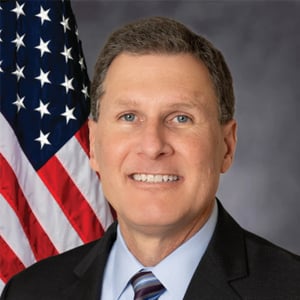
United States Attorney, Eastern District of California
Mr. Grant was appointed by Attorney General Pam Bondi to serve as the United States Attorney for the Eastern District of California beginning on August 11, 2025. Pursuant to 28 U.S.C. § 546(d), he was further appointed by the district court effective December 9, 2025.
Mr. Grant is a veteran of the Department of Justice, having served twice in Washington, D.C.: from 1991 to 1993 as an Attorney-Adviser in the Office of Legal Counsel, and from 2017 to 2021 as a Deputy Assistant Attorney General in the Environment and Natural Resources Division (ENRD). During his tenure at ENRD, he supervised more than a hundred Department litigators advancing the interests of the United States and its agencies in both enforcement and defensive matters, both civil and criminal.
In addition to his service in the Department, Mr. Grant has decades of experience in private practice in Washington, D.C. and Sacramento. That experience includes arguments in the U.S. Supreme Court, the California Supreme Court, and numerous other federal and state courts.
Mr. Grant served as a law clerk to Chief Justice Warren E. Burger (retired) and Associate Justice Clarence Thomas during the Supreme Court’s October 1994 Term. Earlier he served as a law clerk to Judge Edith H. Jones of the U.S. Court of Appeals for the Fifth Circuit in Houston, Texas.
Mr. Grant grew up in Modesto, California and raised his family in Sacramento County. He attended the University of California, Berkeley, from which he earned a bachelor’s degree in economics (1986) and a law degree (1990).
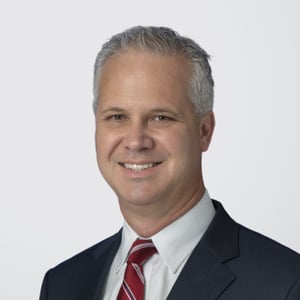
Partner, Hunton Andrews Kurth
Mr. Leopold is a Partner with the law firm of Hunton Andrews Kurth in Washington, DC. He is the former Senate-confirmed general counsel of the U.S. EPA from 2018-2020, and he previously was a litigator at the U.S. Department of Justice, Environment and Natural Resources Division form 2007-2013. As EPA General Counsel, he counseled on the development and defense of EPA’s most significant rulemakings, including the Affordable Clean Energy Rule, the Navigable Waters Protection Rule, and the Safe Affordable Fuel‐Efficient (SAFE) Vehicles Rule, as well as several pesticide actions. He was personally involved in defending EPA in litigation, including the County of Maui v. Hawaii Wildlife Fund in the U.S. Supreme Court. Mr. Leopold’s prior government service also includes working in Florida as general counsel of the Florida Department of Environmental Protection. He now represents clients in regulatory advocacy before federal agencies, litigates federal environmental actions, and defends clients with EPA enforcement issues.
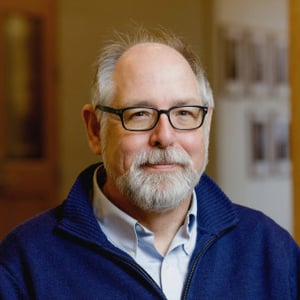
Emmett Visiting Assistant Clinical Professor of Law in Environmental Law, Harvard Law School
Andrew Mergen is a Visiting Assistant Clinical Professor of Law and Faculty Director of the Emmett Environmental Law & Policy Clinic. Prior to joining the Harvard Law School faculty, Andrew Mergen served in the Appellate Section of the Environment & Natural Resources Division (ENRD) at the United States Department of Justice. Professor Mergen began his career at the Justice Department in the Honors Program and concluded his career as Chief of ENRD’s Appellate Section. He has presented oral arguments in all 13 federal courts of appeals, including two en banc courts, and before several state intermediate and supreme courts. He has also worked on over a dozen merits cases in the Supreme Court of the United States. In addition, in 2009, Professor Mergen assisted the Office of White House Counsel on the confirmation of the Honorable Sonia Sotomayor as Associate Justice of the Supreme Court. During his career at the Justice Department, Professor Mergen received the Attorney General’s Award for Distinguished Service three times. He also received ENRD’s Muskee-Chafee Award, honoring his work’s significant contribution to protecting the environment.
Before entering clinical teaching, Professor Mergen taught at several law schools including, Harvard Law School (Advanced Environmental Law), the University of Michigan Law School (Natural Resources Law) and the William S. Richardson School of Law, University of Hawaii-Manoa (Administrative Law). Professor Mergen has written about federal water rights in “A Misplaced Sensitivity: The Draft Opinions in Wyoming v. United States” (68 Colo. L. Rev. 683 (1997), with Sylvia F. Liu); energy development on public lands in “Surface Tension: The Problem of Federal Private Split Estates” (33 Land & Water L. Rev. 419 (1998)); climate change and the Endangered Species Act in “The Role of Climate Change in ESA Listing Decisions” (53 Rocky Mt. Min. L. Fdn. 67 (2016), with Murray Feldman) and the accommodation of Native American sacred sites on federal land in “Finding the Path Forward for Indigenous Sacred and Cultural Spaces on Federal Public Land,” 68 Nat. Resources & Energy L. Inst. 32-1 (2022). Professor Mergen is a graduate of the University of Wisconsin—Madison and the George Washington University Law School.
Senior Vice President of Programs, Earthjustice
Sam Sankar is Earthjustice’s Senior Vice President for Programs. Sam leads our Program Leadership Team, which develops Earthjustice’s strategy for carrying out our mission through litigation, lobbying and regulatory advocacy, and communications.
Sam has been working on environmental issues throughout his career, which has included service as a line attorney at the Justice Department’s Environment and Natural Resources Division, as a senior executive at General Electric, and as deputy chief counsel of a presidential commission formed to investigate the 2010 Deepwater Horizon oil spill. He has also worked as a boat captain, machinist, and senior advisor to The Nature Conservancy.
Sam received his B.S. in civil engineering from Cornell University, an M.S. in environmental engineering from Stanford University, and his law degree from the University of California, Berkeley. After law school, he clerked for Judge William Fletcher of the Ninth Circuit, Judge Louis Pollak of the Eastern District of Pennsylvania, and Justice Sandra Day O’Connor of the U.S. Supreme Court.
Sam lives in Washington, D.C., with his wife and two children.
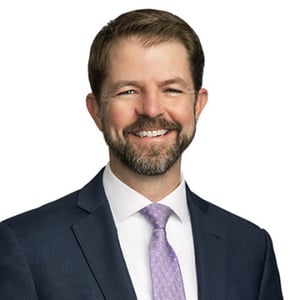
Partner, Baker Botts LLP
Drawing from two decades of experience in senior government, in-house corporate, and private law firm roles, Jeff Wood helps clients with federal enforcement, compliance, litigation, permitting, and policy challenges primarily in the energy and environmental fields.
Prior to joining Baker Botts, Mr. Wood served for almost two years as the Acting Assistant Attorney General (AAG) for the Justice Department's Environment and Natural Resources Division (ENRD). In that capacity, Mr. Wood led ENRD and its more than 600 attorneys and staff representing EPA, Departments of the Interior, Energy, and Defense, and other agencies in civil and criminal enforcement and defensive environmental, energy, and natural resources litigation.
As the top official in ENRD, Mr. Wood managed a complex organization with an annual budget exceeding $200 million and a docket of more than 6,000 cases and matters. E&E News noted that “Wood maintains a strong relationship with ENRD's career staff” (Greenwire, Oct. 31, 2018). He previously served on the staff of the United States Senate Committee on Environment and Public Works.
At the Justice Department, Mr. Wood oversaw the Division's civil and criminal enforcement programs and was responsible for developing legal strategies and approving briefs in key cases including filings before the Supreme Court and Courts of Appeals in coordination with the Office of Solicitor General. In this role, Mr. Wood held the highest level security clearance and worked closely with top leadership at DOJ, EPA, the Interior Department, USDA, the Energy Department, Transportation Department, FERC, NRC and across the Executive Branch, including the White House.
With many years of both private law firm and in-house legal experience, Mr. Wood has handled complex environmental enforcement, regulatory, policy, and litigation matters for electric utilities, energy companies, maritime companies, mining companies, real estate developers, financial institutions, industrial companies and manufacturers, business coalitions, associations, small businesses, and individual property owners. Drawing from his experiences in-house, Mr. Wood brings a common-sense, cost-effective, client-focused approach to his work every day.
With a strong national reputation, Mr. Wood is a frequent speaker on environmental law and policy matters, with recent speeches and presentations at the Environmental Law Institute, Harvard Law School, Vanderbilt Law School, American University Law School, American Bar Association Environmental Law Conferences, the Texas Environmental SuperConference, Air Force Judge Advocate General School's Advanced Environmental Law Course, Baker Institute's Center for Energy Studies (Rice University), and many other venues. He frequently appears in national news to share insights on significant environmental law and policy issues, including recent quotes in the New York Times, Washington Post, Wall Street Journal, Bloomberg, Law360, and E&E News, among others.
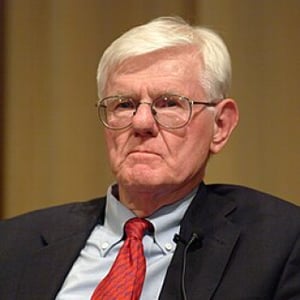
Gordon Stewart Wood is an American historian and professor at Brown University. He is a recipient of the 1993 Pulitzer Prize for History for The Radicalism of the American Revolution (1992). His book The Creation of the American Republic, 1776–1787 (1969) won the 1970 Bancroft Prize. In 2010, he was awarded the National Humanities Medal by President Barack Obama.
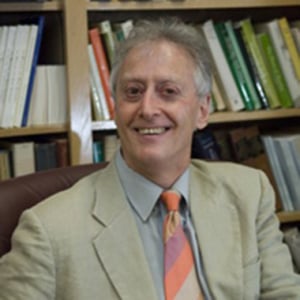
Professor Emeritus, Uiversity of Connecticut
A native of Bridgeport, Connecticut, Robert A. Gross received the B.A. in American civilization from the University of Pennsylvania in 1966 and the M.A. (1968) and Ph.D. (1976) in history from Columbia University. He taught at Amherst College (1976-88), the University of Sussex (1981-83) and the College of William and Mary (1988-2003) before coming to UConn. He is the recipient of various national awards, including fellowships from the Guggenheim, Howard, and Rockefeller Foundations, the National Endowment for the Humanities, and the American Antiquarian Society.
Prof. Gross specializes in the social and cultural history of the U.S., from the colonial era through the nineteenth century. His first book on the American Revolution, The Minutemen and Their World (1976), won the Bancroft Prize in American History; it was re-issued in a 25th anniversary edition in 2001 and will be published by Picador in a new, revised edition in 2022 to commemorate the 250th anniversary of the American Revolution. He has continued studies of the Revolutionary era in such works as In Debt to Shays: The Bicentennial of an Agrarian Rebellion (1993). For two decades he has been deeply involved in the interdisciplinary field known as the history of the book, serving on the editorial board for the multi-volume History of the Book in America published by the University of North Carolina Press and co-editing with Mary Kelley the second volume of the series, An Extensive Republic: Print, Culture, and Society in the New Nation, 1790-1840 (2010). His other recent work examines New England writers — notably, Ralph Waldo Emerson, Henry David Thoreau, and Emily Dickinson — in historical context. From that project has come The Transcendentalists and Their World, which Farrar, Straus, & Giroux published in November 2021.
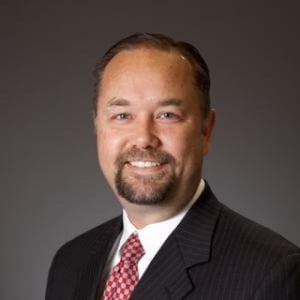
Senior Counsel, Director of Center for Academic Freedom, Alliance Defending Freedom
Tyson Langhofer serves as senior counsel and director of the Center for Academic Freedom with Alliance Defending Freedom.
Langhofer represents students and faculty at public high schools and colleges in defending their First Amendment rights. For example, in Denton v. Hecht, he successfully defended a Florida State University student after he was removed as Student Senate President simply for sharing his Catholic views in a private group chat. In Cross v. Loudoun County Public Schools, he successfully defended an elementary school gym teacher after the school suspended him for peacefully sharing his views on a proposed policy at a public school board meeting.
Langhofer has extensive experience in civil litigation and constitutional law. Before joining ADF, Langhofer was a partner with Stinson LLP, where he worked as a commercial litigation attorney from 2000 until he joined ADF in 2015.
Langhofer is Peer Review Rated AV® Preeminent in Martindale-Hubbell. He is a sought-after speaker on legal and cultural issues. He regularly comments on free speech issues in television, radio, and print media. He has appeared as a guest and written pieces for numerous major media outlets, including The Washington Post, The Washington Times, USA Today, Townhall, The Federalist, and The Daily Wire.
Langhofer earned his Juris Doctor from Regent University School of Law in 1999, graduating cum laude. Langhofer is admitted to practice in multiple states, the Supreme Court, and numerous federal district and appellate courts.
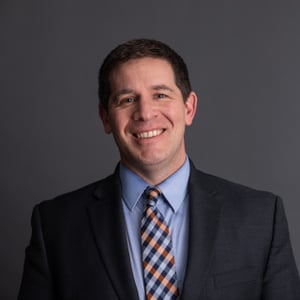
Vice President for Legal Strategy, Stand Together
Casey Mattox is Vice President for Legal Strategy at Stand Together and Senior Advisor at
Americans for Prosperity. In these roles he advocates for and creates strategies and
partnerships to ensure a constitutionally limited government that protects the civil liberties of all
Americans. Prior to joining Stand Together and AFP Casey’s legal career focused on defending
the First Amendment rights of students, faculty, healthcare workers and religious organizations.
Casey has a J.D. from Boston College School of Law and an undergraduate degree from the
University of Virginia. You can find him on Twitter at @CaseyMattox_ and on LinkedIn at
@Casey-Mattox-ST.
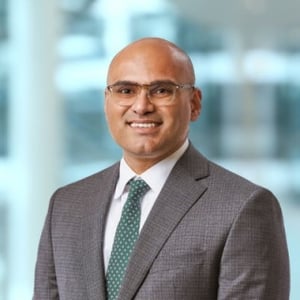
Partner, Holtzman Vogel
Mohammad “Mo” Jazil is a partner with Holtzman Vogel. His broad litigation practice includes state and federal constitutional cases, financial disputes, environmental disputes, white-collar criminal matters, and government investigations. Mohammad has served as first chair in federal and state court trials. He has briefed and argued dispositive motions and appeals before the federal courts, state appellate courts, and state supreme courts. He has also briefed cases before the U.S. Supreme Court, though he has never argued a case there.
Chambers USA calls Mohammad “a very good thinker,” “fantastic,” and “an excellent litigator.”
Since the summer of 2018, Mohammad has represented two Florida Governors and four Florida Secretaries of State on election-related and redistricting matters before federal and state trial courts, the Florida Supreme Court, the Eleventh Circuit, and the U.S. Supreme Court. Notably, this work includes wins in nine federal cases related to Florida’s 2018 recounts; the successful defense of Florida’s felon re-enfranchisement program; federal and state-court decisions upholding Florida’s most recent congressional plan; and the defense of various election-related statutes.
Mohammad represents other public officials as well. He has represented two Speakers of the Florida House of Representatives on issues as varied as cannabis regulation and transportation policy. And he has represented Florida’s Surgeon General, members of Florida’s Boards of Medicine and Osteopathic Medicine, and the head of Florida’s Medicaid agency on health-policy issues.
Finally, Mohammad routinely represents companies and individuals on a variety of issues. This work includes pricing and tax disputes involving some of the country’s largest companies, commercial disputes where he has obtained and collected on eight-figure trial judgments, and criminal proceedings.
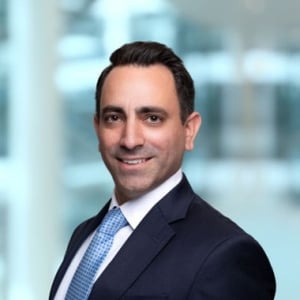
Partner, Holtzman Vogel
Mark Pinkert is a litigation and appellate partner with Holtzman Vogel. He represents clients at every stage of litigation, in state and federal courts around the country. He has extensive experience in constitutional law, administrative law, political law, antitrust, white collar defense, and complex commercial disputes. Additionally, Mark maintains an active practice focused on religious freedom, First Amendment rights, and combatting antisemitism, especially on college campuses.
Mark is a formidable writer and advocate. He has drafted letters, white papers to government agencies, legal memoranda, regulatory comments, complaints, dispositive motions, motions in limine, appellate briefs, and several briefs in the U.S. Supreme Court. His incisive and persuasive writing style has helped him earn key victories for his clients. Mark has argued a Daubert motion in a multi-billion-dollar environmental dispute and was recently appointed lead counsel by the Eleventh Circuit Court of Appeals to represent an indigent petitioner in a habeas corpus appeal. Mark’s legal commentary has been published in The Wall Street Journal, National Review, Times of Israel, Daily Business Review, University of Miami Law Review, and many others.
Mark is also an adept legal strategist, advising some of the largest companies in the world on their most pressing issues. Rather than merely react to problems, he provides holistic thinking and anticipates issues before they arise. He helps clients develop proactive plans of action that mitigate risks, avoid conflict, and reduce costs.
Before joining Holtzman Vogel, Mark worked at a global law firm and clerked for the Honorable Adalberto Jordan (11th Cir.) and the Honorable Roy K. Altman (S.D. Fla.). Clerking at both the trial and appellate levels has given him rare insight into the federal court system and has sharpened his advocacy.
At Yale Law School, Mark was an Articles Editor for the Yale Law Journal and an editor for the Yale Journal of Law & Humanities. He was also a research assistant and taught constitutional law to high school students in New Haven.
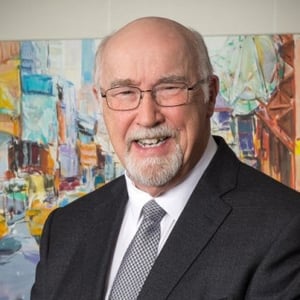
Principal, Dennis R. Adams Consulting; former CEO, American Share Insurance
Dennis R. Adams is currently the Principal of Dennis R. Adams Consulting, assisting credit unions, financial organizations, and businesses around the country. He is also the former President and CEO American Share Insurance. During the 1990s and early 2000s, Dennis was an adjunct instructor of finance with undergraduates at Franklin University,Ashland University, and Capital University’s MBA programs in his hometown of Columbus, Ohio.
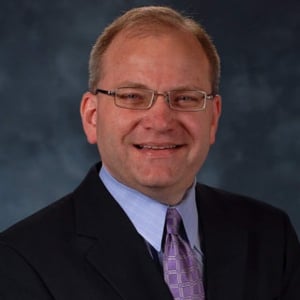
Partner, Manatt, Phelps & Phillips, LLP
Bryan Schneider is partner in Manatt’s Chicago office and a member of the firm’s industry-leading consumer financial services practice, where he focuses on advising clients through the gamut of consumer financial services regulatory and enforcement matters, particularly as it relates to supervision, enforcement and fair lending.
Prior to joining the firm, Bryan served as Associate Director for the Division of Supervision, Enforcement and Fair Lending at the Consumer Financial Protection Bureau (CFPB). In this role, he was tasked with overseeing issues related to student loan origination and servicing, mortgage origination/services, auto finance, credit card account management, debt collection, and payday and other small dollar lending. He was also a member of key interagency governing organizations including the Task Force of Supervision of the Federal Financial Institutions Examination Council.
Bryan’s experience also includes serving as Secretary of the Illinois Department of Financial and Professional Regulation, a cabinet-level agency, under Governor Bruce Rauner. During this time, Bryan led numerous initiatives to place the state at the forefront of innovation in the financial services industry, including leading the conversion to the first-ever online, paperless process for professional licensure and achieving the first credit union section accreditation by the National Association of State Credit Union Supervisors. He also led the creation of the Illinois Blockchain Initiative, where he advised organizations on how they can leverage blockchain technology to create more efficient, integrated and trusted services.
Before his tenure in government, Bryan held health care-related leadership positions at the largest retail, infusion and specialty pharmacy provider in the United States. While in this role, he helped develop policies concerning health care services and reimbursement, and provided regulatory and transactional support for joint ventures with hospitals, health systems and 340B programs. Bryan also served on Corporate Compliance and Disclosure Committees responsible for ensuring compliance with applicable health care and SEC securities requirements.
Bryan has served on the Executive Committee of the Conference of State Bank Supervisors (CSBS) and chaired its Non-Depository Supervisory Committee. He also served on the committee that was responsible for the administration of the Nationwide Multistate Licensing System & Registry (NMLS). Additionally, Bryan served on the Executive Committee of the National Association of State Credit Union Supervisors (NASCUS).
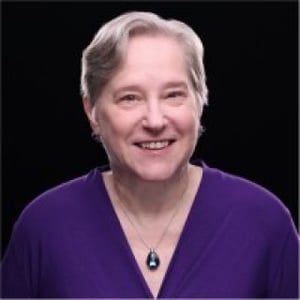
Partner, Davis Polk & Wardwell LLP
Meg is head of Davis Polk's Financial Institutions practice and a member of its Fintech team. She provides strategic bank and financial regulatory advice to many of the largest U.S. and non-U.S. financial institutions, regional banks, fintechs, cryptocurrency exchanges and other digital assets companies.
In 2023, she led teams representing the Signature and Silicon Valley bridge banks and advised JPMorgan on its acquisition of First Republic. This work built on years of representing more than two dozen clients on living wills.
She has been involved in several regional bank combinations. She also advises on corporate governance, consent order remediation, bank chartering, payment systems, fintech partnerships, bank powers and activities, cryptocurrencies, digital assets, securities disclosure, capital and liquidity and the Federal Reserve’s liquidity programs.
Meg is a member of the FDIC’s Systemic Resolution Advisory Committee. She co-authored Financial Regulation: Law and Policy, a leading textbook, and FinTech Law: The Case Studies.
In 2023, she was named a Law360 “Banking MVP” and an NYLJ “Dealmaker of the Year.”
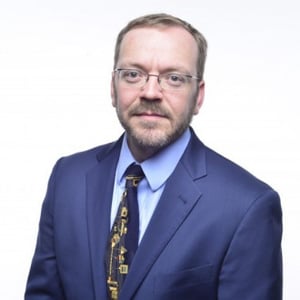
Vice President for Legal Affairs, Goldwater Institute

Director, Center for Education Policy and Mark A. Kolokotrones Fellow in Education, The Heritage Foundation
As director of the Center for Education Policy at The Heritage Foundation, Lindsey Burke oversees Heritage’s research and policy on issues pertaining to preschool, K-12, and higher education reform. Burke’s research has been presented at academic conferences and published in peer-reviewed journals including Social Science Quarterly, Educational Research and Evaluation, and the Journal of School Choice, and her commentary and op-eds have appeared in numerous magazines and newspapers. She is a frequent guest on radio and television shows and speaks on education reform issues across the country and internationally. She has published evaluations of education choice options for public policy foundations across the country and has done extensive work shaping and evaluating education savings accounts (ESAs).
In 2021, Burke was tapped to join Governor-elect Glenn Youngkin’s transition steering committee and was also appointed to serve on the Youngkin landing team for education. Burke was also appointed by Governor Youngkin to serve on the Board of Visitors for George Mason University. Her term runs from July 1, 2022 to June 30, 2026.
Burke also serves as a fellow at EdChoice, the namesake foundation of Milton and Rose Friedman, on the national advisory board of Learn4Life, a network of public charter schools serving “opportunity youth,” on the board of the Educational Freedom Institute, on the advisory board of the Independent Women’s Forum’s Education Freedom Center, and as a Trustee of Choice Media.
In 2015, Burke won Heritage’s prestigious W. Glenn and Rita Ricardo Campbell Award in recognition of her work fighting for expanded education choice options. The award is given annually to a policy expert who has made “an outstanding contribution to the analysis and promotion of a free society.”
Burke holds a bachelor's degree in politics from Hollins University in Roanoke, VA, and a master of teaching degree in foreign language education from the University of Virginia. She earned her Ph.D. in education policy from George Mason University, where she examined the intersection of education choice and institutional theory.

Professor of Law, University of San Diego School of Law (Retired)
Gail Heriot is a recently retired law professor from the University of San Diego. She also served as a member of the U.S. Commission on Civil Rights from 2007 to 2025. She is also the chairman of the board of the American Civil Rights Project and the chair emerita of the Civil Rights practice group at the Federalist Society for Law & Public Policy.
Professor Heriot is a prolific writer in the area of civil rights. She is the author of many law review articles. She is also the editor (along with Maimon Schwarzschild) of the 2021 anthology, A Dubious Expediency: How Race Preferences Damage Higher Education. Her upcoming book is entitled, Why We Walk on Eggshell: How Our Civil Rights Laws Helped Bring About the Woke Era—And the Trump Era, Too.
Her writings for a general audience have appeared in the Wall Street Journal, the San Diego Union-Tribune, the National Review and many other newspapers and magazines.
In 1996, she co-chaired the successful “Yes on Proposition 209” campaign, which amended the California Constitution to prohibit state-sponsored discrimination or preferential treatment based on race, sex, color, ethnicity or national origin. In 2020, she co-chaired the “No on Proposition 16” campaign, which successfully prevented Proposition 209’s repeal.
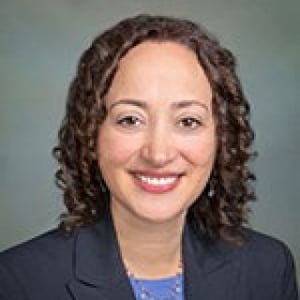
Former Assistant Secretary for Civil Rights, U.S. Department of Education; Former Chair, U.S. Commission on Civil Rights
Catherine E. Lhamon served as Assistant Secretary of Education for Civil Rights from November 17, 2021 to January 20, 2025. Before that, she served as the Chair of the U.S. Commission on Civil Rights. President Obama appointed Lhamon to a six-year term on the Commission on December 15, 2016, and the Commission unanimously confirmed the President’s designation of Lhamon to chair the Commission on December 28, 2016. Lhamon also serves in the cabinet of California Governor Gavin Newsom, where she has been Legal Affairs Secretary since January 2019. Lhamon previously litigated civil rights cases at the National Center for Youth Law.
Before coming to the Commission, Lhamon served as the Assistant Secretary for Civil Rights at the U.S. Department of Education until January 2017. President Obama nominated her to the Assistant Secretary for Civil Rights position on June 10, 2013, and she was unanimously confirmed by the U.S. Senate on August 1, 2013. Immediately prior to joining the Department of Education, Lhamon was director of impact litigation at Public Counsel, the nation’s largest pro bono law firm. Before that, she practiced for a decade at the ACLU of Southern California, ultimately as assistant legal director.
Earlier in her career, Lhamon was a teaching fellow and supervising attorney in the Appellate Litigation Program at Georgetown University Law Center, after clerking for The Honorable William A. Norris on the United States Court of Appeals for the Ninth Circuit. In 2016, Politico Magazine named Lhamon one of Politico 50 Thinkers Transforming Politics and the National Action Network honored Lhamon with their Action & Authority Award. In 2015, Yale Law School named Lhamon their Gruber Distinguished Lecturer and the Association of University Centers on Disabilities awarded Lhamon their Special Recognition Award. Chronicle of Higher Education named Lhamon to their 2014 Influence List as the Enforcer. The Daily Journal listed her as one of California’s Top Women Litigators in 2010 and 2007, and as one of the Top 20 California Lawyers Under 40 in 2007. In 2004, California Lawyer magazine named Lhamon Attorney of the Year for Civil Rights.
Lhamon received her J.D. from Yale Law School, where she was the Outstanding Woman Law Graduate, and she graduated summa cum laude from Amherst College.
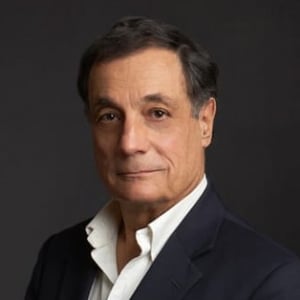
Thomas P. O’Neill, Jr. Professor of American Politics, Boston College; Co-Chair, Harvard Program on Constitutional Government
R. Shep Melnick is the Thomas P. O’Neill, Jr. Professor of American Politics at Boston College and co-chair of the Harvard Program on Constitutional Government. He is the author of The Crucible of Desegregation: The Uncertain Search for Educational Equality (Univeristy of Chicago Press, 2023); The Transformation of Title IX: Regulating Gender Equality in Education, (Brookings, 2018), Between the Lines: Interpreting Welfare Rights (Brookings,1994), and Regulation and the Courts: The Case of the Clean Air Act (Brookings, 1983), as well as many articles on courts, agencies, and public policy. He is currently completing a book on education and the civil rights state. In 2012 he received the American Political Science Association Law and Courts Section’s “Lasting Contribution” award. He received his BA and PhD from Harvard, and taught at Harvard and Brandeis before moving to Boston College. He has also been a Research Associate at Brookings, President of the New England Political Science Association, and an elected member of the NH House of Representatives.
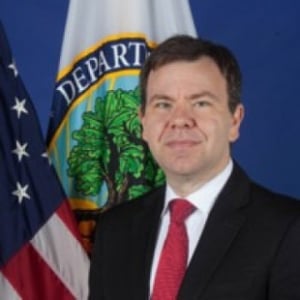
General Counsel, Mountain States Legal Foundation
William E. Trachman is General Counsel for Mountain States Legal Foundation, where he protects the rights of individuals to live freely and securely under the U.S. Constitution. Previously, he was appointed to serve in the Department of Education as Deputy Assistant Secretary in the Office for Civil Rights. Prior to his appointment, he served as General Counsel to the Douglas County School District, where he helped litigate the fight for school choice in the school district. Presently, Mr. Trachman serves as Chair of the Colorado Federalist Society and the Vice Chair of the U.S. Commission on Civil Rights’ Colorado Advisory Board. He previously taught as an Adjunct Professor at the University of Denver, Sturm College of Law. He attended U.C. Berkeley for both undergraduate and law school, and then clerked for the Honorable Harris Hartz on the 10th Circuit Court of Appeals. Mr. Trachman is licensed in Colorado, California, and Washington, D.C.
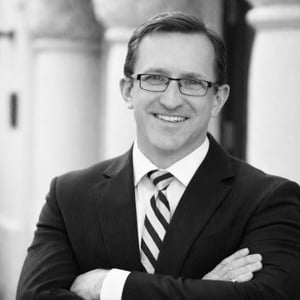
VP and Senior Counsel, Becket Fund
Eric Baxter joined The Becket Fund as Senior Counsel in 2011. Since then he has represented religious organizations and individuals in a wide array of religious liberty disputes at both the trial and appellate level. Recent victories including a Ninth Circuit ruling upholding the “Big Mountain Jesus” statue that has stood on Forest Service land near Kalispell, Montana, for more than sixty years, and a rare Pentagon decision allowing a Sikh soldier to maintain his full beard and turban while serving in the Army. Mr. Baxter has extensive experience fighting efforts under state Blaine amendments to exclude religious organizations and individuals from participating on equal terms in the public square. He also regularly advises religious institutions of higher education in defending their religious missions against government encroachment.
Mr. Baxter has frequently appeared in the national media to discuss religious liberty issues, including appearances on Fox News (Kelly File, Fox & Friends), WSJ Live, CBS New York, Christian Broadcasting Network, Newsmax TV, and Al Jazeera. He has also written op-eds and been quoted in many major newspapers and other print media, including the New York Times, Washington Post, LA Times, Fox News, New York Post, Washington Times, and New Boston Post.
Before joining the Becket Fund, Mr. Baxter was a partner at Arent Fox LLP in Washington, DC, where he maintained a commercial complex litigation practice representing clients primarily in employment, intellectual property, and biotechnology disputes. He also served for many years as outside counsel to a DC church and its affiliated school. In 2007, he was awarded the Albert E. Arent Pro Bono Award for his work representing several parents adopting a total of seven children from foster care.
From 2000 to 2002, Mr. Baxter clerked for the Honorable Robert H. Cleland in the United States District Court for the Eastern District of Michigan (Detroit). Mr. Baxter received a B.A. in Russian Literature and Linguistics from Brigham Young University and graduated magna cum laude from the J. Reuben Clark Law School at BYU, where he served as Executive Editor of the Law Review and was elected to the Order of the Coif. Eric speaks Russian and some Spanish. He and his wife have seven children and an amateur family bluegrass band.
Mr. Baxter has been featured on the Kelly File, Al Jazeera, WSJ Video, and NewsmaxTV.
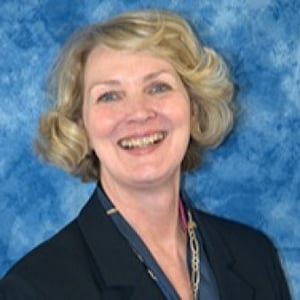
Professor and Director, Prolife Center, University of St. Thomas School of Law
Teresa Collett, J.D., is professor at the University of St. Thomas School of Law, where she serves as director of the school's Prolife Center. Collett received her doctorate at the University of Oklahoma College of Law. As a well-known advocate for the protection of human life and the family, Collett specializes in the subjects of marriage, religion and bioethics in her research.
Collett has published numerous legal articles and is the co-author of a law casebook on professional responsibility and co-editor of a collection of essays exploring “catholic” and “Catholic” perspectives on American law. She is an elected member of the American Law Institute, and has testified before committees of the U.S. Senate and House of Representatives, as well as before legislative committees in several states.
In 2009, Pope Benedict XVI appointed Collett to a five-year term on the Pontifical Council for the Family. Her appointment was renewed by His Holiness Pope Francis until 2016 when the responsibilities of the Council were assumed by the Dicastery for the Laity, Family and Life. In 2013, she served as a delegate to the International Conference on Population and Development (ICPD) for the Mission of the Holy See to the United Nations.
She represented Congressman Ron Paul and various medical groups in the defense of the U.S. federal ban of partial-birth abortion, and the governors of Minnesota and North Dakota defending the N.H. requirement of state parental involvement prior to performance of an abortion on a minor before the U.S. Supreme Court. Collett is often asked to represent the interests of government officials before federal appellate courts. She has served as special attorney general for the states of Oklahoma and Kansas, as well as assisting other state attorneys general in defending laws protecting human life and marriage. Prior to joining St. Thomas in 2003, Collett taught at the South Texas College of Law, where she established the nation's first annual symposium on legal ethics.
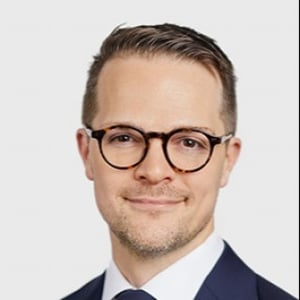
Vice President of Regulatory and Corporate Affairs, Cogeco Inc.
Paul Beaudry is Vice President, Regulatory and Corporate Affairs at Cogeco Inc. He leads Cogeco’s regulatory function in Canada and the United States, and represents the company in proceedings before the CRTC, the Federal Communications Commission and other government departments and regulatory agencies. He also oversees compliance with regulatory requirements imposed on the company at each level of government, in both countries. In addition, Paul leads Cogeco’s Sustainability team and the strategy for public disclosure of ESG matters. He joined Cogeco in November 2020 and has since held progressively larger leadership roles within the organization.
Prior to joining Cogeco, Paul served as Director of Regulatory Affairs at TELUS in Calgary. He also practiced competition and foreign investment law at Stikeman Elliott LLP and Ogilvy Renault LLP (now Norton Rose Fulbright) and served as a senior policy advisor to Canada’s Minister of Industry.
Paul is a graduate of the University of Montreal Faculty of Law and is a member of the Quebec Bar. He serve on the boards of the Institut national de santé publique du Québec, the Cable Public Affairs Channel (CPAC), La Fondation La Rue des Femmes and the Canadian chapter of the International Institute of Communications. He also sits on the Governors Council of Golf Canada.
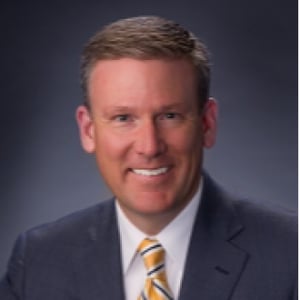
Executive Director of the National Association of Regulatory Utility Commissioners, former Commissioner of the Federal Energy Regulatory Commission
As a former FERC Commissioner, a Chairman and Commissioner of the North Dakota Public Service Commission, a former President of the National Association of Regulatory Utilities Commissioners, the Labor Commissioner of North Dakota, and a member of the North Dakota House of Representatives, Tony is a nationally recognized thought leader in energy policy who draws on years of government service to provide clients with analysis and strategic advice on a variety regulatory and public policy matters affecting their businesses. His tenure on the North Dakota Commission coincided with the state’s historic emergence as a leader in energy production. He primarily works with clients in the energy and telecommunications industries, speaking frequently before groups regarding the state of the utility industry and the public policies that impact it. He has also testified multiple times before Committees of the U.S. Senate, the U.S. House, state legislators and regulatory commissioners.
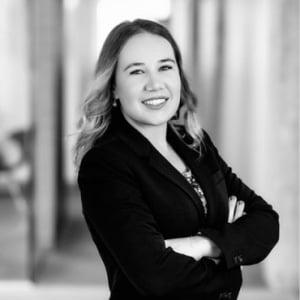
Senior Counsel, Chairman Brendan Carr, Federal Communications Commission
Danielle rejoins Commissioner Carr’s office following a year in the private sector where she led on state and local government relations matters for a nationwide telecommunications infrastructure provider. Before her first stint with Commissioner Carr’s office in 2021, Danielle was an Associate Attorney in the Washington, D.C., office of Wilkinson Barker Knauer. After attending the University of Virginia for her undergraduate degree, Danielle earned her J.D. cum laude from the Catholic University of America’s Columbus School of Law where she was Associate Editor of the Catholic University Law Review. She also earned a certificate from the Columbus School of Law’s Law & Technology Institute.
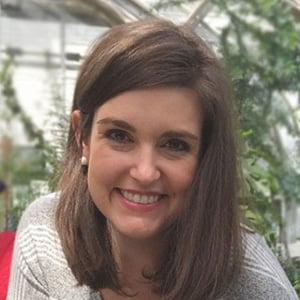
Vice President of Federal Regulatory, AT&T
As Vice President of Federal Regulatory, Caroline Van Wie is responsible for leading AT&T’s wireline interests, including legacy business services’ Title II obligations, robocalling, accessibility, copper retirement and network transformation, and wireline infrastructure issues, before federal regulatory authorities, including the Federal Communications Commission. In addition, Caroline serves on AT&T’s External & Legislative Affairs’ Diversity & Inclusion Task Force and is co-chair of the Women’s Leadership Forum.
Caroline most recently was Assistant Vice President of Federal Regulatory and was responsible for managing AT&T’s wireline interests, focused on federal regulation of Business Data Services and Unbundled Network Elements, before federal regulatory authorities, including the Federal Communications Commission. She concurrently served as Chief of Staff to Joan Marsh, EVP – Federal Regulatory Relations, from 2017-2020.
Prior to joining AT&T, Caroline was a Telecommunications Associate at Wiley Rein LLP. Before attending law school, Caroline served as Deputy National Finance Director for Senator Robert C. Byrd (D-WV) and Scheduler for Congressman John B. Larson (D-CT).
Caroline graduated from Emory University with a bachelor’s degree in International Studies. She received her J.D. with honors from Georgetown University Law Center, where she served as Senior Programs & Development Editor of the Georgetown Law Journal.

An Environmental Law Revolution: Will DOGE and the Second Trump Administration Achieve Lasting Positive Change?
Eric Grant, Matthew Z. Leopold, Andrew Mergen, Sambhav Sankar, Jeffrey H. Wood
Theories of Presidential Power Series
Since Inauguration Day, President Trump and his Cabinet have taken a range of important executive...
Premiere of FedSoc Films Documentary: "Let It Begin Here: The Battles of Lexington and Concord"
Gordon S. Wood, Robert A. Gross
To mark the 250th anniversary of the Battles of Lexington and Concord, the Federalist Society...
Litigation Update: Associated Press v. Budowich
Tyson Langhofer, Casey Mattox
In January, President Trump renamed the "Gulf of Mexico" the "Gulf of America." The Associated...
Courthouse Steps Oral Argument: Diamond Alternative Energy LLC v. Environmental Protection Agency
Mohammad Jazil, Mark I. Pinkert
In 2019, the Environmental Protection Agency withdrew California’s previously-granted waiver to implement its Advanced Clean...
The Future of Deposit Insurance and Opposing Costs
Dennis R. Adams, Bryan Schneider, Margaret E. Tahyar
Currently, the FDIC and NCUA—apart from a limited number of state credit unions—maintain a government-enforced...
Courthouse Steps Oral Argument: Kennedy v. Braidwood Management, Inc.
Timothy Sandefur
In Kennedy v. Braidwood Management, Inc. the Supreme Court will consider "Whether the U.S. Court...
Is Efficiency Desirable in Civil Rights Enforcement?
Lindsey Burke, Gail L. Heriot, Catherine E. Lhamon, R. Shep Melnick, William E. Trachman
Theories of Presidential Power Series
The Trump Administration may bring significant changes to civil rights enforcement in the executive branch....
Daniel Webster Debate Series: Is It Time for DC Statehood?
The Federalist Society's Georgetown Law Chapter'sDaniel Webster Debate Series presents Daniel Webster Debate Series:Is...
Courthouse Steps Oral Argument: Mahmoud v. Taylor
Eric Baxter, Teresa Stanton Collett
In Mahmoud v. Taylor, the Supreme Court will decide whether parents have the right to...
Regulatory Reform for 5G Deployment: Infrastructure and Policy Perspectives
Paul Beaudry, Tony Clark, Danielle Thumann Severs, Caroline Van Wie
The ubiquitous deployment of both wireless and wireline technology is critical to 5G and other...