
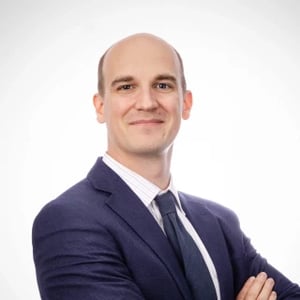
Managing Partner, Boyden Gray PLLC
Michael Buschbacher is the managing partner of Boyden Gray PLLC. He represents public and private companies, trade associations, non-profits, and individuals in high-stakes litigation and administrative proceedings, with a particular focus on environmental and energy matters.
In addition to trial-level work, Mr. Buschbacher maintains an active appellate practice, both as merits counsel and as counsel for amici curiae. He has written amicus briefs quoted by the Seventh and Ninth Circuits. And his Supreme Court advocacy has been cited by The New Yorker, The New York Times, and E&E News. Mr. Buschbacher’s commentary on legal issues has been published in The Wall Street Journal, Newsweek, and The American Conservative.
Before joining the firm, Mr. Buschbacher served at the U.S. Department of Justice as counsel to the Assistant Attorney General for the Environment and Natural Resources Division. There, he advised senior Department leadership, served as the lead attorney on several lawsuits, and helped draft policy memoranda for the Department on the proper scope and procedure for environmental enforcement. Prior to serving in the government, Mr. Buschbacher was an associate in the D.C. office of Sidley Austin.
Mr. Buschbacher is a former clerk to Judge Alice M. Batchelder of the U.S. Court of Appeals for the Sixth Circuit and to Magistrate Judge Paul R. Cherry of the U.S. District Court for the Northern District of Indiana.
Mr. Buschbacher holds a B.A. in Music and Germanic Studies from Indiana University and a J.D., magna cum laude, from Notre Dame Law School.
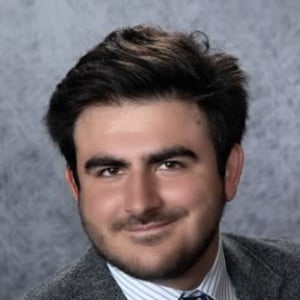
Counsel, Sen. Schmitt and the Senate Judiciary Committee
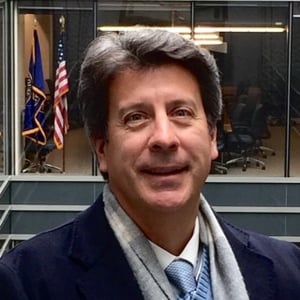
Senior Counsel, Committee on Oversight and Government Reform, U.S. House of Representatives
Daniel Flores is a Senior Counsel on the Republican staff of the Committee on Oversight and Government Reform, U.S. House of Representatives. Prior to his current position, he served in the House as Chief Counsel for the House Judiciary Committee's Subcommittee on Regulatory Reform, Commercial and Antitrust Law. Before coming to the House, he served as an Acting Associate Deputy General Counsel for the U.S. Environmental Protection Agency and in other roles in EPA's Office of General Counsel, as a Senior Trial Attorney for the U.S. Department of Justice, Environment and Natural Resources Division, and as an attorney in private practice in Washington, D.C. He serves as a House liaison to the Administrative Conference of the United States and has served on the Council of the American Bar Association’s Section on Administrative Law & Regulatory Practice.
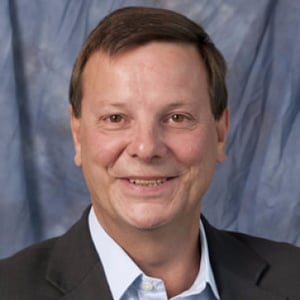
Professor of Law, Antonin Scalia Law School, George Mason University
Professor of Law Michael S. Greve joined the faculty of the Antonin Scalia Law School, George Mason University in fall 2012 after having served as John G. Searle Scholar at the American Enterprise Institute (AEI), where he specialized in constitutional law, courts, and business regulation and served as chairman of the Competitive Enterprise Institute. Prior to joining AEI, Greve was founder and co-director of the Center for Individual Rights, a public interest law firm specializing in constitutional litigation.
Greve has served previously as an adjunct professor at a number of universities, including Cornell and Johns Hopkins Universities, and has been a visiting professor at Boston College since 2004. He was awarded a PhD and an MA in government by Cornell University. Greve also earned a Diploma from the University of Hamburg in Germany.
A prolific writer, Greve is the author of nine books and a multitude of articles appearing in scholarly publications, as well as numerous editorials, short articles, and book reviews. He is a frequent speaker for professional and scholarly organizations and has made many appearances on radio and television.
In addition Greve has provided congressional and state legislative testimony, has lobbied and consulted in federal agency proceedings, and has provided litigation services and management in over 30 cases, including matters before the U.S. Supreme Court.
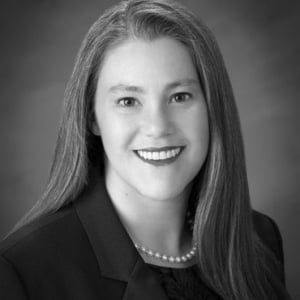
Judge, Arizona Court of Appeals, Division One
The Honorable Jennifer M. Perkins began service on the Arizona Court of Appeals, Division One, on October 30, 2017. At the time of her appointment by Governor Douglas Ducey, Judge Perkins was Assistant Solicitor General for the State of Arizona.
Judge Perkins was born in Portales, New Mexico, and primarily raised in Albuquerque. She attended the prestigious Albuquerque Academy from 1988-1995, before moving to Washington D.C. to attend the Elliott School of International Affairs at the George Washington University as a National Merit Scholar. Therafter, she relocated again to Dallas, Texas, and earned her juris doctor from the SMU Dedman School of Law, graduating cum laude in 2002.
Judge Perkins started her career at the law firm of Browning & Peifer (now Peifer, Hanson, Mullins, and Baker) in Albuquerque, New Mexico. While there, she litigated complex commercial matters including class action plaintiff and defense work, and assisted with employment and contract litigation. In 2003, the judge accompanied the Honorable James O. Browning in transitioning to the federal district court bench, serving as his first law clerk.
After her clerkship, Judge Perkins moved to Arizona to work for the Institute for Justice, Arizona Chapter, a public interest law firm. She spent five years with IJ-AZ litigating civil rights cases in Arizona and across the country. In 2009, the judge became Disciplinary Counsel for the Arizona Commission on Judicial Conduct, where she reviewed and prosecuted ethics complaints against state court judges throughout Arizona. After five years serving the state in this capacity, Judge Perkins entered private practice by joining an appellate law firm in Phoenix. While there, she worked on state and federal appeals involving a wide range of legal subjects, including complex business disputes, property rights, judicial ethics, and personal injury matters.
In January 2015, Judge Perkins joined the Office of the Arizona Attorney General to serve as the first Assistant Solicitor General; in that capacity, she was responsible for oversight of Attorney General Opinions and served as ethics counsel to the entire office. In addition to these two primary roles, the judge assisted on a variety of matters including trial and appellate litigation of election-related matters; federal appellate litigation with the Federalism Unit; state criminal appeals; and drafting amicus briefs on behalf of Arizona in state and federal courts.
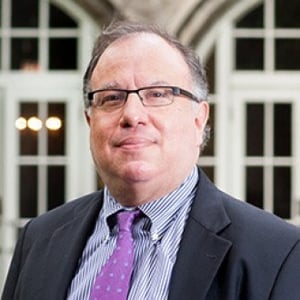
Harold Washington Professor of Law, Northwestern University Pritzker School of Law
Daniel B. Rodriguez, the Harold Washington Professor at the Law School, served as dean of the Law School from January 2012 through August 2018.
His principal academic work is in the areas of administrative law, local government law, statutory interpretation, federal and state constitutional law, and the law-business-technology interface.
Formerly, Professor Rodriguez served as Minerva House Drysdale Regents Chair in Law at the University of Texas-Austin; as a Research Fellow at Rice University’s Baker Institute for Public Policy; as Dean and Warren Distinguished Professor of Law at the University of San Diego School of Law; and, as a Professor of Law at University of California, Berkeley School of Law. He has also served as a visiting professor at several top law schools, including Stanford, Harvard, Columbia, University of Southern California, and Virginia.
Professor Rodriguez was the 2014 President of the Association of American Law Schools (AALS) and is currently serving as chair of the council of the American Bar Association Center for Innovation, a council member of the American Law Institute, and as an advisor to ROSS Intelligence, Inc.
Rodriguez received his law degree, with honors, from Harvard Law School and his undergraduate degree from California State University of Long Beach.
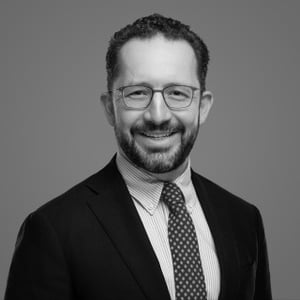
Executive Director, Alliance For Consumers; President & CEO, American Juris Link
O.H. Skinner is the President & CEO of American Juris Link, a nonprofit dedicated to accelerating nonprofit litigation to advance freedom, liberty, and the rule of law. O.H. has a long track record in facilitating strategic nonprofit litigation in his role as the Executive Director at Alliance For Consumers as well as from his time serving Arizona Attorney General Mark Brnovich in senior positions, including as Arizona Solicitor General. O.H. is a graduate of the University of Pennsylvania and Harvard Law School. Prior to joining the Arizona Attorney General's Office, O.H. practiced at WilmerHale and Ropes & Gray in Boston, and clerked for the Hon. J.L. Edmondson of the United States Court of Appeals for the Eleventh Circuit. In 2023, O.H. was a Wasserstein Public Interest Fellow at Harvard Law School, where he counseled students as a Harvard-identified “outstanding public interest attorney.”

Solicitor General, West Virginia
Michael Williams is the Solicitor General for the State of West Virginia. In that role, Michael represents the State in appeals before state and federal courts, including the U.S. Supreme Court. Michael also coordinates strategic affirmative litigation on the State’s behalf, including litigation against the federal government.
Before joining the Attorney General’s Office, Michael co-led the complex briefing and appeals group at a Michigan boutique firm, representing Fortune 50 companies and others in actions across the country. He also practiced in the litigation groups of two Washington, D.C. firms and clerked with the Appellate Division of the U.S. Attorney’s Office for the District of Maine.
Michael’s work has been honored with a Best Brief Award from the National Associationof Attorneys General and a Leader in the Law Award from Michigan Lawyers Weekly. He often speaks and writes on appellate-related issues.
Michael clerked twice in the Fourth Circuit: once with then-Chief Judge Deborah Chasanow of the U.S. District Court for the District of Maryland and later with Judge G. Steven Agee of the U.S. Court of Appeals for the Fourth Circuit. He attended George Washington University Law School and Bates College.
Professor of Law, Antonin Scalia Law School, George Mason University
Professor of Law Michael S. Greve joined the faculty of the Antonin Scalia Law School, George Mason University in fall 2012 after having served as John G. Searle Scholar at the American Enterprise Institute (AEI), where he specialized in constitutional law, courts, and business regulation and served as chairman of the Competitive Enterprise Institute. Prior to joining AEI, Greve was founder and co-director of the Center for Individual Rights, a public interest law firm specializing in constitutional litigation.
Greve has served previously as an adjunct professor at a number of universities, including Cornell and Johns Hopkins Universities, and has been a visiting professor at Boston College since 2004. He was awarded a PhD and an MA in government by Cornell University. Greve also earned a Diploma from the University of Hamburg in Germany.
A prolific writer, Greve is the author of nine books and a multitude of articles appearing in scholarly publications, as well as numerous editorials, short articles, and book reviews. He is a frequent speaker for professional and scholarly organizations and has made many appearances on radio and television.
In addition Greve has provided congressional and state legislative testimony, has lobbied and consulted in federal agency proceedings, and has provided litigation services and management in over 30 cases, including matters before the U.S. Supreme Court.
Judge, Arizona Court of Appeals, Division One
The Honorable Jennifer M. Perkins began service on the Arizona Court of Appeals, Division One, on October 30, 2017. At the time of her appointment by Governor Douglas Ducey, Judge Perkins was Assistant Solicitor General for the State of Arizona.
Judge Perkins was born in Portales, New Mexico, and primarily raised in Albuquerque. She attended the prestigious Albuquerque Academy from 1988-1995, before moving to Washington D.C. to attend the Elliott School of International Affairs at the George Washington University as a National Merit Scholar. Therafter, she relocated again to Dallas, Texas, and earned her juris doctor from the SMU Dedman School of Law, graduating cum laude in 2002.
Judge Perkins started her career at the law firm of Browning & Peifer (now Peifer, Hanson, Mullins, and Baker) in Albuquerque, New Mexico. While there, she litigated complex commercial matters including class action plaintiff and defense work, and assisted with employment and contract litigation. In 2003, the judge accompanied the Honorable James O. Browning in transitioning to the federal district court bench, serving as his first law clerk.
After her clerkship, Judge Perkins moved to Arizona to work for the Institute for Justice, Arizona Chapter, a public interest law firm. She spent five years with IJ-AZ litigating civil rights cases in Arizona and across the country. In 2009, the judge became Disciplinary Counsel for the Arizona Commission on Judicial Conduct, where she reviewed and prosecuted ethics complaints against state court judges throughout Arizona. After five years serving the state in this capacity, Judge Perkins entered private practice by joining an appellate law firm in Phoenix. While there, she worked on state and federal appeals involving a wide range of legal subjects, including complex business disputes, property rights, judicial ethics, and personal injury matters.
In January 2015, Judge Perkins joined the Office of the Arizona Attorney General to serve as the first Assistant Solicitor General; in that capacity, she was responsible for oversight of Attorney General Opinions and served as ethics counsel to the entire office. In addition to these two primary roles, the judge assisted on a variety of matters including trial and appellate litigation of election-related matters; federal appellate litigation with the Federalism Unit; state criminal appeals; and drafting amicus briefs on behalf of Arizona in state and federal courts.
Harold Washington Professor of Law, Northwestern University Pritzker School of Law
Daniel B. Rodriguez, the Harold Washington Professor at the Law School, served as dean of the Law School from January 2012 through August 2018.
His principal academic work is in the areas of administrative law, local government law, statutory interpretation, federal and state constitutional law, and the law-business-technology interface.
Formerly, Professor Rodriguez served as Minerva House Drysdale Regents Chair in Law at the University of Texas-Austin; as a Research Fellow at Rice University’s Baker Institute for Public Policy; as Dean and Warren Distinguished Professor of Law at the University of San Diego School of Law; and, as a Professor of Law at University of California, Berkeley School of Law. He has also served as a visiting professor at several top law schools, including Stanford, Harvard, Columbia, University of Southern California, and Virginia.
Professor Rodriguez was the 2014 President of the Association of American Law Schools (AALS) and is currently serving as chair of the council of the American Bar Association Center for Innovation, a council member of the American Law Institute, and as an advisor to ROSS Intelligence, Inc.
Rodriguez received his law degree, with honors, from Harvard Law School and his undergraduate degree from California State University of Long Beach.
Executive Director, Alliance For Consumers; President & CEO, American Juris Link
O.H. Skinner is the President & CEO of American Juris Link, a nonprofit dedicated to accelerating nonprofit litigation to advance freedom, liberty, and the rule of law. O.H. has a long track record in facilitating strategic nonprofit litigation in his role as the Executive Director at Alliance For Consumers as well as from his time serving Arizona Attorney General Mark Brnovich in senior positions, including as Arizona Solicitor General. O.H. is a graduate of the University of Pennsylvania and Harvard Law School. Prior to joining the Arizona Attorney General's Office, O.H. practiced at WilmerHale and Ropes & Gray in Boston, and clerked for the Hon. J.L. Edmondson of the United States Court of Appeals for the Eleventh Circuit. In 2023, O.H. was a Wasserstein Public Interest Fellow at Harvard Law School, where he counseled students as a Harvard-identified “outstanding public interest attorney.”
Solicitor General, West Virginia
Michael Williams is the Solicitor General for the State of West Virginia. In that role, Michael represents the State in appeals before state and federal courts, including the U.S. Supreme Court. Michael also coordinates strategic affirmative litigation on the State’s behalf, including litigation against the federal government.
Before joining the Attorney General’s Office, Michael co-led the complex briefing and appeals group at a Michigan boutique firm, representing Fortune 50 companies and others in actions across the country. He also practiced in the litigation groups of two Washington, D.C. firms and clerked with the Appellate Division of the U.S. Attorney’s Office for the District of Maine.
Michael’s work has been honored with a Best Brief Award from the National Associationof Attorneys General and a Leader in the Law Award from Michigan Lawyers Weekly. He often speaks and writes on appellate-related issues.
Michael clerked twice in the Fourth Circuit: once with then-Chief Judge Deborah Chasanow of the U.S. District Court for the District of Maryland and later with Judge G. Steven Agee of the U.S. Court of Appeals for the Fourth Circuit. He attended George Washington University Law School and Bates College.
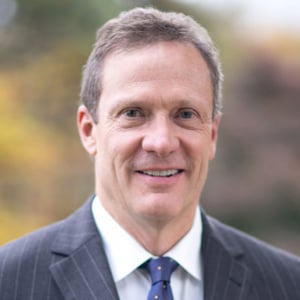
Blaine T. Phillips Distinguished Professor in Environmental Law, University of Virginia School of Law
Law and economics expert Jason Scott Johnston joined the Virginia Law faculty in 2010 and is the Blaine T. Phillips Distinguished Professor in Environmental Law. He formerly served as the the Nicholas E. Chimicles Research Professor in Business Law and Regulation at Virginia Law, and the Robert G. Fuller, Jr. Professor of Law and director of the Program on Law, Environment and Economy at the University of Pennsylvania Law School.
Johnston’s scholarship has examined subjects ranging from natural resources law to torts and contracts. He has published dozens of articles in law journals, such as the Yale Law Journal, and in peer-reviewed economics journals, such as the Journal of Law, Economics and Organization. He is currently working on a book that critically analyzes the foundations of global warming law and policy, a series of articles on the economics of regulatory science and another series of articles on various aspects of the law and economics of consumer protection. He has served on the Board of Directors of the American Law and Economics Association, on the National Science Foundation’s Law and Social Science grant review panel, and on the Board of the Searle Civil Justice Institute. He won Penn Law’s Robert A. Gorman Award for Teaching Excellence in 2003.
After earning his A.B. from Dartmouth College and both his J.D. and Ph.D. (economics) from the University of Michigan, Johnston clerked for Judge Gilbert S. Merritt on the U.S. Court of Appeals for the Sixth Circuit. He then taught at Vermont Law School and Vanderbilt Law School before joining Penn’s faculty. He has been a visiting professor or held fellowship appointments at Yale Law School, the University of Southern California Gould School of Law, the American Academy in Berlin and the Property and Environment Research Center.
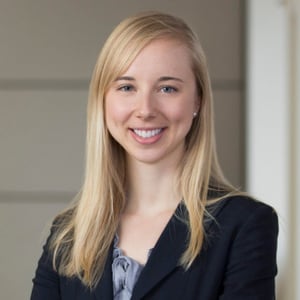
Partner, Vinson & Elkins
Corinne principally practices in environmental law, with an emphasis on litigation, regulatory compliance, internal investigations, and defense against government investigations and enforcement actions.
Corinne draws on wide experience at the U.S. Department of Justice, including serving as Senior Counsel in the Office of the Associate Attorney General, which oversees all civil litigation on behalf of the United States, and as Counselor in the Office of the Attorney General.
Corinne most recently served as Counsel and Chief of Staff in the Environment and Natural Resources Division of the U.S. Department of Justice, where she assisted in managing a 600-person division that included 400 lawyers. In this role she helped manage the Division’s civil and criminal litigation arising under more than 150 environmental and natural resources laws.
She also worked closely with the General Counsel’s Offices for multiple federal agencies, including the EPA, Departments of Interior, Defense, Energy, Commerce, and Agriculture, as well as the White House and Counsel on Environmental Quality to advise high-ranking officials on policy and litigation risks associated with the environmental and natural resource laws.
She has personally argued cases in three U.S. Courts of Appeals, and multiple district courts, and served as the lead or co-lead counsel in district court litigation defending agency regulations, approvals, and permits related to oil and gas operations and other energy extraction projects.
Her roles in government have given her a unique perspective into the decision-making processes in the federal government.
In the private sector, Corinne counsels clients on environmental compliance across a variety of industries, including energy, chemical, manufacturing, and mining sectors. In the transactional context, she assists in the drafting and negotiating of the environmental terms in purchase and sale agreements, lease agreements, credit agreements, and disclosures for debt and equity offerings and public filings. She has also drafted comments on behalf of clients to agencies on proposed rules with significant implications for the oil and gas industry.
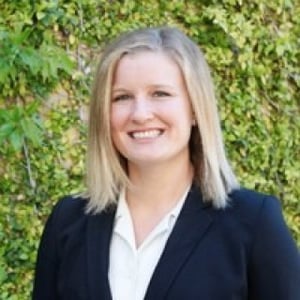
Consumer Protection Bureau Chief, Nebraska Attorney General's Office
Bebe Strnad serves as Consumer Protection Bureau Chief at the Nebraska Attorney General’s Office. She oversees work related to unfair and deceptive trade practices, antitrust, scams, fraud, and data privacy. Bebe previously worked at a private law firm where she focused on intellectual property, complex commercial litigation, and online enforcement. Before law school, Bebe attended art school and worked in marketing. Once a lifelong big-coastal-city-dweller, Bebe is now enjoying heartland living.
Blaine T. Phillips Distinguished Professor in Environmental Law, University of Virginia School of Law
Law and economics expert Jason Scott Johnston joined the Virginia Law faculty in 2010 and is the Blaine T. Phillips Distinguished Professor in Environmental Law. He formerly served as the the Nicholas E. Chimicles Research Professor in Business Law and Regulation at Virginia Law, and the Robert G. Fuller, Jr. Professor of Law and director of the Program on Law, Environment and Economy at the University of Pennsylvania Law School.
Johnston’s scholarship has examined subjects ranging from natural resources law to torts and contracts. He has published dozens of articles in law journals, such as the Yale Law Journal, and in peer-reviewed economics journals, such as the Journal of Law, Economics and Organization. He is currently working on a book that critically analyzes the foundations of global warming law and policy, a series of articles on the economics of regulatory science and another series of articles on various aspects of the law and economics of consumer protection. He has served on the Board of Directors of the American Law and Economics Association, on the National Science Foundation’s Law and Social Science grant review panel, and on the Board of the Searle Civil Justice Institute. He won Penn Law’s Robert A. Gorman Award for Teaching Excellence in 2003.
After earning his A.B. from Dartmouth College and both his J.D. and Ph.D. (economics) from the University of Michigan, Johnston clerked for Judge Gilbert S. Merritt on the U.S. Court of Appeals for the Sixth Circuit. He then taught at Vermont Law School and Vanderbilt Law School before joining Penn’s faculty. He has been a visiting professor or held fellowship appointments at Yale Law School, the University of Southern California Gould School of Law, the American Academy in Berlin and the Property and Environment Research Center.
Partner, Vinson & Elkins
Corinne principally practices in environmental law, with an emphasis on litigation, regulatory compliance, internal investigations, and defense against government investigations and enforcement actions.
Corinne draws on wide experience at the U.S. Department of Justice, including serving as Senior Counsel in the Office of the Associate Attorney General, which oversees all civil litigation on behalf of the United States, and as Counselor in the Office of the Attorney General.
Corinne most recently served as Counsel and Chief of Staff in the Environment and Natural Resources Division of the U.S. Department of Justice, where she assisted in managing a 600-person division that included 400 lawyers. In this role she helped manage the Division’s civil and criminal litigation arising under more than 150 environmental and natural resources laws.
She also worked closely with the General Counsel’s Offices for multiple federal agencies, including the EPA, Departments of Interior, Defense, Energy, Commerce, and Agriculture, as well as the White House and Counsel on Environmental Quality to advise high-ranking officials on policy and litigation risks associated with the environmental and natural resource laws.
She has personally argued cases in three U.S. Courts of Appeals, and multiple district courts, and served as the lead or co-lead counsel in district court litigation defending agency regulations, approvals, and permits related to oil and gas operations and other energy extraction projects.
Her roles in government have given her a unique perspective into the decision-making processes in the federal government.
In the private sector, Corinne counsels clients on environmental compliance across a variety of industries, including energy, chemical, manufacturing, and mining sectors. In the transactional context, she assists in the drafting and negotiating of the environmental terms in purchase and sale agreements, lease agreements, credit agreements, and disclosures for debt and equity offerings and public filings. She has also drafted comments on behalf of clients to agencies on proposed rules with significant implications for the oil and gas industry.
Consumer Protection Bureau Chief, Nebraska Attorney General's Office
Bebe Strnad serves as Consumer Protection Bureau Chief at the Nebraska Attorney General’s Office. She oversees work related to unfair and deceptive trade practices, antitrust, scams, fraud, and data privacy. Bebe previously worked at a private law firm where she focused on intellectual property, complex commercial litigation, and online enforcement. Before law school, Bebe attended art school and worked in marketing. Once a lifelong big-coastal-city-dweller, Bebe is now enjoying heartland living.
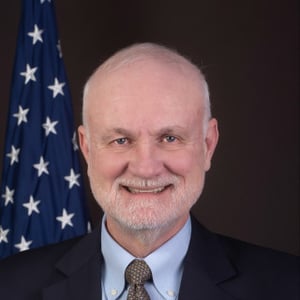
Founding Director of the Center for Energy Law and Policy, William & Mary Law School; Former Chairman, Federal Energy Regulatory Commission; Former Chairman, Virginia State Corporation Commission
Mark Christie is the Founding Director of the Center for Energy Law and Policy at William & Mary Law School. He also teaches courses on energy law at the law school as a visiting professor from practice.
Christie is a former Chairman of the Federal Energy Regulatory Commission (FERC). He served as a FERC commissioner from January 2021 to August 2025, the final seven months as Chairman.
Prior to serving on FERC, Christie was the Chairman of the Virginia State Corporation Commission (Virginia SCC), on which he served as a commissioner for nearly 17 years. He was elected to the Virginia SCC, which regulates utilities, insurance and banking, three times by the Virginia legislature on bipartisan votes.
During Christie’s service as a state regulator, he was elected president of the Organization of PJM States, Inc. (OPSI), an organization of utility regulators representing the 13 states and the District of Columbia which participate in the PJM transmission and markets organization. He served for more than a decade on the OPSI governing board. Christie also served as president of the Mid-Atlantic Conference of Regulatory Utilities Commissioners (MACRUC), a regional chapter of the National Association of Regulatory Utility Commissioners (NARUC).
Former Chairman Christie taught regulatory law for a decade as an adjunct faculty member at the University of Virginia School of Law and constitutional law and government for 20 years in a doctoral program at Virginia Commonwealth University.
Christie received his law degree from Georgetown University and his undergraduate degree from Wake Forest University, where he graduated Magna cum Laude and earned Phi Beta Kappa honors. To help pay for college, he worked as an underground coal miner during summers.
He served as an officer in the U. S. Marine Corps. Semper fi.
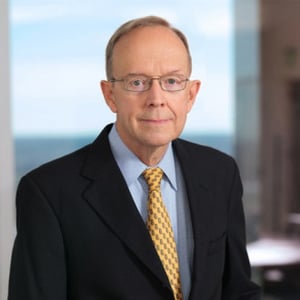
Former Deputy Attorney General for Virginia
Kennerly Davis has over forty years of experience in corporate management, public service, and the private practice of law. He has held senior executive positions in a Fortune 500 electric and gas company. He has served as Deputy Attorney General for the Commonwealth of Virginia, and as a legislative aide to a U.S. Senator and a U.S. Congressman. He practiced law for 25 years with Hunton Andrews Kurth LLP.
Davis is active in the Federalist Society as a member of the Regulatory Process Working Group of the Regulatory Transparency Project, and as a member of the Execuitve Committee of the Administrative Law and Regulation Practice Group. He is active in the national Alumni Free Speech Alliance, and involved in AFSA-chapter initiatives, including litigation, to publicize and correct the serious legal problems created by university Diversity, Equity, and Inclusion programs and the anonymous bias reporting systems used to enforce those DEI programs.
Davis writes and speaks on a wide variety of topics, including those related to the Founding of America, the natural rights foundation of our Republic, the constitutional rule of law, equal protection and free speech, DEI programs and bias reporting systems, capitalism, regulation and regulatory reform, and economic development. His articles have appeared in The Wall Street Journal, the Washington Examiner, the Richmond Times-Dispatch, The Federalist Society Review, the FedSoc Blog, Real Clear Energy, Townhall, the Daily Caller, reports of the Center for Strategic & International Studies, and other publications. He appears frequently on radio, podcasts, and television.
Davis graduated with honors from Cornell University with an A.B. degree in Government. He earned an M.A. degree from Pembroke College, Oxford, in Philosophy, Politics, and Economics. He was awarded a J.D. degree from Harvard Law School, and an M.B.A. degree from Virginia Commonwealth University.
Davis lives in Richmond, Virginia. He can be contacted by email: j.kendavis@verizon.net, and by phone: (804) 624-8525.
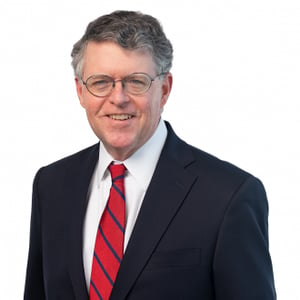
Former Commissioner, Federal Energy Regulatory Commission
Bernard L. McNamee is a former FERC commissioner and currently a partner at McGuireWoods LLP and a senior advisor at McGuireWoods Consulting. His practice focuses on providing clients with strategic legal and policy advice on a wide range of energy and environmental issues. During his time on the Commission, he participated in more than 1,700 published orders on a wide range of issues, including numerous important orders relating to wholesale electricity markets and natural gas pipelines.
Before his appointment by the president and confirmation by the Senate as a commissioner on FERC, McNamee served in the U.S. Department of Energy as executive director of the Office of Policy and deputy general counsel for energy policy. His career in public service includes key leadership positions under Attorneys General in Virginia and Texas, and policy advisor roles for a U.S. Senator from Texas and a Governor of Virginia. In private practice, McNamee has a long career representing energy clients before state public utility commissions in rate cases, certificate proceedings, and integrated resource planning.
Founding Director of the Center for Energy Law and Policy, William & Mary Law School; Former Chairman, Federal Energy Regulatory Commission; Former Chairman, Virginia State Corporation Commission
Mark Christie is the Founding Director of the Center for Energy Law and Policy at William & Mary Law School. He also teaches courses on energy law at the law school as a visiting professor from practice.
Christie is a former Chairman of the Federal Energy Regulatory Commission (FERC). He served as a FERC commissioner from January 2021 to August 2025, the final seven months as Chairman.
Prior to serving on FERC, Christie was the Chairman of the Virginia State Corporation Commission (Virginia SCC), on which he served as a commissioner for nearly 17 years. He was elected to the Virginia SCC, which regulates utilities, insurance and banking, three times by the Virginia legislature on bipartisan votes.
During Christie’s service as a state regulator, he was elected president of the Organization of PJM States, Inc. (OPSI), an organization of utility regulators representing the 13 states and the District of Columbia which participate in the PJM transmission and markets organization. He served for more than a decade on the OPSI governing board. Christie also served as president of the Mid-Atlantic Conference of Regulatory Utilities Commissioners (MACRUC), a regional chapter of the National Association of Regulatory Utility Commissioners (NARUC).
Former Chairman Christie taught regulatory law for a decade as an adjunct faculty member at the University of Virginia School of Law and constitutional law and government for 20 years in a doctoral program at Virginia Commonwealth University.
Christie received his law degree from Georgetown University and his undergraduate degree from Wake Forest University, where he graduated Magna cum Laude and earned Phi Beta Kappa honors. To help pay for college, he worked as an underground coal miner during summers.
He served as an officer in the U. S. Marine Corps. Semper fi.
Former Deputy Attorney General for Virginia
Kennerly Davis has over forty years of experience in corporate management, public service, and the private practice of law. He has held senior executive positions in a Fortune 500 electric and gas company. He has served as Deputy Attorney General for the Commonwealth of Virginia, and as a legislative aide to a U.S. Senator and a U.S. Congressman. He practiced law for 25 years with Hunton Andrews Kurth LLP.
Davis is active in the Federalist Society as a member of the Regulatory Process Working Group of the Regulatory Transparency Project, and as a member of the Execuitve Committee of the Administrative Law and Regulation Practice Group. He is active in the national Alumni Free Speech Alliance, and involved in AFSA-chapter initiatives, including litigation, to publicize and correct the serious legal problems created by university Diversity, Equity, and Inclusion programs and the anonymous bias reporting systems used to enforce those DEI programs.
Davis writes and speaks on a wide variety of topics, including those related to the Founding of America, the natural rights foundation of our Republic, the constitutional rule of law, equal protection and free speech, DEI programs and bias reporting systems, capitalism, regulation and regulatory reform, and economic development. His articles have appeared in The Wall Street Journal, the Washington Examiner, the Richmond Times-Dispatch, The Federalist Society Review, the FedSoc Blog, Real Clear Energy, Townhall, the Daily Caller, reports of the Center for Strategic & International Studies, and other publications. He appears frequently on radio, podcasts, and television.
Davis graduated with honors from Cornell University with an A.B. degree in Government. He earned an M.A. degree from Pembroke College, Oxford, in Philosophy, Politics, and Economics. He was awarded a J.D. degree from Harvard Law School, and an M.B.A. degree from Virginia Commonwealth University.
Davis lives in Richmond, Virginia. He can be contacted by email: j.kendavis@verizon.net, and by phone: (804) 624-8525.
Former Commissioner, Federal Energy Regulatory Commission
Bernard L. McNamee is a former FERC commissioner and currently a partner at McGuireWoods LLP and a senior advisor at McGuireWoods Consulting. His practice focuses on providing clients with strategic legal and policy advice on a wide range of energy and environmental issues. During his time on the Commission, he participated in more than 1,700 published orders on a wide range of issues, including numerous important orders relating to wholesale electricity markets and natural gas pipelines.
Before his appointment by the president and confirmation by the Senate as a commissioner on FERC, McNamee served in the U.S. Department of Energy as executive director of the Office of Policy and deputy general counsel for energy policy. His career in public service includes key leadership positions under Attorneys General in Virginia and Texas, and policy advisor roles for a U.S. Senator from Texas and a Governor of Virginia. In private practice, McNamee has a long career representing energy clients before state public utility commissions in rate cases, certificate proceedings, and integrated resource planning.

Tazewell Taylor Professor of Law and William H. Cabell Research Professor, William & Mary Law School
Jonathan H. Adler joined the William & Mary law faculty as the Tazwell Taylor Professor of Law and William H. Cabell Research Professor in 2025. Prior to joining the faculty, he was the inaugural Johan Verheij Memorial Professor of Law and the founding Director of the Coleman P. Burke Center for Environmental Law at the Case Western Reserve University School of Law.
Professor Adler is the author or editor of seven books, including Climate Liberalism: Perspectives on Liberty, Property and Pollution (Palgrave, 2023), Marijuana Federalism: Uncle Sam and Mary Jane (Brookings Institution Press, 2020), Business and the Roberts Court (Oxford University Press, 2016) and Rebuilding the Ark: New Perspectives on Endangered Species Act Reform (AEI Press, 2011).
His articles have appeared in publications ranging from the Harvard Environmental Law Review and Yale Journal on Regulation to the Wall Street Journal, New York Times, and Washington Post. He has testified before Congress a dozen times, and his work has been cited in the U.S. Supreme Court. A 2024 study identified Professor Adler as the seventh most cited legal academic in administrative and environmental law from 2019 to 2023.
Professor Adler is a contributing editor to Civitas Outlook and a regular contributor to the popular legal blog, The Volokh Conspiracy. A regular commentator on constitutional and regulatory issues, he has appeared on numerous radio and television programs, ranging from the PBS Newshour and National Public Radio to the Fox News Channel and Entertainment Tonight.
Professor Adler is a senior fellow at the Property & Environment Research Center in Bozeman, Montana. In 2018, Professor Adler was elected to membership in the American Law Institute and helped co-found the organization Checks and Balances. In 2024, Professor Adler was appointed a public member of the Administrative Conference of the United States.
Professor Adler clerked for the Honorable David B. Sentelle on the U.S. Court of Appeals for the District of Columbia Circuit.
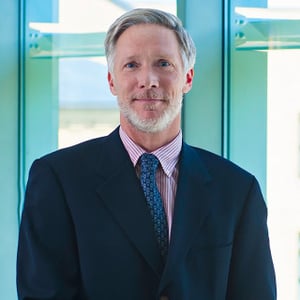
Director of the Program on Environmental and Energy Law, Assistant Dean of Adjunct Faculty Affairs, and Fellow in Environmental Law, American University Washington College of Law
William Snape has litigated a number of environmental and related cases in federal court, and argued Center for Biological Diversity v. Interior at the DC Circuit, which rejected the federal government’s plan for oil and gas drilling off the coast of Alaska in part because of climate change concerns. Snape is the author of numerous articles on natural resource issues, including the book Biodiversity and the Law published by Island Press. His public interest work currently focuses upon environmental justice advocacy at the state level, serving as board general counsel to the United States Climate Action Network, and litigating an active federal docket under the Freedom of Information Act (FOIA). In Summer 2020, Snape was named director of WCL’s Program on Environmental and Energy Law (PEEL).
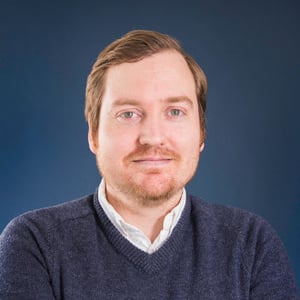
Vice President of Law & Policy, Property and Environment Research Center
Jonathan Wood is vice president of law and policy at the Property and Environment Research Center (PERC). An attorney, Jonathan has litigated environmental and property-rights cases in the Supreme Court of the United States, federal and state appellate courts, and trial courts across the country. His writing has appeared in the Wall Street Journal, Washington Post, National Review, Reason, and other outlets. And his research has been published in journals such as Environmental Law Reporter, Yale Journal on Regulation Notice & Comment, Pace Environmental Law Review, and California Western Law Review.
Prior to coming to PERC, Jonathan was a senior attorney at Pacific Legal Foundation, where he litigated cases concerning the Endangered Species Act, Clean Water Act, and other federal environmental laws. He was co-counsel for forest landowners in Weyerhaeuser Co. v. U.S. Fish and Wildlife Service, in which the Supreme Court ruled unanimously that private land could not be arbitrarily regulated as critical habitat under the ESA. He also led a successful effort to reform regulation of threatened species to better align the incentives of private landowners with the interests of rare species.
Jonathan has testified before several congressional committees on wildlife conservation and endangered species topics. He has also appeared on national television and radio, including NPR’s All Things Considered, C-Span’s Washington Journal, Stossel, Fox News, and Hill.TV.
Jonathan has a law degree from the New York University School of Law, a masters degree in economic policy from the London School of Economics, and a bachelor’s degree in economics from the University of Texas. He is on the executive committee for the Federalist Society’s Environmental Law and Property Rights Practice Group and a steering committee member for the Environmental Law Institute’s Emerging Leaders Initiative.
Tazewell Taylor Professor of Law and William H. Cabell Research Professor, William & Mary Law School
Jonathan H. Adler joined the William & Mary law faculty as the Tazwell Taylor Professor of Law and William H. Cabell Research Professor in 2025. Prior to joining the faculty, he was the inaugural Johan Verheij Memorial Professor of Law and the founding Director of the Coleman P. Burke Center for Environmental Law at the Case Western Reserve University School of Law.
Professor Adler is the author or editor of seven books, including Climate Liberalism: Perspectives on Liberty, Property and Pollution (Palgrave, 2023), Marijuana Federalism: Uncle Sam and Mary Jane (Brookings Institution Press, 2020), Business and the Roberts Court (Oxford University Press, 2016) and Rebuilding the Ark: New Perspectives on Endangered Species Act Reform (AEI Press, 2011).
His articles have appeared in publications ranging from the Harvard Environmental Law Review and Yale Journal on Regulation to the Wall Street Journal, New York Times, and Washington Post. He has testified before Congress a dozen times, and his work has been cited in the U.S. Supreme Court. A 2024 study identified Professor Adler as the seventh most cited legal academic in administrative and environmental law from 2019 to 2023.
Professor Adler is a contributing editor to Civitas Outlook and a regular contributor to the popular legal blog, The Volokh Conspiracy. A regular commentator on constitutional and regulatory issues, he has appeared on numerous radio and television programs, ranging from the PBS Newshour and National Public Radio to the Fox News Channel and Entertainment Tonight.
Professor Adler is a senior fellow at the Property & Environment Research Center in Bozeman, Montana. In 2018, Professor Adler was elected to membership in the American Law Institute and helped co-found the organization Checks and Balances. In 2024, Professor Adler was appointed a public member of the Administrative Conference of the United States.
Professor Adler clerked for the Honorable David B. Sentelle on the U.S. Court of Appeals for the District of Columbia Circuit.
Director of the Program on Environmental and Energy Law, Assistant Dean of Adjunct Faculty Affairs, and Fellow in Environmental Law, American University Washington College of Law
William Snape has litigated a number of environmental and related cases in federal court, and argued Center for Biological Diversity v. Interior at the DC Circuit, which rejected the federal government’s plan for oil and gas drilling off the coast of Alaska in part because of climate change concerns. Snape is the author of numerous articles on natural resource issues, including the book Biodiversity and the Law published by Island Press. His public interest work currently focuses upon environmental justice advocacy at the state level, serving as board general counsel to the United States Climate Action Network, and litigating an active federal docket under the Freedom of Information Act (FOIA). In Summer 2020, Snape was named director of WCL’s Program on Environmental and Energy Law (PEEL).
Vice President of Law & Policy, Property and Environment Research Center
Jonathan Wood is vice president of law and policy at the Property and Environment Research Center (PERC). An attorney, Jonathan has litigated environmental and property-rights cases in the Supreme Court of the United States, federal and state appellate courts, and trial courts across the country. His writing has appeared in the Wall Street Journal, Washington Post, National Review, Reason, and other outlets. And his research has been published in journals such as Environmental Law Reporter, Yale Journal on Regulation Notice & Comment, Pace Environmental Law Review, and California Western Law Review.
Prior to coming to PERC, Jonathan was a senior attorney at Pacific Legal Foundation, where he litigated cases concerning the Endangered Species Act, Clean Water Act, and other federal environmental laws. He was co-counsel for forest landowners in Weyerhaeuser Co. v. U.S. Fish and Wildlife Service, in which the Supreme Court ruled unanimously that private land could not be arbitrarily regulated as critical habitat under the ESA. He also led a successful effort to reform regulation of threatened species to better align the incentives of private landowners with the interests of rare species.
Jonathan has testified before several congressional committees on wildlife conservation and endangered species topics. He has also appeared on national television and radio, including NPR’s All Things Considered, C-Span’s Washington Journal, Stossel, Fox News, and Hill.TV.
Jonathan has a law degree from the New York University School of Law, a masters degree in economic policy from the London School of Economics, and a bachelor’s degree in economics from the University of Texas. He is on the executive committee for the Federalist Society’s Environmental Law and Property Rights Practice Group and a steering committee member for the Environmental Law Institute’s Emerging Leaders Initiative.

California v. EPA: Using the Congressional Review Act to Roll Back State Waivers
Michael Buschbacher, Andrew Ceonzo, Daniel M. Flores
In September 2026, the U.S. District Court for the District of Columbia preliminarily enjoined the...
From Pork Producers to Suncor: Extraterritoriality and Our Constitutional Structure
Michael S. Greve, Jennifer Perkins, Daniel B. Rodriguez, O.H. Skinner, Michael R. Williams
How far can states go in regulating conduct that has effects outside their borders?At the...
From Pork Producers to Suncor: Extraterritoriality and Our Constitutional Structure
Michael S. Greve, Jennifer Perkins, Daniel B. Rodriguez, O.H. Skinner, Michael R. Williams
How far can states go in regulating conduct that has effects outside their borders?At the...
A New Frontier in Climate Litigation: District of Columbia v. ExxonMobil
Jason Johnston, Corinne Virginia Snow, Beatrice Strnad
Can states and local governments use consumer protection laws to regulate national climate policy? District...
A New Frontier in Climate Litigation: District of Columbia v. ExxonMobil
Jason Johnston, Corinne Virginia Snow, Beatrice Strnad
Can states and local governments use consumer protection laws to regulate national climate policy? District...
What Can State and Federal Regulators Do to Control the Cost and Maintain the Reliability of Our Electric Service?
Mark Curtis Christie, John Kennerly Davis, Bernard L. McNamee
After two decades of flat demand, US electricity demand is experiencing rapid growth. Demand is...
What Can State and Federal Regulators Do to Control the Cost and Maintain the Reliability of Our Electric Service?
Mark Curtis Christie, John Kennerly Davis, Bernard L. McNamee
After two decades of flat demand, US electricity demand is experiencing rapid growth. Demand is...
Commandeering for Conservation?
Jonathan H. Adler, William Snape, Jonathan Wood
In Bear Warriors United v. Secretary, Florida Department of Environmental Protection the Eleventh Circuit is...
Commandeering for Conservation?
Jonathan H. Adler, William Snape, Jonathan Wood
In Bear Warriors United v. Secretary, Florida Department of Environmental Protection the Eleventh Circuit is...
Panel 2: New Frontiers for Traditional Fuels: Deregulation or Lawfare?
Energy in the AI Age
CLE credit for this event is available at On-Demand CLE. Coal, oil, and natural gas...