

Laurence A. Tisch Professor of Law and Director, Classical Liberal Institute, New York University School of Law; Director, Classical Liberal Institute, Civitas Institute University of Texas at Austin
Richard A. Epstein is the inaugural Laurence A. Tisch Professor of Law at NYU School of Law. Prior to his joining the faculty, he was a visiting law professor at NYU from 2007 through 2009. He served as the Peter and Kirstin Bedford Senior Fellow at the Hoover Institution from 2000 to 2024. Since 2024 to the present he is a senior lecturer at the Civitas Institute at the University of Texas—Austin. Epstein is also the James Parker Hall Distinguished Service Professor of Law Emeritus and a senior lecturer at the University of Chicago. His initial law school appointment was at the University of Southern California from 1968 to 1972. Epstein received an LL.D., h.c. from the University of Ghent, 2003. He has been a member of the American Academy of Arts and Sciences since 1985 and was a Senior Fellow of the Center for Clinical Medical Ethics at the University of Chicago Division of Biological Sciences, also from 1983. to 2022 He served as editor of the Journal of Legal Studies from 1981 to 1991, and of the Journal of Law and Economics from 1991-2001. From 2001 to 2010 he was a director of the John M. Olin Program in Law and Economics at the University of Chicago.
His newest book, The Myth of Birthright Citizenship: What the Fourteenth Amendment Really Says was published in 2026 (Encounter Books). Prior to that he has published many books including, The Dubious Morality of the Modern Administrative State (Roman & Littlefield 2020).Earlier he published th Classical Liberal Constitution: The Uncertain Quest for Limited Government (Harvard 2014) iHis previous books include Design for Liberty: Private Property, Public Administration and the Rule of Law (Harvard 2011); The Case Against the Employee Free Choice Act (Hoover 2009); Supreme Neglect: How to Revive the Constitutional Protection of Property Rights (Oxford 2008); Antitrust Decrees in Theory and Practice: Why Less is More (AEI 2007); Overdose: How Excessive Government Regulation Stifles Pharmaceutical Innovation (Yale University Press. 2006); How Progressives Rewrote the Constitution (Cato 2006); Cases and Materials on Torts (Aspen Law & Business; 8th ed. 2004); Skepticism and Freedom: A Modern Case for Classical Liberalism (University of Chicago, 2003); Torts (Aspen Law & Business 1999); Principles for a Free Society: Reconciling Individual Liberty with the Common Good (Perseus Books, 1998): Mortal Peril: Our Inalienable Rights to Health Care (Addison-Wesley, 1997); Simple Rules for a Complex World (Harvard, 1995); Bargaining With the State (Princeton, 1993); Forbidden Grounds: The Case Against Employment Discrimination Laws (Harvard , 1992); Takings: Private Property and the Power of Eminent Domain (Harvard, 1985); and Modern Products Liability Law (Greenwood Press, 1980). He has also edited(with Catherine M. Sharkey) Cases and Materials on the Law of Torts (10th edition 2012).
Professor Epstein has written numerous articles on a wide range of legal and interdisciplinary subjects. He has taught courses in administrative law, antitrust law, civil procedure, communications, constitutional law, contracts, corporations, criminal law, employment discrimination law, environmental law, food and drug law health law and policy, legal history, labor law, property, real estate development and finance, jurisprudence, labor law; land use planning, patents, individual, estate and corporate taxation, Roman Law; torts, and workers' compensation.
Professor Epstein also writes a regular column for Civitas Institute, which also sponsors his podcast, The Libertarian with Charles C.W. Cooke, and Law Talk, with Cooke and John Yoo. He also does a podcast with John Batchelor. And appears regularly on the Freedom File with Judge Andrew Napolitano.

Partner, Sullivan & Cromwell LLP; Former Head of External Affairs, BlackRock
Dalia Blass is the Senior Investment Management Partner and a partner in S&C’s Financial Services Group at Sullivan & Cromwell LLP. Her practice focuses on providing strategic and regulatory advice to asset managers, registered and private funds, fund boards and their service providers across the range of regulatory, governance, compliance, examination and enforcement matters they face. ry landscape facing asset managers.
Ms. Blass joined the Firm in 2023 from BlackRock, where she was Senior Managing Director, Global Head of External Affairs and a member of BlackRock’s Global Executive Committee.
Prior to BlackRock, Ms. Blass served as the Director of the Division of Investment Management at the U.S. Securities and Exchange Commission (SEC). Under her leadership, the Division of Investment Management finalized more than 70 regulatory initiatives to modernize the regulatory framework for investment companies and investment advisers, improve the investor experience through modernized disclosure and outreach efforts, elevate the standards of conduct for financial professionals, and re-evaluate the role and responsibilities of fund boards of directors. Ms. Blass was a member of the SEC’s senior-level COVID-19 Market Monitoring Group and contributed to the staff’s report on the U.S. Credit Markets Interconnectedness and Effects of the COVID-19 Economic Shock. She also co-chaired the Financial Stability Board’s Technical Experts Group on Money Market Funds. A summary of Division of Investment Management Activities under Ms. Blass is available here.
Ms. Blass previously served in a number of leadership roles in the Division of Investment Management for a total of 14 years at the SEC. She has received the SEC’s Distinguished Service Award and the Manuel F. Cohen Award and was also named in Barron’s inaugural list of the 100 Most Influential Women in U.S. Finance.
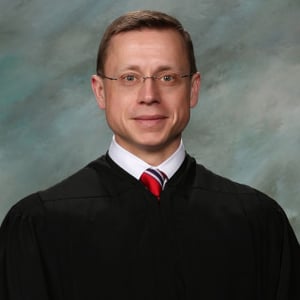
Judge, United States Court of Appeals, Fifth Circuit
Andrew Oldham is a Circuit Judge on the United States Court of Appeals for the Fifth Circuit. Before ascending to the bench, Judge Oldham served as General Counsel to Texas Governor Greg Abbott, where he advised the Governor on a range of issues under federal and state law and managed litigation in which the Governor was an interested party. Before that he served as Deputy Solicitor General for the State of Texas, where he represented Texas in federal courts across the country, including twice before the United States Supreme Court. Before moving to Texas, Judge Oldham was an attorney at Kellogg Hansen Todd Figel & Frederick in Washington, D.C. His practice focused on appellate litigation in federal courts of appeals throughout the country. Before entering private practice, Judge Oldham served as a law clerk to Justice Samuel A. Alito, Jr., at the Supreme Court of the United States and to Judge David B. Sentelle of the U.S. Court of Appeals for the District of Columbia Circuit. He also worked as an attorney-adviser in the Office of Legal Counsel at the U.S. Department of Justice from 2006 to 2008. Judge Oldham earned a B.A. from the University of Virginia with highest honors, a Truman Scholarship for graduate school, an M. Phil., first class (with distinction), from Cambridge University, and a J.D., magna cum laude, from Harvard Law School.
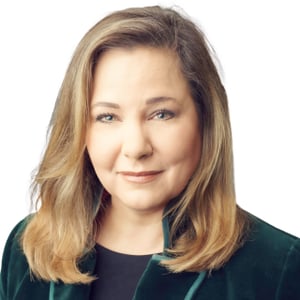
Senior Advisor, Freshfields
Christine is a senior advisor in our antitrust, competition and trade practice with more than 25 years of public and private sector experience at the intersection of law, policy and politics. Based in Washington, DC, she counsels senior executives and boards of directors on how to navigate complex and evolving legal and regulatory regimes to achieve their desired business goals.
Most recently, Christine served as a Commissioner at the Federal Trade Commission (FTC) where she helped shape policies and enforcement actions in the fields of antitrust, consumer privacy and data security and consumer protection. During her tenure, she also testified before the US Congress on several occasions and represented the FTC in bilateral and multilateral discussions abroad.
Before joining the FTC, Christine was a Senior Vice President at Delta Air Lines where she oversaw the carrier’s regulatory and international legal matters. Prior to moving in-house, she was a partner at two international law firms where she worked with clients to achieve regulatory clearance for multi-jurisdictional mergers and to defend businesses in high-stakes investigations.
Her broad sector experience ranges from aircraft and automobiles to veterinary services, video games and virtual reality. She has worked extensively in the highly regulated fields of airlines, healthcare and pharmaceuticals.
After leaving the FTC last year, Christine founded an organization to provide safe housing and comprehensive support services to survivors of human trafficking and sexual exploitation. Freshfields provided pro bono services to the organization including corporate formation. She will continue supporting this organization alongside client practice.
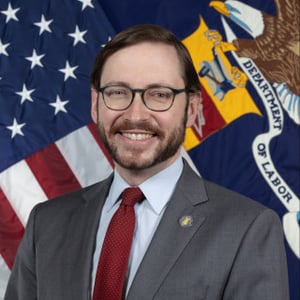
Solicitor, U.S. Department of Labor
Jonathan Berry is Solicitor at the U.S. Department of Labor, in service to President Trump’s agenda to put American workers first. He leads the Department’s lawyers in advising the Secretary and agency leadership on all aspects of law and in representing the Department in court. He was previously managing partner at Boyden Gray PLLC, where he provided strategic counsel and litigated on issues at the intersection of law, politics, and public policy. Earlier, he headed the regulatory office at Labor, and also served at the Department of Justice, in the first Trump Administration. Mr. Berry served as a law clerk to Judge Jerry E. Smith of the United States Court of Appeals for the Fifth Circuit, and to Associate Justice Samuel A. Alito, Jr., of the Supreme Court of the United States.
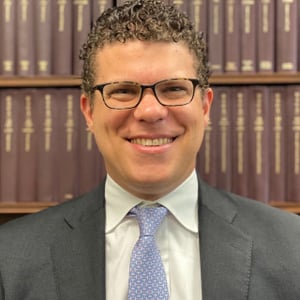
Deputy Director, Bureau of Consumer Protection, Federal Trade Commission
Douglas C. Geho is a seasoned lawyer with extensive enforcement, regulatory, and litigation experience. During the first Trump Administration, Geho served at the Department of Labor as Counsel and Policy Advisor, and then Counselor to the Assistant Secretary for Policy, where he advanced efforts relating to regulatory and enforcement reform, worker safety and training, and additional Administration priorities. He then served as a lead attorney for the House Judiciary Committee and two of its subcommittees. He also managed investigations for the Senate Committee on Homeland Security and Governmental Affairs.
Most recently, Geho served as an Attorney Advisor to Commissioner Melissa Holyoak, handling consumer protection matters for her office. He clerked for Judge Alice M. Batchelder on the U.S. Court of Appeals for the Sixth Circuit. Prior to his government service, Geho was a litigator in private practice. Geho is a graduate of Georgetown Law and Grove City College.
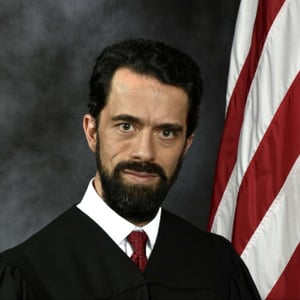
Judge, United States Court of Appeals, Third Circuit
Stephanos Bibas is a judge on the U.S. Court of Appeals for the Third Circuit. Judge Bibas was previously a professor of law and criminology at the University of Pennsylvania Law School. As director of the Penn Law Supreme Court Clinic, he argued six cases before the Supreme Court of the United States and filed briefs in dozens of others. He graduated summa cum laude and Phi Beta Kappa from Columbia University in 1989 with a B.A. in political theory and from Oxford University in 1991 with a B.A. in jurisprudence. He then earned his J.D. from Yale Law School in 1994.
After graduating from Yale Law, Judge Bibas clerked for Judge Patrick Higginbotham of the U.S. Court of Appeals for the Fifth Circuit and Justice Anthony Kennedy on the Supreme Court and was a litigation associate at Covington & Burling LLP in Washington, D.C. Thereafter, Judge Bibas served as an Assistant U.S. Attorney in the Southern District of New York, where he successfully prosecuted the world’s leading expert in Tiffany stained glass for hiring a grave robber to steal priceless Tiffany windows from cemeteries. Before his tenure at Penn Law, Judge Bibas taught at the University of Chicago Law School and the University of Iowa College of Law and was a research fellow at Yale Law School. He has published two books and seventy scholarly articles.
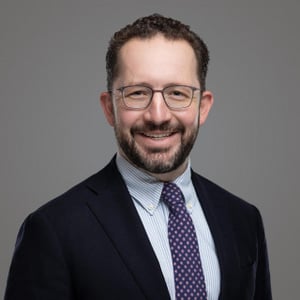
Executive Director, Alliance For Consumers; President & CEO, American Juris Link
O.H. Skinner is the President & CEO of American Juris Link, a nonprofit dedicated to accelerating nonprofit litigation to advance freedom, liberty, and the rule of law. O.H. has a long track record in facilitating strategic nonprofit litigation in his role as the Executive Director at Alliance For Consumers as well as from his time serving Arizona Attorney General Mark Brnovich in senior positions, including as Arizona Solicitor General. O.H. is a graduate of the University of Pennsylvania and Harvard Law School. Prior to joining the Arizona Attorney General's Office, O.H. practiced at WilmerHale and Ropes & Gray in Boston, and clerked for the Hon. J.L. Edmondson of the United States Court of Appeals for the Eleventh Circuit. In 2023, O.H. was a Wasserstein Public Interest Fellow at Harvard Law School, where he counseled students as a Harvard-identified “outstanding public interest attorney.”
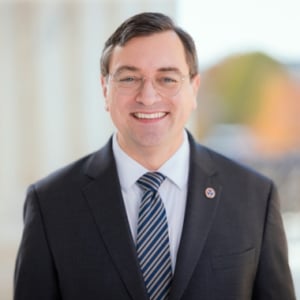
Attorney General of Tennessee
Jonathan Skrmetti was sworn in to an eight-year term as Tennessee’s Attorney General and Reporter on September 1, 2022.
Prior to his current role, General Skrmetti served as Chief Counsel to Governor Bill Lee and as Chief Deputy Attorney General to his predecessor, Tennessee Attorney General Herbert Slatery.
Before working for the State of Tennessee, General Skrmetti was a partner at Butler Snow LLP in Memphis. His legal career began with nearly a decade as a federal prosecutor. He worked at the Civil Rights Division at Main Justice and then at the Memphis U.S. Attorney’s Office and prosecuted sex traffickers, corrupt government officials, and violent white supremacists. In addition, General Skrmetti taught cyberlaw as an adjunct professor at the University of Memphis.
General Skrmetti earned honors degrees from George Washington University, the University of Oxford, and Harvard Law School, where he was editor-in-chief of the Harvard Journal of Law & Public Policy. Following law school, Jonathan clerked for Judge Steven Colloton on the U.S. Court of Appeals for the Eighth Circuit. He lives in Franklin, Tennessee, with his wife and four children.
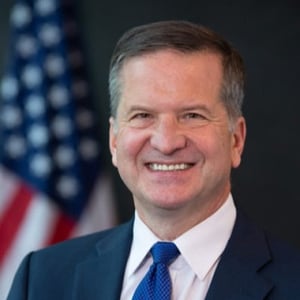
Former Executive Director, National Association of Attorneys General
Chris Toth retired as executive director of the National Association of Attorneys General (NAAG) in June 2022 after serving in this role since December 2017. He previously served as the organization’s deputy executive director from February 2004. Chris supervised support for NAAG committees in the areas of antitrust, consumer protection, criminal law, cyberspace law, and energy and environment, among others. He also supervised the NAAG Center for Tobacco and Public Health, which coordinates enforcement of the 1998 Master Settlement Agreement between the major tobacco manufacturers and 46 states, the Center for Supreme Court Advocacy, which prepares state attorneys to argue before the U.S. Supreme Court, and the Center for Public Integrity. Chris also helped found and served as director of the National Attorneys General Training and Research Institute (NAGTRI), a NAAG branch, from its 2007 inception until December 2017. In addition to serving on the NAGTRI faculty, Chris has served as a faculty member for the National District Attorneys Association.
Prior to joining NAAG, Chris was elected and served as the prosecuting attorney in St. Joseph County (South Bend), Indiana. As prosecuting attorney Chris initiated numerous innovative programs in the areas of community prosecution, cold-case investigations, DUI prevention, and domestic violence prevention. He also previously served as deputy prosecuting attorney and in private legal practice.
Chris attended Naval Aviation Officer Candidate School and received his commission as an ensign in the U.S. Navy. He served several tours on active duty in the Navy, including deployments on the aircraft carrier USS John F. Kennedy and on the staff of the U.S. Naval Forces Europe Commander in London, England, before attending law school. Following law school, Chris served as an NCIS agent (through the Navy Reserves).
In addition to serving as a naval officer on both active duty and the reserves, Chris served both on active duty and in the reserves as an Army officer, retiring from the Army Reserve in 2011. He was deployed multiple times during his career, including to Bosnia, Kuwait, and Iraq. His assignments included serving as the commander of a unit that conducted missions against indicted war criminals and in support of the Global War on Terrorism in Bosnia, and as the commander of the provincial reconstruction team military detachment in Diwaniyah Province, Iraq. His military awards include the Bronze Star for Service, Defense Meritorious Service Medal, Combat Action Badge, Army Airborne Parachutist Badge, Army Commendation Medal, Navy Achievement Medal, as well as various expeditionary, unit, and service awards.
Chris recently concluded an eight year term on the executive committee of the International Association of Prosecutors and became the first American to serve as the organization’s vice president in 2020. He is a Master Gardener and Master Naturalist and participates in community volunteer efforts to teach sound ecological and sustainable practices. He is also an alumnus of the American Council of Young Political Leaders, having served as a delegate with the 2002 delegation to Taiwan and the senior delegate with the 2008 delegation to Turkey with this bipartisan, U.S. State Department sponsored organization. He is also a beekeeper and an avid runner, having completed twelve marathons.
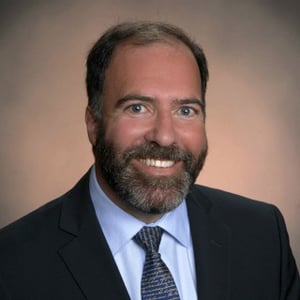
Professor of Law, Widener University Commonwealth Law School
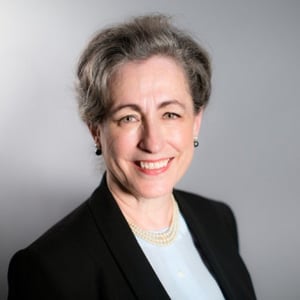
Senior Litigation Counsel, New Civil Liberties Alliance
Peggy Little, Senior Counsel at New Civil Liberties Alliance, a new public interest law firm challenging the administrative state founded in 2017 by Professor Philip Hamburger, has over three decades of experience as a trial and appellate litigator in complex, high-stakes regulatory, mass-tort, class-action, products liability, securities, commercial and civil rights litigation representing individuals and high-profile litigants including Fortune 50 companies, financial institutions, public companies, and universities in state and federal courts, including the United States Supreme Court.
Peggy is a graduate of Yale College and Yale Law School, where she was awarded the Potter Stewart Prize. She was a law clerk to the Hon. Ralph K. Winter on the U.S. Court of Appeals for the Second Circuit. Prior to starting her own trial and appellate law firm in 1997, where she was appellate consulting counsel to the New Haven firefighters in Ricci v.DeStefano, a landmark 2009 United States Supreme Court decision, Peggy was a partner at Tyler, Cooper & Alcorn in New Haven, Connecticut. From 2004 to early 2018, Peggy directed, part-time, the Federalist Society Pro Bono Center.
Peggy has participated in many national conferences and symposia addressing issues of current importance in constitutional law – specifically state and federal constitutional questions regarding the separation of powers and the first amendment – and regularly speaks, blogs and publishes on the topic of the unconstitutional exercise of governmental power. In May of 2017, she presented her paper, Pirates at the Parchment Gates, to a conference of state and federal judges at the Law and Economics Center at the Antonin Scalia Law School. Her work has been published by law reviews, legal publications, the Federalist Society, the Wall Street Journal, Law and Liberty and the Manhattan Institute.
Recent publications include: How the SEC silences its critics, The SEC should listen to Sen. Cotton, Lucia v. SEC, Opening Salvos in the Opioid Litigation Wars, Straight Dope on the Opioid Crisis
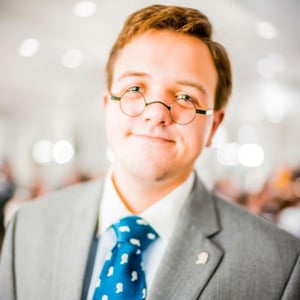
Adam Griffin is a graduate of the University of North Carolina School of Law. During law school, he served as a research assistant to Professor Stephen E. Sachs and UNC Law Dean Martin Brinkley. After law school, Adam spent two years litigating for liberty at the Institute for Justice as an inaugural Law and Liberty Fellow. He then served as a law clerk to Chief Judge Richard E. Myers in the United States District Court for the Eastern District of North Carolina, and previously worked at Pacific Legal Foundation and the Civil Rights Division of the Department of Justice.
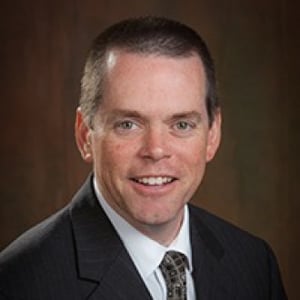
Associate Professor of Law,, St. Thomas University College of Law
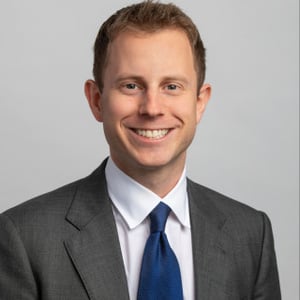
Attorney, Institute for Justice
Andrew Ward is an attorney with the Institute for Justice. He is a leader in IJ’s new Fresh Start practice, which challenges laws that unfairly prevent people with criminal records from earning an honest living.
Before joining IJ, Andrew clerked for Judge Edward Korman of the U.S. District Court for the Eastern District of New York. He has also been a litigation associate at the New York office of Sullivan & Cromwell and a law clerk to Judge Raymond Gruender of the U.S. Court of Appeals for the Eighth Circuit.
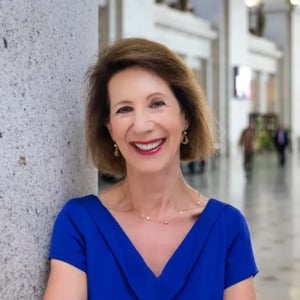
Distinguished Fellow, Energy Policy Research Foundation
Diana Furchtgott-Roth, an Oxford-educated economist, is an Adjunct Professor at George Washington University and a Distinguished Fellow at the Energy Policy Research Foundation. She writes and comments regularly on energy, trade law, tariff authority, and regulatory policy, including recent work on Section 301 and executive trade power. From 2022 until February 2026, Diana headed the Center for Energy, Climate, and Environment at The Heritage Foundation. In President Trump's first term, she was Deputy Assistant Secretary for Research and Technology at the U.S. Department of Transportation and Acting Assistant Secretary for Economic Policy at the U.S. Department of Treasury. She served in the White House under Presidents Reagan, George H.W. Bush, and George W. Bush, including as Chief of Staff of the President's Council of Economic Advisers and Chief Economist of the U.S. Department of Labor, and has testified before Congress on economic and regulatory policy. Diana is the author or coauthor of six books, including Regulating to Disaster, and hundreds of articles in The Wall Street Journal, The Washington Post, The New York Times, National Review, Forbes, the UK’s Daily Telegraph and the New York Post.
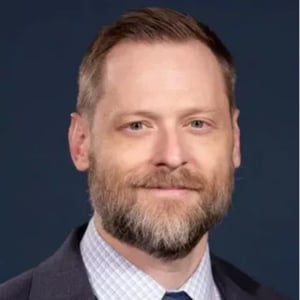
Litigation Director, Center for Individual Rights
Caleb Kruckenberg is CIR’s Litigation Director.
Caleb previously worked as a prosecutor, a public defender, a lobbyist for a national advocacy organization and, most recently, an impact litigator protecting the separation of powers at both the Pacific Legal Foundation and the New Civil Liberties Alliance. He has won major victories against numerous federal agencies, including the U.S. Department of Justice, Department of Labor, Bureau of Alcohol Tobacco and Firearms, and the Securities and Exchange Commission. He is also proud to have sued every U.S. attorney general, eight so far, since he has been litigating against the government on behalf of liberty-minded clients. Caleb has also argued more than 20 times in the U.S. Courts of Appeals, winning cases in 8 of the 12 regional circuit courts.
He graduated cum laude from Temple University Beasley School of Law in Philadelphia, where he was the lead articles editor for the Temple Law Review. Caleb also attended the Pennsylvania Academy of the Fine Arts, where he studied figurative painting.
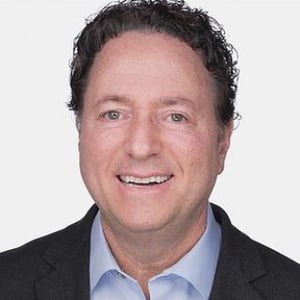
President, Committee for Justice
Curt Levey is President of the Committee For Justice, an organization devoted to advancing constitutionally limited government and individual liberty. He is a veteran of Supreme Court and other judicial confirmation battles and serves on the executive committee of the Federalist Society's Civil Rights Practice Group.
After graduating Harvard Law School with honors and clerking for the U.S. Court of Appeals for the Sixth Circuit, Mr. Levey served as Director of Legal & Public Affairs at the Center for Individual Rights (CIR). There he worked on landmark Supreme Court cases, including the University of Michigan affirmative action cases and the successful constitutional challenge to the Violence Against Women Act. After CIR, Mr. Levey headed the Title IX policy group at the U.S. Department of Education.
Before attending law school, Mr. Levey earned an M.S. and B.A. in computer science from Brown University and worked in the field of artificial intelligence (AI). He invented a new type of AI technology, for which he wrote a successful patent application.
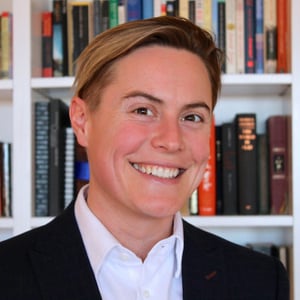
Associate Professor of Legal Studies & Business Ethics, The University of Pennsylvania Wharton School of Business
Amanda Shanor is an Assistant Professor at the University of Pennsylvania Wharton School, where her scholarship focuses on constitutional and administrative law, and in particular the First Amendment.
Shanor is a graduate of Yale Law School and Yale College, and a PhD candidate in law at Yale University. She served as a law clerk to Judges Cornelia T.L. Pillard and Judith W. Rogers on the D.C. Circuit, and Judge Robert W. Sweet in the Southern District of New York. She has taught at both Yale and Georgetown law schools and has published in the New York University Law Review, the Harvard Law Review Forum, and the Yale Law Journal Forum, among others. She is a contributor to Take Care and the co-author of a textbook on counterterrorism law.
Prior to joining the academy, Amanda worked in the National Legal Department of the American Civil Liberties Union on the organization’s Supreme Court litigation, including Masterpiece Cakeshop. Previously, she litigated a number of constitutional and national security cases with Professor David Cole, including Humanitarian Law Project v. Holder, while a fellow at Georgetown.
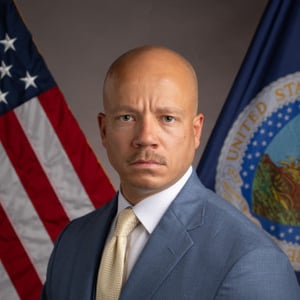
Assistant Secretary for Civil Rights, U.S. Department of Agriculture
Devon Westhill is the Assistant Secretary for Civil Rights at the U.S. Department of Agriculture. The U.S. Senate confirmed President Donald Trump’s nomination of Westhill on October 7, 2025.
Westhill returns to the USDA where he previously headed the civil rights office as Deputy Assistant Secretary in President Trump’s first term. His previous government appointments also include service at the U.S. Department of Labor, liaison to the Administrative Conference of the U.S., and liaison to the White House Initiative on Historically Black Colleges and Universities. Prior to returning to government service, Westhill was President and General Counsel of a nonprofit civil rights organization.
Westhill has testified on civil rights matters before Congress, federal agencies, and as an expert witness in federal court. He has spoken hundreds of times at college campuses, conferences, and on radio and TV programs, and he is frequently quoted in print publications, and his writing has appeared in numerous national outlets. A U.S. Navy veteran, Westhill earned his BA from the University of North Carolina at Chapel Hill and his JD from the University of Florida.
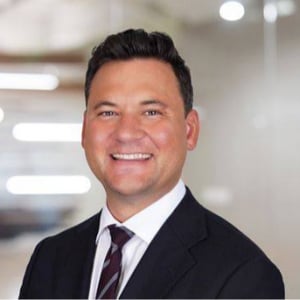
Senior Litigation Counsel, The Fairness Center
Dave Dorey is a seasoned labor and employment attorney with more than a decade of experience guiding clients through complex workplace issues and high-stakes litigation. Bringing unique insights from his distinguished service in the federal government, including as Counsel to the Solicitor at the U.S. Department of Labor and Chief of Staff for Strategy, Policy and Plans at the U.S. Department of Homeland Security, he represents businesses across industries – including trade associations, nonprofits, technology companies, construction and agriculture firms, and consultancies – on the full spectrum of labor and employment matters. Dave has particular experience in handling administrative law matters including engaging in agency rulemaking processes and both challenging and defending agency rules.
Before joining Fisher Phillips, Dave led the Labor & Employment Practice Group at a full-service business law firm. A practical problem solver and trusted advisor, Dave regularly counsels clients on employment policies, regulatory compliance, workplace investigations, and risk management, and represents them in administrative proceedings, rulemaking and other administrative law challenges, and litigation involving wage and hour claims, noncompete and trade secrets disputes, class actions, and allegations of employment discrimination. His practice spans federal and state trial and appellate courts, as well as administrative tribunals.
Dave’s government background, which also includes service as Deputy Chief of Staff for Operations at the U.S. Department of Commerce, lends him a deep understanding of regulatory and administrative processes and enables him to effectively represent clients in government investigations, rulemaking challenges, and agency proceedings.
An active member of the community, Dave serves on the Board of Directors of Child Justice, Inc., a Maryland nonprofit that advocates for abused children.
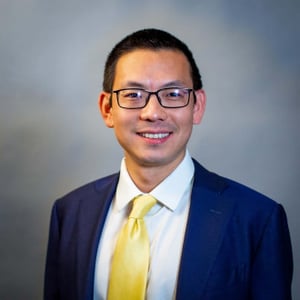
Litigation Counsel, New Civil Liberties Alliance
Sheng Li is Litigation Counsel for the New Civil Liberties Alliance. Prior to joining NCLA, Sheng served as Counselor to the Administrator of Wage and Hour at the U.S. Department of Labor. In that role, he led numerous efforts to remove or simplify unduly burdensome regulations. He has also worked in the private sector as a litigation associate at Patterson Belknap Webb & Tyler and at Kirkland & Ellis.
Sheng is a graduate of Johns Hopkins University and Yale Law School, where he was managing editor of the Yale Journal of International Law. After graduating law school, Sheng served as law clerk to the Hon. Danny J. Boggs on the U.S. Court of Appeals for the Sixth Circuit.
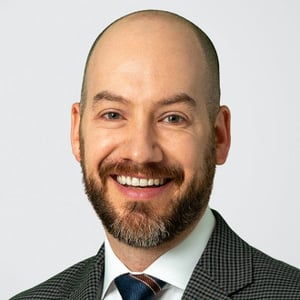
Partner, Holland & Knight LLP
Timothy Taylor is an employment and litigation partner with Holland & Knight LLP, where he was also previously an associate. He represents clients in federal courts and before federal agencies in a variety of disputes. He has special expertise in employment law, the Administrative Procedure Act, the False Claims Act, and appeals. Before rejoining Holland & Knight, Mr. Taylor served as the Deputy Solicitor of Labor. In that position, he oversaw a wide portfolio of litigation, enforcement, rulemaking, and legal counseling for the agency’s more than 450 attorneys. He previously served as the Department of Labor’s Chief of Staff, and in other senior policy positions in the Department. He also served as the employment counsel and as an investigative attorney for the Department of the Treasury’s Office of the Special Inspector General for Pandemic Recovery.
Mr. Taylor clerked for the Honorable Harris Hartz of the U.S. Court of Appeals for the Tenth Circuit and the Honorable Charles Lettow of the U.S. Court of Federal Claims. He graduated summa cum laude with a B.A. from Brigham Young University and cum laude with a J.D. from Harvard Law School, where he was an editor of the Harvard Law Review and the Harvard Journal of Law and Public Policy. He lives in Virginia with his wife and two children.
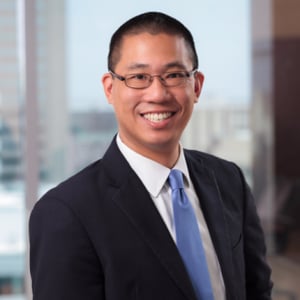
Chair, Issues & Appeals, Hunton Andrews Kurth LLP
The former Solicitor General of West Virginia, Mr. Lin has been on the front lines of many precedent-setting cases in appellate courts across the country, including in a US Supreme Court victory that George Will called “the court’s most severe rebuke of a president” since the Truman administration. Having argued more than 60 appeals, he brings to clients a well-honed ability to identify the most persuasive issues for appeal and a practiced understanding of how best to frame complex legal questions in appellate courts.
With experience in the private sector and multiple branches of government, Mr. Lin’s practice has spanned a wide range of issues, including major questions of constitutional and administrative law at the federal and state levels. On behalf of more than two dozen states, he won a stay from the US Supreme Court of the EPA’s Clean Power Plan. Described by the New York Times as an “unprecedented” order, the stay was the first time the Supreme Court had ever put a regulation on hold before review by a federal appeals court. In that same case, Elbert argued before the en banc DC Circuit in an historic proceeding that one commenter quoted in E&E News compared to “the NBA All-Star Game.” At the state level, Elbert led the effort that persuaded the West Virginia Supreme Court of Appeals to overturn an injunction of the state’s right-to-work law.
In 2013, Mr. Lin was appointed the Solicitor General of West Virginia. During his four-and-a-half year tenure, he served as a member of the Attorney General’s senior management team, oversaw all civil and criminal appeals, and argued nearly two dozen cases in federal and state appellate courts. He authored more than twenty-five briefs in the US Supreme Court and more than forty-five formal Opinions of the Attorney General.
Earlier in his career, Mr. Lin served as a trial attorney in the Federal Programs Branch of the US Department of Justice’s Civil Division, where he received a Special Service Award. He has also been a law clerk at all three levels of the federal judiciary: for Justice Clarence Thomas on the US Supreme Court; for Judge William H. Pryor Jr. on the US Court of Appeals for the Eleventh Circuit; and for Senior Judge Robert E. Keeton on the US District Court for the District of Massachusetts.
Mr. Lin speaks regularly on a wide variety of topics, including constitutional law, administrative law, environmental law, state and federal relations, the US Supreme Court, and appellate practice. He has testified before Congress, and has spoken at the national conventions of the American Bar Association, the Association of Corporate Counsel, the National Asian Pacific American Bar Association, the Federalist Society, Americans for Prosperity, and the American Legislative Exchange Council. He is an elected member of the American Law Institute, a public member of the Administrative Conference of the United States, and a fellow of the American Academy of Appellate Lawyers.
Mr. Lin is admitted to practice in the following federal courts: the Supreme Court of the United States; the First, Second, Third, Fourth, Fifth, Sixth, Seventh, Eighth, Ninth, Eleventh, D.C., and Federal Circuits; the District of Massachusetts; the Northern and Southern Districts of West Virginia; and the Eastern and Western Districts of Virginia.

Barbara K. Olson Memorial Lecture
Richard A. Epstein
2022 National Lawyers Convention
On September 11, 2001, at the age of 45 and at the height of her...
Woke, Smoke, or Smart: Regulators Push for ESG
Dalia Osman Blass, Andrew Oldham, Christine S. Wilson, Jonathan Berry, Douglas C. Geho
2022 National Lawyers Convention
Executive branch agencies such as the SEC, CFTC, FTC and others have recently used their...
Is the National Association of Attorneys General in Need of Reform?
Stephanos Bibas, O.H. Skinner, Jonathan Skrmetti, Christopher Toth
2022 National Lawyers Convention
The National Association of Attorneys General (NAAG) is a nonpartisan association founded in 1907 that...
PG-15 FedSoc Study Break: The Future of American Democracy: Merrill v. Milligan & Moore v. Harper
Michael R. Dimino
30 Minutes. Your Questions. Their Answers.
The Federalist Society's Free Speech & Election Law Practice Group, Student Division & Baylor Law School...
Courthouse Steps Oral Argument: SEC v. Cochran
Margaret A. Little
On November 7, 2022, the U.S. Supreme Court will hear oral argument in Michelle Cochran...
Tiwari v. Friedlander: Which Rational Basis Test is it Anyway?
Adam F. Griffin, David Upham, Andrew H. Ward
In Tiwari v. Friedlander, the Petitioners ask the Supreme Court to grant certiorari to address...
Litigation Update: Garrison v. U.S. Dept. of Ed.: A Challenge to Biden’s Student Loan Forgiveness
Diana Furchtgott-Roth, Caleb Kruckenberg
In August 2022, the Biden administration announced plans to cancel up to $20,000 in student...
Courthouse Steps Oral Argument: SFFA v. Harvard
Curt Levey, Amanda Shanor, Devon Westhill
On October 31, 2022, the U.S. Supreme Court will hear Students for Fair Admissions Inc....
Litigation Update: Helix Energy v. Hewitt
David R. Dorey, Sheng Li, Timothy Taylor
The Regulatory Transparency Project
Some employers were surprised by the en banc Fifth Circuit’s December 2021 decision in Helix...
PG-15 FedSoc Study Break: My Experience as a State Solicitor General & West Virginia v. EPA
Elbert Lin
The Federalist Society's Federalism & Separation of Powers Practice Group, Student Division & University of Miami School...