
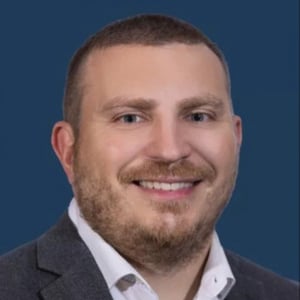
Legal Policy Director, Pacific Legal Foundation
Daniel Dew directs Pacific Legal Foundation’s legal policy efforts. The legal policy team fights for individual liberty in the other two branches of government by finding principled solutions to complex problems.
Daniel has led numerous successful public policy campaigns, including home equity theft reform, judicial bias reform, emergency powers reform, and prior to his time at PLF, civil asset forfeiture reform, sentencing reform, and removing government-imposed barriers to employment.
Before joining PLF, Daniel was a legal fellow at The Buckeye Institute in Columbus, Ohio, and a visiting legal fellow at The Heritage Foundation’s Meese Center for Legal and Judicial Studies.
Daniel served on the Ohio Supreme Court’s Task Force to Examine Ohio’s Bail System, and Ohio’s Justice Reinvestment 2.0 Ad Hoc Committee. He has also served as president of the Columbus, Ohio lawyers chapter of the Federalist Society, and chaired the Ohio State Bar Association’s Criminal Justice Committee.
He earned his law degree from Cleveland Marshall College of Law and his undergraduate degree from Utah State University.
When he’s not battling bureaucrats, Daniel coaches baseball, trains for marathons (very slowly), is constantly disappointed by Cleveland sports teams, and keeps busy with his wife, Amanda, and their four children.
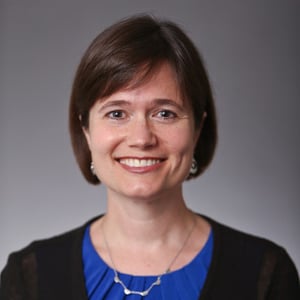
Senior Director, Liberty & National Security Program, Brennan Center for Justice at New York University Law School
Elizabeth (Liza) Goitein is senior director of the Brennan Center for Justice’s Liberty & National Security Program.
Goitein is a nationally-recognized expert on presidential emergency powers, government surveillance, and government secrecy. Her writing has been featured in major newspapers and magazines including the New York Times, Washington Post, Wall Street Journal, USA Today, Los Angeles Times, The Atlantic Magazine, and The New Republic, and she has appeared frequently on MSNBC, CNN, and NPR. She has testified on several occasions before the Senate and House Judiciary Committees.
Before coming to the Brennan Center, Goitein served as counsel to Senator Russ Feingold, chairman of the Constitution Subcommittee of the Senate Judiciary Committee, and as a trial attorney in the Federal Programs Branch of the Civil Division of the Department of Justice. Goitein graduated from Yale Law School and clerked for the Honorable Michael Daly Hawkins on the U.S. Court of Appeals for the Ninth Circuit. In 2021–22, she was a member of the inaugural class of Senior Practitioner Fellows at the University of Chicago’s Center for Effective Government.

Senior Fellow and Director of Constitutional Studies, Manhattan Institute
Ilya Shapiro is a senior fellow and director of constitutional studies at the Manhattan Institute and a contributing editor of City Journal. Previously he was executive director and senior lecturer at the Georgetown Center for the Constitution, and before that a vice president of the Cato Institute.
Shapiro is the author of Lawless: The Miseducation of America’s Elites (2025) and Supreme Disorder: Judicial Nominations and the Politics of America’s Highest Court (2020), coauthor of Religious Liberties for Corporations? (2014), and editor of 11 volumes of the Cato Supreme Court Review (2008-18). He has contributed to a variety of academic, popular, and professional publications, including the Wall Street Journal, Harvard Journal of Law & Public Policy, Washington Post, Los Angeles Times, USA Today, National Review, and Newsweek. He also regularly provides commentary for various media outlets, writes the Shapiro’s Gavel newsletter on Substack, and once appeared on the Colbert Report.
Shapiro has testified many times before Congress and state legislatures and has filed more than 500 amicus curiae “friend of the court” briefs in the Supreme Court. He lectures regularly on behalf of the Federalist Society, is a member of the board of fellows of the Jewish Policy Center, was an inaugural Washington Fellow at the National Review Institute, and has been an adjunct law professor at the George Washington University and University of Mississippi. He is also the chairman of the board of advisers of the Mississippi Justice Institute, a barrister in the Edward Coke Appellate Inn of Court, and a former member of the Virginia Advisory Committee to the U.S. Commission on Civil Rights.
Earlier in his career, Shapiro was a special assistant/adviser to the Multi-National Force in Iraq on rule-of-law issues and practiced at Patton Boggs and Cleary Gottlieb. Before entering private practice, he clerked for Judge E. Grady Jolly of the U.S. Court of Appeals for the Fifth Circuit. He holds an AB from Princeton University, an MSc from the London School of Economics, and a JD from the University of Chicago Law School.

Professor of Law, Antonin Scalia Law School, George Mason University
ILYA SOMIN is Professor of Law at George Mason University and the B. Kenneth Simon Chair in Constitutional Studies at the Cato Institute. His research focuses on constitutional law, property law, democratic theory, federalism, and migration rights. He is the author of Free to Move: Foot Voting, Migration, and Political Freedom (Oxford University Press, revised and expanded edition, 2022), Democracy and Political Ignorance: Why Smaller Government is Smarter (Stanford University Press, revised and expanded second edition, 2016), and The Grasping Hand: Kelo v. City of New London and the Limits of Eminent Domain (University of Chicago Press, 2015, rev. paperback ed., 2016), coauthor of A Conspiracy Against Obamacare: The Volokh Conspiracy and the Health Care Case (Palgrave Macmillan, 2013), and co-editor of Eminent Domain: A Comparative Perspective (Cambridge University Press, 2017). Democracy and Political Ignorance has been translated into Italian and Japanese.
Somin’s work has appeared in numerous scholarly journals, including the Yale Law Journal, Stanford Law Review, Northwestern University Law Review, Georgetown Law Journal, Critical Review, and others. Somin has also published articles in a variety of popular press outlets, including the New York Times, Washington Post, Wall Street Journal, Los Angeles Times, CNN, NBC, The Atlantic, USA Today, Boston Globe, US News and World Report, South China Morning Post, National Law Journal and Reason. He has been quoted or interviewed by the New York Times, Washington Post, Wall Street Journal, Time, Newsweek, The Economist, the Christian Science Monitor, the Financial Times, The Guardian, the Associated Press, CBS, MSNBC, NPR, BBC, Reuters, the Canadian Broadcasting Corporation, the Australian Broadcasting Corporation, Radio Free Europe/Radio Liberty, Al Jazeera, and the Voice of America, among other media.
Somin’s writings have been cited in decisions by the United States Supreme Court, multiple state supreme courts and lower federal courts, and the Supreme Court of Israel. He is co-counsel for the plaintiffs in VOS Selections, Inc. v. Trump, a case challenging the constitutionality of President Trump’s “Liberation Day” tariffs. Somin has testified on the use of drones for targeted killing in the War on Terror before the US Senate Judiciary Subcommittee on the Constitution, Civil Rights, and Human Rights. In 2009, he testified on property rights issues at the United States Senate Judiciary Committee confirmation hearings for Supreme Court Justice Sonia Sotomayor. Somin writes regularly for the popular Volokh Conspiracy law and politics blog, now affiliated with Reason magazine (previously affiliated with the Washington Post from 2014 to 2017). From 2006 to 2013, he served as Co-Editor of the Supreme Court Economic Review, one of the country’s top-rated law and economics journals.
Somin has served as a visiting professor at the University of Pennsylvania Law School. He has also been a visiting professor or scholar at the Georgetown University Law Center, the University of Hamburg, Germany, the University of Torcuato Di Tella in Buenos Aires, Argentina, Uriel Reichman University in Israel, and Zhengzhou University in China. He is a University Affiliate of the Schar School of Policy and Government at George Mason University, and an affiliated faculty member of the George Mason University Institute for Immigration Research. Before joining the faculty at George Mason, Somin was the John M. Olin Fellow in Law at Northwestern University Law School in 2002-2003. In 2001-2002, he clerked for the Hon. Judge Jerry E. Smith of the U.S. Court of Appeals for the Fifth Circuit. Professor Somin earned his B.A., Summa Cum Laude, at Amherst College, M.A. in Political Science from Harvard University, and J.D. from Yale Law School.
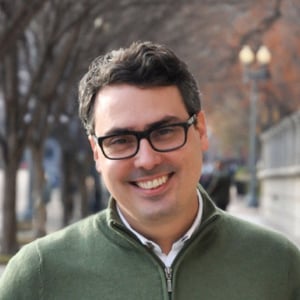
Executive Director, Coin Center
Jerry Brito is executive director of Coin Center, a non-profit research and advocacy center focused on the public policy issues facing cryptocurrency technologies such as Bitcoin.
Now, steel yourself for some serious signaling and credentialism:
Jerry lives in Annandale, Virginia, with his wife Kathleen, daughter Penny Lane, and their dog Jerkface.
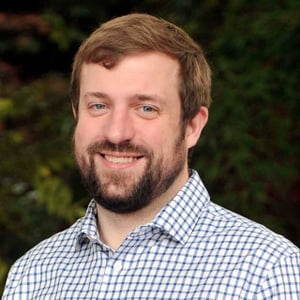
Assistant Professor of Law, Willamette University
Professor Grey’s research focuses on the legal design and regulation of money and finance, including digital fiat currency, as well as broader issues of law and political economy. He teaches Contracts, Business Organizations, and Securities Regulation. He previously co-taught seminars on Fintech and Monies with Professor Robert Hockett at Cornell Law School, where he was a fellow with the Clarke Business Law Institute’s Program on the Law and Regulation of Financial Institutions and Markets, and facilitated a reading group on Law, Money, and Finance at Columbia Law School with Professor Jeffrey N. Gordon.
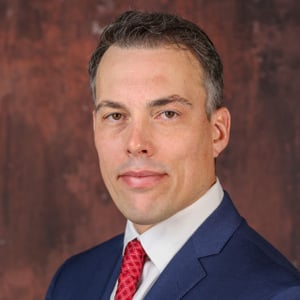
Lecturing Fellow, Duke University
Lee Reiners is a lecturing fellow at the Duke Financial Economics Center at Duke University. At Duke, Reiners has taught classes on FinTech Law and Policy, Cryptocurrency Law and Policy, Financial Regulatory Policy, Climate Change and Financial Markets, and Cybersecurity Law and Policy. Reiners is widely recognized for his unbiased commentary and analysis on cryptocurrency regulation, and he has testified three times on the subject before the U.S. Congress.
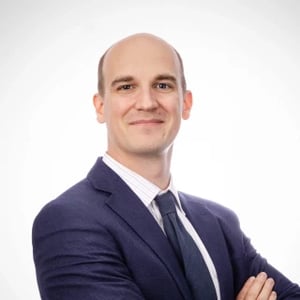
Managing Partner, Boyden Gray PLLC
Michael Buschbacher is the managing partner of Boyden Gray PLLC. He represents public and private companies, trade associations, non-profits, and individuals in high-stakes litigation and administrative proceedings, with a particular focus on environmental and energy matters.
In addition to trial-level work, Mr. Buschbacher maintains an active appellate practice, both as merits counsel and as counsel for amici curiae. He has written amicus briefs quoted by the Seventh and Ninth Circuits. And his Supreme Court advocacy has been cited by The New Yorker, The New York Times, and E&E News. Mr. Buschbacher’s commentary on legal issues has been published in The Wall Street Journal, Newsweek, and The American Conservative.
Before joining the firm, Mr. Buschbacher served at the U.S. Department of Justice as counsel to the Assistant Attorney General for the Environment and Natural Resources Division. There, he advised senior Department leadership, served as the lead attorney on several lawsuits, and helped draft policy memoranda for the Department on the proper scope and procedure for environmental enforcement. Prior to serving in the government, Mr. Buschbacher was an associate in the D.C. office of Sidley Austin.
Mr. Buschbacher is a former clerk to Judge Alice M. Batchelder of the U.S. Court of Appeals for the Sixth Circuit and to Magistrate Judge Paul R. Cherry of the U.S. District Court for the Northern District of Indiana.
Mr. Buschbacher holds a B.A. in Music and Germanic Studies from Indiana University and a J.D., magna cum laude, from Notre Dame Law School.

Senior Manager, Clean Energy, World Resources Institute
Jennifer Chen, Senior Manager at World Resources Institute, helps shape electricity, transmission and governance policies with an eye toward modernizing grid infrastructure, scaling up clean energy and driving cost-effective electrification. She has written and presented on these topics, including testifying before the U.S. Congress and the U.S. Federal Energy Regulatory Commission (FERC).
Previously, Jennifer led federal electricity policy work at the Nicholas Institute, a think tank for environmental policy solutions at Duke University. She was an attorney with the Natural Resources Defense Council, where she spearheaded environmental NGO coalition efforts to advocate for an efficient and flexible power system. She also has experience working with electricity customer and renewable energy groups as an independent consultant and began her energy career at FERC.
Jennifer earned a J.D. from New York University and a Physics Ph.D. from the University of Chicago. She is a member of the California Bar and the District of Columbia Bar and is admitted to the U.S. Court of Appeals for the District of Columbia Circuit. She is a Senior Fellow in electricity policy at R Street, a board member at New Energy Economics, and a member of the U.S. Department of Energy Electricity Advisory Committee.
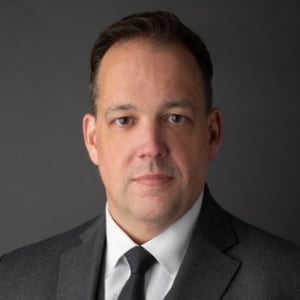
Counsel, Boyden Gray PLLC
Jim Wedeking is counsel at Boyden Gray PLLC. He has extensive experience with environmental regulations, providing compliance counseling for large industrial and agricultural companies and their related trade associations, drafting comments on proposed environmental rulemakings from a variety of federal agencies, and challenging those rules in court. For over 20 years he has helped companies obtain various permits and other authorizations for constructing major infrastructure projects, including fossil fuel-fired power plants, natural gas pipelines, and offshore wind turbines, as well as defend those permits and authorizations through litigation. Mr. Wedeking frequently writes on federal environmental law topics, including for the Washington Legal Foundation.
He has also counseled clients on several Freedom of Information Act matters, including the protection of confidential business information from disclosure to third parties and how the Supreme Court’s Food Marketing Institute v. Argus Leader Media decision increased protections for company information provided to regulatory agencies.
Before joining the firm, Mr. Wedeking was counsel in Sidley Austin’s Washington, D.C. environmental, health, and safety practice group. There, he represented industrial companies in defending against civil and criminal enforcement actions and toxic tort suits.
Mr. Wedeking received a J.D., cum laude, from the Catholic University of America Columbus School of Law and a B.A. in Criminology and Criminal Justice from the University of Maryland.
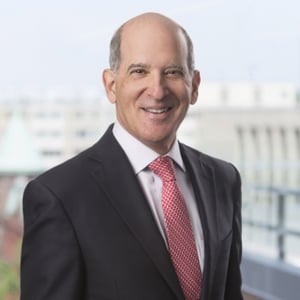
Partner, Steptoe & Johnson
Marc Spitzer served as a former commissioner on the Federal Energy Regulatory Commission (FERC) from July 2006 until December 2011. His practice involves counselling and representing utilities and energy companies before the FERC, at state utility commissions, Congress, federal agencies, and state legislatures. Marc's clients rely on his deep understanding of the energy sector and its policy and regulatory regimes, backed by years in appointed and elected government service. His experience enables him to advise clients through all stages of the energy supply chain from production, transmission, and distribution. Marc’s practice extends to power, gas, and oil proceedings before FERC and he has proven experience in all energy resources.
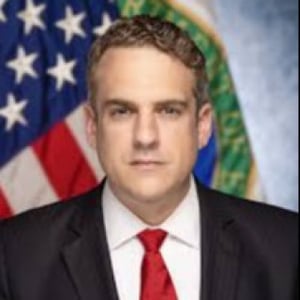
Deputy Secretary of Energy
James P. Danly was sworn in as Deputy Secretary on June 9, 2025.
Before arriving at the Department, Deputy Secretary Danly was a partner and the Energy Regulatory Group leader at Skadden in Washington, D.C. This followed his service at the Federal Energy Regulatory Commission, first as the Commission’s general counsel then as the commissioner and chairman.
Deputy Secretary Danly was an officer in the United States Army. He served two tours in Iraq, receiving a Bronze Star and a Purple Heart.
A graduate of Yale University, Deputy Secretary Danly earned his J.D. from Vanderbilt University Law School. He clerked for Judge Danny J. Boggs of the Sixth Circuit.

Professor of Law, Antonin Scalia Law School, George Mason University
Adam Mossoff is Professor of Law at Antonin Scalia Law School, George Mason University. He has published extensively on why patents, copyrights, and other intellectual property rights have been—and should be—legally secured to innovators and creators as property rights. His scholarship has been relied on by the United States Supreme Court, by lower federal courts, and by U.S. federal agencies. He has been invited to testify numerous times before the U.S. Senate and the House of Representatives on intellectual property legislation. His writings on intellectual property policy have also appeared in the Wall Street Journal, New York Times, Forbes, Investors Business Daily, and in other media outlets. His journal articles can be downloaded here.
Professor Mossoff is a longstanding member of the Executive Committee of the Intellectual Property Practice Group of the Federalist Society, on which he served as Chairperson from 2016-2018, and he is Chair of the Intellectual Property Working Group of the Regulatory Transparency Project of the Federalist Society. He is a Senior Fellow and Chair of the Forum for Intellectual Property at the Hudson Institute, a Visiting Intellectual Property Fellow at the Heritage Foundation, and a member of the Board of Directors of the Center for Intellectual Property Understanding. He is a member of the Intellectual Property Rights Policy Committee of ANSI and he has served as Chair and Vice-Chair of the Intellectual Property Committee of the IEEE-USA, on which he remains a member in good standing.
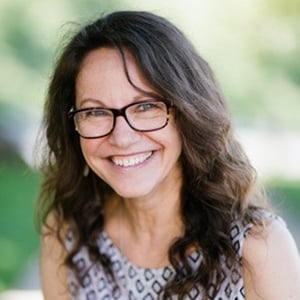
Professor of Law, Pepperdine University
Professor Babette Boliek is a Professor of Law at Pepperdine University. She recently served as Chief Economist of the Federal Communications Commission in Washington, D.C.
Professor Boliek earned her BA with distinction from California State University, Chico, her JD from Columbia University School of Law and her PhD in Economics from the University of California, Davis. While at Columbia, she was both a Harlan Fiske Stone Scholar and a John M. Olin Fellow for Law and Economics. Her doctoral, and much of her subsequent research, focuses on the theoretical and quantitative analysis of legal issues of the U.S. communications industry. Professor Boliek's scholarly research also focuses on issues in administrative, antitrust, and communications and sports law. Professor Boliek clerked for the Honorable Michael B. Mukasey of the U.S. District Court for the Southern District of New York and is admitted to practice in the State of New York.
Prior to joining the Pepperdine Law faculty in 2009, Professor Boliek served as a Senior Fellow at the Information Economy Project at George Mason University School of Law, where she integrated her background in law and applied economics to analyze media, Internet, and telecommunications issues. Professor Boliek's work at George Mason followed and echoed her experience as a Fellow for the Center for Communication Law and Policy, a joint research venture of the University of Southern California Gould School of Law and the Annenberg School of Communication. In addition to her scholarly research at Pepperdine, Professor Boliek is a Visiting Scholar for the American Enterprise Institute and blogs regularly for AEI.org on a variety of technology and telecommunications related issues.
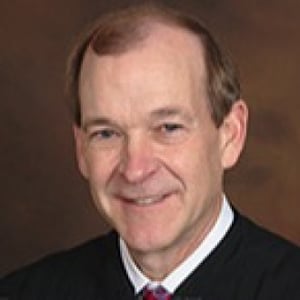
James C. Dever III serves as a United States District Judge for the Eastern District of North Carolina. President George W. Bush nominated Judge Dever (then age 39) in May 2002, and the United States Senate unanimously confirmed him. Before serving as a United States District Judge, Judge Dever served as a United States Magistrate Judge for fifteen months. He served as Chief Judge from October 2011 through October 2018.
Judge Dever received his B.B.A., with high honors, from the University of Notre Dame in 1984. He attended Notre Dame on a four-year ROTC scholarship. He was a Distinguished Military Graduate, was elected to Beta Gamma Sigma, and received the Raymond P. Kent Award (which is awarded to the graduating senior with the highest average in finance/economics classes). He received his J.D., with high honors, from Duke University School of Law in 1987. At Duke, he served as editor-in-chief of the Duke Law Journal, was elected to the Order of the Coif, and received numerous academic awards.
After graduating from law school, he served for one year as a law clerk for Judge J. Clifford Wallace of the U.S. Court of Appeals for the Ninth Circuit. Following his clerkship, Judge Dever was the sole attorney entering active duty in the Air Force selected to serve in the Air Force General Counsel’s Honors Program at the Pentagon. While on active duty, he provided legal advice to and conducted litigation for the Secretary of the Air Force. He served on active duty in the Air Force at the Pentagon from October 1988 until September 1992. At the conclusion of his service, he received the Meritorious Service Medal.
Judge Dever then returned to North Carolina and joined Maupin Taylor & Ellis, P.A. in Raleigh. While in private practice, he engaged in a wide variety of complex civil litigation and served on the law firm’s management committee. He was repeatedly listed in the Best Lawyers in America and in Business North Carolina’s Legal Elite for Employment Law. Since 1997, Judge Dever has taught employment law and criminal procedure as an adjunct law professor at Campbell University’s Norman Adrian Wiggins School of Law. Since 2008, Judge Dever has co-taught a seminar on sentencing and punishment as a senior lecturing fellow at Duke University School of Law. Since 2009, he has taught criminal procedure as a senior lecturing fellow at Duke University School of Law. In 2014, Chief Justice John Roberts appointed Judge Dever to serve on the Advisory Committee on Criminal Rules, where Judge Dever served until 2021. Judge Dever also serves as a member of Duke Law School's Board of Visitors.
Judge Dever’s chambers are in Raleigh, North Carolina.
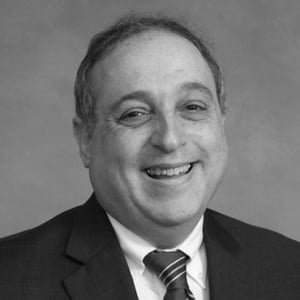
Executive Director, North Carolina Justice Center
Mr. Glazier has held his current position as Executive Director of the North Carolina Justice Center since 2015. The Justice Center focuses on anti-poverty work in the areas of education, immigration, health care, housing, workers’ rights, consumer law, and budget and tax policy.
Prior to his position as Executive Director of the Justice Center, Mr. Glazier served seven terms from 2003-2015 as state representative from Cumberland County in the North Carolina General Assembly. Mr. Glazier received multiple Legislator of Year Awards, and also received the Order of the Long Leaf Pine from Governor McCrory in 2015.
Mr. Glazier received his law degree from Wake Forest University School of Law in 1981 and his undergraduate degree from Penn State University in 1977.
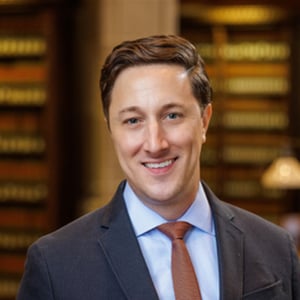
Professor of Law, Notre Dame Law School
Professor Derek Muller is a nationally-recognized scholar in the field of election law. His research focuses on the role of states in the administration of federal elections, the constitutional contours of voting rights and election administration, the limits of judicial power in the domain of elections, and the Electoral College.
He has published more than two dozen academic works, and his op-eds have appeared in the New York Times, the Los Angeles Times, and the Wall Street Journal. He has testified before Congress, and he is a contributor at the Election Law Blog. He is a co-author on a Federal Courts casebook published by Carolina Academic Press. He is also the co-reporter on a new Restatement of the Law, Election Litigation, an effort led by the American Law Institute.
Professor Muller teaches Election Law, Civil Procedure, and Evidence.
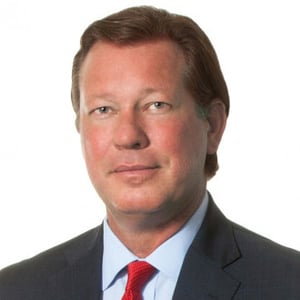
Partner, Nelson Mullins Riley & Scarborough LLP
Phil regularly represents management in labor/employment law and related matters. He advises clients on covenants not to compete and litigates claims involving restrictive covenants, trade secrets, and other business-related litigation. Phil also regularly defends management and employers in employment discrimination cases and counsels management on how to prevent or reduce the risk of these lawsuits.
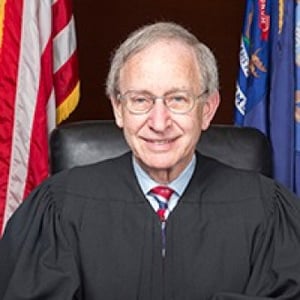
Justice, Michigan Supreme Court
Stephen Markman was appointed Justice of the Michigan Supreme Court on October 1, 1999. He served as the Chief Justice from 2017-2019. Before his appointment, he served as Judge on the Michigan Court of Appeals from 1995-1999. Prior to this, he practiced law with the firm of Miller, Canfield, Paddock & Stone in Detroit.
From 1989-1993, Justice Markman served as United States Attorney, or federal prosecutor, in Michigan, after having been nominated by President George H. W. Bush and confirmed by the United States Senate. From 1985-1989, he served as Assistant Attorney General of the United States, after having been nominated by President Ronald Reagan and confirmed by the United States Senate. In that position, he headed the Department of Justice’s Office of Legal Policy, which served as the principal policy development office within the Department, and which coordinated the federal judicial selection process. Prior to this, he served for seven years as Chief Counsel of the United States Senate Subcommittee on the Constitution, and as Deputy Chief Counsel of the United States Senate Judiciary Committee.
Justice Markman has authored articles for such publications as the University of Michigan Journal of Law Reform, the Detroit College of Law Review, the Stanford Law Review, the University of Chicago Law Review, the American Criminal Justice Law Review, the Barrister’s Law Journal, the Harvard Journal of Law & Public Policy, and the American University Law Review. He has also served as a contributing editor of National Review magazine, and has authored chapters in such books as “In the Name of Justice: The Aims of the Criminal Law,” “Still the Law of the Land,” and “Originalism: A Quarter Century of Debate.”
Justice Markman has taught constitutional law at Hillsdale College since 1993. He has served on the Board of Directors of the Western Michigan University Thomas M. Cooley Law School. He traveled to Ukraine on two occasions on behalf of the State Department, to provide assistance in the development of that nation’s post-Soviet constitution. He is a Fellow of the Michigan Bar Foundation, a Master of the Bench of the Inns of Court, and a member of the One Hundred Club. He has spoken before hundreds of youth, civic, charitable, and legal groups throughout Michigan and nationally, and has coached Little League baseball and basketball. He lives with his wife Mary Kathleen in Mason, and has two sons, James and Charles.
Justice Markman was re-elected to the Supreme Court in 2000, 2004, and 2012. His present term expires January 1, 2021.
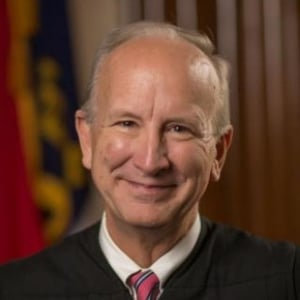
Chief Justice, North Carolina Supreme Court
Chief Justice Paul Newby was born in Asheboro and grew up in Jamestown, N.C. He received his B.A. degree in Public Policy Studies from Duke University and law degree from UNC-Chapel Hill School of Law.
Chief Justice Newby was first elected to the Supreme Court as an Associate Justice in 2004. He was elevated to the highest judicial office in North Carolina in the 2020 election. As Chief Justice, he is head of the Judicial Branch, a co-equal branch of state government with the Legislative and Executive branches. He is entrusted with leading the Judicial Branch and its 7,600 elected officials and employees.
He is an adjunct professor of law at Campbell University and has published a book on the North Carolina Constitution.
Chief Justice Newby’s legal experience includes private practice and corporate inhouse legal counsel. He also served almost 20 years as an Assistant United States Attorney, during which he played an integral role in conducting the undercover sting operation that recovered North Carolina’s original copy of the Bill of Rights, stolen in the aftermath of the Civil War.
Chief Justice Newby is an Eagle Scout and is the recipient of the Heroism Award (for rescuing nine people from a riptide), the God and Service Award, the Silver Beaver Award, and the Scouter of the Year Award. In 2012, he was designated a Distinguished Eagle Scout, a national honor that recognizes both his service to the Boy Scouts and his dedication to public service.
Chief Justice Newby has been married to Macon Tucker Newby since 1983, and they have four children. He is active in his local church, where he serves as a teacher and mentor to young professionals.
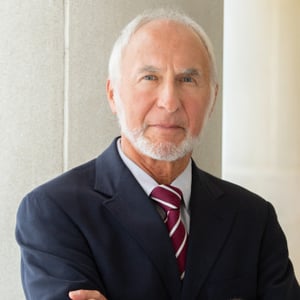
William Rand Kenan Jr. Professor of Law Emeritus, UNC School of Law
John V. Orth joined the Carolina Law faculty in 1978 and serves as the William Rand Kenan, Jr. Professor of Law. He teaches first-year Property, Trusts & Estates, and Legal History. Orth is the author of six books, three of them published by Oxford University Press, and ninety articles and book chapters. His writings cover a wide array of topics including labor law, constitutional law (both federal and state), legal history, wills and trusts, and basic property law. His works have been cited by federal and state courts, including the United States Supreme Court and the North Carolina Supreme Court. He has extensive contacts with Australian law professors and has published several articles comparing American and Australian law.
Orth has a law degree from the Harvard Law School and a Ph.D. in history from Harvard University. After completing his studies, he clerked for Judge John Gibbons of the U.S. Court of Appeals for the 3d Circuit. While teaching, he has maintained contact with the practice of law by consulting on questions concerning property, constitutional law, and wills and trusts.
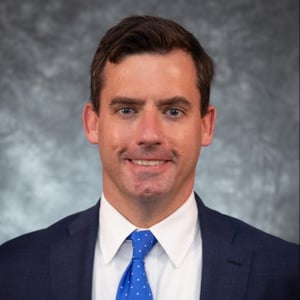
Senior Vice President for Legal Affairs & General Counsel, UNC System Office
As the Senior Vice President and General Counsel in the Office of Legal Affairs, Mr. Tripp provides strategic counsel to the University of North Carolina, the Board of Governors, and President Peter Hans. He leads a team of talented professionals serving the diverse legal needs of a nationally acclaimed university system. In addition, he directly supports the operations of the Board of Governors and staffs the Committee on University Governance.
Mr. Tripp brings to the University a decade of experience in public service from his tenure at the North Carolina Senate, where he served as counsel to the Senate Rules Chairman and later as general counsel and then Chief of Staff to the President Pro Tempore. His practice areas include public law, litigation, administrative procedure, and regulatory compliance. Before entering the public sphere, Mr. Tripp worked in private practice in both Raleigh and Atlanta, Georgia. Mr. Tripp began his legal career serving under and learning from the Honorable United States District Judge Terrence W. Boyle as his law clerk at Elizabeth City.
Mr. Tripp graduated with honors from the Duke University School of Law and obtained his B.A. in history and political science from the University of North Carolina at Chapel Hill. He and his wife are raising their two boys and a girl in Raleigh.
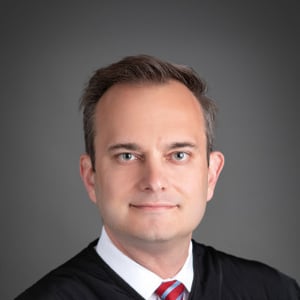
United States Magistrate Judge, Eastern District of North Carolina
Robert T. Numbers, II serves as a United States Magistrate Judge in the United States District Court for the Eastern District of North Carolina.
Judge Numbers received degrees in Political Science and Economics, with honors, from Wake Forest University. After completing his undergraduate work, Judge Numbers obtained his law degree from the University of Notre Dame where he served on the Notre Dame Law Review.
Upon his graduation from law school, Judge Numbers joined the Winston-Salem office of a large, regional law firm. From 2005 until 2010, Judge Numbers’ practice focused on civil rights claims against local municipalities and government contractors. In 2010, Judge Numbers joined the firm’s Raleigh office and concentrated his practice on complex business litigation in state and federal courts.
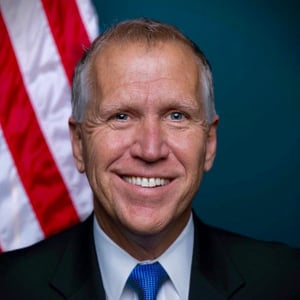
U.S. Senator, United States Senate
Thom was born into a working-class family with his father and mother and five siblings. During his childhood, his family was frequently forced to relocate depending on where his parents could find work. After graduating from high school, Thom was unable to afford college, so he took a job as a warehouse records clerk earning minimum wage. He knows firsthand how difficult it is to raise a family while attending school at night, struggling to make ends meet.
Through hard work and dedication, Thom quickly moved up the corporate ladder, earning his degree at 36 and becoming a top-level executive at PricewaterhouseCoopers and IBM. Thom’s 29-year private sector career in technology and management consulting provided him with a deep understanding of policy-making and the management of complex organizations.
Fueled by a desire to make a difference in his local community, Thom’s involvement in public service began by serving as the PTA president of his daughter’s high school and as a member of the Town of Cornelius Board of Commissioners. In 2006, he was elected to the North Carolina House of Representatives and was selected by his peers to serve as Speaker of the House from 2011 to 2014. As Speaker, Thom played an instrumental role in enacting job-creating policies and reforming North Carolina’s tax and regulatory codes. Thom was elected as U.S. Senator in 2014 and he has focused on pragmatic solutions and delivering results for North Carolina.
Thom lives with his wife Susan in Huntersville, North Carolina, and they are the proud parents of two grown children and two granddaughters.
United States District Court, Western District of North Carolina

What Are the Limits of Emergency Executive Powers?
Daniel J. Dew, Elizabeth Goitein, Ilya Shapiro, Ilya Somin
The use of presidential emergency powers has raised controversy under administrations of both parties. President...
Bitcoin Cowboys: Will Wyoming Become the Next Crypto Capital?
Jerry Brito, Rohan Grey, David Kinitsky, Caitlin Long, Stephen Mihm, Lee A. Reiners
A Regulatory Transparency Project Fourth Branch Video
“Bitcoin Cowboys: Will Wyoming Become the Next Crypto Capital” will premiere on the Federalist Society’s YouTube...
A Global Energy Crisis and the FERC: A Discussion of Challenges and Opportunities [Panel Discussion]
Michael Buschbacher, Jennifer Chen, Jim Wedeking, Marc L. Spitzer
In the last few years, the Federal Energy Regulatory Commission (FERC) has emerged from relative...
A Global Energy Crisis and the FERC: A Discussion of Challenges and Opportunities [Keynote Address]
James P. Danly
In the last few years, the Federal Energy Regulatory Commission (FERC) has emerged from relative...
Should the Government Limit Copyright Protection for E-books?
Adam Mossoff
A Regulatory Transparency Project Fourth Branch Video
In addition to offering physical copies of books, public libraries now offer e-books which can...
The Evolution of Antitrust Laws Relating to College Athletics
Babette E. Boliek
A Regulatory Transparency Project Fourth Branch Video
NCAA rules for student-athletes are based on the assumption that the rules protect the amateur...
Panel 2: The Law of Democracy: Recent and Future Developments in Election Law
James C. Dever, Rick Glazier, Derek T. Muller, Phillip J. Strach
Inaugural North Carolina Chapters Conference
CLE credit anticipated. Featuring: Rick Glazier, Executive Director, North Carolina Justice Center Professor Derek Muller,...
Panel 1: State Constitutionalism in North Carolina
Steve J. Markman, Paul Newby, John Orth, Andrew Tripp
Inaugural North Carolina Chapters Conference
CLE credit anticipated. Featuring: Professor John Orth, William Rand Kenan Jr. Professor of Law, UNC...
Fireside Chat
Robert T. Numbers, Thom Tillis
Inaugural North Carolina Chapters Conference
Featuring: Hon. Thom Tillis, United States Senator Moderator: Hon. Robert T. Numbers, United States Magistrate Judge
Lunch & Introductory Remarks
Frank D. Whitney
Inaugural North Carolina Chapters Conference
Featuring: Hon. Frank D. Whitney, United States District Court, Western District of North Carolina