
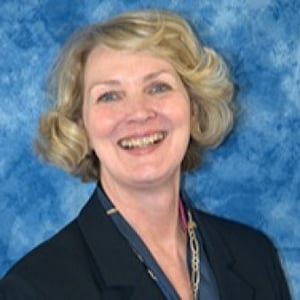
Professor and Director, Prolife Center, University of St. Thomas School of Law
Teresa Collett, J.D., is professor at the University of St. Thomas School of Law, where she serves as director of the school's Prolife Center. Collett received her doctorate at the University of Oklahoma College of Law. As a well-known advocate for the protection of human life and the family, Collett specializes in the subjects of marriage, religion and bioethics in her research.
Collett has published numerous legal articles and is the co-author of a law casebook on professional responsibility and co-editor of a collection of essays exploring “catholic” and “Catholic” perspectives on American law. She is an elected member of the American Law Institute, and has testified before committees of the U.S. Senate and House of Representatives, as well as before legislative committees in several states.
In 2009, Pope Benedict XVI appointed Collett to a five-year term on the Pontifical Council for the Family. Her appointment was renewed by His Holiness Pope Francis until 2016 when the responsibilities of the Council were assumed by the Dicastery for the Laity, Family and Life. In 2013, she served as a delegate to the International Conference on Population and Development (ICPD) for the Mission of the Holy See to the United Nations.
She represented Congressman Ron Paul and various medical groups in the defense of the U.S. federal ban of partial-birth abortion, and the governors of Minnesota and North Dakota defending the N.H. requirement of state parental involvement prior to performance of an abortion on a minor before the U.S. Supreme Court. Collett is often asked to represent the interests of government officials before federal appellate courts. She has served as special attorney general for the states of Oklahoma and Kansas, as well as assisting other state attorneys general in defending laws protecting human life and marriage. Prior to joining St. Thomas in 2003, Collett taught at the South Texas College of Law, where she established the nation's first annual symposium on legal ethics.
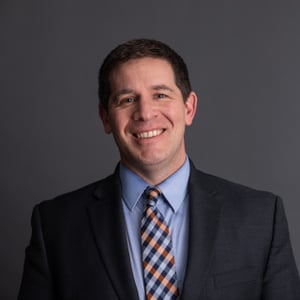
Vice President for Legal Strategy, Stand Together
Casey Mattox is Vice President for Legal Strategy at Stand Together and Senior Advisor at
Americans for Prosperity. In these roles he advocates for and creates strategies and
partnerships to ensure a constitutionally limited government that protects the civil liberties of all
Americans. Prior to joining Stand Together and AFP Casey’s legal career focused on defending
the First Amendment rights of students, faculty, healthcare workers and religious organizations.
Casey has a J.D. from Boston College School of Law and an undergraduate degree from the
University of Virginia. You can find him on Twitter at @CaseyMattox_ and on LinkedIn at
@Casey-Mattox-ST.
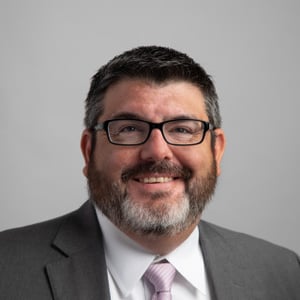
Senior Attorney, Institute for Justice
Paul Avelar is the Managing Attorney of the Institute for Justice Arizona Office. He joined the Institute in March 2010 and litigates free speech, property rights, economic liberty, school choice and other constitutional cases in federal and state courts.
As the head of IJ’s national Braiding Freedom Initiative, Paul represents natural hair braiders across the country to protect their right to earn an honest living. The Initiative uses lawsuits, activism and research to remove laws that require potential braiders to undergo hundreds of costly training hours just to braid hair. Since IJ launched the Braiding Freedom Initiative in 2014, 12 additional states have freed braiders from unnecessary licensing burdens. Paul drafted the model Natural Hair Braiding Protection Act, which has been adopted in Arkansas, Indiana, Iowa, Kentucky, Nebraska, New Hampshire, Texas and South Dakota. He is currently representing braiders in Missouri, where state laws infringe upon their right to earn an honest living.
In his free speech work, Paul has challenged numerous laws that trample First Amendment rights. In Arizona Freedom Club PAC v. Bennett, he represented candidates and independent groups in a successful U.S. Supreme Court challenge to the “matching funds” provision of Arizona’s publicly financed elections system. He represented grassroots groups and individuals in Arizona, Mississippi and Washington, where state laws burdened their political speech by requiring them to register with the government, to navigate complex regulations and to face fines and possible criminal penalties merely because they talked about political issues. In Washington, Paul protected a lawyer’s right to defend, pro-bono, the First Amendment rights of political speakers. Through litigation and legislation, Paul leads the fight against abusive civil forfeiture laws in Arizona and elsewhere.
Paul also co-authored the most comprehensive published study of economic liberty protections in the Arizona Constitution. The Chief Justice of the Arizona Supreme Court appointed Paul to the Task Force on the Review of the Role and Governance Structure of the State Bar of Arizona, where he dissented from the majority report and called on leaders to substantially reform the Bar and state regulation of the practice of law. He often speaks at law schools across the country about constitutional issues and his work at IJ.
Prior to joining IJ-AZ, Paul worked as an attorney in Philadelphia. He clerked for Judge Roger Miner on the 2nd U.S. Circuit Court of Appeals, Justice Andrew Hurwitz on the Arizona Supreme Court, and Judge Daniel Barker on the Arizona Court of Appeals.
Paul graduated manga cum laude from the Arizona State University College of Law in 2004 and was elected to the Order of the Coif. He received his undergraduate degree from Princeton University in 2000.
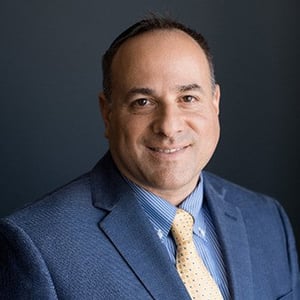
Policy Advisor, Heartland Institute
Jeff Stier is a policy advisor to the Heartland Institute.
He is widely quoted in the media and has written health policy op-eds for The Wall Street Journal, the Los Angeles Times, USA Today, The New York Post, The Washington Examiner, and Foxnews.com. The New York Times, the Associated Press, Reuters, CNN, Fox News, CNBC, MSNBC, NPR and other major outlets have interviewed and quoted Stier on a wide range of topics.
Stier has testified at state and local legislatures throughout the U.S., at FDA scientific hearings and at the Office of Management and Budget. He has also been a voice for freedom at hearings at the United Nations and in Israel’s Knesset. During more than two decades of advancing public health and defending liberty, Stier has been a speaker at CPAC, policy retreats for elected officials and medical and legal conferences.
Stier advises leading investment firms on regulatory and legal risk.
Earlier, Mr. Stier crafted health and environmental policy in the Office of the Mayor during the Giuliani administration in New York City.
Mr. Stier serves on the boards of the non-profit Jewish International Connections and Park City Jewish Collective. While earning his law degree at the Benjamin N. Cardozo School of Law, Mr. Stier served two terms as Editor-In-Chief of the Cardozo Law Forum. Jeff and his canine, BB, served as a Certified Crisis Response Strike Team with NATIONAL Crisis Response Canines, supporting survivors and first-responders.
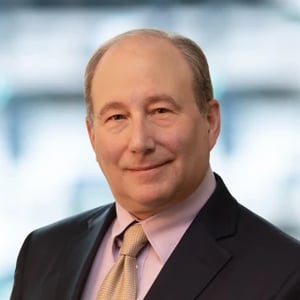
Managing Director, Berkeley Research Group
Dan Troy is the Managing Director at Berkeley Research Group.
Prior to that, he was the Chief Business Officer, Chief Administrative Officer, and General Counsel of Valo in Boston, Massachusetts.
Prior to joining Valo, he served as the Senior Vice President & General Counsel of GlaxoSmithKline and was a member of its Corporate Executive Team. Dan joined GSK in September 2008 and was responsible for leading the company’s legal department in protecting GSK’s intellectual property; managing litigation; supporting business development transactions; and business compliance and risk management. In 2012, Dan led the integration team following the acquisition of Human Genome Sciences, which later resulted in the launch of Benlysta, the first lupus treatment in 50 years. Dan led GSK’s Contributions Committee in the US and also led the Government Affairs, Public Policy and Patient Advocacy team from 2012 until 2014.
Prior to joining GSK, he was a Partner at the Washington law firm Sidley Austin LLP, where he principally represented pharmaceutical companies and trade associations on matters related to the US Food and Drug Administration (FDA) and government regulations. Dan was formerly Chief Counsel for the FDA, where he served as a primary liaison to the White House and the US Department of Health and Human Services.
Dan has chaired the American Bar Association's Section of Administrative Law and is a member of the American Law Institute. He currently chairs the US Chamber of Commerce Litigation Center. He has also chaired the Civil Justice Reform Group, as well as the PhRMA Law Section Executive Committee. He was the 2012 CPR Corporate Leadership Award recipient and, in 2013, was named a 'Legend in the Law' at the Burton Awards.
Dan holds a B.S. in Industrial and Labor Relations from Cornell University and a J.D. from Columbia University School of Law, where he was a member of the Law Review and a Kent Scholar. After graduation from law school, he was a law clerk for the US Circuit Court of Appeals for the District of Columbia Circuit.
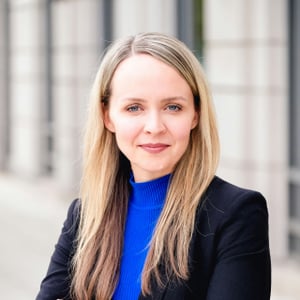
Professor of Law and Faculty Director for the Georgetown Center for the Constitution, Georgetown University Law Center
Stephanie Barclay is a Professor of Law at Georgetown Law School, and the Faculty Director of the Georgetown Center for the Constitution. Her research focuses on the role our different democratic institutions play in protecting minority rights, particularly at the intersection of free speech and religious exercise. Barclay‘s work is published or is forthcoming in leading journals such as the Harvard Law Review, the Chicago Law Review, the University of Pennsylvania Law Review, and the Yale Law Journal Forum. One of her articles was also selected for the 2020 Stanford/Harvard/Yale Junior Faculty Forum. Her work has been featured in many media outlets, including The New York Times, The Wall Street Journal, The Washington Post, USA Today, Bloomberg BNA, The Hill, and Law 360. And her work has also been cited by the U.S. Supreme Court.
Prior to joining Georgetown, Barclay was twice voted Professor of the Year. Barclay has also litigated constitutional cases at both the trial and appellate level, including before the U.S. Supreme Court. Barclay served as a law clerk to Judge N. Randy Smith on the U.S. Court of Appeals for the Ninth Circuit, and to Justice Neil M. Gorsuch of the U.S. Supreme Court.
Barclay is a Faculty Affiliate at the Constitutional Law Center at Stanford Law School; and she is a Nootbaar Fellow at the Nootbaar Institute on Law, Religion, and Ethics at Pepperdine University. She currently serves as the Chair for the AALS Law and Religion Section and as a Member of the Executive Committee for the AALS Constitutional Law Section. She graduated summa cum laude from BYU Law School, where she was elected to the Order of the Coif. She is completing a Ph.D. in Law at Oxford University as a Clarendon Scholar and a Tang Scholar.
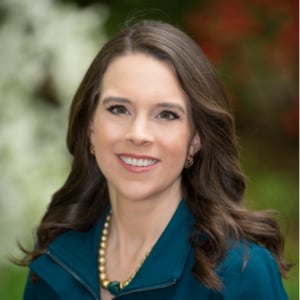
President, JCN
Carrie Campbell Severino is the president of the JCN, and co-author with Mollie Hemingway of the bestselling book Justice on Trial: The Kavanaugh Confirmation and the Future of the Court. As a go-to expert on the confirmation process, Mrs. Severino has been extensively quoted in the media. She regularly appears on television, including FOX, CNN, MSNBC, C-SPAN, and ABC’s This Week.
Severino writes and speaks on a wide range of judicial issues, including the constitutional limits on government, the federal nomination process, and state judicial selection. She has testified before Congress on constitutional questions and briefed Senators on judicial nominations, and regularly files briefs in high-profile Supreme Court cases. She was a law clerk to Supreme Court Justice Clarence Thomas and to Judge David B. Sentelle of the U.S. Court of Appeals for the D.C. Circuit, and is a graduate of Harvard Law School (J.D.), Duke University (B.A., Biology), and Michigan State University (M.A., Linguistics).
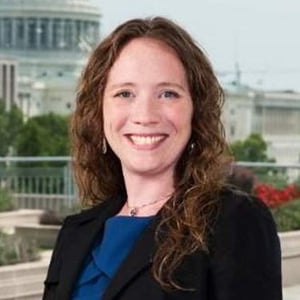
Partner, Luther Strange & Associates
Annie Donaldson Talley is Partner at Luther Strange and Associates. She recently departed the White House after serving as Deputy Assistant to the President and Deputy Counsel to the President. Over the past four years, she provided outside counsel to the Donald J. Trump for President campaign; helped stand up and manage the White House Counsel’s Office; interfaced with agencies across the federal government; and advised the President of the United States, White House Counsel, Chief of Staff and other senior staff across the Executive Office of the President on a broad range of issues from regulatory reform to executive nominations to the day-to-day issues facing the Administration.
Prior to her White House service, Annie Donaldson Talley counseled clients in the non-profit, for-profit, political, and government sectors, as well as high-profile individuals in private practice at Jones Day and Patton Boggs. She provided strategic counseling to clients structuring their affairs to ensure compliance with a web of state and federal laws and represented clients in complex, multi-faceted investigations, leading teams navigating issues of intense public scrutiny.
Annie Donaldson Talley is also a veteran of three presidential campaigns and served in state government. She holds a B.A., summa cum laude, from the University of Alabama and a J.D. from Harvard Law School, where she served on the Harvard Law Review. She lives in Montgomery, Alabama with her husband, Brett.
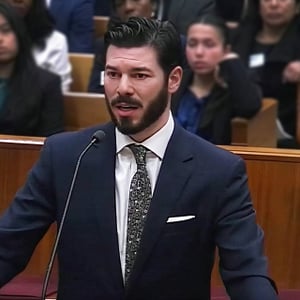
Office of the Florida Attorney General
JEFFREY DESOUSA served as the Acting Solicitor General in the Florida Attorney General’s Office, where he focused on criminal appeals and constitutional litigation, primarily in the United States and Florida Supreme Courts, the Eleventh Circuit Court of Appeal, and the Florida district courts. He is a member of the Florida Bar’s Appellate Court Rules Committee and the First District Appellate American Inn of Court. After graduating with honors from Georgetown Law, Jeffrey served as an appellate attorney for the Miami-Dade Public Defender’s Office. He has worked on hundreds of appellate cases and presented oral argument in approximately 70, including 18 in the Florida Supreme Court.
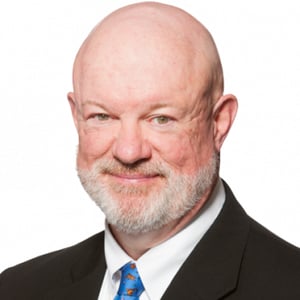
Senior Legal Fellow, the Meese Institute for the Rule of Law, Advancing American Freedom
Paul J. Larkin is a Senior Legal Fellow in the Meese Institute for the Rule of Law at Advancing American Freedom. Paul has held various positions in the federal and state governments throughout his career, such as being an attorney in the Organized Crime and Racketeering Section of the Criminal Division at the U.S. Department of Justice, an Assistant to the Solicitor General in the Office of the Solicitor General at the U.S. Department of Justice, Special Agent-in-Charge and Acting Director of the Criminal Investigation Division at the Environmental Protection Agency, and a member of the Parole Abolition and Sentencing Reform Commission and of the Juvenile Justice Reform Commission in the Office of Virginia Governor George Allen.
He has also worked at Verizon Communications and two law firms in Washington, D.C. His current research is principally in the fields of drug policy, criminal justice policy, and administrative law and policy. He has published numerous articles in law and public policy journals, both in print and online.
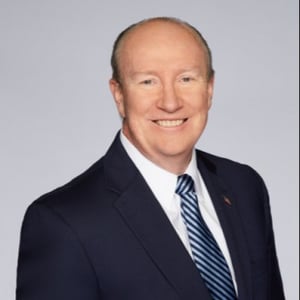
Senior Fellow, National Review
Bestselling author Andrew C. McCarthy is a contributing editor at National Review, a senior fellow at National Review Institute, and a Fox News contributor. He is a former Chief Assistant United States Attorney in the Southern District of New York and led the terrorism prosecution against the “Blind Sheikh” (Omar Abdel Rahman) and eleven other jihadists for conducting a war of urban terrorism against the United States that included the 1993 World Trade Center bombing and a plot to bomb New York City landmarks. During is 20-year career as a prosecutor, he received numerous honors, including the Justice Department’s highest awards. Andy speaks and writes widely on law and national security, radical Islam, politics, and culture. He has testified before Congress as an expert on issues of constitutional law, counterterrorism, and law-enforcement. He is a columnist for The Hill, and his essays and book reviews appear frequently at The New Criterion. His most recent New York Times bestselling book is Ball of Collusion (Encounter Books, 2019), about the Russiagate controversy (an updated version was published in 2020). His other books include Willful Blindness (2008), The Grand Jihad (2010), Spring Fever: The Illusion of Islamic Democracy (2012), and Faithless Execution (2014). He has also written several pamphlets in the Broadside series published by Encounter Books, most recently Islam and Free Speech (2015).
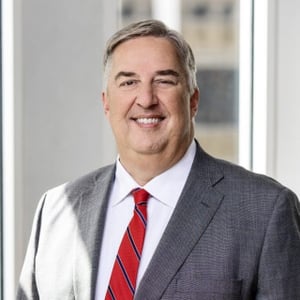
Member, Ifrah Law
After 27 years as a prosecutor, James (“Jim”) Trusty brings to Ifrah Law extensive experience in complex, multi-district white collar litigation, especially in matters involving RICO, The Computer Fraud and Abuse Act, and The Money Laundering Control Act of 1986.
Jim has represented a wide variety of individuals and corporations in the white-collar space. He regularly represents professional athletes, both criminally and civilly, and during 2022 and 2023 he represented President Trump during pre-indictment litigation relating to the Mar-a-Lago and January 6 cases.
Prior to joining Ifrah Law, Jim had a long career in public service, most recently as Chief of the Organized Crime Section at the United States Department of Justice. For seven years, Jim was ultimately responsible for investigating and prosecuting regional, national, and international cases, supervising significant pleadings, and providing strategic and tactical guidance in investigations and multi-defendant trials. In addition to running the RICO Review Unit, which reviewed and approved all criminal RICO cases brought by federal prosecutors, he also was in charge of establishing and promoting policies focused on immigration reform, firearms trafficking, proposed Congressional testimony for DOJ officials, and internet gambling. Significant and sensitive matters on which he worked include the post-conviction review of the Alaska corruption case related to U.S. v. Theodore Stevens and the investigation into allegations of misconduct by a sitting U.S. Attorney and one of her subordinates.
Prior to his work at DOJ, Jim acted as Assistant U.S. Attorney in Greenbelt, Maryland, where he investigated and prosecuted a wide variety of white-collar and other criminal cases, including The Washington area Sniper investigation. He also prosecuted three death penalty cases and was a member of the Attorney General’s Capital Review Committee, responsible for assessing capital-eligible cases such as the Boston Marathon Bomber and the Charleston Church massacre.
In 2018, Jim was appointed by the Governor of Maryland to serve on The Task Force to Study Maryland’s Criminal Gang Statutes. The Task Force assessed the efficacy of existing state laws as they apply to gang-related criminal activity in the state and presented its findings and recommendations to the Governor.
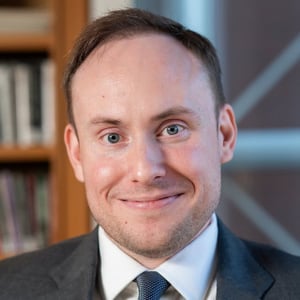
Director, Robert A. Levy Center for Constitutional Studies, Cato Institute
Thomas Berry is the director in the Cato Institute’s Robert A. Levy Center for Constitutional Studies and editor in chief of the Cato Supreme Court Review. Before joining Cato, he was an attorney at Pacific Legal Foundation and clerked for Judge E. Grady Jolly of the U.S. Court of Appeals for the Fifth Circuit. His academic work has appeared in NYU Journal of Law and Liberty, Washington and Lee Law Review Online, and Federalist Society Review. His popular writing has appeared in The Wall Street Journal, National Law Journal, Investor’s Business Daily, National Review Online, and The Hill Online. He has testified before the U.S. Senate, and his work has been cited by the U.S. District Court for the District of Columbia.
Berry holds a J.D. from Stanford Law School, where he was a senior editor on the Stanford Law and Policy Review and a Bradley Student Fellow in the Stanford Constitutional Law Center. He graduated with a B.A. in Liberal Arts from St. John’s College, Santa Fe.
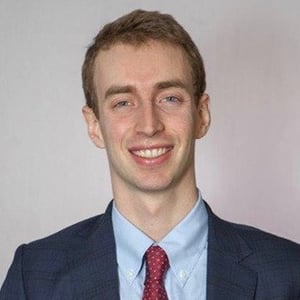
Partner, Boyden Gray PLLC
Jimmy Conde is partner at Boyden Gray PLLC, specializing in energy, environmental, and administrative law, with particular expertise in the Clean Air Act. He has protected clients against agency overreach in cutting-edge and complex legal proceedings, including challenges to EPA, DOE, DOT, and California rules seeking to compel electrification of motor vehicles, the FCC’s universal service fund, Department of Labor Wage & Hour Division rules, and HHS rules interfering with the practice of medicine and sound insurance practices. His written commentary has been published and referenced in the Wall Street Journal, the Washington Examiner, Concurrences (an antitrust publication), and Newsweek, among others.
Mr. Conde began his legal career as an associate with Boyden Gray PLLC. He clerked for Judge Douglas H. Ginsburg in the U.S. Court of Appeals for the D.C. Circuit and Judge David J. Porter in the U.S. Court of Appeals for the Third Circuit.
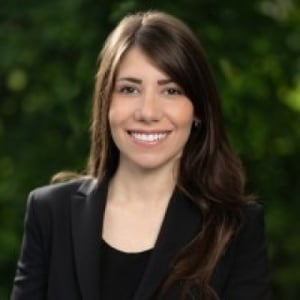
Associate Chief Counsel, U.S. Chamber Litigation Center, U.S. Chamber of Commerce
Maria C. Monaghan is associate chief counsel at the U.S. Chamber Litigation Center, the litigation arm of the U.S. Chamber of Commerce. In this capacity, she handles a variety of litigation matters for the Chamber.
Before joining the Litigation Center, Monaghan practiced as an associate in the D.C. office of Gibson, Dunn & Crutcher LLP. She represented clients in the telecommunications, energy, transportation, and e-commerce sectors, with a focus on appellate litigation and regulatory matters.
Monaghan served as a law clerk to the Honorable Samuel A. Alito of the United States Supreme Court, the Honorable Ed Carnes of the U.S. Court of Appeals for the Eleventh Circuit, and the Honorable Amul R. Thapar of the U.S. Court of Appeals for the Sixth Circuit. She graduated Order of the Coif from the University of Virginia School of Law, where she served as Articles Development Editor for the Virginia Law Review and participated in the Supreme Court Litigation Clinic. She received her undergraduate degree in Human Resource Management and Labor Studies from Rutgers University.
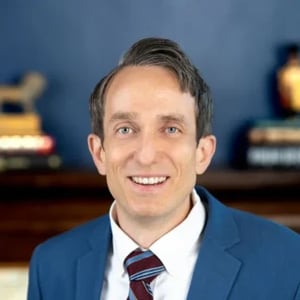
Senior Counsel, America First Legal Foundation
James Rogers is Senior Counsel at America First Legal Foundation, where he litigates in a number of areas, including border security, election integrity, parental rights, and administrative and constitutional law. Before joining America First Legal, from 2021 to 2022, he was Senior Litigation Counsel at the Solicitor General’s Office of the Arizona Attorney General’s Office. While there, he spearheaded lawsuits against the Biden Administration’s destructive open borders policies and its COVID19 vaccine mandates. From 2015 to 2021, James was a Foreign Service Officer at the U.S. Department of State, where he worked in the Office of the Assistant Legal Advisor for Consular Affairs, at the U.S. Consulate in Porto Alegre, Brazil, and at the U.S. Embassy in Windhoek, Namibia.
Prior to joining the Department of State, he was a commercial litigation partner at Osborn Maledon, a Phoenix-based firm with a #1 litigation ranking from Chambers and Partners. James earned a J.D. from Harvard Law School in 2009, an L.L.M. in International Law from the University of Cambridge in 2008, and a B.A., with honors, in International Studies from Brigham Young University in 2005. He is a sixth-generation Arizonan and lives in Mesa, Arizona, with his four children.
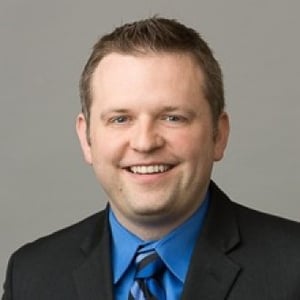
Partner, Marshall, Gerstein & Borun LLP
Ryan Schermerhorn is a registered patent attorney in the firm's Industrial & Mechanical Technologies Practice Group. His engineering background provides him with an understanding of clients’ technologies and enables him to effectively and efficiently provide a range of patent procurement services. He also leverages his experience to assist on intellectual property litigation as well as develop strategies for acquiring and protecting intellectual property.
Since 2017, Ryan has been listed as an "Emerging Lawyer" by Emerging Lawyers Magazine and has been selected for inclusion in the Illinois Rising Stars® lists. Ryan was recognized in Chicago Daily Law Bulletin's 2023 40 Under Forty list. Since 2024, Ryan has been selected for inclusion in The Best Lawyers in America© list in the practice areas of Litigation - Patent and Patent Law. In 2025, Ryan was selected by the Law Bulletin Publishing Company’s Leading Lawyer Network as a “Leading Lawyer.”
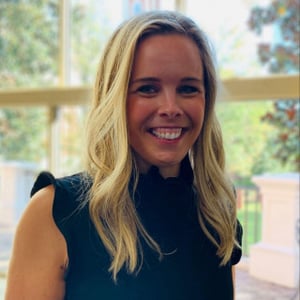
Senior Litigation Counsel, New Civil Liberties Alliance
Margaret Harker litigates for a public interest law firm. She has significant experience in government investigations and litigation, having served in the three branches of our government. Previously, she led complex Congressional investigations for the House Committee on Oversight and Government Reform—including the only government-wide investigation into federal agencies’ strategy (or lack thereof) to counter Chinese Communist Party political warfare against America.
Prior to her time on Capitol Hill, Harker served in the U.S. Department of Justice. She was an Assistant United States Attorney in both the Eastern District of Tennessee and the Eastern District of Virginia. She was a Trial Attorney in the National Security Division, Counterintelligence and Export Control Section, with an emphasis on the administration and enforcement of the Foreign Agents Registration Act.
Harker clerked for the Honorable Henry E. Hudson, U.S. District Court for the Eastern District of Virginia and the Honorable Randolph A. Beales, Court of Appeals of Virginia.
Earlier in her career, she studied in Beijing, China, and worked at the U.S. Chamber of Commerce’s China Center.
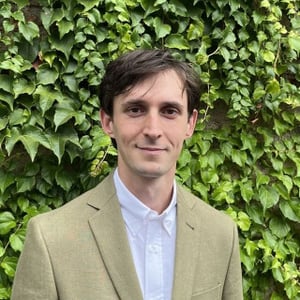
Writer and Editor, Tablet Magazine
Park MacDougald is Editor and Senior Writer at The Scroll, Tablet’s daily afternoon newsletter, a fellow at the Manhattan Institute, and a former recipient of the Novak Fellowship from The Fund for American Studies. His writing has appeared in Tablet, City Journal, New York Magazine, The Washington Examiner, and UnHerd.
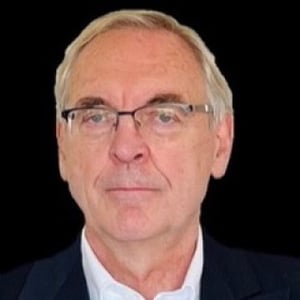
Fellow, National Security Institute, Antonin Scalia Law School, George Mason University
Vince Vitkowsky chaired the Executive Committee of the Federalist Society’s International and National Security Law and Policy Practice Group for over a decade. He is also a Fellow at the National Security Institute of George Mason University Law School. Vince spent 45 years in private practice, primarily in AmLaw 100/200 firms and their spin-offs. His practice included domestic and international commercial arbitration and litigation, as well as cyber risks and liabilities. Vince's current focus is on national security policy, artificial intelligence, cybersecurity, and counterterrorism. He has often written and spoken on national security and other public policy issues. Among other affiliations, Vince has been an Adjunct Fellow at the Center for Law and Counterterrorism of the Foundation for the Defense of Democracies, a member of the Executive Committee of the American Branch of the International Law Association, and Co-Chair of the Committee on Interventions and Trial Observations of the International Bar Association’s Human Rights Institute. He received his B.A. from Northwestern University and his J.D. from Cornell Law School.

Professor of Law, South Texas College of Law Houston
Josh Blackman is a national thought leader on constitutional law and the United States Supreme Court. Josh’s work was quoted during two presidential impeachment trials. He has testified before Congress and advises federal and state lawmakers. Josh regularly appears on TV, including NBC, CBS, ABC, Fox, and the BBC. Josh is also a frequent guest on NPR and other syndicated radio programs. He has published commentaries in the New York Times, Wall Street Journal, Washington Post, and leading national publications.
Since 2012, Josh has served as a professor at the South Texas College of Law Houston. He holds the Centennial Chair of Constitutional Law. Josh is an Adjunct Fellow at the Manhattan Institute. Josh has written more than seven dozen law review articles that have been cited more than a thousand times. Josh was selected as the Jurist of the Year by the Texas Journal of Law & Public Policy, received the inaugural Meese III Originalism Award, and was awarded the Inaugural Joseph Story Award. Josh was selected by Forbes Magazine for the “30 Under 30” in Law and Policy. Josh is the President of the Harlan Institute, and founded FantasySCOTUS, the Internet’s Premier Supreme Court Fantasy League. He blogs at the Volokh Conspiracyand posts@JoshMBlackman.
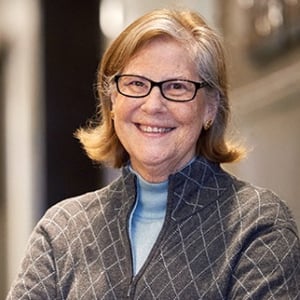
Professor of Practice and Distinguished Scholar in Residence; Co-Director of the Legislative and Regulatory Process Clinic, New York University School of Law
Sally Katzen served in the Clinton administration as administrator of the Office of Information and Regulatory Affairs in the Office of Management and Budget (OMB), as deputy assistant to the president for economic policy and deputy director of the National Economic Council in the White House, and then as the deputy director for management at OMB. She served as the head of the Agency Review Group for the Obama/Biden transition with responsibility for the Executive Office of the President and all government-wide agencies. She has taught both undergraduates and at various law schools. She is a member of the American Law Institute and the National Academy of Public Administration, has served on multiple panels for the National Academy of Sciences, testified frequently before Congress, and is on the board of several non-profit organizations. Before joining the Clinton administration, Katzen was a partner in the Washington, DC, law firm of Wilmer, Cutler & Pickering, specializing in regulatory and legislative matters, while serving in leadership roles in the American Bar Association (including chair of the Section on Administrative Law and Regulatory Practice and as DC delegate to the ABA’s House of Delegates), as president of the Federal Communications Bar Association and as president of the Women’s Legal Defense Fund. She graduated from Smith College and the University of Michigan Law School, where she was the first woman editor-in-chief of the Law Review. She clerked for Judge J. Skelly Wright of the United States Court of Appeals for the District of Columbia Circuit and served in the Carter administration as the general counsel of the Council on Wage and Price Stability in the Executive Office of the President.
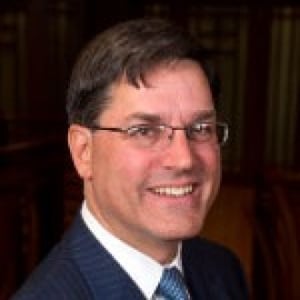
Vice President for Public Policy, American Forest and Paper Association
Paul Noe serves as Vice President for Public Policy at the American Forest and Paper Association. Paul has extensive regulatory, legislative and technical experience, including in environmental regulation, regulatory reform, renewable energy, biomass carbon neutrality, chemicals and product stewardship, workplace health and safety, and sustainability. He previously served as the Vice President of Regulatory Affairs at the Grocery Manufacturers Association.
Paul also has broad experience in public service, including as Counselor to the Administrator in the Office of Information and Regulatory Affairs, Office of Management and Budget (2001-2006), where he helped to lead the development of regulatory policy and White House review of regulations in the Administration of George W. Bush. He previously served as Senior Counsel to the U.S. Senate Committee on Governmental Affairs under Chairmen Fred Thompson, Ted Stevens and Bill Roth (1995-2001), where his work focused on reforming the regulatory process. He also has been a lawyer in private practice, most recently as a partner with C&M Capitolink LLC, as well as counsel in Crowell & Moring’s Environment and Natural Resources Group.
Paul currently serves as the Co-Chair of the Legislation Committee in the American Bar Association’s Section of Administrative Law and Regulatory Practice, and recently coauthored a chapter, “Beyond Process Excellence: Enhancing Societal Well-Being,” published in a book by Brookings Institution Press entitled, “Achieving Regulatory Excellence.” In the spring of 2016, he also served as a Policy Fellow at the University of Pennsylvania Law School, where he offered lectures in environmental law, advanced regulatory policy, legislation, and administrative law.
Paul is a graduate of The Georgetown University Law Center, where he was a John M. Olin fellow in law and economics and an editor on the law journal, and Williams College, where he was a member of Phi Beta Kappa.
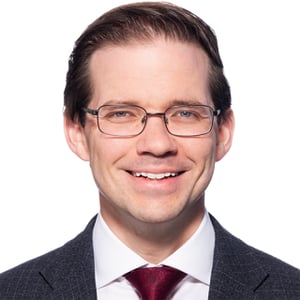
Of Counsel, Covington & Burling LLP
The Honorable Paul J. Ray is currently Of Counsel at Covington & Burling LLP where he advises clients on regulatory opportunities and challenges and helps them formulate and execute advocacy strategies for their regulatory policy priorities before the executive branch and Congress.
During the first Trump Administration, Paul held various senior positions at the Office of Information and Regulatory Affairs (OIRA) within the White House’s Office of Management and Budget, including as acting, and then Senate-confirmed, head of the office. As OIRA Administrator (the "regulations czar"), Paul supervised the review of hundreds of regulations from across the government, drafted numerous executive orders governing the regulatory process, and led the Administration’s regulatory reform effort. As a result of this experience, Paul is well-positioned to help clients understand and achieve regulatory policy priorities in the context of the government’s regulatory agenda and ongoing reform efforts.
Most recently, Paul was also the Director of the Roe Institute for Economic Policy Studies at The Heritage Foundation. In that role, he supervised the formulation of the Foundation’s economic and regulatory policy recommendations and provided technical assistance to congressional committees and staff regarding legislative changes to the regulatory process. In addition to his role at The Heritage Foundation, Paul also served as a Senior Advisor at a strategic advisory firm. Before his time in government, Paul practiced law at a law firm in Washington, specializing in administrative law matters.
Prior to his role at the White House, Paul was Counselor to the Secretary at the U.S. Department of Labor. There he led departmental efforts in high-profile rulemakings and helped formulate the Department’s legal positions and strategy.
Paul served as a law clerk to Supreme Court Justice Samuel Alito and as a law clerk to the Honorable Debra Livingston of the U.S. Court of Appeals for the Second Circuit.
Paul is a thought leader in the conservative legal movement and is a frequent commentator and speaker on regulatory policy and reform matters, including at law schools, professional gatherings, and other venues. He is the Chairman of Innovations in Peacebuilding International and the Regulatory Process Working Group of the Federalist Society’s Regulatory Transparency Project and a public member of the Administrative Conference of the United States. Paul is also an adjunct lecturer at the Hillsdale College School of Government.

Tazewell Taylor Professor of Law and William H. Cabell Research Professor, William & Mary Law School
Jonathan H. Adler joined the William & Mary law faculty as the Tazwell Taylor Professor of Law and William H. Cabell Research Professor in 2025. Prior to joining the faculty, he was the inaugural Johan Verheij Memorial Professor of Law and the founding Director of the Coleman P. Burke Center for Environmental Law at the Case Western Reserve University School of Law.
Professor Adler is the author or editor of seven books, including Climate Liberalism: Perspectives on Liberty, Property and Pollution (Palgrave, 2023), Marijuana Federalism: Uncle Sam and Mary Jane (Brookings Institution Press, 2020), Business and the Roberts Court (Oxford University Press, 2016) and Rebuilding the Ark: New Perspectives on Endangered Species Act Reform (AEI Press, 2011).
His articles have appeared in publications ranging from the Harvard Environmental Law Review and Yale Journal on Regulation to the Wall Street Journal, New York Times, and Washington Post. He has testified before Congress a dozen times, and his work has been cited in the U.S. Supreme Court. A 2024 study identified Professor Adler as the seventh most cited legal academic in administrative and environmental law from 2019 to 2023.
Professor Adler is a contributing editor to Civitas Outlook and a regular contributor to the popular legal blog, The Volokh Conspiracy. A regular commentator on constitutional and regulatory issues, he has appeared on numerous radio and television programs, ranging from the PBS Newshour and National Public Radio to the Fox News Channel and Entertainment Tonight.
Professor Adler is a senior fellow at the Property & Environment Research Center in Bozeman, Montana. In 2018, Professor Adler was elected to membership in the American Law Institute and helped co-found the organization Checks and Balances. In 2024, Professor Adler was appointed a public member of the Administrative Conference of the United States.
Professor Adler clerked for the Honorable David B. Sentelle on the U.S. Court of Appeals for the District of Columbia Circuit.

Judge, United States Court of Appeals, Sixth Circuit
Judge Readler earned his undergraduate and law degrees from the University of Michigan. After graduating, he served as a law clerk to Judge Alan Norris of the United States Court of Appeals for the Sixth Circuit. Judge Readler then began practicing law in the Columbus office of the international law firm Jones Day, eventually spending ten years as a partner in the firm’s Issues and Appeals Practice Group. While at Jones Day, Judge Readler appeared in state and federal trial and appellate courts around the country, most frequently the Supreme Court of Ohio and the Sixth Circuit. Judge Readler also successfully argued before the United States Supreme Court in McQuiggin v. Perkins on behalf of an inmate claiming actual innocence. His other pro bono representations include representing capital defendants before the Tenth Circuit and the Supreme Court of Ohio, as well as representing defendants sentenced to life in prison before the Sixth Circuit. While at Jones Day, Judge Readler traveled to Nairobi with Lawyers Without Borders to train Kenyan lawyers in prosecuting domestic violence cases, and he was also a recipient of the American Marshall Memorial Fellowship awarded by the German Marshall Fund of the United States. Following his career in private practice, Judge Readler served as Acting Assistant Attorney General for the Civil Division of the United States Department of Justice from 2017 to 2019. In that role, Judge Readler led and supervised over 1,000 lawyers in the Department’s largest litigating division, briefing and arguing several cases on behalf of the United States in federal courts across the country, including high-profile cases significant to the Administration and the Department. In March 2019, Judge Readler was confirmed to serve as a Circuit Judge on the Sixth Circuit. He resides in Columbus.
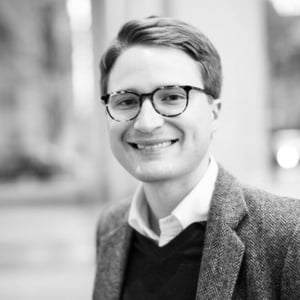
Senior Counsel, The Becket Fund for Religious Liberty
Joe Davis joined Becket in 2017 as Legal Counsel. His work at Becket has included appellate litigation in both federal and state courts, including representing religious entities and governments sued because of their openness to religious expression in precedent-setting victories before the Third, Fifth, Seventh, and Eleventh Circuits. Joe has appeared in national media to discuss religious liberty issues, including on Fox News and numerous radio and print outlets, and his academic work on topics related to religious liberty has been published at venues including the Yale Law Journal Forum and the Notre Dame Law Review Online.
Before joining Becket, Joe worked as a litigator at Jones Walker LLP in New Orleans, Louisiana, where he worked on a variety of matters from commercial and criminal litigation to bankruptcy. From 2014 to 2015, he clerked for the Honorable E. Grady Jolly of the U.S. Court of Appeals for the Fifth Circuit.
Joe graduated summa cum laude from the University of Virginia School of Law in 2014, where he served on the Virginia Law Review and was elected to the Order of the Coif. While in law school, Joe studied religious liberty law with one of the top religious liberty scholars and litigators in the nation. He also worked as a researcher for the law school’s Supreme Court Litigation Clinic. Before going to law school, Joe received his B.A. in Economics with a minor in Religion, summa cum laude, from Mississippi State University.
Joe is married to his high school sweetheart. When he’s not helping her corral their four young children, he tends to be reading the classics, watching college football, or listening to his vinyl collection.
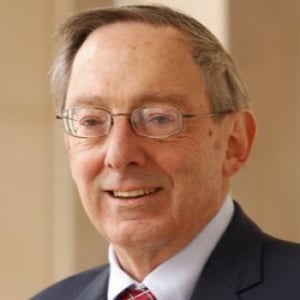
Robert E. Scott Distinguished Professor of Law Emeritus, University of Virginia School of Law; Alice McKean Young Regents Chair in Law Emeritus, University of Texas
Douglas Laycock is perhaps the nation’s leading authority on the law of religious liberty and also on the law of remedies. He has taught and written about these topics for more than four decades at the University of Chicago, the University of Texas, the University of Michigan and the University of Virginia. He retired from teaching at UVA Law School in May 2023.
Laycock has testified frequently before Congress and has argued many cases in the courts, including the U.S. Supreme Court, where he has served as lead counsel in six cases and has also filed influential amicus briefs. He is the author (co-author in the most recent edition) of the leading casebook Modern American Remedies, the award-winning monograph The Death of the Irreparable Injury Rule and many articles in leading law reviews. He co-edited a collection of essays, Same-Sex Marriage and Religious Liberty.
His many writings on religious liberty have been republished in a five-volume collection:
Laycock resigned from the council and as first vice president of the American Law Institute to become co-reporter for the Restatement (Third) of Torts: Remedies. He is a fellow of the American Academy of Arts and Sciences. He earned his B.A. from Michigan State University and his J.D. from the University of Chicago.

Richard and Frances Mallery Professor of Law and Faculty Director, Constitutional Law Center, Stanford Law School
Michael W. McConnell is the Richard and Frances Mallery Professor and Faculty Director of the Constitutional Law Center at Stanford Law School, and a Senior Fellow at the Hoover Institution. From 2002 to 2009, he served as a Circuit Judge on the United States Court of Appeals for the Tenth Circuit. He was nominated by President George W. Bush, a Republican, and confirmed by a Democratic Senate by unanimous consent. McConnell has previously held chaired professorships at the University of Chicago and the University of Utah, and visiting professorships at Harvard and NYU. He teaches courses on constitutional law, constitutional history, First Amendment, and interpretive theory. He has published widely in the fields of constitutional law and theory, especially church and state, equal protection, and separation of powers. His book, “The President Who Would Not Be King: Executive Power Under the Constitution,” was published by Princeton University Press in 2020, based on the Tanner Lectures in Human Values, which he delivered at Princeton in 2019. His latest book, co-authored with Nathan Chapman, “Agreeing to Disagree: How the Establishment Clause Protects Religious Diversity and Freedom of Conscience,” was published by Oxford University Press in mid-2023. McConnell has argued sixteen cases in the United States Supreme Court, most recently Carney v. Adams (2020). defending a provision of the Delaware Constitution requiring political balance on that state’s courts. More recently, he was co-counsel in Gonzalez v. Google. He earned his B.A. from Michigan State University and his J.D. from the University of Chicago, and has received honorary degrees from Notre Dame University and Michigan State. He served as law clerk to Supreme Court Justice William J. Brennan, Jr. and D.C. Circuit Chief Judge J. Skelly Wright. He has been Assistant General Counsel of the Office of Management & Budget, Assistant to the Solicitor General of the Department of Justice, and a member of the President’s Intelligence Oversight Board. He is Senior of Counsel to the law firm Wilson, Sonsini, Goodrich & Rosati, and is co-chair of Meta’s Oversight Review Board.
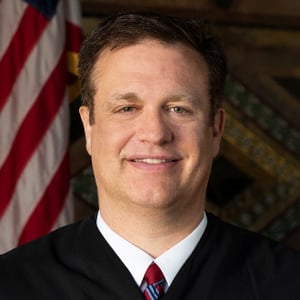
Judge, United States Court of Appeals, Ninth Circuit
Judge Nelson was confirmed to the Ninth Circuit in October 2018, as the youngest Circuit Judge to serve from Idaho and he has chambers in his hometown of Idaho Falls. Prior to his confirmation, Judge Nelson served for nine years as General Counsel of Idaho Falls-based Melaleuca, Inc., a consumer goods company. He previously worked in Washington, DC, where he served in all three branches of the federal government, including as Special Counsel for Supreme Court nominations to the Ranking Member of the Senate Judiciary Committee; Deputy General Counsel to the White House Office of Management and Budget; Deputy Assistant Attorney General in the Environment and Natural Resources Division of the United States Department of Justice; and a law clerk to Judge Henderson of the United States Court of Appeals for the D.C. Circuit. He has argued in most of the federal courts of appeals and worked on dozens of Supreme Court briefs. He started in the Washington, DC office of Sidley Austin as an appellate lawyer, after clerking for Judges Mosk and Brower of the Iran-U.S. Claims Tribunal at The Hague, and for now-Judge Tom Griffith, then-Senate Legal Counsel, during the impeachment trial of President Clinton. Judge Nelson earned his B.A. from Brigham Young University and his J.D., with honors, from BYU Law School. Judge Nelson has been a member of the Federalist Society since 1998.
Senior Attorney, Institute for Justice
Paul Avelar is the Managing Attorney of the Institute for Justice Arizona Office. He joined the Institute in March 2010 and litigates free speech, property rights, economic liberty, school choice and other constitutional cases in federal and state courts.
As the head of IJ’s national Braiding Freedom Initiative, Paul represents natural hair braiders across the country to protect their right to earn an honest living. The Initiative uses lawsuits, activism and research to remove laws that require potential braiders to undergo hundreds of costly training hours just to braid hair. Since IJ launched the Braiding Freedom Initiative in 2014, 12 additional states have freed braiders from unnecessary licensing burdens. Paul drafted the model Natural Hair Braiding Protection Act, which has been adopted in Arkansas, Indiana, Iowa, Kentucky, Nebraska, New Hampshire, Texas and South Dakota. He is currently representing braiders in Missouri, where state laws infringe upon their right to earn an honest living.
In his free speech work, Paul has challenged numerous laws that trample First Amendment rights. In Arizona Freedom Club PAC v. Bennett, he represented candidates and independent groups in a successful U.S. Supreme Court challenge to the “matching funds” provision of Arizona’s publicly financed elections system. He represented grassroots groups and individuals in Arizona, Mississippi and Washington, where state laws burdened their political speech by requiring them to register with the government, to navigate complex regulations and to face fines and possible criminal penalties merely because they talked about political issues. In Washington, Paul protected a lawyer’s right to defend, pro-bono, the First Amendment rights of political speakers. Through litigation and legislation, Paul leads the fight against abusive civil forfeiture laws in Arizona and elsewhere.
Paul also co-authored the most comprehensive published study of economic liberty protections in the Arizona Constitution. The Chief Justice of the Arizona Supreme Court appointed Paul to the Task Force on the Review of the Role and Governance Structure of the State Bar of Arizona, where he dissented from the majority report and called on leaders to substantially reform the Bar and state regulation of the practice of law. He often speaks at law schools across the country about constitutional issues and his work at IJ.
Prior to joining IJ-AZ, Paul worked as an attorney in Philadelphia. He clerked for Judge Roger Miner on the 2nd U.S. Circuit Court of Appeals, Justice Andrew Hurwitz on the Arizona Supreme Court, and Judge Daniel Barker on the Arizona Court of Appeals.
Paul graduated manga cum laude from the Arizona State University College of Law in 2004 and was elected to the Order of the Coif. He received his undergraduate degree from Princeton University in 2000.
Professor of Law and Faculty Director for the Georgetown Center for the Constitution, Georgetown University Law Center
Stephanie Barclay is a Professor of Law at Georgetown Law School, and the Faculty Director of the Georgetown Center for the Constitution. Her research focuses on the role our different democratic institutions play in protecting minority rights, particularly at the intersection of free speech and religious exercise. Barclay‘s work is published or is forthcoming in leading journals such as the Harvard Law Review, the Chicago Law Review, the University of Pennsylvania Law Review, and the Yale Law Journal Forum. One of her articles was also selected for the 2020 Stanford/Harvard/Yale Junior Faculty Forum. Her work has been featured in many media outlets, including The New York Times, The Wall Street Journal, The Washington Post, USA Today, Bloomberg BNA, The Hill, and Law 360. And her work has also been cited by the U.S. Supreme Court.
Prior to joining Georgetown, Barclay was twice voted Professor of the Year. Barclay has also litigated constitutional cases at both the trial and appellate level, including before the U.S. Supreme Court. Barclay served as a law clerk to Judge N. Randy Smith on the U.S. Court of Appeals for the Ninth Circuit, and to Justice Neil M. Gorsuch of the U.S. Supreme Court.
Barclay is a Faculty Affiliate at the Constitutional Law Center at Stanford Law School; and she is a Nootbaar Fellow at the Nootbaar Institute on Law, Religion, and Ethics at Pepperdine University. She currently serves as the Chair for the AALS Law and Religion Section and as a Member of the Executive Committee for the AALS Constitutional Law Section. She graduated summa cum laude from BYU Law School, where she was elected to the Order of the Coif. She is completing a Ph.D. in Law at Oxford University as a Clarendon Scholar and a Tang Scholar.
Vice President for Legal Strategy, Stand Together
Casey Mattox is Vice President for Legal Strategy at Stand Together and Senior Advisor at
Americans for Prosperity. In these roles he advocates for and creates strategies and
partnerships to ensure a constitutionally limited government that protects the civil liberties of all
Americans. Prior to joining Stand Together and AFP Casey’s legal career focused on defending
the First Amendment rights of students, faculty, healthcare workers and religious organizations.
Casey has a J.D. from Boston College School of Law and an undergraduate degree from the
University of Virginia. You can find him on Twitter at @CaseyMattox_ and on LinkedIn at
@Casey-Mattox-ST.

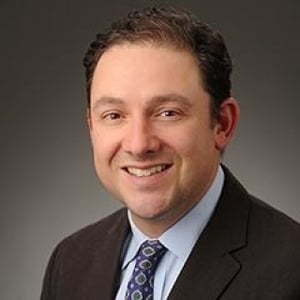
Courthouse Steps Decision: First Choice Women's Resource Centers v. Davenport
Teresa Stanton Collett, Casey Mattox
In First Choice Women’s Resource Centers, Inc. v. Davenport, the New Jersey Attorney General, Matthew...
Is the FDA Trying to Ban Direct-to-Consumer Drug Ads?
Paul Avelar, Jeff Stier, Dan Troy
The Trump Administration has been exploring new ways to tighten requirements for direct-to-consumer advertisements for...
From Chambers to the Front Page: Supreme Court Leaks and Judicial Integrity
Stephanie Barclay, Carrie Campbell Severino, Annie Donaldson Talley
What happens when confidential Supreme Court deliberations make their way into the press—most recently through...
What Did the Founders Think of the President’s Pardon Power?
Jeffrey DeSousa, Paul James Larkin, Andrew McCarthy, James Trusty
In this Federalist Society America250 series, experts analyze modern legal and policy debates through the...
A Seat at the Sitting - April 2026
Thomas Berry, James Conde, Maria Monaghan, James Rogers, Ryan Schermerhorn
Each month, a panel of constitutional experts convenes to discuss the Court’s upcoming docket sitting...
Foreign Influence Operations and National Security
Margaret Harker, Park MacDougald, Vincent Vitkowsky
Foreign influence operations have become increasingly important in geopolitical competition and American national security. China...
The Presidential Toolbox: Instruments of Executive Power
Josh Blackman, Sally Katzen, Paul R. Noe, Paul J. Ray
What are the legal tools available to a President to shape policy and execute the...
Arthur N. Rupe Debate: Judging the Supreme Court's Emergency Docket
Jonathan H. Adler, Chad A. Readler, Jed Shugerman
Virginia Student Chapter
The Federalist Society at UVA Law is pleased to host their 7th Annual Originalism...
What Was an "Establishment of Religion" at the Founding?
Joseph Davis, Douglas Laycock, Michael W. McConnell, Ryan D. Nelson
The Founders Gave Us the Tools Series
In this Federalist Society America250 series, experts analyze modern legal and policy debates through the...
Courthouse Steps Decision: Chiles v. Salazar
Paul Avelar, Stephanie Barclay, Casey Mattox
Chiles v. Salazar addressed whether a Colorado law prohibiting “conversion therapy” violates the First...