The Major Questions Doctrine: A Question or an Answer for Administrative Law?
A Regulatory Transparency Project Fourth Branch Video
Recent Supreme Court decisions have invoked what is being called the “Major Questions Doctrine.” In essence, the Court has proposed that administrative agency policies need to be evaluated on two criteria. One - does the policy have major political or economic consequences? Two - can the agency show that it has clear statutory authority from Congress on this issue? Supporters of the Major Questions Doctrine say that this could return lawful authority to Congress. Critics of the Doctrine contend that it has no constitutional basis and it opens the door for judges to engage in decisions about policy.
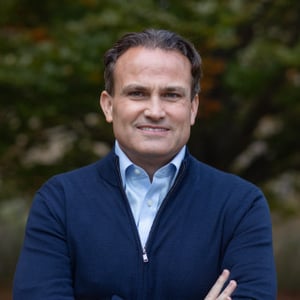
Christopher Walker is Professor of Law at the University of Michigan. His research focuses primarily on administrative law, regulation, and law and policy at the agency level. He teaches Administrative Law, Civil Procedure, Constitutional Litigation, Federal Courts, Legislation and Regulation, and State and Local Government Law.
Visit our website – https://www.RegProject.org – to learn more, view all of our content, and connect with us on social media.
*******
As always, the Federalist Society takes no position on particular legal or public policy issues; all expressions of opinion are those of the speaker.

Professor of Law, University of Michigan Law School
Christopher J. Walker is a Professor of Law at the University of Michigan. Prior to joining Michigan law faculty in 2022, he spent a decade teaching at The Ohio State University Moritz College of Law. He previously clerked for Justice Anthony Kennedy of the U.S. Supreme Court, worked on the Civil Appellate Staff at the U.S. Department of Justice, and served on the Senate Judiciary Committee staff for the Gorsuch Supreme Court confirmation. Professor Walker’s research focuses on administrative law, regulation, and law and policy at the agency level. Outside the law school, he chaired the American Bar Association’s Section of Administrative Law and Regulatory Practice in 2020-21 and served as one of forty Public Members of the Administrative Conference of the United States from 2016-2022, and he continues to serve in both organizations in various capacities. He also works of counsel at the U.S. Chamber Litigation Center. In 2022, he received the Federalist Society’s Joseph Story Award.