
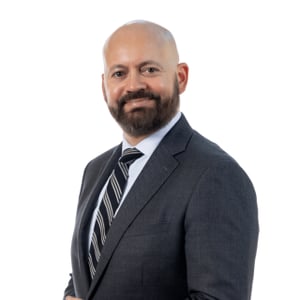
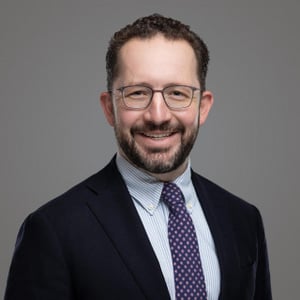
Milton R. Underwood Chair in Free Enterprise, Vanderbilt University Law School
Brian Fitzpatrick is the Milton R. Underwood Chair in Free Enterprise and Professor of Law at Vanderbilt Law School, where his research focuses on class action litigation, federal courts, judicial selection, and constitutional law. He is best known for his empirical studies of class action settlements as well as his book The Conservative Case for Class Actions (University of Chicago Press, 2019). Professor Fitzpatrick joined Vanderbilt's law faculty in 2007 after serving as the John M. Olin Fellow at New York University School of Law. He graduated first in his class from Harvard Law School and went on to clerk for Judge Diarmuid O'Scannlain on the U.S. Court of Appeals for the Ninth Circuit and Justice Antonin Scalia on the U.S. Supreme Court. After his clerkships, Professor Fitzpatrick practiced commercial and appellate litigation for several years at Sidley Austin in Washington, D.C., and served as Special Counsel for Supreme Court Nominations to U.S. Senator John Cornyn. Before earning his law degree, Fitzpatrick graduated summa cum laude with a bachelor's of science in chemical engineering from the University of Notre Dame. He has received the Hall-Hartman Outstanding Professor Award, which recognizes excellence in classroom teaching, for his Civil Procedure and Federal Courts courses.
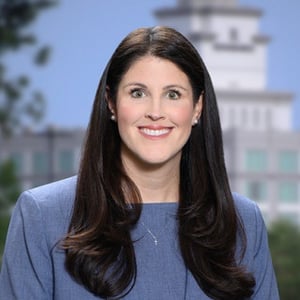
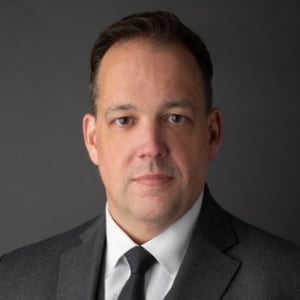
Partner, Shutts & Bowen
Alyssa L. Cory is a Partner in the Tampa office of Shutts & Bowen LLP, where she is a member of the Appellate Practice Group.
Board certified in Appellate Practice, she regularly briefs and argues high-profile appeals in all six of Florida’s appellate courts, as well as in the Florida Supreme Court and the United States Court of Appeals for the Eleventh Circuit. Her practice covers appellate advocacy in the areas of complex commercial and business disputes, constitutional issues, election-related litigation, and administrative law. She also assists clients through civil litigation support in a variety of federal and state cases with trial preservation, and developing and framing key legal arguments.
She currently serves as the Chair of the General Practice Subcommittee of The Florida Bar Appellate Court Rules Committee, and as Chair of the Programs Committee of the Appellate Practice Section of The Florida Bar.
Alyssa brings a wealth of knowledge to her appellate practice from her previous experience as a staff attorney for the Honorable Ricky Polston of the Florida Supreme Court, and the Honorable Thomas D. Winokur of Florida’s First District Court of Appeal.
Alyssa is also a leader in her local community, serving as President of the Tampa Bay Attorney Chapter of the Christian Legal Society, and as a Vice President of the Tampa Bay Lawyers Chapter of the Federalist Society.
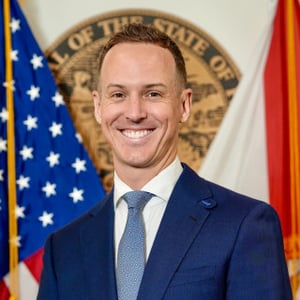
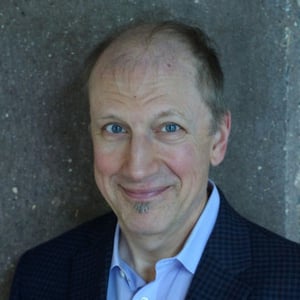
Deputy Attorney General for Civil Enforcement, Florida Office of the Attorney General
Jason Hilborn is the Deputy Attorney General for the Civil Division of the Florida Office of the Attorney General, overseeing civil investigations, enforcement, and litigation for the State. Before his current role, Jason was a partner in the Fort Lauderdale office of Boies Schiller Flexner LLP, focusing on complex civil litigation. Earlier in his career, he practiced at Gibson, Dunn & Crutcher LLP in Washington, D.C., before serving as a Deputy Solicitor General in the Florida Solicitor General’s Office, where he handled civil and criminal appeals and challenges to federal agency action. Jason clerked for Judge John K. Bush of the U.S. Court of Appeals for the Sixth Circuit and for Vice Chancellor Sam Glasscock III of the Delaware Court of Chancery. Before earning his J.D., Jason served as a missionary across Europe, Africa, and Asia. He received his B.S. and B.A. from the University of Florida and his J.D. from Harvard Law School.
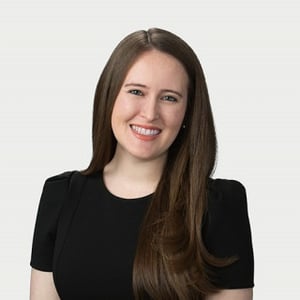
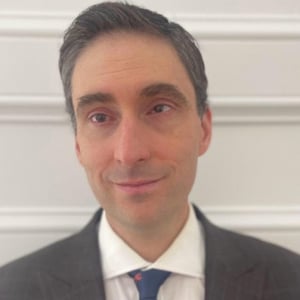
Associate, Gibson, Dunn & Crutcher LLP
Elizabeth A. Kiernan is a senior associate in the Appellate and Constitutional Law Practice Group at Gibson, Dunn & Crutcher, representing clients in their most consequential, high-stakes, and time-sensitive matters. Elizabeth specializes in appellate advocacy and sophisticated briefing. She has successfully argued before the Fifth Circuit and Texas Supreme Court and has supported arguments in various courts, including the U.S. Supreme Court and courts across the country.
Elizabeth’s most significant victories include obtaining and preserving at the Texas Supreme Court writs of mandamus directing dismissal of billions of dollars in personal injury and property damage claims across a 200-case, 20,000-plaintiff MDL; securing a landmark U.S. Supreme Court victory allowing an insurer responsible for millions of dollars in bankruptcy claims to be heard on objections to its insureds’ plan of reorganization; and persuading a unanimous Fifth Circuit panel to uphold dismissal of over $12 million in contractual and tort claims.
Chambers and Partners recently named Elizabeth an “Associate to Watch” for Litigation: Appellate (Texas), and she has been recognized as an Appellate “Rising Star” by Thomson Reuters’s Texas Super Lawyers magazine.
Prior to joining Gibson Dunn, Elizabeth earned her B.A. summa cum laude from the University of Alabama and her J.D. with Honors from the University of Chicago Law School. She served as a law clerk to the Honorable Jerry E. Smith of the U.S. Court of Appeals for the Fifth Circuit and the Honorable William H. Pryor Jr. of the U.S. Court of Appeals for the Eleventh Circuit. She also served as Special Counsel to U.S. Senator Josh Hawley for the confirmation of Justice Amy Coney Barrett.
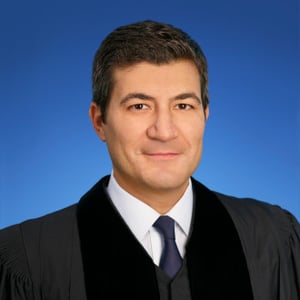
Judge, United States District Court, Southern District of Florida
Rodolfo “Rudy” Armando Ruiz II is a District Judge of the United States District Court for the Southern District of Florida. Prior to his judicial commission on May 3, 2019, Ruiz was a Circuit Court Judge for the Eleventh Judicial Circuit of Florida from 2014 through 2019, and a Miami-Dade County Court Judge from 2012 through 2014. Ruiz also served as an Assistant County Attorney with the Miami-Dade County Attorney’s Office and an associate with White & Case LLP.
Ruiz received a Bachelor of Science in Economics from Duke University and earned his Juris Doctor from Georgetown University. After graduating from law school, he was a law clerk to the Honorable Federico A. Moreno of the United States District Court for the Southern District of Florida.
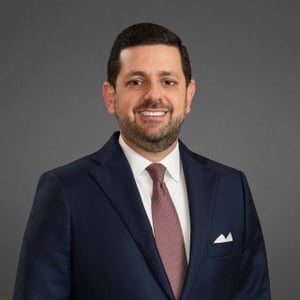
Of Counsel, DLA Piper LLP (US)
Harout J. Samra – a Board Certified Specialist in International Law – focuses his practice on international dispute resolution and arbitration matters, including international civil litigation in US courts.
Harout has represented clients from both the public and private sectors, including foreign governments, public officials and clients from a variety of industries. He has experience in international arbitrations administered under the International Chamber of Commerce (ICC), International Centre for Dispute Resolution (ICDR), United Nations Commission on International Trade Law (UNCITRAL), China International Economic and Trade Arbitration Commission (CIETAC), Bogota Chamber of Commerce, Madrid Court of Arbitration and International Centre for Settlement of Investment Disputes (ICSID) arbitration rules.
Harout currently serves as a member of the Florida Supreme Court Judicial Nominating Commission, by appointment of Governor Ron DeSantis. He previously served, by appointment of Governor Rick Scott, as a member of the Florida Third District Court of Appeal Judicial Nominating Commission, and was elected as Chair of the Commission from 2018-2019.
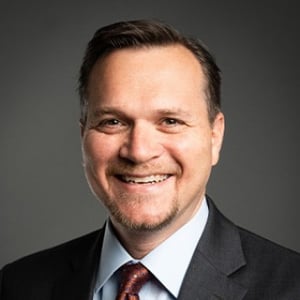
Partner, Shook, Hardy & Bacon, LLP
Phil Goldberg is the office managing partner of Shook in Washington, D.C., and co-chair of the firm’s Public Policy Practice Group. He has more than 25 years of experience advising clients on high stakes and high profile liability-related public policy, public affairs and public relations issues. He counsels businesses and their trade associations on some of the most cutting-edge liability issues of the day.
As part of this work, Phil co-chairs the firm’s National Amicus Practice, which files more than three dozen amicus briefs every year. He has filed amicus briefs for many of the most influential trade and civil justice groups with courts at every level, from the U.S. Supreme Court to the U.S. Courts of Appeals and state appellate courts. He has testified before Congress and state legislatures, has authored leading legal scholarship and is a regular speaker at judicial education conferences. He also is a resource for journalists, podcasters and others who report on and discuss pressing liability issues.
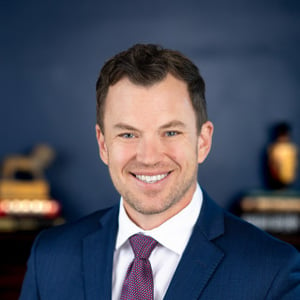
President and Co-Founder, America First Legal Foundation
Gene Hamilton is the President of America First Legal, which he co-founded, and where he was previously the Executive Director, Executive Vice President, and General Counsel. He most recently served as Deputy White House Counsel to President Donald Trump. Earlier in his career, Gene served as Counselor to Attorney General at the U.S. Department of Justice and as Senior Counselor to the Secretary of Homeland Security. He also served as General Counsel on the Senate Judiciary Committee and held several roles at the Department of Homeland Security, including with U.S. Immigration Enforcement, U.S. Customs and Border Protection and the Office of the General Counsel. He holds a B.A. from the University of Georgia and a J.D. from Washington and Lee University School of Law.
Executive Director, Alliance For Consumers
O.H. leads Alliance For Consumers, which fights to ensure that consumer protection efforts, class action lawsuits, and attorney general enforcement actions are consistent with the rule of law and benefit everyday consumers, not just class action lawyers and career bureaucrats.
His work with AFC builds off his time with the Arizona Attorney General's Office under Attorney General Mark Brnovich, where he not only defended constitutional questions and served as the State's lead counsel in the U.S. Supreme Court, but also had the privilege of leading Arizona's consumer protection lawsuit against Google over the tracking of consumers' location, and the successful case against Volkswagen over well-publicized diesel-related consumer deception.
O.H. is a 2010 graduate of Harvard Law School. Before joining Attorney General Brnovich in 2016, O.H. practiced at WilmerHale and Ropes & Gray in Boston and clerked for the Hon. J.L. Edmondson of the United States Court of Appeals for the Eleventh Circuit in Atlanta, Georgia.
Counsel, Boyden Gray PLLC
Jim Wedeking is counsel at Boyden Gray PLLC. He has extensive experience with environmental regulations, providing compliance counseling for large industrial and agricultural companies and their related trade associations, drafting comments on proposed environmental rulemakings from a variety of federal agencies, and challenging those rules in court. For over 20 years he has helped companies obtain various permits and other authorizations for constructing major infrastructure projects, including fossil fuel-fired power plants, natural gas pipelines, and offshore wind turbines, as well as defend those permits and authorizations through litigation. Mr. Wedeking frequently writes on federal environmental law topics, including for the Washington Legal Foundation.
He has also counseled clients on several Freedom of Information Act matters, including the protection of confidential business information from disclosure to third parties and how the Supreme Court’s Food Marketing Institute v. Argus Leader Media decision increased protections for company information provided to regulatory agencies.
Before joining the firm, Mr. Wedeking was counsel in Sidley Austin’s Washington, D.C. environmental, health, and safety practice group. There, he represented industrial companies in defending against civil and criminal enforcement actions and toxic tort suits.
Mr. Wedeking received a J.D., cum laude, from the Catholic University of America Columbus School of Law and a B.A. in Criminology and Criminal Justice from the University of Maryland.
James L. Oberstar Professor of Law and Public Policy, University of St. Thomas School of Law
Senior Litigation Counsel, Washington Legal Foundation
Zac joined WLF in 2025 as Senior Litigation Counsel. In that role, he regularly represents WLF and other clients as counsel of record in cases before the U.S. Supreme Court and the federal appellate courts. Before arriving at WLF, Zac served as counsel to Commissioner Allen Dickerson of the Federal Election Commission. Zac also spent eight years litigating First Amendment cases as a staff attorney for the Institute for Free Speech, where he represented clients in federal and state cases across the country. He received his J.D. from George Mason University’s School of Law, where he participated in GMU’s Wiley Rein Supreme Court clinic.
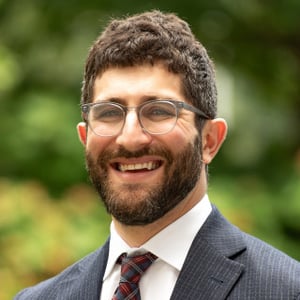
Associate Professor of Law, Temple University Beasley School of Law
Jacob Schuman is an Associate Professor at Temple University Beasley School of Law, where he teaches Constitutional Law, Evidence, and the Law of the Police. His scholarship focuses on the law of community supervision and has been published or is forthcoming in the Stanford Law Review, New York University Law Review, Michigan Law Review, Virginia Law Review, American Criminal Law Review, Philadelphia Inquirer, and New Republic.
Professor Schuman’s scholarship is regularly cited by courts, scholars, journalists, and advocates, including by federal judges on the Second, Fourth, and Seventh Circuit U.S. Courts of Appeals. It has also won plaudits across the ideological spectrum, from the American Constitution Society to the Federalist Society. He has filed amicus briefs based on his work on behalf of clients such as the National Association of Federal Defenders and the National Association of Criminal Defense Lawyers.
Prior to joining Temple Law, Professor Schuman served in the appellate unit of the Federal Community Defender Office in Philadelphia, where he represented indigent criminal defendants before the U.S. Court of Appeals for the Third Circuit. He also worked as a white-collar criminal defense lawyer in Washington, D.C. After graduating magna cum laude from Harvard Law School, he clerked for the Honorable Michael Boudin on the U.S. Court of Appeals for the First Circuit and the Honorable James Boasberg on the U.S. District Court for the District of Columbia.
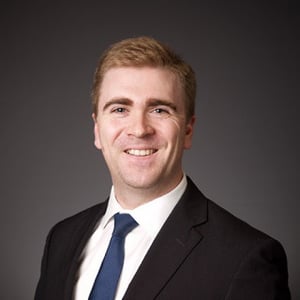
Legal Counsel, Center for Free Speech, Alliance Defending Freedom
Logan Spena serves as legal counsel for the Center for Free Speech at Alliance Defending Freedom, where he works to defend free speech and combat global censorship and coercion.
Before joining ADF, Spena served as Deputy Policy Director in the Missouri governor’s office where he oversaw the state’s regulatory reform efforts and worked to approve legislation on many issues including education, foster care, and protecting the unborn.
Spena graduated from the University of Virginia School of Law in 2016, where he served on the Editorial Board of the Virginia Law Review. Spena earned his B.A. in Government: Political Theory from Patrick Henry College in 2012. Spena is a member of the bars of Virginia and Missouri.
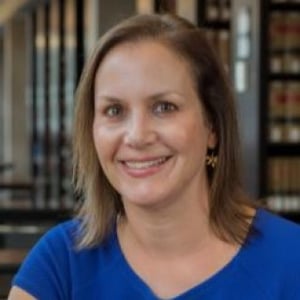
Director of Clinical and Experiential Learning, Clinical Professor of Law & Director of the Criminal and Juvenile Justice Clinic, University of Chicago Law School
Erica Zunkel is a Clinical Professor of Law and directs the Criminal and Juvenile Justice Clinic. Under Professor Zunkel’s supervision, law students represent indigent individuals in criminal trial courts, on appeal, and in post-conviction proceedings, and pursue policy and impact projects to effect system change. Professor Zunkel’s Excessive Sentences Project is an initiative that aims to free prisoners serving lengthy sentences through the use of second look mechanisms such as compassionate release, parole, and clemency. Zunkel and her clinic students have secured the early release of 17 individuals, resulting in hundreds of years in prison saved for their clients. In recognition of her post-conviction work, Zunkel received the 2024 Excellence in Pro Bono Service Award from the United States Northern District of Illinois District Court and the Federal Bar Association.
Zunkel’s case and research interests include post-conviction remedies for excessive sentences in the federal and state systems, mandatory minimums, and sentencing. In 2022, Illinois Governor J.B. Pritzker appointed Professor Zunkel to be a Commissioner on the Illinois Torture Inquiry and Relief Commission, which examines claims of police torture.
Before coming to the Law School in 2012, Professor Zunkel was a federal public defender in San Diego, California and a law clerk for U.S. District Court Judge Martha Vázquez in Santa Fe, New Mexico. She received her B.A. from Cornell University and her J.D. from the University of California-Berkeley School of Law.
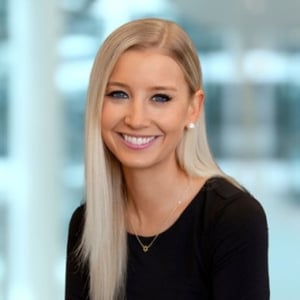
Of Counsel, Holtzman Vogel
Erielle Azerrad is Of Counsel with Holtzman Vogel and focuses her practice on commercial litigation, appellate law, and constitutional law matters.
Prior to joining the firm, Erielle clerked for the Honorable Steven J. Menashi on the U.S. Court of Appeals for the Second Circuit.
Erielle is also a co-founder of the Center for the Middle East and International Law through the Antonin Scalia Law School at George Mason University.
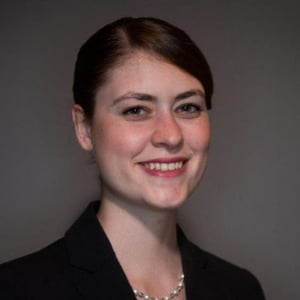
Deputy Solicitor General, Ohio
Jana serves in the Office of the Solicitor General as a Deputy Solicitor General. In that role, she works with the Solicitor General on the State’s major appellate cases. She also represents the State of Ohio in the Ohio Supreme Court and in the United States Court of Appeals for the Sixth Circuit.
Before joining the office, Jana clerked for Judge John B. Nalbandian of the United States Court of Appeals for the Sixth Circuit and for Judge Allison Jones Rushing of the United States Court of Appeals for the Fourth Circuit.
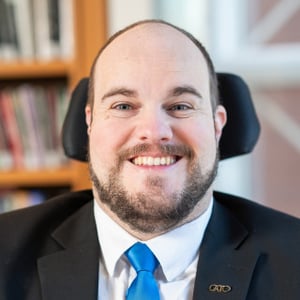
Director, Project on Criminal Justice, Cato Institute
Matthew Cavedon is the Director of the Cato Institute’s Project on Criminal Justice. He focuses on reforming plea-driven mass adjudication, ensuring police accountability, and defending constitutional criminal originalism. Cavedon’s scholarship has been published (or is forthcoming in) publications including the Arizona State Law Journal, Cato Supreme Court Review, Seattle University Law Review, and Georgetown Journal of Law and Public Policy. Formerly a Georgia public defender and fellow at the Institute for Justice, Cavedon has taught law school courses on criminal law and procedure, as well as the First Amendment. Cavedon clerked for a U.S. district court and the Supreme Court of Georgia. He came to Cato following a fellowship at the Emory University Center for the Study of Law and Religion.
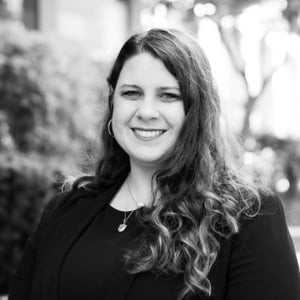
Counsel, The Becket Fund for Religious Liberty
Amanda Dixon is counsel at the Becket Fund for Religious Liberty, where her practice focuses on First Amendment litigation at the trial and appellate levels. Before coming to Becket, she served as a law clerk to the Honorable Allison Jones Rushing of the U.S. Court of Appeals for the Fourth Circuit and the Honorable James C. Dever III of the U.S. District Court for the Eastern District of North Carolina.
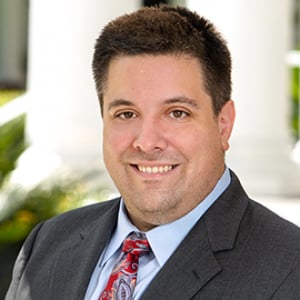
Sheila M. McDevitt Professor of Law and Faculty Director of the Election Law Center, Florida State University College of Law
Professor Morley joined FSU Law in 2018, and teaches and writes in the areas of election law, constitutional law, remedies, and the federal courts. He is best known for his work on election emergencies and post-election litigation, nationwide and other defendant-oriented injunctions, the jurisdiction of the federal courts and their equitable powers more generally. He has testified before congressional committees, made presentations to election officials for the U.S. Election Assistance Commission and participated in bipartisan blue-ribbon groups to develop election reforms. The governor of Florida also appointed Professor Morley to the Criminal Punishment Code Task Force, to propose potential revisions to the legislature.
The U.S. Supreme Court has cited several of his articles, and he was counsel of record for the successful Petitioner in a landmark campaign finance case. Professor Morley has appeared on C-SPAN, Court TV, Fox News and numerous local news programs, and has been quoted in the Washington Post, Los Angeles Times, Roll Call, Politico, U.S. News and World Report, and a wide range of other national publications. His work has been published in many of the nation’s top law reviews, including the Georgetown Law Journal, Northwestern University Law Review, Boston University Law Review and Emory Law Journal.
Before joining FSU Law, Professor Morley was a Climenko Fellow and Lecturer in Law at Harvard Law School. Prior to his experience in academia, he served in government as special assistant to the General Counsel of the Army at the Pentagon, as well as a law clerk for Judge Gerald B. Tjoflat of the U.S. Court of Appeals for the Eleventh Circuit. During his tenure with the Army General Counsel’s office, he was awarded the Meritorious Civilian Service Award and the Army Staff Lapel Pin. He also worked as an associate at Williams & Connolly LLP and the Supreme Court & Appellate group of Winston & Strawn, LLP, both in Washington, D.C.
Professor Morley earned his J.D. from Yale Law School in 2003, where he was a senior editor on the Yale Law Journal; served on the moot court board; and received the Thurman Arnold Prize for Best Oralist in the Morris Tyler Moot Court of Appeals.
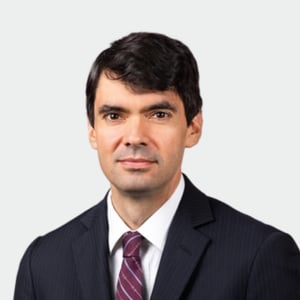
Partner, Baker & Hostetler LLP
Richard Raile is a partner at Baker Hostetler, where he is a member of their Litigation team. He focuses his practice on appeals and major motions. He frequently plays the principal role in drafting briefs for clients and in delivering oral argument, including on dispositive motions, bench trials and appeals. He has represented parties and amici curiae at every level of the judiciary, from trial courts to merits litigation in the U.S. Supreme Court and state supreme courts.
His litigation experience runs the gamut of subject matters, including everything from commercial, civil rights, constitutional, campaign finance, voting rights, labor and bankruptcy law.
Partner, Shook, Hardy & Bacon, LLP
Phil Goldberg is the office managing partner of Shook in Washington, D.C., and co-chair of the firm’s Public Policy Practice Group. He has more than 25 years of experience advising clients on high stakes and high profile liability-related public policy, public affairs and public relations issues. He counsels businesses and their trade associations on some of the most cutting-edge liability issues of the day.
As part of this work, Phil co-chairs the firm’s National Amicus Practice, which files more than three dozen amicus briefs every year. He has filed amicus briefs for many of the most influential trade and civil justice groups with courts at every level, from the U.S. Supreme Court to the U.S. Courts of Appeals and state appellate courts. He has testified before Congress and state legislatures, has authored leading legal scholarship and is a regular speaker at judicial education conferences. He also is a resource for journalists, podcasters and others who report on and discuss pressing liability issues.
President and Co-Founder, America First Legal Foundation
Gene Hamilton is the President of America First Legal, which he co-founded, and where he was previously the Executive Director, Executive Vice President, and General Counsel. He most recently served as Deputy White House Counsel to President Donald Trump. Earlier in his career, Gene served as Counselor to Attorney General at the U.S. Department of Justice and as Senior Counselor to the Secretary of Homeland Security. He also served as General Counsel on the Senate Judiciary Committee and held several roles at the Department of Homeland Security, including with U.S. Immigration Enforcement, U.S. Customs and Border Protection and the Office of the General Counsel. He holds a B.A. from the University of Georgia and a J.D. from Washington and Lee University School of Law.
Executive Director, Alliance For Consumers
O.H. leads Alliance For Consumers, which fights to ensure that consumer protection efforts, class action lawsuits, and attorney general enforcement actions are consistent with the rule of law and benefit everyday consumers, not just class action lawyers and career bureaucrats.
His work with AFC builds off his time with the Arizona Attorney General's Office under Attorney General Mark Brnovich, where he not only defended constitutional questions and served as the State's lead counsel in the U.S. Supreme Court, but also had the privilege of leading Arizona's consumer protection lawsuit against Google over the tracking of consumers' location, and the successful case against Volkswagen over well-publicized diesel-related consumer deception.
O.H. is a 2010 graduate of Harvard Law School. Before joining Attorney General Brnovich in 2016, O.H. practiced at WilmerHale and Ropes & Gray in Boston and clerked for the Hon. J.L. Edmondson of the United States Court of Appeals for the Eleventh Circuit in Atlanta, Georgia.
Counsel, Boyden Gray PLLC
Jim Wedeking is counsel at Boyden Gray PLLC. He has extensive experience with environmental regulations, providing compliance counseling for large industrial and agricultural companies and their related trade associations, drafting comments on proposed environmental rulemakings from a variety of federal agencies, and challenging those rules in court. For over 20 years he has helped companies obtain various permits and other authorizations for constructing major infrastructure projects, including fossil fuel-fired power plants, natural gas pipelines, and offshore wind turbines, as well as defend those permits and authorizations through litigation. Mr. Wedeking frequently writes on federal environmental law topics, including for the Washington Legal Foundation.
He has also counseled clients on several Freedom of Information Act matters, including the protection of confidential business information from disclosure to third parties and how the Supreme Court’s Food Marketing Institute v. Argus Leader Media decision increased protections for company information provided to regulatory agencies.
Before joining the firm, Mr. Wedeking was counsel in Sidley Austin’s Washington, D.C. environmental, health, and safety practice group. There, he represented industrial companies in defending against civil and criminal enforcement actions and toxic tort suits.
Mr. Wedeking received a J.D., cum laude, from the Catholic University of America Columbus School of Law and a B.A. in Criminology and Criminal Justice from the University of Maryland.
James L. Oberstar Professor of Law and Public Policy, University of St. Thomas School of Law
Senior Litigation Counsel, Washington Legal Foundation
Zac joined WLF in 2025 as Senior Litigation Counsel. In that role, he regularly represents WLF and other clients as counsel of record in cases before the U.S. Supreme Court and the federal appellate courts. Before arriving at WLF, Zac served as counsel to Commissioner Allen Dickerson of the Federal Election Commission. Zac also spent eight years litigating First Amendment cases as a staff attorney for the Institute for Free Speech, where he represented clients in federal and state cases across the country. He received his J.D. from George Mason University’s School of Law, where he participated in GMU’s Wiley Rein Supreme Court clinic.
Associate Professor of Law, Temple University Beasley School of Law
Jacob Schuman is an Associate Professor at Temple University Beasley School of Law, where he teaches Constitutional Law, Evidence, and the Law of the Police. His scholarship focuses on the law of community supervision and has been published or is forthcoming in the Stanford Law Review, New York University Law Review, Michigan Law Review, Virginia Law Review, American Criminal Law Review, Philadelphia Inquirer, and New Republic.
Professor Schuman’s scholarship is regularly cited by courts, scholars, journalists, and advocates, including by federal judges on the Second, Fourth, and Seventh Circuit U.S. Courts of Appeals. It has also won plaudits across the ideological spectrum, from the American Constitution Society to the Federalist Society. He has filed amicus briefs based on his work on behalf of clients such as the National Association of Federal Defenders and the National Association of Criminal Defense Lawyers.
Prior to joining Temple Law, Professor Schuman served in the appellate unit of the Federal Community Defender Office in Philadelphia, where he represented indigent criminal defendants before the U.S. Court of Appeals for the Third Circuit. He also worked as a white-collar criminal defense lawyer in Washington, D.C. After graduating magna cum laude from Harvard Law School, he clerked for the Honorable Michael Boudin on the U.S. Court of Appeals for the First Circuit and the Honorable James Boasberg on the U.S. District Court for the District of Columbia.
Legal Counsel, Center for Free Speech, Alliance Defending Freedom
Logan Spena serves as legal counsel for the Center for Free Speech at Alliance Defending Freedom, where he works to defend free speech and combat global censorship and coercion.
Before joining ADF, Spena served as Deputy Policy Director in the Missouri governor’s office where he oversaw the state’s regulatory reform efforts and worked to approve legislation on many issues including education, foster care, and protecting the unborn.
Spena graduated from the University of Virginia School of Law in 2016, where he served on the Editorial Board of the Virginia Law Review. Spena earned his B.A. in Government: Political Theory from Patrick Henry College in 2012. Spena is a member of the bars of Virginia and Missouri.
Director of Clinical and Experiential Learning, Clinical Professor of Law & Director of the Criminal and Juvenile Justice Clinic, University of Chicago Law School
Erica Zunkel is a Clinical Professor of Law and directs the Criminal and Juvenile Justice Clinic. Under Professor Zunkel’s supervision, law students represent indigent individuals in criminal trial courts, on appeal, and in post-conviction proceedings, and pursue policy and impact projects to effect system change. Professor Zunkel’s Excessive Sentences Project is an initiative that aims to free prisoners serving lengthy sentences through the use of second look mechanisms such as compassionate release, parole, and clemency. Zunkel and her clinic students have secured the early release of 17 individuals, resulting in hundreds of years in prison saved for their clients. In recognition of her post-conviction work, Zunkel received the 2024 Excellence in Pro Bono Service Award from the United States Northern District of Illinois District Court and the Federal Bar Association.
Zunkel’s case and research interests include post-conviction remedies for excessive sentences in the federal and state systems, mandatory minimums, and sentencing. In 2022, Illinois Governor J.B. Pritzker appointed Professor Zunkel to be a Commissioner on the Illinois Torture Inquiry and Relief Commission, which examines claims of police torture.
Before coming to the Law School in 2012, Professor Zunkel was a federal public defender in San Diego, California and a law clerk for U.S. District Court Judge Martha Vázquez in Santa Fe, New Mexico. She received her B.A. from Cornell University and her J.D. from the University of California-Berkeley School of Law.
James L. Oberstar Professor of Law and Public Policy, University of St. Thomas School of Law
Senior Litigation Counsel, Washington Legal Foundation
Zac joined WLF in 2025 as Senior Litigation Counsel. In that role, he regularly represents WLF and other clients as counsel of record in cases before the U.S. Supreme Court and the federal appellate courts. Before arriving at WLF, Zac served as counsel to Commissioner Allen Dickerson of the Federal Election Commission. Zac also spent eight years litigating First Amendment cases as a staff attorney for the Institute for Free Speech, where he represented clients in federal and state cases across the country. He received his J.D. from George Mason University’s School of Law, where he participated in GMU’s Wiley Rein Supreme Court clinic.
Associate Professor of Law, Temple University Beasley School of Law
Jacob Schuman is an Associate Professor at Temple University Beasley School of Law, where he teaches Constitutional Law, Evidence, and the Law of the Police. His scholarship focuses on the law of community supervision and has been published or is forthcoming in the Stanford Law Review, New York University Law Review, Michigan Law Review, Virginia Law Review, American Criminal Law Review, Philadelphia Inquirer, and New Republic.
Professor Schuman’s scholarship is regularly cited by courts, scholars, journalists, and advocates, including by federal judges on the Second, Fourth, and Seventh Circuit U.S. Courts of Appeals. It has also won plaudits across the ideological spectrum, from the American Constitution Society to the Federalist Society. He has filed amicus briefs based on his work on behalf of clients such as the National Association of Federal Defenders and the National Association of Criminal Defense Lawyers.
Prior to joining Temple Law, Professor Schuman served in the appellate unit of the Federal Community Defender Office in Philadelphia, where he represented indigent criminal defendants before the U.S. Court of Appeals for the Third Circuit. He also worked as a white-collar criminal defense lawyer in Washington, D.C. After graduating magna cum laude from Harvard Law School, he clerked for the Honorable Michael Boudin on the U.S. Court of Appeals for the First Circuit and the Honorable James Boasberg on the U.S. District Court for the District of Columbia.
Legal Counsel, Center for Free Speech, Alliance Defending Freedom
Logan Spena serves as legal counsel for the Center for Free Speech at Alliance Defending Freedom, where he works to defend free speech and combat global censorship and coercion.
Before joining ADF, Spena served as Deputy Policy Director in the Missouri governor’s office where he oversaw the state’s regulatory reform efforts and worked to approve legislation on many issues including education, foster care, and protecting the unborn.
Spena graduated from the University of Virginia School of Law in 2016, where he served on the Editorial Board of the Virginia Law Review. Spena earned his B.A. in Government: Political Theory from Patrick Henry College in 2012. Spena is a member of the bars of Virginia and Missouri.
Director of Clinical and Experiential Learning, Clinical Professor of Law & Director of the Criminal and Juvenile Justice Clinic, University of Chicago Law School
Erica Zunkel is a Clinical Professor of Law and directs the Criminal and Juvenile Justice Clinic. Under Professor Zunkel’s supervision, law students represent indigent individuals in criminal trial courts, on appeal, and in post-conviction proceedings, and pursue policy and impact projects to effect system change. Professor Zunkel’s Excessive Sentences Project is an initiative that aims to free prisoners serving lengthy sentences through the use of second look mechanisms such as compassionate release, parole, and clemency. Zunkel and her clinic students have secured the early release of 17 individuals, resulting in hundreds of years in prison saved for their clients. In recognition of her post-conviction work, Zunkel received the 2024 Excellence in Pro Bono Service Award from the United States Northern District of Illinois District Court and the Federal Bar Association.
Zunkel’s case and research interests include post-conviction remedies for excessive sentences in the federal and state systems, mandatory minimums, and sentencing. In 2022, Illinois Governor J.B. Pritzker appointed Professor Zunkel to be a Commissioner on the Illinois Torture Inquiry and Relief Commission, which examines claims of police torture.
Before coming to the Law School in 2012, Professor Zunkel was a federal public defender in San Diego, California and a law clerk for U.S. District Court Judge Martha Vázquez in Santa Fe, New Mexico. She received her B.A. from Cornell University and her J.D. from the University of California-Berkeley School of Law.
Of Counsel, Holtzman Vogel
Erielle Azerrad is Of Counsel with Holtzman Vogel and focuses her practice on commercial litigation, appellate law, and constitutional law matters.
Prior to joining the firm, Erielle clerked for the Honorable Steven J. Menashi on the U.S. Court of Appeals for the Second Circuit.
Erielle is also a co-founder of the Center for the Middle East and International Law through the Antonin Scalia Law School at George Mason University.
Deputy Solicitor General, Ohio
Jana serves in the Office of the Solicitor General as a Deputy Solicitor General. In that role, she works with the Solicitor General on the State’s major appellate cases. She also represents the State of Ohio in the Ohio Supreme Court and in the United States Court of Appeals for the Sixth Circuit.
Before joining the office, Jana clerked for Judge John B. Nalbandian of the United States Court of Appeals for the Sixth Circuit and for Judge Allison Jones Rushing of the United States Court of Appeals for the Fourth Circuit.
Director, Project on Criminal Justice, Cato Institute
Matthew Cavedon is the Director of the Cato Institute’s Project on Criminal Justice. He focuses on reforming plea-driven mass adjudication, ensuring police accountability, and defending constitutional criminal originalism. Cavedon’s scholarship has been published (or is forthcoming in) publications including the Arizona State Law Journal, Cato Supreme Court Review, Seattle University Law Review, and Georgetown Journal of Law and Public Policy. Formerly a Georgia public defender and fellow at the Institute for Justice, Cavedon has taught law school courses on criminal law and procedure, as well as the First Amendment. Cavedon clerked for a U.S. district court and the Supreme Court of Georgia. He came to Cato following a fellowship at the Emory University Center for the Study of Law and Religion.
Counsel, The Becket Fund for Religious Liberty
Amanda Dixon is counsel at the Becket Fund for Religious Liberty, where her practice focuses on First Amendment litigation at the trial and appellate levels. Before coming to Becket, she served as a law clerk to the Honorable Allison Jones Rushing of the U.S. Court of Appeals for the Fourth Circuit and the Honorable James C. Dever III of the U.S. District Court for the Eastern District of North Carolina.
Sheila M. McDevitt Professor of Law and Faculty Director of the Election Law Center, Florida State University College of Law
Professor Morley joined FSU Law in 2018, and teaches and writes in the areas of election law, constitutional law, remedies, and the federal courts. He is best known for his work on election emergencies and post-election litigation, nationwide and other defendant-oriented injunctions, the jurisdiction of the federal courts and their equitable powers more generally. He has testified before congressional committees, made presentations to election officials for the U.S. Election Assistance Commission and participated in bipartisan blue-ribbon groups to develop election reforms. The governor of Florida also appointed Professor Morley to the Criminal Punishment Code Task Force, to propose potential revisions to the legislature.
The U.S. Supreme Court has cited several of his articles, and he was counsel of record for the successful Petitioner in a landmark campaign finance case. Professor Morley has appeared on C-SPAN, Court TV, Fox News and numerous local news programs, and has been quoted in the Washington Post, Los Angeles Times, Roll Call, Politico, U.S. News and World Report, and a wide range of other national publications. His work has been published in many of the nation’s top law reviews, including the Georgetown Law Journal, Northwestern University Law Review, Boston University Law Review and Emory Law Journal.
Before joining FSU Law, Professor Morley was a Climenko Fellow and Lecturer in Law at Harvard Law School. Prior to his experience in academia, he served in government as special assistant to the General Counsel of the Army at the Pentagon, as well as a law clerk for Judge Gerald B. Tjoflat of the U.S. Court of Appeals for the Eleventh Circuit. During his tenure with the Army General Counsel’s office, he was awarded the Meritorious Civilian Service Award and the Army Staff Lapel Pin. He also worked as an associate at Williams & Connolly LLP and the Supreme Court & Appellate group of Winston & Strawn, LLP, both in Washington, D.C.
Professor Morley earned his J.D. from Yale Law School in 2003, where he was a senior editor on the Yale Law Journal; served on the moot court board; and received the Thurman Arnold Prize for Best Oralist in the Morris Tyler Moot Court of Appeals.
Partner, Baker & Hostetler LLP
Richard Raile is a partner at Baker Hostetler, where he is a member of their Litigation team. He focuses his practice on appeals and major motions. He frequently plays the principal role in drafting briefs for clients and in delivering oral argument, including on dispositive motions, bench trials and appeals. He has represented parties and amici curiae at every level of the judiciary, from trial courts to merits litigation in the U.S. Supreme Court and state supreme courts.
His litigation experience runs the gamut of subject matters, including everything from commercial, civil rights, constitutional, campaign finance, voting rights, labor and bankruptcy law.
Of Counsel, Holtzman Vogel
Erielle Azerrad is Of Counsel with Holtzman Vogel and focuses her practice on commercial litigation, appellate law, and constitutional law matters.
Prior to joining the firm, Erielle clerked for the Honorable Steven J. Menashi on the U.S. Court of Appeals for the Second Circuit.
Erielle is also a co-founder of the Center for the Middle East and International Law through the Antonin Scalia Law School at George Mason University.
Deputy Solicitor General, Ohio
Jana serves in the Office of the Solicitor General as a Deputy Solicitor General. In that role, she works with the Solicitor General on the State’s major appellate cases. She also represents the State of Ohio in the Ohio Supreme Court and in the United States Court of Appeals for the Sixth Circuit.
Before joining the office, Jana clerked for Judge John B. Nalbandian of the United States Court of Appeals for the Sixth Circuit and for Judge Allison Jones Rushing of the United States Court of Appeals for the Fourth Circuit.
Director, Project on Criminal Justice, Cato Institute
Matthew Cavedon is the Director of the Cato Institute’s Project on Criminal Justice. He focuses on reforming plea-driven mass adjudication, ensuring police accountability, and defending constitutional criminal originalism. Cavedon’s scholarship has been published (or is forthcoming in) publications including the Arizona State Law Journal, Cato Supreme Court Review, Seattle University Law Review, and Georgetown Journal of Law and Public Policy. Formerly a Georgia public defender and fellow at the Institute for Justice, Cavedon has taught law school courses on criminal law and procedure, as well as the First Amendment. Cavedon clerked for a U.S. district court and the Supreme Court of Georgia. He came to Cato following a fellowship at the Emory University Center for the Study of Law and Religion.
Counsel, The Becket Fund for Religious Liberty
Amanda Dixon is counsel at the Becket Fund for Religious Liberty, where her practice focuses on First Amendment litigation at the trial and appellate levels. Before coming to Becket, she served as a law clerk to the Honorable Allison Jones Rushing of the U.S. Court of Appeals for the Fourth Circuit and the Honorable James C. Dever III of the U.S. District Court for the Eastern District of North Carolina.
Sheila M. McDevitt Professor of Law and Faculty Director of the Election Law Center, Florida State University College of Law
Professor Morley joined FSU Law in 2018, and teaches and writes in the areas of election law, constitutional law, remedies, and the federal courts. He is best known for his work on election emergencies and post-election litigation, nationwide and other defendant-oriented injunctions, the jurisdiction of the federal courts and their equitable powers more generally. He has testified before congressional committees, made presentations to election officials for the U.S. Election Assistance Commission and participated in bipartisan blue-ribbon groups to develop election reforms. The governor of Florida also appointed Professor Morley to the Criminal Punishment Code Task Force, to propose potential revisions to the legislature.
The U.S. Supreme Court has cited several of his articles, and he was counsel of record for the successful Petitioner in a landmark campaign finance case. Professor Morley has appeared on C-SPAN, Court TV, Fox News and numerous local news programs, and has been quoted in the Washington Post, Los Angeles Times, Roll Call, Politico, U.S. News and World Report, and a wide range of other national publications. His work has been published in many of the nation’s top law reviews, including the Georgetown Law Journal, Northwestern University Law Review, Boston University Law Review and Emory Law Journal.
Before joining FSU Law, Professor Morley was a Climenko Fellow and Lecturer in Law at Harvard Law School. Prior to his experience in academia, he served in government as special assistant to the General Counsel of the Army at the Pentagon, as well as a law clerk for Judge Gerald B. Tjoflat of the U.S. Court of Appeals for the Eleventh Circuit. During his tenure with the Army General Counsel’s office, he was awarded the Meritorious Civilian Service Award and the Army Staff Lapel Pin. He also worked as an associate at Williams & Connolly LLP and the Supreme Court & Appellate group of Winston & Strawn, LLP, both in Washington, D.C.
Professor Morley earned his J.D. from Yale Law School in 2003, where he was a senior editor on the Yale Law Journal; served on the moot court board; and received the Thurman Arnold Prize for Best Oralist in the Morris Tyler Moot Court of Appeals.
Partner, Baker & Hostetler LLP
Richard Raile is a partner at Baker Hostetler, where he is a member of their Litigation team. He focuses his practice on appeals and major motions. He frequently plays the principal role in drafting briefs for clients and in delivering oral argument, including on dispositive motions, bench trials and appeals. He has represented parties and amici curiae at every level of the judiciary, from trial courts to merits litigation in the U.S. Supreme Court and state supreme courts.
His litigation experience runs the gamut of subject matters, including everything from commercial, civil rights, constitutional, campaign finance, voting rights, labor and bankruptcy law.

The Future of American Universities: A Conversation with Professor Brian Fitzpatrick
Portland Lawyer Chapter
Portland, ORLitigation Finance: Access to Justice, Lawfare, and Foreign Influence
Phil Goldberg, Gene P. Hamilton, Oramel H. Skinner, Jim Wedeking
Third-party litigation funding has grown into a major part of modern civil litigation. Supporters argue it...
Panel 2: Strategic Litigation for the Modern Practitioner
2026 Florida Young Lawyers Summit
Coral Gables, FLLitigation Finance: Access to Justice, Lawfare, and Foreign Influence
A Seat at the Sitting - November 2025
The November Docket in 90 Minutes or Less
A Seat at the Sitting - November 2025
Thomas C. Berg, Zac Morgan, Jacob Schuman, Logan Spena, Erica Zunkel
Each month, a panel of constitutional experts convenes to discuss the Court’s upcoming docket sitting...
A Seat at the Sitting - November 2025
Thomas C. Berg, Zac Morgan, Jacob Schuman, Logan Spena, Erica Zunkel
Each month, a panel of constitutional experts convenes to discuss the Court’s upcoming docket sitting...
A Seat at the Sitting - October 2025
Erielle Azerrad, Jana Bosch, Matthew P. Cavedon, Amanda Gray Dixon, Michael T. Morley, Richard B. Raile
Each month, a panel of constitutional experts convenes to discuss the Court’s upcoming docket sitting...
A Seat at the Sitting - October 2025
Erielle Azerrad, Jana Bosch, Matthew P. Cavedon, Amanda Gray Dixon, Michael T. Morley, Richard B. Raile
Each month, a panel of constitutional experts convenes to discuss the Court’s upcoming docket sitting...
A Seat at the Sitting - October 2025
The October Docket in 90 Minutes or Less